
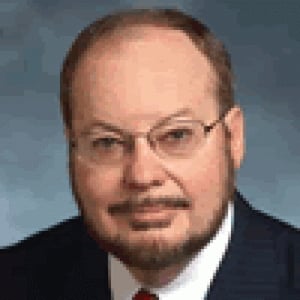
University Distinguished Professor of Political Science, Texas A&M University
George C. Edwards III is University Distinguished Professor of Political Science at Texas A&M University. He also holds the Jordan Chair in Presidential Studies and has served as the Olin Professor of American Government at Oxford and the John Adams Fellow at the University of London, and has held senior visiting appointments at Sciences Po-Paris, Peking University, Hebrew University of Jerusalem, and the U.S. Military Academy at West Point. He is an Associate Member of Nuffield College at the University of Oxford and was the founder and from 1991-2001 the director of The Center for Presidential Studies. In 2012-13, he will be Winant Professor of American Government at Oxford.
A leading scholar of the presidency, he has authored dozens of articles and has written or edited 25 books on American politics and public policy making. He is also editor of Presidential Studies Quarterly and general editor of the Oxford Handbook of American Politics series. Among his recent books, On Deaf Ears: The Limits of the Bully Pulpit examines the effectiveness of presidential leadership of public opinion; Why the Electoral College Is Bad for America evaluates the consequences of the method of electing the president; Governing by Campaigning analyzes the politics of the Bush presidency; and The Strategic President offers a new formulation for understanding presidential leadership. His most recent book,Overreach, analyzes presidential leadership during the Obama presidency.
Professor Edwards has served as president of the Presidency Research Section of the American Political Science Association, which has named its annual dissertation prize in his honor and awarded him its Career Service Award. A member of Phi Beta Kappa and a Woodrow Wilson Fellow, he has received the Decoration for Distinguished Civilian Service from the U.S. Army and the Pi Sigma Alpha Prize from the Southern Political Science Association. He is also a member of the Council on Foreign Relations. He has spoken to more than 200 universities and other groups in the U.S. and abroad, keynoted numerous national and international conferences, done hundreds of interviews with the national and international press, and can be heard on National Public Radio. Grants from the National Science Foundation, the Smith-Richardson Foundation, and the Ford Foundation have funded his work. He has served on the Board of Directors of the Roper Center and the Board of Trustees of the Center for the Study of the Presidency and on many editorial boards.
Dr. Edwards also applies his scholarship to practical issues of governing, including advising Brazil on its constitution and the operation of its presidency, Russia on building a democratic national party system, Mexico on elections, and Chinese scholars on democracy. He also authored studies for the 1988 and 2000 U.S. presidential transitions.
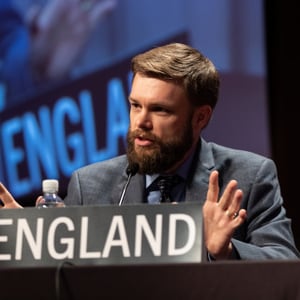
Founder and Executive Director, Save Our States
Trent England defends the Electoral College as the founder and director of Save Our States. He also serves as the David and Ann Brown Distinguished Fellow at the Oklahoma Council of Public Affairs.
Trent previously served as Executive Vice President of the Oklahoma Council of Public Affairs and earlier of the Olympia, Washington-based Freedom Foundation. He was also a morning-drive radio host, a state legislative candidate, a legal policy analyst at The Heritage Foundation, and a research analyst at the National Republican Senatorial Committee.
Trent is the author of "Why We Must Defend the Electoral College," co-author of "The Case Against Ranked-Choice Voting," and a contributor to "The Heritage Guide to the Constitution" and "One Nation Under Arrest: How Crazy Laws, Rogue Prosecutors, and Activist Judges Threaten Your Liberty." His writing has also appeared in the Wall Street Journal, Christian Science Monitor, Washington Times, and other newspapers. He is a producer of the feature-length documentary "Safeguard: An Electoral College Story."
Trent earned a law degree from The George Mason University School of Law and a bachelor of arts in government from Claremont McKenna College. He lives in Oklahoma City with his wife and their three children.
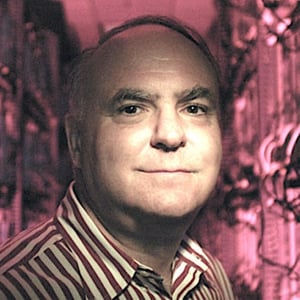
Chair, National Popular Vote
John R. Koza received his Ph.D. in computer science from the University of Michigan in 1972. He published a board game involving Electoral College strategy in 1966. From 1973 through 1987, he was co-founder, chairman, and CEO of Scientific Games Inc. where he co-invented the rub-off instant lottery ticket used by state lotteries. In the 1980s, he and attorney Barry Fadem were active in promoting adoption of lotteries by various states through the citizen-initiative process and state legislative action. Between 1988 and 2003, he taught a course on genetic algorithms and genetic programming at Stanford University, where he was a consulting professor. He is lead author of the book Every Vote Equal: A State-Based Plan for Electing the President by National Popular Vote and originator of the National Popular Vote legislation. He is Chair of National Popular Vote and a member of the Board of Directors. Koza has visited 29 states on behalf of National Popular Vote.
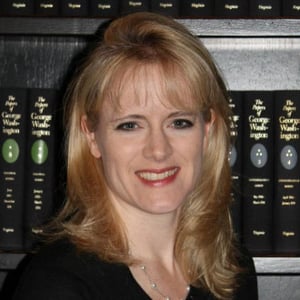
Author, The Indispensable Electoral College: How the Founders’ Plan Saves Our Country from Mob Rule and Enlightened Democracy: The Case for the Electoral College
Tara Ross is nationally recognized for her expertise on the Electoral College. She is the author of Why We Need the Electoral College (2019), The Indispensable Electoral College: How the Founders’ Plan Saves Our Country from Mob Rule (2017), We Elect A President: The Story of our Electoral College (2016), and Enlightened Democracy: The Case for the Electoral College (2d ed. 2012). She is also the author of She Fought Too: Stories of Revolutionary War Heroines (2019), and a co-author of Under God: George Washington and the Question of Church and State (2008) (with Joseph C. Smith, Jr.). Her Prager University video, Do You Understand the Electoral College?, is Prager’s most-viewed video ever, with more than 60 million views.
Tara often appears as a guest on a variety of talk shows nationwide, and she regularly addresses civic, university, and legal audiences. She’s contributed to several law reviews and newspapers, including the National Law Journal, USA Today, the Washington Examiner, The Hill, The Washington Times, and FoxNews.com. She’s appeared before institutions such as the Cooper Union, Brown University, the Dole Institute of Politics, and Mount Vernon. She’s appeared on Fox News, CSPAN, NPR, and a variety of other national and local shows.
Tara is a retired lawyer and a former Editor-in-Chief of the Texas Review of Law & Politics. She obtained her B.A. from Rice University and her J.D. from the University of Texas School of Law. She resides in Dallas with her husband and children.
Director of Regulatory and State Affairs, Institute for Energy Research
Daniel Simmons is Director of State Affairs at the Institute for Energy Research. He oversees energy research and outreach at the state level. Before joining IER, Simmons served as the Director of the Natural Resources Task Force at the American Legislative Exchange Council (ALEC). ALEC’s Natural Resources Task Force promotes policy innovations through markets, property rights, and the rule of law in energy, environment, natural resources, and agricultural policy areas.
Prior to working for ALEC, Simmons was a Research Fellow at the Mercatus Center at George Mason University. He analyzed proposed federal regulations and wrote comments to federal agencies during the rulemaking process. He also drafted law review articles based on a current regulatory and legal issues.
Previous to working at the Mercatus Center, Simmons served as Legislative Staff for the Committee on Resources in the U.S. House of Representatives where he handled endangered species and forestry issues.
Simmons holds a B.A. in Economics from Utah State University and a J.D. from George Mason University School of Law. He is a member of the Virginia State Bar.
Professor of Law and Director of the Natural Resources Law Cente, University of Colorado Law School
Professor Mark Squillace is the Director of the Natural Resources Law Center at the University of Colorado Law School. Before coming to Colorado, Professor Squillace taught at the University of Toledo College of Law where he was the Charles Fornoff Professor of Law and Values. Prior to Toledo, Mark taught at the University of Wyoming College of Law where he served a three-year term as the Winston S. Howard Professor of Law. He is a former Fulbright scholar and the author or co-author of numerous articles and books on natural resources and environmental law. In 2000, Professor Squillace took a leave from law teaching to serve as Special Assistant to the Solicitor at the U.S. Department of the Interior. In that capacity he worked directly with the Secretary of the Interior, Bruce Babbitt, on variety of legal and policy issues.
Garwood Visiting Professor and Visiting Fellow, James Madison Pr, Cleveland-Marshall College of Law
David F. Forte is Professor of Law at Cleveland State University, where he was the inaugural holder of the Charles R. Emrick, Jr.- Calfee Halter & Griswold Endowed Chair. This fall, Professor Forte will be the Garwood Visiting Professor at Princeton University in the Department of Politics, and Visiting Fellow at the James Madison Program in American Ideals and Institutions. He holds degrees from Harvard College, Manchester University, England, the University of Toronto and Columbia University.
During the Reagan administration, Professor Forte served as chief counsel to the United States delegation to the United Nations and alternate delegate to the Security Council. He has authored a number of briefs before the United States Supreme Court, and has frequently testified before the United States Congress and consulted with the Department of State on human rights and international affairs issues. His advice was specifically sought on the approval of the Genocide Convention, on world-wide religious persecution, and Islamic extremism. He has appeared and spoken frequently on radio and television, both nationally and internationally. In 2002, the Department of State sponsored a speaking tour for Professor Forte in Amman, Jordan, and he was also a featured speaker to the Meeting of Peoples in Rimini, Italy, a meeting which gathers over 500,000 people from all over Europe. He has also been called to testify before the state legislatures of Ohio, Kansas, and Idaho as well as the New York City Council. He has assisted in drafting a number of pieces of legislation for the Ohio General Assembly dealing with abortion, international trade, and federalism. He has sat as acting judge on the municipal court of Lakewood Ohio and was chairman of Professional Ethics Committee of the Cleveland Bar Association. He has received a number of awards for his public service, including the Cleveland Bar Association’s President’s Award, the Cleveland State University Award for Distinguished Service, the Cleveland State University Distinguished Teaching Award, and the Cleveland-Marshall College of Law Alumni Award for Faculty Excellence. He served as Consultor to the Pontifical Council for the Family under Pope St. John Paul II and Pope Benedict XVI. In 2003, Dr. Forte was a Distinguished Fulbright Chair at the University of Trento and returned there in 2004 as a Visiting Professor. For the academic year, 2008-2009, Professor Forte was Senior Visiting Scholar at the Center for the Study of Religion and the Constitution in at the Witherspoon Institute in Princeton, New Jersey. He was the Robert E. Henderson Constitution Day Lecturer at the Ashbrook Center at Ashland University, and he has given over 300 invited addresses and papers at more than 100 academic institutions. His work has been cited by the U.S. Supreme Court.
Professor Forte was a Bradley Scholar at the Heritage Foundation, and Visiting Scholar at the Liberty Fund. He has been President of the Ohio Association of Scholars, was on the Board of Directors of the Philadelphia Society, and is also adjunct Scholar at the Ashbrook Center. He has been appointed to the Ohio State Advisory Committee to the U.S. Commission on Civil Rights. He has also been a Civil War re-enactor and a Merit Badge Counselor for the Boy Scouts.
He writes and speaks nationally on topics such as constitutional law, religious liberty, Islamic law, the rights of families, and international affairs. He served as book review editor for the American Journal of Jurisprudence and has edited a volume entitled, Natural Law and Contemporary Public Policy, published by Georgetown University Press. His book, Islamic Law Studies: Classical and Contemporary Applications, has been published by Austin & Winfield. He is Senior Editor of The Heritage Guide to the Constitution (2006), 2d edition (2014), published by Regnery & Co, a clause by clause analysis of the Constitution of the United States.
His teaching competencies include Constitutional Law, the First Amendment, Islamic Law, Jurisprudence, Natural Law, International Law, International Human Rights, the Presidency, and Constitutional History.
Ella A. and Ernest H. Fisher Professor of Law, Ohio Northern University Claude W. Pettit College of Law
Professor Lewis joined the Ohio Northern faculty in August, 2006. Lewis flew F-14's for the United States Navy in Operation Desert Shield, conducted strike planning for Desert Storm and was deployed to the Persian Gulf to enforce the no-fly zone over Iraq. He was a Topgun graduate in 1992 and was featured in a NOVA documentary on Topgun and aircraft carriers.
After his naval service, Lewis graduated from Harvard Law School, cum laude, was a management consultant with McKinsey and Company, and served as a litigation associate with McGuireWoods, LLP, in Norfolk, Virginia.
Professor Lewis published more than a dozen articles and essays on various aspects of the law of war and the conflict between the US and al Qaeda. His work has been cited by the Seventh, Ninth and Eleventh Circuit Courts of Appeals. He has testified before Congress on the legality of drone strikes in Pakistan and Yemen and on the civil liberties tradeoffs associated with trying some Al Qaeda members or terrorist suspects before military commissions. His op-eds have appeared in numerous media outlets including the LA Times and the New York Post and he has appeared on Public Radio International to discuss the increasing use of armed drones in warfare. He delivered scores of presentations and panel presentations before military and law school audiences alike including presentations to the international Military Operations Law conference in Queensland, Australia, the US Army's JAG School in Charlottesville, VA and law school events at Stanford, Chicago, Columbia, Penn, Duke, Texas and Northwestern among others.
Professor Lewis received the Award for Excellence in Classroom Teaching for the 2007-08 academic year.
He taught Commercial Law, International Law, a Law of War Seminar and Torts. He also taught Corporate Finance and Accounting for Lawyers. His other teaching interests included Civil Procedure and Contracts.
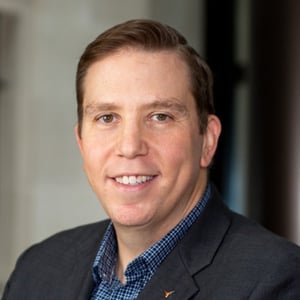
Agnes Williams Sesquicentennial Professor of Federal Courts, Georgetown Law
Stephen I. Vladeck is a professor of law at the Georgetown University Law Center, and is a nationally recognized expert on the federal courts; the Supreme Court; national security law; and military justice.
Vladeck is author of the New York Times bestselling book, “The Shadow Docket: How the Supreme Court Uses Stealth Rulings to Amass Power and Undermine the Republic,” which won the 2023 Writers’ League of Texas Book Award for Non-Fiction and was a finalist for the 2024 ABA Silver Gavel Award for Media and the Arts. Vladeck is also a highly regarded appellate advocate, having argued three cases before the U.S. Supreme Court and over a dozen before various lower federal civilian and military courts. He has received numerous awards for his influential and widely cited legal scholarship, his prolific popular writing, his teaching, and his service to the legal profession—including the 2024 University of Texas President’s Research Impact Award and his selection by the Order of the Coif to serve as its Distinguished Visiting Professor for 2025.
Vladeck is CNN’s Supreme Court analyst and editor and author of “One First,” a popular weekly newsletter about the Supreme Court. Together with Bobby Chesney, Vladeck co-hosts the popular and award-winning “National Security Law Podcast.” He is also a co-author of Aspen Publishers’ leading national security law and counterterrorism law casebooks. And he is a member of the Board of Trustees of EarthJustice—the nation’s premier nonprofit public interest environmental law organization.
Vladeck graduated from Yale Law School in 2004—where he was executive editor of the Yale Law Journal and won the Harlan Fiske Stone Prize for outstanding moot court oralist and shared the Potter Stewart Prize for best moot court team performance. After law school, he clerked for the Honorable Marsha S. Berzon on the U.S. Court of Appeals for the Ninth Circuit and the Honorable Rosemary Barkett on the U.S. Court of Appeals for the Eleventh Circuit. He earned a B.A. summa cum laude with Highest Distinction in History and Mathematics from Amherst College in 2001—where he wrote his senior thesis on “Leipzig’s Shadow: The War Crimes Trials of the First World War and Their Implications from Nuremberg to the Present.” A native New Yorker and hopeless Mets fan, Vladeck lives in the District with his wife, Karen (Founder and Managing Partner of Risepoint Search Partners); their daughters, Madeleine and Sydney; and their eleven-year-old pug, Roxanna.
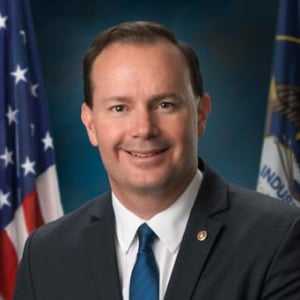
United States Senator, Utah
Elected in 2010 as Utah's 16th Senator, Mike Lee has spent his career defending the basic liberties of Americans and Utahns as a tireless advocate for our founding constitutional principles.
Senator Lee acquired a deep respect for the Constitution early on. His father, Rex Lee, who served as the Solicitor General under President Ronald Reagan, would often discuss varied aspects of judicial and constitutional doctrine around the kitchen table, from Due Process to the uses of Executive Plenary Power. He attended most of his father's arguments before the U.S. Supreme Court, giving him a unique, hands-on experience and understanding of government up close.
Lee graduated from Brigham Young University with a Bachelor of Science in Political Science, and served as BYU's Student Body President in his senior year. He graduated from BYU's Law School in 1997 and went on to serve as law clerk to Judge Dee Benson of the U.S. District Court for the District of Utah, and then with future Supreme Court Justice Judge Samuel A. Alito, Jr. on the U.S. Court of Appeals for the Third Circuit.
Lee spent several years as an attorney with the law firm Sidley & Austin specializing in appellate and Supreme Court litigation, and then served as an Assistant U.S. Attorney in Salt Lake City arguing cases before the U.S. Court of Appeals for the Tenth Circuit.
Lee served the state of Utah as Governor Jon Huntsman's General Counsel and was later honored to reunite with Justice Alito, now on the Supreme Court, for a one-year clerkship. He returned to private practice in 2007.
Throughout his career, Lee earned a reputation as an outstanding practitioner of the law based on his sound judgment, abilities in the courtroom, and thorough understanding of the Constitution.
Today, Lee fights to preserve America's proud founding document in the United States Senate. He advocates efforts to support constitutionally limited government, fiscal responsibility, individual liberty, and economic prosperity.
Lee is a member of the Judiciary Committee, and serves as Chairman of the Antitrust, Competition Policy and Consumer Rights Subcommittee protecting business competition and personal freedom.
He also oversees issues critical to Utah as the Chairman of the Water and Power Subcommittee of the Energy and Natural Resources Committee. He serves on the Commerce Committee and the Joint Economic Committee, as well.
In the 114th Congress, Lee also began his tenure as Chairman of the Senate Steering Committee, where he works with his Republican colleagues in the Senate to introduce bold and innovative solutions to issues facing the American people.
Lee and his wife Sharon live in Alpine, Utah, with their three children. He is a member of The Church of Jesus Christ of Latter-day Saints and served a two-year mission for the Church in the Texas Rio Grande Valley.
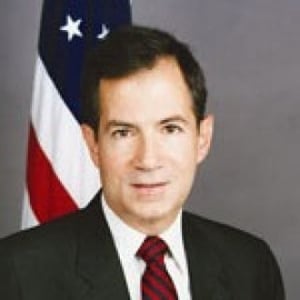
Former General Counsel of the U.S. Immigration and Naturalization, Former United States Ambassador to East Timor
Grover Joseph Rees, a native and resident of Louisiana, served as the first United States Ambassador to East Timor from 2002 to 2006.
From October 2006 until January 2009 Ambassador Rees served as Special Representative for Social Issues in the U.S. Department of State. He was responsible for promoting human dignity, including issues affecting vulnerable persons and the family, within the United Nations system. He served as Acting U.S. Representative to the United Nations Economic and Social Counsel during the fall 2007 session of the UN General Assembly and also served as Deputy Assistant Secretary for International Organizations.
From 1995 until 2002 Rees was a senior staff member on the Foreign Affairs Committee in the United States House of Representatives, where he was responsible for human rights and refugee protection and played a major role in the drafting and enactment of important human rights legislation including the Trafficking Victims Protection Act, the International Religious Freedom Act, and the Torture Victims Relief Act.
Ambassador Rees also formerly served as General Counsel of the United States Immigration and Naturalization Service (1991-93), as Chief Justice of the High Court of American Samoa (1986-1991), and as Special Counsel to the Attorney General of the United States (1985-86).
Prior to his work in Washington, Rees served for seven years as a law professor at the University of Texas. He has written and spoken widely on international law, human rights, refugees, and related issues.
Rees obtained his undergraduate degree from Yale University and his law degree from Louisiana State University Law School, where he served as Editor in Chief of the Louisiana Law Review and was selected for the academic honor society Order of the Coif.
Rees was born in New Orleans, the oldest of 12 children. He is married to Lan Dai Nguyen Rees and has one son. He retired from government service in January 2009 and now lives and works in Lafayette, Louisiana.
In addition to English, Ambassador Rees speaks French, Spanish, Portuguese, Samoan, and Tetum.
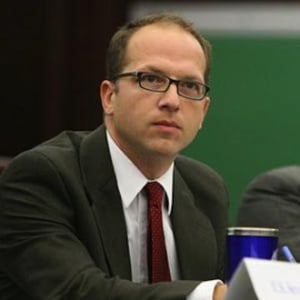
Roger Williams University School of Law
While serving as an associate at Shearman & Sterling in Washington, D.C., Professor Goldstein became one of the first civilian lawyers allowed into the Guantanamo Bay prison, in conjunction with his representation of several families of Kuwaiti detainees.
After resistance from the U.S. Government, the Supreme Court agreed to hear the case Rasul v. Bush. Professor Goldstein’s involvement with the Guantanamo cases included drafting district, appellate and Supreme Court briefs on behalf of the detainees. He continues his work with the detainees through his scholarship at RWU, and is a national expert on the applicability of habeas corpus to the Guantanamo Bay detainees. He has published numerous articles on the topic and penned an Op-ed reprinted in newspapers around the country.
Additionally, Professor Goldstein was a Bristow Fellow in the Office of the United States Solicitor General and served as an attorney for the Department of Justice, working in the appellate section of the Environment and Natural Resources division, where he drafted briefs on behalf of the United States in several Supreme Court cases. He received numerous awards while working at the Department of Justice including the Special Commendation for Outstanding Service and the National Oceanic and Atmospheric Administration General Counsel’s award.
Professor Goldstein teaches Constitutional Law and an array of Environmental Law courses. He regularly publishes in top law journals and because of his nationally recognized expertise, he has authored numerous briefs in the Supreme Court of the United States. Professor Goldstein is a graduate of Vassar and Michigan (J.D., magna cum laude).
Professor of Political Science, University of Pittsburgh
Chris W. Bonneau is Professor of Political Science at the University of Pittsburgh, where he has been since 2002. His research is primarily in the areas of judicial selection (specifically, judicial elections) and judicial decisionmaking. Professor Bonneau’s work has been supported by the National Science Foundation and he has published numerous articles, including in the American Journal of Political Science and Journal of Politics. He is also the coauthor of three books: Strategic Behavior and Policy Choice on the U.S. Supreme Court (2005), In Defense of Judicial Elections (2009), and the award-winning Voters’ Verdicts: Citizens, Campaigns, and Institutions in State Supreme Court Elections (2015).
Professor Bonneau teaches undergraduate classes in constitutional law, judicial politics, and research methods, as well as graduate classes in judicial politics and research design.
Professor of Law and Director, Center for the Middle East and International Law, George Mason University Antonin Scalia Law School
Professor of Law Eugene Kontorovich is one of the world’s preeminent experts on universal jurisdiction and maritime piracy, as well as international law and the Israel-Arab conflict. He is also the Director of Scalia Law School's Center for the Middle East and International Law. Professor Kontorovich joined the Scalia Law School from Northwestern University Pritzker School of Law where he was a Professor of Law from 2011 to 2018 and an Associate Professor from 2007 to 2011. Previously, he was a Visiting Professor at the University of Chicago from 2005 to 2007 and an Assistant Professor at George Mason School of Law from 2003 to 2007.
Professor Kontorovich has published over thirty major scholarly articles and book chapters in leading law reviews and peer-reviewed journals in the United States and Europe, including the American Journal of International Law, International Review of Law & Economics, Stanford Law Review, California Law Review, University of Pennsylvania Law Review, and Virginia Law Review. His scholarship has been cited in leading foreign relations and international law
His expertise is often sought out and quoted by major news organizations such the New York Times, Wall Street Journal, NPR News, The New Yorker, Los Angeles Times, and numerous television and radio programs. Prof. Kontorovich’s popular writings have appeared in the New York Times, Wall Street Journal, Los Angeles Times, POLITICO, Commentary, Haaretz, and numerous other leading publications. He is also a regular contributor to the Washington Post’s Volokh Conspiracy legal blog.
He attended the University of Chicago for college and law school. After law school, he clerked for Judge Richard Posner on the United States Court of Appeals for the Seventh Circuit. He has been honored with a fellowship at the Institute for Advanced Study in Princeton, in 2011-12, and with the Federalist Society’s prestigious Bator Award, given annually to a young scholar (under 40), for outstanding scholarship and teaching.

The National Popular Vote Plan
Federalism & Separation of Powers and Free Speech & Election Law Practice Groups Teleforum
TeleforumThe Keystone Pipeline
The Tea Party: Three Principles - Faculty Book Podcast
Elizabeth Price Foley, Jared Goldstein
This Federalist Society Faculty Book Podcast features Professor Elizabeth Price Foley’s new book, The Tea Party:...
The 2012 Election: What's Natural Law Got To Do About It?
Irvine, CaliforniaA Survey of Empirical Evidence Concerning Judicial Elections
Chris W. Bonneau
The election of state judges is a controversial topic. Consider, for example, this quote from...
Examination of the Legal Rationale for Targeting US Citizens
Few and Defined: Saving the Republic Through Constitutionally Limited Government
Does the Constitution Permit the Assassination of U.S. Citizens?
The Conservative Case for International Human Rights
Kiobel v. Royal Dutch Petroleum and Mohamad v. Rajoub - Post-Argument SCOTUScast
Eugene Kontorovich
On February 28, 2012 the Supreme Court heard oral argument in Kiobel v. Royal Dutch Petroleum and Mohamad...