
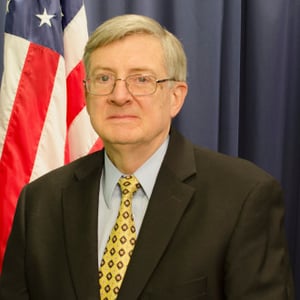
Senior Research Fellow, Mercatus Center, George Mason University; Former General Counsel at the Federal Trade Commission (FTC)
Alden Abbott is a Senior Research Fellow at the Mercatus Center. Prior to joining Mercatus, he served as the General Counsel of the Federal Trade Commission (FTC). As the Commission’s chief legal officer and adviser, he represented the agency in court and provides legal counsel to the Commission and its bureaus and offices.
Prior to rejoining the FTC in April 2018, Mr. Abbott served in executive positions at the Heritage Foundation (2014-2018) and BlackBerry (2012-2014). He also held a variety of senior positions in the U.S. federal government (in the FTC, the Commerce Department, and the Justice Department's Office of Legal Counsel and the Antitrust Division).
He speaks French, Spanish, and Italian.

Associate, Latham & Watkins LLP
Charlie Beller is an associate in the Washington, D.C. office of Latham & Watkins.
Mr. Beller represents companies in antitrust and competition matters, including merger clearance, antitrust litigation, government investigations, and corporate counseling.
He advises clients on a variety of antitrust issues, with specific experience in the defense, aviation, chemicals, and music and book publishing industries.
Mr. Beller maintains an active pro bono practice, providing tax-exempt counseling to non-profit institutions. He has also supported successful litigation to overturn state occupational licensing restrictions.
Mr. Beller serves as a Young Lawyer Representative on the American Bar Association (ABA) Antitrust Section’s Pricing Conduct Committee, and as a co-editor of the Section’s forthcoming Price Discrimination Handbook. He authored updates to the Air Transportation chapter of Antitrust Law Developments.
Mr. Beller was previously a management consultant in Germany supporting companies with pricing strategy.

Vice President and Director of Legal Advocacy, American Antitrust Institute
Kathleen Bradish has been an antitrust lawyer, in both private practice and government, for almost 20 years. She has extensive experience with conduct cases and mergers, with particular experience in the healthcare and pharmaceutical sectors, and in international competition matters. Ms. Bradish joined the law firm of Cleary Gottlieb after law school and was appointed counsel in 2014. From mid-2015 to late 2018, Ms. Bradish was Assistant Chief and International Counsel at the U.S. Department of Justice (DOJ), Antitrust Division.
At DOJ, Ms. Bradish served as deputy chief handling the Antitrust Division’s international relations, representing the Division’s views on antitrust enforcement abroad. She advised case teams on issues affecting cooperation with foreign antitrust enforcers and provided guidance to leadership on competition issues arising abroad and affecting the United States. Ms. Bradish also represented the Antitrust Division in trade issues, including leading the negotiations of competition chapters in the U.S.-Mexico-Canada Agreement and in the Transatlantic Trade and Investment Partnership. Ms. Bradish returned to Cleary Gottlieb as Counsel in 2018.
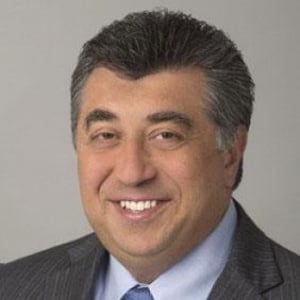
Counsel, Cadwalader, Wickersham & Taft LLP; Senior Competition Counsel, TechFreedom
Bilal Sayyed represents clients before the Federal Trade Commission (FTC) and Department of Justice (DOJ) in significant merger, civil and criminal antitrust matters. A significant portion of his practice involves representing investment funds on antitrust and Hart-Scott-Rodino (HSR) Act compliance matters; he has also provided expert witness services related to HSR compliance. Bilal also counsels clients before the FTC in consumer protection and privacy investigations. He maintains an active amicus and appellate brief writing practice in antitrust litigation and antitrust merger matters.
Prior to joining Cadwalader, Bilal was the Director of the FTC’s Office of Policy Planning (OPP) (2018-2021). In that role, he provided legal and policy advice to the Chairman and Commissioners on antitrust and consumer protection matters and worked closely with the senior and career leadership of the FTC’s Bureaus of Competition, Consumer Protection, and Economics. Bilal previously served as an Attorney Advisor to FTC Chairman Timothy J. Muris from 2001 to 2004. In that role, Bilal advised the Chairman on matters involving a wide spectrum of industries, including chemical and mining, petroleum and natural gas, health care and pharmaceutical, defense and transportation, gaming, various consumer products and retail operations, and professional associations and standard-setting organizations.
Bilal has taught antitrust and competition law at the George Mason University School of Law since 2011.
Bilal received his B.A. from Case Western Reserve University, and a J.D. from George Mason University School of Law. He is admitted to practice in the District of Columbia and the State of New York, as well as before the U.S. District Courts for the District of Colorado and the District of Columbia, the U.S. Court of Appeals for the District of Columbia Circuit, the Fifth Circuit, the Ninth Circuit, and the U.S. Supreme Court.
Bilal is the host of Rethinking Antitrust, a podcast published by TechFreedom that examines the economics, institutions, law, legislation, and policy goals of antitrust enforcement.

Will Skillman Fellow in Education, Center for Education Policy, The Heritage Foundation
Jonathan Butcher is the Will Skillman Fellow in Education at The Heritage Foundation. He is the author of Splintered: Critical Race Theory and the Progressive War on Truth (Bombardier Books, April 2022). He co-edited and wrote chapters in The Critical Classroom (The Heritage Foundation, 2022), discussing the racial prejudice that comes from the application of critical race theory in K-12 schools. In 2021, South Carolina Gov. Henry McMaster nominated Jonathan to serve on the board of the South Carolina Public Charter School District, a statewide charter school authorizer. He has researched and testified on education policy around the U.S.
Jonathan co-edited and wrote chapters in the book The Not-So-Great Society, which provides conservative solutions to the problems created by the ever-expanding federal footprint in preschool, K-12, and higher education.
In 2018 the Federal Commission on School Safety cited comments from his testimony in the commission’s final report. He has appeared on local and national TV outlets, including C-SPAN, Fox News, and HBO’s Vice News Tonight, and he has been a guest on many radio programs. His commentary has appeared nationally in places such as the Wall Street Journal, Education Week, National Review Online, Newsweek.com, and Forbes.com, along with newspapers around the country.
In 2017 he was a co-recipient of the State Policy Network’s Bob Williams Award for Most Influential Research for a proposal to protect free speech on campus, alongside Stanley Kurtz of the Ethics and Public Policy Center and Jim Manley of the Goldwater Institute.
Jonathan previously served as the education director at the Goldwater Institute, where he remains a senior fellow. He was a member of the Arizona Department of Education’s first Steering Committee for Empowerment Scholarship Accounts, the nation’s first education savings account program. He is also a Senior Fellow with The Beacon Center of Tennessee, a nonpartisan research organization, and a contributing scholar for the Georgia Center for Opportunity.
Prior to joining Goldwater, Jonathan was the director of accountability for the South Carolina Public Charter School District. Jonathan previously studied education policy at the Department of Education Reform at the University of Arkansas and worked with the School Choice Demonstration Project, the research team that evaluated voucher programs in Washington, D.C. and Milwaukee, Wisc.
Jonathan holds a B.A. in English from Furman University and an M.A. in economics from the University of Arkansas.
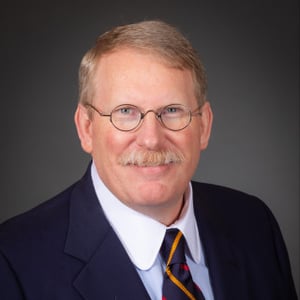
Co-Founder and President, Defense of Freedom Institute
Bob is a co-founder and President of DFI. He previously served as Senior Counselor to the Secretary of Education from 2017 through 2020 and Deputy General Counsel of the U.S. Department of Education from 2005 until 2009.
During his most recent tenure at the Department, Bob served on the Secretary’s Leadership Team as a strategic and legal adviser on higher education, civil rights, and congressional oversight matters. As the Department’s Regulatory Reform Officer, he also supervised the implementation of the Secretary’s regulatory agenda and was an architect of the Secretary’s reforms concerning Title IX and the Higher Education Act. As Deputy General Counsel, Bob advised on a wide variety of regulatory, legislative, and oversight matters.
Prior to joining the Department in 2017, Bob was vice president for regulatory compliance matters for several postsecondary institutions and practiced education and employment law in Washington, D.C. Before coming to the Department in 2005, he practiced law in New Orleans, litigating commercial, employment, and bankruptcy cases in Louisiana, Texas, and Mississippi.
Bob earned his A.B. in History from Georgetown University, studied British government and international politics at the London School of Economics and Political Science, and received his law degree from Tulane University Law School. His articles have been published by National Review, Real Clear Education, Washington Examiner, and other media outlets. Fox News has featured his work.
Bob is a member of the District of Columbia and Louisiana Bars and the Federalist Society for Law and Public Policy Studies.
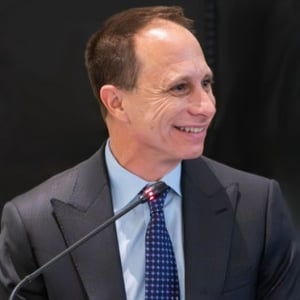
President, Thomas B. Fordham Institute
Michael J. Petrilli is president of the Thomas B. Fordham Institute, research fellow at Stanford University’s Hoover Institution, executive editor of Education Next, editor in chief of the Education Gadfly Weekly, host of the Education Gadfly Show podcast, and a contributor at Forbes.com. An award-winning writer, he is the author of The Diverse Schools Dilemma, editor of Education for Upward Mobility, and co-editor of How to Educate an American and Follow the Science to School. An expert on charter schools, school accountability, evidence-based practices, and trends in test scores and other student outcomes, Petrilli has published opinion pieces in the New York Times, Washington Post, Wall Street Journal, Bloomberg, and Slate, and appears frequently on television and radio. Petrilli helped to create the U.S. Department of Education’s Office of Innovation and Improvement and the Policy Innovators in Education Network, and serves on the board of the Association of American Educators Foundation. He lives with his family in Bethesda, Maryland.

Director of Research, National Association of Scholars
David Randall is director of research at the National Association of Scholars (NAS). He has co-authored The Irreproducibility Crisis of Modern Science: Causes, Consequences, and the Road to Reform (2018), as well as articles on the irreproducibility crisis for The Wall Street Journal and The Hill. He has also written reports for the NAS on civics education, social justice education, college common readings, and the College Board’s Advanced Placement European History examination. His academic works include The Concept of Conversation: From Cicero’s Sermo to the Grand Siècle’s Conversation (2018) and The Conversational Enlightenment: The Reconception of Rhetoric in Eighteenth-Century Thought (2019).
David earned a Ph.D. in history from Rutgers University, an M.F.A. in fiction writing from Columbia University, a master’s degree in library science from the Palmer School at Long Island University, and a B.A. from Swarthmore College. Prior to working at NAS he was the sole librarian at the John McEnroe Library at New York Studio School, where he secured a number of grants for the school’s Lecture Series Archive Digitization Project.
Investigative Counsel, U.S. House Committee on Education and the Workforce
Kent Talbert is a Washington, DC-based attorney with over 25 years’ experience in providing advice on education law and policy in Congress, the U.S. Department of Education, and the private sector. His practice includes legal and policy advice to colleges and universities, for-profit schools, accrediting agencies, the pre-K-12 sector, charter school organizations, trade associations, and education-focused companies, as well as service as an expert witness. He currently serves as Investigative Counsel, U.S. House Committee on Education and the Workforce.
Prior to establishing his firm, Mr. Talbert practiced at Talbert & Eitel, PLLC from 2010-2012. From 2006-2009 he served as General Counsel of the U.S. Department of Education, advising the Secretary of Education on a broad range of legal and policy matters, including the reauthorization of the Higher Education Act of 1965, the drafting and implementation of regulations under the No Child Left Behind Act of 2001, and major education law cases pending before the Supreme Court of the United States and other appellate and trial courts. During his tenure as General Counsel, Mr. Talbert served as the Chief Regulatory Officer for the Department, overseeing all documents for publication in the Federal Register.
He has provided legal and strategic advice on the No Child Left Behind Act of 2001, the Higher Education Opportunity Act of 2008, the Ensuring Continued Access to Student Loans Act of 2008, the Freedom of Information Act (FOIA), the Family Educational Rights and Privacy Act (FERPA), the Rehabilitation Act of 1973, the Americans With Disabilities Act, Title IX of the Education Amendments of 1972, the Jeanne Clery Disclosure of Campus Security Policy and Campus Crime Statistics Act ("Clery Act"), Federal Student Aid program reviews, negotiated rulemaking, and accreditation.
Prior to his service as General Counsel, Mr. Talbert served as the Department's Deputy General Counsel for Departmental and Legislative Service from 2001-2006. Earlier in his career, Mr. Talbert served for over 12 years on House and Senate staff, both as Education Policy Counsel for the Committee on Education and the Workforce in the U.S. House of Representatives, and as a professional staff member of the Committee on Labor and Human Resources (now Committee on Health, Education, Labor, and Pensions) in the U.S. Senate.
Mr. Talbert is a member of the Bars of the District of Columbia and South Carolina, the Alliance of Public Charter School Attorneys, and the National Association of College and University Attorneys where he serves on the Committee on Legal Education. He is admitted to practice before the United States Supreme Court, the United States Court of Federal Claims, the United States Court of Appeals for the District of Columbia Circuit, the United States Court of Appeals for the Fourth Circuit, and all federal courts in South Carolina and Washington, DC.

Partner, Boyden Gray PLLC
Trent McCotter is a partner with Boyden Gray PLLC. He previously served as Deputy Associate Attorney General of the United States and as an Assistant U.S. Attorney.
Mr. McCotter maintains an extensive appellate practice. He has considerable experience identifying and briefing cases that draw the Supreme Court’s attention, having persuaded the Court to grant certiorari in numerous cases raising issues of sovereignty, constitutional rights, due process, and criminal law. He has authored and submitted over 60 briefs at the Court.
He has also personally argued more than fifteen federal appeals across the Second, Fourth, Fifth, Sixth, Ninth, Eleventh, Federal, and D.C. Circuits—including once arguing three separate appeals in just four days. He has also twice argued before the 17-judge en banc Fifth Circuit. He has been counsel in over 50 other appeals raising matters from FOIA and the APA to constitutional rights and statutory construction.
As Deputy Associate Attorney General, Mr. McCotter oversaw DOJ’s Civil Appellate and Federal Programs branches, which are responsible for defending nearly all major litigation against the federal government. During his three years as a federal trial attorney in the Eastern District of Virginia’s “Rocket Docket,” Mr. McCotter won the Attorney General’s Award for Distinguished Service.
During his DOJ tenures, Mr. McCotter also assisted with the confirmations of two Supreme Court justices and over a dozen lower-court judges.
Mr. McCotter served as an inaugural clerk to the Hon. Steven J. Menashi on the U.S. Court of Appeals for the Second Circuit and also clerked for the Hon. R. Lanier Anderson III on the U.S. Court of Appeals for the Eleventh Circuit.
Partner, Boyden Gray PLLC
Trent McCotter is a partner with Boyden Gray PLLC. He previously served as Deputy Associate Attorney General of the United States and as an Assistant U.S. Attorney.
Mr. McCotter maintains an extensive appellate practice. He has considerable experience identifying and briefing cases that draw the Supreme Court’s attention, having persuaded the Court to grant certiorari in numerous cases raising issues of sovereignty, constitutional rights, due process, and criminal law. He has authored and submitted over 60 briefs at the Court.
He has also personally argued more than fifteen federal appeals across the Second, Fourth, Fifth, Sixth, Ninth, Eleventh, Federal, and D.C. Circuits—including once arguing three separate appeals in just four days. He has also twice argued before the 17-judge en banc Fifth Circuit. He has been counsel in over 50 other appeals raising matters from FOIA and the APA to constitutional rights and statutory construction.
As Deputy Associate Attorney General, Mr. McCotter oversaw DOJ’s Civil Appellate and Federal Programs branches, which are responsible for defending nearly all major litigation against the federal government. During his three years as a federal trial attorney in the Eastern District of Virginia’s “Rocket Docket,” Mr. McCotter won the Attorney General’s Award for Distinguished Service.
During his DOJ tenures, Mr. McCotter also assisted with the confirmations of two Supreme Court justices and over a dozen lower-court judges.
Mr. McCotter served as an inaugural clerk to the Hon. Steven J. Menashi on the U.S. Court of Appeals for the Second Circuit and also clerked for the Hon. R. Lanier Anderson III on the U.S. Court of Appeals for the Eleventh Circuit.
Will Skillman Fellow in Education, Center for Education Policy, The Heritage Foundation
Jonathan Butcher is the Will Skillman Fellow in Education at The Heritage Foundation. He is the author of Splintered: Critical Race Theory and the Progressive War on Truth (Bombardier Books, April 2022). He co-edited and wrote chapters in The Critical Classroom (The Heritage Foundation, 2022), discussing the racial prejudice that comes from the application of critical race theory in K-12 schools. In 2021, South Carolina Gov. Henry McMaster nominated Jonathan to serve on the board of the South Carolina Public Charter School District, a statewide charter school authorizer. He has researched and testified on education policy around the U.S.
Jonathan co-edited and wrote chapters in the book The Not-So-Great Society, which provides conservative solutions to the problems created by the ever-expanding federal footprint in preschool, K-12, and higher education.
In 2018 the Federal Commission on School Safety cited comments from his testimony in the commission’s final report. He has appeared on local and national TV outlets, including C-SPAN, Fox News, and HBO’s Vice News Tonight, and he has been a guest on many radio programs. His commentary has appeared nationally in places such as the Wall Street Journal, Education Week, National Review Online, Newsweek.com, and Forbes.com, along with newspapers around the country.
In 2017 he was a co-recipient of the State Policy Network’s Bob Williams Award for Most Influential Research for a proposal to protect free speech on campus, alongside Stanley Kurtz of the Ethics and Public Policy Center and Jim Manley of the Goldwater Institute.
Jonathan previously served as the education director at the Goldwater Institute, where he remains a senior fellow. He was a member of the Arizona Department of Education’s first Steering Committee for Empowerment Scholarship Accounts, the nation’s first education savings account program. He is also a Senior Fellow with The Beacon Center of Tennessee, a nonpartisan research organization, and a contributing scholar for the Georgia Center for Opportunity.
Prior to joining Goldwater, Jonathan was the director of accountability for the South Carolina Public Charter School District. Jonathan previously studied education policy at the Department of Education Reform at the University of Arkansas and worked with the School Choice Demonstration Project, the research team that evaluated voucher programs in Washington, D.C. and Milwaukee, Wisc.
Jonathan holds a B.A. in English from Furman University and an M.A. in economics from the University of Arkansas.
Co-Founder and President, Defense of Freedom Institute
Bob is a co-founder and President of DFI. He previously served as Senior Counselor to the Secretary of Education from 2017 through 2020 and Deputy General Counsel of the U.S. Department of Education from 2005 until 2009.
During his most recent tenure at the Department, Bob served on the Secretary’s Leadership Team as a strategic and legal adviser on higher education, civil rights, and congressional oversight matters. As the Department’s Regulatory Reform Officer, he also supervised the implementation of the Secretary’s regulatory agenda and was an architect of the Secretary’s reforms concerning Title IX and the Higher Education Act. As Deputy General Counsel, Bob advised on a wide variety of regulatory, legislative, and oversight matters.
Prior to joining the Department in 2017, Bob was vice president for regulatory compliance matters for several postsecondary institutions and practiced education and employment law in Washington, D.C. Before coming to the Department in 2005, he practiced law in New Orleans, litigating commercial, employment, and bankruptcy cases in Louisiana, Texas, and Mississippi.
Bob earned his A.B. in History from Georgetown University, studied British government and international politics at the London School of Economics and Political Science, and received his law degree from Tulane University Law School. His articles have been published by National Review, Real Clear Education, Washington Examiner, and other media outlets. Fox News has featured his work.
Bob is a member of the District of Columbia and Louisiana Bars and the Federalist Society for Law and Public Policy Studies.
President, Thomas B. Fordham Institute
Michael J. Petrilli is president of the Thomas B. Fordham Institute, research fellow at Stanford University’s Hoover Institution, executive editor of Education Next, editor in chief of the Education Gadfly Weekly, host of the Education Gadfly Show podcast, and a contributor at Forbes.com. An award-winning writer, he is the author of The Diverse Schools Dilemma, editor of Education for Upward Mobility, and co-editor of How to Educate an American and Follow the Science to School. An expert on charter schools, school accountability, evidence-based practices, and trends in test scores and other student outcomes, Petrilli has published opinion pieces in the New York Times, Washington Post, Wall Street Journal, Bloomberg, and Slate, and appears frequently on television and radio. Petrilli helped to create the U.S. Department of Education’s Office of Innovation and Improvement and the Policy Innovators in Education Network, and serves on the board of the Association of American Educators Foundation. He lives with his family in Bethesda, Maryland.
Director of Research, National Association of Scholars
David Randall is director of research at the National Association of Scholars (NAS). He has co-authored The Irreproducibility Crisis of Modern Science: Causes, Consequences, and the Road to Reform (2018), as well as articles on the irreproducibility crisis for The Wall Street Journal and The Hill. He has also written reports for the NAS on civics education, social justice education, college common readings, and the College Board’s Advanced Placement European History examination. His academic works include The Concept of Conversation: From Cicero’s Sermo to the Grand Siècle’s Conversation (2018) and The Conversational Enlightenment: The Reconception of Rhetoric in Eighteenth-Century Thought (2019).
David earned a Ph.D. in history from Rutgers University, an M.F.A. in fiction writing from Columbia University, a master’s degree in library science from the Palmer School at Long Island University, and a B.A. from Swarthmore College. Prior to working at NAS he was the sole librarian at the John McEnroe Library at New York Studio School, where he secured a number of grants for the school’s Lecture Series Archive Digitization Project.
Investigative Counsel, U.S. House Committee on Education and the Workforce
Kent Talbert is a Washington, DC-based attorney with over 25 years’ experience in providing advice on education law and policy in Congress, the U.S. Department of Education, and the private sector. His practice includes legal and policy advice to colleges and universities, for-profit schools, accrediting agencies, the pre-K-12 sector, charter school organizations, trade associations, and education-focused companies, as well as service as an expert witness. He currently serves as Investigative Counsel, U.S. House Committee on Education and the Workforce.
Prior to establishing his firm, Mr. Talbert practiced at Talbert & Eitel, PLLC from 2010-2012. From 2006-2009 he served as General Counsel of the U.S. Department of Education, advising the Secretary of Education on a broad range of legal and policy matters, including the reauthorization of the Higher Education Act of 1965, the drafting and implementation of regulations under the No Child Left Behind Act of 2001, and major education law cases pending before the Supreme Court of the United States and other appellate and trial courts. During his tenure as General Counsel, Mr. Talbert served as the Chief Regulatory Officer for the Department, overseeing all documents for publication in the Federal Register.
He has provided legal and strategic advice on the No Child Left Behind Act of 2001, the Higher Education Opportunity Act of 2008, the Ensuring Continued Access to Student Loans Act of 2008, the Freedom of Information Act (FOIA), the Family Educational Rights and Privacy Act (FERPA), the Rehabilitation Act of 1973, the Americans With Disabilities Act, Title IX of the Education Amendments of 1972, the Jeanne Clery Disclosure of Campus Security Policy and Campus Crime Statistics Act ("Clery Act"), Federal Student Aid program reviews, negotiated rulemaking, and accreditation.
Prior to his service as General Counsel, Mr. Talbert served as the Department's Deputy General Counsel for Departmental and Legislative Service from 2001-2006. Earlier in his career, Mr. Talbert served for over 12 years on House and Senate staff, both as Education Policy Counsel for the Committee on Education and the Workforce in the U.S. House of Representatives, and as a professional staff member of the Committee on Labor and Human Resources (now Committee on Health, Education, Labor, and Pensions) in the U.S. Senate.
Mr. Talbert is a member of the Bars of the District of Columbia and South Carolina, the Alliance of Public Charter School Attorneys, and the National Association of College and University Attorneys where he serves on the Committee on Legal Education. He is admitted to practice before the United States Supreme Court, the United States Court of Federal Claims, the United States Court of Appeals for the District of Columbia Circuit, the United States Court of Appeals for the Fourth Circuit, and all federal courts in South Carolina and Washington, DC.

Reducing Regulatory Barriers: The Future of Market Competition
On April 9th, President Trump signed E.O. 14267, Reducing Anti-Competitive Regulatory Barriers, which “commences the...
Reducing Regulatory Barriers: The Future of Market Competition
Alden F. Abbott, Charlie Beller, Kathleen W. Bradish, Bilal Sayyed
On April 9th, President Trump signed E.O. 14267, Reducing Anti-Competitive Regulatory Barriers, which “commences the process...
Lunch and Keynote Address
2025 National Security Symposium
Washington, DCThe Nondelegation Doctrine’s Next Good Year? SCOTUS Hears Oral Arguments in FCC v. Consumers’ Research
Triangle Lawyers Chapter
Raleigh, NC[POSTPONED] 2025 National Security Symposium
The China Challenge: U.S. National Security Policy in the 21st Century
Washington, DCTopics
Clean Water Act Clarity: Will the Supreme Court Grant Cert in Port of Tacoma v. Puget Soundkeeper Alliance?
On May 27, 2025, the United States filed an amicus brief in a case testing...
The Nondelegation Doctrine’s Next Good Year? SCOTUS Hears Oral Arguments in FCC v. Consumers’ Research
Triad Lawyers Chapter
Winston-Salem, NCCan the President Shut Down the Department of Education?
Jonathan Butcher, Robert S. Eitel, Michael J. Petrilli, David Randall, Kent D. Talbert
On March 20, President Trump signed E.O. 14242, Improving Education Outcomes by Empowering Parents, States, and Communities,...
Can the President Shut Down the Department of Education?
A Regulatory Transparency Project Webinar
Topics
In Ames v. Ohio Youth Services, the Supreme Court Follows the Text and Rejects Discrimination
On June 5, the Supreme Court issued a unanimous decision in Ames v. Ohio Department...