
*Mr. Callen is an attorney who practice in Kansas City, Mo.

Vice President, Edwin Meese III Institute for the Rule of Law, Advancing American Freedom
John G. Malcolm oversees Advancing American Freedom’s work to increase understanding of the Constitution and the rule of law as Vice President of the organization’s Edwin Meese III Institute for the Rule of Law. Malcolm brings to the challenge a wealth of legal expertise and experience in both the public and private sectors.
Prior to joining Advancing American Freedom in 2025, Malcolm was the Vice President of the Institute for Constitutional Government and the Director of the Meese Center for Legal and Judicial Studies at the Heritage Foundation. Prior to joining Heritage in 2012, Malcolm was general counsel at the U.S. Commission on International Religious Freedom, as well as a distinguished practitioner in residence at Pepperdine Law School. From 2004 to 2009, Malcolm was executive vice president and director of worldwide anti-piracy operations for the Motion Picture Association.
Malcolm served as a deputy assistant attorney general in the Department of Justice’s Criminal Division from 2001 to 2004, where he oversaw sections on computer crime and intellectual property, domestic security, child exploitation and obscenity, and special investigations. Immediately prior to that, he was a founding partner in the Atlanta law firm of Malcolm & Schroeder, LLP.
From 1990 to 1997, Malcolm was an assistant U.S. attorney in Atlanta, assigned to the fraud and public corruption section, and also an associate independent counsel, investigating fraud and abuse in the Department of Housing and Urban Development. He was honored with the Director’s Award for Superior Performance for his work in connection with the successful prosecution of Walter Leroy Moody Jr., who assassinated an 11th Circuit judge and the head of the Savannah chapter of the NAACP.
A graduate of Harvard Law School and Columbia College, Malcolm began his career as a law clerk to a federal district court judge and a federal appellate court judge, and as an associate at the Atlanta-based law firm of Sutherland, Asbill & Brennan (new Eversheds Sutherland).
Malcolm, who resides in Washington, D.C., serves on the Board of Trustees of the Washington National Opera and is a Senate-confirmed member of the Board of Directors of the Legal Services Corporation, the largest funder of civil legal aid in the United States.
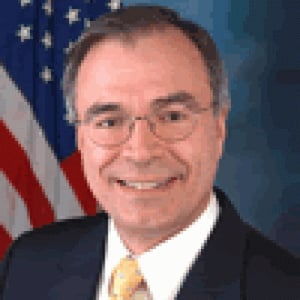
United States House of Representatives, Maryland
The son of immigrants who fled communist Eastern Europe immediately after World War II, Andrew P. Harris, M.D., has spent a lifetime serving his neighbors, country and community. Whether it was as a physician at the prestigious Johns Hopkins Hospital, as a medical officer in the Naval Reserve, as a hard-working state senator, or now as congressman, Andy has made a life by serving others. He is dedicated to making sure every constituent in the 1st Congressional District receives the highest-quality assistance and is well-represented in the halls of Congress.
Serving his neighbors. Andy is a proud father of five children (Joe, Becky, Irene, Jessica and Danny), grandfather of two (Charles, Abigail), and husband to Cookie for over 33 years. Born in working-class Brooklyn in 1957, Andy grew up one of four boys.. He found his calling studying medicine at the Johns Hopkins Hospital in Baltimore, where he continued to practice as an anesthesiologist for over three decades. Obstetric anesthesiology was his subspecialty, and over those years has helped thousands of women through their labor and delivery. For many years, his peers chose him to be named as one of the nation’s “Best Doctors” in his specialty. Recently, Andy still practices at Memorial Hospital in Easton, Maryland.
Serving his country. Answering a recruitment call to fill a critical need for anesthesiologists in the Naval Reserve during the Reagan Administration, Andy volunteered to serve in the military as a medical specialist. He went on to establish and command the Johns Hopkins Medical Naval ReserveUnit. In 1990, his unit was called up to active duty in order to assist with Operation Desert Shield (and later Operation Desert Storm). They took care of active duty military, veterans, and POWs at Bethesda Naval Hospital. Harris reached the rank of Commander (O-5).
Serving his community. Unhappy with the status quo in Annapolis, Harris, a political neophyte, decided to take on the establishment and make a run for the Maryland State Senate in 1998. After winning by an impressive margin, Andy continued to serve as a physician – epitomizing our Founding Fathers' belief in a part-time, citizen legislature. His innovative thinking, devotion to efficient government and dedication to his constituents earned him the “Hero of the Taxpayer” award from the Maryland Taxpayers Association in 2008.
Andy began serving as the Congressman from the beautiful 1st Congressional District of Maryland in 2011. He serves on the Committee on Appropriations and on the following subcommittees: Commerce, Justice, Science, and Related Agencies; Labor, Health and Human Services, Education, and Related Agencies; and Legislative Branch. In his free time, he enjoys spending time on the Chesapeake Bay with his family, and repairing old cars with his sons.
Prof. Jill Levenson is a licensed clinical social worker with more than 20 years experience in the human service field. She began her career as a child protection social worker in Baltimore and has worked in a variety of social service agencies over the years. In addition to teaching at Lynn, she maintains a small psychotherapy practice.
Levenson is also a nationally recognized expert in sexual violence and is frequently quoted in the media. She has testified in front of the Florida, Kansas, Vermont and New Mexico Legislatures and has contributed to an Amicus Brief submitted to the U.S. Supreme Court in the 2002 case of CT v. Doe, which addressed the constitutionality of Megan's Law. Levenson is actively engaged in several research projects funded by the National Institute of Justice, and serves on the editorial board of “Sexual Abuse: Journal of Research and Treatment.”
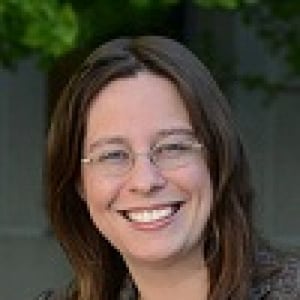
Professor of Law, Indiana University Robert H. McKinney School of Law
Margaret Ryznar is an Associate Professor of Law at Indiana University Robert H. McKinney School of Law. She teaches and researches in the areas of family law, tax, trusts & estates, property, and juvenile law. Her scholarship focuses on the rights of family members under federal and state law, with particular emphasis on how family members hold and transfer property among themselves. Professor Ryznar edits the Family Law Prof Blog and has published over twenty law journal articles. Her work has been featured in the media and cited in law journals and judicial materials.
Prior to joining the faculty in 2012, Professor Ryznar served as a law clerk to the Honorable Myron H. Bright of the United States Court of Appeals for the Eighth Circuit and practiced law with Cadwalader, Wickersham & Taft LLP in Washington, DC.
Professor Ryznar is a graduate of Notre Dame Law School, where she served as a Note Editor of the Notre Dame Law Review, competed in the Philip C. Jessup International Law Moot Court, and received the Bainbridge Fellowship for the Study of International and Comparative Law. She holds a master’s degree in European Studies from Jagiellonian University and a bachelor’s degree from the University of Chicago with majors in Economics; English Language & Literature; Political Science; and Law, Letters, & Society.
Lecturer in Law, Michigan State University College of Law
Professor Pucillo comes to Michigan State University College of Law from the University of North Carolina School of Law, where he taught Civil Procedure and Constitutional Law as a visiting professor during the 2009-10 academic year. He spent the previous academic year teaching Administrative Law, Constitutional Law, Constitutional Litigation, and Federal Courts at Tulane University Law School. Prior to those appointments, he served on the faculty of Ave Maria School of Law in Ann Arbor, Michigan, where he was awarded tenure.
Before he began teaching law, Professor Pucillo practiced as a litigation associate in the Washington, D.C., office of Skadden, Arps, Slate, Meagher & Flom. He also completed several judicial clerkships, including one with Judge Ronald Lee Gilman of the U.S. Court of Appeals for the Sixth Circuit.
Professor Pucillo's primary area of scholarly interest is federal jurisdiction and procedure, especially in the appellate realm. His most recent publications have appeared in the Tulane Law Review, the Rutgers Law Review, and the Oklahoma Law Review.
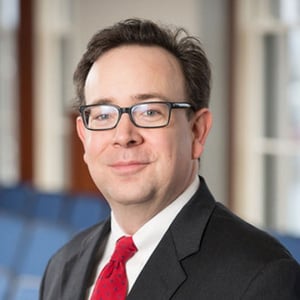
Professor of Law, Oklahoma City University School of Law
Professor O’Shea is a nationally recognized expert on firearms law and the Second Amendment. He is a co-author of the first law school casebook on the subject, Firearms Law and the Second Amendment: Regulation, Rights, and Policy, published in 2012. He serves as the Associate Director of OCU Law’s Center for State Constitutional Law and Government.
Professor O’Shea is an honors graduate of Harvard College and Harvard Law School. He also holds a master’s degree in philosophy from the University of Pittsburgh. Before coming to Oklahoma City University School of Law in 2006, he practiced commercial litigation in Chicago and in his hometown of Kansas City, Missouri. He also served as a law clerk to Chief Judge Danny J. Boggs of the U.S. Court of Appeals for the Sixth Circuit and to Judge John R. Gibson of the U.S. Court of Appeals for the Eighth Circuit.
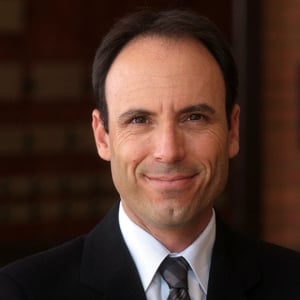
Professor of Law, UCLA School of Law
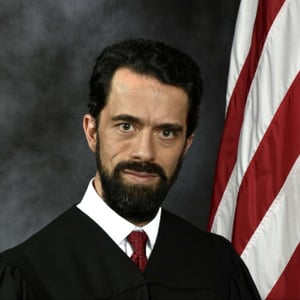
Judge, United States Court of Appeals, Third Circuit
Stephanos Bibas is a judge on the U.S. Court of Appeals for the Third Circuit. Judge Bibas was previously a professor of law and criminology at the University of Pennsylvania Law School. As director of the Penn Law Supreme Court Clinic, he argued six cases before the Supreme Court of the United States and filed briefs in dozens of others. He graduated summa cum laude and Phi Beta Kappa from Columbia University in 1989 with a B.A. in political theory and from Oxford University in 1991 with a B.A. in jurisprudence. He then earned his J.D. from Yale Law School in 1994.
After graduating from Yale Law, Judge Bibas clerked for Judge Patrick Higginbotham of the U.S. Court of Appeals for the Fifth Circuit and Justice Anthony Kennedy on the Supreme Court and was a litigation associate at Covington & Burling LLP in Washington, D.C. Thereafter, Judge Bibas served as an Assistant U.S. Attorney in the Southern District of New York, where he successfully prosecuted the world’s leading expert in Tiffany stained glass for hiring a grave robber to steal priceless Tiffany windows from cemeteries. Before his tenure at Penn Law, Judge Bibas taught at the University of Chicago Law School and the University of Iowa College of Law and was a research fellow at Yale Law School. He has published two books and seventy scholarly articles.

Partner, Steptoe & Johnson LLP
Stewart Baker is a partner in the law firm of Steptoe & Johnson in Washington, D.C. From 2005 to 2009, he was the first Assistant Secretary for Policy at the Department of Homeland Security. His law practice covers cybersecurity, data protection, homeland security, and travel and foreign investment regulation; he has been awarded one patent.
Mr. Baker has been General Counsel of the National Security Agency and General Counsel of the commission that investigated WMD intelligence failures prior to the Iraq war. He is the author of Skating on Stilts, a book on terrorism, cybersecurity, and other technology issues; he also hosts the weekly Cyberlaw Podcast.
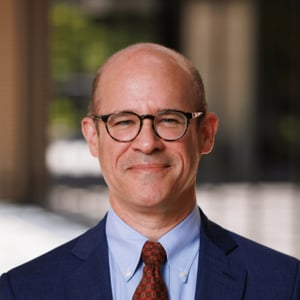
Professor of Law, Stanford Law School
Orin S. Kerr is a Professor of Law at Stanford Law School, where he teaches and writes in the areas of criminal procedure and computer crime law. Kerr earned mechanical engineering degrees from Princeton University and Stanford University before graduating with a J.D. from Harvard Law School. He is a former law clerk to Justice Anthony M. Kennedy at the United States Supreme Court and Judge Leonard I. Garth of the U.S. Court of Appeals for the Third Circuit.
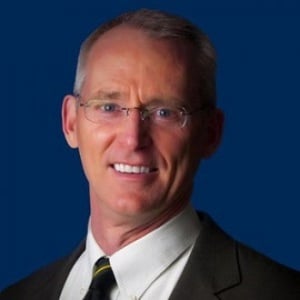
Executive Director, republicEn, Energy and Enterprise Initiative at George Mason
Professor of Law, UCLA School of Law
Sander has been working on questions of social and economic inequality for nearly all of his career. He was born in Washington, D.C., but spent most of his childhood in small towns in northwest Indiana. After earning a B.A. in Social Studies at Harvard, Sander in 1978 joined the federal Vista program and worked for a small neighborhood housing group on Chicago's south side. While organizing tenant unions and building receiverships, he was deeply impressed with the work of the South Shore Bank, an experimental, community-development bank owned by churches and foundations. Sander secured funding from three federal agencies and, with the Woodstock Institute, completed the first detailed study of the bank. South Shore Bank was widely imitated as an instrument for community revitalization in other urban areas over the next two decades.
Sander attended graduate school at Northwestern University from 1983 to 1988, earning degrees in law (J.D., 1988) and economics (M.A. 1985, Ph.D., 1990). In his law review comment and his dissertation, Sander sought to understand why fair housing laws had seemingly produced widespread integration in some American metropolitan areas, but very little integration in most. During much of this period, Sander served on the board of the Rogers Park Tenants Committee, and worked on the election effort and subsequent transition team of Harold Washington, Chicago’s first black mayor.
In 1989, Sander joined the faculty of the UCLA School of Law. During this period, he continued his work on housing segregation, but also pursued two new interests: the reasons behind the American legal profession’s explosive growth since the mid-1960s, and the structure and effects of law school admissions policies. With Kris Knaplund, he published in 1995 the first comparative evaluation of academic support programs used in legal education. After California voters approved Propostion 209 in 1996 – banning the use of race in various government programs, including admissions at the University of California – Sander successfully argued for the adoption of class-based preferences in the law school’s admissions, and published a study on the results of this experiment in 1997.
During the 1990s, Sander was involved in several Los Angeles civic initiatives. He served as President of the Fair Housing Congress of Southern California from 1984 to 1996; founded the Fair Housing Institute in 1996, and helped the City of Los Angeles design and implement in 1997 what was, at the time, the nation's most ambitious living wage law. Sander also persuaded regional authorities to develop outreach programs that sharply increased local usage of the Earned Income Tax Credit, generating tens of millions of dollars annually for LA's poorest working families.
Sander was one of seven UCLA faculty members and staff who launched the Program in Public Interest Law and Policy, which created a distinct curriculum aimed at public interest students. From 1998 to 2004, Sander helped to steer the "After the JD" study, the first national panel study of law school graduates. In 1998-99, Sander and others at the School of Law launched the Empirical Research Group (ERG), an entity designed to help faculty members undertake ambitious empirical projects and introduce more quantitative and methodological sophistication into their policy-related work.
In 2004, Sander published a comprehensive study of affirmative action in American law schools, focusing particularly on the ways in which large preferences imposed unexpected but substantial costs on their intended beneficiaries.
Sander teaches courses in Property, Quantitative Methods, Urban Housing, and Policy Analysis. He is married to astrophysicist Fiona Harrison, and has a son, Robert. He lives in the Los Feliz neighborhood of Los Angeles.

Tenth Circuit Rejects Challenge to the Judicial Merit Selection Process in Kansas
Clayton Callen, Justin Whitworth
The U.S. Court of Appeals for the Tenth Circuit has become the latest federal appellate...
An Exchange Over The Sex Offender Registration and Notification Act (SORNA)
John G. Malcolm, Andrew P. Harris, Jill Levenson
The Sex Offender Registration and Notification Act: A Sensible and Workable Law that Helps Keep...
Gun Rights Headed to SCOTUS Yet Again?
The Machinery of Criminal Justice
Morristown, New JerseyCybersecurity and "Hacking Back"
Chafin v. Chafin - Post-Argument SCOTUScast
Margaret Ryznar
On December 5, 2012 the Supreme Court heard oral argument in Chafin v. Chafin, a case...
Environmental Law & Regulation
Fisher v. UT Event
Dallas, TexasFrench & American Perspectives on Banning of the Veil - Event Video
Targeting US Citizens with Drones, Is Anywhere Safe? 5-10-12Running Time: 01:01:42[ Full Audio] Featuring: Prof....
United States v. Bormes - Post-Decision SCOTUScast
Philip Pucillo
On November 13, 2012 the Supreme Court announced its decision in United States v. Bormes. The...