

Former President & CEO, The Federalist Society for Law and Public Policy Studies
Eugene B. Meyer, former President and CEO of the Federalist Society, has served as Executive Director, CEO, and/or President of the organization for more than 40 years. He is responsible for shepherding the organization from a small group of law students to a community of 90,000 lawyers, law students, academics, judges, and others interested in the rule of law. The Society now includes a Student Chapter at nearly every ABA-accredited law school in the country and Lawyers Chapters in 220 major cities across the nation. Gene earned his B.A. in history at Yale in 1975 and his M.A. in political science from the London School of Economics in 1976. Gene currently serves on the boards of the U.S. Chess Center, the Holman Foundation, the Sarah Scaife Foundation, and the advisory board of the Adam Smith Society. He holds the title of International Chess Master.
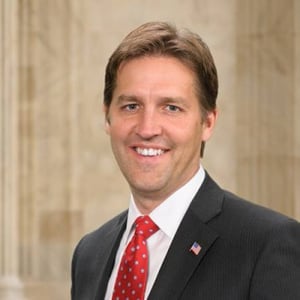
United States Senator, Nebraska
Ben Sasse is a United States Senator, representing the great state of Nebraska.
He was elected in a 2014 landslide, winning each of Nebraska's 93 counties, and securing the second-largest margin for a new senator in the history of the state. Living off of a rickety old campaign bus, he and his family campaigned tirelessly on a common-sense platform of restoring the Constitution to its rightful place and encouraging a more constructive politics where every public official works to make the American Dream achievable for every family. He believes in term limits and a humbler Washington, where the federal government does fewer things, but the more important things, more urgently, more transparently, and with less partisan screaming. Healthy lives are lived primarily in the private sector, and the vast majority of good policy is created at the state and local level -- and Washington should get better at talking honestly about these essential American realities.
A fifth-generation Nebraskan, Ben grew up walking beans and detasseling corn, experiences that taught him the value of hard work. A graduate of Fremont High School, he was recruited to wrestle at Harvard and then earned a PhD in American history at Yale. Ben comes to the Senate having spent the last five years as a college president. When he was recruited to take over the failing Midland University, Ben was just 37 years old, making him one of the youngest college presidents in the nation. The 130-year-old Lutheran college was on the verge of bankruptcy when he arrived, but became one of the fastest-growing higher education institutions in the country by the time of his departure.
Most of his career has been spent guiding companies and institutions through times of crisis with straight talk about the core issues. He has worked with the Boston Consulting Group and McKinsey and Company, as well as private equity firms and not-for-profit organizations, to tackle failing strategies across a broad array of sectors and nations.
Ben believes that we have a moral obligation to pass along a country as great and free and opportunity-filled to the next generation as we were blessed to inherit from our grandparents. This will require a more serious Congress, committed to reforming entitlements, telling the truth about fake federal budgets, modernizing national security for the age of global terror networks, and helping the next generation recover a sense of optimism about the American Dream for everyone of every race in every neighborhood.
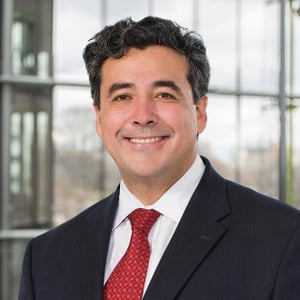
Partner-in-Charge Washington, Jones Day
Noel Francisco served as the 47th Solicitor General of the United States in the Trump Administration, from 2017 to 2020. He has argued some of the most important cases the Supreme Court has heard in recent years on a wide array of issues.
For example, as Solicitor General, he argued Trump v. Hawaii, where he successfully defended the president's orders restricting travel from countries deemed to present security risks; Janus v. AFSCME, which upheld the First Amendment rights of public employees who decline to join labor unions; Kisor v. Wilkie, which adopted his argument that the "Auer deference doctrine" should be significantly curtailed but retained in its core applications; Apple Inc. v. Pepper, which addressed whether Apple's App Store customers had standing to sue the company for antitrust violations; Knick v. Township of Scott, which held that property owners could sue state and local governments in federal court to vindicate Fifth Amendment takings claims; and Seila Law LLC v. CFPB, which invalidated restrictions on the president's authority to remove the director of the Consumer Financial Protection Bureau.
He also spearheaded the government's general strategy to seek emergency relief in the appellate courts and the Supreme Court when lower courts issued nationwide injunctions against important government programs.
Noel's service as Solicitor General built on his previous tenure at Jones Day, during which he argued McDonnell v. United States, which reversed the federal bribery conviction of the governor of Virginia; NLRB v. Noel Canning, which limited the president's constitutional recess appointments power; and Zubik v. Burwell, which challenged federal insurance coverage regulations that violated Catholic organizations' religious beliefs.

Professor of Law, University of San Diego School of Law (Retired)
Gail Heriot is a recently retired law professor from the University of San Diego. She also served as a member of the U.S. Commission on Civil Rights from 2007 to 2025. She is also the chairman of the board of the American Civil Rights Project and the chair emerita of the Civil Rights practice group at the Federalist Society for Law & Public Policy.
Professor Heriot is a prolific writer in the area of civil rights. She is the author of many law review articles. She is also the editor (along with Maimon Schwarzschild) of the 2021 anthology, A Dubious Expediency: How Race Preferences Damage Higher Education. Her upcoming book is entitled, Why We Walk on Eggshell: How Our Civil Rights Laws Helped Bring About the Woke Era—And the Trump Era, Too.
Her writings for a general audience have appeared in the Wall Street Journal, the San Diego Union-Tribune, the National Review and many other newspapers and magazines.
In 1996, she co-chaired the successful “Yes on Proposition 209” campaign, which amended the California Constitution to prohibit state-sponsored discrimination or preferential treatment based on race, sex, color, ethnicity or national origin. In 2020, she co-chaired the “No on Proposition 16” campaign, which successfully prevented Proposition 209’s repeal.
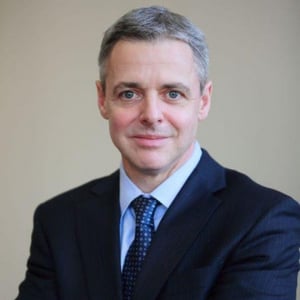
Judge, United States Court of Appeals, Sixth Circuit
Raymond M. Kethledge is a Circuit Judge on the United States Court of Appeals for the Sixth Circuit, to which he was appointed on July 8, 2008. He received his BA in history from the University of Michigan in 1989, and his JD from the University of Michigan Law School in 1993. He clerked for Justice Anthony Kennedy of the United States Supreme Court and Judge Ralph B. Guy, Jr. of the United States Court of Appeals for the Sixth Circuit. He also worked in the United States Senate and later, with two partners, founded a boutique litigation firm, now known as Bush Seyferth PLLC, in Troy, Michigan. His practice there included a broad mix of trial-court, appellate, and class-action litigation.
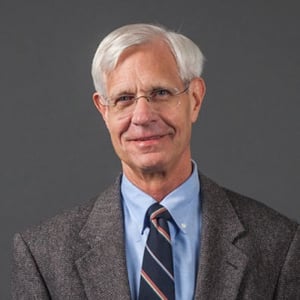
Distinguished University Professor, Antonin Scalia Law School, George Mason University
University Professor Nelson Lund is the author of Rousseau’s Rejuvenation of Political Philosophy: A New Introduction. He has also written widely in the field of constitutional law, including articles on constitutional interpretation, federalism, separation of powers, the Second Amendment, the Commerce Clause, the Speech or Debate Clause, the Equal Protection Clause, and the Uniformity Clause. In addition, he has published articles in the fields of employment discrimination and civil rights, the legal regulation of medical ethics, and the application of economic analysis to legal institutions and legal ethics.
Professor Lund graduated from St. John's College in Annapolis, Maryland, after which he received an MA in philosophy from the Catholic University of America and a PhD in political science from Harvard University. He left the faculty of the University of Chicago to attend its law school, where he served as executive editor of the University of Chicago Law Review and chapter chairman of the Federalist Society for Law and Public Policy Studies. After law school, he held positions at the United States Department of Justice in the Office of the Solicitor General and the Office of Legal Counsel. He also served as a law clerk to the Honorable Patrick E. Higginbotham of the United States Court of Appeals for the Fifth Circuit and to the Honorable Sandra Day O'Connor of the United States Supreme Court. Following his clerkship with Justice O'Connor, Professor Lund served in the White House as associate counsel to the president from 1989 to 1992.
Since joining the faculty at George Mason University's Antonin Scalia Law School, Professor Lund has taught Constitutional Law, Legislation, Federal Election Law, Employment Discrimination, State and Local Government, and seminars on the Second Amendment and on a variety of topics in Jurisprudence.
Professor of Law, Oklahoma City University School of Law
Professor O’Shea is a nationally recognized expert on firearms law and the Second Amendment. He is a co-author of the first law school casebook on the subject, Firearms Law and the Second Amendment: Regulation, Rights, and Policy, published in 2012. He serves as the Associate Director of OCU Law’s Center for State Constitutional Law and Government.
Professor O’Shea is an honors graduate of Harvard College and Harvard Law School. He also holds a master’s degree in philosophy from the University of Pittsburgh. Before coming to Oklahoma City University School of Law in 2006, he practiced commercial litigation in Chicago and in his hometown of Kansas City, Missouri. He also served as a law clerk to Chief Judge Danny J. Boggs of the U.S. Court of Appeals for the Sixth Circuit and to Judge John R. Gibson of the U.S. Court of Appeals for the Eighth Circuit.
Associate Dean of Students; William R. Jacques Constitutional La, University of Missouri-Kansas City School of Law
Allen Rostron, who joined the faculty in 2003, teaches and writes in the areas of constitutional law, tort law, products liability, and conflict of laws.
Before becoming a teacher, Rostron worked in Washington, D.C. as a Senior Staff Attorney at the Brady Center to Prevent Gun Violence, where he was part of a nationwide litigation effort that included lawsuits brought against gun manufacturers by several dozen major cities and counties. Rostron began his career working as a law clerk for Judge Thomas S. Ellis III of the U.S. District Court for the Eastern District of Virginia, and then as a litigation associate at the Cravath Swaine & Moore law firm in New York City.
Professor Rostron’s research and writing has had a significant impact on several areas of law. The Supreme Court of Wisconsin relied on one of his articles in a decision in which it became the first court in the nation to impose proportional or “market share” liability on manufacturers of lead paint. In another article, Professor Rostron suggested a new approach to regulation of high-powered sniper rifles, and that approach was subsequently enacted into law in the District of Columbia and incorporated into proposed federal legislation introduced in the U.S. Senate.
United States Senator, Texas
Ted Cruz represents 28 million Texans in the U.S. Senate as a passionate fighter for limited government and economic growth. He has authored 39 legislative measures signed into law. Recent victories include expanding 529 college savings accounts to allow parents to save for K–12 public, private, and religious education, leading the effort to repeal Obamacare’s individual mandate, imposing sanctions on terrorists who use civilians as human shields, designating North Korea as a state sponsor of terrorism, reauthorizing and reforming NASA, ensuring the availability of additional records to help solve civil rights cold cases, supporting thousands of Texas jobs, and leading the fight to confirm principled constitutionalists to our courts.
Senator Cruz is a graduate of Princeton University and Harvard Law School, a former law clerk to Chief Justice William Rehnquist, and former solicitor general of Texas. He has argued nine cases before the Supreme Court. In November of 2018, he was re-elected to the Senate by the people of Texas.

Executive Vice President, The Federalist Society
Dean Reuter is Executive Vice President at the Federalist Society for Law and Public Policy Studies. He has served in two federal government agency Offices of the Inspector General, as Counsel to the Inspector General and Deputy Inspector General, responsible for policing the use of federal funds granted and contracted through those agencies. As such, he helped conduct and oversee criminal investigations across the country. He is the principal author of the non-fiction book, The Hidden Nazi: The Untold Story of America's Deal with the Devil, and editor of Liberty’s Nemesis: The Unchecked Expansion of the State and Confronting Terror: 9/11 and the Future of American National Security. He was appointed by the President and served as Vice-Chairman of the Board of Directors of the Corporation for National and Community Service, and recently served as an appointee on the U.S. Commission on Presidential Scholars. He is a graduate of Hood College (BA with Honors) and the University of Maryland School of Law.
Former Attorney General, State of Arizona
Mark Brnovich served as Arizona's 26th Attorney General from 2015 to 2023. He was first inaugurated in 2015, and again in 2019 after winning re-election. Mark has spent most of his professional life serving as a prosecutor at the local, state, and federal levels. Mark met his wife Susan while they both worked as prosecutors for the Maricopa County Attorney's office. Mark worked in the Gang/Repeat Offender Unit and prosecuted many difficult and high profile cases from 1992 to 1998. He then went on to work as an Assistant Attorney General with the Arizona Attorney General's Office from 1998 to 2003, where he developed an expertise in gambling law. Brnovich later went on to serve as an Assistant United States Attorney for the District of Arizona where he prosecuted public integrity crimes, as well as crimes occurring in Indian Country.
Brnovich has also been a Judge Pro Tem of Maricopa County Superior Court, a Command Staff Judge Advocate in the U.S. Army National Guard, the Director for Constitutional Government at the Goldwater Institute, and the Director of the Arizona Department of Gaming, a law enforcement agency that investigates illegal gambling activity, as well as working with tribal regulators to ensure the integrity of tribal gaming.
Brnovich is known for restoring public confidence in the office of "Arizona's Top Cop" and for assembling some of the nation's most talented public servants for his administration. Mark argued at the United States Supreme Court in defense of the "one-person, one-vote" principle, was featured on 60 Minutes in defense of capital punishment, and has initiated national public education efforts to combat human sex trafficking.
Brnovich has been recognized by the National Federation of Independent Business as a "Champion of Small Business." and was elected by his bi-partisan colleagues to serve as the Chairman of the Conference of Western Attorneys General.
Mark's wife Susan was recently appointed by the United States Senate to serve as a U.S. District Judge for the District of Arizona. He has two teenage daughters and lives in Phoenix.
Senior Director and Global Relations Lead, Uber Technologies Inc.
Mark Floyd is the Sr. Director and Global Labor Relations lead for Uber Technologies. Mr. Floyd has more than 30 years of legal experience devoted to the area of labor and employment global matters; experience that includes private practice as well as senior in-house positions for U.S as well as International companies. Mr. Floyd is a frequent speaker, trainer, and author on matters concerning today’s labor and employee relations environment.

Judge, United States Court of Appeals, Third Circuit
Judge Hardiman was appointed to the United States Court of Appeals for the Third Circuit on January 9, 2007 and was confirmed by the Senate (95-0) on March 15, 2007. Prior to becoming an appellate judge, Judge Hardiman served as a trial judge on the United States District Court for the Western District of Pennsylvania as of November 1, 2003. In 2008, Chief Justice John Roberts appointed Judge Hardiman to the Information Technology Committee of the Judicial Conference of the United States. Judge Hardiman was appointed Chairman of the IT Committee in 2013 and served in that capacity until September 2021. In 2021 he was appointed by the Director of the Administrative Office of the United States Courts to serve as Chair of the Judiciary IT Security Task Force, which completed its work in fall 2023. Chief Justice Roberts appointed Judge Hardiman to the Board of the Federal Judicial Center to serve from March 2020 until March 2024. As part of his work with the Center, Judge Hardiman now serves as Editor in Chief for the Manual for Complex Civil Litigation, Fifth.
Before entering judicial service, Judge Hardiman handled a wide variety of litigation matters in state and federal trial and appellate courts as a partner at Reed Smith LLP (1999-2003), a partner at Titus & McConomy LLP (1996-1999), and as an associate with its predecessor firm, Cindrich & Titus (1992-1996). Judge Hardiman began his legal career as an associate in the Washington, D.C. office of Skadden, Arps, Slate, Meagher & Flom (1990-1992).
A 1987 honors graduate of the University of Notre Dame, Judge Hardiman received his law degree in 1990 from the Georgetown University Law Center, where he served as a Notes and Comments Editor on the Georgetown Law Journal. In 2012, Judge Hardiman was elected as a member of the American Law Institute and was elected to its Council in 2019 and its Executive Committee in 2025. Judge Hardiman regularly teaches a seminar on Advanced Constitutional Law at Duquesne University School of Law and a one-week course entitled “Constitutional Law: the First and Second Amendments” at Georgetown University Law Center.
A native of Waltham, Massachusetts, Judge Hardiman has chambers in Pittsburgh, Pennsylvania. He and his wife Lori married in 1992 and have three children.
Immigration Law and Policy Fellow, Cornell Law School
Randel Johnson has worked on employment and immigration law and policy issues for over twenty-five years, bringing a broad perspective from working in the executive agencies, on Capitol Hill, and in the private sector. Deeply involved in past efforts on comprehensive immigration reform, including testifying in both the U.S. House of Representatives and the U.S. Senate, his experience includes working as the senior vice president at the U.S. Chamber of Commerce, labor counsel to the House Education and Labor Committee, and special assistant to the solicitor of labor at the U.S. Department of Labor. He was also a partner at the law firm of Seyfarth Shaw and most recently a judge on the Administrative Review Board at the Labor Department.
Director of Government Affairs, AFL-CIO
Bill Samuel is the Director of Government Affairs at the AFL-CIO. In addition to serving as the chief lobbyist for the 10 million-member labor federation, Bill chairs the AFL-CIO’s Legislative Committee, which is made up of legislative representatives from the federation’s 54 affiliated unions.
Bill returned to the labor movement in January 2001 after a five-year stint in the Clinton Administration, serving first as Associate Deputy Secretary of Labor under Robert Reich and then Alexis Herman. In 2000, Bill joined the White House staff as senior policy advisor to Vice President Al Gore, serving as the Vice President’s principal advisor on labor policy issues and liaison to organized labor.
From 1984 to 1995, Bill was the chief lobbyist at the United Mine Workers of America. While at the UMWA, Bill lead the successful campaign to win passage of federal legislation guaranteeing lifetime health benefits to over 200,000 retired miners and their dependents. Prior to joining the UMWA, Bill was a legislative representative for the National Treasury Employees Union and the American Federation of Government Employees.
He is a graduate of Oberlin College and the George Washington University Law Center.
Partner-in-Charge Washington, Jones Day
Noel Francisco served as the 47th Solicitor General of the United States in the Trump Administration, from 2017 to 2020. He has argued some of the most important cases the Supreme Court has heard in recent years on a wide array of issues.
For example, as Solicitor General, he argued Trump v. Hawaii, where he successfully defended the president's orders restricting travel from countries deemed to present security risks; Janus v. AFSCME, which upheld the First Amendment rights of public employees who decline to join labor unions; Kisor v. Wilkie, which adopted his argument that the "Auer deference doctrine" should be significantly curtailed but retained in its core applications; Apple Inc. v. Pepper, which addressed whether Apple's App Store customers had standing to sue the company for antitrust violations; Knick v. Township of Scott, which held that property owners could sue state and local governments in federal court to vindicate Fifth Amendment takings claims; and Seila Law LLC v. CFPB, which invalidated restrictions on the president's authority to remove the director of the Consumer Financial Protection Bureau.
He also spearheaded the government's general strategy to seek emergency relief in the appellate courts and the Supreme Court when lower courts issued nationwide injunctions against important government programs.
Noel's service as Solicitor General built on his previous tenure at Jones Day, during which he argued McDonnell v. United States, which reversed the federal bribery conviction of the governor of Virginia; NLRB v. Noel Canning, which limited the president's constitutional recess appointments power; and Zubik v. Burwell, which challenged federal insurance coverage regulations that violated Catholic organizations' religious beliefs.
Judge, United States Court of Appeals, Sixth Circuit
Raymond M. Kethledge is a Circuit Judge on the United States Court of Appeals for the Sixth Circuit, to which he was appointed on July 8, 2008. He received his BA in history from the University of Michigan in 1989, and his JD from the University of Michigan Law School in 1993. He clerked for Justice Anthony Kennedy of the United States Supreme Court and Judge Ralph B. Guy, Jr. of the United States Court of Appeals for the Sixth Circuit. He also worked in the United States Senate and later, with two partners, founded a boutique litigation firm, now known as Bush Seyferth PLLC, in Troy, Michigan. His practice there included a broad mix of trial-court, appellate, and class-action litigation.
Distinguished University Professor, Antonin Scalia Law School, George Mason University
University Professor Nelson Lund is the author of Rousseau’s Rejuvenation of Political Philosophy: A New Introduction. He has also written widely in the field of constitutional law, including articles on constitutional interpretation, federalism, separation of powers, the Second Amendment, the Commerce Clause, the Speech or Debate Clause, the Equal Protection Clause, and the Uniformity Clause. In addition, he has published articles in the fields of employment discrimination and civil rights, the legal regulation of medical ethics, and the application of economic analysis to legal institutions and legal ethics.
Professor Lund graduated from St. John's College in Annapolis, Maryland, after which he received an MA in philosophy from the Catholic University of America and a PhD in political science from Harvard University. He left the faculty of the University of Chicago to attend its law school, where he served as executive editor of the University of Chicago Law Review and chapter chairman of the Federalist Society for Law and Public Policy Studies. After law school, he held positions at the United States Department of Justice in the Office of the Solicitor General and the Office of Legal Counsel. He also served as a law clerk to the Honorable Patrick E. Higginbotham of the United States Court of Appeals for the Fifth Circuit and to the Honorable Sandra Day O'Connor of the United States Supreme Court. Following his clerkship with Justice O'Connor, Professor Lund served in the White House as associate counsel to the president from 1989 to 1992.
Since joining the faculty at George Mason University's Antonin Scalia Law School, Professor Lund has taught Constitutional Law, Legislation, Federal Election Law, Employment Discrimination, State and Local Government, and seminars on the Second Amendment and on a variety of topics in Jurisprudence.
Professor of Law, Oklahoma City University School of Law
Professor O’Shea is a nationally recognized expert on firearms law and the Second Amendment. He is a co-author of the first law school casebook on the subject, Firearms Law and the Second Amendment: Regulation, Rights, and Policy, published in 2012. He serves as the Associate Director of OCU Law’s Center for State Constitutional Law and Government.
Professor O’Shea is an honors graduate of Harvard College and Harvard Law School. He also holds a master’s degree in philosophy from the University of Pittsburgh. Before coming to Oklahoma City University School of Law in 2006, he practiced commercial litigation in Chicago and in his hometown of Kansas City, Missouri. He also served as a law clerk to Chief Judge Danny J. Boggs of the U.S. Court of Appeals for the Sixth Circuit and to Judge John R. Gibson of the U.S. Court of Appeals for the Eighth Circuit.
Associate Dean of Students; William R. Jacques Constitutional La, University of Missouri-Kansas City School of Law
Allen Rostron, who joined the faculty in 2003, teaches and writes in the areas of constitutional law, tort law, products liability, and conflict of laws.
Before becoming a teacher, Rostron worked in Washington, D.C. as a Senior Staff Attorney at the Brady Center to Prevent Gun Violence, where he was part of a nationwide litigation effort that included lawsuits brought against gun manufacturers by several dozen major cities and counties. Rostron began his career working as a law clerk for Judge Thomas S. Ellis III of the U.S. District Court for the Eastern District of Virginia, and then as a litigation associate at the Cravath Swaine & Moore law firm in New York City.
Professor Rostron’s research and writing has had a significant impact on several areas of law. The Supreme Court of Wisconsin relied on one of his articles in a decision in which it became the first court in the nation to impose proportional or “market share” liability on manufacturers of lead paint. In another article, Professor Rostron suggested a new approach to regulation of high-powered sniper rifles, and that approach was subsequently enacted into law in the District of Columbia and incorporated into proposed federal legislation introduced in the U.S. Senate.
Professor of Law, University of San Diego School of Law (Retired)
Gail Heriot is a recently retired law professor from the University of San Diego. She also served as a member of the U.S. Commission on Civil Rights from 2007 to 2025. She is also the chairman of the board of the American Civil Rights Project and the chair emerita of the Civil Rights practice group at the Federalist Society for Law & Public Policy.
Professor Heriot is a prolific writer in the area of civil rights. She is the author of many law review articles. She is also the editor (along with Maimon Schwarzschild) of the 2021 anthology, A Dubious Expediency: How Race Preferences Damage Higher Education. Her upcoming book is entitled, Why We Walk on Eggshell: How Our Civil Rights Laws Helped Bring About the Woke Era—And the Trump Era, Too.
Her writings for a general audience have appeared in the Wall Street Journal, the San Diego Union-Tribune, the National Review and many other newspapers and magazines.
In 1996, she co-chaired the successful “Yes on Proposition 209” campaign, which amended the California Constitution to prohibit state-sponsored discrimination or preferential treatment based on race, sex, color, ethnicity or national origin. In 2020, she co-chaired the “No on Proposition 16” campaign, which successfully prevented Proposition 209’s repeal.
Partner-in-Charge Washington, Jones Day
Noel Francisco served as the 47th Solicitor General of the United States in the Trump Administration, from 2017 to 2020. He has argued some of the most important cases the Supreme Court has heard in recent years on a wide array of issues.
For example, as Solicitor General, he argued Trump v. Hawaii, where he successfully defended the president's orders restricting travel from countries deemed to present security risks; Janus v. AFSCME, which upheld the First Amendment rights of public employees who decline to join labor unions; Kisor v. Wilkie, which adopted his argument that the "Auer deference doctrine" should be significantly curtailed but retained in its core applications; Apple Inc. v. Pepper, which addressed whether Apple's App Store customers had standing to sue the company for antitrust violations; Knick v. Township of Scott, which held that property owners could sue state and local governments in federal court to vindicate Fifth Amendment takings claims; and Seila Law LLC v. CFPB, which invalidated restrictions on the president's authority to remove the director of the Consumer Financial Protection Bureau.
He also spearheaded the government's general strategy to seek emergency relief in the appellate courts and the Supreme Court when lower courts issued nationwide injunctions against important government programs.
Noel's service as Solicitor General built on his previous tenure at Jones Day, during which he argued McDonnell v. United States, which reversed the federal bribery conviction of the governor of Virginia; NLRB v. Noel Canning, which limited the president's constitutional recess appointments power; and Zubik v. Burwell, which challenged federal insurance coverage regulations that violated Catholic organizations' religious beliefs.
Judge, United States Court of Appeals, Sixth Circuit
Raymond M. Kethledge is a Circuit Judge on the United States Court of Appeals for the Sixth Circuit, to which he was appointed on July 8, 2008. He received his BA in history from the University of Michigan in 1989, and his JD from the University of Michigan Law School in 1993. He clerked for Justice Anthony Kennedy of the United States Supreme Court and Judge Ralph B. Guy, Jr. of the United States Court of Appeals for the Sixth Circuit. He also worked in the United States Senate and later, with two partners, founded a boutique litigation firm, now known as Bush Seyferth PLLC, in Troy, Michigan. His practice there included a broad mix of trial-court, appellate, and class-action litigation.
Distinguished University Professor, Antonin Scalia Law School, George Mason University
University Professor Nelson Lund is the author of Rousseau’s Rejuvenation of Political Philosophy: A New Introduction. He has also written widely in the field of constitutional law, including articles on constitutional interpretation, federalism, separation of powers, the Second Amendment, the Commerce Clause, the Speech or Debate Clause, the Equal Protection Clause, and the Uniformity Clause. In addition, he has published articles in the fields of employment discrimination and civil rights, the legal regulation of medical ethics, and the application of economic analysis to legal institutions and legal ethics.
Professor Lund graduated from St. John's College in Annapolis, Maryland, after which he received an MA in philosophy from the Catholic University of America and a PhD in political science from Harvard University. He left the faculty of the University of Chicago to attend its law school, where he served as executive editor of the University of Chicago Law Review and chapter chairman of the Federalist Society for Law and Public Policy Studies. After law school, he held positions at the United States Department of Justice in the Office of the Solicitor General and the Office of Legal Counsel. He also served as a law clerk to the Honorable Patrick E. Higginbotham of the United States Court of Appeals for the Fifth Circuit and to the Honorable Sandra Day O'Connor of the United States Supreme Court. Following his clerkship with Justice O'Connor, Professor Lund served in the White House as associate counsel to the president from 1989 to 1992.
Since joining the faculty at George Mason University's Antonin Scalia Law School, Professor Lund has taught Constitutional Law, Legislation, Federal Election Law, Employment Discrimination, State and Local Government, and seminars on the Second Amendment and on a variety of topics in Jurisprudence.
Professor of Law, Oklahoma City University School of Law
Professor O’Shea is a nationally recognized expert on firearms law and the Second Amendment. He is a co-author of the first law school casebook on the subject, Firearms Law and the Second Amendment: Regulation, Rights, and Policy, published in 2012. He serves as the Associate Director of OCU Law’s Center for State Constitutional Law and Government.
Professor O’Shea is an honors graduate of Harvard College and Harvard Law School. He also holds a master’s degree in philosophy from the University of Pittsburgh. Before coming to Oklahoma City University School of Law in 2006, he practiced commercial litigation in Chicago and in his hometown of Kansas City, Missouri. He also served as a law clerk to Chief Judge Danny J. Boggs of the U.S. Court of Appeals for the Sixth Circuit and to Judge John R. Gibson of the U.S. Court of Appeals for the Eighth Circuit.
Associate Dean of Students; William R. Jacques Constitutional La, University of Missouri-Kansas City School of Law
Allen Rostron, who joined the faculty in 2003, teaches and writes in the areas of constitutional law, tort law, products liability, and conflict of laws.
Before becoming a teacher, Rostron worked in Washington, D.C. as a Senior Staff Attorney at the Brady Center to Prevent Gun Violence, where he was part of a nationwide litigation effort that included lawsuits brought against gun manufacturers by several dozen major cities and counties. Rostron began his career working as a law clerk for Judge Thomas S. Ellis III of the U.S. District Court for the Eastern District of Virginia, and then as a litigation associate at the Cravath Swaine & Moore law firm in New York City.
Professor Rostron’s research and writing has had a significant impact on several areas of law. The Supreme Court of Wisconsin relied on one of his articles in a decision in which it became the first court in the nation to impose proportional or “market share” liability on manufacturers of lead paint. In another article, Professor Rostron suggested a new approach to regulation of high-powered sniper rifles, and that approach was subsequently enacted into law in the District of Columbia and incorporated into proposed federal legislation introduced in the U.S. Senate.
Professor of Law, University of San Diego School of Law (Retired)
Gail Heriot is a recently retired law professor from the University of San Diego. She also served as a member of the U.S. Commission on Civil Rights from 2007 to 2025. She is also the chairman of the board of the American Civil Rights Project and the chair emerita of the Civil Rights practice group at the Federalist Society for Law & Public Policy.
Professor Heriot is a prolific writer in the area of civil rights. She is the author of many law review articles. She is also the editor (along with Maimon Schwarzschild) of the 2021 anthology, A Dubious Expediency: How Race Preferences Damage Higher Education. Her upcoming book is entitled, Why We Walk on Eggshell: How Our Civil Rights Laws Helped Bring About the Woke Era—And the Trump Era, Too.
Her writings for a general audience have appeared in the Wall Street Journal, the San Diego Union-Tribune, the National Review and many other newspapers and magazines.
In 1996, she co-chaired the successful “Yes on Proposition 209” campaign, which amended the California Constitution to prohibit state-sponsored discrimination or preferential treatment based on race, sex, color, ethnicity or national origin. In 2020, she co-chaired the “No on Proposition 16” campaign, which successfully prevented Proposition 209’s repeal.
United States Senator, Texas
Ted Cruz represents 28 million Texans in the U.S. Senate as a passionate fighter for limited government and economic growth. He has authored 39 legislative measures signed into law. Recent victories include expanding 529 college savings accounts to allow parents to save for K–12 public, private, and religious education, leading the effort to repeal Obamacare’s individual mandate, imposing sanctions on terrorists who use civilians as human shields, designating North Korea as a state sponsor of terrorism, reauthorizing and reforming NASA, ensuring the availability of additional records to help solve civil rights cold cases, supporting thousands of Texas jobs, and leading the fight to confirm principled constitutionalists to our courts.
Senator Cruz is a graduate of Princeton University and Harvard Law School, a former law clerk to Chief Justice William Rehnquist, and former solicitor general of Texas. He has argued nine cases before the Supreme Court. In November of 2018, he was re-elected to the Senate by the people of Texas.
Executive Vice President, The Federalist Society
Dean Reuter is Executive Vice President at the Federalist Society for Law and Public Policy Studies. He has served in two federal government agency Offices of the Inspector General, as Counsel to the Inspector General and Deputy Inspector General, responsible for policing the use of federal funds granted and contracted through those agencies. As such, he helped conduct and oversee criminal investigations across the country. He is the principal author of the non-fiction book, The Hidden Nazi: The Untold Story of America's Deal with the Devil, and editor of Liberty’s Nemesis: The Unchecked Expansion of the State and Confronting Terror: 9/11 and the Future of American National Security. He was appointed by the President and served as Vice-Chairman of the Board of Directors of the Corporation for National and Community Service, and recently served as an appointee on the U.S. Commission on Presidential Scholars. He is a graduate of Hood College (BA with Honors) and the University of Maryland School of Law.
United States Senator, Texas
Ted Cruz represents 28 million Texans in the U.S. Senate as a passionate fighter for limited government and economic growth. He has authored 39 legislative measures signed into law. Recent victories include expanding 529 college savings accounts to allow parents to save for K–12 public, private, and religious education, leading the effort to repeal Obamacare’s individual mandate, imposing sanctions on terrorists who use civilians as human shields, designating North Korea as a state sponsor of terrorism, reauthorizing and reforming NASA, ensuring the availability of additional records to help solve civil rights cold cases, supporting thousands of Texas jobs, and leading the fight to confirm principled constitutionalists to our courts.
Senator Cruz is a graduate of Princeton University and Harvard Law School, a former law clerk to Chief Justice William Rehnquist, and former solicitor general of Texas. He has argued nine cases before the Supreme Court. In November of 2018, he was re-elected to the Senate by the people of Texas.
Executive Vice President, The Federalist Society
Dean Reuter is Executive Vice President at the Federalist Society for Law and Public Policy Studies. He has served in two federal government agency Offices of the Inspector General, as Counsel to the Inspector General and Deputy Inspector General, responsible for policing the use of federal funds granted and contracted through those agencies. As such, he helped conduct and oversee criminal investigations across the country. He is the principal author of the non-fiction book, The Hidden Nazi: The Untold Story of America's Deal with the Devil, and editor of Liberty’s Nemesis: The Unchecked Expansion of the State and Confronting Terror: 9/11 and the Future of American National Security. He was appointed by the President and served as Vice-Chairman of the Board of Directors of the Corporation for National and Community Service, and recently served as an appointee on the U.S. Commission on Presidential Scholars. He is a graduate of Hood College (BA with Honors) and the University of Maryland School of Law.
Reed Larson Professor of Labor Law, Ave Maria School of Law and, National Right To Work Legal Defense Foundation
John Raudabaugh is a labor lawyer and former Member of the U.S. National Labor Relations Board. He was a partner in law firms representing management concerning domestic and international labor law matters. Currently, he represents employees seeking relief from union and/or employer unfair labor practices. Mr. Raudabaugh has presented testimony to both Senate and House Committees regarding labor law reform. Professor Raudabaugh teaches Labor Law and a Labor Law Practicum at the Ave Maria School of Law. He is a graduate of the Wharton School of Finance and Commerce and New York State School of Industrial and Labor Relations with B.S. and M.S. degrees in labor economics and a J.D. degree from the University of Virginia Law School of Law.
Director, Commercial Freedom; Senior Fellow, R Street Institute
C. Jarrett Dieterle researches and writes on regulatory affairs, alcohol policy, occupational licensing and other commercial freedom issues. He also oversees the Institute’s postal, labor and disintermediation policy programs.
Jarrett previously worked as a regulatory attorney at a Washington law firm. In that role, he advised private companies on how to navigate complex regulatory regimes and helped them challenge overreaching regulations. He also practiced appellate advocacy, co-authoring several Supreme Court amicus briefs. He previously clerked for a federal judge on the U.S. Court of Federal Claims, and has worked and written for numerous policy organizations and think tanks such as the Reason Foundation, Manhattan Institute, Mackinac Center, Federalist Society, Institute for Justice, Atlantic Legal Foundation and the Washington Legal Foundation.
Jarrett earned his bachelor’s from the University of Richmond, with a major in political science and minor in economics. He received his juris doctor from Georgetown University Law Center.
Jarrett currently lives in Richmond, Virginia with his wife, Maria, and their Australian shepherd, Pepper.

16th Annual Barbara K. Olson Memorial Lecture
2016 National Lawyers Convention
Washington, DCCivil Rights: The Second Amendment: Enforcing the Heller Decision
Noel J. Francisco, Raymond Kethledge, Nelson Lund, Michael O'Shea, Allan Rostron, Gail L. Heriot
The Supreme Court's 2008 decision in District of Columbia v. Heller recognized for the first time...
Civil Rights: The Second Amendment: Enforcing the Heller Decision
Noel J. Francisco, Raymond Kethledge, Nelson Lund, Michael O'Shea, Allan Rostron, Gail L. Heriot
The Supreme Court's 2008 decision in District of Columbia v. Heller recognized for the first time...
Civil Rights: The Second Amendment: Enforcing the Heller Decision
2016 National Lawyers Convention
Washington, DCAddress by Senator Ted Cruz
Ted Cruz, Dean Reuter
Senator Ted Cruz delivered this address at the 2016 National Lawyers Convention on Friday, November...
Address by Senator Ted Cruz
Ted Cruz, Dean Reuter
Senator Ted Cruz delivered this address at the 2016 National Lawyers Convention on Friday, November...
Address by Senator Ted Cruz
2016 National Lawyers Convention
Washington, DCLabor & Employment Law: The Battle for the Gig Economy
2016 National Lawyers Convention
Washington, DCFull Board Decisions of the National Labor Relations Board: Fiscal Year 2016
John N. Raudabaugh
Note from the Editor: This article critically reflects on the most recent term of the National...
The Sandbagging Phenomenon: How Governments Lower Eminent Domain Appraisals to Punish Landowners
Jarrett Dieterle
Note from the Editor: This article discusses a controversial practice known as “sandbagging” in eminent...