
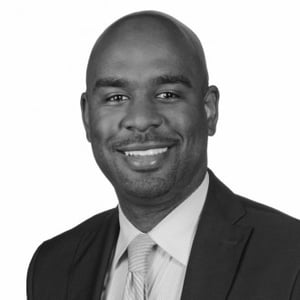
Executive Director, North America, Quilliam International
Dr. Muhammad Fraser-Rahim is the Executive Director, North America for Quilliam International.
He is an expert on violent extremism issues and a scholar on Africa. Prior to his current role, he served as a Senior Program Officer at the U.S. Institute of Peace, where he led their Horn of Africa program and served as an expert on violent extremism issues globally.
Dr. Fraser-Rahim’s areas of specialty are on transnational terrorist movements, Islamic intellectual history, Muslim communities in the West and Africa affairs. In addition, Dr. Fraser-Rahim worked for the United States Government for more than a decade for the Department of Homeland Security, Director of National Intelligence, and the National Counter-terrorism Center. There, he provided strategic advice and executive branch analytical support on violent extremism issues to the White House and the National Security Council, where he was the author or co-author of Presidential Daily Briefs and strategic assessments on extremist ideology.
Dr. Fraser-Rahim has conducted research in more than 40 countries on the African continent, and has worked and studied throughout the Middle East. He completed advanced level Arabic language certificates at various higher education institutions in the U.S., West Africa and the Middle East and he earned his Ph.D. in 2017 from Howard University in African Studies, with a focus on Islamic thought and on violent extremism issues.
Dr. Fraser-Rahim provided one of the first doctoral dissertations on the intellectual thought of African American Muslims and its nexus to the broader Islamic world using original primary sources in both Arabic and English. and focused on the American Muslim thinker, WD Mohammed, titled, ” The Making of American Islam and the Emergence of Western Islamic Intellectual Thought to Counter Violent Extremism: A Case Study of American Muslim Revivalist, Imam WD Mohammed (1933-2008.) Finally, he is also a security fellow at the Truman National Security Project.
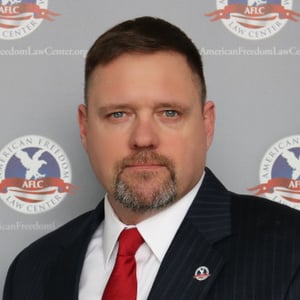
Co-Founder and Senior Counsel, American Freedom Law Center
Robert J. Muise is an expert in constitutional law. Since 2000, his law practice has been dedicated to defending religious liberties, the freedom of speech, and the right to life in state and federal trial and appellate courts all across the country. More recently, Mr. Muise has been involved in numerous cases defending American freedoms against the growing threat of sharia.
In 2012, Mr. Muise, along with David Yerushalmi, co-founded the American Freedom Law Center, a national public interest law firm dedicated to fighting for faith and freedom and defending our Judeo-Christian heritage and moral values.
In 2015, Messrs. Muise and Yerushalmi co-authored the monograph entitled, Offensive and Defensive Lawfare: Fighting Civilizational Jihad in America’s Courts as part of the Center for Security Policy’s Civilization Jihad Reader Series.
Through his work, Mr. Muise has appeared on national television programs such as The Kelly File with Megyn Kelly, the O’Reilly Factor, Hannity and Colmes, Freedom Watch, Fox and Friends, and the Glenn Beck Program, among others. He has also been interviewed on numerous local and national radio shows and for many national and local newspapers and periodicals, including the New York Times, the Los Angeles Times, the San Francisco Chronicle, and many others. He was named the “Appellate Lawyer of the Week” by the National Law Journal on August 10, 2011. Mr. Muise is also co-author of a scholarly article published in the Duke University Press’s Journal of Health Politics, Policy, and Law, entitled, “Wearing the Crown of Solomon? Chief Justice Roberts and the Affordable Care Act ‘Tax.'”
Founder and Chairman, Liberty Counsel
Mat Staver is the Founder and Chairman of Liberty Counsel, an international nonprofit litigation, education, and policy organization dedicated to advancing religious freedom, the sanctity of human life, and the family; Chairman of Liberty Counsel Action, Freedom Federation, The Salt & Light Council, and National House of Hope; Chairman of Christians in Defense of Israel; Founder and Chairman of Liberty Relief International; Vice President and Chief Counsel of the National Hispanic Christian Leadership Conference-CONEL; Director of the Hispanic Israel Leadership Coalition; former Vice President of Liberty University; former Dean and tenured professor of law at Liberty University School of Law; Trustee of The Timothy Plan, a New York and Tel-Aviv Stock Exchange-traded family of mutual funds; Trustee of the Supreme Court Historical Society; Board of Reference of The Christian Film and Television Commission; Board of Advisors of Care for Pastors; Founder and former President of Staver & Associates; and Founder and former President of The Staver Group.
Mat has over 230 published legal opinions. He has authored eight scholarly law review publications and 10 books, including Faith & Freedom: A Complete Handbook for Defending Your Religious Rights, Same-Sex Marriage: Putting Every Household at Risk, and Eternal Vigilance: Knowing and Protecting Your Religious Freedom. He has authored many booklets and brochures, along with hundreds of articles.
Mat is the host and producer of Faith and Freedom, an 11-minute daily radio program, and Freedom's Call, a 60-second daily radio program. He is a frequent guest on international and many national network and cable television and radio programs, including print and electronic media.
Mat has filed numerous briefs and argued in many federal and state courts, including the U.S. Supreme Court and has argued two landmark cases before the Supreme Court, Madsen v. Women's Health Center and McCreary County v. ACLU of Kentucky.
Mat has a B.A., Theology, cum laude, Southern Missionary College; M.A., Religion, summa cum laude, Andrews University; J.D., University of Kentucky; LL.D., honoris causa, Liberty University; D.D., honoris causa, South Florida Bible College.
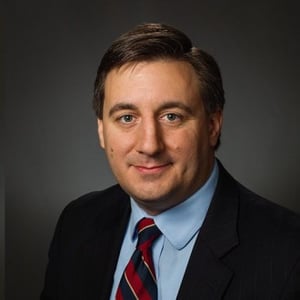
Senior Counsel, Senior Vice President of Corporate Engagement, Alliance Defending Freedom
Jeremy Tedesco serves as senior counsel and senior vice president of corporate engagement for Alliance Defending Freedom. In this role, Tedesco leads ADF’s efforts to combat corporate cancel culture and build a business ethic that respects free speech, religious freedom, and human dignity.
Immediately preceding his current role, Tedesco served as senior vice president for communications, during which time he was a lead convener of the Philadelphia Statement, a movement dedicated to restoring free speech and civil discourse. Tedesco also launched a regular video series called Freedom Matters, profiling ADF clients, cases, and issues. The program included 24 videos in its first year, which more than 31 million people viewed.
Previously, Tedesco litigated First Amendment cases at the highest levels. He was part of the legal team that represented cake artist Jack Phillips in Masterpiece Cakeshop v. Colorado Civil Rights Commission before the U.S. Supreme Court and argued Phillips’ case at the Colorado Court of Appeals. He was also the lead brief writer in two other U.S. Supreme Court wins, Reed v. Town of Gilbert and Arizona Christian School Tuition Organization v. Winn. Tedesco has also argued six times before five different federal appellate courts and founded and directed the ADF Center for Conscience Initiatives, where he led efforts to protect individuals from government-coerced speech.
Numerous media outlets, including The Wall Street Journal, Fox News, CNN, The New York Times, USA Today, PBS, NPR, and National Review, have interviewed Tedesco or published his comments.
Tedesco earned his Juris Doctor in 2004 from the Regent University School of Law.
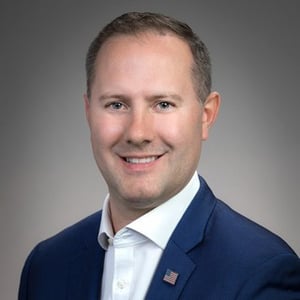
Head of Corporate Governance, Strive Asset Management
Justin Danhof is the Head of Corporate Governance at Strive Asset Management. Previously, he served as General Counsel for the National Center for Public Policy Research, as well as Director of the Center’s Free Enterprise Project. He also worked in the Miami-Dade State’s Attorney’s Office in the Economic Crimes and Cybercrimes Division, for the Massachusetts Alliance for Economic Development and at the U.S. Securities and Exchange Commission.
Mr. Danhof’s work has been widely published and quoted in major newspapers, including the Wall Street Journal, the New York Times, Politico, USA Today, the Los Angeles Times, the San Francisco Chronicle, the Boston Globe, the Christian Science Monitor, and the Washington Post. He has also appeared on the Fox News Channel, One America News Network, and the Fox Business Channel, among others.
Mr. Danhof is a member of the Federalist Society and Christian Legal Society.
Mr. Danhof is a graduate of Bentley University (Waltham, MA), where he received a Bachelor of Science in economics and finance and pitched for three seasons on the school’s NCAA Division II baseball team. Mr. Danhof completed his graduate studies at the University of Miami School of Law where he received his Juris Doctor and Master of Laws in Taxation.
Mr. Danhof is licensed to practice law in New York and Washington, D.C.

Senior Vice President for Legal Studies, Cato Institute
Clark Neily is senior vice president for legal studies at the Cato Institute. His areas of interest include constitutional law, overcriminalization, civil forfeiture, police accountability, and gun rights. Neily is the author of Terms of Engagement: How Our Courts Should Enforce the Constitution’s Promise of Limited Government. His writing has appeared in the Wall Street Journal, Forbes, and National Review Online, as well as various law reviews, including the Harvard Journal of Law and Public Policy, George Mason Law Review, Georgetown Journal of Law and Public Policy, NYU Journal of Law and Liberty, and Texas Review of Law and Politics. Neily is a frequent guest speaker and lecturer for the Federalist Society, Institute for Humane Studies, and American Constitution Society.
Before joining Cato in 2017, Neily was a senior attorney and constitutional litigator at the Institute for Justice and director of the Institute’s Center for Judicial Engagement. He is also an adjunct professor at the University of Texas School of Law, where he teaches constitutional litigation and public-interest law.
Neily served as co-counsel in District of Columbia v. Heller, the historic case in which the Supreme Court held for the first time that the Second Amendment protects an individual right to own a gun for self-defense.
Neily began his legal career as a law clerk to Judge Royce Lamberth on the U.S. District Court for the District of Columbia. After that he spent four years in the trial department of the Dallas-based firm Thompson & Knight. Neily received his undergraduate and law degrees from the University of Texas, where he was Chief Articles Editor of the Texas Law Review.
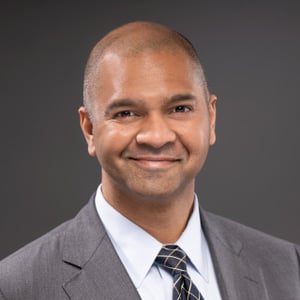
Senior Fellow, Stand Together Trust
Vikrant Reddy is a senior fellow at Stand Together Trust, specializing in the area of criminal justice reform. Reddy previously served as a senior policy analyst at the Texas Public Policy Foundation (TPPF), where he managed the launch of TPPF’s national Right on Crime initiative in 2010. He has worked as a research assistant at the Cato Institute, as a judicial clerk to the Hon. Gina M. Benavides in Texas, and as an attorney in private practice. He is a member of the State Bar of Texas, and he serves on the Executive Committee of the Criminal Law Practice Group of the Federalist Society. He is also an appointee to the U.S. Commission on Civil Rights Texas State Advisory Committee.
Reddy’s research and scholarly opinions have appeared in a range of national media outlets, including USA Today, National Review, The Federalist, and others.
Reddy earned his law degree from the Southern Methodist University School of Law. He received his undergraduate degree from the University of Texas at Austin.
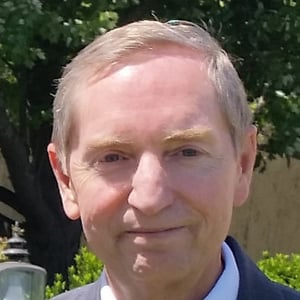
Legal Director & General Counsel, Criminal Justice Legal Foundation
Kent S. Scheidegger has been the Legal Director of the Criminal Justice Legal Foundation since December 1986. He also served as Chairman of the Criminal Law Practice Group of the Federalist Society 2003 to 2005. His articles on criminal and constitutional law have been published in law reviews, national legal publications, and congressional reports. Legal arguments authored by Mr. Scheidegger have been cited and incorporated in several precedent-setting United States Supreme Court decisions.
After receiving a degree in physics with honors from New Mexico State University in 1976, Mr. Scheidegger served for six years in the United States Air Force as a Nuclear Research Officer. He took his law degree with distinction from the University of the Pacific, McGeorge School of Law in 1982 and practiced civil law in Northern California. He was general counsel of California Cooler, Inc. from 1984 until 1986, when he joined the Foundation.
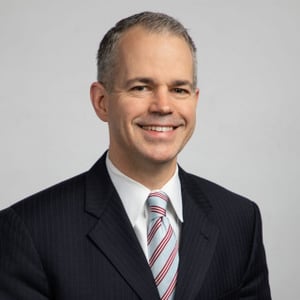
Senior Attorney, Institute for Justice
Michael Bindas is a senior attorney with the Institute for Justice (IJ) and leads IJ’s educational choice team. In this role, he oversees a talented group of IJ attorneys who help policymakers design constitutionally defensible educational choice programs and who defend educational choice programs in courtrooms nationwide. He joined IJ in 2005.
Michael was part of IJ’s litigation team in Espinoza v. Montana Department of Revenue, in which the U.S. Supreme Court held the exclusion of religious options from Montana’s educational choice program unconstitutional, and he led IJ’s defense of the Choice Scholarship Program for elementary and secondary students in Douglas County, Colorado. He also successfully challenged Washington’s denial of special education services to children in religious schools, as well as the state’s exclusion of sectarian options from its state work study program. Currently, he leads IJ’s team in Carson v. Makin, challenging Maine’s exclusion of religious options from its educational choice program.
Prior to leading IJ’s educational choice team, Michael litigated extensively to secure economic liberty, property rights, and freedom of speech throughout the nation. He was counsel of record at the U.S. Supreme Court for Kimbrough Fine Wine & Spirits in Tennessee Wine and Spirits Retailers Association v. Thomas, a successful challenge to Tennessee’s durational residency requirements for retail liquor licenses. He also led successful challenges to the municipal sign codes of St. Louis, Mo. and Norfolk, Va., after those cities attempted to silence protests of their abusive eminent domain practices.
Prior to joining IJ, Michael spent three years as an attorney with Perkins Coie LLP. He is a former law clerk to Judge Rhesa Hawkins Barksdale of the U.S. Court of Appeals for the Fifth Circuit and served as an engineer officer in the United States Army and Pennsylvania Army National Guard before beginning his legal career.
Michael received his law degree cum laude from the University of Pennsylvania Law School in 2001, where he served as Articles Editor for the Journal of Constitutional Law and was elected to the Order of the Coif. He received his undergraduate degree from the United States Military Academy at West Point in 1995.
Head of Corporate Governance, Strive Asset Management
Justin Danhof is the Head of Corporate Governance at Strive Asset Management. Previously, he served as General Counsel for the National Center for Public Policy Research, as well as Director of the Center’s Free Enterprise Project. He also worked in the Miami-Dade State’s Attorney’s Office in the Economic Crimes and Cybercrimes Division, for the Massachusetts Alliance for Economic Development and at the U.S. Securities and Exchange Commission.
Mr. Danhof’s work has been widely published and quoted in major newspapers, including the Wall Street Journal, the New York Times, Politico, USA Today, the Los Angeles Times, the San Francisco Chronicle, the Boston Globe, the Christian Science Monitor, and the Washington Post. He has also appeared on the Fox News Channel, One America News Network, and the Fox Business Channel, among others.
Mr. Danhof is a member of the Federalist Society and Christian Legal Society.
Mr. Danhof is a graduate of Bentley University (Waltham, MA), where he received a Bachelor of Science in economics and finance and pitched for three seasons on the school’s NCAA Division II baseball team. Mr. Danhof completed his graduate studies at the University of Miami School of Law where he received his Juris Doctor and Master of Laws in Taxation.
Mr. Danhof is licensed to practice law in New York and Washington, D.C.
Executive Director, North America, Quilliam International
Dr. Muhammad Fraser-Rahim is the Executive Director, North America for Quilliam International.
He is an expert on violent extremism issues and a scholar on Africa. Prior to his current role, he served as a Senior Program Officer at the U.S. Institute of Peace, where he led their Horn of Africa program and served as an expert on violent extremism issues globally.
Dr. Fraser-Rahim’s areas of specialty are on transnational terrorist movements, Islamic intellectual history, Muslim communities in the West and Africa affairs. In addition, Dr. Fraser-Rahim worked for the United States Government for more than a decade for the Department of Homeland Security, Director of National Intelligence, and the National Counter-terrorism Center. There, he provided strategic advice and executive branch analytical support on violent extremism issues to the White House and the National Security Council, where he was the author or co-author of Presidential Daily Briefs and strategic assessments on extremist ideology.
Dr. Fraser-Rahim has conducted research in more than 40 countries on the African continent, and has worked and studied throughout the Middle East. He completed advanced level Arabic language certificates at various higher education institutions in the U.S., West Africa and the Middle East and he earned his Ph.D. in 2017 from Howard University in African Studies, with a focus on Islamic thought and on violent extremism issues.
Dr. Fraser-Rahim provided one of the first doctoral dissertations on the intellectual thought of African American Muslims and its nexus to the broader Islamic world using original primary sources in both Arabic and English. and focused on the American Muslim thinker, WD Mohammed, titled, ” The Making of American Islam and the Emergence of Western Islamic Intellectual Thought to Counter Violent Extremism: A Case Study of American Muslim Revivalist, Imam WD Mohammed (1933-2008.) Finally, he is also a security fellow at the Truman National Security Project.
Co-Founder and Senior Counsel, American Freedom Law Center
Robert J. Muise is an expert in constitutional law. Since 2000, his law practice has been dedicated to defending religious liberties, the freedom of speech, and the right to life in state and federal trial and appellate courts all across the country. More recently, Mr. Muise has been involved in numerous cases defending American freedoms against the growing threat of sharia.
In 2012, Mr. Muise, along with David Yerushalmi, co-founded the American Freedom Law Center, a national public interest law firm dedicated to fighting for faith and freedom and defending our Judeo-Christian heritage and moral values.
In 2015, Messrs. Muise and Yerushalmi co-authored the monograph entitled, Offensive and Defensive Lawfare: Fighting Civilizational Jihad in America’s Courts as part of the Center for Security Policy’s Civilization Jihad Reader Series.
Through his work, Mr. Muise has appeared on national television programs such as The Kelly File with Megyn Kelly, the O’Reilly Factor, Hannity and Colmes, Freedom Watch, Fox and Friends, and the Glenn Beck Program, among others. He has also been interviewed on numerous local and national radio shows and for many national and local newspapers and periodicals, including the New York Times, the Los Angeles Times, the San Francisco Chronicle, and many others. He was named the “Appellate Lawyer of the Week” by the National Law Journal on August 10, 2011. Mr. Muise is also co-author of a scholarly article published in the Duke University Press’s Journal of Health Politics, Policy, and Law, entitled, “Wearing the Crown of Solomon? Chief Justice Roberts and the Affordable Care Act ‘Tax.'”
Founder and Chairman, Liberty Counsel
Mat Staver is the Founder and Chairman of Liberty Counsel, an international nonprofit litigation, education, and policy organization dedicated to advancing religious freedom, the sanctity of human life, and the family; Chairman of Liberty Counsel Action, Freedom Federation, The Salt & Light Council, and National House of Hope; Chairman of Christians in Defense of Israel; Founder and Chairman of Liberty Relief International; Vice President and Chief Counsel of the National Hispanic Christian Leadership Conference-CONEL; Director of the Hispanic Israel Leadership Coalition; former Vice President of Liberty University; former Dean and tenured professor of law at Liberty University School of Law; Trustee of The Timothy Plan, a New York and Tel-Aviv Stock Exchange-traded family of mutual funds; Trustee of the Supreme Court Historical Society; Board of Reference of The Christian Film and Television Commission; Board of Advisors of Care for Pastors; Founder and former President of Staver & Associates; and Founder and former President of The Staver Group.
Mat has over 230 published legal opinions. He has authored eight scholarly law review publications and 10 books, including Faith & Freedom: A Complete Handbook for Defending Your Religious Rights, Same-Sex Marriage: Putting Every Household at Risk, and Eternal Vigilance: Knowing and Protecting Your Religious Freedom. He has authored many booklets and brochures, along with hundreds of articles.
Mat is the host and producer of Faith and Freedom, an 11-minute daily radio program, and Freedom's Call, a 60-second daily radio program. He is a frequent guest on international and many national network and cable television and radio programs, including print and electronic media.
Mat has filed numerous briefs and argued in many federal and state courts, including the U.S. Supreme Court and has argued two landmark cases before the Supreme Court, Madsen v. Women's Health Center and McCreary County v. ACLU of Kentucky.
Mat has a B.A., Theology, cum laude, Southern Missionary College; M.A., Religion, summa cum laude, Andrews University; J.D., University of Kentucky; LL.D., honoris causa, Liberty University; D.D., honoris causa, South Florida Bible College.
Senior Counsel, Senior Vice President of Corporate Engagement, Alliance Defending Freedom
Jeremy Tedesco serves as senior counsel and senior vice president of corporate engagement for Alliance Defending Freedom. In this role, Tedesco leads ADF’s efforts to combat corporate cancel culture and build a business ethic that respects free speech, religious freedom, and human dignity.
Immediately preceding his current role, Tedesco served as senior vice president for communications, during which time he was a lead convener of the Philadelphia Statement, a movement dedicated to restoring free speech and civil discourse. Tedesco also launched a regular video series called Freedom Matters, profiling ADF clients, cases, and issues. The program included 24 videos in its first year, which more than 31 million people viewed.
Previously, Tedesco litigated First Amendment cases at the highest levels. He was part of the legal team that represented cake artist Jack Phillips in Masterpiece Cakeshop v. Colorado Civil Rights Commission before the U.S. Supreme Court and argued Phillips’ case at the Colorado Court of Appeals. He was also the lead brief writer in two other U.S. Supreme Court wins, Reed v. Town of Gilbert and Arizona Christian School Tuition Organization v. Winn. Tedesco has also argued six times before five different federal appellate courts and founded and directed the ADF Center for Conscience Initiatives, where he led efforts to protect individuals from government-coerced speech.
Numerous media outlets, including The Wall Street Journal, Fox News, CNN, The New York Times, USA Today, PBS, NPR, and National Review, have interviewed Tedesco or published his comments.
Tedesco earned his Juris Doctor in 2004 from the Regent University School of Law.

Topics
Labor Law Conflict: The EEO-1 Component 2 Pay Data Reporting Rule
Over the last few years, there has been an increasing number of initiatives by various...
Topics
Human Rights in American Foreign Policy
Early last month, Secretary Pompeo announced the formation at the State Department of an advisory...
Topics
Climate and the Courts: Juliana Oral Arguments
How much can the federal courts do on a climate change? If you want more...
Southern Poverty Law Center Controversy
Muhammud Fraser-Rahim, Robert J. Muise, Mathew D. Staver, Jeremy Tedesco, Justin Danhof
The Southern Poverty Law Center (501(c)(3)) and SPLC Action Fund (reportedly processing 501(c)(4) application) potentially...
Topics
New article: Have the American People Irrevocably Ceded Control of Their Government to the Modern Administrative State?
The past few years have witnessed a surge of writing by conservative intellectuals about the...
Southern Poverty Law Center Controversy
Civil Rights Practice Group Teleforum
Gamble v. United States - Post-Decision SCOTUScast
Clark Neily
On June 17, 2019, the Supreme Court decided Gamble v. United States, a case challenging...
Two Views on Criminal Justice Reform: The Author and a Critic on Locked In
Vikrant P. Reddy, Kent Scheidegger
A Debate About: Locked In: The True Causes of Mass Incarceration—and How to Achieve Real...
Tennessee Wine and Spirits Retailers Association v. Thomas - Post-Decision Podcast
Michael Bindas
On June 26, 2019, the Supreme Court decided Tennessee Wine & Spirits Retailers Association v....
Topics
Money and the Constitution: Money, Credit, and Interest Rates
In a previous post, I explained that at this year’s National Lawyers Convention, in November,...