
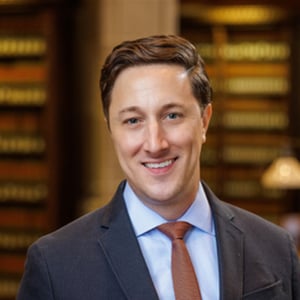
Professor of Law, Notre Dame Law School
Professor Derek Muller is a nationally-recognized scholar in the field of election law. His research focuses on the role of states in the administration of federal elections, the constitutional contours of voting rights and election administration, the limits of judicial power in the domain of elections, and the Electoral College.
He has published more than two dozen academic works, and his op-eds have appeared in the New York Times, the Los Angeles Times, and the Wall Street Journal. He has testified before Congress, and he is a contributor at the Election Law Blog. He is a co-author on a Federal Courts casebook published by Carolina Academic Press. He is also the co-reporter on a new Restatement of the Law, Election Litigation, an effort led by the American Law Institute.
Professor Muller teaches Election Law, Civil Procedure, and Evidence.
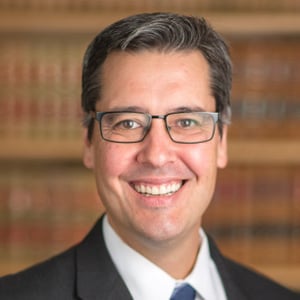
Associate Dean for Faculty; Charles W. Ebersold and Florence Whitcomb Ebersold Professor of Constitutional Law, The Ohio State University Mortiz College of Law
Professor Daniel Tokaji is an authority on the law of elections and democracy. He teaches courses on Election Law, Civil Rights, Civil Procedure, Comparative Law, Constitutional Law, Federal Courts, Legislation and Regulation, and the U.S. Legal System. His scholarship addresses questions of voting rights, racial justice, free speech, and the role of the courts in American democracy.
Professor Tokaji is the author of Election Law in a Nutshell (2d ed. 2016), and co-author of Election Law: Cases and Materials (6th ed. 2017) and The New Soft Money (2014). He has written numerous articles and book chapters on a wide variety of election and voting issues, including voting rights, voter ID, voter registration, redistricting, campaign finance regulation. Recent articles include “Gerrymandering and Association,” 59 William & Mary Law Review 2159 (2018), and “Denying Systemic Equality: The Last Words of the Kennedy Court,” 13 Harvard Law & Policy Review 539 (2019). His current research focuses on the challenges facing democracies around the globe, including the free speech issues surrounding digital disinformation and the need for trustworthy electoral institutions.
Media outlets frequently seek Professor Tokaji’s expertise on election and voting issues. He has been quoted in The New York Times, Los Angeles Times, The Columbus Dispatch, USA TODAY, and appeared on TODAY, FOX News, NBC News, and National Public Radio and many other media outlets.
A graduate of Harvard College and the Yale Law School, Professor Tokaji clerked for the Honorable Stephen Reinhardt of the U.S. Court of Appeals for the Ninth Circuit. Before arriving at Ohio State, he was a staff attorney with the ACLU Foundation of Southern California and Chair of California Common Cause.
Professor Tokaji has litigated many civil rights, civil liberties, and election law cases. He was lead counsel in a case that struck down an Ohio law requiring naturalized citizens to produce a certificate of naturalization when challenged at the polls. He also served as counsel in litigation challenging the state’s voting purges. He was also an attorney for plaintiffs in cases that kept open the window for simultaneous registration and early voting in Ohio’s 2008 general election, and that challenged punch-card voting systems in Ohio and California after the 2000 election.
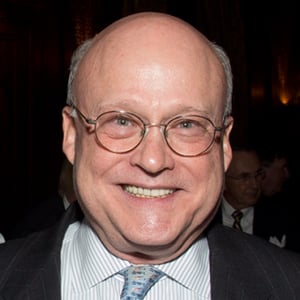
President Emeritus, Intercollegiate Studies Institute
T. Kenneth Cribb Jr. is the former president of the Intercollegiate Studies Institute. Mr. Cribb was Assistant to the President for Domestic Affairs in the Reagan administration, serving as President Reagan’s top adviser on domestic matters. Earlier in the administration he held the position of Counselor to the Attorney General. He also served as Vice Chairman of the Fulbright Foreign Scholarship Board from 1989 to 1992.
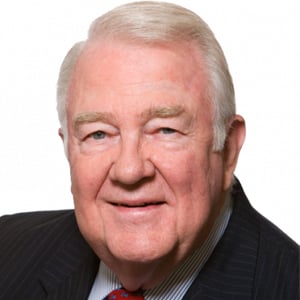
Ronald Reagan Distinguished Fellow Emeritus, The Heritage Foundation
Edwin Meese III, the prominent conservative leader, thinker and elder statesman, continues a quarter-century formal association with The Heritage Foundation as the leading think tank’s Ronald Reagan Distinguished Fellow Emeritus.
In that capacity, Meese oversees special projects and acts as an ambassador for Heritage within the conservative movement.
Meese was chairman of Heritage’s Center for Legal and Judicial Studies from its founding in 2001 until what he calls his “semi-retirement” on Feb. 1, 2013.
He joined Heritage in 1988 as the think tank's first Ronald Reagan Distinguished Fellow -- the only policy chair in the country to be officially named for the 40th president. His work focused on keeping President Reagan’s legacy of conservative principles alive in public debate and discourse.
The legal center now bears his name, in recognition of Meese’s contributions to the rule of law and the nation’s understanding of constitutional law. Its mission is to educate government officials, the media and the public about the Constitution and legal principles -- and how they affect public policy.
Perhaps best known as U.S. attorney general during Reagan’s second term, Meese’s service to the conservative icon stretched from the California governor’s mansion in 1966 to the White House in 1981 before he went to the Department of Justice four years later.
His Heritage “hats” kept Meese among the major conservative voices in national policy debates at an age when most men and women enjoyed quiet retirements.
In 2006, for example, Meese was named to the Iraq Study Group, a special presidential commission dedicated to examining the best resolutions for America's involvement in Iraq. In the past few years he wrote and spoke about constitutional topics ranging from religious liberty to the responsibility of Supreme Court justices.
Immediately after Reagan's death in 2004, and in the years since, Meese often agreed to major media appearances to discuss the lasting impact of his old friend, mentor and boss. He has summarized the Reagan legacy in three accomplishments: Reagan cut taxes and kept them low. He worked to defeat and end the Soviet Union and its worldwide push for communism. And he restored America's faith in itself after years of failure and "malaise."
"I admired him as a leader and cherish his friendship," Meese wrote in a 2004 essay for Heritage members and supporters. "Ronald Reagan had strong convictions. He was committed to the principles that had led to the founding of our nation. And he had the courage to follow his convictions against all odds." <[>Edwin Meese III was born Dec. 2, 1931, to Edwin Jr. and Leone Meese in Oakland, Calif. He graduated from Yale University in 1953 and holds a law degree from the University of California-Berkeley.
Meese spent much of his adult life working for Reagan, first after the former actor, sports announcer and athlete was elected as California’s governor in 1966 and then when he sought and won the presidency in 1980.
Reagan never forgot Meese's loyalty and hard work. During a press conference at which reporters questioned Meese's actions at the Justice Department, Reagan replied: "If Ed Meese is not a good man, there are no good men."
During the Reagan governorship, Meese served as executive assistant and chief of staff from 1969 through 1974 and as legal affairs secretary from 1967 through 1968. He previously was deputy district attorney in Alameda County, Calif.
From January 1981 to February 1985, Meese held the position of counsellor to the president -- the senior job on the White House staff -- and functioned as Reagan's chief policy adviser. In 1985, he received Government Executive magazine's annual award for excellence in management.
Meese served as the 75th attorney general of the United States from February 1985 to August 1988. As the nation's chief law enforcement officer, he directed the Justice Department and led international efforts to combat terrorism, drug trafficking and organized crime.
Meese’s relationship with Heritage began when he met with senior management to discuss the think tank's landmark policy guide, Mandate for Leadership, prepared for the incoming administration. Meese later recalled that Reagan personally handed out copies of the 1,093-page book to members of his Cabinet and asked them to read it. Nearly two-thirds of Mandate's 2,000 recommendations would be adopted or attempted by the Reagan administration.
More than a decade after joining Heritage, Meese assumed the chairmanship of its Center for Legal and Judicial Studies. Under his guidance, the center counseled White House staffers, Justice Department officials and Senate Judiciary Committee members on the importance of filling judicial vacancies with qualified men and women who are committed to interpreting the Constitution according to the founding document's original meaning.
The center became known for hosting "moot court" practice sessions to sharpen the arguments of attorneys slated to bring important cases before the Supreme Court. Those cases addressed constitutional issues ranging from property rights to racial preferences in primary and secondary schools to restrictions on free speech in campaign finance law.
Meese headed the legal center's Advisory Board for the writing and editing of the best-selling book, The Heritage Guide to the Constitution (Regnery, 2005). In it, 109 experts walked readers through a clause-by-clause analysis of the Constitution. Sen. Tom Coburn (R-Okla.) was among those keeping the reference work handy during Judiciary Committee hearings on Supreme Court nominees.
Meese's other books include “Leadership, Ethics and Policing” (Prentice Hall, 2004); “Making America Safer” (Heritage, 1997); and “With Reagan: The Inside Story” (Regnery Gateway, 1992).He wrote the Introduction to a well-received 2010 book on the “overcriminalization” trend, “One Nation Under Arrest,” by Heritage veterans Paul Rosenzweig and Brian W. Walsh.
He also is a distinguished visiting fellow at the Hoover Institution at Stanford University in California and lectures, writes and consults throughout the United States on a variety of subjects.
As both attorney general and counsellor to Reagan, Meese was a member of the Cabinet and the National Security Council. He served as chairman of the Domestic Policy Council and the National Drug Policy Board. After Reagan won the White House in the 1980 election, Meese headed the transition team. During the campaign, he was the Reagan-Bush Committee's senior official.
Meese had a career outside government and politics. From 1977 to 1981, he was a law professor at the University of San Diego, where he also directed the Center for Criminal Justice Policy and Management.
He was an executive in the aerospace and transportation industry as vice president for administration of Rohr Industries Inc. in Chula Vista, Calif. He left Rohr to return to the practice of law, doing corporate and general work in San Diego County.
A retired colonel in the Army Reserve, Meese remains active in numerous civic and educational organizations.
He and his wife, Ursula, have two grown children and reside in McLean, Va.
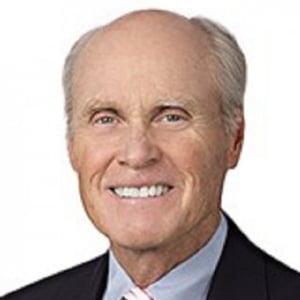
Former United States Assistant Attorney General, Civil Rights Division, United States Department of Justice
William Bradford served as the United States Assistant Attorney General for the Civil Rights Division from 1981 to 1988.
Reynolds was Senior Counsel in BakerBotts Antitrust and Competition division. He graduated with a LL.B. from Vanderbilt University Law School in 1967 where he was Order of the Coif and Editor-in-Chief of the Vanderbilt Law Review. In 1964, he received a B.A. from Yale University.
Reynolds passed away on September 14, 2019, in Seabrook Island, South Carolina at age 77.
President Emeritus, Intercollegiate Studies Institute
T. Kenneth Cribb Jr. is the former president of the Intercollegiate Studies Institute. Mr. Cribb was Assistant to the President for Domestic Affairs in the Reagan administration, serving as President Reagan’s top adviser on domestic matters. Earlier in the administration he held the position of Counselor to the Attorney General. He also served as Vice Chairman of the Fulbright Foreign Scholarship Board from 1989 to 1992.
Ronald Reagan Distinguished Fellow Emeritus, The Heritage Foundation
Edwin Meese III, the prominent conservative leader, thinker and elder statesman, continues a quarter-century formal association with The Heritage Foundation as the leading think tank’s Ronald Reagan Distinguished Fellow Emeritus.
In that capacity, Meese oversees special projects and acts as an ambassador for Heritage within the conservative movement.
Meese was chairman of Heritage’s Center for Legal and Judicial Studies from its founding in 2001 until what he calls his “semi-retirement” on Feb. 1, 2013.
He joined Heritage in 1988 as the think tank's first Ronald Reagan Distinguished Fellow -- the only policy chair in the country to be officially named for the 40th president. His work focused on keeping President Reagan’s legacy of conservative principles alive in public debate and discourse.
The legal center now bears his name, in recognition of Meese’s contributions to the rule of law and the nation’s understanding of constitutional law. Its mission is to educate government officials, the media and the public about the Constitution and legal principles -- and how they affect public policy.
Perhaps best known as U.S. attorney general during Reagan’s second term, Meese’s service to the conservative icon stretched from the California governor’s mansion in 1966 to the White House in 1981 before he went to the Department of Justice four years later.
His Heritage “hats” kept Meese among the major conservative voices in national policy debates at an age when most men and women enjoyed quiet retirements.
In 2006, for example, Meese was named to the Iraq Study Group, a special presidential commission dedicated to examining the best resolutions for America's involvement in Iraq. In the past few years he wrote and spoke about constitutional topics ranging from religious liberty to the responsibility of Supreme Court justices.
Immediately after Reagan's death in 2004, and in the years since, Meese often agreed to major media appearances to discuss the lasting impact of his old friend, mentor and boss. He has summarized the Reagan legacy in three accomplishments: Reagan cut taxes and kept them low. He worked to defeat and end the Soviet Union and its worldwide push for communism. And he restored America's faith in itself after years of failure and "malaise."
"I admired him as a leader and cherish his friendship," Meese wrote in a 2004 essay for Heritage members and supporters. "Ronald Reagan had strong convictions. He was committed to the principles that had led to the founding of our nation. And he had the courage to follow his convictions against all odds." <[>Edwin Meese III was born Dec. 2, 1931, to Edwin Jr. and Leone Meese in Oakland, Calif. He graduated from Yale University in 1953 and holds a law degree from the University of California-Berkeley.
Meese spent much of his adult life working for Reagan, first after the former actor, sports announcer and athlete was elected as California’s governor in 1966 and then when he sought and won the presidency in 1980.
Reagan never forgot Meese's loyalty and hard work. During a press conference at which reporters questioned Meese's actions at the Justice Department, Reagan replied: "If Ed Meese is not a good man, there are no good men."
During the Reagan governorship, Meese served as executive assistant and chief of staff from 1969 through 1974 and as legal affairs secretary from 1967 through 1968. He previously was deputy district attorney in Alameda County, Calif.
From January 1981 to February 1985, Meese held the position of counsellor to the president -- the senior job on the White House staff -- and functioned as Reagan's chief policy adviser. In 1985, he received Government Executive magazine's annual award for excellence in management.
Meese served as the 75th attorney general of the United States from February 1985 to August 1988. As the nation's chief law enforcement officer, he directed the Justice Department and led international efforts to combat terrorism, drug trafficking and organized crime.
Meese’s relationship with Heritage began when he met with senior management to discuss the think tank's landmark policy guide, Mandate for Leadership, prepared for the incoming administration. Meese later recalled that Reagan personally handed out copies of the 1,093-page book to members of his Cabinet and asked them to read it. Nearly two-thirds of Mandate's 2,000 recommendations would be adopted or attempted by the Reagan administration.
More than a decade after joining Heritage, Meese assumed the chairmanship of its Center for Legal and Judicial Studies. Under his guidance, the center counseled White House staffers, Justice Department officials and Senate Judiciary Committee members on the importance of filling judicial vacancies with qualified men and women who are committed to interpreting the Constitution according to the founding document's original meaning.
The center became known for hosting "moot court" practice sessions to sharpen the arguments of attorneys slated to bring important cases before the Supreme Court. Those cases addressed constitutional issues ranging from property rights to racial preferences in primary and secondary schools to restrictions on free speech in campaign finance law.
Meese headed the legal center's Advisory Board for the writing and editing of the best-selling book, The Heritage Guide to the Constitution (Regnery, 2005). In it, 109 experts walked readers through a clause-by-clause analysis of the Constitution. Sen. Tom Coburn (R-Okla.) was among those keeping the reference work handy during Judiciary Committee hearings on Supreme Court nominees.
Meese's other books include “Leadership, Ethics and Policing” (Prentice Hall, 2004); “Making America Safer” (Heritage, 1997); and “With Reagan: The Inside Story” (Regnery Gateway, 1992).He wrote the Introduction to a well-received 2010 book on the “overcriminalization” trend, “One Nation Under Arrest,” by Heritage veterans Paul Rosenzweig and Brian W. Walsh.
He also is a distinguished visiting fellow at the Hoover Institution at Stanford University in California and lectures, writes and consults throughout the United States on a variety of subjects.
As both attorney general and counsellor to Reagan, Meese was a member of the Cabinet and the National Security Council. He served as chairman of the Domestic Policy Council and the National Drug Policy Board. After Reagan won the White House in the 1980 election, Meese headed the transition team. During the campaign, he was the Reagan-Bush Committee's senior official.
Meese had a career outside government and politics. From 1977 to 1981, he was a law professor at the University of San Diego, where he also directed the Center for Criminal Justice Policy and Management.
He was an executive in the aerospace and transportation industry as vice president for administration of Rohr Industries Inc. in Chula Vista, Calif. He left Rohr to return to the practice of law, doing corporate and general work in San Diego County.
A retired colonel in the Army Reserve, Meese remains active in numerous civic and educational organizations.
He and his wife, Ursula, have two grown children and reside in McLean, Va.
Former United States Assistant Attorney General, Civil Rights Division, United States Department of Justice
William Bradford served as the United States Assistant Attorney General for the Civil Rights Division from 1981 to 1988.
Reynolds was Senior Counsel in BakerBotts Antitrust and Competition division. He graduated with a LL.B. from Vanderbilt University Law School in 1967 where he was Order of the Coif and Editor-in-Chief of the Vanderbilt Law Review. In 1964, he received a B.A. from Yale University.
Reynolds passed away on September 14, 2019, in Seabrook Island, South Carolina at age 77.
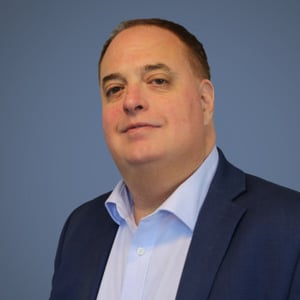
Director of the Center for Energy and Environment and Senior Fellow, Competitive Enterprise Institute
Daren Bakst is Director of the Competitive Enterprise Institute’s Center for Energy and Environment and a Senior Fellow. In this role, he manages, develops, and leads the coalition, advocacy, and research activities of the Center, which is one of the most effective advocates for Free Market Environmentalism.
Before joining CEI as Deputy Director in March, 2023, Daren was a Senior Research Fellow in Environmental Policy and Regulation at the Heritage Foundation, where he played a leading role in the launch of the organization’s new energy and environment center, and created and hosted the Heritage Foundation’s energy and environment podcast the “PowerCast.” During his decade at Heritage, Daren wrote about energy and environmental policy, food and agricultural policy (including editing and co-authoring the book Farms and Free Enterprise), regulation, and trade among other topics.
Daren also worked on environmental policy and regulation at the U.S. Chamber of Commerce, where he was a policy counsel and served as the executive to the association’s Government Oversight, Operations & Consumer Affairs committee, which was responsible for issues such as regulatory process reform. Daren has significant state level experience, working for seven years at the Raleigh, N.C.-based John Locke Foundation, one of the largest state-based, free-market think tanks. As director of legal and regulatory studies, his broad portfolio included energy and environmental policy, regulatory reform, and property rights.
Daren has testified numerous times before Congress, regularly submits comments to federal agencies and has appeared in or been quoted by a wide range of media outlets such as The Wall Street Journal, USA Today, The Washington Times, CNN, Fox Business News, Al-Jazeera America, and U.S. News and World Report. He is a member of the Federalist Society’s Environmental Law and Property Rights Executive Committee and serves on the College Level Advisory Board for Constituting America, an organization that informs and educates about the importance of the U.S. Constitution.
Daren, who hails from Florida, received his bachelor’s and master’s degrees from George Washington University. A licensed attorney, he holds a law degree from the University of Miami and a master of laws degree from American University.
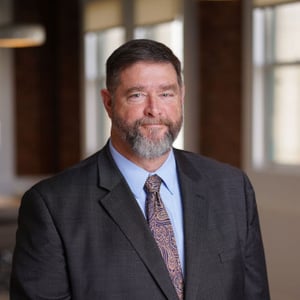
Partner, Briscoe Prows Kao Ivester & Bazel LLP
Tony Francois is experienced in Water and Real Property Law, Land Use and Zoning, Environmental Regulation, Natural Resources Development, Agricultural Law, and Constitutional Law. He has represented homeowners, builders, farmers and ranchers, trade associations, and water districts in administrative, civil, and criminal proceedings before state and federal administrative agencies and state and federal trial and appellate courts. He is a member of the California State Bar and the Northern, Eastern, and Central Districts of California and the Districts of New Mexico and North Dakota, and has litigated cases in federal courts in California, Oregon, Washington, Idaho, Montana, Nevada, Arizona, New Mexico, Colorado, North and South Dakota, Minnesota, Massachusetts, Maryland, South Carolina, and the District of Columbia, as well as the Sixth, Eighth, Ninth, and Tenth Circuit Courts of Appeals. He has appeared before the Supreme Courts of California, Idaho, Nevada, and the United States.
Prior to attending law school, he served as an infantry officer in the United States Army, and was stationed in the former West Germany during the fall of the Berlin Wall.
Tony was an Attorney at Pacific Legal Foundation from 2012 to 2021. He was a lobbyist for 10 years, first with California Farm Bureau Federation from 2003 to 2007, and then with KP Public Affairs from 2007 to 2012. He was an attorney at McQuaid, Bedford & Van Zandt in San Francisco from 1999 – 2003.
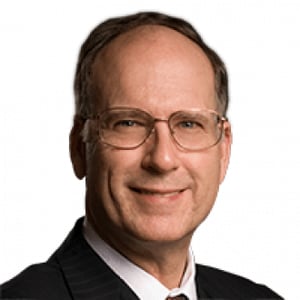
Principal, Advantus Strategies, LLC
John Paul Woodley Jr. is currently the Principal of Environmental and Energy Practice Group for Advantus Strategies. From 2003 to 2009, Woodley served as Assistant Secretary of the Army for Civil Works, supervising the Army Corps of Engineers Civil Works Program. Under his leadership, the Corps Wetland Regulatory Program was strengthened. He also oversaw the restoration of the Florida Everglades and the reconstruction of the hurricane protection system for New Orleans following Hurricane Katrina.
Woodley also served as Assistant Deputy Under Secretary of Defense, Environment, where he was responsible for policy and oversight of the Defense Department’s environmental cleanup, compliance, pollution prevention and natural resource management.
He has also served as Secretary of Natural Resources for Virginia, where he was responsible for environmental protection and for permitting, outdoor recreation, open space management, inland and marine fisheries and historic resources in the Commonwealth.
Woodley served on active duty with the U.S. Army Judge Advocate General’s Corps from 1979 to 1985, and retired from the Army Reserve in August 2003 as a Lieutenant Colonel.
Woodley has been awarded the Legion of Merit, the Meritorious Service Medal (2nd Oak Leaf Cluster), the Army Commendation Medal (1st Oak Leaf Cluster), and the Army Achievement Medal. He has been honored with the U. S. Army Decoration for Distinguished Civilian Service, the Secretary of Defense Medal for Outstanding Public Service and the Silver de Fleury Medal from the Army Engineer Regiment.
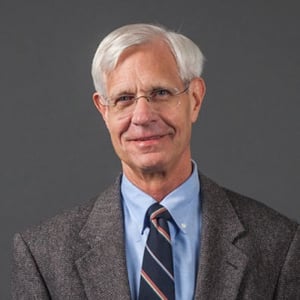
Distinguished University Professor, Antonin Scalia Law School, George Mason University
University Professor Nelson Lund is the author of Rousseau’s Rejuvenation of Political Philosophy: A New Introduction. He has also written widely in the field of constitutional law, including articles on constitutional interpretation, federalism, separation of powers, the Second Amendment, the Commerce Clause, the Speech or Debate Clause, the Equal Protection Clause, and the Uniformity Clause. In addition, he has published articles in the fields of employment discrimination and civil rights, the legal regulation of medical ethics, and the application of economic analysis to legal institutions and legal ethics.
Professor Lund graduated from St. John's College in Annapolis, Maryland, after which he received an MA in philosophy from the Catholic University of America and a PhD in political science from Harvard University. He left the faculty of the University of Chicago to attend its law school, where he served as executive editor of the University of Chicago Law Review and chapter chairman of the Federalist Society for Law and Public Policy Studies. After law school, he held positions at the United States Department of Justice in the Office of the Solicitor General and the Office of Legal Counsel. He also served as a law clerk to the Honorable Patrick E. Higginbotham of the United States Court of Appeals for the Fifth Circuit and to the Honorable Sandra Day O'Connor of the United States Supreme Court. Following his clerkship with Justice O'Connor, Professor Lund served in the White House as associate counsel to the president from 1989 to 1992.
Since joining the faculty at George Mason University's Antonin Scalia Law School, Professor Lund has taught Constitutional Law, Legislation, Federal Election Law, Employment Discrimination, State and Local Government, and seminars on the Second Amendment and on a variety of topics in Jurisprudence.
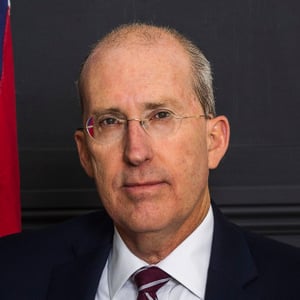
Staff Attorney, Eighth Texas Court of Appeals
David Vandenberg is a staff attorney with the Eighth Texas Court of Appeals in El Paso. He is also the President-Elect of the Texas Association of Appellate Court Attorneys. Prior to working at the Texas Court of Appeals, he was Supervising Attorney for the Third Judicial District Court in Las Cruces, New Mexico, the second largest court of general jurisdiction in the state. He served as summer clerk at the Supreme Court of Micronesia, a former American territory, and at the Texas Third Court of Appeals in Austin. In addition to his law degree from John Marshall School of Law in Atlanta, he earned a doctorate in philosophy with a concentration in epistemology from the University of North Carolina at Chapel Hill with highest awards of the graduate faculty. He is the author of a highly cited article on royalty determination for horizontal and stacked (fracked) oil and gas wells in cross-boundary contexts with the Journal of World Business and Energy Law at Oxford University Press and is a designated reporter for developments in American law for OUP. He has been invited to speak on legal aspects of fracking technology at international energy conferences in Europe and Asia.
Associate, King & Spalding
Brian Callanan is an associate in the national appellate practice at King & Spalding. He has participated in cases before the Supreme Court, federal courts of appeals, and state and federal trial courts.
Mr. Callanan has drafted appellate briefs and critical motions in matters involving a broad range of complex legal issues. He has considerable experience litigating against federal agencies and advising clients on administrative law matters. He has represented clients before, or in litigation against, agencies including the Department of Transportation, National Labor Relations Board, Securities & Exchange Commission, Commodity Futures Trading Commission, Federal Reserve, Department of Health & Human Services, and Food & Drug Administration. Among other successes, he participated in an Administrative Procedure Act challenge that prompted a federal agency to withdraw the costliest regulatory mandate in the history of the U.S. railroad industry. He co-chairs the Rulemaking Committee of the American Bar Association’s administrative law section and is a member of the Executive Committee of the Federalist Society’s administrative law section.
Before joining King & Spalding, Mr. Callanan was general counsel to U.S. Senator Rob Portman. In that position, he served as principal adviser on tax policy, regulatory policy, and legal issues cutting across all substantive areas. He developed and drafted bipartisan legislation on a range of issues, including bipartisan bills to reform the rulemaking process, to strengthen economic analysis by independent regulatory agencies, to reform the federal permitting process for major infrastructure projects, and to expedite the sale of excess federal property. He advised Senator Portman in connection with his work on the Finance Committee and the Homeland Security & Governmental Affairs Committee. During the same period, he served as staff director of a Senate oversight subcommittee with jurisdiction over all aspects of federal contracting.
Previously, Mr. Callanan was a litigation associate at another major law firm in Washington, D.C.
Mr. Callanan served as a law clerk to Judge A. Raymond Randolph of the U.S. Court of Appeals for the District of Columbia Circuit. He received his J.D., cum laude, from Harvard Law School in 2008. At Harvard, Mr. Callanan served as Articles Editor of the Harvard Journal of Law & Public Policy. Before law school, he served as a speechwriter in the U.S. Senate. Mr. Callanan earned his undergraduate degree, magna cum laude, from Claremont McKenna College, where he was elected to Phi Beta Kappa.
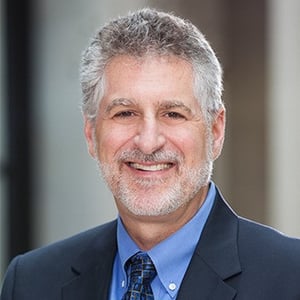
Roy W. and Eugenia C. McDonald Endowed Chair in Civil Procedure & Professor of Government, The University of Texas at Austin School of Law
Charles Silver holds the Roy W. and Eugenia C. McDonald Endowed Chair in Civil Procedure at the School of Law at the University of Texas at Austin. He has published widely in law reviews and peer-reviewed journals. His articles use economic theory, philosophical and doctrinal reasoning, and empirical methodologies to shed light on issues arising in the areas of civil procedure, liability insurance, and the professional regulation of attorneys. He has written about group lawsuits (including class actions and other mass proceedings), attorneys’ fees (including contractual compensation arrangements, common fund fee awards, and statutory fee awards), and professional responsibility (focusing on lawyers involved in civil litigation on behalf of plaintiffs and defendants). In recent years, as Co-Director of the Center on Lawyers, Civil Justice and the Media at the University of Texas, he has worked with a group of empirical researchers on a series of studies of medical malpractice litigation in Texas.
Professor Silver served as Associate Reporter on the Principles of the Law of Aggregate Litigation, published by the American Law Institute in 2010. He taught as a Visiting Professor at the Harvard Law School, the University of Michigan Law School, and the Vanderbilt University Law School.
Professor Silver has given many presentations at academic conferences, including programs sponsored by the American Law and Economics Association, the Conference on Empirical Legal Studies, the Law & Society Association, RAND, and the Searle Center on Law, Regulation and Economic Growth. He has also spoken at faculty colloquia at law schools across the U.S.
Professor Silver often consults with attorneys and serves as an expert witness. He has strong ties with all segments of the litigating bar. On the plaintiffs’ side, he submitted an expert report on attorneys’ fees in the massive Enron settlement and served as professional responsibility advisor to the private attorneys who handled the State of Texas’ lawsuit against the tobacco industry. On the defense side, he advises on the responsibilities of lawyers retained by insurance carriers to defend liability suits against policyholders. Professor Silver has also testified to legislative committees and submitted amicus curiae briefs to courts on topics ranging from class certification to lawyers’ fiduciary duties to medical malpractice litigation.
In 2009, the Tort Trial & Insurance Practice Section (TIPS) of the ABA awarded Professor Silver the Robert B. McKay Law Professor Award for outstanding scholarship on tort and insurance law.

Do Voter ID Laws Burden Voters? [POLICYbrief]
Derek T. Muller, Daniel P. Tokaji
The requirement to show identification in order to vote has become a topic of heated...
Banquet Speech by Attorney General Edwin Meese III [Archive Collection]
T. Kenneth Cribb, Edwin Meese, Wm. Bradford Reynolds
On January 30, 1987, the Federalist Society hosted its annual National Lawyers Convention at the...
Banquet Speech by Attorney General Edwin Meese III [Archive Collection]
T. Kenneth Cribb, Edwin Meese, Wm. Bradford Reynolds
On January 30, 1987, the Federalist Society hosted its annual National Lawyers Convention at the...
Litigation Update: McMahon v. Fenves
TeleforumBreakfast with General Counsel Brian Callanan
DC Young Lawyers Chapter
Washington, DCAn Evening with Judge Michael Mosman
Portland Lawyers Chapter
Portland , ORDeep Dive Episode 90 – The New Definition of WOTUS
Daren Bakst, Tony Francois, John Paul Woodley
The Trump Administration recently released its final rule defining “waters of the United States” under...
Topics
In United States v. Sineneng-Smith, SCOTUS Grapples with Line Between Protected Speech and Criminal Solicitation
Can an individual be convicted of a felony for statements made in support of illegal...
Who Should Pay for Your Health Care: The Government, Your Insurer, or You?
Texas Student Chapter
Austin, TXThe Mythical McCulloch
Nelson Lund
A Review of The Spirit of the Constitution: John Marshall and the 200-Year Odyssey of...