
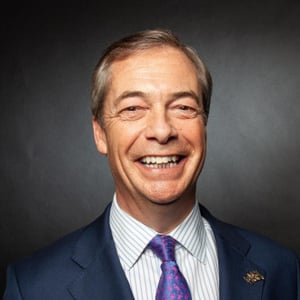
Former Member of the European Parliament, South East England Constituency

Professor Emeritus of Law, Antonin Scalia Law School, George Mason University
Jeremy A. Rabkin is a Professor Emeritus of Law at the Antonin Scalia Law School, George Mason University. Before joining the faculty in June 2007, he was for over two decades a professor in the Department of Government at Cornell University. Professor Rabkin serves on the board of directors of the Center for Individual Rights, a public interest law firm based in Washington, D.C. Previously he was a board member of the U.S. Institute of Peace and the board of academic advisors of the American Enterprise Institute.
Professor Rabkin’s books include Law Without Nations? (Princeton University Press, 2005). He authored “If You Need a Friend, Don’t Call a Cosmopolitan,” a chapter in Varieties of Sovereignty and Citizenship (Sigal R. Ben-Porath & Rogers M. Smith eds., University of Pennsylvania Press, 2012). His articles have appeared in major law reviews and political science journals and his journalistic contributions in a range of magazines and newspapers, including the Washington Post and the Wall Street Journal.
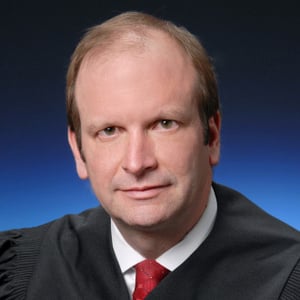
Associate Justice, Supreme Court of Ohio
Justice Pat DeWine began his six-year term on the Supreme Court of Ohio on Jan. 2, 2017, following his statewide election in November 2016. An excellent writer, Justice DeWine is known for the quality and thoroughness of his legal opinions. His opinions reflect his strong belief in judicial restraint and his respect for the constitutional roles of the other coequal branches of government.
Justice DeWine has served at all levels of the Ohio judiciary. Prior to his election to the Supreme Court, Justice DeWine served for four years on the First District Court of Appeals, and prior to that, for four years on the Hamilton County Common Pleas Court.
Justice DeWine has a strong commitment to furthering the rule of law through education. He is an adjunct professorat the University of Cincinnati College of Law where he teaches Appellate Practice and Procedure. In addition, he has taught undergraduate courses at the University of Cincinnati in Ohio Government & Politics and American Courts.
Justice DeWine has strong academic credentials. He graduated from the University of Michigan Law School in the top ten percent of his class with Order of the Coif honors. As an undergraduate student at Miami University, he maintained a perfect 4.0 grade point average and received summa cum laude honors. He was also a member of the Varsity Track and Cross Country teams.
After law school, he was selected for a clerkship on United States Court of Appeals for the Sixth Circuit. He served under the Honorable David A. Nelson, who had been appointed to the Sixth Circuit by President Ronald Reagan.
Justice DeWine understands the litigant’s perspective, having practiced law for 13 years with one of Cincinnati’s top law firms, Keating, Muething & Klekamp. He represented clients in appellate matters in Ohio and in federal courts across the country. He handled a diverse range of litigation matters, including mass tort bankruptcies, securities fraud litigation, and constitutional issues.
Other Public Service
Justice DeWine brings a unique perspective to the bench because of his public service as a County Commissioner and a member of Cincinnati City Council.
As a member of the Hamilton County Board of Commissioners, he focused on reforming County government, lowering the tax burden, eliminating unnecessary bureaucracy and promoting public safety. He led the citizens referendum that ultimately repealed the nearly $1 billion sales tax increase that was enacted by his colleagues on the Commission. The Reason Foundation named him an “Innovator in Action,” along with such leaders as Rudy Giuliani and Jeb Bush, for his efforts to reform County government.
On Cincinnati City Council, he was known as a taxpayer watchdog, successfully rooting out wasteful spending and abuse in city government. He helped eliminate unnecessary regulations, led the effort to crack down on quality of life issues affecting city neighborhoods and created a development fund that leveraged private capital to spur new housing development downtown and across city neighborhoods. He also led the Issue Four charter change that created a more accountable city government by allowing the city to hire the most qualified individuals for key positions in city government.
He was a founder of the Build Cincinnati reform group that successfully passed a charter amendment to allow Cincinnati voters to directly elect the Mayor.athon.
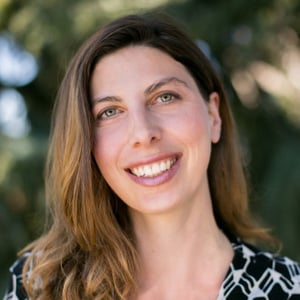
Senior Fellow, Democracy, Conflict, and Governance Program, Carnegie Endowment for International Peace
Dr. Rachel Kleinfeld is a senior fellow at the Carnegie Endowment for International Peace, where she focuses on issues of rule of law, security, and governance in post-conflict countries, fragile states, and states in transition.
As the founding CEO of the Truman National Security Project, she spent nearly a decade leading a movement of national security, political, and military leaders working to promote people and policies that strengthen security, stability, rights, and human dignity in America and around the world. In 2011, former secretary of state Hillary Clinton appointed Kleinfeld to the Foreign Affairs Policy Board, which advises the secretary of state quarterly, a role she served through 2014.
Kleinfeld has consulted on rule of law reform for the World Bank, the European Union, the OECD, the Open Society Institute, and other institutions, and has briefed multiple government agencies in the United States and abroad. She is the author of Advancing the Rule of Law Abroad: Next Generation Reform (Carnegie, 2012), which was chosen by Foreign Affairs magazine as one of the best foreign policy books of 2012. Her writings have appeared in Relocating the Rule of Law (Hart, 2009), Promoting Democracy and the Rule of Law: American and European Strategies (Palgrave, 2009), The Future of Human Rights (Philadelphia UP, 2008), Promoting the Rule of Law: The Problem of Knowledge (Carnegie Endowment, 2006), With All Our Might (Rowen and Littlefield, 2006) and other publications. She has also co-authored Let There Be Light: Electrifying the Developing World with Markets and Distributed Generation (Truman Institute, 2012).
Named one of the top 40 Under 40 Political Leaders in America by Time magazine in 2010, Kleinfeld has been featured in the New York Times, the Wall Street Journal, Fox News, and other national television, radio, and print media. You can find out more about her work and activities on her website, rachelkleinfeld.com.
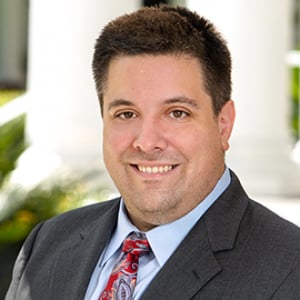
Sheila M. McDevitt Professor of Law and Faculty Director of the Election Law Center, Florida State University College of Law
Professor Morley joined FSU Law in 2018, and teaches and writes in the areas of election law, constitutional law, remedies, and the federal courts. He is best known for his work on election emergencies and post-election litigation, nationwide and other defendant-oriented injunctions, the jurisdiction of the federal courts and their equitable powers more generally. He has testified before congressional committees, made presentations to election officials for the U.S. Election Assistance Commission and participated in bipartisan blue-ribbon groups to develop election reforms. The governor of Florida also appointed Professor Morley to the Criminal Punishment Code Task Force, to propose potential revisions to the legislature.
The U.S. Supreme Court has cited several of his articles, and he was counsel of record for the successful Petitioner in a landmark campaign finance case. Professor Morley has appeared on C-SPAN, Court TV, Fox News and numerous local news programs, and has been quoted in the Washington Post, Los Angeles Times, Roll Call, Politico, U.S. News and World Report, and a wide range of other national publications. His work has been published in many of the nation’s top law reviews, including the Georgetown Law Journal, Northwestern University Law Review, Boston University Law Review and Emory Law Journal.
Before joining FSU Law, Professor Morley was a Climenko Fellow and Lecturer in Law at Harvard Law School. Prior to his experience in academia, he served in government as special assistant to the General Counsel of the Army at the Pentagon, as well as a law clerk for Judge Gerald B. Tjoflat of the U.S. Court of Appeals for the Eleventh Circuit. During his tenure with the Army General Counsel’s office, he was awarded the Meritorious Civilian Service Award and the Army Staff Lapel Pin. He also worked as an associate at Williams & Connolly LLP and the Supreme Court & Appellate group of Winston & Strawn, LLP, both in Washington, D.C.
Professor Morley earned his J.D. from Yale Law School in 2003, where he was a senior editor on the Yale Law Journal; served on the moot court board; and received the Thurman Arnold Prize for Best Oralist in the Morris Tyler Moot Court of Appeals.
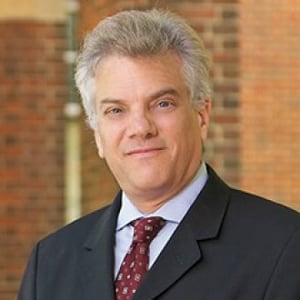
Sudler Family Professor of Constitutional Law, New York University School of Law
Richard H. Pildes is one of the nation’s leading scholars of constitutional law and a specialist in legal issues affecting democracy. He is a Member of the American Academy of Arts and Sciences and the American Law Institute, and has received recognition as a Guggenheim Fellow and a Carnegie Scholar. His acclaimed casebook, The Law of Democracy: Legal Structure of the Political Process (now in its fourth edition), helped create an entirely new field of study in the law schools. The Law of Democracy systematically explores legal and policy issues concerning the structure of democratic elections and institutions, such as the role of money in politics, the design of election districts, the regulation of political parties, the design of voting systems, the representation of minority interests in democratic institutions, and similar issues. He has written extensively on the rise of political polarization in the United States, the Voting Rights Act, the dysfunction of America’s political processes, the role of the Supreme Court in overseeing American democracy, the powers of the American President and Congress, and he has criticized excessively “romantic” understandings of democracy. In addition to his scholarship on these issues, he has written on national-security law, the design of the regulatory state, and American constitutional history and theory.
Respect for his expertise in these areas is reflected in frequent citations of his work in U.S. Supreme Court opinions, the translation of his work into many languages, and his frequent public lectures and appearances around the world, including his nomination with the NBC News Team for an Emmy Award for coverage of the 2000 Presidential election litigation.
His work has been translated and published in Chinese, French, Spanish, and Portuguese. In addition to his scholarship, Professor Pildes plays an active role litigating in these areas. He has won two cases before the United States Supreme Court, including a 2015 victory in Alabama Democratic Conference v. Alabama, a case involving race and redistricting. He served as counsel to a group of former chairmen of the Securities and Exchange Commission in litigation defending the constitutionality of the Sarbanes-Oxley Act; as counsel in election litigation to the Puerto Rico Electoral Commission; as counsel to the government of Puerto Rico; as a federal court-appointed independent expert on voting rights litigation; and as counsel in successful Supreme Court litigation that challenged the way the United States Tax Court operated. He was also a senior legal advisor to the 2008 and 2012 campaigns of President Obama.
Pildes received his A.B. in physical chemistry summa cum laude from Princeton, and his J.D. magna cum laude from Harvard, where he served as Supreme Court Note Editor on the Harvard Law Review. He clerked for Judge Abner J. Mikva of the U.S. Court of Appeals for the District of Columbia Circuit and for Justice Thurgood Marshall of the U.S. Supreme Court. After practicing law in Boston, he began his academic career at the University of Michigan Law School, before joining the NYU School of Law in 2001.
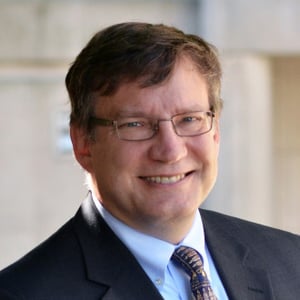
Chairman and Founder, Institute for Free Speech; Josiah H. Blackmore II/Shirley M. Nault Designated Professor of Law, Capital University Law School
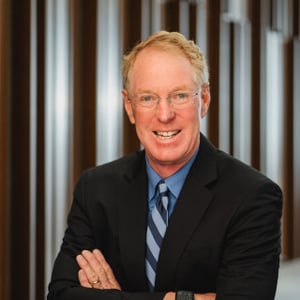
Ronald N. Boyce Presidential Professor of Criminal Law and University Distinguished Professor of Law, The University of Utah College of Law
Paul G. Cassell is an internationally recognized legal scholar on criminal and civil justice, crime victims' rights, constitutional law, evidence, judicial process, and other legal issues. Cassell received a B.A. (1981) and a J.D. (1984) from Stanford University, where he graduated Order of the Coif and was President of the Stanford Law Review. He clerked for then-Judge Antonin Scalia when Scalia was on the U.S. Court of Appeals for the D.C. Circuit (1984-85) and for Chief Justice Warren Burger of the United States Supreme Court (1985-86). Cassell then served as an Associate Deputy Attorney General with the U.S. Justice Department (1986-88) and as an Assistant U.S. Attorney for the Eastern District of Virginia (1988 to 1991). Cassell joined the faculty at the College of Law in 1992, where he taught full-time until he was sworn in as a U.S. District Court Judge for the District of Utah in July 2002. In November 2007, he resigned his judgeship to return full-time to the College of Law to teach, write, and litigate concerning issues relating to crime victims' rights and criminal and civil justice reform. Professor Cassell has also published numerous law review articles in journals such as the Stanford Law Review, the Michigan Law Review, the Harvard Journal of Law and Public Policy, and the Journal of Criminal Law and Criminology. He is a co-author of the nation's only law school textbook on crime victims' rights, Victims in Criminal Procedure (various editions, most recently in its fifth edition published in 2025). Professor Cassell has argued pro bono cases relating to criminal procedure and crime victims' rights before the United States Supreme Court, the 2nd, 4th, 5th, 6th, 7th, 8th, 9th, 10th, 11th, and D.C. Circuits (including the 5th and 11th Circuits en banc), several U.S. District Courts, the Utah Supreme Court, and the Arizona Supreme Court. In 2020, Cassell received the Ronald Wilson Reagan Public Policy Award - National Crime Victims' Service Award from the U.S. Department of Justice. Cassell is a member of the American Law Institute, a fellow of the American Bar Foundation, and an inaugural member of the Council on Criminal Justice. He is also an occasional blogger at The Volokh Conspiracy.
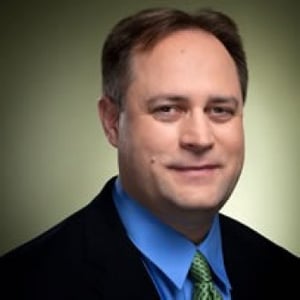
Vice President, Cornerstone Research, Economic and Financial Consulting and Expert Testimony
Greg Eastman analyzes complex economic and accounting issues related to tax, mergers, securities and financial products, and healthcare. He has extensive trial and arbitration expertise and directs large teams supporting multiple experts. As a testifying expert, Dr. Eastman has addressed profitability, cost efficiencies, class certification, valuation and damages, and unjust enrichment issues. He has provided testimony before the Commodity Futures Trading Commission, the Department of Justice (DOJ), and the Federal Bureau of Investigation. Dr. Eastman has more than twenty years of experience consulting in a range of industries, including electric utilities, energy, financial institutions, insurance, medical services, nuclear utilities, oil, private equity, and transportation.
In his tax controversy work, Dr. Eastman has analyzed the economic substance and business purpose of transactions. He has reviewed structured transactions, assessed a multinational company’s debt capacity, analyzed guarantee fee payments, and evaluated the risk management functions of a multinational financial institution. In addition, he has worked on cases involving transfer pricing, the relative value of software components, and the manufacturing and Food and Drug Administration approval processes for medical devices.
Dr. Eastman’s tax accounting work has covered stock option awards, uncertain tax benefits, deferred tax assets, and net operating loss carryforwards. He supported experts on tax accounting and poison pill issues in the Selectica, Inc. v. Versata Enterprises, Inc., and Trilogy, Inc. trial in the Delaware Court of Chancery.
Dr. Eastman has been retained as a testifying expert to assess merger-specificity and verifiability of claimed efficiencies in multiple industries. He helped to estimate the profitability of the individual commercial health insurance business in the Aetna–Humana merger. Dr. Eastman has also been retained to perform profitability analyses and to assess whether firms are failing and their assets are likely to exit the relevant market. He was the DOJ’s testifying expert in United States v. EnergySolutions Inc. et al.
Dr. Eastman has led a variety of consulting projects involving accounting and financial reporting issues. In these matters, he has evaluated the adequacy of disclosures, fair value and asset impairments, materiality, goodwill, accounting for loan losses, concentrations of risk, revenue recognition, and other issues pertaining to whether financial statements were prepared in accordance with generally accepted accounting principles (GAAP) and whether audit and review procedures complied with generally accepted auditing standards (GAAS).
Dr. Eastman has conducted liability and damages analyses in securities class actions, including In re Vivendi Securities Litigation, In re Omnicom Securities Litigation, and In re Williams Securities Litigation. In financial cases, he has analyzed issues related to debt and equity securities, derivative contracts, mutual fund trading, cost of capital, real estate investments, private equity investments, and valuation. He worked with experts on insider trading and failure to report transactions in the SEC v. Samuel E. Wyly et al. trial. Dr. Eastman also supported multiple experts in a trial involving risks and investment returns in a large portfolio of high-yield bonds.
Dr. Eastman has performed drug valuations in multiple contexts, including in appraisal and breach of contract cases. As the testifying expert in an international arbitration, he estimated damages related to allegations of breach of contract to market a drug. He has also analyzed medical devices, cord blood services, cancer treatment services, and other healthcare-related industries. Dr. Eastman worked on firm profitability and cost efficiencies issues in the Aetna–Humana and Anthem–Cigna proposed mergers. He was retained as a testifying expert to analyze cost efficiencies and failing firm defenses in a hospital and physician practice merger.
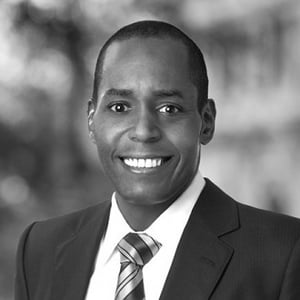
Partner, White & Case
Mr. Grannon helps clients with antitrust matters, including civil and criminal defense as well as counseling for mergers and acquisitions and settlements of pharmaceutical patent litigation. Since 2001, he also has helped clients with concerns under the Foreign Corrupt Practices Act (FCPA) and other anti-corruption issues. Mr. Grannon began at the firm as a summer associate in 1997 and has been a partner since 2007.
A former prosecutor, Mr. Grannon returned to White & Case after serving as Counsel to the Assistant Attorney General in charge of the Antitrust Division of the United States Department of Justice (DOJ) in 2003-04, where he helped formulate US antitrust enforcement policy and manage the civil and criminal investigations and court cases brought by the Antitrust Division. He ended his DOJ service with a detail as a Special Assistant US Attorney in the District of Columbia, trying twenty bench and jury trials as lead counsel.
In private practice, Mr. Grannon has argued on behalf of clients in district courts across the country, including a successful verdict for defendants in an antitrust jury trial, argued appeals in the Eleventh and DC Circuits, and worked on eleven matters before the US Supreme Court, ten of which were antitrust cases.
Mr. Grannon clerked for the Honorable Walter K. Stapleton, US Court of Appeals for the Third Circuit, 1999-2000, and the Honorable Federico A. Moreno, US District Court for the Southern District of Florida, 1998-99.
He is a member of the Legal Policy Board of the Washington Legal Foundation.
Mr. Grannon served a three-year term, 2015-18, on the American Bar Association's Standing Committee on Amicus Curiae Briefs.
He previously served as Vice-Chair of the Health Care and Pharmaceuticals Committee of the American Bar Association Section of Antitrust Law, and prior to that as Vice-Chair of its Compliance and Ethics Committee.
Mr. Grannon has served as an adjunct faculty member at the Howard University School of Law, where he taught a seminar on advanced antitrust law.
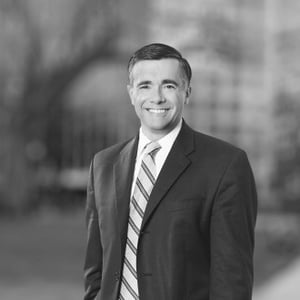
Partner,, White & Case LLP
George Paul is an antitrust lawyer who advises clients on a range of international competition issues, with a particular focus on merger clearances, cartel defense and litigation.
As reported by The Legal 500 US, clients said George's "'depth of experience, ability to make the complex simple and business-oriented and succinct approach' make him 'an in-house lawyer's dream.'" Further acclaimed as a "world-class" practitioner, George's reputation is based on his "impressive track record", spanning more than 20 years. He has played a key role in numerous high-profile cases, which have often involved multiple competition agencies across the globe. George provides clarity to clients in a complex area that requires highly detailed and technical knowledge, and where regulations change rapidly and can even conflict across jurisdictions.
Merger Clearances
George is regularly involved in antitrust counseling and litigation arising from US and cross-border mergers and joint ventures. He advises clients on merger control filings for cross-border transactions and coordinates their HSR and international filings efforts. George has handled complex antitrust issues across an array of industries, including retail/consumer goods, healthcare and medical devices, paper and pulp, petrochemicals, broadcasting and electronics. His work on complex, cutting edge matters has received Deal of the Year recognition by numerous publications, such as the Financial Times, the American Lawyer Legal Awards, The Deal and M&A Advisor.
George has particular experience advising clients on global transactions with multiple merger clearance requirements. He is co-editor of Worldwide Merger Notification Requirements, a comprehensive survey of merger notification and control laws across 217 jurisdictions, and regularly writes and speaks on antitrust and competition law matters.
Cartels
George regularly counsels companies and individuals on criminal antitrust matters before enforcement agencies around the world, including the US Department of Justice (DOJ), US Commodity Futures Trading Commission, the EU, Australia, Japan and South Korea. He was counsel to Stolt-Nielsen in its landmark action against the DOJ, which revoked Stolt's amnesty and indicted the company and its senior executives. The case was the first time a court enforced an antitrust amnesty agreement.
Litigation/Anticompetitive Practices
George has represented clients before the competition agencies as plaintiffs and defendants in federal and state courts in the US. He has been involved in a number of US agency merger challenges, and has successfully defended clients in non-merger investigations related to alleged market allocation, consumer protection requirements and monopolization. George has represented overseas manufacturers against charges of an alleged global price-fixing cartel, and has also represented clients in numerous antitrust class action proceedings.

Topics
The Real COVID-19 Crisis
In late 2019, the first cases of COVID-19, a highly contagious disease caused by...
Topics
Statements to House Judiciary on Antitrust Reform
The House Antitrust Subcommittee has been undertaking an investigation into competition issues in digital markets for a...
World Politics After Brexit: A Conversation with Nigel Farage
TeleforumMiranda v. Arizona [SCOTUSbrief]
Paul G. Cassell
Whenever law enforcement performs a custodial interrogation of a suspect in the United States, it...
Civil Liberties and COVID-19
The Antitrust "Failing Firm” Defense in the Wake of the COVID-19 Crisis
Greg Eastman, Eric Grannon, George L. Paul
Since 1930, the Supreme Court has recognized a failing firm defense to an otherwise unlawful...
COVID-19 and the 2020 Elections
COVID-19 & the Law Conference
COVID-19 and the 2020 Elections
Aurelius Investment, LLC v. Puerto Rico - Post-Decision SCOTUScast
On June 1, 2020, the Supreme Court issued the decision in the case Aurelius Investment,...
Government vs. Private Decisionmaking
COVID-19 & the Law Conference