
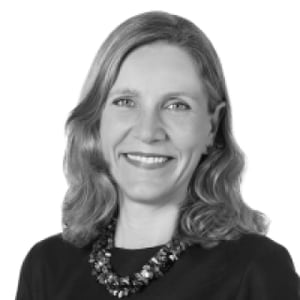
Global Competition Counsel, BHP Group
Kirstie is Global Competition Counsel at BHP. Based in Singapore, Kirstie is responsible for the group’s competition law compliance framework and leads the BHP competition law team advising advises clients located across the BHP group on the full range of competition law matters, including merger control, investigations and day to day counselling. Before joining BHP, Kirstie spent over a decade in private practice as a competition law specialist with international law firms in London, Brussels, Shanghai and Singapore, and was among the first European competition lawyers to relocate to China to assist clients with aspects of the developing competition laws in Asia. Her practice has covered all aspects of competition law, including cartels, dominance, mergers and appeals to the European Courts. Kirstie was also a founding partner of Landmark Asia in Singapore, a boutique public affairs consultancy assisting clients with regulation and policy throughout the APAC region.
Former Senior Director, Antitrust & Competition, Cisco
Gil Ohana is former Senior Director, Antitrust and Competition for Cisco, the leading manufacturer of networking equipment for the Internet. Gil writes and speaks regularly on antitrust and intellectual property issues relating to standard-essential patents in the areas of wired and wireless networking and communications. He has participated indiscussions of standards development organization IPR policies at leading standards development organizations such as ANSI, ETSI, IEEE-SA, ITU-T, IETF, and OneM2m, and has advised on the formation and operation of numerous informal standards development organizations active in IoT and patent pools.
From 1993 through 1996, Gil was a trial attorney with the Antitrust Division of the U.S. Department of Justice, where he participated in the Division's investigation of Microsoft's software licensing practices and its successful court challenge to Microsoft's proposed acquisition of Intuit.
Gil received his law degree from Columbia University, where he was articles editor of the Columbia Law Review, and his B.A. from Harvard College. He is admitted to the bars of California and the District of Columbia.
Senior Counsel for International Competition Affairs, Deutsche Telekom AG
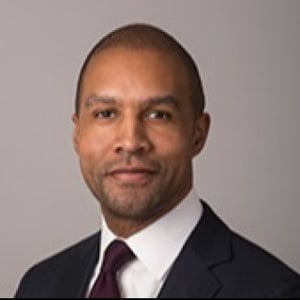
Partner, Gibson Dunn & Crutcher
Christopher M. Wilson is a partner in the Washington, D.C. office of Gibson Dunn & Crutcher. He is a member of the firm’s Antitrust and Competition Practice Group.
Mr. Wilson assists clients in navigating DOJ, FTC, and international competition authority investigations as well as private party litigation involving complex antitrust and consumer protection issues, including matters implicating the Sherman Act, the Clayton Act, the FTC Act, the Hart-Scott-Rodino (HSR) merger review process, as well as international and state competition statutes. His experience crosses multiple industries, including health insurance, transportation, telecommunications, technology, energy, agriculture, and biotechnology, and his particular areas of focus include merger enforcement, interlocking directorates, joint ventures, compliance programs, and employee “no-poach” agreements. He is also well-versed in cross-border investigations involving the European Union, the United Kingdom, Canada, Brazil, Japan, Korea, and Saudi Arabia, among other jurisdictions.
Mr. Wilson is also active in the Antitrust Section of the American Bar Association, serving as Vice Chair of the Transportation & Energy Industries Committee. He is also a member of the Section’s Health Care and Pharmaceuticals Committee, and is a frequent participant in ABA webcasts and presentations.
Prior to joining the firm, Mr. Wilson was a trial attorney in the Transportation, Energy & Agriculture Section of the U.S. Department of Justice – Antitrust Division. During his tenure, Mr. Wilson played a prominent role in numerous high-profile matters, and he received the Antitrust Division’s Award of Distinction on two separate occasions. Before joining the Department of Justice, Mr. Wilson was an associate in Gibson Dunn’s Dallas office.
He is a graduate of Columbia Law School, where he was a Harlan Fiske Stone scholar, and was an editor on the Columbia Business Law Review. He holds a B.A. in Economics from New York University.
Mr. Wilson is admitted to practice in California, Texas, and the District of Columbia.
Global Competition Counsel, BHP Group
Kirstie is Global Competition Counsel at BHP. Based in Singapore, Kirstie is responsible for the group’s competition law compliance framework and leads the BHP competition law team advising advises clients located across the BHP group on the full range of competition law matters, including merger control, investigations and day to day counselling. Before joining BHP, Kirstie spent over a decade in private practice as a competition law specialist with international law firms in London, Brussels, Shanghai and Singapore, and was among the first European competition lawyers to relocate to China to assist clients with aspects of the developing competition laws in Asia. Her practice has covered all aspects of competition law, including cartels, dominance, mergers and appeals to the European Courts. Kirstie was also a founding partner of Landmark Asia in Singapore, a boutique public affairs consultancy assisting clients with regulation and policy throughout the APAC region.
Former Senior Director, Antitrust & Competition, Cisco
Gil Ohana is former Senior Director, Antitrust and Competition for Cisco, the leading manufacturer of networking equipment for the Internet. Gil writes and speaks regularly on antitrust and intellectual property issues relating to standard-essential patents in the areas of wired and wireless networking and communications. He has participated indiscussions of standards development organization IPR policies at leading standards development organizations such as ANSI, ETSI, IEEE-SA, ITU-T, IETF, and OneM2m, and has advised on the formation and operation of numerous informal standards development organizations active in IoT and patent pools.
From 1993 through 1996, Gil was a trial attorney with the Antitrust Division of the U.S. Department of Justice, where he participated in the Division's investigation of Microsoft's software licensing practices and its successful court challenge to Microsoft's proposed acquisition of Intuit.
Gil received his law degree from Columbia University, where he was articles editor of the Columbia Law Review, and his B.A. from Harvard College. He is admitted to the bars of California and the District of Columbia.
Senior Counsel for International Competition Affairs, Deutsche Telekom AG
Partner, Gibson Dunn & Crutcher
Christopher M. Wilson is a partner in the Washington, D.C. office of Gibson Dunn & Crutcher. He is a member of the firm’s Antitrust and Competition Practice Group.
Mr. Wilson assists clients in navigating DOJ, FTC, and international competition authority investigations as well as private party litigation involving complex antitrust and consumer protection issues, including matters implicating the Sherman Act, the Clayton Act, the FTC Act, the Hart-Scott-Rodino (HSR) merger review process, as well as international and state competition statutes. His experience crosses multiple industries, including health insurance, transportation, telecommunications, technology, energy, agriculture, and biotechnology, and his particular areas of focus include merger enforcement, interlocking directorates, joint ventures, compliance programs, and employee “no-poach” agreements. He is also well-versed in cross-border investigations involving the European Union, the United Kingdom, Canada, Brazil, Japan, Korea, and Saudi Arabia, among other jurisdictions.
Mr. Wilson is also active in the Antitrust Section of the American Bar Association, serving as Vice Chair of the Transportation & Energy Industries Committee. He is also a member of the Section’s Health Care and Pharmaceuticals Committee, and is a frequent participant in ABA webcasts and presentations.
Prior to joining the firm, Mr. Wilson was a trial attorney in the Transportation, Energy & Agriculture Section of the U.S. Department of Justice – Antitrust Division. During his tenure, Mr. Wilson played a prominent role in numerous high-profile matters, and he received the Antitrust Division’s Award of Distinction on two separate occasions. Before joining the Department of Justice, Mr. Wilson was an associate in Gibson Dunn’s Dallas office.
He is a graduate of Columbia Law School, where he was a Harlan Fiske Stone scholar, and was an editor on the Columbia Business Law Review. He holds a B.A. in Economics from New York University.
Mr. Wilson is admitted to practice in California, Texas, and the District of Columbia.
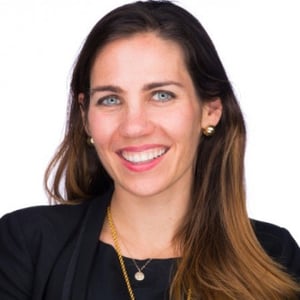
Adjunct Professor of Law, Scalia Law; Google, Corporate Counsel
Kathryn Ciano Mauler currently serves as a Corporate Counsel at Google. Prior to Google, Kathryn was Senior Regulatory Counsel at Uber Technologies, and also spent three years at i360, LLC as General Counsel. Before this, she also worked at a boutique law firm in Washington, D.C. and at the Institute for Justice.
She received her B.A. from the University of Florida. She also received her business degree from the University of Florida - Warrington College of Business, studying at the Ecole supérieure de Commerce de Toulouse in France. Kathryn's J.D. is from the George Mason University School of Law.
Chief Global Affairs Officer, Duco
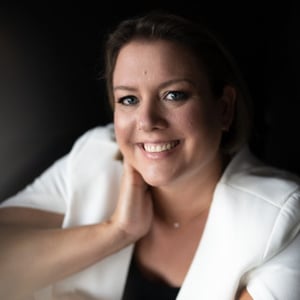
Katie Harbath is a global leader at the intersection of elections, democracy, and technology. As the chief executive of Anchor Change, she helps clients think through tech policy issues. Katie is Chief Global Affairs Officer at Duco and a nonresident fellow at the Atlantic Council.
Previously, Katie spent ten years at Facebook. As a director of public policy, she built and led global teams that managed elections and helped government and political figures use the social network to connect with their constituents.
This work included managing the global elections strategy across the company by working closely with product teams to develop and deploy civic engagement and election integrity products including political ads transparency features; developing and executing policies around elections; building the teams that support the government, political, and advocacy partners; working with policymakers on shaping the regulation of elections online, and serving as a spokesperson for the company about these issues. Katie was involved in this work in major elections for every country worldwide, including the United States, India, Brazil, United Kingdom, European Union, Canada, Philippines, and Mexico.
Before Facebook, Katie held senior strategic digital roles at the Republican National Committee, the National Republican Senatorial Committee, DCI Group and multiple campaigns. She is a board member at the National Conference on Citizenship, Democracy Works, and the Center for Journalism Ethics at the University of Madison-Wisconsin. Katie holds a BA in journalism and political science from the University of Wisconsin-Madison.
Distinguished Professor of History, Professor of Political Science and European Studies, Director of Undergraduate Studies, Vanderbilt University
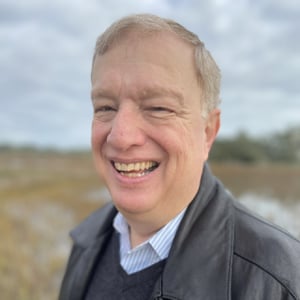
Thomas Alan Schwartz is a historian of the foreign relations of the United States, with related interests in American politics, the history of international relations, Modern European history, and biography. His most recent book is Henry Kissinger and American Power: A Political Biography (Hill and Wang, 2020). The book has received considerable notice and acclaim. Harvard’s University’s Charles Maier has written: "Thomas Schwartz's superbly researched political biography reveals the brilliance, self-serving ego, and vulnerability of America's most remarkable diplomat in the twentieth century, even as it provides a history of U.S. engagement in global politics as it moved beyond bipolarity." Earlier in his career, Schwartz was the author of America’s Germany: John J. McCloy and the Federal Republic of Germany (Harvard, 1991), which was translated into German, Die Atlantik Brücke (Ullstein, 1992). This book received the Stuart Bernath Book Prize of the Society of American Foreign Relations, and the Harry S. Truman Book Award, given by the Truman Presidential Library. He is also the author of Lyndon Johnson and Europe: In the Shadow of Vietnam (Harvard, 2003), which examined the Johnson Administration’s policy toward Europe and assessed the impact of the war in Vietnam on its other foreign policy objectives. He is the co-editor with Matthias Schulz of The Strained Alliance: U.S.-European Relations from Nixon to Carter, (Cambridge University Press, 2009).
Professor Schwartz has held fellowships from the Social Science Research Council, the German Historical Society, the Norwegian Nobel Institute, the Woodrow Wilson International Center for Scholars, and the Center for the Study of European Integration. He has served as President of the Society of Historians of American Foreign Relations. He served on the United States Department of State’s Historical Advisory Committee as the representative of the Organization of American Historians from 2005-2008. Professor Schwartz received The Madison Sarratt Prize for Excellence in Undergraduate Teaching on April 3, 2013 at the Spring Faculty Assembly, Vanderbilt University. In 2008 Professor Schwartz received the Annual Alumni Education Award from the Vanderbilt Alumni Association. Schwartz is the recipient of the 2008 Book Award by Chi Chapter of the Kappa Alpha Order. This award is given to a faculty member who has been particularly influential in the lives and education of members of KAO. Professor Schwartz presented, "The Arab Spring: Revolution in the Middle East," on April 19, 2011, as part of the Samuel L. Shannon Distinguished Lecture Series at Tennessee State University. Professor Schwartz has also presented lectures for the OAH Distinguished Lecturers Program.
Mack Brown Distinguished Chair for Leadership in Global Affairs; Professor of Public Affairs and History, University of Texas
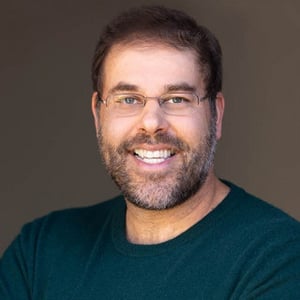
Jeremi Suri holds the Mack Brown Distinguished Chair for Leadership in Global Affairs at The University of Texas at Austin. He is a professor in the University's Department of History and the LBJ School of Public Affairs. Dr. Suri is the author and editor of eleven books on contemporary politics and foreign policy, most recently Civil War By Other Means: America's Long and Unfinished Fight for Democracy. His other books include The Impossible Presidency: The Rise and Fall of America's Highest Office; Henry Kissinger and the American Century; Liberty's Surest Guardian: American Nation-Building from the Founders to Obama; and Foreign Policy Breakthroughs: Cases in Successful Diplomacy (with Robert Hutchings).
Dr. Suri writes for major newspapers and magazines including the New York Times, Washington Post, Los Angeles Times, New York Daily News, Dallas Morning News, Houston Chronicle, Boston Globe, The Atlantic, Foreign Policy, Foreign Affairs, Fortune, The American Prospect and Wired — as well as for various online sites and blogs. He is a popular public lecturer, and appears frequently on radio and television.
Dr. Suri teaches courses on strategy and decision-making, leadership, globalization, international relations and modern history. He teaches graduate and undergraduate courses, and he teaches and serves as academic director for the Executive Master in Public Leadership program (EMPL) at LBJ. His research and teaching have received numerous prizes. In 2007 Smithsonian magazine named him one of America's "Top Young Innovators" in the arts and sciences. In 2018 he received the Pro Bene Meritis Award for Contributions to the Liberal Arts. In the same year also received the President’s Associates Teaching Excellence Award from the University of Texas at Austin.
Emanuel S. Heller Professor of Law, University of California at Berkeley; Thomas Smith Senior Research Fellow, Civitas Institute, University of Texas at Austin
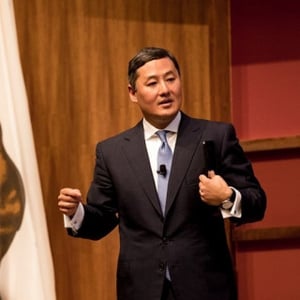
John Yoo is the Emanuel Heller Professor of Law at the University of California at Berkeley. He is also the Thomas Smith Senior Research Fellow, Civitas Institute, at the University of Texas at Austin. He is also a Nonresident Senior Fellow at the American Enterprise Institute.
His most recent book, The Politically Incorrect Guide to the Supreme Court, co-authored with Robert Delahunty, was published in 2023. Professor Yoo’s other books include Defender-in-Chief: Trump’s Fight for Presidential Power; Striking Power: How Cyber, Robots, and Space Weapons Change the Rules for War; Point of Attack: Preventive War, International Law, and Global Welfare; and Crisis and Command: A History of Executive Power from George Washington to George Bush.
He is a co-author of volumes 1 and 2 of R. Rossum, G. Tarr, V. Munoz & J. Yoo American Constitution Law (Routledge, 2026), and a co-editor of the eight-volume series on the 250th anniversary of the American Revolution, We Hold These Truths, with Yuval Levin and Adam White of the American Enterprise Institute.
Professor Yoo has published more than 100 articles in academic journals on subjects including national security, constitutional law, international law, and the Supreme Court. He also regularly contributes to the editorial pages of the Wall Street Journal, New York Times, Washington Post, Los Angeles Times, and National Review, among others.
Professor Yoo has served in all three branches of government. He was an official in the U.S. Department of Justice, where he worked on national security and terrorism issues after the 9/11 attacks. He served as general counsel of the U.S. Senate Judiciary Committee. He has been a law clerk for Supreme Court Justice Clarence Thomas and federal appeals Judge Laurence Silberman. He has been a visiting professor at the University of Texas at Austin’s School of Civic Leadership, Seoul National University, the Interdisciplinary Center Herzliya, Keio University, Trento University, the University of Chicago, and the Free University of Amsterdam.
Professor Yoo supervises the Public Law and Policy Program and the California Constitution Center. He also serves on the boards of Founding Forward, the Washington Legal Foundation, the Pacific Legal Foundation, the Ulysses Grant Institute, the Federalist Society’s Separation of Powers and Federalism Division, the Universidad Cientifica del Sur Law School, and the Asia-Pacific Law Institute at Seoul National University. He is a winner of the Federalist Society’s Paul Bator award and the Heritage Foundation’s Edwin Meese III Originalism Lectureship.
Professor Yoo graduated from Yale Law School and summa cum laude from Harvard College.
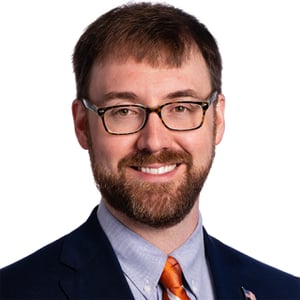
Senior Legal Fellow, Courts and the Constitution, Legal Policy Center, The Heritage Foundation
Zack is a Senior Legal Fellow of Courts and the Constitution at The Heritage Foundation.
He previously served for several years as an Assistant United States Attorney in the Northern District of Florida. Prior to that, he spent two years as an associate in the Washington, D.C. office of Cleary Gottlieb Steen & Hamilton, which he joined after clerking for the Hon. Emmett R. Cox on the United States Court of Appeals for the Eleventh Circuit.
Smith received his undergraduate, master’s, and law degrees from the University of Florida. During law school, Smith served as the Editor in Chief of the Florida Law Review and served on the executive boards of several student organizations, including the UF Chapter of the Federalist Society.
Global Competition Counsel, BHP Group
Kirstie is Global Competition Counsel at BHP. Based in Singapore, Kirstie is responsible for the group’s competition law compliance framework and leads the BHP competition law team advising advises clients located across the BHP group on the full range of competition law matters, including merger control, investigations and day to day counselling. Before joining BHP, Kirstie spent over a decade in private practice as a competition law specialist with international law firms in London, Brussels, Shanghai and Singapore, and was among the first European competition lawyers to relocate to China to assist clients with aspects of the developing competition laws in Asia. Her practice has covered all aspects of competition law, including cartels, dominance, mergers and appeals to the European Courts. Kirstie was also a founding partner of Landmark Asia in Singapore, a boutique public affairs consultancy assisting clients with regulation and policy throughout the APAC region.
Former Senior Director, Antitrust & Competition, Cisco
Gil Ohana is former Senior Director, Antitrust and Competition for Cisco, the leading manufacturer of networking equipment for the Internet. Gil writes and speaks regularly on antitrust and intellectual property issues relating to standard-essential patents in the areas of wired and wireless networking and communications. He has participated indiscussions of standards development organization IPR policies at leading standards development organizations such as ANSI, ETSI, IEEE-SA, ITU-T, IETF, and OneM2m, and has advised on the formation and operation of numerous informal standards development organizations active in IoT and patent pools.
From 1993 through 1996, Gil was a trial attorney with the Antitrust Division of the U.S. Department of Justice, where he participated in the Division's investigation of Microsoft's software licensing practices and its successful court challenge to Microsoft's proposed acquisition of Intuit.
Gil received his law degree from Columbia University, where he was articles editor of the Columbia Law Review, and his B.A. from Harvard College. He is admitted to the bars of California and the District of Columbia.
Senior Counsel for International Competition Affairs, Deutsche Telekom AG
Partner, Gibson Dunn & Crutcher
Christopher M. Wilson is a partner in the Washington, D.C. office of Gibson Dunn & Crutcher. He is a member of the firm’s Antitrust and Competition Practice Group.
Mr. Wilson assists clients in navigating DOJ, FTC, and international competition authority investigations as well as private party litigation involving complex antitrust and consumer protection issues, including matters implicating the Sherman Act, the Clayton Act, the FTC Act, the Hart-Scott-Rodino (HSR) merger review process, as well as international and state competition statutes. His experience crosses multiple industries, including health insurance, transportation, telecommunications, technology, energy, agriculture, and biotechnology, and his particular areas of focus include merger enforcement, interlocking directorates, joint ventures, compliance programs, and employee “no-poach” agreements. He is also well-versed in cross-border investigations involving the European Union, the United Kingdom, Canada, Brazil, Japan, Korea, and Saudi Arabia, among other jurisdictions.
Mr. Wilson is also active in the Antitrust Section of the American Bar Association, serving as Vice Chair of the Transportation & Energy Industries Committee. He is also a member of the Section’s Health Care and Pharmaceuticals Committee, and is a frequent participant in ABA webcasts and presentations.
Prior to joining the firm, Mr. Wilson was a trial attorney in the Transportation, Energy & Agriculture Section of the U.S. Department of Justice – Antitrust Division. During his tenure, Mr. Wilson played a prominent role in numerous high-profile matters, and he received the Antitrust Division’s Award of Distinction on two separate occasions. Before joining the Department of Justice, Mr. Wilson was an associate in Gibson Dunn’s Dallas office.
He is a graduate of Columbia Law School, where he was a Harlan Fiske Stone scholar, and was an editor on the Columbia Business Law Review. He holds a B.A. in Economics from New York University.
Mr. Wilson is admitted to practice in California, Texas, and the District of Columbia.
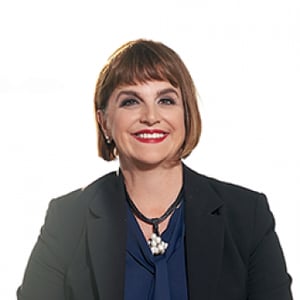
Former Vice Chair, U.S. Commission on International Religious Freedom
Kristina Arriaga is a passionate communicator with a storied life. Early on in her career, she orchestrated the rescue of a Cuban woman and her two children, for which she was featured in Vanity Fair and Reader’s Digest. More recently, she visited American Pastor Andrew Brunson in a prison in Turkey where she advocated for his release in Congress, in Turkey, and through the pages of The Wall Street Journal. In her other life, as President and CEO of Intrinsic Communications, she helps her clients elevate their stories in the court of public opinion.
Arriaga also serves with the inaugural group of seven trustees who oversee a newly created Oversight Board, an independent entity that makes biding decisions on content moderation for Meta’s 2.9 billion users. Its 20-member Board includes Judge Michael McConnell (Stanford Law School), Helle Thorning-Schmidt (former prime minister of Denmark), and Tawakkol Karman (first Arab woman to win a Nobel prize), among other notable freedom of expression experts.
Formerly, in 2016, the U.S. Congress appointed her to the U.S. Commission on International Religious Freedom, where she was elected Vice Chair for two consecutive terms. During her 3-year tenure, she met with high-ranking government officials to advocate for human rights in Iraq, Saudi Arabia, Bahrain, Egypt, Nigeria, Turkey, and many other countries. In protest over legislation that turned the watchdog agency into a government lapdog, she resigned with an explanatory op-ed for the Wall Street Journal.
Before the Commission, Arriaga was a member of the U.S. delegation to the UN Human Rights Commission and the executive director of a public interest law firm that defends free expression. During her tenure at the law firm, she oversaw several strategic public relations campaigns on landmark cases before the U.S. Supreme Court.
Arriaga is the recipient of the 2017 Newseum Free Expression Award along with Apple’s CEO Tim Cook, ABC’s correspondent Martha Raddatz, and civil rights champion John Lewis.
A sought-after speaker, she has appeared on BBC, MSNBC, C-Span, CNN, and NPR, among many others. She has lectured in numerous universities worldwide. Her 2020 op-ed for USAToday, “My family fled Fidel Castro's Cuba, where 'cancel culture' was deadly serious” went viral. Her recent interviews include an extended feature by Crux entitled: “Cuban Americans cling to both U.S., Cuban identities.”

Proposed Changes to the HSR Merger Filing Process: In-House Counsel View
Kirstie Nicholson, Gil Ohana, Roman Reuter, Chris Wilson
The U.S. antitrust agencies have recently proposed changes to the HSR merger filing process, broadening...
Proposed Changes to the HSR Merger Filing Process: In-House Counsel View
Kirstie Nicholson, Gil Ohana, Roman Reuter, Chris Wilson
The U.S. antitrust agencies have recently proposed changes to the HSR merger filing process, broadening...
Topics
State Department’s Proposed Foreign Assistance Nondiscrimination Requirements Raise Concerns
On January 19, 2024, the U.S. Department of State issued two notices of proposed rulemaking...
Proposed Changes to the HSR Merger Filing Process: In-House Counsel View
Topics
Claudine Gay’s ‘My Truths’ v. the Declaration’s ‘Self-Evident Truths’
Shortly after her resignation as Harvard’s president, in an interview with the Harvard Crimson, Claudine Gay said:...
Religious Liberty in the US and Abroad
Tallahassee Lawyers Chapter
Tallahassee, FLTopics
Supreme Court to Settle 22-Year Conflict Over Abortion Drugs
The Supreme Court will hear arguments on March 26 in a conflict that began in...
Explainer Episode 63 - Super Elections Year
Kathryn Ciano Mauler, Katie Harbath
The 2024 super election year has captured the world's attention, with the US elections playing...
Henry Kissinger and International Law
Thomas Alan Schwartz, Jeremi Suri, John C. Yoo
On November 29, 2023, Henry Kissinger died at the age of 100. The former US...
New Jersey Supreme Court Rules Police Need Wiretap Order to Access Nearly Real-Time Facebook Activity
Zack Smith
New Jersey police officers sought to “compel Facebook to provide the contents of two users’...