

Partner, Sullivan & Cromwell LLP
Andrei Iancu is a partner at Sullivan & Cromwell and one of the leading voices in intellectual property law and innovation policy. He is a former Undersecretary of Commerce for Intellectual Property and Director of the U.S. Patent and Trademark Office (USPTO), a position to which he was confirmed unanimously by the Senate. Andrei has decades of experience representing plaintiffs and defendants in IP matters across the technical and scientific spectra, including medical devices, genetic testing, therapeutics, the Internet, telephony, TV broadcasting, video game systems and computer peripherals. He represents clients in litigation and trials before the district courts, the U.S. International Trade Commission and the USPTO, the Federal Circuit and U.S. Supreme Court, and also counsels clients on obtaining, licensing, enforcing and defending against IP rights globally.
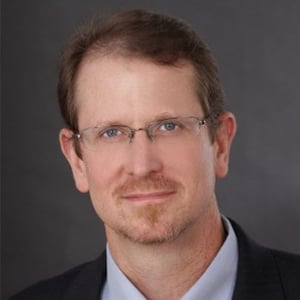
Executive Director, High Tech Inventors Alliance
David W. Jones is the Executive Director of the High Tech Inventors Alliance. Prior to HTIA, David was Assistant General Counsel for Patent Policy at Microsoft, where he spent more than a decade handling both domestic and international patent issues. He previously held multiple positions on Capitol Hill, most recently as antitrust and IP counsel to Senator Orrin Hatch on the Senate Judiciary Committee. David clerked for Chief Judge Sharon Prost on the Federal Circuit and Judge Will Garwood on the Fifth Circuit and is a graduate of the University of Virginia School of Law.
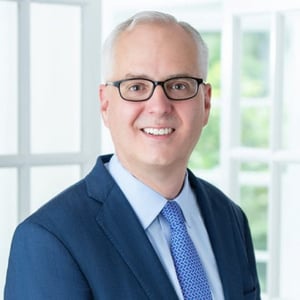
Principal, Clear IP, LLC
Joseph Matal is the Principal at Clear IP, LLC.
Joe has served as both the U.S. Patent and Trademark’s Acting Director and Acting Solicitor. As Acting Solicitor, he defended the agency in intellectual property cases before the U.S. Court of Appeals for the Federal Circuit and U.S. Supreme Court. In his role in the Solicitor’s Office, he participated in briefing almost every major case involving PTAB trials that has come before the Federal Circuit, including cases that have defined the Board’s powers and the evidence that it may consider, the content of final decisions, and the burdens and scope of motions to amend. Recent cases include Uniloc v. Hulu, Thryv v. Click-to-Call, and Aqua Products v. Matal. Previously, Joe served in senior legal roles for more than a decade for the U.S. Senate Judiciary Committee. In that capacity, he negotiated and drafted many of the key provisions of the America Invents Act.
In his roles at the USPTO, Joe briefed and argued numerous appeals of patent and trademark decisions before the Federal Circuit; oversaw the management of the USPTO and its 13,000 employees; and advised the U.S. Solicitor General’s Office in key IP cases before the Supreme Court.
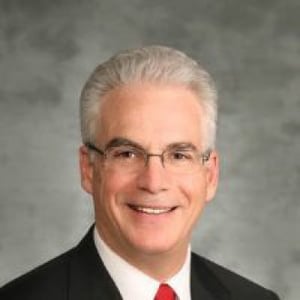
Dinsmore & Shohl LLP, Partner
Brian is chair of Dinsmore’s IP Transactions and Licensing Group. He is a past president of the Licensing Executives Society (USA and Canada), Inc. (LES), the leading professional society devoted to commercial transactions and licensing of intangible property. He continues to serve LES as senior vice president for public policy. He has extensive experience in a wide variety of commercial transactions involving intangible property, and is known for creative licensing strategies to promote collaboration and resolve IP-related disputes.
He is a registered patent attorney with more than 30 years of experience before the U.S. Patent and Trademark Office and in structuring global IP portfolios and strategies. He has extensive experience in contested proceedings before the USPTO Patent Trial and Appeal Board (interferences, Inter Partes Reviews and Post Grant Reviews), as well as contested matters in federal courts and the International Trade Commission. His wide-ranging experience affords a broad, informed perspective and facilitates creative approaches to intellectual property management, licensing, and enforcement.
In addition to his leadership of LES, Brian served on the LES Board of Directors 2007 – 2018. In his ongoing role as senior vice president for public policy he is responsible for coordinating the society’s public policy positions, amicus briefs, and congressional outreach. He works with legislators, the executive branch, and the courts toward consistent, reliable, and prudent IP laws and policies that advance innovation and economic development. He has also served LES as trustee for education, and has long served as an author, editor, and faculty member of LES educational programs focusing on best practices in IP licensing.
He is also active in the global society, LES International (LESI). Among his various roles in LESI, he has served as co-chair of the External Relations Committee, coordinating public policy and advocacy for effective IP laws and policies among the 33 regional LES societies, and with various non-governmental organizations such as WIPO and EPO. In 2019, he received the LES International President’s Service Recognition Award.
Brian also serves as Chair of the Board of Directors of the Bayh Dole Coalition, a 501(c)(4) corporation dedicated to promoting and preserving the Bayh Dole Act. He is a member of the Founding Board of Directors of the United States Intellectual Property Alliance (USIPA), an organization dedicated to raising public awareness of, and appreciation for, the role of IP in fostering innovation for the public good; and he has served on the DC Bar Intellectual Property Section Steering Committee (2013 – 2016).
In 2016, Brian testified before the U.S. Senate Committee on Small Business and Entrepreneurship on the effects of the America Invents Act on small business and entrepreneurs in a hearing entitled “An Examination of Changes to the U.S. Patent System & Impacts on America's Small Businesses.”
With his longstanding and diverse patent practice, in both private practice and in-house, Brian advises corporate leaders and entrepreneurs in effective IP procurement practices, and in maximizing value from IP assets. He has been retained as a testifying witness in IP and licensing disputes by the U.S. Department of Justice, the U.S. Department of the Treasury, and by various private enterprises.
Brian has been acknowledged by IAM magazine as among its “IAM Strategy 300”, the world’s leading IP strategists, and among “The World's Leading Patent and Technology Licensing Lawyers.”
He earned B.S. and M.S. degrees from the Department of Chemistry, Rochester Institute of Technology, Rochester, NY; and Juris Doctor from Syracuse University, College of Law, Syracuse, NY (1986).
Brian has served his alma mater as president of the RIT Alumni Association 2005 – 2009; and now serves on the RIT Board of Trustees as a member of its Executive Committee, chair of its Student Life Committee, and vice-chair of its Committee on Trustees. In 2013, Brian was awarded RIT’s Outstanding Alumnus Award, and in 2005 he was awarded the Distinguished Alumnus Award by RIT’s College of Science.

Partner, Patrick Doerr
Mr. Rando has represented clients in matters involving computer hardware and software, silicon chip manufacturing, biotechnology, medical devices, pharmaceuticals, chemical compounds, food additives, alternative energy, AI, autonomous vehicles, blockchain, consumer electronics, communications, internet, and e-commerce. He has appeared in courts across the country, including the Southern and Eastern Districts of New York and multiple U.S. Courts of Appeals.
As appellate counsel, Mr. Rando has served as counsel of record or co-counsel in more than 30 amicus briefs filed before the U.S. Supreme Court and Federal Circuit on issues of patent law, statutory interpretation, separation of powers, and constitutional law. Noteworthy filings include eBay Inc. v. MercExchange (2006), Oil States v. Greene’s Energy (2017), American Axle v. Neapco (2021), Amgen v. Sanofi (2023), and Cellect v. Vidal (2024).
Mr. Rando is a Fellow of the Academy of Court-Appointed Masters, having served by judicial appointment as Special Master in numerous complex patent cases, including multi-day Markman hearings and post-discovery proceedings. He also serves as a court-appointed Mediator and Neutral in both patent and commercial disputes.
He has played an active role in judicial and legislative engagement. Mr. Rando co-developed and conducted lecture series for the SDNY and EDNY Patent Pilot Program Judges and Clerks, covering the America Invents Act and Section 101 eligibility post-Alice and Mayo. He represented both the Federal Bar Association (FBA) and New York Intellectual Property Law Association (NYIPLA) at the Tillis/Coons Section 101 Patent Reform Roundtable, and submitted written testimony to the U.S. Senate Judiciary Committee in 2019.
Mr. Rando is a former president of the NYIPLA (2023–2024) and has held nearly every leadership position in the organization. He also served as Chair of the FBA’s Intellectual Property Law Section and was a founding member and president of the FBA’s EDNY Chapter. He is a founding member of the Association of Amicus Counsel, and an active contributor to the Federalist Society IP Practice Group Executive Committee.
He frequently lectures at CLE programs, universities, and legal associations on IP, constitutional law, and appellate advocacy. He has been quoted extensively in publications such as Law360, Bloomberg Law, WIPR, and National Law Journal. His scholarly publications include articles in The Federal Lawyer, Touro Law Review, and IPWatchdog.

Associate Dean for Research and Intellectual Life, McKnight Presidential Professor in Law, Distinguished McKnight University Professor, Harlan Albert Rogers Professor in Law, Associate Director, Corporate Institute, University of Minnesota Law School
Professor Kristin E. Hickman is the McKnight Presidential Professor in Law, a Distinguished McKnight University Professor, and Harlan Albert Rogers Professor in Law at the University of Minnesota Law School. She also has taught at Harvard Law School and Northwestern University School of Law. Professor Hickman teaches and writes primarily in the areas of administrative law, tax administration, and statutory interpretation. Her articles on these topics have appeared in the Columbia Law Review, Cornell Law Review, Virginia Law Review, Duke Law Journal, and other publications. She also co-authors the Administrative Law Treatise with Richard J. Pierce, Jr., and a casebook on federal administrative law with Pierce and Christopher J. Walker. Her scholarly work has been cited several times in opinions of the United States Supreme Court as well as regularly in lower court judicial opinions and court briefs.
In 2018-19, Professor Hickman served as Special Adviser to the Administrator of the Office of Information and Regulatory Affairs in Washington, D.C. She presently serves as a Senior Fellow, and previously served as a public member and chair of the judicial review committee, for the Administrative Conference of the United States. She also is a Fellow of the American College of Tax Counsel.
Professor Hickman received her B.S. degree in business administration with a concentration in accounting and a secondary major in history from Trinity University in San Antonio, Texas. After practicing for several years as a certified public accountant, Professor Hickman earned her J.D. degree, magna cum laude, from Northwestern University School of Law, where she was awarded the Raoul Berger Prize and the Lowden Wigmore Prize for her scholarly writings. Following law school, Professor Hickman clerked for The Honorable David B. Sentelle of the United States Court of Appeals for the District of Columbia Circuit and practiced law as an associate with the Chicago office of Skadden, Arps, Slate, Meagher & Flom, concentrating on corporate and international tax transactions and matters.
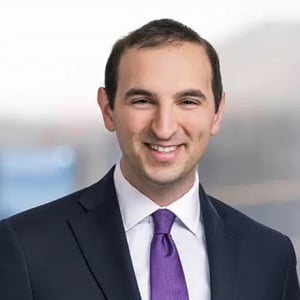
Associate, Covington & Burling LLP
Eli Nachmany is an associate at Covington & Burling LLP in the Washington, DC, office. He clerked for Judge Steven J. Menashi of the U.S. Court of Appeals for the Second Circuit. Eli graduated magna cum laude from Harvard Law School, where he was Editor-in-Chief of the Harvard Journal of Law & Public Policy. Prior to law school, Eli served as the speechwriter to the U.S. Secretary of the Interior and as a domestic policy aide in the White House Office of American Innovation. He graduated summa cum laude from New York University with a B.S. in Sports Management. Eli’s scholarship on administrative law and executive power has appeared in the BYU Law Review, George Mason Law Review, Wake Forest Law Review, and Yale Law Journal Forum.
Affiliated Scholar, George Washington University Regulatory Studies Center
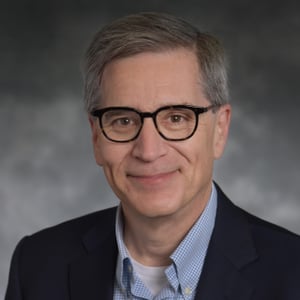
Roger Nober is a Professor of Practice at the Trachtenberg School of Public Policy and Public Administration. Nober served as director of the GW Regulatory Studies Center from 2024 to 2025. His career includes service as Executive Vice President and Chief Legal Officer at BNSF Railway, Chairman of the U.S. Surface Transportation Board and Chief Counsel of the Committee on Transportation and Infrastructure of the U.S. House of Representatives.
Nober retired from BNSF Railway Co. in December 2022, after 16 years as an Executive Vice President responsible for overseeing legal and regulatory matters, environmental claims, compliance, communications as well as state government and community affairs. He also served on the Board of BNSF Railway LLC. Prior to joining BNSF, Nober was a partner in the Washington office of Steptoe & Johnson LLP.
From 2002 to 2006, Nober was Chairman of the U.S. Surface Transportation Board. From 2001 to 2002, he served as Counselor to the Deputy Secretary at the U.S. Department of Transportation. From 1993 to 2001, he served in a variety of roles for the Committee on Transportation and Infrastructure of the U.S. House of Representatives, including serving as chief counsel from 1996 to 2001. He has a bachelor’s degree from Haverford College and a Juris Doctor from Harvard University School of Law.
He currently is an advisory board member at the Texas Transportation Institute at Texas A&M University, a member of the Business Advisory Council at Northwestern University Transportation Center, a member of the Texas Holocaust, Genocide, and Antisemitism Advisory Commission, and a past and current board member of a number of nonprofit organizations.
Of Counsel, Covington & Burling LLP
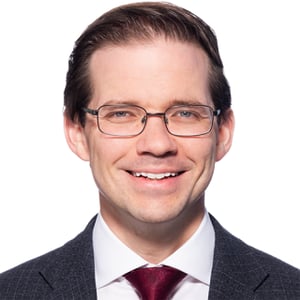
The Honorable Paul J. Ray is currently Of Counsel at Covington & Burling LLP where he advises clients on regulatory opportunities and challenges and helps them formulate and execute advocacy strategies for their regulatory policy priorities before the executive branch and Congress.
During the first Trump Administration, Paul held various senior positions at the Office of Information and Regulatory Affairs (OIRA) within the White House’s Office of Management and Budget, including as acting, and then Senate-confirmed, head of the office. As OIRA Administrator (the "regulations czar"), Paul supervised the review of hundreds of regulations from across the government, drafted numerous executive orders governing the regulatory process, and led the Administration’s regulatory reform effort. As a result of this experience, Paul is well-positioned to help clients understand and achieve regulatory policy priorities in the context of the government’s regulatory agenda and ongoing reform efforts.
Most recently, Paul was also the Director of the Roe Institute for Economic Policy Studies at The Heritage Foundation. In that role, he supervised the formulation of the Foundation’s economic and regulatory policy recommendations and provided technical assistance to congressional committees and staff regarding legislative changes to the regulatory process. In addition to his role at The Heritage Foundation, Paul also served as a Senior Advisor at a strategic advisory firm. Before his time in government, Paul practiced law at a law firm in Washington, specializing in administrative law matters.
Prior to his role at the White House, Paul was Counselor to the Secretary at the U.S. Department of Labor. There he led departmental efforts in high-profile rulemakings and helped formulate the Department’s legal positions and strategy.
Paul served as a law clerk to Supreme Court Justice Samuel Alito and as a law clerk to the Honorable Debra Livingston of the U.S. Court of Appeals for the Second Circuit.
Paul is a thought leader in the conservative legal movement and is a frequent commentator and speaker on regulatory policy and reform matters, including at law schools, professional gatherings, and other venues. He is the Chairman of Innovations in Peacebuilding International and the Regulatory Process Working Group of the Federalist Society’s Regulatory Transparency Project and a public member of the Administrative Conference of the United States. Paul is also an adjunct lecturer at the Hillsdale College School of Government.

Partner, Jackson Walker
Arthur offers clients a winning combination of trial and appellate experience gained as a federal prosecutor and more than 20 years of experience in handling patent, copyright, trademark, and trade secrets litigation.
While his practice concentrates on intellectual property litigation, Arthur also has significant experience in internal investigations, False Claims Act suits, partnership and breach of fiduciary duty, breach of contract, and employment litigation. Arthur also has represented clients testifying before Congressional committees.
Arthur writes and speaks frequently on topics ranging from the case against Boston bomber Dzhokhar Tsarnaev to patent litigation reform.
Prior to joining Michael Best, Arthur served as an Assistant United States Attorney in the Southern District of New York, where he was the lead prosecutor in criminal trials, including federal intellectual property crimes. He also argued numerous appeals.
Partner, Knobbe Martens
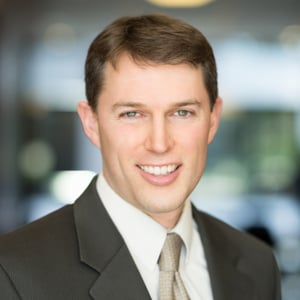
Philip Nelson counsels clients in all stages of growth, from startups to established public companies. To jump-start young portfolios, Mr. Nelson pioneered use of special programs to cut through red tape for rapid patent allowance. For those wanting to preserve options at minimal cost, he has a tested protocol. He especially enjoys laying sophisticated patent minefields, protecting core assets with an eye to the future concept and product pipeline. No matter when he joins the team, he quickly grasps the technology and points to the best options to support the business.
Mr. Nelson builds value for investment and acquisition by working with company visionaries and scientists to describe and protect their ideas. Although the patent office likes to say “no,” he works through the objections, often speaking to patent examiners in person to negotiate for better claims. Collegial persistence and technical tutorials tend to persuade examiners, getting them to “yes.”
Mr. Nelson drafts and negotiates technology agreements and advises on big-picture strategy. When opposing diligence counsel is just pasting in a pat phrase from a template, he uses his experience from the trenches (prosecuting, negotiating, and litigating) to correct the meaning and serve his clients.
Mr. Nelson advises on contested matters, drafts litigation briefs, and works closely with litigator colleagues. He negotiates with his clients’ adversaries to avoid suit or improve litigation positions. When a competitor claimed to own his client’s invention in chemistry lab instruments, he won two patent office “interferences”—and a Federal Circuit appeal—to preserve his client’s ownership rights. He handles complex patent office trials such as interferences, derivations, and inter-partes reviews. He did reexaminations and inter-partes reexaminations back before they were cool (before the America Invents Act popularized Board proceedings).
His physics background and widely varied experience at a top intellectual property boutique for almost 20 years has created a sophisticated advocate for his clients. Mr. Nelson looks forward to helping you assess the field, build your defenses, close your deal, and rain fire on your IP problems and adversaries.

Chief Policy Officer and Counsel, The Council for Innovation Promotion
Jamie Simpson is Chief Policy Officer and Counsel for The Council for Innovation Promotion (c4IP), which is a bipartisan coalition dedicated to promoting strong and effective intellectual property rights that drive innovation, boost economic competitiveness, and improve lives everywhere.
Simpson has almost 20 years of experience in policy and a specific focus on IP-related issues. She previously served as Chief Counsel on the House Judiciary Subcommittee on Courts, IP, and the Internet; Counsel to the Senate Judiciary Committee while on detail from the U.S. Patent and Trademark Office; and Associate Solicitor at the USPTO.
A graduate of Harvard Law School and, previously, a law clerk at the United States Court of Appeals for the Federal Circuit, Simpson has extensive expertise in intellectual property law and policy, as well as an earlier background of working on patent litigation and licensing disputes.
Founder and Owner, RPT Legal Strategies PC
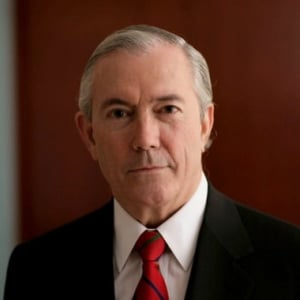
Bob Taylor is the founder and owner of RPT Legal Strategies PC in San Francisco and Palo Alto, providing legal and business advice to companies and investors with respect to all aspects of intellectual property and related fields of endeavor. He also serves as a Venture Advisor to New Enterprise Associates and as a patent law expert for the National Venture Capital Association.
He is a Fellow of the American College of Trial Lawyers, a former chair of the Antitrust Section of American Bar Association, and a Lifetime Member of the American Law Institute.
Bob has written and lectured extensively on the business and legal problems associated with both intellectual property protection and the laws related to competition.
Bob holds a J.D degree from Georgetown University Law Center and was a member of the editorial board of the Georgetown Law Journal. He holds a B.S.E.E degree from the University of Arizona.

Senior Fellow, R Street Institute
Prior to R Street, Adam spent 12 years as a senior fellow at the Mercatus Center at George Mason University. Before the Mercatus Center, he served as the president of the Progress and Freedom Foundation. Adam has also worked for the Adam Smith Institute, the Heritage Foundation and the Cato Institute.
Adam has published 10 books on a wide range of topics, including online child safety, internet governance, intellectual property, telecommunications policy, media regulation and federalism.
In 2008, Adam received the Family Online Safety Institute’s “Award for Outstanding Achievement.”

Founding Partner, Benbrook Law Group
Brad has litigated business and public policy matters throughout the United States for over 25 years. He represents businesses of all sizes in civil litigation and disputes with administrative agencies. Brad also regularly represents individuals and groups in constitutional and public policy litigation in the trial and appellate courts. He regularly submits amicus briefs on behalf of clients at the Supreme Court of the United States on significant cases. Brad is often hired as special litigation counsel in complex family law, bankruptcy, and trust and estate litigation.
After graduating from law school, Brad worked as a judicial clerk for Judge J.L. Edmondson of the United States Court of Appeals for the Eleventh Circuit in Atlanta. Brad received his law degree from the University of California at Berkeley after graduating from Stanford University, where he was a four-year letterman on the golf team.

Professor of Law, Widener University Commonwealth Law School
Counsel, U.S. Chamber Litigation Center
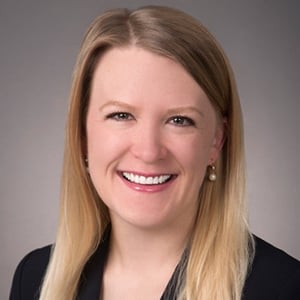
Mariel Brookins attended Wheaton College where she studied economics and theology. After graduation, she worked at PwC as a tax CPA. She attended the University of Michigan Law School. After law school, Mariel clerked for Judge Barrett on the Seventh Circuit and Judge Newsom on the Eleventh Circuit. She currently practices appellate litigation in Washington, D.C.
Litigation Senior Corporate Counsel, Microsoft
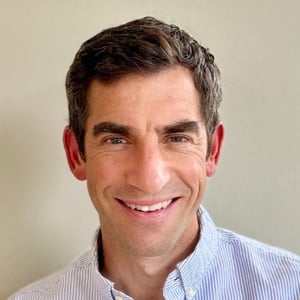
Benjamin Diggs is a Litigation Senior Corporate Counsel at Microsoft based in Redmond, Washington.
Previously, he was an Attorney at Hogan Lovells and also held positions at Heller Ehrman, U.S. Department of Justice, California Attorney Group, Athens College, Hellenic American Educational Foundation.
Benjamin received a Doctor of Law degree from Stanford University Law School.
Chief Legal Officer, Cognizant
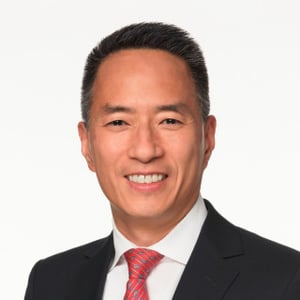
John Kim has held the title of Chief Legal Officer, Chief Administrative Officer and Corporate Secretary since February 2024. This title change was made to better reflect his responsibilities after previously serving as our Executive Vice President, General Counsel, Chief Corporate Affairs Officer and Secretary beginning March 2021. In this role, he leads Cognizant’s legal, company secretary, compliance, corporate security, regulatory, ESG, global real estate, procurement, contract lifecycle risk management and strategic negotiation functions.
John joined Cognizant in November 2019 as Senior Vice President and Deputy General Counsel, Global Commercial Contracts. Previously, he served as Global Head of Big Deals at Capgemini, U.S. Counsel for WNS Global Services and General Counsel for Travelport, a leading travel technology company, as well as a number of technology service companies.
John holds a bachelor’s degree in English literature from Columbia University. He obtained his law degree from Cornell Law School, where he was a member of the Cornell Law Review.
Executive Director of Policy, U.S. Chamber of Commerce Technology Engagement Center
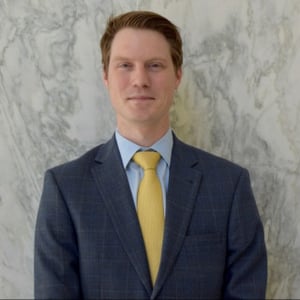
Michael Richards is the Executive Director of Policy at the U.S. Chamber of Commerce Technology Engagement Center (C_TEC), where he leads the Chamber’s work on artificial intelligence and IT modernization. His portfolio focuses on federal and state policies related to AI, facial recognition, and emerging technologies that impact American businesses. He also manages the AI Policy Working Group, a coalition of more than 100 companies and trade associations, and played a key role in developing the Chamber’s AI policy principles.
Prior to joining the Chamber, Michael served as Deputy Chief of Staff and Legislative Director for Representatives Scott Franklin (FL-15) and Pete Olson (TX-22). In these roles, he led legislative strategy, staffed the House AI Caucus and Victims’ Rights Caucus, and handled the Communications & Technology portfolio on the House Energy and Commerce Committee.
Michael holds a Master of Public Policy from the Pepperdine School of Public Policy and a Bachelor’s degree from Texas State University.
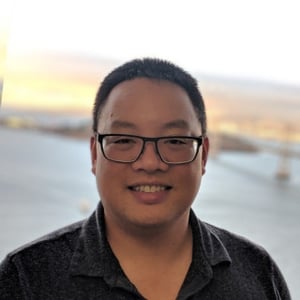
Associate General Counsel, OpenAI
Michael Trinh is currently Associate General Counsel at OpenAI working on litigation and regulatory matters. He was formerly Head of Litigation Advance at Google where he led a team handling a broad portfolio of litigation strategy, research, amici briefs, and proactive/enforcement litigation across the company’s product areas.
In prior roles over 14 years at Google, Mike managed a group defending patent litigation worldwide, and also served as product counsel at Google X for emerging ‘moonshots’ (innovation projects primarily in developing economies). He guided experimental aviation projects as they evolved from research concept towards market introduction, handling the legal/regulatory issues arising from high altitude balloon-mounted telecommunication networks, drone delivery of burritos, kite-generated electricity, and cargo airships. Before this science fiction, he was Litigation Counsel at Google, managing a team handling a fast-growing docket of 100+ patent litigation cases in courts worldwide.
Previously, he was a technology/IP litigation associate at Orrick, Herrington and Sutcliffe in San Francisco. He also handled national security issues while representing, pro bono, Guantanamo Bay detainees challenging their indefinite incarceration without ever being charged. Mike graduated from the Georgetown University Law Center (2005) and the University of North Carolina at Chapel Hill (2002, B.S. Comp Sci). While he grew up in Raleigh, NC, he now lives in the San Francisco Bay Area with his wife and a string cheese-seeking dog (who was once featured in the Financial Times).
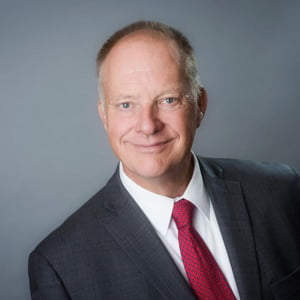
Associate Justice, Minnesota Supreme Court (ret.)
Former Minnesota Supreme Court Justice Barry Anderson is a 1976 graduate of Gustavus Adolphus College in St. Peter, Minnesota and a 1979 graduate of the University of Minnesota Law School. He was a member of the Minnesota Court of Appeals from August 1998 until his appointment to the Supreme Court. He was sworn in and joined the court on October 13, 2004, and served through to his retirement on May 10, 2024.
He previously was a partner in the Minneapolis and Hutchinson law firm of Arnold, Anderson & Dove, PLLP, and also served the City of Hutchinson as City Attorney from 1987 to 1998. He is certified by the Minnesota State Bar Association as a civil trial specialist.
Justice Anderson’s background includes substantial public service including as a board member and chair of variety of community organizations including service clubs, task forces and a local public access channel as well as a wide variety of other community activities.
Justice Anderson also served on the Minnesota Judicial Council, the managing body for the Minnesota Judicial Branch. He is also a frequent contributor to continuing legal education efforts on both appellate advocacy issues as well as general trial practice.
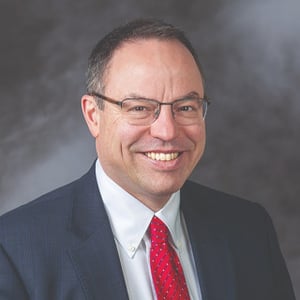
Professor of Law and J. Philip Johnson Faculty Fellow, University of North Dakota School of Law
Michael S. McGinniss is Professor of Law and J. Philip Johnson Faculty Fellow at the University of North Dakota School of Law, where he joined the faculty in 2010 and served as the Dean from 2019 to 2022. He chairs the executive committee for the Federalist Society's Practice Group on Professional Responsibility and Legal Education.
Before entering the legal academy, Professor McGinniss served for twelve years as a Disciplinary Counsel for the Supreme Court of Delaware. He currently teaches courses on Professional Responsibility, Advanced Legal Ethics, Civil Procedure, and Federal Courts. He also serves as Faculty Advisor for the North Dakota Law Review and the UND Law Federalist Society student chapter.
Professor McGinniss’ research and scholarship interests are wide-ranging and include lawyer and judicial ethics, lawyer discipline and regulation of the profession, constitutional law (especially First Amendment, separation of powers, and federalism), and cultural challenges faced by conservatives in the law schools and the legal profession. His most recent law review article, Declaring Independence to Secure Integrity: The Supreme Court Justices' Code of Conduct, was published in the Federalist Society Review. His article Expressing Conscience with Candor: Saint Thomas More and First Freedoms in the Legal Profession, was published in the Harvard Journal of Law & Public Policy.
Professor McGinniss has spoken to Federalist Society lawyer and student chapters across the country about judicial independence and ethics, especially relating to the federal courts and the United States Supreme Court Justices. In addition, he has spoken to several chapters about rising challenges to ideological diversity and targeting of conservative viewpoints in law schools and the legal profession. Although he is very pleased to speak on these and many other topics that may be of interest to lawyer and student chapters, in 2026-2027, he has particular interest in speaking on the topic “Lawyer Discipline as Political ‘Resistance’: Separation of Powers, Federalism, and the Rule of Law,” concerning his work-in-progress on the weaponization of professional disciplinary processes against conservative lawyers for political and ideological purposes.
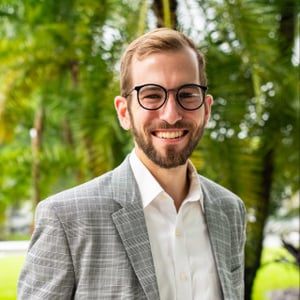
AI Innovation and Law Fellow, University of Texas School of Law
Kevin Frazier is an AI Innovation and Law Fellow with University of Texas School of Law.
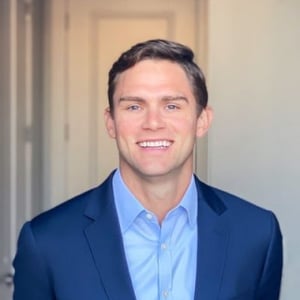
Head of Government Affairs, Andreessen Horowitz
Collin is the Head of Government Affairs at Andreessen Horowitz where he oversees the firm’s political and policy strategy.
Prior to joining a16z, Collin spent more than a decade working on Capitol Hill. Most recently, Collin was the Deputy Staff Director of the House Financial Services Committee, where he served as a senior advisor to Chairman Patrick McHenry, members of the Committee, and House Leadership. While at the Financial Services Committee, Collin led a variety of policy initiatives, including efforts to pass the historic Coronavirus Aid, Relief, and Economic Security (CARES) Act of 2020, a $2.2 trillion relief package in response to the COVID-19 pandemic; craft legislation on digital assets and financial technology, including legislation on stablecoins and digital asset market structure; reform rules around capital formation and investment; and build coalitions between policymakers and industry stakeholders on a broad range of policy proposals.
Prior to his role at the Financial Services Committee, Collin served as Policy Director of the House Rules Committee, overseeing the procedure for all major legislation that was brought before the House of Representatives. Before that, he served in multiple roles at the Transportation and Infrastructure Committee, negotiating several major bipartisan pieces of legislation, including the Fixing America’s Surface Transportation (FAST) Act and the FAA Reauthorization Act of 2018.
Collin holds a B.A. in public policy from Franklin & Marshall College.
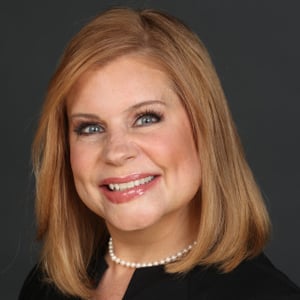
Vice President & Senior Legal Fellow, Defending Education
Sarah Parshall Perry is vice president and senior legal fellow at Defending Education.
Before coming to Defending Education, Sarah served as a Senior Legal Fellow for the Edwin Meese III Center for Legal and Judicial Studies, part of the Institute for Constitutional Government at Heritage, where her work centered on civil rights and the proper role of the courts.
Sarah joined Heritage after serving as Senior Counsel to the Assistant Secretary for Civil Rights at the U.S. Department of Education where she focused on policy reform, technical guidance, and the Office for Civil Rights’ (OCR) annual report to Congress. While at OCR, she was appointed by the Acting Assistant Secretary to co-chair the Employment Engagement, Diversity, & Inclusion Council and, in coordination with the Deputy Assistant Secretary for Enforcement oversee the hiring of dozens of attorneys for OCR’s 12 regional offices nationwide. Prior to her tenure at the Department of Education, she spent six years at the Family Research Council in Washington, D.C. where she was Senior Fellow for Education Reform and later, became the regular substitute host for the “Washington Watch” radio show. Her work at the Family Research Council also included the building and oversight of multiple policy coalitions geared toward the fight against antisemitism in academia, curbing tech censorship, and protecting religious liberty.
Before joining FRC, Sarah was in-house counsel and director of development for a Baltimore advertising agency, providing management of all new business transactions from pitch to contract execution for the multi-million-dollar enterprise. She began her practice at the litigation firm of Simms Showers, LLP where her work included Title VII employment discrimination, maritime/admiralty, and False Claims Act (“Qui Tam”) law. Sarah has a law degree from the University of Virginia School of Law, where she was an editor of the Virginia Journal of International Law, a recipient of the American Jurisprudence award, a Phi Delta Phi honor society member, and a student practitioner in the appellate litigation clinic where she argued before the 4th Circuit Court of Appeals. She holds a B.S. in Journalism with honors from Liberty University.
Her commentary and analysis have appeared in media outlets across the country, including the AP, BBC, Fox News, NPR, The Hill, Washington Post, Washington Times, and the New York Times. She is the mother of three children, and the author of just as many books on the trials and triumphs of parenting children on the autism spectrum. Sarah is a member of the Kirkpatrick Society at the American Enterprise Institute, and makes her home north of Baltimore, Maryland.
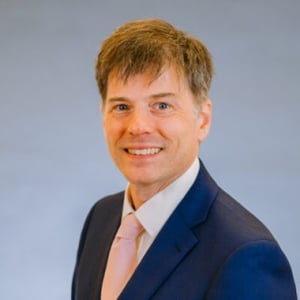
Senior Counsel, Vice President of Litigation Strategy, Alliance Defending Freedom
Jonathan Scruggs serves as senior counsel and vice president of litigation strategy with Alliance Defending Freedom. In this role, he identifies new litigation opportunities, develops new legal strategies, and improves processes across multiple litigation teams in collaboration with the chief legal counsel.
Since joining ADF in 2006, Scruggs has worked on and prevailed in a variety of cases related to Title IX, gender ideology, and people’s right to freely express their faith, including Masterpiece Cakeshop v. Colorado Civil Rights Commission, 303 Creative v. Elenis, and Brush & Nib Studio v. Phoenix, which Scruggs argued at the Arizona Supreme Court. Scruggs has argued before numerous federal appellate courts and trial courts across the country and has extensive experience litigating free-speech, religious-liberty, establishment, Title IX, and equal-protection issues on behalf of students, female athletes, businesses, professionals, and non-profit entities.
Scruggs earned his B.A., summa cum laude, from Vanderbilt University in 2003 and his J.D. at Harvard Law School in 2006. He is also a 2004 Blackstone Fellow.
A member of the bars of Arizona and Tennessee, Scruggs is admitted to the U.S. Supreme Court and multiple federal district and appellate courts.

Associate Professor of Law, Antonin Scalia Law School at George Mason University
Robert Luther III was appointed Associate Professor of Law in 2025 after serving as Distinguished Professor of Law from 2024-2025 and Adjunct Professor of Law from 2019-2024. He teaches and writes on the federal courts, legal and judicial ethics, political law, Congress, and professional sports. He has served at high levels in all three branches of the federal government and recently founded Constitutional Solutions PLLC—a law firm that navigates judicial candidates, judges, elected officials, professional athletes, and executives through high-stakes hearings, investigations, and reputational attacks.
Immediately before joining the Scalia Law faculty, Professor Luther spent over five years in the Washington, D.C. office of Jones Day, where his practice focused on strategic counseling, crisis management, and litigation. Prior to joining Jones Day, he served as Associate Counsel to the President of the United States in the White House Counsel’s Office. In the White House, he co-managed the judicial selection process and supervised the preparation of over 150 federal judicial nominees for their successful U.S. Senate confirmation hearings. The New York Times Magazine referred to his work on judicial selection during this period as “unique in White House history.” Before joining the White House, Professor Luther served as Counsel to then–U.S. Senator Jeff Sessions (R-Ala.) on the U.S. Senate Judiciary Committee, where he served as a core member of the team that prepared the Senator for confirmation as United States Attorney General. Professor Luther was also a law clerk to Judge Daniel A. Manion of the U.S. Court of Appeals for the Seventh Circuit. Earlier in his career, Professor Luther practiced civil and appellate litigation at a boutique firm in Williamsburg, Va. and taught at William & Mary Law School.
Professor Luther frequently speaks on the legal profession, political law, and federal judicial selection. His public work has been covered by or appeared in The New York Times, The Washington Post, The Wall Street Journal, Bloomberg, Fox News, The Hill, Politico, the Washington Examiner, National Law Journal, Law360, The Washington Reporter, and elsewhere, while his scholarship is published in the law journals of nearly twenty universities including three journals of Harvard University. He holds active law licenses in Virginia, the District of Columbia, the U.S. Supreme Court, and half of the U.S. Courts of Appeals.
In 2025, Virginia Governor Glenn Youngkin appointed Professor Luther to the Board of Visitors to Mount Vernon. He is an elected member of the American Law Institute (ALI) and serves on the Advisory Board of the Wilson Center for Leadership at Hampden-Sydney College. Since 2019, he has helped over 200 of his students secure clerkships with federal judges.

Which Path for Patent Challenges? The USPTO's "One-Challenge" NPRM for Inter Partes Review
Andrei Iancu, David Jones, Joseph Matal, Brian O'Shaughnessy, Robert J. Rando
Join us for a timely webinar examining the United States Patent and Trademark Office’s Notice...
Independent Agencies and the OIRA Review Process
Kristin E. Hickman, Eli Nachmany, Roger Nober, Paul J. Ray
The question of agency independence is front and center in modern political and legal discourse—the...
SAP, Motorola, and the Future of PTAB Reform
Arthur Gollwitzer, Philip M. Nelson, Jamie Simpson, Robert P. Taylor
The Patent Trial and Appeal Board (PTAB), created under the America Invents Act (AIA) of...
AI at a Crossroads [Shaped Docuseries Ep. 3]
Adam Thierer
AI at a Crossroads [Shaped Docuseries Ep. 3] As AI becomes increasingly integrated into everyday...
Courthouse Steps Oral Argument: Louisiana v. Callais (Round 2)
Bradley A. Benbrook, Michael R. Dimino
Louisiana's congressional districts, which it redrew following the 2020 census, currently sit in a state...
Everyone v. AI: Navigating the New Regulatory and Legal Battleground
Mariel Brookins, Benjamin Diggs, John Kim, Michael Richards, Mike Trinh
Presented by the In-House Counsel Network and the U.S. Chamber Litigation Center CLE credit for...
A Modern Look at Federal Judicial Selection
Michigan Lawyers Chapter
Detroit, MI2025 Ron Rotunda Memorial Webinar
Barry Anderson, Michael S. McGinniss
Professor Ron Rotunda wrote seminal law books that are still used in law schools across...
Law For Little Tech: Part 1 - Breaking Down the Little Tech Agenda
Kevin Frazier, Collin McCune
Smaller, advanced technology entrepreneurs are increasingly shaping the U.S. innovation landscape through what some have...
Courthouse Steps Preview: Little v. Hecox and West Virginia v. B.P.J.
Sarah Parshall Perry, Jonathan Scruggs
In 2020 and 2021, Idaho and West Virginia passed laws that required public schools and...