
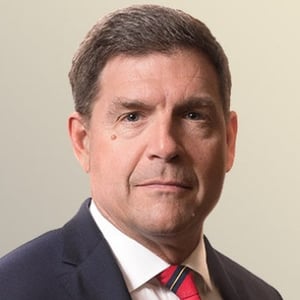
Partner, King & Spalding
John Richter is a trial and investigations partner in the Special Matters and Investigations Practice Group, and represents and defends companies, Boards of Directors, Board committees, and individuals facing a variety of white-collar criminal and regulatory enforcement matters, parallel civil litigation, and internal corporate investigations. John previously served as the Acting Assistant Attorney General in charge of the Criminal Division at the U.S. Department of Justice and as the U.S. Attorney for the Western District of Oklahoma, having been nominated by President George W. Bush and confirmed by unanimous consent of the U.S. Senate.
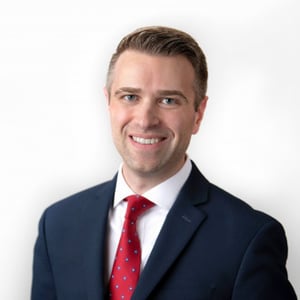
Managing Partner, Cramer Multhauf LLP
Attorney Matthew Fernholz focuses his practice on commercial litigation, trust and fiduciary disputes, business torts, trade secrets, non-compete agreements, defamation, and appellate work. In addition, he has developed one of the preeminent political and election law practices in the State of Wisconsin, and has handled several high-profile matters, from representing candidates for statewide office, successfully challenging the Governor’s emergency powers, arguing before the Wisconsin Elections Commission, and representing the Speaker of the Assembly.
Matthew frequently and successfully tries cases to verdict, and believes a lawyer unwilling to try a case should not take on a client in a litigation matter. In addition to this trial work, he has handled dozens of appeals, and countless dispositive motions.
His work has also been published in law review journals and newspapers alike.
Judge, United States District Court, Northern District of Illinois
John Fitzgerald Kness is a judge on the United States District Court for the Northern District of Illinois. He was nominated by President Donald Trump on June 24, 2019. The United States Senate confirmed Kness on February 12, 2020, by a vote of 81-12.
Kness was the general counsel of the College of DuPage from 2016 to 2020.
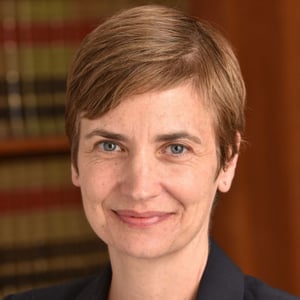
Vice Dean for Faculty Development and Professor of Law, UCLA Law
Joanna Schwartz is Vice Dean for Faculty Development and Professor of Law at UCLA School of Law. She teaches Civil Procedure and a variety of courses on police accountability and public interest lawyering. In 2015, she received UCLA's Distinguished Teaching Award.
Professor Schwartz is one of the country's leading experts on police misconduct litigation. Professor Schwartz additionally studies the dynamics of modern civil litigation. She is co-author, with Stephen Yeazell, of a leading casebook, Civil Procedure (9th Edition), and her scholarship has appeared in the New York University Law Review, the Texas Law Review, the UCLA Law Review, and the Yale Law Journal, among others.
Professor Schwartz is a graduate of Brown University and Yale Law School. After law school, Professor Schwartz clerked for Judge Denise Cote of the Southern District of New York and Judge Harry Pregerson of the Ninth Circuit Court of Appeals. She was then associated with Emery Celli Brinckerhoff & Abady LLP, in New York City, where she specialized in police misconduct, prisoners' rights, and First Amendment litigation.
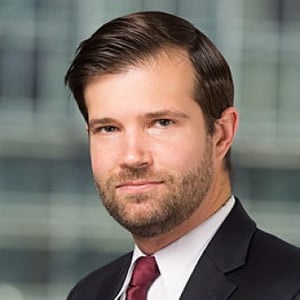
Research Fellow, CATO Institute
Jay Schweikert is a research fellow with the Cato Institute’s Project on Criminal Justice. His research and advocacy focuses on accountability for prosecutors and law enforcement, plea bargaining, Sixth Amendment trial rights, and the provision and structuring of indigent defense.
Before joining Cato, Schweikert spent four years doing civil and criminal litigation at Williams & Connolly LLP. He holds a JD from Harvard Law School, where he was an articles editor for the Harvard Law Review, and chaired the Harvard Federalist Society’s student colloquium program. Following law school, Schweikert clerked for Judge Diane Sykes of the U.S. Court of Appeals for the Seventh Circuit and Judge Laurence Silberman of the U.S. Court of Appeals for the DC Circuit.
He holds a BA in political science and economics from Yale University.

Professor of Law, University of Michigan Law School
Christopher J. Walker is a Professor of Law at the University of Michigan. Prior to joining Michigan law faculty in 2022, he spent a decade teaching at The Ohio State University Moritz College of Law. He previously clerked for Justice Anthony Kennedy of the U.S. Supreme Court, worked on the Civil Appellate Staff at the U.S. Department of Justice, and served on the Senate Judiciary Committee staff for the Gorsuch Supreme Court confirmation. Professor Walker’s research focuses on administrative law, regulation, and law and policy at the agency level. Outside the law school, he chaired the American Bar Association’s Section of Administrative Law and Regulatory Practice in 2020-21 and served as one of forty Public Members of the Administrative Conference of the United States from 2016-2022, and he continues to serve in both organizations in various capacities. He also works of counsel at the U.S. Chamber Litigation Center. In 2022, he received the Federalist Society’s Joseph Story Award.
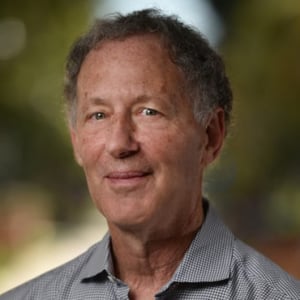
James C. Gaither Professor of Law; Vice Dean, Stanford Law School
Mark Kelman has tried, over the course of his career, to utilize the insights of neoclassical and behavioral economics, cognitive psychology, and political theory to illuminate a wide range of legal and policy controversies. He has paid special attention to antidiscrimination law (and most particularly disability law), criminal law, and taxation. He has written both articles and books that emphasize basic theory (e.g. THE HEURISTICS DEBATE, Oxford University Press 2011 or A GUIDE TO CRITICAL LEGAL STUDIES, Harvard University Press 1987, and a project on INJURIES that he is working on now, attempting both to elucidate what it means to be injured and why certain practices or outcomes – poverty, discrimination, sexual harassment, and death – are or are not injurious) as well as works that apply theoretical insights more directly to legal controversies (e.g. JUMPING THE QUEUE, with Gillian Lester, Harvard University Press, 1997 and the recently published, WHAT IS IN A NAME? TAXATION AND REGULATION ACROSS CONSTITUTIONAL DOMAINS, Carolina Academic Press, 2019). He employs a wide variety of methods in his work, from experiments (e.g. “Playing with Trolleys: Intuitions About the Permissibility of Aggregation,” with Tamar Kreps, JELS, 2014) to doctrinal analysis (e.g. “Untangling Horne, Resuscitating Nollan,” 104 Cornell Law Review Online, 2018) to eclectic pieces that blend empirical and conceptual analyses of contested social practices (e.g. “Concepts of Discrimination in ‘General Ability’ Job Testing,” Harvard Law Review, 1991 and “Hard Choices and Deficient Choosers,” Northwestern Journal of Law and Policy, 2018). He has, for many decades, taught first year courses in Property and Criminal Law and will, for the first time this academic year, offer a course attempting to synthesize the recurring themes and arguments that cut across the law school curriculum. He has also now served as Vice Dean at the Law School for the past fifteen years. Before joining the Stanford Law faculty in 1977, he served as Director of Criminal Justice Projects at the Fund for the City of New York.

Levin, Mabie & Levin Professor of Law, University of Florida Levin College of Law
Professor Gary Lawson joined the University of Florida Levin College of Law faculty on July 1, 2024, after twenty-four years at Boston University School of Law and eleven years at Northwestern University School of Law. While at Boston University, he was named a William Fairfield Warren Distinguished Professor in 2022 – the highest faculty honor within the university. He has authored or co-authored nine editions of a textbook on administrative law, a textbook on constitutional law, five university press books, one popular press book, and more than one hundred scholarly articles on topics ranging from aspects of constitutional theory and history to the proof of legal propositions. His works have been cited in more than twenty opinions of United States Supreme Court justices. He is a founding member, and serves on the Board of Directors, of the Federalist Society for Law and Public Policy Studies and is on the Editorial Advisory Board of the Heritage Guide to the Constitution.
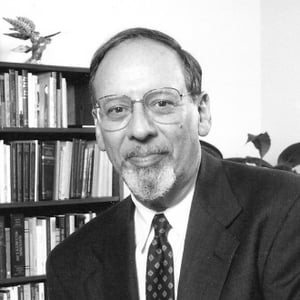
Dean Emeritus, George Mason School of Law
Lauded as a cultural laureate of the Commonwealth of Virginia, former Mason dean Henry G. Manne was the driving force behind the many innovations in legal education implemented at George Mason.
Professor Manne was designated one of the "founders" of the field of law and economics by the American Law and Economics Association. He launched the Law and Economics Center at Emory University and the University of Miami before bringing it to George Mason.
His monograph, An Intellectual History of the School of Law, George Mason University, traces the development of the law and economics movement and highlights the special contributions made by George Mason University School of Law to the movement. Professor Manne's other writings include such seminal works as Insider Trading and the Stock Market; Wall Street in Transition (with E. Solomon); and "Mergers and the Market for Corporate Control", Journal of Political Economy, April 1965. Professor Manne also designed and implemented at George Mason the nation's first system of fully integrated law school specialty track programs.
In August 2012, Dean Manne gave an oral history of his life, including his time at the Law and Economics Center, to the Securities and Exchange Commission Historical Society. An audio recording of the interview and transcript are available on the Society's website: audio (mp3); edited transcript (pdf).
He received a B.A. from Vanderbilt University (1950), J.D. from the University of Chicago (1952), J.S.D. from Yale University (1966), LL.D. from Seattle University (1987), and LL.D. from the Universidad Francesco Marroquin in Guatemala (1987).

Vice President for Legal Affairs, Cato Institute
Roger Pilon is the Cato’s Institute’s vice president for legal affairs, the founding director of Cato’s Robert A. Levy Center for Constitutional Studies, the inaugural holder of Cato’s B. Kenneth Simon Chair in Constitutional Studies, and the founding publisher of the Cato Supreme Court Review.
Prior to joining Cato, Pilon held five senior posts in the Reagan administration, including at State and Justice, and was a national fellow at Stanford’s Hoover Institution. In 1989 the Bicentennial Commission presented him with its Benjamin Franklin Award for excellence in writing on the U.S. Constitution. In 2001 Columbia University’s School of General Studies awarded him its Alumni Medal of Distinction. Pilon lectures and debates at universities and law schools across the country and testifies often before Congress.
His writing has appeared in the Wall Street Journal, the Washington Post, the New York Times, the Los Angeles Times, Legal Times, National Law Journal, Harvard Journal of Law and Public Policy, Stanford Law and Policy Review, and elsewhere. He has appeared on ABC’s Nightline, CBS’s 60 Minutes II, Fox News Channel, NPR, CNN, MSNBC, CNBC, C-SPAN, and other media.
Pilon holds a BA from Columbia University, an MA and a PhD from the University of Chicago, and a JD from the George Washington University School of Law.
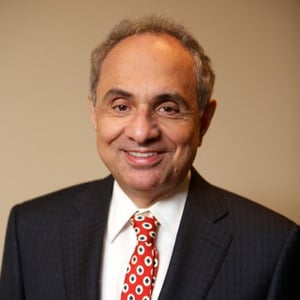
Professor of Economics; Co-Director of Classical liberal Institute, NYU Law School; Director of the Foundations of the Market Economy Program, New York University
Mario Rizzo is the Director of the Program on the Foundations of the Market Economy in the Department of Economics. He is also the Co-Director of the Classical Liberal Institute at the New York University School of Law. He has been a law and economics fellow at Yale Law School and the University of Chicago Law School. He teaches a yearly seminar at the NYU Law School called “Classical Liberalism.” He is the author of many articles in economics and in law journals. He is the coauthor of Austrian Economics Re-Examined: The Economics of Time and Ignorance. Professor Rizzo’s current research is focused on new or soft paternalism, behavioral economics, and the economic theory of rationality. He is completing a book, Puppets and Puppet Masters: Rationality, Behavioral Economics and New Paternalism, for Cambridge University Press.
President and CEO, The Buckeye Institute
Robert Alt is the President and Chief Executive Officer of The Buckeye Institute where he has catalyzed exponential growth since he took the organization’s helm in 2012. He has since founded Buckeye’s renowned Economic Research Center and established its impactful Legal Center.
Alt is a distinguished scholar and attorney with particular expertise in legal policy, criminal justice, national security, and constitutional law. He previously worked for former U.S. Attorney General Edwin Meese III, regularly provides commentary on television and radio programs, and his writings have appeared in countless outlets.
In 2004, Alt spent five months in Iraq as an embedded war correspondent.
Alt has testified before Congress multiple times—including at the confirmation hearings for U.S. Supreme Court Justice Elena Kagan—the Federal Election Commission regarding matters of constitutional and administrative law, and numerous state legislatures.
Alt serves as an officer on the boards of The Philadelphia Society and the Federalist Society’s Columbus Lawyers Chapter. He taught national security law, criminal law, and legislation at Case Western Reserve University School of Law, as well as constitutional law and political parties and interest groups at Ashland University.
Alt earned his Doctor of Law degree from The University of Chicago Law School, where he was Symposium Editor and the winner of the Mulroy Prize for Excellence in Appellate Advocacy as well as research assistant to Professor Richard Epstein. Following law school, he clerked for Judge Alice Batchelder on the U.S. Court of Appeals for the Sixth Circuit. Alt graduated with his Bachelor of Arts in philosophy and political science magna cum laude from Azusa Pacific University where he also won the Outstanding Senior Award in Political Science.
Alt is an accomplished high-altitude alpinist and endurance athlete who has successfully climbed 6.75 of the famed Seven Summits of the World including Mount Everest. He is the creator of PROFOUND CLIMBING™ and a frequent speaker across the country and around the world on legal and public policy topics as well as effective leadership, management, decision-making, and teamwork in contexts ranging from extraordinary life/death situations to ordinary professional/business settings.
Partner, Kirkland & Ellis LLP
Reginald “Reg” Brown is a partner in the Washington, D.C., office of Kirkland & Ellis LLP. He has a vibrant and diverse crisis and governmental investigations practice, and regularly counsels financial institutions and other industry-leading clients facing complex and significant regulatory, enforcement and reputational matters.
Reg provides investigations-related guidance, strategic counsel and crisis management assistance to a broad range of companies and senior executives confronting challenges and opportunities at the intersection of government, law, media and public policy. He has assisted leading institutions and high-profile individual clients with more than a hundred congressional inquiries, as well as numerous federal, state and global government investigations and crisis avoidance and mitigation matters.
Reg leads teams of lawyers responding to some of the most challenging Department of Justice (DOJ), Consumer Financial Protection Bureau (CFPB), State Attorneys General and other regulatory or enforcement matters for financial institutions. Many of his clients are among the world's most prominent banks, hedge funds, private equity and venture firms, energy companies, government contractors, healthcare institutions and technology firms, as well as CEOs and high-ranking public officials. Reg has also assisted prospective and incumbent high-level public officials in connection with complex ethics agreements and governmental controversies.
Prior to joining Kirkland, Reg was a partner at WilmerHale, where he served as chairman of the firm's Financial Institutions Group and led the firm's congressional investigations practice as vice chair of the Crisis Management and Strategic Response Group. He previously served in the White House Counsel's office, where he was the White House's principal legal liaison to the Departments of Treasury and Housing and Urban Development, as well as many independent financial services agencies. In this role, he provided counsel on a wide variety of issues. Among other things, Reg served as a counselor for the White House Office of Political Affairs, Presidential Personnel Office and the National Economic Council.
Prior to his government service, Reg served as assistant to the CEO and vice president of corporate strategy at Nationwide Mutual Insurance Company, and as the deputy general counsel to former Florida Governor Jeb Bush. He served as a Peace Corps volunteer in the Federated States of Micronesia early in his professional career.
Partner, Gibson Dunn & Crutcher LLP
Miguel A. Estrada is a partner in the Washington, D.C. office of Gibson, Dunn & Crutcher.
Mr. Estrada has represented clients before federal and state courts throughout the country in a broad range of matters. He has argued 24 cases before the United States Supreme Court, and briefed many others. He has also argued dozens of appeals in the lower federal courts.
Best Lawyers® recognized Mr. Estrada as a 2020 Lawyer of the Year in Intellectual Property Litigation and as a Lawyer of the Year in Appellate Practice. He has been recognized by Benchmark Litigation as a 2020 U.S. Appellate Litigation “Star”. In 2014, The American Lawyer named Mr. Estrada a “Litigator of the Year,” praising his “brains and tenacity” and noting he is the lawyer to call for “a tough, potentially unwinnable case.” From 2014-2021, Chambers & Partners has named him as one of a handful of attorneys that it ranked in the top tier among the nation’s leading appellate lawyers. Chambers & Partners noted that “clients are impressed by his intellect and ability, with one saying, ‘His papers are just blindingly clear in what they say and devastating in how they marshal the arguments.’” The Atlantic described his oral argument in a 2014 high-profile separation-of-powers case as “one of the most dazzling arguments the marble chamber has heard in many years.”
Mr. Estrada was selected by his peers for inclusion in the 2020 edition of The Best Lawyers in America® in the area of Appellate Law, in addition to previous recognition by the publication in the specialties of Bet-the-Company Litigation, Commercial Litigation and Criminal Defense: White Collar, Intellectual Property Litigation, and Regulatory Enforcement Litigation in the areas of SEC, Telecom, and Energy. In 2017, he was elected as a member of the American Law Institute. In 2021, Mr. Estrada was named among the Lawdragon 500 Leading Lawyers in America. In 2004, Legal Times named him one of the top 12 appellate litigators in the D.C. area, noting that “people who follow appellate practice in Washington have known for several years that Estrada . . . is one of the best around.” Also in 2004, Washingtonian Magazine named him one of the top constitutional law lawyers “who could become one of the legends of the Supreme Court bar.”
Mr. Estrada joined Gibson Dunn in 1997, after serving for five years as Assistant to the Solicitor General of the United States. He previously served as Assistant U.S. Attorney and Deputy Chief of the Appellate Section, U.S. Attorney’s Office, Southern District of New York. In those capacities, Mr. Estrada represented the government in numerous jury trials and in many appeals before the U.S. Court of Appeals for the Second Circuit. Before joining the U.S. Attorney’s Office, Mr. Estrada practiced corporate law in New York with Wachtell, Lipton, Rosen & Katz.
Mr. Estrada is a Trustee of the Supreme Court Historical Society. He was formerly a member of the Board of Visitors of Harvard Law School.
Mr. Estrada served as a law clerk to the Honorable Anthony M. Kennedy in the U.S. Supreme Court from 1988 to 1989 and to the Honorable Amalya L. Kearse in the U.S. Court of Appeals for the Second Circuit from 1986 to 1987. He received a J.D. degree magna cum laude in 1986 from Harvard Law School, where he was editor of the Harvard Law Review. Mr. Estrada graduated with an A.B. degree magna cum laude and Phi Beta Kappa in 1983 from Columbia College, New York. He is fluent in Spanish and proficient in French.
Representative Supreme Court matters include:
In 2011, the Supreme Court appointed Mr. Estrada to brief and argue two criminal cases –Dorsey v. United States and Hill v. United States – in which the Solicitor General declined to defend the judgments of the court of appeals. Mr. Estrada was appointed to argue the position that the Solicitor General had declined to defend.
Mr. Estrada was also part of the team that successfully presented then Governor Bush’s position to the Supreme Court in Bush v. Gore (2000). Other cases that Mr. Estrada handled in the Supreme Court include Granholm v. Heald (2005) (dormant Commerce Clause and Twenty-First Amendment), Vermont Agency of Natural Resources v. United States ex rel. Stevens (2000) (False Claims Act, Article III standing and Eleventh Amendment immunity), Old Chief v. United States (1997) (rules of evidence), United States v. Mezzanatto (1995) (evidence and plea bargaining), United States v. Robertson (1995) (constitutional limits on Congress’s Commerce Clause powers), Citizens Bank of Maryland v. Strumpf (1995) (bankruptcy law), and NOW, Inc. v. Scheidler (1994) (RICO).
Recent Court of Appeals matters include:
In addition, Mr. Estrada is lead appellate counsel to Vivendi S.A. in two securities-fraud appeals from jury verdicts that are currently pending in the Second Circuit, and to the National Association of Broadcasters in a challenge to certain procedures promulgated by the FCC in connection with the upcoming Spectrum Auction. Mr. Estrada also recently presented argument before the D.C. Circuit on behalf of the tobacco industry in a first amendment challenge to certain compelled disclosures that were imposed as part of the government’s long-running civil RICO case against the industry.
Other matters:

Executive Vice President, The Federalist Society
Dean Reuter is Executive Vice President at the Federalist Society for Law and Public Policy Studies. He has served in two federal government agency Offices of the Inspector General, as Counsel to the Inspector General and Deputy Inspector General, responsible for policing the use of federal funds granted and contracted through those agencies. As such, he helped conduct and oversee criminal investigations across the country. He is the principal author of the non-fiction book, The Hidden Nazi: The Untold Story of America's Deal with the Devil, and editor of Liberty’s Nemesis: The Unchecked Expansion of the State and Confronting Terror: 9/11 and the Future of American National Security. He was appointed by the President and served as Vice-Chairman of the Board of Directors of the Corporation for National and Community Service, and recently served as an appointee on the U.S. Commission on Presidential Scholars. He is a graduate of Hood College (BA with Honors) and the University of Maryland School of Law.
Harry Elwood Warren Scholar and Professor of Law, Boston University Law School
Jack Beermann’s scholarship focuses on two areas: civil rights litigation and administrative law. He is an authority on the circumstances under which state and local officials, and local governments, should be held liable for their constitutional violations. “What particularly fascinates me is studying the values underlying our public law system and how social movements and history have affected those values,” he says.
Professor Beermann has authored or co-authored four books on administrative law, including a widely-used casebook and the Emanuel Law Outline on the subject. He has also written extensively on the degree to which federal courts should defer to the legal determinations of federal agencies, on the problem of midnight rulemaking, in which outgoing administrations promulgate dozens of regulations at the end of their administrations and on the legal aspects of the funding crisis facing public employee pension funds in the United States.
His articles have appeared in prominent American journals such as the Stanford Law Review, UCLA Law Review, Duke Law Journal, and Boston University Law Review, and in foreign law journals including Germany’s Rechtstheorie and China’s Administrative Law Review. Recent articles include “The Public Pension Crisis” in the Washington & Lee Law Review, “Congressional Administration” in the San Diego Law Review and the “Constitutional Law of Presidential Transition” in the North Carolina Law Review. In 1998, he co-authored an article that examined civil rights violations in the popular television drama NYPD Blue and in 1993 he wrote “The Supreme Court’s Narrow View on Civil Rights” for the prestigious Supreme Court Review.
Before joining the Boston University faculty in 1984, Professor Beermann clerked for Judge Richard Cudahy of the United States Court of Appeals for the Seventh Circuit. In 2017, he was appointed as a public member of the Administrative Conference of the United States. In 2008, 2011 and 2014 he was visiting professor at Harvard Law School and in 1997, he was distinguished visiting professor at DePaul Law School. In 2004, 2005 and 2007, he taught at the Interdisciplinary Center in Herzliya, Israel, and in 2002, he taught at the China University of Political Science and Law in Beijing. He has lectured in Israel, Germany, Australia, Morocco, Portugal and Canada. At BU Law, Professor Beermann teaches administrative law, civil rights litigation, and constitutional law. In recent years, he has also taught introduction to American law (for foreign LLM students) and local government law.
Senior Policy Analyst, GW Regulatory Studies Center
Daniel is a senior policy analyst at the GW Regulatory Studies Center. His professional experience includes work as a private sector energy analyst, where he studied the outcomes and regulatory environment of state-owned oil companies. Daniel’s research interests include privacy, effects of regulation on international trade and investment, the international energy market, and national security. Daniel is also a PhD. student at the Trachtenberg School of Public Policy & Public Administration.

Laurence H. Silberman Chair in Constitutional Governance, American Enterprise Institute; Executive Director, Antonin Scalia Law School’s C. Boyden Gray Center for the Study of the Administrative State
Adam J. White is the Laurence H. Silberman Chair in Constitutional Governance and senior fellow at the American Enterprise Institute, where he focuses on the Supreme Court and the administrative state. He also directs the Antonin Scalia Law School’s C. Boyden Gray Center for the Study of the Administrative State.
He writes on regulation and constitutional government for a variety of publications. He practiced law in Washington, D.C., after clerking for the D.C. Circuit's Judge David Sentelle. He also has been chairman of the ABA's Administrative Law Section.
In 2021, he served on the Presidential Commission on the Supreme Court of the United States, where he criticized “Court packing” and other efforts to restructure the Supreme Court.

Newsweek Senior Editor-at-Large, Syndicated Columnist, Host of "The Josh Hammer Show," Article III Project Senior Counsel, Newsweek, Salem Media, Article III Project, David Horowitz Freedom Center
Josh Hammer is the senior editor-at-large of Newsweek and host of "The Josh Hammer Show," a podcast, a syndicated radio show, and TV program on Salem News Channel. A syndicated columnist through Creators Syndicate, Josh is a frequent pundit and essayist on political, legal, and cultural issues. He is also senior counsel for the Article III Project and Internet Accountability Project, as well as a Shillman Fellow with the David Horowitz Freedom Center and a fellow with the Palm Beach Freedom Institute.
An outspoken conservative, Josh opines on conservative intellectual trends, contemporary domestic and foreign policy debates, constitutional and legal issues, and the intersection of law, politics and culture. He has been published by many leading outlets, including the Los Angeles Times, the New York Post, Daily Mail, Newsweek, the Claremont Review of Books, National Affairs, American Affairs, The New Criterion, The National Interest, National Review, RealClearPolitics, First Things, City Journal, Public Discourse, Law & Liberty, Tablet Magazine, Deseret Magazine, Compact Magazine, Chronicles Magazine, The Spectator, The American Mind, The American Conservative, The European Conservative, American Greatness, American Compass, The Federalist, Blaze Media, TomKlingenstein.com, Townhall, The Daily Wire, The Daily Signal, The Daily Caller, The Epoch Times, Anchoring Truths, Fortune, Fox Business, The Jerusalem Post, The Times of Israel, The Forward, Jewish Telegraphic Agency and the Jewish Journal. He has also had legal scholarship published by the Harvard Journal of Law & Public Policy and the University of St. Thomas Law Journal.
Josh is a college campus speaker through Young America's Foundation and the Intercollegiate Studies Institute, and a law school campus speaker through the Federalist Society. Prior to Newsweek and The Daily Wire, where he was an editor, Josh worked at Kirkland & Ellis LLP and clerked for the Hon. James C. Ho on the U.S. Court of Appeals for the Fifth Circuit. Josh has also served as a John Marshall Fellow with the Claremont Institute and as a Fellow with the James Wilson Institute. He is the former host of "America on Trial with Josh Hammer," a one-season daily podcast with The First that covered the unique legal issues surrounding the 2024 presidential election.
Josh graduated from Duke University, where he majored in economics, and from the University of Chicago Law School. He lives in Florida, but remains an active member of the State Bar of Texas.
Attorney, Allen Harris Law
Samantha Harris is a nationally recognized attorney advising students and faculty on issues of campus due process, Title IX, free speech, and academic freedom. Drawing on more than 15 years at the Foundation for Individual Rights in Education (FIRE), where she served as Vice President for Policy Research, she guides students, faculty, administrators, and attorneys through complex disciplinary and constitutional issues involving free speech, fair hearings, and faculty-student rights.
A graduate of Princeton University and the University of Pennsylvania Law School (Articles Editor, Journal of Constitutional Law), Samantha clerked for the Hon. Jay C. Waldman in the U.S. District Court for the Eastern District of Pennsylvania and began her legal career at Pepper Hamilton LLP. At FIRE, she led efforts to reform campus policies and defended individuals in high-profile Title IX and free speech disputes.
Now at Allen Harris PLLC, a firm focused on Title IX and campus defense, Samantha represents students and professors in investigations, hearings, appeals, and related litigation. Samantha’s practice emphasizes strategic advocacy in campus disciplinary systems and litigation-ready defense in federal court. Her blend of policy experience, legal skill, and media visibility positions her as a leading resource for issues at the intersection of education law and constitutional rights.
General Counsel, Mountain States Legal Foundation
William E. Trachman is General Counsel for Mountain States Legal Foundation, where he protects the rights of individuals to live freely and securely under the U.S. Constitution. Previously, he was appointed to serve in the Department of Education as Deputy Assistant Secretary in the Office for Civil Rights. Prior to his appointment, he served as General Counsel to the Douglas County School District, where he helped litigate the fight for school choice in the school district. Presently, Mr. Trachman serves as Chair of the Colorado Federalist Society and the Vice Chair of the U.S. Commission on Civil Rights’ Colorado Advisory Board. He previously taught as an Adjunct Professor at the University of Denver, Sturm College of Law. He attended U.C. Berkeley for both undergraduate and law school, and then clerked for the Honorable Harris Hartz on the 10th Circuit Court of Appeals. Mr. Trachman is licensed in Colorado, California, and Washington, D.C.
Director, Digital Media, Communications and Fellow, R Street Institute
Shoshana Weissmann manages R Street’s social media, email marketing and other digital assets. She also works on occupational licensing reform, social media regulatory policy, Section 230 and other issues, and has written for various publications, including The Wall Street Journal and USA Today.
Shoshana most recently managed digital communications for Opportunity Lives, a group that highlighted positive stories and policy solutions. Before that, she managed social media and wrote for The Weekly Standard. Earlier in her career, she managed digital communications for the America Rising PAC, where her strategy was highlighted in a piece that appeared in The New York Times.
She is on the board of The Conservation Coalition and a member of the Federalist Society’s Regulatory Transparency Project’s state and local and emerging technology working groups.
She lives in Washington, D.C. and has a stuffed sloth named James Madisloth, and she enjoys the Snapchat hot dog.
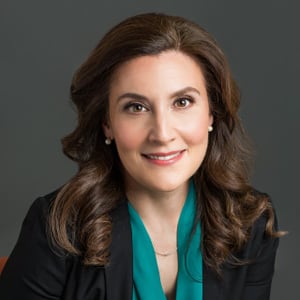
Board Member, U.S. Privacy and Civil Liberties Oversight Board
Beth A. Williams is a Board Member of the United States Privacy and Civil Liberties Oversight Board, an agency whose mission is to ensure that the federal government's efforts to prevent terrorism are balanced with the need to protect privacy and civil liberties.
Prior to her Board service, Ms. Williams was the Assistant Attorney General for the Office of Legal Policy at the United States Department of Justice from August 2017 to December 2020. In that role, she served as the primary policy advisor to the Attorney General and the Deputy Attorney General, and as the Chief Regulatory Officer for the Department. Ms. Williams also led the judicial nomination process for the Department, assisting in the selection and confirmation of more than 230 Article III judges to the bench.
Prior to becoming Assistant Attorney General, Ms. Williams was a litigation and appellate partner at a national law firm, where her practice focused on complex commercial, securities, appellate, and First Amendment litigation. From 2005-2006, Ms. Williams served as Special Counsel to the United States Senate Committee on the Judiciary, where she assisted with the confirmation of Chief Justice John G. Roberts, Jr. and Associate Justice Samuel A. Alito, Jr. to the United States Supreme Court.
Ms. Williams clerked for the Hon. Richard C. Wesley on the United State Court of Appeals for the Second Circuit. She graduated from Harvard College magna cum laude, with a degree in History and Literature, and she earned her law degree from Harvard Law School, where she served as Executive Editor of the Harvard Journal of Law and Public Policy.
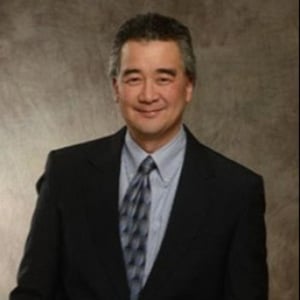
Professor, University of Denver, Sturm College of Law

The False Claims Act, the CARES Act, and COVID-19: An Enforcement Overview
John C. Richter
The False Claims Act, which imposes civil and criminal liability on those who submit false...
Recent Trends in the Roberts Court
Matthew M. Fernholz
On August 18, 2020, the Federalist Society's Milwaukee Lawyers Chapter hosted a virtual event on...
The Doctrine of Qualified Immunity
John F. Kness, Joanna C. Schwartz, Jay R. Schweikert, Christopher J. Walker
On August 17, 2020, The Federalist Society's Chicago Lawyers Chapter hosted a virtual panel on...
Panel I: Methods of Interpreting the Economic Rights Provisions of the Constitution [Archive Collection]
Mark Kelman, Gary Lawson, Henry G. Manne, Roger Pilon, Mario J. Rizzo
On October 16-17, 1987, the Federalist Society hosted a symposium in celebration of the bicentennial...
Criminal Law Update: A Survey of State Law Changes in 2019
Robert Alt
Note from the Editor: The Federalist Society takes no positions on particular legal and public...
Topics
One Way to Help Fix Congress? Get Rid of C-Span
The Select Committee on the Modernization of Congress has a number of good suggestions to...
2020 Annual Supreme Court Round Up
Reginald J. Brown, Miguel A. Estrada, Dean Reuter
On August 10, 2020, the Federalist Society's Washington, D.C. Lawyers Chapter will present its annual...
Deep Dive Episode 126 – Minutes to Midnight, or Teeing Up a Second Term?
Jack Beermann, Daniel R. Pérez, Adam White
The next presidential inauguration will be on January 20, 2021. The six months between then...
Reviewing The Supreme Court’s 2019/20 Term: A Panel Discussion
Josh Hammer, Samantha Harris, William E. Trachman, Shoshana Weissmann, Beth A. Williams, Alan Chen
The Colorado Lawyers Chapter held a virtual review of the 2019-20 Supreme Court term on...
Topics
A Second Amendment Grade for President Trump So Far
In his most recent State of the Union address, President Donald Trump promised the American...