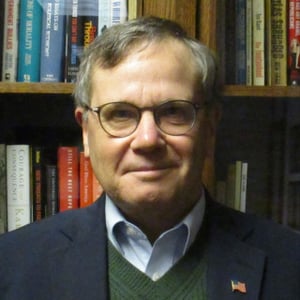
Partner, Oliver Wyman
Douglas Elliott is a Partner at Oliver Wyman in New York, where he focuses on financial regulation and associated public policy issues and their implications for the financial sector.
He analyzes a wide range of issues and has published papers on such diverse topics as “Financial Institutions in an Age of Populism,” “Data Rights in Finance,” and “Tackling Global Market Fragmentation in Banking.” He has also written extensively on the impacts of capital and liquidity requirements, including a 150-page literature review in 2016, which followed on an earlier study for the IMF. Recently he addressed the finance ministers and central bank governors of the 28 EU member states on the topic of “Rebooting Capital Markets Union.”
Prior to joining the firm, he was a Fellow in Economic Studies at The Brookings Institution, generally ranked as the world’s top think tank. He primarily analyzed financial institutions and markets and their regulation, along with extensive analysis of the Euro Crisis. He has twice been a Visiting Scholar at the International Monetary Fund. Mr. Elliott also worked as a consultant for the IMF, the World Bank, and the Asian Development Bank. Prior to Brookings, he was a financial institutions investment banker for two decades, principally at J.P. Morgan.
He has testified multiple times before both houses of Congress and participated in numerous speaking engagements, as well as appearing widely in the major media outlets. The New York Times has described his analyses as “refreshingly understandable” and “without a hint of dogma or advocacy.”
Mr. Elliott graduated from Harvard College magna cum laude with an A.B. in Sociology in 1981. In 1984, he graduated from Duke University with an M.A. in Computer Science.
Executive Director, Milken Institute Center for Financial Markets
Michael S. Piwowar is the executive director of the Milken Institute Center for Financial Markets. Dr. Piwowar served as a Commissioner at the U.S. Securities and Exchange Commission from August 15, 2013 to July 6, 2018. He was first appointed to the SEC by President Barack Obama and was designated Acting Chairman of the Commission by President Donald Trump from January 23, 2017 to May 4, 2017. He was previously the Republican chief economist for the U.S. Senate Committee on Banking, Housing, and Urban Affairs under Senators Mike Crapo (R-ID) and Richard Shelby (R-AL) and served as the lead Republican economist on the four SEC-related titles of the Dodd-Frank Act and the JOBS Act. During the financial crisis and its immediate aftermath, Dr. Piwowar served in a one-year fixed-term position at the White House as a senior economist at the President’s Council of Economic Advisers (CEA) in both the George W. Bush and Barack Obama Administrations. Before joining the White House, Dr. Piwowar worked as a Principal at the Securities Litigation and Consulting Group (SLCG). He received a B.A. in Foreign Service and International Politics from the Pennsylvania State University, an M.B.A. from Georgetown University, and a Ph.D. in Finance from the Pennsylvania State University.
Former Commissioner, The Commodity Futures Trading Commission
Dawn Stump is a senior leader and regulatory expert in domestic and international financial services. Her experience and thought leadership have tactically identified potential risks and initiated regulatory and systemic solutions to protect industries, infrastructures, and economies. Based on her global perspective and industry expertise, Dawn is able to raise critical financial services issues to the board level and/or the global stage as business environments fluctuate. She is widely respected for her leadership, bipartisanism, and consensus building among senior government officials, senior regulatory ministry officials, corporate, and academic leaders worldwide.
Recently, she completed her term as a Commissioner of the CFTC, the independent U.S. agency that regulates the $200+ Trillion derivatives market. As one of five Commissioners, she helped to shape the priorities of the agency while overseeing policy direction and internal planning. Dawn prioritized sector resilience in evolving global markets through robust regulatory strategies necessary during market volatility and changing economic environments. Within the agency, she also championed the importance of enterprise-wide risk management practices. Specifically, Dawn initiated new agency wide data protection procedures for the consistent handling of data intake and strengthening of responses to potential cyber intrusions.
Previously, as Senior Vice President of the Futures Industry Association and concurrently Executive Director of its Americas Advisory Board, Dawn advised its President and global Board of Directors on the impacts of public policy changes on the industry and association members. Earlier, she was Vice President of Government Affairs for NYSE Euronext where she developed regulatory compliance policies alongside her international counterparts to ensure adherence across jurisdictions. Her leadership was critical to the establishment of a new U.S. based derivative exchange/clearing house.
During her early career in public service, she served as majority and minority senior professional staff for the U.S. Senate Committee on Agriculture, Nutrition & Forestry, U.S. House of Representatives Committee on Agriculture, and initially on the staff of U.S. Senator Phil Gramm. She was actively involved in negotiating the reform of derivatives regulations contained in the Dodd-Frank Act and efforts to conduct oversight of commodity and financial derivatives, under the jurisdiction of the CFTC.
Dawn shares her professional expertise as a member of the 3-person Advisory Council to the Women In Derivative’s (WIND) Board of Directors and through committee service for the National Charity League. She earned a Bachelor of Science from Texas Tech University in Lubbock, Texas and is a past President of the Texas Tech Alumni Association’s Washington, DC Chapter. Dawn and her husband have two children and live in the greater Washington, DC area.
Executive Director, The Financial Technology and Cybersecurity Center
Thomas P. Vartanian is the Executive Director of the Financial Technology & Cybersecurity Center, an author, financial services advisor, expert witness, and board mentor. He is the former Executive Director of the Program on Financial Regulation & Technology at George Mason University’s Antonin Scalia Law School, where he was also a Professor of Law. Between 1983 and 2018, he chaired the Financial Institution’s practices at two international law firms, Dechert LLP and Fried Frank LLP, through four financial crises. Both as a regulator and private practitioner, he has represented parties in a majority of the 50 largest financial institution failures in American history.
Mr. Vartanian served in the Reagan Administration during the S&L crisis as General Counsel of the Federal Home Loan Bank Board and the FSLIC. Prior to that, he served in the Carter Administration in the Office of the Comptroller of the Currency as Special Assistant to the Chief Counsel. Since departing government service, he has advised many subsequent presidential administrations on financial institution issues.
Mr. Vartanian is a futurist and expert in financial technology who has been described by clients in Chambers as “one of the best financial services lawyers in America.” Mr. Vartanian was Chairman of the American Bar Association’s Cyberspace Law Committee between 1998 and 2002, where he chaired an international task force of lawyers from twenty countries which released a seminal report in London in 2000 on the novel issues created by doing business in Cyberspace. He is currently a member of the American Association of Bank Directors’ Task Force on Bank Director Personal Liability Mitigation.
Mr. Vartanian has authored more than four hundred articles and eight books, including his new book, 200 Years of American Financial Panics: Crashes, Recessions, Depressions, and the Technology That Will Change It All chronicling the country’s tumultuous financial history and the impact that technology will have on its future.
He is a frequent lecturer and media commentator on the financial services industry, having appeared on Bloomberg TV, CNN, Fox News, Newsmax, PBS and various local and national radio shows. He has also taught financial services and digital commerce law at Georgetown Law School, George Washington Law School, and Boston University School of Law, and has been a guest lecturer at Harvard Law School.
In 2008, Mr. Vartanian was named “Washingtonian of the Year” based on his use of music and sports to raise money for charities in the D.C. metropolitan area. As a musician, he appeared in the first production in the United States in 1970 of Joseph and the Amazing Technicolor Dreamcoat. His classic rock band, The Johnny Esquire Band, has helped raise approximately $5,000,000 for charities in the Washington D.C. area over the last twenty-five years. Mr. Vartanian also founded and plays for the Washington All Stars, a senior baseball team that has raised more than $500,000 for Special Olympics.
His next book, The Unhackable Internet, will be published in early 2023.
Partner, Fusion Law, PLLC
Paul is the founding partner of Fusion Law, PLLC. He has extensive experience with state, federal, and global regulators building coalitions and implementing policies to promote innovation in financial services. He is responsible for designing and implementing the first state (Arizona) and federal (CFPB) FinTech sandboxes in the United States. He also designed the CFPB no-action letter and trial disclosure policies. He helped found the first global regulatory innovation coalition (Global Financial Innovation Network) and led the founding of the first U.S. regulatory innovation coalition (American Consumer Financial Innovation Network). He served on the Financial Stability Oversight Council subcommittee on digital assets. He also has drafted state-level laws on blockchain and utility tokens.
Paul also has significant enforcement and litigation experience. He led many multi-state consumer protection enforcement matters as Civil Litigation Division Chief at the Arizona Attorney General’s Office.
Prior to his government service, Paul practiced law in the areas of securities litigation and transactional work for approximately six years at two well-known law firms. He also clerked on the U.S. Court of Appeals for the Fourth Circuit.
Partner, Oliver Wyman
Douglas Elliott is a Partner at Oliver Wyman in New York, where he focuses on financial regulation and associated public policy issues and their implications for the financial sector.
He analyzes a wide range of issues and has published papers on such diverse topics as “Financial Institutions in an Age of Populism,” “Data Rights in Finance,” and “Tackling Global Market Fragmentation in Banking.” He has also written extensively on the impacts of capital and liquidity requirements, including a 150-page literature review in 2016, which followed on an earlier study for the IMF. Recently he addressed the finance ministers and central bank governors of the 28 EU member states on the topic of “Rebooting Capital Markets Union.”
Prior to joining the firm, he was a Fellow in Economic Studies at The Brookings Institution, generally ranked as the world’s top think tank. He primarily analyzed financial institutions and markets and their regulation, along with extensive analysis of the Euro Crisis. He has twice been a Visiting Scholar at the International Monetary Fund. Mr. Elliott also worked as a consultant for the IMF, the World Bank, and the Asian Development Bank. Prior to Brookings, he was a financial institutions investment banker for two decades, principally at J.P. Morgan.
He has testified multiple times before both houses of Congress and participated in numerous speaking engagements, as well as appearing widely in the major media outlets. The New York Times has described his analyses as “refreshingly understandable” and “without a hint of dogma or advocacy.”
Mr. Elliott graduated from Harvard College magna cum laude with an A.B. in Sociology in 1981. In 1984, he graduated from Duke University with an M.A. in Computer Science.
Executive Director, Milken Institute Center for Financial Markets
Michael S. Piwowar is the executive director of the Milken Institute Center for Financial Markets. Dr. Piwowar served as a Commissioner at the U.S. Securities and Exchange Commission from August 15, 2013 to July 6, 2018. He was first appointed to the SEC by President Barack Obama and was designated Acting Chairman of the Commission by President Donald Trump from January 23, 2017 to May 4, 2017. He was previously the Republican chief economist for the U.S. Senate Committee on Banking, Housing, and Urban Affairs under Senators Mike Crapo (R-ID) and Richard Shelby (R-AL) and served as the lead Republican economist on the four SEC-related titles of the Dodd-Frank Act and the JOBS Act. During the financial crisis and its immediate aftermath, Dr. Piwowar served in a one-year fixed-term position at the White House as a senior economist at the President’s Council of Economic Advisers (CEA) in both the George W. Bush and Barack Obama Administrations. Before joining the White House, Dr. Piwowar worked as a Principal at the Securities Litigation and Consulting Group (SLCG). He received a B.A. in Foreign Service and International Politics from the Pennsylvania State University, an M.B.A. from Georgetown University, and a Ph.D. in Finance from the Pennsylvania State University.
Former Commissioner, The Commodity Futures Trading Commission
Dawn Stump is a senior leader and regulatory expert in domestic and international financial services. Her experience and thought leadership have tactically identified potential risks and initiated regulatory and systemic solutions to protect industries, infrastructures, and economies. Based on her global perspective and industry expertise, Dawn is able to raise critical financial services issues to the board level and/or the global stage as business environments fluctuate. She is widely respected for her leadership, bipartisanism, and consensus building among senior government officials, senior regulatory ministry officials, corporate, and academic leaders worldwide.
Recently, she completed her term as a Commissioner of the CFTC, the independent U.S. agency that regulates the $200+ Trillion derivatives market. As one of five Commissioners, she helped to shape the priorities of the agency while overseeing policy direction and internal planning. Dawn prioritized sector resilience in evolving global markets through robust regulatory strategies necessary during market volatility and changing economic environments. Within the agency, she also championed the importance of enterprise-wide risk management practices. Specifically, Dawn initiated new agency wide data protection procedures for the consistent handling of data intake and strengthening of responses to potential cyber intrusions.
Previously, as Senior Vice President of the Futures Industry Association and concurrently Executive Director of its Americas Advisory Board, Dawn advised its President and global Board of Directors on the impacts of public policy changes on the industry and association members. Earlier, she was Vice President of Government Affairs for NYSE Euronext where she developed regulatory compliance policies alongside her international counterparts to ensure adherence across jurisdictions. Her leadership was critical to the establishment of a new U.S. based derivative exchange/clearing house.
During her early career in public service, she served as majority and minority senior professional staff for the U.S. Senate Committee on Agriculture, Nutrition & Forestry, U.S. House of Representatives Committee on Agriculture, and initially on the staff of U.S. Senator Phil Gramm. She was actively involved in negotiating the reform of derivatives regulations contained in the Dodd-Frank Act and efforts to conduct oversight of commodity and financial derivatives, under the jurisdiction of the CFTC.
Dawn shares her professional expertise as a member of the 3-person Advisory Council to the Women In Derivative’s (WIND) Board of Directors and through committee service for the National Charity League. She earned a Bachelor of Science from Texas Tech University in Lubbock, Texas and is a past President of the Texas Tech Alumni Association’s Washington, DC Chapter. Dawn and her husband have two children and live in the greater Washington, DC area.
Executive Director, The Financial Technology and Cybersecurity Center
Thomas P. Vartanian is the Executive Director of the Financial Technology & Cybersecurity Center, an author, financial services advisor, expert witness, and board mentor. He is the former Executive Director of the Program on Financial Regulation & Technology at George Mason University’s Antonin Scalia Law School, where he was also a Professor of Law. Between 1983 and 2018, he chaired the Financial Institution’s practices at two international law firms, Dechert LLP and Fried Frank LLP, through four financial crises. Both as a regulator and private practitioner, he has represented parties in a majority of the 50 largest financial institution failures in American history.
Mr. Vartanian served in the Reagan Administration during the S&L crisis as General Counsel of the Federal Home Loan Bank Board and the FSLIC. Prior to that, he served in the Carter Administration in the Office of the Comptroller of the Currency as Special Assistant to the Chief Counsel. Since departing government service, he has advised many subsequent presidential administrations on financial institution issues.
Mr. Vartanian is a futurist and expert in financial technology who has been described by clients in Chambers as “one of the best financial services lawyers in America.” Mr. Vartanian was Chairman of the American Bar Association’s Cyberspace Law Committee between 1998 and 2002, where he chaired an international task force of lawyers from twenty countries which released a seminal report in London in 2000 on the novel issues created by doing business in Cyberspace. He is currently a member of the American Association of Bank Directors’ Task Force on Bank Director Personal Liability Mitigation.
Mr. Vartanian has authored more than four hundred articles and eight books, including his new book, 200 Years of American Financial Panics: Crashes, Recessions, Depressions, and the Technology That Will Change It All chronicling the country’s tumultuous financial history and the impact that technology will have on its future.
He is a frequent lecturer and media commentator on the financial services industry, having appeared on Bloomberg TV, CNN, Fox News, Newsmax, PBS and various local and national radio shows. He has also taught financial services and digital commerce law at Georgetown Law School, George Washington Law School, and Boston University School of Law, and has been a guest lecturer at Harvard Law School.
In 2008, Mr. Vartanian was named “Washingtonian of the Year” based on his use of music and sports to raise money for charities in the D.C. metropolitan area. As a musician, he appeared in the first production in the United States in 1970 of Joseph and the Amazing Technicolor Dreamcoat. His classic rock band, The Johnny Esquire Band, has helped raise approximately $5,000,000 for charities in the Washington D.C. area over the last twenty-five years. Mr. Vartanian also founded and plays for the Washington All Stars, a senior baseball team that has raised more than $500,000 for Special Olympics.
His next book, The Unhackable Internet, will be published in early 2023.
Partner, Fusion Law, PLLC
Paul is the founding partner of Fusion Law, PLLC. He has extensive experience with state, federal, and global regulators building coalitions and implementing policies to promote innovation in financial services. He is responsible for designing and implementing the first state (Arizona) and federal (CFPB) FinTech sandboxes in the United States. He also designed the CFPB no-action letter and trial disclosure policies. He helped found the first global regulatory innovation coalition (Global Financial Innovation Network) and led the founding of the first U.S. regulatory innovation coalition (American Consumer Financial Innovation Network). He served on the Financial Stability Oversight Council subcommittee on digital assets. He also has drafted state-level laws on blockchain and utility tokens.
Paul also has significant enforcement and litigation experience. He led many multi-state consumer protection enforcement matters as Civil Litigation Division Chief at the Arizona Attorney General’s Office.
Prior to his government service, Paul practiced law in the areas of securities litigation and transactional work for approximately six years at two well-known law firms. He also clerked on the U.S. Court of Appeals for the Fourth Circuit.
Partner, Oliver Wyman
Douglas Elliott is a Partner at Oliver Wyman in New York, where he focuses on financial regulation and associated public policy issues and their implications for the financial sector.
He analyzes a wide range of issues and has published papers on such diverse topics as “Financial Institutions in an Age of Populism,” “Data Rights in Finance,” and “Tackling Global Market Fragmentation in Banking.” He has also written extensively on the impacts of capital and liquidity requirements, including a 150-page literature review in 2016, which followed on an earlier study for the IMF. Recently he addressed the finance ministers and central bank governors of the 28 EU member states on the topic of “Rebooting Capital Markets Union.”
Prior to joining the firm, he was a Fellow in Economic Studies at The Brookings Institution, generally ranked as the world’s top think tank. He primarily analyzed financial institutions and markets and their regulation, along with extensive analysis of the Euro Crisis. He has twice been a Visiting Scholar at the International Monetary Fund. Mr. Elliott also worked as a consultant for the IMF, the World Bank, and the Asian Development Bank. Prior to Brookings, he was a financial institutions investment banker for two decades, principally at J.P. Morgan.
He has testified multiple times before both houses of Congress and participated in numerous speaking engagements, as well as appearing widely in the major media outlets. The New York Times has described his analyses as “refreshingly understandable” and “without a hint of dogma or advocacy.”
Mr. Elliott graduated from Harvard College magna cum laude with an A.B. in Sociology in 1981. In 1984, he graduated from Duke University with an M.A. in Computer Science.
Executive Director, Milken Institute Center for Financial Markets
Michael S. Piwowar is the executive director of the Milken Institute Center for Financial Markets. Dr. Piwowar served as a Commissioner at the U.S. Securities and Exchange Commission from August 15, 2013 to July 6, 2018. He was first appointed to the SEC by President Barack Obama and was designated Acting Chairman of the Commission by President Donald Trump from January 23, 2017 to May 4, 2017. He was previously the Republican chief economist for the U.S. Senate Committee on Banking, Housing, and Urban Affairs under Senators Mike Crapo (R-ID) and Richard Shelby (R-AL) and served as the lead Republican economist on the four SEC-related titles of the Dodd-Frank Act and the JOBS Act. During the financial crisis and its immediate aftermath, Dr. Piwowar served in a one-year fixed-term position at the White House as a senior economist at the President’s Council of Economic Advisers (CEA) in both the George W. Bush and Barack Obama Administrations. Before joining the White House, Dr. Piwowar worked as a Principal at the Securities Litigation and Consulting Group (SLCG). He received a B.A. in Foreign Service and International Politics from the Pennsylvania State University, an M.B.A. from Georgetown University, and a Ph.D. in Finance from the Pennsylvania State University.
Former Commissioner, The Commodity Futures Trading Commission
Dawn Stump is a senior leader and regulatory expert in domestic and international financial services. Her experience and thought leadership have tactically identified potential risks and initiated regulatory and systemic solutions to protect industries, infrastructures, and economies. Based on her global perspective and industry expertise, Dawn is able to raise critical financial services issues to the board level and/or the global stage as business environments fluctuate. She is widely respected for her leadership, bipartisanism, and consensus building among senior government officials, senior regulatory ministry officials, corporate, and academic leaders worldwide.
Recently, she completed her term as a Commissioner of the CFTC, the independent U.S. agency that regulates the $200+ Trillion derivatives market. As one of five Commissioners, she helped to shape the priorities of the agency while overseeing policy direction and internal planning. Dawn prioritized sector resilience in evolving global markets through robust regulatory strategies necessary during market volatility and changing economic environments. Within the agency, she also championed the importance of enterprise-wide risk management practices. Specifically, Dawn initiated new agency wide data protection procedures for the consistent handling of data intake and strengthening of responses to potential cyber intrusions.
Previously, as Senior Vice President of the Futures Industry Association and concurrently Executive Director of its Americas Advisory Board, Dawn advised its President and global Board of Directors on the impacts of public policy changes on the industry and association members. Earlier, she was Vice President of Government Affairs for NYSE Euronext where she developed regulatory compliance policies alongside her international counterparts to ensure adherence across jurisdictions. Her leadership was critical to the establishment of a new U.S. based derivative exchange/clearing house.
During her early career in public service, she served as majority and minority senior professional staff for the U.S. Senate Committee on Agriculture, Nutrition & Forestry, U.S. House of Representatives Committee on Agriculture, and initially on the staff of U.S. Senator Phil Gramm. She was actively involved in negotiating the reform of derivatives regulations contained in the Dodd-Frank Act and efforts to conduct oversight of commodity and financial derivatives, under the jurisdiction of the CFTC.
Dawn shares her professional expertise as a member of the 3-person Advisory Council to the Women In Derivative’s (WIND) Board of Directors and through committee service for the National Charity League. She earned a Bachelor of Science from Texas Tech University in Lubbock, Texas and is a past President of the Texas Tech Alumni Association’s Washington, DC Chapter. Dawn and her husband have two children and live in the greater Washington, DC area.
Executive Director, The Financial Technology and Cybersecurity Center
Thomas P. Vartanian is the Executive Director of the Financial Technology & Cybersecurity Center, an author, financial services advisor, expert witness, and board mentor. He is the former Executive Director of the Program on Financial Regulation & Technology at George Mason University’s Antonin Scalia Law School, where he was also a Professor of Law. Between 1983 and 2018, he chaired the Financial Institution’s practices at two international law firms, Dechert LLP and Fried Frank LLP, through four financial crises. Both as a regulator and private practitioner, he has represented parties in a majority of the 50 largest financial institution failures in American history.
Mr. Vartanian served in the Reagan Administration during the S&L crisis as General Counsel of the Federal Home Loan Bank Board and the FSLIC. Prior to that, he served in the Carter Administration in the Office of the Comptroller of the Currency as Special Assistant to the Chief Counsel. Since departing government service, he has advised many subsequent presidential administrations on financial institution issues.
Mr. Vartanian is a futurist and expert in financial technology who has been described by clients in Chambers as “one of the best financial services lawyers in America.” Mr. Vartanian was Chairman of the American Bar Association’s Cyberspace Law Committee between 1998 and 2002, where he chaired an international task force of lawyers from twenty countries which released a seminal report in London in 2000 on the novel issues created by doing business in Cyberspace. He is currently a member of the American Association of Bank Directors’ Task Force on Bank Director Personal Liability Mitigation.
Mr. Vartanian has authored more than four hundred articles and eight books, including his new book, 200 Years of American Financial Panics: Crashes, Recessions, Depressions, and the Technology That Will Change It All chronicling the country’s tumultuous financial history and the impact that technology will have on its future.
He is a frequent lecturer and media commentator on the financial services industry, having appeared on Bloomberg TV, CNN, Fox News, Newsmax, PBS and various local and national radio shows. He has also taught financial services and digital commerce law at Georgetown Law School, George Washington Law School, and Boston University School of Law, and has been a guest lecturer at Harvard Law School.
In 2008, Mr. Vartanian was named “Washingtonian of the Year” based on his use of music and sports to raise money for charities in the D.C. metropolitan area. As a musician, he appeared in the first production in the United States in 1970 of Joseph and the Amazing Technicolor Dreamcoat. His classic rock band, The Johnny Esquire Band, has helped raise approximately $5,000,000 for charities in the Washington D.C. area over the last twenty-five years. Mr. Vartanian also founded and plays for the Washington All Stars, a senior baseball team that has raised more than $500,000 for Special Olympics.
His next book, The Unhackable Internet, will be published in early 2023.
Partner, Fusion Law, PLLC
Paul is the founding partner of Fusion Law, PLLC. He has extensive experience with state, federal, and global regulators building coalitions and implementing policies to promote innovation in financial services. He is responsible for designing and implementing the first state (Arizona) and federal (CFPB) FinTech sandboxes in the United States. He also designed the CFPB no-action letter and trial disclosure policies. He helped found the first global regulatory innovation coalition (Global Financial Innovation Network) and led the founding of the first U.S. regulatory innovation coalition (American Consumer Financial Innovation Network). He served on the Financial Stability Oversight Council subcommittee on digital assets. He also has drafted state-level laws on blockchain and utility tokens.
Paul also has significant enforcement and litigation experience. He led many multi-state consumer protection enforcement matters as Civil Litigation Division Chief at the Arizona Attorney General’s Office.
Prior to his government service, Paul practiced law in the areas of securities litigation and transactional work for approximately six years at two well-known law firms. He also clerked on the U.S. Court of Appeals for the Fourth Circuit.
Topics
Pricier Burgers, Fewer Workers: California’s FAST Recovery Act will hike restaurant prices, destroy jobs, and exacerbate inflation—all in the name of handing power to big unions.
Wages are rising, the job market is tight, prices are surging. Across the country, voters...
Topics
Originalism’s Still Around, No Matter What Adrian Vermeule Says
I was taken aback when I read Adrian Vermeule’s recent Washington Post op-ed, which alleges...
Topics
Religious Liberty Update on Congressional and Executive Branch Actions
Congress On June 16, 2022, Reps. Jim Banks of Indiana and Doug LaMalfa of California...
Topics
The Third Time is Not the Charm: Significant Problems Remain With Senator Klobuchar’s Antitrust Reform Bill
Since assuming the gavel of the Senate Judiciary Committee’s Subcommittee on Competition Policy, Antitrust, and...
Deep Dive Episode 220 – The Government’s Arms Around Cryptocurrency: Hug or Stranglehold?
Douglas Elliott, Michael Piwowar, Dawn Stump, Thomas P. Vartanian, Paul N. Watkins
As the cryptocurrency industry grows, state and federal governments are considering how that industry should...
The Government’s Arms Around Cryptocurrency: Hug or Stranglehold?
Douglas Elliott, Michael Piwowar, Dawn Stump, Thomas P. Vartanian, Paul N. Watkins
As the cryptocurrency industry grows, state and federal governments are considering how that industry should...
The Government’s Arms Around Cryptocurrency: Hug or Stranglehold?
TeleforumTopics
Religious Liberty Update on Congressional and Executive Branch Actions
Congress 1. In the wake of the unprecedented leak of the draft Dobbs decision on...
Topics
In Memoriam Orrin Hatch
In 1976, when I was still in college and the world was young, a 43...
Topics
Religious Liberty Update on Congressional and Executive Branch Actions
Congress Senator Marco Rubio (R-FL) announced on March 17, 2022 that he and 32 Republican...