

Senior Fellow and Director of Constitutional Studies, Manhattan Institute
Ilya Shapiro is a senior fellow and director of constitutional studies at the Manhattan Institute and a contributing editor of City Journal. Previously he was executive director and senior lecturer at the Georgetown Center for the Constitution, and before that a vice president of the Cato Institute.
Shapiro is the author of Lawless: The Miseducation of America’s Elites (2025) and Supreme Disorder: Judicial Nominations and the Politics of America’s Highest Court (2020), coauthor of Religious Liberties for Corporations? (2014), and editor of 11 volumes of the Cato Supreme Court Review (2008-18). He has contributed to a variety of academic, popular, and professional publications, including the Wall Street Journal, Harvard Journal of Law & Public Policy, Washington Post, Los Angeles Times, USA Today, National Review, and Newsweek. He also regularly provides commentary for various media outlets, writes the Shapiro’s Gavel newsletter on Substack, and once appeared on the Colbert Report.
Shapiro has testified many times before Congress and state legislatures and has filed more than 500 amicus curiae “friend of the court” briefs in the Supreme Court. He lectures regularly on behalf of the Federalist Society, is a member of the board of fellows of the Jewish Policy Center, was an inaugural Washington Fellow at the National Review Institute, and has been an adjunct law professor at the George Washington University and University of Mississippi. He is also the chairman of the board of advisers of the Mississippi Justice Institute, a barrister in the Edward Coke Appellate Inn of Court, and a former member of the Virginia Advisory Committee to the U.S. Commission on Civil Rights.
Earlier in his career, Shapiro was a special assistant/adviser to the Multi-National Force in Iraq on rule-of-law issues and practiced at Patton Boggs and Cleary Gottlieb. Before entering private practice, he clerked for Judge E. Grady Jolly of the U.S. Court of Appeals for the Fifth Circuit. He holds an AB from Princeton University, an MSc from the London School of Economics, and a JD from the University of Chicago Law School.

Associate Dean for Academic Affairs, Austin E. Owen Research Scholar & Professor of Law, The University of Richmond School of Law
Dean Kristen Jakobsen Osenga teaches and writes in the areas of patent law, antitrust, and legislation and regulation. Some of her recent scholarship focuses on standard development organizations, patent eligible subject matter, patent licensing firms, litigation and remedies for patent infringement, and patent law reform. She has written numerous law review articles on these and other topics, as well as book chapters and op eds on various aspects of patent law. Additionally, she has spoken on these issues at many academic conferences and bar events. Dean Osenga is Chief Policy Counselor for the Inventors Defense Alliance, as well as an active member of the Federal Circuit Bar Association and the American Intellectual Property Law Association.
Dean Osenga received a B.S. degree in Biomedical Engineering from the University of Iowa, an M.S. degree in Electrical Engineering from Southern Illinois University – Carbondale, and a J.D. from the University of Illinois College of Law, where she graduated magna cum laude. After law school, she practiced at the law firm of Finnegan, Henderson, Farabow, Garrett, & Dunner LLP, (now Finnegan) where she did patent prosecution and litigation. She then clerked for the Judge Richard Linn of the U.S. Court of Appeals for the Federal Circuit. After clerking, she entered academia, teaching first at Chicago-Kent College of Law and then at the University of Richmond, where she has been since 2006. She has also been a Visiting Professor at Emory University School of Law and at William & Mary School of Law.
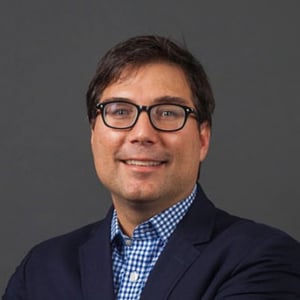
Associate Professor of Law and Director, Program on Economics & Privacy, Antonin Scalia Law School, George Mason University
Associate Professor of Law James C. Cooper brings over a decade of public and private sector experience to his research and teaching. He served as Deputy and Acting Director of the Federal Trade Commission’s Office of Policy Planning, Advisor to Federal Trade Commissioner William Kovacic, and an associate in the antitrust group of Crowell and Moring, LLP. His research on vertical restraints, price discrimination, behavioral economics and antitrust, and privacy policy have appeared in top journals and are widely cited.
Professor Cooper has a BA from the University of South Carolina, received his PhD in economics from Emory University, and his law degree (magna cum laude) from Antonin Scalia Law School, George Mason University, where he was a Levy Fellow and a member of the George Mason Law Review.
He teaches Economics for Lawyers, Advanced Seminar on Law & Economics, and Digital Information Policy Seminar.

Partner, Sullivan & Cromwell LLP
Andrei Iancu is a partner at Sullivan & Cromwell and one of the leading voices in intellectual property law and innovation policy. He is a former Undersecretary of Commerce for Intellectual Property and Director of the U.S. Patent and Trademark Office (USPTO), a position to which he was confirmed unanimously by the Senate. Andrei has decades of experience representing plaintiffs and defendants in IP matters across the technical and scientific spectra, including medical devices, genetic testing, therapeutics, the Internet, telephony, TV broadcasting, video game systems and computer peripherals. He represents clients in litigation and trials before the district courts, the U.S. International Trade Commission and the USPTO, the Federal Circuit and U.S. Supreme Court, and also counsels clients on obtaining, licensing, enforcing and defending against IP rights globally.
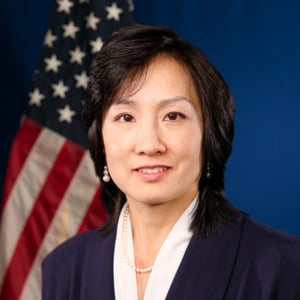
Former Under Secretary of Commerce for Intellectual Property and Director, U.S. Patent and Trademark Office
The Hon. Michelle K. Lee is a proven leader in technology, law, business and government. She spent most of her professional career advising some of the country's most innovative companies on issues at the intersection of law, technology and policy.
As the Under Secretary of Commerce for Intellectual Property and Director of the United States Patent and Trademark Office (USPTO), Ms. Lee led one of the largest intellectual property offices in the world, with 13,000 employees and an annual budget of over $3 billion. Ms. Lee also served as the principal advisor to the President, through the Secretary of Commerce, on domestic and international intellectual property policy and a trial judge on the USPTO’s Patent Trial and Appeal Board. She is the first woman Director of the USPTO in our country’s 200+ year history.
Prior to joining the USPTO, Ms. Lee was Deputy General Counsel at Google, where she was responsible for formulating and implementing Google’s patent strategy (including dispute resolution) for all its products and services worldwide. Before Google, Ms. Lee served as a partner at Fenwick & West, advising on technology licensing, litigation, intellectual property, corporate and mergers and acquisition matters, and as a litigator at the trial boutique law firm of Keker & Van Nest. Earlier in her career, Ms. Lee worked as a computer scientist at Hewlett-Packard Research Laboratories and the MIT Artificial Intelligence Lab. She holds a B.S. and an M.S. in electrical engineering and computer science from MIT (where she wrote her graduate thesis on artificial intelligence) and a J.D. from Stanford Law School. Ms. Lee clerked for the Honorable Vaughn Walker, U.S. District Court for the Northern District of California and the Honorable Paul Michel of the U.S. Court of Appeals for the Federal Circuit.
From 2017-2018, Ms. Lee held the appointment as the Herman Phleger Visiting Professor at Law at Stanford Law School where she taught on disruptive technologies (including artificial intelligence and driverless cars) and their impact on existing laws and regulations. Ms. Lee also serves on a number of public and private company boards including alarm.com (NASDAQ: ALRM) and Nauto, Inc.
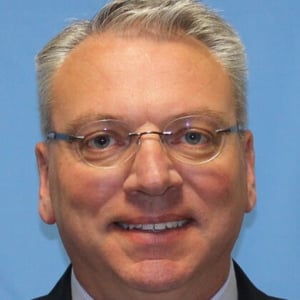
Judge, United States Court of Appeals, Third Circuit
David J. Porter is a judge on the United States Court of Appeals for the Third Circuit. He was nominated by President Donald Trump and confirmed on October 11, 2018. Before his appointment, he was a shareholder at Buchanan Ingersoll & Rooney PC, where he practiced commercial and civil litigation. Porter received his bachelor’s degree from Grove City College and his J.D. from the George Mason University School of Law. He clerked for Judge D. Brooks Smith on the United States District Court for the Western District of Pennsylvania.

Of Counsel, Jones Day
Dr. Ognian Shentov is a lead trial lawyer who secured over $30 million damages in a patent infringement case, where the jury verdict was affirmed en banc by the Federal Circuit. He directed a joint defense group of international companies in a semiconductor manufacturing dispute and has led jury trials, arbitrations, and numerous claim construction and summary judgment hearings. His practice focuses on patent, trade secret, copyright, and complex technology issues in the electronics, communications, artificial intelligence (AI), medical device, and finance industries.
Oggie represents companies like IBM, Qualcomm, DirecTV, Lenovo, Marine Polymer, and Chevron in matters ranging from distributed servers, to satellite television, MPEG video, dynamic web page generation, anti-hemmoraging devices, and trade secret misappropriation of high-throughput technology. He was lead attorney in an instituted PTAB trial on Distributed Antenna Systems. Oggie also represents Korean companies, successfully defending SOLiD, Inc. against a competitor by defeating the asserted patents on summary judgment and jury verdict of noninfringement, as well as Sewoon and Taewoong in a dispute over stents. With litigation in mind, he also builds patent portfolios and has prosecuted more than 500 patents with international counterparts.
Oggie is vice chair of the International Patent Law and Trade committee of the Intellectual Property Owners (IPO) Association and a five-term vice chair of its U.S. Patent Law committee. He frequently leads panel discussions on intellectual property (IP), lectures internationally on AI-related legal issues and, along with several technical journal articles, has published on issues of patent eligibility, international IP protection, portfolio management, and monetization.
Associate Professor of Law and Director, Program on Economics & Privacy, Antonin Scalia Law School, George Mason University
Associate Professor of Law James C. Cooper brings over a decade of public and private sector experience to his research and teaching. He served as Deputy and Acting Director of the Federal Trade Commission’s Office of Policy Planning, Advisor to Federal Trade Commissioner William Kovacic, and an associate in the antitrust group of Crowell and Moring, LLP. His research on vertical restraints, price discrimination, behavioral economics and antitrust, and privacy policy have appeared in top journals and are widely cited.
Professor Cooper has a BA from the University of South Carolina, received his PhD in economics from Emory University, and his law degree (magna cum laude) from Antonin Scalia Law School, George Mason University, where he was a Levy Fellow and a member of the George Mason Law Review.
He teaches Economics for Lawyers, Advanced Seminar on Law & Economics, and Digital Information Policy Seminar.
Partner, Sullivan & Cromwell LLP
Andrei Iancu is a partner at Sullivan & Cromwell and one of the leading voices in intellectual property law and innovation policy. He is a former Undersecretary of Commerce for Intellectual Property and Director of the U.S. Patent and Trademark Office (USPTO), a position to which he was confirmed unanimously by the Senate. Andrei has decades of experience representing plaintiffs and defendants in IP matters across the technical and scientific spectra, including medical devices, genetic testing, therapeutics, the Internet, telephony, TV broadcasting, video game systems and computer peripherals. He represents clients in litigation and trials before the district courts, the U.S. International Trade Commission and the USPTO, the Federal Circuit and U.S. Supreme Court, and also counsels clients on obtaining, licensing, enforcing and defending against IP rights globally.
Former Under Secretary of Commerce for Intellectual Property and Director, U.S. Patent and Trademark Office
The Hon. Michelle K. Lee is a proven leader in technology, law, business and government. She spent most of her professional career advising some of the country's most innovative companies on issues at the intersection of law, technology and policy.
As the Under Secretary of Commerce for Intellectual Property and Director of the United States Patent and Trademark Office (USPTO), Ms. Lee led one of the largest intellectual property offices in the world, with 13,000 employees and an annual budget of over $3 billion. Ms. Lee also served as the principal advisor to the President, through the Secretary of Commerce, on domestic and international intellectual property policy and a trial judge on the USPTO’s Patent Trial and Appeal Board. She is the first woman Director of the USPTO in our country’s 200+ year history.
Prior to joining the USPTO, Ms. Lee was Deputy General Counsel at Google, where she was responsible for formulating and implementing Google’s patent strategy (including dispute resolution) for all its products and services worldwide. Before Google, Ms. Lee served as a partner at Fenwick & West, advising on technology licensing, litigation, intellectual property, corporate and mergers and acquisition matters, and as a litigator at the trial boutique law firm of Keker & Van Nest. Earlier in her career, Ms. Lee worked as a computer scientist at Hewlett-Packard Research Laboratories and the MIT Artificial Intelligence Lab. She holds a B.S. and an M.S. in electrical engineering and computer science from MIT (where she wrote her graduate thesis on artificial intelligence) and a J.D. from Stanford Law School. Ms. Lee clerked for the Honorable Vaughn Walker, U.S. District Court for the Northern District of California and the Honorable Paul Michel of the U.S. Court of Appeals for the Federal Circuit.
From 2017-2018, Ms. Lee held the appointment as the Herman Phleger Visiting Professor at Law at Stanford Law School where she taught on disruptive technologies (including artificial intelligence and driverless cars) and their impact on existing laws and regulations. Ms. Lee also serves on a number of public and private company boards including alarm.com (NASDAQ: ALRM) and Nauto, Inc.
Judge, United States Court of Appeals, Third Circuit
David J. Porter is a judge on the United States Court of Appeals for the Third Circuit. He was nominated by President Donald Trump and confirmed on October 11, 2018. Before his appointment, he was a shareholder at Buchanan Ingersoll & Rooney PC, where he practiced commercial and civil litigation. Porter received his bachelor’s degree from Grove City College and his J.D. from the George Mason University School of Law. He clerked for Judge D. Brooks Smith on the United States District Court for the Western District of Pennsylvania.
Of Counsel, Jones Day
Dr. Ognian Shentov is a lead trial lawyer who secured over $30 million damages in a patent infringement case, where the jury verdict was affirmed en banc by the Federal Circuit. He directed a joint defense group of international companies in a semiconductor manufacturing dispute and has led jury trials, arbitrations, and numerous claim construction and summary judgment hearings. His practice focuses on patent, trade secret, copyright, and complex technology issues in the electronics, communications, artificial intelligence (AI), medical device, and finance industries.
Oggie represents companies like IBM, Qualcomm, DirecTV, Lenovo, Marine Polymer, and Chevron in matters ranging from distributed servers, to satellite television, MPEG video, dynamic web page generation, anti-hemmoraging devices, and trade secret misappropriation of high-throughput technology. He was lead attorney in an instituted PTAB trial on Distributed Antenna Systems. Oggie also represents Korean companies, successfully defending SOLiD, Inc. against a competitor by defeating the asserted patents on summary judgment and jury verdict of noninfringement, as well as Sewoon and Taewoong in a dispute over stents. With litigation in mind, he also builds patent portfolios and has prosecuted more than 500 patents with international counterparts.
Oggie is vice chair of the International Patent Law and Trade committee of the Intellectual Property Owners (IPO) Association and a five-term vice chair of its U.S. Patent Law committee. He frequently leads panel discussions on intellectual property (IP), lectures internationally on AI-related legal issues and, along with several technical journal articles, has published on issues of patent eligibility, international IP protection, portfolio management, and monetization.

Laurence A. Tisch Professor of Law and Director, Classical Liberal Institute, New York University School of Law; Director, Classical Liberal Institute, Civitas Institute University of Texas at Austin
Richard A. Epstein is the Laurence A. Tisch Professor of Law, at New York University, a senior research fellow at the Civitas Institute at the University of Texas Austin, and a senior Lecturer, the University of Chicago. He received an LL.D., h.c . from the University of Ghent, 2003 , and an LLD h.c . from the University of Siegen in 2018 and the Bradley Prize in 2011. He has been a member of the American Academy of Arts and Sciences since 1985. He has edited both the Journal of Legal Studies (1981-1991) and the Journal of Law and Economics (1991-2001). He is also a founder and director of the Classical Liberal Institute at NYU Law School. His most recent book is The Classical Liberal Constitution: The Uncertain Quest for Limited Government (2014). His other books include Takings: Private Property and the Power of Eminent Domain ( 1985); Bargaining with the State (1993); Simple Rules for a Complex World (1995); Principles for a Free Society: Reconciling Individual Liberty and the Common Good (1998); Skepticism and Freedom: A Modern Theory of Classical Liberalism (2003); Design for Liberty: Private Property, Public Administration and the Rule of Law (2011), and most recently, The Myth of Birthright citizenship—and Beyond (2026). He has taught courses in , administrative law, antitrust, constitutional, contracts, environmental law, land use planning; real property, torts and water law. He has written and spoken extensively on a wide range of topics, and is writes a regular column for Defining Ideas.
Senior Fellow and Director of Constitutional Studies, Manhattan Institute
Ilya Shapiro is a senior fellow and director of constitutional studies at the Manhattan Institute and a contributing editor of City Journal. Previously he was executive director and senior lecturer at the Georgetown Center for the Constitution, and before that a vice president of the Cato Institute.
Shapiro is the author of Lawless: The Miseducation of America’s Elites (2025) and Supreme Disorder: Judicial Nominations and the Politics of America’s Highest Court (2020), coauthor of Religious Liberties for Corporations? (2014), and editor of 11 volumes of the Cato Supreme Court Review (2008-18). He has contributed to a variety of academic, popular, and professional publications, including the Wall Street Journal, Harvard Journal of Law & Public Policy, Washington Post, Los Angeles Times, USA Today, National Review, and Newsweek. He also regularly provides commentary for various media outlets, writes the Shapiro’s Gavel newsletter on Substack, and once appeared on the Colbert Report.
Shapiro has testified many times before Congress and state legislatures and has filed more than 500 amicus curiae “friend of the court” briefs in the Supreme Court. He lectures regularly on behalf of the Federalist Society, is a member of the board of fellows of the Jewish Policy Center, was an inaugural Washington Fellow at the National Review Institute, and has been an adjunct law professor at the George Washington University and University of Mississippi. He is also the chairman of the board of advisers of the Mississippi Justice Institute, a barrister in the Edward Coke Appellate Inn of Court, and a former member of the Virginia Advisory Committee to the U.S. Commission on Civil Rights.
Earlier in his career, Shapiro was a special assistant/adviser to the Multi-National Force in Iraq on rule-of-law issues and practiced at Patton Boggs and Cleary Gottlieb. Before entering private practice, he clerked for Judge E. Grady Jolly of the U.S. Court of Appeals for the Fifth Circuit. He holds an AB from Princeton University, an MSc from the London School of Economics, and a JD from the University of Chicago Law School.
Associate Professor of Law and Director, Program on Economics & Privacy, Antonin Scalia Law School, George Mason University
Associate Professor of Law James C. Cooper brings over a decade of public and private sector experience to his research and teaching. He served as Deputy and Acting Director of the Federal Trade Commission’s Office of Policy Planning, Advisor to Federal Trade Commissioner William Kovacic, and an associate in the antitrust group of Crowell and Moring, LLP. His research on vertical restraints, price discrimination, behavioral economics and antitrust, and privacy policy have appeared in top journals and are widely cited.
Professor Cooper has a BA from the University of South Carolina, received his PhD in economics from Emory University, and his law degree (magna cum laude) from Antonin Scalia Law School, George Mason University, where he was a Levy Fellow and a member of the George Mason Law Review.
He teaches Economics for Lawyers, Advanced Seminar on Law & Economics, and Digital Information Policy Seminar.
Partner, Sullivan & Cromwell LLP
Andrei Iancu is a partner at Sullivan & Cromwell and one of the leading voices in intellectual property law and innovation policy. He is a former Undersecretary of Commerce for Intellectual Property and Director of the U.S. Patent and Trademark Office (USPTO), a position to which he was confirmed unanimously by the Senate. Andrei has decades of experience representing plaintiffs and defendants in IP matters across the technical and scientific spectra, including medical devices, genetic testing, therapeutics, the Internet, telephony, TV broadcasting, video game systems and computer peripherals. He represents clients in litigation and trials before the district courts, the U.S. International Trade Commission and the USPTO, the Federal Circuit and U.S. Supreme Court, and also counsels clients on obtaining, licensing, enforcing and defending against IP rights globally.
Former Under Secretary of Commerce for Intellectual Property and Director, U.S. Patent and Trademark Office
The Hon. Michelle K. Lee is a proven leader in technology, law, business and government. She spent most of her professional career advising some of the country's most innovative companies on issues at the intersection of law, technology and policy.
As the Under Secretary of Commerce for Intellectual Property and Director of the United States Patent and Trademark Office (USPTO), Ms. Lee led one of the largest intellectual property offices in the world, with 13,000 employees and an annual budget of over $3 billion. Ms. Lee also served as the principal advisor to the President, through the Secretary of Commerce, on domestic and international intellectual property policy and a trial judge on the USPTO’s Patent Trial and Appeal Board. She is the first woman Director of the USPTO in our country’s 200+ year history.
Prior to joining the USPTO, Ms. Lee was Deputy General Counsel at Google, where she was responsible for formulating and implementing Google’s patent strategy (including dispute resolution) for all its products and services worldwide. Before Google, Ms. Lee served as a partner at Fenwick & West, advising on technology licensing, litigation, intellectual property, corporate and mergers and acquisition matters, and as a litigator at the trial boutique law firm of Keker & Van Nest. Earlier in her career, Ms. Lee worked as a computer scientist at Hewlett-Packard Research Laboratories and the MIT Artificial Intelligence Lab. She holds a B.S. and an M.S. in electrical engineering and computer science from MIT (where she wrote her graduate thesis on artificial intelligence) and a J.D. from Stanford Law School. Ms. Lee clerked for the Honorable Vaughn Walker, U.S. District Court for the Northern District of California and the Honorable Paul Michel of the U.S. Court of Appeals for the Federal Circuit.
From 2017-2018, Ms. Lee held the appointment as the Herman Phleger Visiting Professor at Law at Stanford Law School where she taught on disruptive technologies (including artificial intelligence and driverless cars) and their impact on existing laws and regulations. Ms. Lee also serves on a number of public and private company boards including alarm.com (NASDAQ: ALRM) and Nauto, Inc.
Judge, United States Court of Appeals, Third Circuit
David J. Porter is a judge on the United States Court of Appeals for the Third Circuit. He was nominated by President Donald Trump and confirmed on October 11, 2018. Before his appointment, he was a shareholder at Buchanan Ingersoll & Rooney PC, where he practiced commercial and civil litigation. Porter received his bachelor’s degree from Grove City College and his J.D. from the George Mason University School of Law. He clerked for Judge D. Brooks Smith on the United States District Court for the Western District of Pennsylvania.
Of Counsel, Jones Day
Dr. Ognian Shentov is a lead trial lawyer who secured over $30 million damages in a patent infringement case, where the jury verdict was affirmed en banc by the Federal Circuit. He directed a joint defense group of international companies in a semiconductor manufacturing dispute and has led jury trials, arbitrations, and numerous claim construction and summary judgment hearings. His practice focuses on patent, trade secret, copyright, and complex technology issues in the electronics, communications, artificial intelligence (AI), medical device, and finance industries.
Oggie represents companies like IBM, Qualcomm, DirecTV, Lenovo, Marine Polymer, and Chevron in matters ranging from distributed servers, to satellite television, MPEG video, dynamic web page generation, anti-hemmoraging devices, and trade secret misappropriation of high-throughput technology. He was lead attorney in an instituted PTAB trial on Distributed Antenna Systems. Oggie also represents Korean companies, successfully defending SOLiD, Inc. against a competitor by defeating the asserted patents on summary judgment and jury verdict of noninfringement, as well as Sewoon and Taewoong in a dispute over stents. With litigation in mind, he also builds patent portfolios and has prosecuted more than 500 patents with international counterparts.
Oggie is vice chair of the International Patent Law and Trade committee of the Intellectual Property Owners (IPO) Association and a five-term vice chair of its U.S. Patent Law committee. He frequently leads panel discussions on intellectual property (IP), lectures internationally on AI-related legal issues and, along with several technical journal articles, has published on issues of patent eligibility, international IP protection, portfolio management, and monetization.

Topics
Over-regulation is Killing Medical Innovation – But it’s Not the Agency You Think
Usually when we think about regulation of the medical industry – and specifically pharmaceuticals –...
Courthouse Steps Oral Argument: Iancu v Brunetti
Ilya Shapiro
Remember “The Slants,” the Asian-American rock band who were denied a trademark because the U.S....
Courthouse Steps Oral Argument: Iancu v Brunetti
Teleforum Co-sponsored by the Free Speech & Election Law and Intellectual Property Practice Groups
TeleforumTopics
Argument Spotlight: Return Mail v. USPS
On February 20, 2019 the Supreme Court heard yet another case stemming from the...
What Happened to the Public’s Interest in Patent Law?
Kristen Osenga
Note from the Editor: This article discusses the role of the concept of the public...
Artificial Intelligence and Big Data Innovation: Navigating the Technology World of the Near Future
2018 National Lawyers Convention
Washington, DCArtificial Intelligence and Big Data Innovation: Navigating the Technology World of the Near Future
James C. Cooper, Shawn D. Hamacher, Andrei Iancu, Michelle K. Lee, David James Porter, Ognian V. Shentov
Technology progress in recent years has been driven in large part by the continuous generation...
Artificial Intelligence and Big Data Innovation: Navigating the Technology World of the Near Future
James C. Cooper, Shawn D. Hamacher, Andrei Iancu, Michelle K. Lee, David James Porter, Ognian V. Shentov
Technology progress in recent years has been driven in large part by the continuous generation...
The Supreme Court Tackles Patent Reform: Inter Partes Review Under the AIA Undermines the Structural Protections Offered by Article III Courts
Richard A. Epstein
Note from the Editor: This article criticizes Justice Clarence Thomas’ opinion in Oil States. It...
Topics
Can Tribal Immunity Shield Blockbuster Drugs from PTAB Scrutiny?
The Patent Trial & Appeal Board, an administrative panel created as part of the America...