

General Counsel & Parliamentarian, U. S. House of Representatives, Financial Services Committee
Molly Boyl Fromm is the General Counsel and Parliamentarian for the Financial Services Committee in U.S. House of Representatives. Prior to this role she has served the House as the General Counsel and Parliamentarian for the Committee on Science, Space and Technology and as Deputy General Counsel and Parliamentarian for the Oversight and Government Reform Committee.
She received her Bachelor of Arts in Political Science from the University of California, Berkley and her law degree from The Catholic University of America, Columbus School of Law.
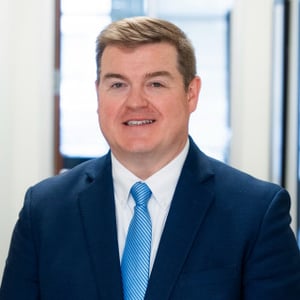
Vice President, Networks, The Federalist Society for Law and Public Policy Studies
Nathan Kaczmarek is Vice President for Networks at the Federalist Society. He began his legal career in Detroit representing nationwide clients in all phases of healthcare litigation and complex medical malpractice claims. He has since served as a Senior Legal and Policy Advisor in the U.S. House of Representatives and as Counsel for the Subcommittee on Regulatory Affairs and Federal Management in the U.S. Senate. Prior to overseeing the Networks, he was Director of the Practice Groups, the Regulatory Transparency Project, and the Article I Initiative for the Federalist Society.
Nathan holds degrees from Hillsdale College and Thomas M. Cooley Law School. He is a Liaison Representative for The Administrative Conference of the United States. He also serves as Vice President of the Associates of St. John Bosco, a Virginia based non-profit dedicated to Catholic high school and college students.

Editor, Modern Age
Daniel McCarthy is the Editor of Modern Age, an American conservative academic quarterly journal. Previously, he was the editor-at-large of The American Conservative from 2010 through 2016. His writing has appeared in The New York Times, USA Today, The Spectator, The National Interest, Reason, Modern Age, and other publications. He has been interviewed on National Public Radio, the BBC, Fox Business, and many other outlets. Outside of journalism, he has worked as internet communications coordinator of the Ron Paul 2008 presidential campaign and senior editor of ISI Books. He is a graduate of Washington University in St. Louis, where he studied classics.

Partner, Akin Gump Strauss Hauer & Feld LLP
Mr. Pomper formerly served as chief international trade counsel to Senate Finance Committee Chairman Max Baucus (D-MT). In that role, he was responsible for advising Chairman Baucus and other members of the Senate Finance Committee on all aspects of the Committee’s international trade and economic agenda.
In his current practice, Mr. Pomper represents companies before Congress, the White House and federal agencies on a diverse set of public policy matters, including market access, investment, international trade disputes, intellectual property, international tax and customs issues.
Mr. Pomper also serves as an adjunct professor teaching international trade policy and politics at George Washington’s Graduate School of Political Management. He was elected 2011 to serve a three-year term as a member of the Steering Committee for the International Law Section of the D.C. Bar. He is an Educational Counselor for the Massachusetts Institute of Technology, for which he interviews students from the Thomas Jefferson High School for Science and Technology in Alexandria, Virginia applying to MIT.
Mr. Pomper is a member of the U.S. patent bar.

Professor of Law, University of Baltimore School of Law
Professor Garrett Epps joined the University of Baltimore School of Law in 2008. He teaches courses in Constitutional Law, First Amendment, and Fiction and Non-Fiction Writing for Law Students. He is a contributing writer to The Atlantic Online and serves as the magazine's Supreme Court correspondent. He is also a contributing editor of The American Prospect. Epps' most recent book, American Justice 2014: Nine Clashing Visions on the Supreme Court, was published by the University of Pennsylvania Press.
Professor Epps' previous book, American Epic: Reading the U.S. Constitution, was published in 2013 by Oxford University Press. In March 2014, American Epic was named a finalist for the American Bar Association’s Silver Gavel Book award. Two of his previous books, Democracy Reborn: The Fourteenth Amendment and the Fight for Equal Rights in Post-Civil War America (2006) and To an Unknown God: Religious Freedom on Trial (2001), were both also Silver Gavel finalists. A former staff writer for The Washington Post, Epps has written for The New York Times, The New York Review of Books, The Nation, The New Republic and The American Prospect.
He received his LL.M. in Comparative and International Law and his J.D. from Duke University, where he served as articles editor of Law and Contemporary Problems and graduated with the Willis Smith Award for the highest three-year academic average. Before attending law school, Epps earned his M.A. in English Writing in 1975 from Hollins College and his B.A. in 1972 from Harvard College, where he was editor of The Harvard Crimson.
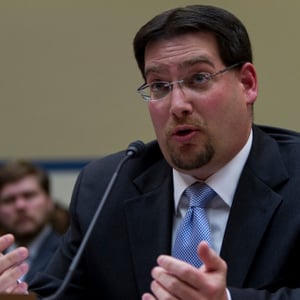
Deputy General Counsel, U. S. House of Representatives, Office of General Counsel
Todd Tatelman has served in the Office of General Counsel since November 2011. Mr. Tatelman previously served as a Legislative Attorney for the American Law Division of the Congressional Research Service. He received his bachelor of arts degrees in Philosophy, Political Science, and Economics from Boston University and his law degree, with honors, from The Catholic University of America, Columbus School of Law, where he was a member of The Catholic University Law Review.
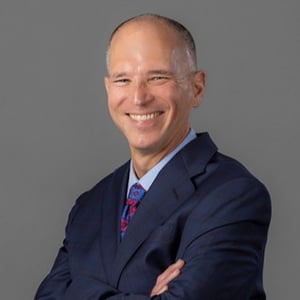
George Mason University Foundation Professor of Law, Antonin Scalia Law School, George Mason University
TODD J. ZYWICKI is George Mason University Foundation Professor of Law at Antonin Scalia Law School at George Mason University and Research Fellow of the George Mason Law and Economics Center. During the Fall 2023 semester he served as the Visiting Scholar in Conservative Thought and Policy for the Bruce Benson Center for the Study of Western Civilization at the University of Colorado-Boulder. From 2020-2021 he was Chair of the Consumer Financial Protection Bureau Taskforce on Federal Consumer Financial Law. In 2021 he was inducted to the American College of Consumer Financial Services Lawyers. He is also a Senior Fellow of the F.A. Hayek Program for the Advanced Study of Politics, Philosophy, and Economics at George Mason University and a former Senior Fellow of the Cato Institute. From 2015-2017 he was Executive Director of the George Mason Law and Economics Center. He served as Co-Editor of the Supreme Court Economic Review from 2006-2017. From 2003-2004, Professor Zywicki served as the Director of the Office of Policy Planning at the Federal Trade Commission. He has also taught at Vanderbilt University Law School, Georgetown University Law Center, Boston College Law School, Mississippi College School of Law, and China University of Political Science and Law.
Professor Zywicki clerked for Judge Jerry E. Smith of the U.S. Court of Appeals for the Fifth Circuit and worked as an associate at Alston & Bird in Atlanta, Georgia, where he practiced bankruptcy and commercial law. He received his J.D. from the University of Virginia, where he was executive editor of the Virginia Tax Review and John M. Olin Scholar in Law and Economics. Professor Zywicki also received an M.A. in Economics from Clemson University and an A.B. cum Laude with high honors in his major from Dartmouth College.
Professor Zywicki is also a Lone Mountain Fellow of the Property and Environment Research Center, a Fellow of the International Centre for Economic Research in Turin, Italy, and a former Senior Fellow of the Goldwater Institute. During the Fall 2008 Semester Professor Zywicki was the Searle Fellow of the George Mason University School of Law and was a 2008-09 W. Glenn Campbell and Rita Ricardo-Campbell National Fellow and the Arch W. Shaw National Fellow at the Hoover Institution on War, Revolution and Peace. He has lectured and consulted with government officials around the world, including Iceland, Italy, Japan, and Guatemala. In 2006 Professor Zywicki served as a Member of the United States Department of Justice Study Group on “Identifying Fraud, Abuse and Errors in the United States Bankruptcy System.”
Professor Zywicki is the author of more than 130 articles in leading law reviews and peer-reviewed economics journals. He is one of the Top 10 most-cited law professors in the field of Commercial Law and one of the Top 25 law professors on Twitter as measured by engagement levels. He is one of the Top 50 Most Downloaded Law Authors at the Social Science Research Network. He has testified multiple times before Congress on issues of consumer bankruptcy law and consumer credit and is a frequent commentator on legal issues in the print and broadcast media, including the Wall Street Journal, New York Times, The Washington Post, The Washington Times, Nightline, The Newshour with Jim Lehrer, Neil Cavuto Show, Fox & Friends, Smerconish, Fox News @ Night with Shannon Bream, Fox Business, CNN, CNBC, Bloomberg News, BBC, The Diane Rehm Show, Lou Dobbs Show, Jerry Doyle Show, and The Laura Ingraham Show.
Professor Zywicki is former Chairman and a current member of the Board of Directors of the Competitive Enterprise Institute, and is a member of the Board of Directors of the Institute for Humane Studies, Bill of Rights Institute, the Executive Committee for the Federalist Society's Financial Institutions and E-Commerce Practice Group, the Board of Trustees of the Foundation for Research on Economics and the Environment. He formerly served on the Governing Board and the Advisory Council for the Financial Services Research Program at George Washington University School of Business. He is currently the Chair of the Academic Advisory Council for the following organizations: The Bill of Rights Institute, the film “We the People in IMAX,” and the McCormick-Tribune Foundation “Freedom Museum” in Chicago, Illinois. He is a member of the Board of Visitors of Ralston College and was a member of the Board of Trustees of Yorktown University. From 2005-2009 he served as an elected Alumni Trustee of the Dartmouth College Board of Trustees.
General Counsel & Parliamentarian, U. S. House of Representatives, Financial Services Committee
Molly Boyl Fromm is the General Counsel and Parliamentarian for the Financial Services Committee in U.S. House of Representatives. Prior to this role she has served the House as the General Counsel and Parliamentarian for the Committee on Science, Space and Technology and as Deputy General Counsel and Parliamentarian for the Oversight and Government Reform Committee.
She received her Bachelor of Arts in Political Science from the University of California, Berkley and her law degree from The Catholic University of America, Columbus School of Law.
Partner, Akin Gump Strauss Hauer & Feld LLP
Mr. Pomper formerly served as chief international trade counsel to Senate Finance Committee Chairman Max Baucus (D-MT). In that role, he was responsible for advising Chairman Baucus and other members of the Senate Finance Committee on all aspects of the Committee’s international trade and economic agenda.
In his current practice, Mr. Pomper represents companies before Congress, the White House and federal agencies on a diverse set of public policy matters, including market access, investment, international trade disputes, intellectual property, international tax and customs issues.
Mr. Pomper also serves as an adjunct professor teaching international trade policy and politics at George Washington’s Graduate School of Political Management. He was elected 2011 to serve a three-year term as a member of the Steering Committee for the International Law Section of the D.C. Bar. He is an Educational Counselor for the Massachusetts Institute of Technology, for which he interviews students from the Thomas Jefferson High School for Science and Technology in Alexandria, Virginia applying to MIT.
Mr. Pomper is a member of the U.S. patent bar.
Editor, Modern Age
Daniel McCarthy is the Editor of Modern Age, an American conservative academic quarterly journal. Previously, he was the editor-at-large of The American Conservative from 2010 through 2016. His writing has appeared in The New York Times, USA Today, The Spectator, The National Interest, Reason, Modern Age, and other publications. He has been interviewed on National Public Radio, the BBC, Fox Business, and many other outlets. Outside of journalism, he has worked as internet communications coordinator of the Ron Paul 2008 presidential campaign and senior editor of ISI Books. He is a graduate of Washington University in St. Louis, where he studied classics.
Professor of Law, University of Baltimore School of Law
Professor Garrett Epps joined the University of Baltimore School of Law in 2008. He teaches courses in Constitutional Law, First Amendment, and Fiction and Non-Fiction Writing for Law Students. He is a contributing writer to The Atlantic Online and serves as the magazine's Supreme Court correspondent. He is also a contributing editor of The American Prospect. Epps' most recent book, American Justice 2014: Nine Clashing Visions on the Supreme Court, was published by the University of Pennsylvania Press.
Professor Epps' previous book, American Epic: Reading the U.S. Constitution, was published in 2013 by Oxford University Press. In March 2014, American Epic was named a finalist for the American Bar Association’s Silver Gavel Book award. Two of his previous books, Democracy Reborn: The Fourteenth Amendment and the Fight for Equal Rights in Post-Civil War America (2006) and To an Unknown God: Religious Freedom on Trial (2001), were both also Silver Gavel finalists. A former staff writer for The Washington Post, Epps has written for The New York Times, The New York Review of Books, The Nation, The New Republic and The American Prospect.
He received his LL.M. in Comparative and International Law and his J.D. from Duke University, where he served as articles editor of Law and Contemporary Problems and graduated with the Willis Smith Award for the highest three-year academic average. Before attending law school, Epps earned his M.A. in English Writing in 1975 from Hollins College and his B.A. in 1972 from Harvard College, where he was editor of The Harvard Crimson.
Deputy General Counsel, U. S. House of Representatives, Office of General Counsel
Todd Tatelman has served in the Office of General Counsel since November 2011. Mr. Tatelman previously served as a Legislative Attorney for the American Law Division of the Congressional Research Service. He received his bachelor of arts degrees in Philosophy, Political Science, and Economics from Boston University and his law degree, with honors, from The Catholic University of America, Columbus School of Law, where he was a member of The Catholic University Law Review.
George Mason University Foundation Professor of Law, Antonin Scalia Law School, George Mason University
TODD J. ZYWICKI is George Mason University Foundation Professor of Law at Antonin Scalia Law School at George Mason University and Research Fellow of the George Mason Law and Economics Center. During the Fall 2023 semester he served as the Visiting Scholar in Conservative Thought and Policy for the Bruce Benson Center for the Study of Western Civilization at the University of Colorado-Boulder. From 2020-2021 he was Chair of the Consumer Financial Protection Bureau Taskforce on Federal Consumer Financial Law. In 2021 he was inducted to the American College of Consumer Financial Services Lawyers. He is also a Senior Fellow of the F.A. Hayek Program for the Advanced Study of Politics, Philosophy, and Economics at George Mason University and a former Senior Fellow of the Cato Institute. From 2015-2017 he was Executive Director of the George Mason Law and Economics Center. He served as Co-Editor of the Supreme Court Economic Review from 2006-2017. From 2003-2004, Professor Zywicki served as the Director of the Office of Policy Planning at the Federal Trade Commission. He has also taught at Vanderbilt University Law School, Georgetown University Law Center, Boston College Law School, Mississippi College School of Law, and China University of Political Science and Law.
Professor Zywicki clerked for Judge Jerry E. Smith of the U.S. Court of Appeals for the Fifth Circuit and worked as an associate at Alston & Bird in Atlanta, Georgia, where he practiced bankruptcy and commercial law. He received his J.D. from the University of Virginia, where he was executive editor of the Virginia Tax Review and John M. Olin Scholar in Law and Economics. Professor Zywicki also received an M.A. in Economics from Clemson University and an A.B. cum Laude with high honors in his major from Dartmouth College.
Professor Zywicki is also a Lone Mountain Fellow of the Property and Environment Research Center, a Fellow of the International Centre for Economic Research in Turin, Italy, and a former Senior Fellow of the Goldwater Institute. During the Fall 2008 Semester Professor Zywicki was the Searle Fellow of the George Mason University School of Law and was a 2008-09 W. Glenn Campbell and Rita Ricardo-Campbell National Fellow and the Arch W. Shaw National Fellow at the Hoover Institution on War, Revolution and Peace. He has lectured and consulted with government officials around the world, including Iceland, Italy, Japan, and Guatemala. In 2006 Professor Zywicki served as a Member of the United States Department of Justice Study Group on “Identifying Fraud, Abuse and Errors in the United States Bankruptcy System.”
Professor Zywicki is the author of more than 130 articles in leading law reviews and peer-reviewed economics journals. He is one of the Top 10 most-cited law professors in the field of Commercial Law and one of the Top 25 law professors on Twitter as measured by engagement levels. He is one of the Top 50 Most Downloaded Law Authors at the Social Science Research Network. He has testified multiple times before Congress on issues of consumer bankruptcy law and consumer credit and is a frequent commentator on legal issues in the print and broadcast media, including the Wall Street Journal, New York Times, The Washington Post, The Washington Times, Nightline, The Newshour with Jim Lehrer, Neil Cavuto Show, Fox & Friends, Smerconish, Fox News @ Night with Shannon Bream, Fox Business, CNN, CNBC, Bloomberg News, BBC, The Diane Rehm Show, Lou Dobbs Show, Jerry Doyle Show, and The Laura Ingraham Show.
Professor Zywicki is former Chairman and a current member of the Board of Directors of the Competitive Enterprise Institute, and is a member of the Board of Directors of the Institute for Humane Studies, Bill of Rights Institute, the Executive Committee for the Federalist Society's Financial Institutions and E-Commerce Practice Group, the Board of Trustees of the Foundation for Research on Economics and the Environment. He formerly served on the Governing Board and the Advisory Council for the Financial Services Research Program at George Washington University School of Business. He is currently the Chair of the Academic Advisory Council for the following organizations: The Bill of Rights Institute, the film “We the People in IMAX,” and the McCormick-Tribune Foundation “Freedom Museum” in Chicago, Illinois. He is a member of the Board of Visitors of Ralston College and was a member of the Board of Trustees of Yorktown University. From 2005-2009 he served as an elected Alumni Trustee of the Dartmouth College Board of Trustees.
Professor of Law, University of Baltimore School of Law
Professor Garrett Epps joined the University of Baltimore School of Law in 2008. He teaches courses in Constitutional Law, First Amendment, and Fiction and Non-Fiction Writing for Law Students. He is a contributing writer to The Atlantic Online and serves as the magazine's Supreme Court correspondent. He is also a contributing editor of The American Prospect. Epps' most recent book, American Justice 2014: Nine Clashing Visions on the Supreme Court, was published by the University of Pennsylvania Press.
Professor Epps' previous book, American Epic: Reading the U.S. Constitution, was published in 2013 by Oxford University Press. In March 2014, American Epic was named a finalist for the American Bar Association’s Silver Gavel Book award. Two of his previous books, Democracy Reborn: The Fourteenth Amendment and the Fight for Equal Rights in Post-Civil War America (2006) and To an Unknown God: Religious Freedom on Trial (2001), were both also Silver Gavel finalists. A former staff writer for The Washington Post, Epps has written for The New York Times, The New York Review of Books, The Nation, The New Republic and The American Prospect.
He received his LL.M. in Comparative and International Law and his J.D. from Duke University, where he served as articles editor of Law and Contemporary Problems and graduated with the Willis Smith Award for the highest three-year academic average. Before attending law school, Epps earned his M.A. in English Writing in 1975 from Hollins College and his B.A. in 1972 from Harvard College, where he was editor of The Harvard Crimson.
Deputy General Counsel, U. S. House of Representatives, Office of General Counsel
Todd Tatelman has served in the Office of General Counsel since November 2011. Mr. Tatelman previously served as a Legislative Attorney for the American Law Division of the Congressional Research Service. He received his bachelor of arts degrees in Philosophy, Political Science, and Economics from Boston University and his law degree, with honors, from The Catholic University of America, Columbus School of Law, where he was a member of The Catholic University Law Review.
George Mason University Foundation Professor of Law, Antonin Scalia Law School, George Mason University
TODD J. ZYWICKI is George Mason University Foundation Professor of Law at Antonin Scalia Law School at George Mason University and Research Fellow of the George Mason Law and Economics Center. During the Fall 2023 semester he served as the Visiting Scholar in Conservative Thought and Policy for the Bruce Benson Center for the Study of Western Civilization at the University of Colorado-Boulder. From 2020-2021 he was Chair of the Consumer Financial Protection Bureau Taskforce on Federal Consumer Financial Law. In 2021 he was inducted to the American College of Consumer Financial Services Lawyers. He is also a Senior Fellow of the F.A. Hayek Program for the Advanced Study of Politics, Philosophy, and Economics at George Mason University and a former Senior Fellow of the Cato Institute. From 2015-2017 he was Executive Director of the George Mason Law and Economics Center. He served as Co-Editor of the Supreme Court Economic Review from 2006-2017. From 2003-2004, Professor Zywicki served as the Director of the Office of Policy Planning at the Federal Trade Commission. He has also taught at Vanderbilt University Law School, Georgetown University Law Center, Boston College Law School, Mississippi College School of Law, and China University of Political Science and Law.
Professor Zywicki clerked for Judge Jerry E. Smith of the U.S. Court of Appeals for the Fifth Circuit and worked as an associate at Alston & Bird in Atlanta, Georgia, where he practiced bankruptcy and commercial law. He received his J.D. from the University of Virginia, where he was executive editor of the Virginia Tax Review and John M. Olin Scholar in Law and Economics. Professor Zywicki also received an M.A. in Economics from Clemson University and an A.B. cum Laude with high honors in his major from Dartmouth College.
Professor Zywicki is also a Lone Mountain Fellow of the Property and Environment Research Center, a Fellow of the International Centre for Economic Research in Turin, Italy, and a former Senior Fellow of the Goldwater Institute. During the Fall 2008 Semester Professor Zywicki was the Searle Fellow of the George Mason University School of Law and was a 2008-09 W. Glenn Campbell and Rita Ricardo-Campbell National Fellow and the Arch W. Shaw National Fellow at the Hoover Institution on War, Revolution and Peace. He has lectured and consulted with government officials around the world, including Iceland, Italy, Japan, and Guatemala. In 2006 Professor Zywicki served as a Member of the United States Department of Justice Study Group on “Identifying Fraud, Abuse and Errors in the United States Bankruptcy System.”
Professor Zywicki is the author of more than 130 articles in leading law reviews and peer-reviewed economics journals. He is one of the Top 10 most-cited law professors in the field of Commercial Law and one of the Top 25 law professors on Twitter as measured by engagement levels. He is one of the Top 50 Most Downloaded Law Authors at the Social Science Research Network. He has testified multiple times before Congress on issues of consumer bankruptcy law and consumer credit and is a frequent commentator on legal issues in the print and broadcast media, including the Wall Street Journal, New York Times, The Washington Post, The Washington Times, Nightline, The Newshour with Jim Lehrer, Neil Cavuto Show, Fox & Friends, Smerconish, Fox News @ Night with Shannon Bream, Fox Business, CNN, CNBC, Bloomberg News, BBC, The Diane Rehm Show, Lou Dobbs Show, Jerry Doyle Show, and The Laura Ingraham Show.
Professor Zywicki is former Chairman and a current member of the Board of Directors of the Competitive Enterprise Institute, and is a member of the Board of Directors of the Institute for Humane Studies, Bill of Rights Institute, the Executive Committee for the Federalist Society's Financial Institutions and E-Commerce Practice Group, the Board of Trustees of the Foundation for Research on Economics and the Environment. He formerly served on the Governing Board and the Advisory Council for the Financial Services Research Program at George Washington University School of Business. He is currently the Chair of the Academic Advisory Council for the following organizations: The Bill of Rights Institute, the film “We the People in IMAX,” and the McCormick-Tribune Foundation “Freedom Museum” in Chicago, Illinois. He is a member of the Board of Visitors of Ralston College and was a member of the Board of Trustees of Yorktown University. From 2005-2009 he served as an elected Alumni Trustee of the Dartmouth College Board of Trustees.
Professor, University of North Carolina at Wilmington
Mike Adams is a professor at the University of North Carolina at Wilmington (UNCW). He writes a weekly column for The Daily Wire and speaks frequently on First Amendment and pro-life issues. After graduating from Mississippi State University in 1993 with a PhD in Criminology, his research emphasized social psychological causes of crime and delinquency. He won the Faculty Member of the Year Award from the Office of the Dean of Students in 1998 and again in 2000. Later, after his involvement in a free speech controversy in the wake of the 9/11 attack his research emphasis shifted to threats to free speech, due process, and academic integrity in higher education. In 2006, he was denied a promotion full professor and filed suit in federal court alleging that UNCW retaliated against him for his criticism the diversity movement in general as well as his criticism of specific policies within his own university. The retaliation lawsuit set up a legal challenge concerning whether Garcetti v. Ceballos (2006), which denied First Amendment protection to public employees who were commenting about their “official duties,” applied to college professors. In Adams v. UNCW (2011), the 4th Circuit Court of Appeals unanimously ruled in his favor. The ruling set up a federal trial on the issue of retaliation, which he also won before a jury in federal district court in Greenville, North Carolina.

Professor of History, Brooklyn College and the CUNY Graduate Center
KC Johnson is professor of history at Brooklyn College and the CUNY Graduate Center, where he has taught since 1999. He has written 13 books on topics in U.S. political history, U.S. foreign policy, and legal and policy debates surrounding campus due process and civil liberties. His Duke lacrosse case blog, Durham-in-Wonderland, was named ABA Journal’s Best Ethics Blog in 2007; and he continues to blog on higher-ed matters at the blog Minding the Campus.
FIRE
Senior Fellow in Constitutional Jurisprudence, Independence Institute
Professor Robert G. Natelson is a constitutional scholar and author.
Rob’s constitutional scholarship has been cited repeatedly by justices and parties at the U.S. Supreme Court—as well as by federal appeals courts, and at least 18 state supreme courts.
Rob’s research into the Constitution’s original meaning has carried him to libraries throughout the United States and in Britain, including four months at Oxford University. His books and articles span many different parts of the Constitution, including groundbreaking studies of the Necessary and Proper Clause, the Indian Commerce Clause, federalism, Founding-Era interpretation, regulation of elections, and the amendment process of Article V. He created the first-ever online bibliography for 18th century materials used in constitutional research. He is a contributing author to the Encyclopedia of the Supreme Court of the United States (on Magna Carta). He contributed eight essays to the third edition of the Heritage Guide to the Constitution: five on the amendment procedure and one each on the Guarantee Clause, the Postal Clause, and the Recess Appointments Clause.
U.S. Supreme Court justices have relied explicitly on Rob’s research in 41 citations in 13 separate cases.

2018 Election Review on November 8
Phoenix Lawyers Chapter
Phoenix, AZLitigating on Behalf of the House of Representatives
Yale Student Chapter
New Haven, CTNecessary & Proper Episode 30: The Legislative Branch and Trade
Molly Boyl Fromm, Brian Arthur Pomper, Daniel McCarthy, Stephen Claeys
American trade policy has been the subject of much interest and media attention over the...
The Legislative Branch and Trade
Co-sponsored by the Article I Initiative and the Capitol Hill Chapter
Washington, DCHow Should the United States Senate be Elected?
Garrett Epps, Todd B. Tatelman, Todd J. Zywicki
The Constitution did not create a direct democracy; it established a constitutional republic. Its goal...
How Should the United States Senate be Elected?
Garrett Epps, Todd B. Tatelman, Todd J. Zywicki
The Constitution did not create a direct democracy; it established a constitutional republic. Its goal...
How Should the United States Senate be Elected?
Washington, DCThe Student Right to Counsel
Mike S. Adams, KC Johnson, Adam Kissell
Note from the Editor: This article argues that a student right to counsel in quasi-criminal...
Topics
Liberty Month Revisited: Out of Control: Separation of Powers and Encroaching Delegations
This month we are sharing a selection of paired pieces from The Federalist Society's Liberty...
“Advice” in the Constitution’s Advice and Consent Clause: New Evidence from Contemporaneous Sources
Robert G. Natelson
Note from the Editor: This article discusses the proper interpretation of the Constitution’s Advice and...