
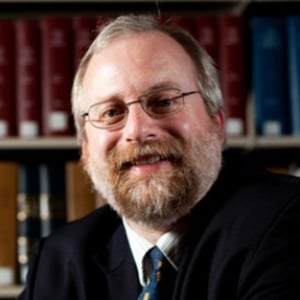
Pio Cardinal Laghi Distinguished Chair in Law, Professor and Co-director of the Terrence J. Murphy Institute for Catholic Thought, Law, and Public Policy, University of St. Thomas School of Law - Minnesota
Professor Gregory Sisk is the Pio Cardinal Laghi Distinguished Chair in Law at the University of St. Thomas School of Law in Minneapolis, Minnesota.
He received his B.A. from Montana State University and his J.D. from the University of Washington School of Law, where he graduated first in his class, was an editor on the law review, and president of the moot court board. Prior to joining the legal academy, he served as a legal advisor in all three branches of the federal government: as a legislative assistant to a U.S. Senator, as a law clerk to a U.S. Court of Appeals judge, and as an appellate attorney with the U.S. Department of Justice representing the United States in the courts of appeals and the Supreme Court. Subsequent to his government service, he was in private practice as the head of the appellate department of a Seattle law firm.
Professor Sisk joined the University of St. Thomas law faculty in 2003, after teaching for twelve years at the Drake University Law School, where he had also been named as the Richard M. & Anita Calkins Distinguished Professor. He teaches Professional Responsibility and Civil Procedure, as well as a new course with original materials on Litigation with the Federal Government. His casebook, "Litigation With the Federal Government: Cases and Materials," was published by Foundation Press in 2000 and has been adopted at several law schools, including Georgetown University, George Washington University, Catholic University, New York University, the University of Pittsburgh, and McGeorge School of Law.
Professor Sisk also is author of the leading treatise on the subject, "Litigation With the Federal Government," published as the fourth edition by ALI-ABA in 2006. He has published nearly three dozen articles on litigation with the federal government, judicial decisionmaking, awards of attorney's fees, professional responsibility, constitutional interpretation, law and religion, and tort reform. His articles have been cited by the United States Supreme Court, several federal courts of appeals, and the supreme courts of several states. His empirical study of judicial decisionmaking and the influence of judicial background, co-authored with Professors Michael Heise and Andrew Morriss, was published in the New York University Law Review and received the 1999 Article Prize from the Law and Society Association.
Professor Sisk has remained active as a member of the legal profession. He served as reporter for the Iowa Rules of Professional Conduct Drafting Committee appointed by the Iowa Supreme Court to draft the new set of ethics rules to govern lawyers in Iowa. He is a member of the American Law Institute, the nation's premier law reform organization. He maintains a limited practice, primarily as an appellate attorney and as an expert witness on professional ethics and conduct. For example, he briefed a leading environmental/federal-common-law case as counsel for amicus curiae and then was invited to argue the central issue before the U.S. Court of Appeals for the Ninth Circuit. More important than success on the merits, however, was the testament that the court gave to the attorneys in the case: "Litigation often produces criticism for its participants. This case, however, was extraordinarily well briefed and argued by consummate professionals on both sides and we are grateful for that." Atchison, Topeka & Santa Fe Railway Co. v. Brown & Bryant, Inc., 132 F.3d 1295, 1303 n.5 (9th Cir. 1997), amended, 159 F.3d 358, 365 n.6 (9th Cir. 1998).
Professor Sisk is also active with the Conference on Catholic Legal Thought, writing and speaking about religion and public life and the role of faith in professional life. He occasionally participates as a member of the Mirror of Justice blog, which present a diverse array of Catholic perspectives on the law, public life, and social justice.
J.D., University of Washington Law School
B.A., Montana State University
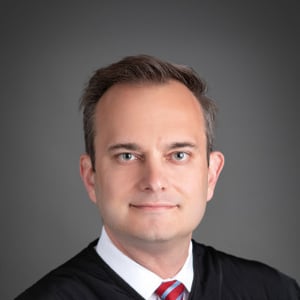
United States Magistrate Judge, Eastern District of North Carolina
Robert T. Numbers, II serves as a United States Magistrate Judge in the United States District Court for the Eastern District of North Carolina.
Judge Numbers received degrees in Political Science and Economics, with honors, from Wake Forest University. After completing his undergraduate work, Judge Numbers obtained his law degree from the University of Notre Dame where he served on the Notre Dame Law Review.
Upon his graduation from law school, Judge Numbers joined the Winston-Salem office of a large, regional law firm. From 2005 until 2010, Judge Numbers’ practice focused on civil rights claims against local municipalities and government contractors. In 2010, Judge Numbers joined the firm’s Raleigh office and concentrated his practice on complex business litigation in state and federal courts.
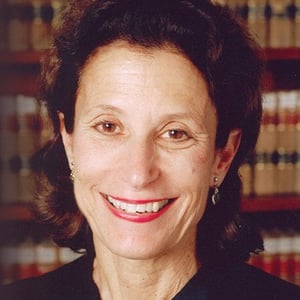
Former Associate Justice, Massachusetts Supreme Judicial Court
Judith Cathy Arnold Cowin is a retired justice of the Massachusetts Supreme Judicial Court. She was born in Boston. Cowin received her undergraduate degree from Wellesley College and her J.D. degree from Harvard Law School.
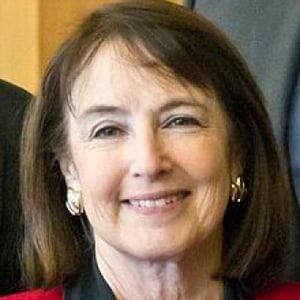
Senior Lecturer on Law, Harvard Law School
Nancy Gertner is a former U.S. federal judge who built her career around standing up for women’s rights, civil liberties and justice for all. Gertner was appointed to the federal bench of the U.S. District Court of Massachusetts by President Bill Clinton in 1994. She retired from the bench in 2011 to teach at Harvard Law School.
Named one of “The Most Influential Lawyers of the Past 25 Years” by Massachusetts Lawyers Weekly, Gertner has written and spoken throughout the U.S., Europe and Asia. She has published widely on sentencing, discrimination, and forensic evidence; women’s rights; and the jury system. Her autobiography, “In Defense of Women: Memoirs of an Unrepentant Advocate,” was published in 2011.
She is a graduate of Barnard College, Columbia University, and holds a M.A in Political Science and J.D. from Yale University. She has received numerous awards, including the Margaret Brent Award from the ABA commission on the status of Women, Massachusetts Bar Association’s Hennessey Award for judicial excellence in 2011; the Morton A. Brody Distinguished Judicial Service Award from Colby College in 2010; the National Association of Women Lawyers’ highest honor, the Arabella Babb Mansfield Award, in 2011,The Women's Bar Association's highest award, The Lelia Robinson Award, in 2012, and, in 2008, the Thurgood Marshall Award from the American Bar Association, Section of Individual Rights and Responsibilities, which recognized her contributions to advancing human rights and civil liberties. The Marshall award has been given to one other woman, Justice Ruth Ginsburg.
In November 2014, she gave the Pope and John lecture at Northwestern University. In October 2014, she was a resident scholar at the Rockefeller Foundation in Bellagio, Italy; In September she gave the keynote address at the 18th Anniversary Celebration of the Jewish Women’s archive (September 14, 2014).
Gertner is presently working on her second book, Incomplete Sentences, concerning the men who she sentenced over her 17 year career as a federal judge. In addition to writing about them, highlighting the unfairness and disproportionality of their sentences, she is assisting in clemency petitions where appropriate.
Drawing on her wide ranging experience in practice and as a judge, Gertner also consults and litigates in civil right cases (she is of counsel to Neufeld, Scheck & Brustin, a civil rights firm in New York City), white collar criminal case (she is of counsel to Fick and Marx, a white collar criminal defense firm in Boston), as well as in employment discrimination and false claims cases.
Drawing on her judicial experience, Gertner engages in mediation and arbitration with Resolutions, LLC. (with Eric Green) and the Southeast Regional Mediation, Arbitration and Compliance Association (with Bill Nettles and Paul Zwier).
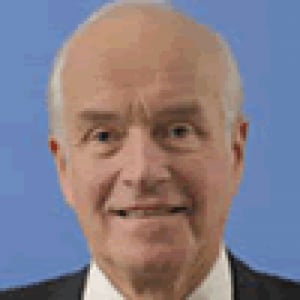
U.S. District Court Judge, District of Massachusetts
Nathaniel M. Gorton is a federal judge for the United States District Court for the District of Massachusetts. He joined the court in 1992 after being nominated by President George H.W. Bush. At the time of appointment, he was a private practice in Massachusetts.
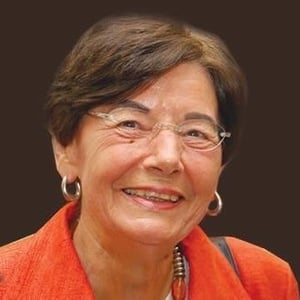
U.S. District Court Judge, District of Massachusetts
Rya Weickert Zobel is a federal judge of the United States District Court for the District of Massachusetts. She joined the court in 1979 after being nominated by President Jimmy Carter. At the time of her appointment, Zobel was a private practice attorney inMassachusetts.
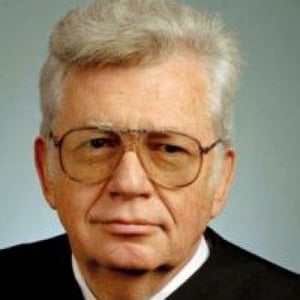
Judge, U.S. Court of Appeals, District of Columbia Circuit
Judge Sentelle was appointed United States Circuit Judge in October 1987, served as Chief Judge from February 11, 2008 until February 11, 2013, and took senior status on February 12, 2013. He is a 1968 graduate of the University of North Carolina Law School. Following law school, he practiced with the firm of Uzzell & DuMont until he became an Assistant U.S. Attorney in Charlotte, N.C. in 1970. From 1974 to 1977, he served as a North Carolina State District Judge but left the bench in 1977 to become a partner with the firm of Tucker, Hicks, Sentelle, Moon & Hodge. In 1985, Judge Sentelle joined the U.S. District Court, Western District of North Carolina, in Asheville, where he served until his appointment to the D.C. Circuit. Judge Sentelle was the Presiding Judge of the Special Division for the Purpose of Appointing Independent Counsels (1992-2006). He also served as the Chair of the U.S. Judicial Conference's Executive Committee (2010-2013). Judge Sentelle served for over 20 years as President of the Edward Bennett Williams Inn of the American Inns of Court.
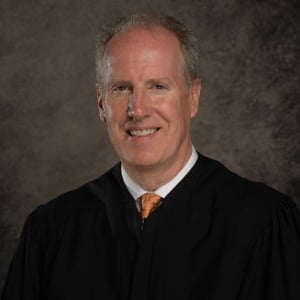
U.S. Court of Appeals, Second Circuit
|
Richard J. Sullivan was sworn in as a United States Circuit Court Judge for the Second Circuit in October 2018. Before that, Judge Sullivan served for eleven years as a United States District Judge for the Southern District of New York. Prior to becoming a judge, he served as the General Counsel and Managing Director of Marsh Inc., the world's leading risk management and insurance brokerage firm. From 1994 to 2005, he served as an Assistant United States Attorney in the Southern District of New York, where he was Chief of the International Narcotics Trafficking Unit and Director of the New York/New Jersey Organized Crime Drug Enforcement Task Force. In 2003, he was awarded the Henry L. Stimson Medal from the Association of the Bar of the City of New York. In 1998, he was named the Federal Law Enforcement Association's Prosecutor of the Year. Prior to joining the U.S. Attorney's Office, he was a litigation associate at Wachtell, Lipton, Rosen & Katz in New York and a law clerk to the Honorable David M. Ebel of the United States Court of Appeals for the 10th Circuit. He is a graduate of Yale Law School, the College of William & Mary, and Chaminade High School on Long Island. From 1986 to 1987, he served as a New York City Urban Fellow under New York City Police Commissioner Benjamin Ward. Judge Sullivan is on the executive board of the New York American Inn of Court and the Center for Law and Religion at St. John’s University School of Law. He is an adjunct professor at Columbia Law School, where he teaches courses on sentencing and jurisprudence, and he previously served as an adjunct professor at Fordham Law School, where he taught courses on white collar crime and trial advocacy and was named Adjunct Professor of the Year.
|
Newton D. Baker-Baker & Hostetler Chair in Law, Moritz College of Law, The Ohio State University
Professor Douglas A. Berman is Newton D. Baker-Baker & Hostetler Chair in Law and Executive Director of the Drug Enforcement and Policy Center, housed in the Moritz College of Law. Berman’s principal teaching and research focus is in the area of criminal law and criminal sentencing, though he also has teaching and practice experience in the fields of legislation and intellectual property. He has taught Criminal Law, Criminal Punishment and Sentencing, Criminal Procedure – Investigation, Marijuana Law, Policy & Reform Seminar, Federal and State Clemency Decision-making, The Death Penalty, Legislation, Introduction to Intellectual Property, Second Amendment Seminar, and the Legislation Clinic.
Professor Berman attended Princeton University and Harvard Law School. In law school, he was an editor and developments office chair of the Harvard Law Review and also served as a teaching assistant for a Harvard University philosophy course. After graduation from law school in 1993, Professor Berman served as a law clerk for Judge Jon O. Newman and then for Judge Guido Calabresi, both on the United States Court of Appeals for the Second Circuit. After clerking, Professor Berman was a litigation associate at the law firm of Paul, Weiss, Rifkind, Wharton, and Garrison in New York City.
Professor Berman is the co-author of two casebooks. Sentencing Law and Policy: Cases, Statutes and Guidelines, published by Aspen Publishers, is now in its fifth edition. Marijuana Law and Policy was released by Carolina Academic Press in 2020. In addition to authoring numerous articles on topics ranging from capital punishment to the federal sentencing guidelines, Professor Berman has served as a managing editor of the Federal Sentencing Reporter for more than twenty five years, and also serves as an editor of the Ohio State Journal of Criminal Law.
Professor Berman is the sole creator and author of the widely-read and widely-cited blog, Sentencing Law and Policy. The blog often receives nearly 50,000 page views per month (and had over 20,000 hits the day of the Supreme Court’s major sentencing decision in United States v. Booker). Professor Berman’s work on the Sentencing Law and Policy blog, which he describes as a form of “scholarship in action,” has been profiled or discussed at length in articles appearing in the Wall Street Journal, Legal Affairs magazine, Lawyers Weekly USA, Legal Times, Columbus Monthly, and in numerous other print and online publications.
In addition, Sentencing Law and Policy has the distinction of being the first blog cited by the U.S. Supreme Court (for a document appearing exclusively on the site), and substantive analysis in particular blog posts has been cited in numerous appellate and district court rulings, in many briefs submitted to federal and state courts around the country, and in hundreds of law review articles.
Professor Berman is a member of the Council on Criminal Justice and frequently is consulted by national and state policymakers, sentencing commissioners, and public policy groups concerning sentencing law and policy reforms. He has testified before the U.S. House of Representatives and before numerous sentencing commissions. He also is frequently contacted by national and local media concerning sentencing and marijuana reform developments.
Professor Berman has appeared on national television, radio and podcast news programs and has been extensively quoted in newspaper articles appearing in nearly every major national paper and many local papers, including The New York Times, The Washington Post, The Wall Street Journal, Legal Times, and in pieces from the Associated Press, Reuters, and Knight-Ridder news services.
Professor Berman sometimes serves as a consultant to lawyers working on important or interesting sentencing cases. In most instances, Professor Berman’s consulting has been on an ad hoc and pro bono basis, and it usually involves a quick review of draft briefs and other court filings and then providing general advice on litigation strategies. On some occasions, however, Professor Berman has been formally retained to play a more sustained role in certain cases, including being retained by law firms to provide consulting service on various cutting-edge federal sentencing issues.
Chief Judge, United States Court of Appeals, Sixth Circuit
JEFFREY S. SUTTON is the Chief Judge of the United States Court of Appeals for the Sixth Circuit. He has served as Chair of the Federal Judicial Conference Committee on Rules of Practice and Procedure, Chair of the Advisory Committee on Appellate Rules, and Chair of the Supreme Court Fellows Commission. He currently serves as Chair of the Executive Committee of the Judicial Conference of the United States. Since 1993, Chief Judge Sutton has been an adjunct professor at The Ohio State University College of Law, where he teaches seminars on State Constitutional Law, the United States Supreme Court, and Appellate Advocacy. He also teaches a class on State Constitutional Law at Harvard Law School. Among other publications, he is the author of Who Decides? States as Laboratories of Constitutional Experimentation and 51 Imperfect Solutions: States and the Making of American Constitutional Law. He is the co-author of a casebook, State Constitutional Law: The Modern Experience, as well as The Law of Judicial Precedent. He is also the co-editor of The Essential Scalia: On the Constitution, the Courts, and the Rule of Law. In 2006, Chief Judge Sutton was elected to the American Law Institute, and in 2017 he was elected to its Council.
Judge, United States Court of Appeals, Sixth Circuit
Amul R. Thapar serves as a judge on the United States Court of Appeals for the Sixth Circuit. His judicial career began in 2007 when President George W. Bush nominated him to serve on the Eastern District of Kentucky, making him the first South Asian Article III judge in American history. In 2017, he became President Donald J. Trump’s first appellate court nominee.
Before joining the bench, Judge Thapar served as the United States Attorney for the Eastern District of Kentucky. While United States Attorney, Judge Thapar worked on the Attorney General’s Advisory Committee (“AGAC”) and chaired the AGAC’s Controlled Substances and Asset Forfeiture subcommittee. He also served on the Terrorism and National Security subcommittee, the Violent Crime subcommittee, and the Child Exploitation working group.
Judge Thapar has worked in private practice, at Williams & Connolly in Washington, D.C., and Squire, Sanders & Dempsey in Cincinnati, Ohio. He also served as an Assistant United States Attorney in both the Southern District of Ohio and the District of Columbia.
Judge Thapar received his undergraduate degree from Boston College and his law degree from the University of California, Berkeley. After graduating, Judge Thapar worked as a law clerk to the Honorable S. Arthur Spiegel of the United States District Court for the Southern District of Ohio, and the Honorable Nathaniel R. Jones of the United States Court of Appeals for the Sixth Circuit.
Judge Thapar has also published in the Yale Law Journal, Michigan Law Review, and Catholic University Law Review. He teaches courses on originalism, the Federalists and Anti-Federalists, and legal writing at Notre Dame Law School, the University of Virginia School of Law, and Vanderbilt Law School.
Senior Fellow, National Review
Bestselling author Andrew C. McCarthy is a contributing editor at National Review, a senior fellow at National Review Institute, and a Fox News contributor. He is a former Chief Assistant United States Attorney in the Southern District of New York and led the terrorism prosecution against the “Blind Sheikh” (Omar Abdel Rahman) and eleven other jihadists for conducting a war of urban terrorism against the United States that included the 1993 World Trade Center bombing and a plot to bomb New York City landmarks. During is 20-year career as a prosecutor, he received numerous honors, including the Justice Department’s highest awards. Andy speaks and writes widely on law and national security, radical Islam, politics, and culture. He has testified before Congress as an expert on issues of constitutional law, counterterrorism, and law-enforcement. He is a columnist for The Hill, and his essays and book reviews appear frequently at The New Criterion. His most recent New York Times bestselling book is Ball of Collusion (Encounter Books, 2019), about the Russiagate controversy (an updated version was published in 2020). His other books include Willful Blindness (2008), The Grand Jihad (2010), Spring Fever: The Illusion of Islamic Democracy (2012), and Faithless Execution (2014). He has also written several pamphlets in the Broadside series published by Encounter Books, most recently Islam and Free Speech (2015).
U.S. Court of Appeals, Second Circuit
|
Richard J. Sullivan was sworn in as a United States Circuit Court Judge for the Second Circuit in October 2018. Before that, Judge Sullivan served for eleven years as a United States District Judge for the Southern District of New York. Prior to becoming a judge, he served as the General Counsel and Managing Director of Marsh Inc., the world's leading risk management and insurance brokerage firm. From 1994 to 2005, he served as an Assistant United States Attorney in the Southern District of New York, where he was Chief of the International Narcotics Trafficking Unit and Director of the New York/New Jersey Organized Crime Drug Enforcement Task Force. In 2003, he was awarded the Henry L. Stimson Medal from the Association of the Bar of the City of New York. In 1998, he was named the Federal Law Enforcement Association's Prosecutor of the Year. Prior to joining the U.S. Attorney's Office, he was a litigation associate at Wachtell, Lipton, Rosen & Katz in New York and a law clerk to the Honorable David M. Ebel of the United States Court of Appeals for the 10th Circuit. He is a graduate of Yale Law School, the College of William & Mary, and Chaminade High School on Long Island. From 1986 to 1987, he served as a New York City Urban Fellow under New York City Police Commissioner Benjamin Ward. Judge Sullivan is on the executive board of the New York American Inn of Court and the Center for Law and Religion at St. John’s University School of Law. He is an adjunct professor at Columbia Law School, where he teaches courses on sentencing and jurisprudence, and he previously served as an adjunct professor at Fordham Law School, where he taught courses on white collar crime and trial advocacy and was named Adjunct Professor of the Year.
|
Assistant U.S. Attorney for the Southern District of NY
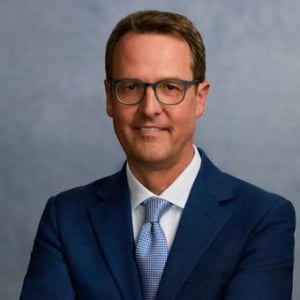
Partner, Orrick, Herrington & Sutcliffe LLP
Andy excels at solving complex problems for his clients using a variety of effective strategies. As former Chief Deputy Attorney General for the State of Wisconsin, Andy Cook has extensive experience representing businesses before state Attorneys General involving investigations and lawsuits. His strong relationships with Attorneys General and their senior staff frequently facilitate the successful resolution of client issues through diplomacy and negotiations. When litigation becomes necessary, Andy effectively advocates for clients throughout the litigation process.
Andy combines his legal expertise in numerous areas of law covered by state Attorneys General, an understanding of how state AG offices operate, and vast knowledge of legal and regulatory issues facing his clients. This substantive and comprehensive legal approach is crucial to effectively representing clients before state Attorneys General. Andy also has substantial experience drafting and enacting complex civil liability reforms before state legislatures to successfully address client goals.
Andy’s main practice focuses on advising Fortune 500 companies before state Attorneys General in the areas of antitrust, consumer protection, False Claims Act, environmental law, and cybersecurity and data privacy. Andy, in collaboration with a team of attorneys, successfully navigated a client through antitrust regulatory review by state Attorneys General in one of the nation’s largest mergers of two major telecommunication companies. Andy also worked with a team of lawyers representing a large corporation involving the multistate opioids litigation brought by state Attorneys General.
Andy gained valuable experience serving as Deputy Attorney General for the State of Wisconsin where he was the second in command of the 700-plus state agency. In his role as Chief Deputy Attorney General, Andy oversaw the day-to-day operations at the Wisconsin Department of Justice (DOJ); directed the State’s litigation strategy; negotiated, reviewed, and approved all settlements; drafted and reviewed attorney general opinions; managed the agency’s budget; oversaw civil and criminal investigations handled by DOJ; and managed DOJ’s legislative agenda.
Andy played college hockey and remains active by running, cross country skiing, and playing golf. On the weekends, Andy and his wife enjoy watching their kids’ sporting events, including soccer, baseball, gymnastics, and track. In his rare spare time, Andy reads history books.
Wisconsin State Representative
State Representative Jon Richards represents Milwaukee's East Side, Downtown, and Bay View neighborhoods in the Wisconsin State Assembly's 19th district. He was first elected to the Wisconsin State Assembly in 1998, and has been re-elected ever since.
Jon is an attorney in Milwaukee. He owns a home in the Brady Street neighborhood of Milwaukee. Before entering law school, Jon worked as an English teacher in Japan, volunteered with Mother Teresa in Calcutta, India and worked as a reporter for business newspapers in Milwaukee and San Francisco. He is a graduate of Lawrence University in Appleton, Wisconsin, the University of Wisconsin Law School, and attended Keio University in Tokyo.
Jon has been a champion of reforming healthcare in Wisconsin. As chair of the Assembly committee on Health and Healthcare Reform, he has led the effort in the Legislature to reduce health care costs, cover every Wisconsinite with health insurance and promote wellness-based health care. Jon was the Assembly author of the statewide smoking ban. Jon also led the effort for the largest investment ever in UWM from the State of Wisconsin.
Jon is very active in the Milwaukee community. He is a four-time winner of the "Milwaukee's Best Legislator" award from theShepherd Express. He is a volunteer Big Brother with Big Brothers, Big Sisters of Metro Milwaukee. He is a member of the Brady Street Area Association, Immanuel Presbyterian Church, and the Bay View Lions Club.

Professor of Law, Antonin Scalia Law School, George Mason University
ILYA SOMIN is Professor of Law at George Mason University and the B. Kenneth Simon Chair in Constitutional Studies at the Cato Institute. His research focuses on constitutional law, property law, democratic theory, federalism, and migration rights. He is the author of Free to Move: Foot Voting, Migration, and Political Freedom (Oxford University Press, revised and expanded edition, 2022), Democracy and Political Ignorance: Why Smaller Government is Smarter (Stanford University Press, revised and expanded second edition, 2016), and The Grasping Hand: Kelo v. City of New London and the Limits of Eminent Domain (University of Chicago Press, 2015, rev. paperback ed., 2016), coauthor of A Conspiracy Against Obamacare: The Volokh Conspiracy and the Health Care Case (Palgrave Macmillan, 2013), and co-editor of Eminent Domain: A Comparative Perspective (Cambridge University Press, 2017). Democracy and Political Ignorance has been translated into Italian and Japanese.
Somin’s work has appeared in numerous scholarly journals, including the Yale Law Journal, Stanford Law Review, Northwestern University Law Review, Georgetown Law Journal, Critical Review, and others. Somin has also published articles in a variety of popular press outlets, including the New York Times, Washington Post, Wall Street Journal, Los Angeles Times, CNN, NBC, The Atlantic, USA Today, Boston Globe, US News and World Report, South China Morning Post, National Law Journal and Reason. He has been quoted or interviewed by the New York Times, Washington Post, Wall Street Journal, Time, Newsweek, The Economist, the Christian Science Monitor, the Financial Times, The Guardian, the Associated Press, CBS, MSNBC, NPR, BBC, Reuters, the Canadian Broadcasting Corporation, the Australian Broadcasting Corporation, Radio Free Europe/Radio Liberty, Al Jazeera, and the Voice of America, among other media.
Somin’s writings have been cited in decisions by the United States Supreme Court, multiple state supreme courts and lower federal courts, and the Supreme Court of Israel. He is co-counsel for the plaintiffs in VOS Selections, Inc. v. Trump, a case challenging the constitutionality of President Trump’s “Liberation Day” tariffs. Somin has testified on the use of drones for targeted killing in the War on Terror before the US Senate Judiciary Subcommittee on the Constitution, Civil Rights, and Human Rights. In 2009, he testified on property rights issues at the United States Senate Judiciary Committee confirmation hearings for Supreme Court Justice Sonia Sotomayor. Somin writes regularly for the popular Volokh Conspiracy law and politics blog, now affiliated with Reason magazine (previously affiliated with the Washington Post from 2014 to 2017). From 2006 to 2013, he served as Co-Editor of the Supreme Court Economic Review, one of the country’s top-rated law and economics journals.
Somin has served as a visiting professor at the University of Pennsylvania Law School. He has also been a visiting professor or scholar at the Georgetown University Law Center, the University of Hamburg, Germany, the University of Torcuato Di Tella in Buenos Aires, Argentina, Uriel Reichman University in Israel, and Zhengzhou University in China. He is a University Affiliate of the Schar School of Policy and Government at George Mason University, and an affiliated faculty member of the George Mason University Institute for Immigration Research. Before joining the faculty at George Mason, Somin was the John M. Olin Fellow in Law at Northwestern University Law School in 2002-2003. In 2001-2002, he clerked for the Hon. Judge Jerry E. Smith of the U.S. Court of Appeals for the Fifth Circuit. Professor Somin earned his B.A., Summa Cum Laude, at Amherst College, M.A. in Political Science from Harvard University, and J.D. from Yale Law School.
Wisconsin Attorney General
John Byron ("J.B.") Van Hollen, Wisconsin's 43rd Attorney General, was elected on November 7, 2006, and assuming office on January 1, 2007.
During his campaign for Attorney General, Van Hollen identified the backlog of forensic DNA evidence in the State Crime Lab as the single most important public safety issue facing the Department of Justice and Wisconsin's justice system. Within weeks of becoming Attorney General, General Van Hollen worked with members of both parties in the Legislature and Governor Jim Doyle to secure an unprecedented 31 positions to address the Wisconsin Crime Lab backlog. With efficiencies and the cooperation of partner agencies, the State Crime Lab is on track to eliminate the backlog by 2010.
As Wisconsin's "Top Cop," General Van Hollen identified Internet Crimes Against Children (ICAC) as another priority vital to protecting Wisconsin's children from on-line predators. By raising awareness and partnering with the Legislature and the Governor, General Van Hollen secured additional resources to educate parents and children, identify, stop, and prosecute these predators. Working in partnership with local law enforcement authorities, the Department offers education, resources, and its expertise in this fight for the safety of some of our most vulnerable victims: children.
General Van Hollen has also restored an emphasis on the rule of law to the Department of Justice. Professionally-reasoned legal advice and client representation is now a hallmark of the Department's work.
General Van Hollen has been clear that restoring integrity and fighting crime would define his work as Attorney General. A philosophy of first principles, limited government, and the Department's role as an "exist to assist" state agency has guided his tenure as Attorney General.
Van Hollen graduated from St. Olaf College in 1988 with an undergraduate degree in Political Science and Economics. He earned his law degree two years later from the University of Wisconsin Law School.
Van Hollen began his public service career as an Assistant State Public Defender in Spooner, Wisconsin. In 1991, he became a federal prosecutor, serving as an Assistant United States Attorney for the Western District of Wisconsin. Governor Tommy Thompson appointed Van Hollen as District Attorney in Ashland County, where he served for six years. He was subsequently appointed by Governor Thompson to serve as Bayfield County District Attorney. Van Hollen was later elected to the position, enjoying bi-partisan support as Bayfield County's only elected Republican.
Prior to becoming Attorney General, J.B. was appointed United States Attorney for Wisconsin's Western District in 2002 and served there until 2005.
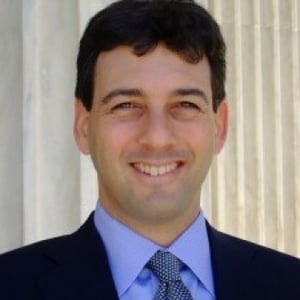
Vice President for Litigation, Institute for Free Speech
Alan joined the Institute for Free Speech as Vice President for Litigation in February 2021. In this role, Alan directs the Institute’s litigation and legal advocacy, leads our in-house legal team, and manages and works to expand our network of volunteer attorneys.
Prior to joining the Institute, Alan litigated complex federal matters for twenty years, in his own practice and as a partner in various Washington-area firms. He argued and won landmark constitutional cases in the United States Supreme Court and has appeared before numerous appellate and district courts throughout the country. Alan often speaks at law schools and continuing legal education seminars. He also teaches strategic/public interest litigation as an adjunct professor at the Georgetown University Law Center.
Alan began his career clerking for the Hon. Terrence W. Boyle, United States District Judge for the Eastern District of North Carolina. He has also served as a Deputy Attorney General for the State of California, a litigation associate at the Washington office of Sidley Austin, and as counsel to the United States Senate Judiciary Committee.
Alan earned his J.D. at Georgetown (1995) and his B.A. at Cornell University (1992). He is an active member in good standing of the Virginia, District of Columbia, and California bars, the Bar of the United States Supreme Court, and various federal appellate and district court bars.

United States v. Tohono O'odham Nation - Post-Decision SCOTUScast
Gregory Sisk
On April 26, 2011, the Supreme Court announced its decision in United States v. Tohono...
Justice and Mercy in Shakespeare's Merchant of Venice
Boston, MassachusettsThe Role of the Courts in National Security
Houston, TexasThe Reinvigorated Foreign Corrupt Practices Act
Contrasting Constitutional Perspectives
ColumbusFederal Sentencing Issues
North Carolina Appellate Court Questions the Constitutionality of Campus Police at Universities with Religious Heritages in State v. Yencer
Robert T. Numbers
In late August, as colleges and universities across North Carolina were preparing to welcome back...
Lessons from Ghailaini
The Constitutionality of the Federal Health Care Law
Madison Lawyers Chapter
Madison, WILitigating The Second Amendment After Heller and McDonald
Cleveland