

Director of Strategy and New Initiatives, Vera Institute of Justice
Insha is the director of strategy & new initiatives. As a member of Vera's leadership team, she helps to incubate new work in the areas of prosecutorial reform, bail, and decarceration, with a focus on developing advocacy-related strategies and accountability. Having practiced as a public defender before coming to Vera, she is a nationally-recognized expert on bail and has developed bail legislation and policies, including recently passed reforms in New York State, and provided technical assistance and training to advocates, judges, defense attorneys, and prosecutors on bail reform, pretrial justice, and reducing jail incarceration.
From 2016-2017, Insha served as staff to the Independent Commission on New York City Criminal Justice & Incarceration Reform, a blue-ribbon commission chaired by former Chief Justice Jonathan Lippman of the New York State Court of Appeals that developed a blueprint to close Rikers Island. She has been quoted as an expert on bail in The Nation, City and State, New York Times, NPR, and PBS, among other outlets. Prior to Vera, Insha was a public defender at The Bronx Defenders. She earned her J.D. from the City University of New York School of Law and her B.A. in Africana Studies from Vassar College. She currently serves on the boards of the New York Civil Liberties Union, Brooklyn Community Bail Fund, and the New York State Appellate Division's Indigent Defense Organization Oversight Committee.
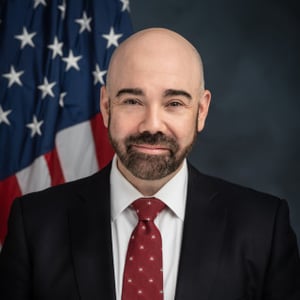
Assistant Secretary for Fair Housing and Equal Opportunity, United States Department of Housing and Urban Development
Craig Trainor is Assistant Secretary for Fair Housing and Equal Opportunity at the United States Department of Housing and Urban Development. President Trump nominated Mr. Trainor for this position on February 11, 2025, and the United States Senate confirmed him on October 7, 2025.
A “Day One” Trump-Vance Administration official, he previously served as Acting Assistant Secretary for Civil Rights and Principal Deputy Assistant Secretary for Civil Rights at the United States Department of Education, where he spearheaded the Department’s efforts to reorient America’s civil rights regime from an unjust spoils system to one that protects the rights of all Americans. Mr. Trainor’s February 14, 2025, “Dear Colleague” letter is widely considered the Trump Administration’s blueprint for enforcing civil rights laws and restoring the Constitution’s promise of equal protection.
Prior to serving in the Trump-Vance Administration, he was Senior Special Counsel with the United States House of Representatives Committee on the Judiciary under Chairman Jim Jordan (R-OH), and Senior Litigation Counsel with the America First Policy Institute under the Honorable Pam Bondi.
For over ten years, Mr. Trainor was a criminal defense and civil rights lawyer in New York City, litigating cases in New York state court and the United States District Court for the Southern and Eastern Districts of New York.
Prior to founding his law practice, he served as a New York City prosecutor, an associate attorney at a white collar criminal defense firm, and a law clerk to Chief Judge Frederick J. Scullin, Jr., United States District Court for the Northern District of New York.

Tammy McCutchen is a leading authority on federal and state wage-hour laws and prevailing wage laws. She counsels businesses on wage-hour compliance, including conducting internal audits on independent contractor status, overtime exemptions, and other pay practices. She also represents employers during investigations by the U.S. Department of Labor and serves as an expert witness in wage-hour class actions. She was a founding officer of ComplianceHR, a law and technology company, where she created AI-based applications to evaluate independent contractor and overtime exempt status.
Ms. McCutchen served as Administrator of the U.S. Department of Labor’s Wage and Hour Division, appointed by President Bush and confirmed by the Senate in 2001. She was the primary architect of the 2004 revisions to the overtime exemption regulations, the first major changes to the regulations in 55 years.
Before joining DOL, she was senior counsel for the Hershey Company in Hershey, Pennsylvania.
Ms. McCutchen has been a volunteer leader of the Federalist Society since 1989. She served in leadership roles for the Northwestern Student Chapter and Chicago Lawyers Chapter. She currently serves in leadership for the Labor & Employment Practice Group, the Regulatory Transparency Project, and the Knoxville, TN Lawyers Chapter. She served on the Editorial Advisory Board of Law360, the Labor Committee of the U.S. Chamber of Commerce, the Small Business Legal Advisory Board of the National Federation of Independent Business, and a Policy Fellow at the ACU Foundation.
Ms. McCutchen is a graduate of Western Illinois University and Northwestern University School of Law. She clerked for the Hon. Daniel Manion on the U.S. Court of Appeals for the Seventh Circuit.
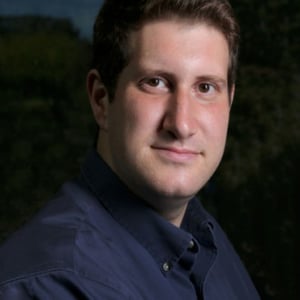
Assistant Professor of Law, Stanford Law School
Gregory Ablavsky’s scholarship focuses on early American legal history, particularly on issues of sovereignty, territory, and property in the early American West. A lawyer and historian, his publications explore a range of topics including the history of the Indian Commerce Clause and the importance of Indian affairs in shaping the U.S. Constitution and the balance of power between states and the federal government. In 2015, the American Society of Legal History named him a Kathryn T. Preyer Scholar. He is currently writing a book based on his dissertation, “The Adjudicatory State: Sovereignty, Property, and the Law in the U.S. Territories, 1783-1803.”
Prior to joining the Stanford Law faculty in 2015, Professor Ablavsky was the Sharswood Fellow in Law and History at the University of Pennsylvania, where he taught courses on land use law and the legal history of empire and race. He clerked for Judge Anthony Scirica of the U.S. Court of Appeals for the Third Circuit. He was also a law clerk for the Native American Rights Fund in Washington, D.C.

Vice President, Global Policy, BSA | The Software Alliance
Aaron Cooper serves as Vice President, Global Policy with BSA | The Software Alliance. In this role, Cooper leads BSA’s global policy team and contributes to the advancement of BSA members’ policy priorities: data privacy and security, intellectual property, and trade. Cooper joined BSA in February 2016 as Vice President, Strategic Policy Initiatives.
Prior to joining BSA, Cooper served as the Chief Counsel for Intellectual Property and Antitrust Law for Chairman Patrick Leahy on the U.S. Senate Judiciary Committee. Most recently, Cooper was of counsel at Covington and Burling, where he provided strategic counseling and policy advice on a range of intellectual property, communications, and privacy issues. Cooper has also served as Legal Counsel to Senator Paul Sarbanes.
Cooper is a graduate of Princeton University and Vanderbilt Law School. He clerked for Judge Gerald Tjoflat on the U.S. Court of Appeals for the Eleventh Circuit.
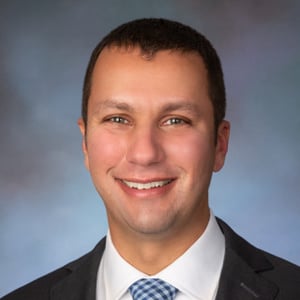
Partner, Duane Morris LLP
Brian Pandya is Partner at Duane Morris LLP. A member of the firm’s Trial Practice Group, Brian represents technology, manufacturing, and healthcare companies in high-stakes litigation, arbitrations, investigations and appeals. He has served as lead trial counsel in a range of intellectual property, antitrust, complex commercial and white-collar matters. He also regularly counsels clients on cybersecurity and national security issues, particularly matters concerning emerging technologies and artificial intelligence.
Before joining Duane Morris, Brian served at the U.S. Department of Justice as Deputy Associate Attorney General from 2019-21, where he oversaw investigations and litigation undertaken by the Antitrust Division and Civil Division and served on several high-profile task forces and trial teams. Brian was also previously a litigation and IP partner at another prominent Washington, DC firm.
Brian clerked for Judge Leonard Davis on the United States District Court for the Eastern District of Texas. He is a two-time recipient of the Federal Circuit Bar Association’s Pro Bono Advocacy Award for work on behalf of military veterans and has served as volunteer federal public defender in the Eastern District of Virginia, among many other bar and community engagements.
Brian graduated cum laude from the University of Michigan Law School, where he was articles editor of the Michigan Telecommunications and Technology Law Review, and with honors and high distinction in mechanical engineering from Penn State University, where he received the Ralph Dorn Hetzel Memorial Award.

Partner, Shore Chan Depumpo LLP
Michael W. Shore practices in the areas of intellectual property commercialization, business litigation, and other select litigation matters. His intellectual property practice is multifaceted, aiding clients in commercializing their patent and copyright portfolios through strategic development, licensing and litigation. Mr. Shore currently represents clients ranging from Fortune 500 companies to individuals located in the United States, Japan, Great Britain, Luxembourg, Taiwan (ROC) and the People's Republic of China. Prior to forming Shore Chan DePumpo LLP, Mr. Shore headed the Intellectual Property Licensing and Litigation Practice Group as a partner at Akin Gump Strauss Hauer & Feld, LLP.

President, Cass & Associates, PC
Ronald A. Cass is Dean Emeritus of Boston University School of Law (where he was Dean from 1990-2004), President of Cass & Associates, PC, former Vice-Chairman and Commissioner of the U.S. International Trade Commission, former faculty member at Boston University School of Law and the University of Virginia Law School, and Distinguished Senior Fellow at the C. Boyden Gray Center for the Study of the Administrative State. Dean Cass also sits as an arbitrator for commercial, international, and intellectual property rights disputes, and is a former United States member of the Panel of Conciliators of the International Centre for Settlement of Investment Disputes. He is a member of the Council of the Administrative Conference of the United States and has received seven presidential appointments, spanning Presidents Ronald Reagan to Donald J. Trump.
As a law professor, lecturer, and scholar, Dean Cass has been teaching and writing about a wide array of legal issues on topics such as administrative law and regulation, antitrust, constitutional law, communications, intellectual property, international trade, separation of powers, and legal process. He has published more than 160 scholarly books, chapters, articles, and papers, including a leading casebook on administrative law. Dean Cass has taught judges as well as students in schools of law, economics, business, and public policy and has held academic appointments in the United States, Europe, and Latin America.
In addition to his academic work, Dean Cass has participated in numerous important legal cases as an amicus, consultant, or expert, and has advised businesses, law firms, investment funds, and government agencies on a range of trade, antitrust, intellectual property, and regulatory issues. He has a broad range of affiliations with professional groups, and has received numerous honors, fellowships and awards.
Dean Cass is a graduate of the University of Virginia and the University of Chicago Law School.
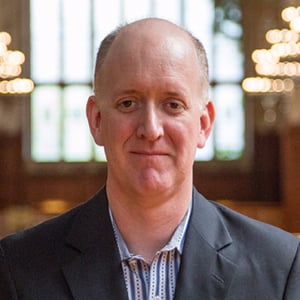
Richard W. Pogue Professor of Law, University of Michigan Law School
Professor Daniel Crane is the Richard W. Pogue Professor of Law. He served as the associate dean for faculty and research from 2013 to 2016. He teaches Contracts, Antitrust, Antitrust and Intellectual Property, and Legislation and Regulation.
Crane previously was a professor of law at Yeshiva University's Benjamin N. Cardozo School of Law and a visiting professor at New York University School of Law and the University of Chicago Law School. In spring 2009, he taught antitrust law on a Fulbright Scholarship at the Universidade Católica Portuguesa in Lisbon.
Crane's work has appeared in the University of Chicago Law Review, the California Law Review, the Michigan Law Review, the Georgetown Law Journal, and the Cornell Law Review, among other journals. He is the author of several books on antitrust law, including Antitrust (Aspen, 2014), The Making of Competition Policy: Legal and Economic Sources (Oxford University Press, 2013), and The Institutional Structure of Antitrust Enforcement (Oxford University Press, 2011).

Senior Judge, United States Court of Appeals, District of Columbia Circuit
Circuit Judge Douglas H. Ginsburg was appointed to the United States Court of Appeals for the District of Columbia in 1986. After receiving his B.S. from Cornell University in 1970, and his J.D. from the University of Chicago Law School in 1973, he clerked on the D.C. Circuit and for Justice Thurgood Marshall on the United States Supreme Court. Thereafter, Judge Ginsburg was a professor at the Harvard Law School, the Deputy Assistant and then Assistant Attorney General for the Antitrust Division of the Department of Justice, as well as the Administrator of the Office of Information and Regulatory Affairs in the Office of Management and Budget. Concurrent with his service as a federal judge, Judge Ginsburg has taught at the University of Chicago Law School and the New York University School of Law. Judge Ginsburg is currently a Professor of Law at the George Mason University and a visiting professor at University College London, Faculty of Laws.
Judge Ginsburg is the Chairman of the International Advisory Board of the Global Antitrust Institute at the Law and Economics Center of the George Mason University School of Law. He also serves on the Advisory Boards of: Competition Policy International; the Harvard Journal of Law and Public Policy; the Journal of Competition Law and Economics; the Journal of Law, Economics & Policy; the Supreme Court Economic Review; the University of Chicago Law Review; the New York University Journal of Law and Liberty; and, at University College London, both the Centre for Law, Economics and Society and the Jevons Institute for Competition Law and Economics.
In 2020, Judge Ginsburg was the 11th recipient of the John Sherman Award, presented by the Antitrust Division of the Department of Justice in recognition of the awardee’s Lifetime Contributions to Antitrust Law and Policy.
In 2014, Judge Ginsburg received the Lifetime Achievement Award given annually by the Global Competition Review.
He is the author or co-author of several books and more than 100 articles on competition and regulation, including, most recently, Growing Convergence: The Limited Role of Antitrust in Standard Essential Patent Disputes, in CPI Antitrust Chronicle, Summer 2021, Vol. 1, No. 2.
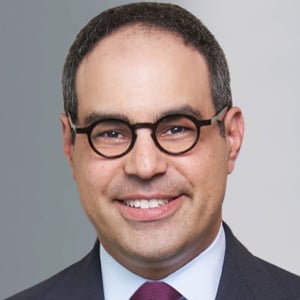
Assistant Attorney General for the Antitrust Division, U.S. Department of Justice
Jonathan Kanter was confirmed on November 16, 2021, as Assistant Attorney General for the Antitrust Division. Throughout his career, Mr. Kanter has been a leading advocate for strong and meaningful antitrust enforcement and competition policy.
Mr. Kanter has been a partner in the Washington, D.C. offices of two national law firms and was the founder of a boutique antitrust law firm dedicated to promoting antitrust enforcement. Mr. Kanter began his career as an attorney for the Federal Trade Commission's Bureau of Competition. He earned his J.D. from Washington University in St. Louis and his B.A. from State University of New York at Albany.

Associate Justice, Supreme Court of the United States
Associate Justice Brett Kavanaugh was born in Washington, D.C., on February 12, 1965. He married Ashley Estes in 2004, and they have two daughters - Margaret and Liza. He received a B.A. from Yale College in 1987 and a J.D. from Yale Law School in 1990. He served as a law clerk for Judge Walter Stapleton of the U.S. Court of Appeals for the Third Circuit from 1990-1991, for Judge Alex Kozinski of the U.S. Court of Appeals for the Ninth Circuit from 1991-1992, and for Justice Anthony M. Kennedy of the U.S. Supreme Court during the 1993 Term. In 1992-1993, he was an attorney in the Office of the Solicitor General of the United States. From 1994 to 1997 and for a period in 1998, he was Associate Counsel in the Office of Independent Counsel. He was a partner at a Washington, D.C., law firm from 1997 to 1998 and again from 1999 to 2001. From 2001 to 2003, he was Associate Counsel and then Senior Associate Counsel to President George W. Bush. From 2003 to 2006, he was Assistant to the President and Staff Secretary for President Bush. He was appointed a Judge of the United States Court of Appeals for the District of Columbia Circuit in 2006. President Donald J. Trump nominated him as an Associate Justice of the Supreme Court, and he took his seat on October 6, 2018.
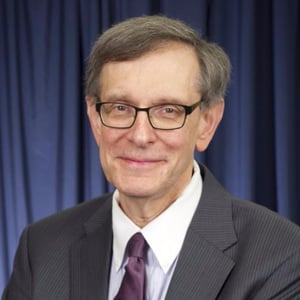
Executive Director, Americans United for Separation of Church and State

The Pros and Cons of New York’s Bail Reform
Insha Rahman, Craig Trainor
Almost exactly a year ago—on April 1, 2019—New York State enacted groundbreaking bail reform that...
One Year Later: Impact of Encino Motorcars on FLSA Litigation
Tammy Dee McCutchen
Just over a year ago, in a case involving an obscure car dealership exemption from...
New Frontiers for Tribal Immunity: Patents, Pharmaceuticals, and the PTAB
Gregory Ablavsky, Aaron Cooper, Brian Pandya, Michael Shore
The courts and Congress have long acknowledged the sovereign status of Native American tribes. Tribes,...
The Future of Antitrust: Is the Consumer Welfare Standard Still Up to the Task or Is It Time for a 'Better Deal'?
Ronald A. Cass, Daniel A. Crane, Douglas H. Ginsburg, Jonathan S. Kanter, Brett M. Kavanaugh, Barry W. Lynn
As an advisor to Woodrow Wilson, Louis Brandeis observed that “We can have democracy in...
Turning Bad Into Good?
Jendi B. Reiter
In The Wife of Bath's Tale, Chaucer observes, "Forbede us thyng, and that desiren we."...