
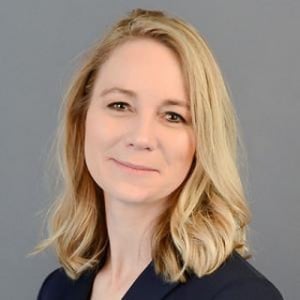
Supreme Court & Appellate Litigation Chair, Lex Politica; Of Counsel, Alliance Defending Freedom
Erin Morrow Hawley serves as Chair of Lex Politica's Supreme Court and Appellate Practice overseeing the firm’s strategic appellate litigation and critical motions practice in the trial courts. Erin is an experienced litigator who represents clients in constitutional, regulatory, and appellate matters in federal and state courts throughout the country.
Erin has represented dozens of clients before the Supreme Court of the United States, served as lead counsel in high-profile cases raising novel constitutional and statutory issues, and authored numerous successful petitions for certiorari and briefs in opposition. She has argued in state and federal appellate and trial courts throughout the country, including the Supreme Court of the United States. Erin represents diverse clients in high-stakes litigation from state governments to faith-based nonprofits to Fortune 100 companies. She possesses expertise on a wide range of subject matters including administrative law, the First Amendment, religious liberty, federal jurisdiction, federal preemption, equitable jurisdiction, tax law, the Affordable Care Act, and Title IX.
Erin represents clients in cases where public communications strategy is paramount. She is a sought-after speaker and writer, has testified multiple times before Congress, and is a frequent presenter on constitutional and administrative law issues, including at the Oxford Union, the National Federalist Society Convention, and university campuses across the country. She is a frequent commentator to media outlets, including Fox News, MSNBC, the Wall Street Journal, WORLD, USA Today, the Federalist, and the Hill.
Erin previously oversaw Alliance Defending Freedom’s--where she still serves as Of Counsel--litigation strategies to empower women and protect the dignity of life, defend pregnancy centers’ First Amendment rights from government overreach, and safeguard Americans’ freedoms from the ever-encroaching administrative state.
Executive Director, Consumers
Executive Director, Consumers’ Research
Co-founder, The Financial Integrity Network
Chip Poncy is a co-founder of the Financial Integrity Network (FIN), a strategic and technical advisory company focused on assisting key financial and jurisdictional stakeholders in combating and protecting against the full spectrum of illicit finance. Launched in 2014, FIN advises jurisdictional authorities, financial institutions, and vulnerable sectors, industries, and organizations in developing and implementing counter-illicit finance policies, requirements and best practices.
Prior to launching FIN, Mr. Poncy assisted one of the world’s largest banks in developing and implementing its enterprise-wide financial crimes compliance program in Latin America, including by serving in Mexico City as the bank’s interim Head of Financial Crimes Compliance for Mexico and the Latin American region.
From 2002-2013, Mr. Poncy served as the inaugural Director of the Office of Strategic Policy for Terrorist Financing and Financial Crimes (OSP) and a Senior Advisor at the U.S. Department of the Treasury. As the Director of OSP from 2005-2013, Mr. Poncy led an office of strategic policy advisors in creating policies and initiatives to combat the full spectrum of illicit finance, including money laundering, terrorist financing, WMD proliferation financing, and kleptocracy flows. As a Senior Advisor from 2002- 2005, Mr. Poncy assisted Treasury leadership in developing the U.S. Government’s post-9/11 strategy to combat terrorist financing. He also assisted senior leadership in creating and developing the Office of Terrorism and Financial Intelligence in the post-9/11 Government reorganization.
Mr. Poncy led the U.S. delegation to the Financial Action Task Force (FATF) from 2010-2013, co-chaired the policy working group of the FATF from 2007-2013, and managed U.S. participation on various G7, G8 and G20 illicit finance experts groups from 2008-2013. Key accomplishments in these roles included assisting in the revision and adoption of the FATF’s global standards and assessment processes for evaluating jurisdictions under the FATF global network, and facilitating the integration of counter-illicit finance into the broader global financial reform agenda since 2008.
Mr. Poncy began his career as an associate in the New York offices of the law firm White & Case and has served as general counsel to biotechnology and internet radio companies. He has co-pioneered a graduate course on national security and the international financial system as an adjunct associate professor at Georgetown University’s Edmund A. Walsh School of Foreign Service. Mr. Poncy graduated with honors from Harvard University (Bachelor of Arts in Government) and The Johns Hopkins School of Advanced International Studies (Masters of Arts in International Relations) and holds a Juris Doctor from the Georgetown University Law Center.
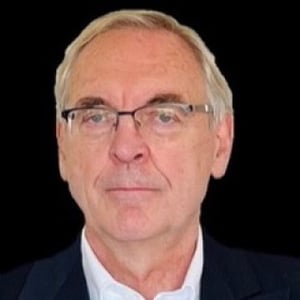
Fellow, National Security Institute, Antonin Scalia Law School, George Mason University
Vince Vitkowsky chaired the Executive Committee of the Federalist Society’s International and National Security Law and Policy Practice Group for over a decade. He is also a Fellow at the National Security Institute of George Mason University Law School. Vince spent 45 years in private practice, primarily in AmLaw 100/200 firms and their spin-offs. His practice included domestic and international commercial arbitration and litigation, as well as cyber risks and liabilities. Vince's current focus is on national security policy, artificial intelligence, cybersecurity, and counterterrorism. He has often written and spoken on national security and other public policy issues. Among other affiliations, Vince has been an Adjunct Fellow at the Center for Law and Counterterrorism of the Foundation for the Defense of Democracies, a member of the Executive Committee of the American Branch of the International Law Association, and Co-Chair of the Committee on Interventions and Trial Observations of the International Bar Association’s Human Rights Institute. He received his B.A. from Northwestern University and his J.D. from Cornell Law School.
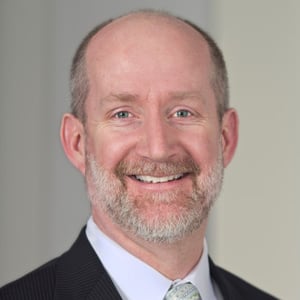
Nonresident Senior Fellow, American Enterprise Institute
Jim Harper is a nonresident senior fellow at the American Enterprise Institute (AEI), where he focuses on privacy issues, and select legal and constitutional law issues.
A lawyer by training, Mr. Harper has served as counsel for the Subcommittee on Commercial, and Administrative Law of the US House Committee on the Judiciary and as counsel for the Senate Committee on Government Affairs. More recently, he worked at the Competitive Enterprise Institute and the Cato Institute, where he wrote on the intersection of business, technology, and public policy, including privacy, surveillance, data security, telecommunications, and cryptocurrencies. He also served as global policy counsel for the Bitcoin Foundation. Mr. Harper was a founding member of the Department of Homeland Security’s Data Privacy and Integrity Advisory Committee. Early in his post-Hill career, he represented companies such as PayPal and Verisign before Congress.
Mr. Harper is the co-editor of “Terrorizing Ourselves: Why U.S. Counterterrorism Policy Is Failing and How to Fix It” (Cato Institute, 2010) and the author of “Identity Crisis: How Identification Is Overused and Misunderstood” (Cato Institute, 2006). He has written several amicus briefs in Fourth Amendment cases before the U.S. Supreme Court and has published scholarly articles in a variety of law journals. In the popular press, Mr. Harper has been published in The New York Times and The Wall Street Journal, among many other publications.
Mr. Harper has a law degree from the U.C. Hastings College of the Law, where he was editor-in-chief of the Hastings Constitutional Law Quarterly, and a BA from the University of California, Santa Barbara.
Kansas Securities Commissioner
Aaron Jack, J.D., M.B.A., is the Kansas Securities Commissioner, a position he was appointed to by Kansas Governor Sam Brownback in 2011. Aaron was previously the West-Central Zone Director for New York Life where his 3,200 registered representatives produced over $1.5 billion in sales annually. Aaron was the first director in the history of New York Life to raise $1 billion in new assets for the company's investment management subsidiary, NYLIM.
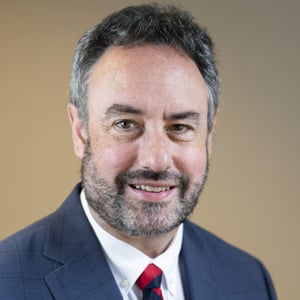
Research Director, Independence Institute
David B. Kopel is Research Director at the Independence Institute; Adjunct Scholar at the Cato Institute; and Senior Fellow at the University of Wyoming College of Law, Firearms Research Center. He received his B.A. in history with Highest Honors from Brown University and his J.D. magna cum laude from the University of Michigan Law School.
He is the author of over 20 books, including the textbook Firearm Law and the Second Amendment: Regulation, Rights, and Policy (Aspen Pubs. 4th ed. forthcoming 2026). His scholarship and briefs have been cited 7 Supreme Court cases--including Heller, McDonald, and Bruen--and in 140 lower courts opinions. He is the author of 120 scholarly articles. His shorter articles often appear on The Volokh Conspiracy blog, hosted by Reason magazine. His topics of interest include the right to arms throughout history, the Colorado Constitution, and law enforcement policy.
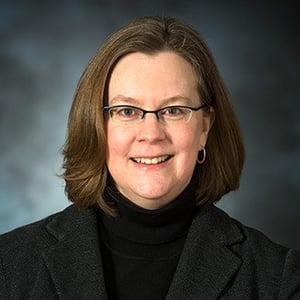
Associate Dean for Research and Intellectual Life, McKnight Presidential Professor in Law, Distinguished McKnight University Professor, Harlan Albert Rogers Professor in Law, Associate Director, Corporate Institute, University of Minnesota Law School
Professor Kristin E. Hickman is the McKnight Presidential Professor in Law, a Distinguished McKnight University Professor, and Harlan Albert Rogers Professor in Law at the University of Minnesota Law School. She also has taught at Harvard Law School and Northwestern University School of Law. Professor Hickman teaches and writes primarily in the areas of administrative law, tax administration, and statutory interpretation. Her articles on these topics have appeared in the Columbia Law Review, Cornell Law Review, Virginia Law Review, Duke Law Journal, and other publications. She also co-authors the Administrative Law Treatise with Richard J. Pierce, Jr., and a casebook on federal administrative law with Pierce and Christopher J. Walker. Her scholarly work has been cited several times in opinions of the United States Supreme Court as well as regularly in lower court judicial opinions and court briefs.
In 2018-19, Professor Hickman served as Special Adviser to the Administrator of the Office of Information and Regulatory Affairs in Washington, D.C. She presently serves as a Senior Fellow, and previously served as a public member and chair of the judicial review committee, for the Administrative Conference of the United States. She also is a Fellow of the American College of Tax Counsel.
Professor Hickman received her B.S. degree in business administration with a concentration in accounting and a secondary major in history from Trinity University in San Antonio, Texas. After practicing for several years as a certified public accountant, Professor Hickman earned her J.D. degree, magna cum laude, from Northwestern University School of Law, where she was awarded the Raoul Berger Prize and the Lowden Wigmore Prize for her scholarly writings. Following law school, Professor Hickman clerked for The Honorable David B. Sentelle of the United States Court of Appeals for the District of Columbia Circuit and practiced law as an associate with the Chicago office of Skadden, Arps, Slate, Meagher & Flom, concentrating on corporate and international tax transactions and matters.
Co-Director, Center for Economic and Policy Research
Dean Baker is co-director of the Center for Economic and Policy Research in Washington, DC. He is frequently cited in economics reporting in major media outlets, including the New York Times,Washington Post, CNN, CNBC, and National Public Radio. He writes a weekly column for the Guardian Unlimited (UK), the Huffington Post,TruthOut, and his blog, Beat the Press, features commentary on economic reporting. His analyses have appeared in many major publications, including the Atlantic Monthly, the Washington Post, theLondon Financial Times, and the New York Daily News. He received his Ph.D in economics from the University of Michigan.
Dean has written several books, his latest being The End of Loser Liberalism: Making Markets Progressive. His other books includeTaking Economics Seriously (MIT Press), which thinks through what we might gain if we took the ideological blinders off of basic economic principles, False Profits: Recovering from the Bubble Economy(PoliPoint Press, 2010) about what caused - and how to fix - the current economic crisis. In 2009, he wrote Plunder and Blunder: The Rise and Fall of the Bubble Economy (PoliPoint Press), which chronicled the growth and collapse of the stock and housing bubbles and explained how policy blunders and greed led to the catastrophic - but completely predictable - market meltdowns. He also wrote a chapter ("From Financial Crisis to Opportunity") in Thinking Big: Progressive Ideas for a New Era (Progressive Ideas Network, 2009). His previous books include The United States Since 1980 (Cambridge University Press, 2007); The Conservative Nanny State: How the Wealthy Use the Government to Stay Rich and Get Richer (Center for Economic and Policy Research, 2006), and Social Security: The Phony Crisis (with Mark Weisbrot, University of Chicago Press, 1999). His book Getting Prices Right: The Debate Over the Consumer Price Index (editor, M.E. Sharpe, 1997) was a winner of a Choice Book Award as one of the outstanding academic books of the year.
Among his numerous articles are "The Benefits of a Financial Transactions Tax," Tax Notes 121, no. 4, 2008; "Are Protective Labor Market Institutions at the Root of Unemployment? A Critical Review of the Evidence," (with David R. Howell, Andrew Glyn, and John Schmitt),Capitalism and Society 2, no. 1, 2007; "Asset Returns and Economic Growth," (with Brad DeLong and Paul Krugman), Brookings Papers on Economic Activity, 2005; "Financing Drug Research: What Are the Issues," Center for Economic and Policy Research, 2004; "Medicare Choice Plus: The Solution to the Long-Term Deficit Problem," Center for Economic and Policy Research, 2004; The Benefits of Full Employment (with Jared Bernstein), Economic Policy Institute, 2004; "Professional Protectionists: The Gains From Free Trade in Highly Paid Professional Services," Center for Economic and Policy Research, 2003; and "The Run-Up in Home Prices: Is It Real or Is It Another Bubble," Center for Economic and Policy Research, 2002.
Dean previously worked as a senior economist at the Economic Policy Institute and an assistant professor at Bucknell University. He has also worked as a consultant for the World Bank, the Joint Economic Committee of the U.S. Congress, and the OECD's Trade Union Advisory Council. He was the author of the weekly online commentary on economic reporting, the Economic Reporting Review (ERR), from 1996 - 2006.
Partner, Sullivan & Cromwell LLP
H. Rodgin Cohen is a partner at Sullivan & Cromwell LLP. He was Chairman of the Firm from July 1, 2000 through December 31, 2009 and has served as its Senior Chairman since January 1, 2010. The primary focus of his practice is corporate governance, regulatory, acquisition and securities law matters for major U.S. and non-U.S. banking and other financial institutions.
Mr. Cohen has acted in most of the major U.S. bank acquisitions and government-sponsored and capital-raising efforts during the financial crisis and provides corporate governance advice to a large number of financial and non-financial institutions. He has played a singular role in the market events that have changed the face of the financial services industry and economy, for which The American Lawyer ranked Mr. Cohen #1 among its 25 “Dealmakers of the Year” in 2009.
In March 2010, Mr. Cohen was recognized as one of the “Decade’s Most Influential Lawyers” by The National Law Journal. In late 2009, he was among the top 25 people named to Institutional Investor’s “The Power 25: Leaders in Finance.” Mr. Cohen was also presented with an FT Special Achievement Award in recognition of his work on nearly 20 substantial credit crisis-related transactions by the Financial Times in October 2009.
Mr. Cohen is or has been a member of the FDIC Systemic Resolution Advisory Committee, The Pew Financial Reform Project, the IIF Special Committee for a Strategic Dialogue for Effective Regulation, the Treasury Advisory Committee on the Auditing Profession, The New York State Commission to Modernize the Regulation of Financial Services and The Financial Services Roundtable’s Blue Ribbon Commission on Enhancing Competitiveness.
Mr. Cohen is a trustee of New York Presbyterian Hospital, Rockefeller University, the Hackley School, Deerfield Academy, Hampton University, Lincoln Center Theater, New York City Partnership and, formerly, the Economic Club of New York. He is also a member of Harvard Law School’s Visiting Committee and the advisory boards of United Way of Westchester-Putnam, the University of Charleston and Wall Street Rising, which in 2005 honored him with its annual Leadership Award for his “steadfast commitment to Lower Manhattan” in the aftermath of the attacks of September 11, 2001. In May 2010, Mr. Cohen and his wife Barbara were honored with the Servant of Justice Award at the Legal Aid Society’s 33rd Annual Dinner.
Founder and Chief Executive Officer, Elliott Management Corporation
Paul E. Singer is founder and general partner of Elliott Associates LP, a New York–based trading partnership formed in 1977. Elliott's compound annual rate of return from inception to June 30, 2011 has been 14.2% net to investors, compared with 10.9% for the S&P 500 in the same period. Elliott's volatility of return has been roughly one-third that of the S&P 500. Total assets under management were approximately $17 billion as of July 1, 2011. Elliott has offices in New York, London, Hong Kong and Tokyo.
The Wall Street Journal has recognized Elliott's early forecasting of the systemic economic crisis of 2008. The New York Times has written that “of all the hedge fund managers on Wall Street, [Elliott] is one of the most revered.”
Mr. Singer is on the board of fellows of Harvard Medical School. He is also chairman of the Manhattan Institute and an advisory board member of the James Madison Program in American Ideals and Institutions at Princeton University, and on the board of directors of Commentary Magazine. He is a member of the Marketable Assets Advisory Committee at Williams College as well as an ex officio member of the Investment Committee of the University of Rochester.
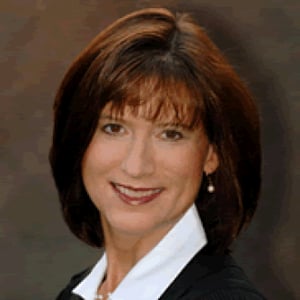
Judge, United States Court of Appeals, Seventh Circuit
Judge Sykes was nominated to the Seventh Circuit by President George W. Bush and confirmed by the Senate in 2004. Prior to her appointment to the federal bench, Judge Sykes served as a justice on the Wisconsin Supreme Court. Governor Tommy G. Thompson appointed her in September 1999 to fill a mid-term vacancy on the state supreme court, and she was elected to a full ten-year term in April 2000. From 1992-1999, Judge Sykes served on the state trial bench in Milwaukee County (elected in 1992 and re-elected in 1998). From 1985-1992, Judge Sykes practiced law with the Milwaukee firm of Whyte & Hirschboeck, S.C., and from 1984-1985, was a law clerk to Federal Judge Terence T. Evans.
Born and raised in the Milwaukee area, Judge Sykes earned a bachelor’s degree in journalism from Northwestern University in 1980 and a law degree from Marquette University Law School in 1984. Between college and law school, Judge Sykes worked as a reporter for The Milwaukee Journal.
Judge Sykes has two sons.
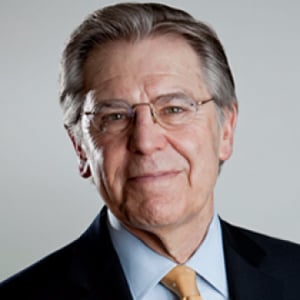
Senior Fellow, Arthur F. Burns Fellow in Financial Policy Studies, American Enterprise Institute
Peter J. Wallison holds the Arthur F. Burns Chair in Financial Policy Studies and is co-director of AEI’s program on Financial Policy Studies. Prior to joining AEI, he practiced banking, corporate and financial law at Gibson, Dunn & Crutcher in Washington, D.C., and New York. Mr. Wallison has held a number of government positions. From June 1981 to January 1985, he was General Counsel of the United States Treasury Department, where he had a significant role in the development of the Reagan Administration's proposals for deregulation in the financial services industry. During 1986 and 1987, Mr. Wallison was White House counsel to President Ronald Reagan, and between 1972 and 1976, he served first as Special Assistant to New York's Gov. Nelson A. Rockefeller and, subsequently, as counsel to Mr. Rockefeller as vice president of the United States.
Mr. Wallison was admitted to practice before the courts of New York and the District of Columbia, and is retired from practice in New York. He continues to be a member of the District of Columbia Bar Association. He received his undergraduate degree from Harvard College in 1963 and law degree from Harvard Law School in 1966.
Mr. Wallison is the author of Ronald Reagan: The Power of Conviction and the Success of His Presidency, published in December 2002 by Westview Press. On campaign finance, he is the author (with Joel Gora) of Better Parties, Better Government, (AEI Press 2009). On financial or regulatory matters, he is the author of Back From the Brink, a proposal for a private deposit insurance system, and co-author of Nationalizing Mortgage Risk: The Growth of Fannie Mae and Freddie Mac; The GAAP Gap: Corporate Disclosure in the Internet Age; Competitive Equity: A Better Way to Organize Mutual Funds; Bad History, Worse Policy: How a False Narrative about the Financial Crisis Led to the Dodd-Frank Act (AEI Press 2013); and Hidden In Plain Sight: What Caused the World’s Worst Financial Crisis and Why it Could Happen Again (Encounter Books 2015). His most recent book is Judicial Fortitude: The Last Chance to Rein in the Administrative State, published by Encounter Books in October 2018.
He testifies frequently before committees of Congress, and is a frequent contributor to the op-ed pages of the Wall Street Journal and other print and online journals. He has also been a speaker at many conferences on financial services, housing, the causes of the financial crisis, the Dodd-Frank Act, accounting, and corporate governance, and was a member of the Shadow Financial Regulatory Committee between 1995 and 2015. He was a member of the SEC Advisory Committee on Improvements to Financial Reporting (2008), co-Chair of the Pew Financial Reform Task Force (2009), and a member of the congressionally- appointed Financial Crisis Inquiry Commission (2009-2011). In May 2011, for his work in financial policy, Mr. Wallison received an honorary doctorate in Humane Letters from the University of Colorado.
Co-Director, Center for Economic and Policy Research
Dean Baker is co-director of the Center for Economic and Policy Research in Washington, DC. He is frequently cited in economics reporting in major media outlets, including the New York Times,Washington Post, CNN, CNBC, and National Public Radio. He writes a weekly column for the Guardian Unlimited (UK), the Huffington Post,TruthOut, and his blog, Beat the Press, features commentary on economic reporting. His analyses have appeared in many major publications, including the Atlantic Monthly, the Washington Post, theLondon Financial Times, and the New York Daily News. He received his Ph.D in economics from the University of Michigan.
Dean has written several books, his latest being The End of Loser Liberalism: Making Markets Progressive. His other books includeTaking Economics Seriously (MIT Press), which thinks through what we might gain if we took the ideological blinders off of basic economic principles, False Profits: Recovering from the Bubble Economy(PoliPoint Press, 2010) about what caused - and how to fix - the current economic crisis. In 2009, he wrote Plunder and Blunder: The Rise and Fall of the Bubble Economy (PoliPoint Press), which chronicled the growth and collapse of the stock and housing bubbles and explained how policy blunders and greed led to the catastrophic - but completely predictable - market meltdowns. He also wrote a chapter ("From Financial Crisis to Opportunity") in Thinking Big: Progressive Ideas for a New Era (Progressive Ideas Network, 2009). His previous books include The United States Since 1980 (Cambridge University Press, 2007); The Conservative Nanny State: How the Wealthy Use the Government to Stay Rich and Get Richer (Center for Economic and Policy Research, 2006), and Social Security: The Phony Crisis (with Mark Weisbrot, University of Chicago Press, 1999). His book Getting Prices Right: The Debate Over the Consumer Price Index (editor, M.E. Sharpe, 1997) was a winner of a Choice Book Award as one of the outstanding academic books of the year.
Among his numerous articles are "The Benefits of a Financial Transactions Tax," Tax Notes 121, no. 4, 2008; "Are Protective Labor Market Institutions at the Root of Unemployment? A Critical Review of the Evidence," (with David R. Howell, Andrew Glyn, and John Schmitt),Capitalism and Society 2, no. 1, 2007; "Asset Returns and Economic Growth," (with Brad DeLong and Paul Krugman), Brookings Papers on Economic Activity, 2005; "Financing Drug Research: What Are the Issues," Center for Economic and Policy Research, 2004; "Medicare Choice Plus: The Solution to the Long-Term Deficit Problem," Center for Economic and Policy Research, 2004; The Benefits of Full Employment (with Jared Bernstein), Economic Policy Institute, 2004; "Professional Protectionists: The Gains From Free Trade in Highly Paid Professional Services," Center for Economic and Policy Research, 2003; and "The Run-Up in Home Prices: Is It Real or Is It Another Bubble," Center for Economic and Policy Research, 2002.
Dean previously worked as a senior economist at the Economic Policy Institute and an assistant professor at Bucknell University. He has also worked as a consultant for the World Bank, the Joint Economic Committee of the U.S. Congress, and the OECD's Trade Union Advisory Council. He was the author of the weekly online commentary on economic reporting, the Economic Reporting Review (ERR), from 1996 - 2006.
Partner, Sullivan & Cromwell LLP
H. Rodgin Cohen is a partner at Sullivan & Cromwell LLP. He was Chairman of the Firm from July 1, 2000 through December 31, 2009 and has served as its Senior Chairman since January 1, 2010. The primary focus of his practice is corporate governance, regulatory, acquisition and securities law matters for major U.S. and non-U.S. banking and other financial institutions.
Mr. Cohen has acted in most of the major U.S. bank acquisitions and government-sponsored and capital-raising efforts during the financial crisis and provides corporate governance advice to a large number of financial and non-financial institutions. He has played a singular role in the market events that have changed the face of the financial services industry and economy, for which The American Lawyer ranked Mr. Cohen #1 among its 25 “Dealmakers of the Year” in 2009.
In March 2010, Mr. Cohen was recognized as one of the “Decade’s Most Influential Lawyers” by The National Law Journal. In late 2009, he was among the top 25 people named to Institutional Investor’s “The Power 25: Leaders in Finance.” Mr. Cohen was also presented with an FT Special Achievement Award in recognition of his work on nearly 20 substantial credit crisis-related transactions by the Financial Times in October 2009.
Mr. Cohen is or has been a member of the FDIC Systemic Resolution Advisory Committee, The Pew Financial Reform Project, the IIF Special Committee for a Strategic Dialogue for Effective Regulation, the Treasury Advisory Committee on the Auditing Profession, The New York State Commission to Modernize the Regulation of Financial Services and The Financial Services Roundtable’s Blue Ribbon Commission on Enhancing Competitiveness.
Mr. Cohen is a trustee of New York Presbyterian Hospital, Rockefeller University, the Hackley School, Deerfield Academy, Hampton University, Lincoln Center Theater, New York City Partnership and, formerly, the Economic Club of New York. He is also a member of Harvard Law School’s Visiting Committee and the advisory boards of United Way of Westchester-Putnam, the University of Charleston and Wall Street Rising, which in 2005 honored him with its annual Leadership Award for his “steadfast commitment to Lower Manhattan” in the aftermath of the attacks of September 11, 2001. In May 2010, Mr. Cohen and his wife Barbara were honored with the Servant of Justice Award at the Legal Aid Society’s 33rd Annual Dinner.
Founder and Chief Executive Officer, Elliott Management Corporation
Paul E. Singer is founder and general partner of Elliott Associates LP, a New York–based trading partnership formed in 1977. Elliott's compound annual rate of return from inception to June 30, 2011 has been 14.2% net to investors, compared with 10.9% for the S&P 500 in the same period. Elliott's volatility of return has been roughly one-third that of the S&P 500. Total assets under management were approximately $17 billion as of July 1, 2011. Elliott has offices in New York, London, Hong Kong and Tokyo.
The Wall Street Journal has recognized Elliott's early forecasting of the systemic economic crisis of 2008. The New York Times has written that “of all the hedge fund managers on Wall Street, [Elliott] is one of the most revered.”
Mr. Singer is on the board of fellows of Harvard Medical School. He is also chairman of the Manhattan Institute and an advisory board member of the James Madison Program in American Ideals and Institutions at Princeton University, and on the board of directors of Commentary Magazine. He is a member of the Marketable Assets Advisory Committee at Williams College as well as an ex officio member of the Investment Committee of the University of Rochester.
Judge, United States Court of Appeals, Seventh Circuit
Judge Sykes was nominated to the Seventh Circuit by President George W. Bush and confirmed by the Senate in 2004. Prior to her appointment to the federal bench, Judge Sykes served as a justice on the Wisconsin Supreme Court. Governor Tommy G. Thompson appointed her in September 1999 to fill a mid-term vacancy on the state supreme court, and she was elected to a full ten-year term in April 2000. From 1992-1999, Judge Sykes served on the state trial bench in Milwaukee County (elected in 1992 and re-elected in 1998). From 1985-1992, Judge Sykes practiced law with the Milwaukee firm of Whyte & Hirschboeck, S.C., and from 1984-1985, was a law clerk to Federal Judge Terence T. Evans.
Born and raised in the Milwaukee area, Judge Sykes earned a bachelor’s degree in journalism from Northwestern University in 1980 and a law degree from Marquette University Law School in 1984. Between college and law school, Judge Sykes worked as a reporter for The Milwaukee Journal.
Judge Sykes has two sons.
Senior Fellow, Arthur F. Burns Fellow in Financial Policy Studies, American Enterprise Institute
Peter J. Wallison holds the Arthur F. Burns Chair in Financial Policy Studies and is co-director of AEI’s program on Financial Policy Studies. Prior to joining AEI, he practiced banking, corporate and financial law at Gibson, Dunn & Crutcher in Washington, D.C., and New York. Mr. Wallison has held a number of government positions. From June 1981 to January 1985, he was General Counsel of the United States Treasury Department, where he had a significant role in the development of the Reagan Administration's proposals for deregulation in the financial services industry. During 1986 and 1987, Mr. Wallison was White House counsel to President Ronald Reagan, and between 1972 and 1976, he served first as Special Assistant to New York's Gov. Nelson A. Rockefeller and, subsequently, as counsel to Mr. Rockefeller as vice president of the United States.
Mr. Wallison was admitted to practice before the courts of New York and the District of Columbia, and is retired from practice in New York. He continues to be a member of the District of Columbia Bar Association. He received his undergraduate degree from Harvard College in 1963 and law degree from Harvard Law School in 1966.
Mr. Wallison is the author of Ronald Reagan: The Power of Conviction and the Success of His Presidency, published in December 2002 by Westview Press. On campaign finance, he is the author (with Joel Gora) of Better Parties, Better Government, (AEI Press 2009). On financial or regulatory matters, he is the author of Back From the Brink, a proposal for a private deposit insurance system, and co-author of Nationalizing Mortgage Risk: The Growth of Fannie Mae and Freddie Mac; The GAAP Gap: Corporate Disclosure in the Internet Age; Competitive Equity: A Better Way to Organize Mutual Funds; Bad History, Worse Policy: How a False Narrative about the Financial Crisis Led to the Dodd-Frank Act (AEI Press 2013); and Hidden In Plain Sight: What Caused the World’s Worst Financial Crisis and Why it Could Happen Again (Encounter Books 2015). His most recent book is Judicial Fortitude: The Last Chance to Rein in the Administrative State, published by Encounter Books in October 2018.
He testifies frequently before committees of Congress, and is a frequent contributor to the op-ed pages of the Wall Street Journal and other print and online journals. He has also been a speaker at many conferences on financial services, housing, the causes of the financial crisis, the Dodd-Frank Act, accounting, and corporate governance, and was a member of the Shadow Financial Regulatory Committee between 1995 and 2015. He was a member of the SEC Advisory Committee on Improvements to Financial Reporting (2008), co-Chair of the Pew Financial Reform Task Force (2009), and a member of the congressionally- appointed Financial Crisis Inquiry Commission (2009-2011). In May 2011, for his work in financial policy, Mr. Wallison received an honorary doctorate in Humane Letters from the University of Colorado.
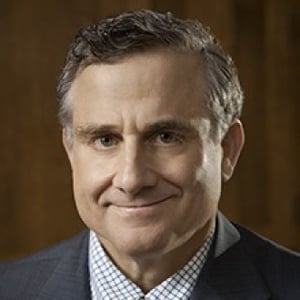
Sam Harris Professor of Corporate Law, Corporate Finance, and Securities Law, Yale Law School
Jonathan R. Macey is Sam Harris Professor of Corporate Law, Corporate Finance, and Securities Law at Yale University, and Professor in the Yale School of Management. From 1991 – 2004, Professor Macey was J. DuPratt White Professor of Law, Director of the John M. Olin Program in Law and Economics at Cornell Law School, and Professor of Law and Business at the Cornell University Johnson Graduate School of Business. Professor Macey earned his B.A. cum laude from Harvard in 1977, and his J.D. from Yale Law School in 1982, where he was Article and Book Review editor of The Yale Law Journal. In 1996, Professor Macey received a Ph.D. honoris causa from the Stockholm School of Economics. Following law school, Professor Macey was law clerk to Judge Henry J. Friendly on the U.S. Court of Appeals for the Second Circuit.
Professor Macey is the author of several books including the two-volume treatise, Macey on Corporation Laws, published in 1998 (Aspen Law & Business), and co-author of two leading casebooks, Corporations: Including Partnerships and Limited Liability Companies (2003 Thomson West), which is in its eighth edition, and Banking Law and Regulation (2002 Aspen Law & Business), which is now in its third edition. He also is the author of over 100 scholarly articles. His recent articles have appeared in the Banking Law Journal, the University of Chicago Law Review, the Stanford Law Review, The Yale Law Journal, the Cornell Law Review, the Journal of Law and Economics, and the Brookings Wharton Papers on Financial Institutions. He has published numerous editorials in such publications as The Wall Street Journal, Forbes, The Los Angeles Times, and The National Law Journal.
Professor Macey has taught at major universities throughout the world, including Bocconi University (Milan), the University of Tokyo; the University of Toronto; the University of Turin, the University of Amsterdam Department of Finance, and the Stockholm School of Economics, Department of Law. He also has been Professor of Law at the University of Chicago (1990) and Visiting Professor of Law at Harvard Law School (1999). Professor Macey is a Senior Research Fellow at the International Centre for Economic Research (ICER) in Turin, Italy. Professor Macey also serves on the Academic Advisory Board (Comitato Scientifico) of the Associazione Disiano Preite for the study of corporate law (per lo studio del diritto dell’impresa). In 1995, Professor Macey was awarded the Paul M. Bator prize for excellence in Teaching, Scholarship and Public Service by the Federalist Society for Law and Public Policy. In 1996, he received a Ph.D., honoris causa from the Stockholm School of Economics. And in 1998, he received the D.P. Jacobs prize for the most significant paper in volume 6 of the Journal of Financial Intermediation for his paper (co-authored with Maureen O’Hara), “The Law & Economics of Best Execution.”
In 1999 Professor Macey was made an honorary Fellow of the Society For Advanced Legal Studies. In 2000, Professor Macey became a member of the Legal Advisory Committee to the Board of Directors of the New York Stock Exchange. In 2001 Professor Macey was appointed a Bertil Daniellson Distinguished Visiting Professor in Banking and Finance at the Stockholm School of Economics. In 2002 Professor Macey was appointed to the Economic Advisory Board of the National Association of Securities Dealers (NASD). In 2004 Professor Macey was awarded a Teaching Award by the Yale Law Women in recognition of his “commitment to excellence in teaching, mentoring and inspiring.” In 2005 Professor Macey became a member of the Board of Editors of Thomson West Publishing Company.
Co-Director, Center for Economic and Policy Research
Dean Baker is co-director of the Center for Economic and Policy Research in Washington, DC. He is frequently cited in economics reporting in major media outlets, including the New York Times,Washington Post, CNN, CNBC, and National Public Radio. He writes a weekly column for the Guardian Unlimited (UK), the Huffington Post,TruthOut, and his blog, Beat the Press, features commentary on economic reporting. His analyses have appeared in many major publications, including the Atlantic Monthly, the Washington Post, theLondon Financial Times, and the New York Daily News. He received his Ph.D in economics from the University of Michigan.
Dean has written several books, his latest being The End of Loser Liberalism: Making Markets Progressive. His other books includeTaking Economics Seriously (MIT Press), which thinks through what we might gain if we took the ideological blinders off of basic economic principles, False Profits: Recovering from the Bubble Economy(PoliPoint Press, 2010) about what caused - and how to fix - the current economic crisis. In 2009, he wrote Plunder and Blunder: The Rise and Fall of the Bubble Economy (PoliPoint Press), which chronicled the growth and collapse of the stock and housing bubbles and explained how policy blunders and greed led to the catastrophic - but completely predictable - market meltdowns. He also wrote a chapter ("From Financial Crisis to Opportunity") in Thinking Big: Progressive Ideas for a New Era (Progressive Ideas Network, 2009). His previous books include The United States Since 1980 (Cambridge University Press, 2007); The Conservative Nanny State: How the Wealthy Use the Government to Stay Rich and Get Richer (Center for Economic and Policy Research, 2006), and Social Security: The Phony Crisis (with Mark Weisbrot, University of Chicago Press, 1999). His book Getting Prices Right: The Debate Over the Consumer Price Index (editor, M.E. Sharpe, 1997) was a winner of a Choice Book Award as one of the outstanding academic books of the year.
Among his numerous articles are "The Benefits of a Financial Transactions Tax," Tax Notes 121, no. 4, 2008; "Are Protective Labor Market Institutions at the Root of Unemployment? A Critical Review of the Evidence," (with David R. Howell, Andrew Glyn, and John Schmitt),Capitalism and Society 2, no. 1, 2007; "Asset Returns and Economic Growth," (with Brad DeLong and Paul Krugman), Brookings Papers on Economic Activity, 2005; "Financing Drug Research: What Are the Issues," Center for Economic and Policy Research, 2004; "Medicare Choice Plus: The Solution to the Long-Term Deficit Problem," Center for Economic and Policy Research, 2004; The Benefits of Full Employment (with Jared Bernstein), Economic Policy Institute, 2004; "Professional Protectionists: The Gains From Free Trade in Highly Paid Professional Services," Center for Economic and Policy Research, 2003; and "The Run-Up in Home Prices: Is It Real or Is It Another Bubble," Center for Economic and Policy Research, 2002.
Dean previously worked as a senior economist at the Economic Policy Institute and an assistant professor at Bucknell University. He has also worked as a consultant for the World Bank, the Joint Economic Committee of the U.S. Congress, and the OECD's Trade Union Advisory Council. He was the author of the weekly online commentary on economic reporting, the Economic Reporting Review (ERR), from 1996 - 2006.
Partner, Sullivan & Cromwell LLP
H. Rodgin Cohen is a partner at Sullivan & Cromwell LLP. He was Chairman of the Firm from July 1, 2000 through December 31, 2009 and has served as its Senior Chairman since January 1, 2010. The primary focus of his practice is corporate governance, regulatory, acquisition and securities law matters for major U.S. and non-U.S. banking and other financial institutions.
Mr. Cohen has acted in most of the major U.S. bank acquisitions and government-sponsored and capital-raising efforts during the financial crisis and provides corporate governance advice to a large number of financial and non-financial institutions. He has played a singular role in the market events that have changed the face of the financial services industry and economy, for which The American Lawyer ranked Mr. Cohen #1 among its 25 “Dealmakers of the Year” in 2009.
In March 2010, Mr. Cohen was recognized as one of the “Decade’s Most Influential Lawyers” by The National Law Journal. In late 2009, he was among the top 25 people named to Institutional Investor’s “The Power 25: Leaders in Finance.” Mr. Cohen was also presented with an FT Special Achievement Award in recognition of his work on nearly 20 substantial credit crisis-related transactions by the Financial Times in October 2009.
Mr. Cohen is or has been a member of the FDIC Systemic Resolution Advisory Committee, The Pew Financial Reform Project, the IIF Special Committee for a Strategic Dialogue for Effective Regulation, the Treasury Advisory Committee on the Auditing Profession, The New York State Commission to Modernize the Regulation of Financial Services and The Financial Services Roundtable’s Blue Ribbon Commission on Enhancing Competitiveness.
Mr. Cohen is a trustee of New York Presbyterian Hospital, Rockefeller University, the Hackley School, Deerfield Academy, Hampton University, Lincoln Center Theater, New York City Partnership and, formerly, the Economic Club of New York. He is also a member of Harvard Law School’s Visiting Committee and the advisory boards of United Way of Westchester-Putnam, the University of Charleston and Wall Street Rising, which in 2005 honored him with its annual Leadership Award for his “steadfast commitment to Lower Manhattan” in the aftermath of the attacks of September 11, 2001. In May 2010, Mr. Cohen and his wife Barbara were honored with the Servant of Justice Award at the Legal Aid Society’s 33rd Annual Dinner.
Founder and Chief Executive Officer, Elliott Management Corporation
Paul E. Singer is founder and general partner of Elliott Associates LP, a New York–based trading partnership formed in 1977. Elliott's compound annual rate of return from inception to June 30, 2011 has been 14.2% net to investors, compared with 10.9% for the S&P 500 in the same period. Elliott's volatility of return has been roughly one-third that of the S&P 500. Total assets under management were approximately $17 billion as of July 1, 2011. Elliott has offices in New York, London, Hong Kong and Tokyo.
The Wall Street Journal has recognized Elliott's early forecasting of the systemic economic crisis of 2008. The New York Times has written that “of all the hedge fund managers on Wall Street, [Elliott] is one of the most revered.”
Mr. Singer is on the board of fellows of Harvard Medical School. He is also chairman of the Manhattan Institute and an advisory board member of the James Madison Program in American Ideals and Institutions at Princeton University, and on the board of directors of Commentary Magazine. He is a member of the Marketable Assets Advisory Committee at Williams College as well as an ex officio member of the Investment Committee of the University of Rochester.
Judge, United States Court of Appeals, Seventh Circuit
Judge Sykes was nominated to the Seventh Circuit by President George W. Bush and confirmed by the Senate in 2004. Prior to her appointment to the federal bench, Judge Sykes served as a justice on the Wisconsin Supreme Court. Governor Tommy G. Thompson appointed her in September 1999 to fill a mid-term vacancy on the state supreme court, and she was elected to a full ten-year term in April 2000. From 1992-1999, Judge Sykes served on the state trial bench in Milwaukee County (elected in 1992 and re-elected in 1998). From 1985-1992, Judge Sykes practiced law with the Milwaukee firm of Whyte & Hirschboeck, S.C., and from 1984-1985, was a law clerk to Federal Judge Terence T. Evans.
Born and raised in the Milwaukee area, Judge Sykes earned a bachelor’s degree in journalism from Northwestern University in 1980 and a law degree from Marquette University Law School in 1984. Between college and law school, Judge Sykes worked as a reporter for The Milwaukee Journal.
Judge Sykes has two sons.
Senior Fellow, Arthur F. Burns Fellow in Financial Policy Studies, American Enterprise Institute
Peter J. Wallison holds the Arthur F. Burns Chair in Financial Policy Studies and is co-director of AEI’s program on Financial Policy Studies. Prior to joining AEI, he practiced banking, corporate and financial law at Gibson, Dunn & Crutcher in Washington, D.C., and New York. Mr. Wallison has held a number of government positions. From June 1981 to January 1985, he was General Counsel of the United States Treasury Department, where he had a significant role in the development of the Reagan Administration's proposals for deregulation in the financial services industry. During 1986 and 1987, Mr. Wallison was White House counsel to President Ronald Reagan, and between 1972 and 1976, he served first as Special Assistant to New York's Gov. Nelson A. Rockefeller and, subsequently, as counsel to Mr. Rockefeller as vice president of the United States.
Mr. Wallison was admitted to practice before the courts of New York and the District of Columbia, and is retired from practice in New York. He continues to be a member of the District of Columbia Bar Association. He received his undergraduate degree from Harvard College in 1963 and law degree from Harvard Law School in 1966.
Mr. Wallison is the author of Ronald Reagan: The Power of Conviction and the Success of His Presidency, published in December 2002 by Westview Press. On campaign finance, he is the author (with Joel Gora) of Better Parties, Better Government, (AEI Press 2009). On financial or regulatory matters, he is the author of Back From the Brink, a proposal for a private deposit insurance system, and co-author of Nationalizing Mortgage Risk: The Growth of Fannie Mae and Freddie Mac; The GAAP Gap: Corporate Disclosure in the Internet Age; Competitive Equity: A Better Way to Organize Mutual Funds; Bad History, Worse Policy: How a False Narrative about the Financial Crisis Led to the Dodd-Frank Act (AEI Press 2013); and Hidden In Plain Sight: What Caused the World’s Worst Financial Crisis and Why it Could Happen Again (Encounter Books 2015). His most recent book is Judicial Fortitude: The Last Chance to Rein in the Administrative State, published by Encounter Books in October 2018.
He testifies frequently before committees of Congress, and is a frequent contributor to the op-ed pages of the Wall Street Journal and other print and online journals. He has also been a speaker at many conferences on financial services, housing, the causes of the financial crisis, the Dodd-Frank Act, accounting, and corporate governance, and was a member of the Shadow Financial Regulatory Committee between 1995 and 2015. He was a member of the SEC Advisory Committee on Improvements to Financial Reporting (2008), co-Chair of the Pew Financial Reform Task Force (2009), and a member of the congressionally- appointed Financial Crisis Inquiry Commission (2009-2011). In May 2011, for his work in financial policy, Mr. Wallison received an honorary doctorate in Humane Letters from the University of Colorado.

Bitcoin Taxation: Recommendations to Improve the Understanding and Treatment of Virtual Currency
Erin M. Hawley, Joseph J. Colangelo
Note from the Editor: Any accounting, business, or tax advice contained in this article is...
Bitcoin: Commerce, Government and Security - Podcast
Chip Poncy, Vincent Vitkowsky, Jim Harper
Bitcoin is the most prominent cryptographic digital currency emerging as a privately-created medium of exchange....
The Economic Freedom Amendment: A States-Based Response to the Nationalizing Effects of Bailouts and Federal Ownership of Corporate Stock
Aaron Jack
Note from the Editor: This paper discusses a proposed state constitutional amendment that would deny...
Mexico's Federal Law of Firearms and Explosives
David B. Kopel
In recent years, gun control has become an important international issue. For example, some persons...
An Overview and Analysis of the Consumer Financial Protection Bureau
Overview The Dodd-Frank Wall Street Reform and Consumer Protection Act (the “Act”), signed into law...
The New Federal Consumer Financial Protection Bureau: Appropriate Safeguard or Regulation Run Amok?
New York, New YorkGoodbye Tax Exceptionalism
Kristin E. Hickman
In the past few decades, the practices and doctrines governing the interpretation and administration of...
Showcase Panel I: Too Big to Fail
Dean Baker, H. Rodgin Cohen, Paul Singer, Diane S. Sykes, Peter J. Wallison
The Dodd-Frank Wall Street Reform and Consumer Protection Act was aimed at correcting a number...
Showcase Panel I: Too Big to Fail
Dean Baker, H. Rodgin Cohen, Paul Singer, Diane S. Sykes, Peter J. Wallison
The Dodd-Frank Wall Street Reform and Consumer Protection Act was aimed at correcting a number...
Showcase Panel I: Too Big to Fail
2011 National Lawyers Convention
Washington, DC