
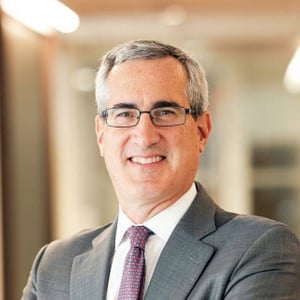
Partner and Chair, Appellate & Supreme Court Practice, Jenner & Block LLP
Ian Gershengorn is chair of Jenner & Block’s Appellate and Supreme Court Practice and is one of the nation’s premier Supreme Court and appellate advocates, having argued before the U.S. Supreme Court 16 times. Before rejoining the firm in 2017, he served in the Office of the Solicitor General during the Obama Administration, first as Principal Deputy Solicitor General and then as Acting Solicitor General of the United States. While there, Ian supervised the federal government’s briefing in a range of high-profile cases, including those involving the Affordable Care Act, Dodd-Frank, election law and redistricting, immigration reform, Title VII, and same-sex marriage.
Since leaving the federal government and returning to Jenner & Block, Ian has advised clients on a range of complex litigation and strategy problems, and he has appeared regularly in the state and federal appellate courts, representing arguing on behalf of corporate clients such as the Recording Industry Association of America, FirstTrust Bank, General Dynamics, Tsubaki, and Charter Communications.
Ian currently teaches a seminar on The Roberts Court at Harvard Law School.
Ian graduated Harvard College, magna cum laude, and Harvard Law School, magna cum laude, where he was a member of the Harvard Law Review. He served as a law clerk for Judge Amalya L. Kearse of the U.S. Court of Appeals for the Second Circuit and then for Associate Justice John Paul Stevens of the U.S. Supreme Court.
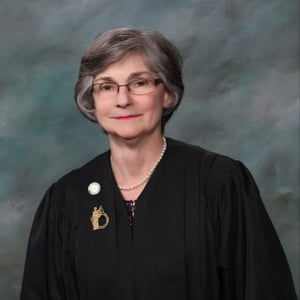
Judge, United States Court of Appeals, Fifth Circuit
Edith Jones graduated from Alamo Heights High School, where she was a National Merit Scholar. In 1971, she received her B.A. in Economics from Cornell University, graduating with honors. In 1974, she was awarded her J.D. at the University of Texas Law School, where she was a law review editor and received the Order of the Coif.
Judge Jones was the first female partner at Andrews, Kurth, Campbell & Jones (now Hunton Andrews Kurth) where she practiced various types of litigation and bankruptcy cases. Judge Jones went on the federal bench on June 1, 1985.
Judge Jones served as a former member of the National Bankruptcy Review Commission, and as a member of the Judicial Conference Commission on Bankruptcy Rules. Judge Jones served on the White House Fellows Commission. Judge Jones served on the board of the Sam Houston Area Council of the Boy Scouts of America. She has been a member of the Garland Walker Inn of Court in Houston for more than 20 years and its President for at least ten years. Judge Jones is also on the Board of the Calvin Coolidge Presidential Foundation.

Judge, U.S. Court of Appeals for the Third Circuit
Hon. Jennifer Mascott served as Associate Professor of Law and Director of the Separation of Powers Institute at The Catholic University of America’s Columbus School of Law before her appointment to the federal bench. On July 16, 2025, President Donald J. Trump nominated her to the U.S. Court of Appeals for the Third Circuit (Delaware), and she was confirmed on October 9, 2025.
Prior to her confirmation, Judge Mascott wrote extensively in administrative and constitutional law, statutory interpretation, and the separation of powers. Her scholarship—published in leading journals including the Stanford Law Review, Notre Dame Law Review, and Supreme Court Review—was cited by the U.S. Supreme Court and multiple federal courts. She also contributed Supreme Court commentary for NBC Universal.
Before joining Catholic Law, she was an Assistant Professor and Co-Director of The C. Boyden Gray Center at George Mason University’s Antonin Scalia Law School. In 2022 she became co-author of Beermann, Cass & Diver’s Administrative Law: Cases and Materials (9th ed.). In 2023 she received the Justice Joseph Story Award for excellence in scholarship, teaching, and advancing the rule of law.
Judge Mascott also served as a Council Member of the ABA’s Administrative Law Section and as a Public Member of the Administrative Conference of the United States. She frequently testified before Congress on executive power, regulatory reform, and judicial jurisdiction, and participated in multiple Supreme Court confirmation hearings.
From 2019 to 2021, she took leave from academia to serve as Deputy Assistant Attorney General in the Department of Justice’s Office of Legal Counsel and later as Associate Deputy Attorney General, where she argued federal cases and assisted with Justice Amy Coney Barrett’s confirmation. Earlier in her career, she clerked for Justice Clarence Thomas and for then-Judge Brett M. Kavanaugh on the D.C. Circuit.
Judge Mascott earned her J.D. summa cum laude from the George Washington University Law School and her B.A. from the same institution.
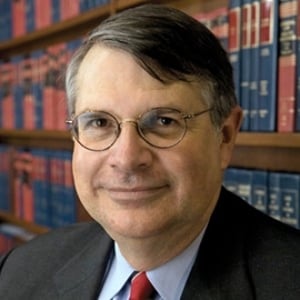
Charles Evans Hughes Professor of Law, Columbia Law School
THOMAS W. MERRILL is the Charles Evans Hughes Professor of Law at Columbia Law School. He previously taught at Northwestern University School of Law and Yale Law School. He has undergraduate degrees from Grinnell College and Oxford University, where he studied as a Rhodes Scholar, and a law degree from the University of Chicago. He clerked on the D.C. Circuit (for Chief Judge David Bazelon) and the U.S. Supreme Court (for Justice Harry Blackmun). From 1987-1990 he served as Deputy Solicitor General, U.S. Department of Justice. Professor Merrill’s writings related to property include Property: Principles and Policies (Foundation Press Second Edition, 2012) (with Henry E. Smith); Property: The Oxford Introductions to U.S. Law (Oxford U. Press, 2010); Property: Takings (Foundation Press, 2002)(with David Dana); and numerous articles, including “The Economics of Public Use” (Cornell Law Review 1986); “The Landscape of Constitutional Property” (Virginia Law Review 2000); and “The Character of the Governmental Action” (Vermont Law Review 2012). He is a member of the American Academy of Arts and Sciences.
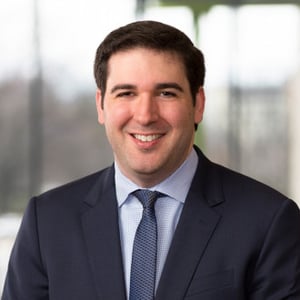
Jones Day, Partner
Yaakov Roth's goal is to strategically develop and effectively present the key legal arguments that will secure victory for clients through appellate advocacy and dispositive motions. He has represented clients in high-profile Supreme Court cases, argued appeals in the federal Courts of Appeals, and prepared motions to dismiss and for summary judgment across a range of substantive areas.
Yaakov's most recent Supreme Court experience includes vindicating former Virginia Gov. Bob McDonnell from political corruption charges, narrowing the geographic scope of private civil RICO lawsuits, and pursuing a major challenge to the Affordable Care Act from inception through high court review. At the appellate level, Yaakov's oral advocacy has included pressing a First Amendment challenge to an Ohio law prohibiting "false" campaign statements, seeking disclosure of a Justice Department policy manual concerning criminal discovery, and protecting the religious freedom rights of Death Row inmates. He has successfully defended his clients against defamation, antitrust, Title VII, and ERISA claims — including nationwide class actions — and pursued a host of challenges to federal, state, and local regulations. His ERISA experience also includes a series of withdrawal liability arbitrations and related litigation.
Yaakov speaks and writes about the Supreme Court and First Amendment issues and maintains an active pro bono practice centered around religious freedom and criminal justice.
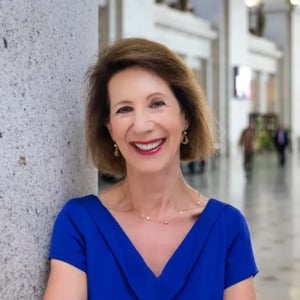
Distinguished Fellow, Energy Policy Research Foundation
Diana Furchtgott-Roth, an Oxford-educated economist, is an Adjunct Professor at George Washington University and a Distinguished Fellow at the Energy Policy Research Foundation. She writes and comments regularly on energy, trade law, tariff authority, and regulatory policy, including recent work on Section 301 and executive trade power. From 2022 until February 2026, Diana headed the Center for Energy, Climate, and Environment at The Heritage Foundation. In President Trump's first term, she was Deputy Assistant Secretary for Research and Technology at the U.S. Department of Transportation and Acting Assistant Secretary for Economic Policy at the U.S. Department of Treasury. She served in the White House under Presidents Reagan, George H.W. Bush, and George W. Bush, including as Chief of Staff of the President's Council of Economic Advisers and Chief Economist of the U.S. Department of Labor, and has testified before Congress on economic and regulatory policy. Diana is the author or coauthor of six books, including Regulating to Disaster, and hundreds of articles in The Wall Street Journal, The Washington Post, The New York Times, National Review, Forbes, the UK’s Daily Telegraph and the New York Post.
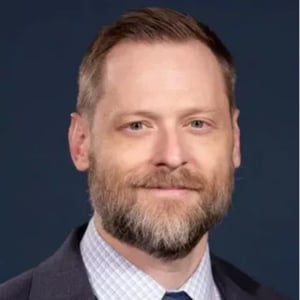
Litigation Director, Center for Individual Rights
Caleb Kruckenberg is CIR’s Litigation Director.
Caleb previously worked as a prosecutor, a public defender, a lobbyist for a national advocacy organization and, most recently, an impact litigator protecting the separation of powers at both the Pacific Legal Foundation and the New Civil Liberties Alliance. He has won major victories against numerous federal agencies, including the U.S. Department of Justice, Department of Labor, Bureau of Alcohol Tobacco and Firearms, and the Securities and Exchange Commission. He is also proud to have sued every U.S. attorney general, eight so far, since he has been litigating against the government on behalf of liberty-minded clients. Caleb has also argued more than 20 times in the U.S. Courts of Appeals, winning cases in 8 of the 12 regional circuit courts.
He graduated cum laude from Temple University Beasley School of Law in Philadelphia, where he was the lead articles editor for the Temple Law Review. Caleb also attended the Pennsylvania Academy of the Fine Arts, where he studied figurative painting.
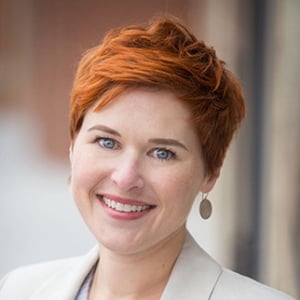
Senior Fellow, American Enterprise Institute
Elizabeth “Beth” Akers is a senior fellow at the American Enterprise Institute (AEI), where she focuses on the economics of higher education. Before joining AEI, she worked as a senior fellow at the Manhattan Institute, a visiting research scholar at the Federal Reserve Board, a fellow at Brookings Institution, and a staff economist at the Council of Economic Advisers under President George W. Bush.
Dr. Akers is the coauthor of Game of Loans: The Rhetoric and Reality of Student Debt (Princeton University Press, 2016) and the coauthor of the chapter “Understanding Changes in the Distribution of Student Loan Debt over Time” in Student Loans and the Dynamics of Debt (Upjohn Institute Press, 2015).
She has testified before Congress, and her writing and research have been published or featured in Bloomberg View, Boston Globe, E21 Manhattan Institute, Education Next, New York Daily News, New York Post, Newsweek, Quartz, Time, The Hill, The New York Times, The Wall Street Journal, The Washington Post, and USA Today, among others. Her broadcast appearances include ABC News, Bloomberg Television, C-SPAN, and CNBC.
Dr. Akers has a PhD in economics from Columbia University and a BS in mathematics and economics from the State University of New York at Albany.
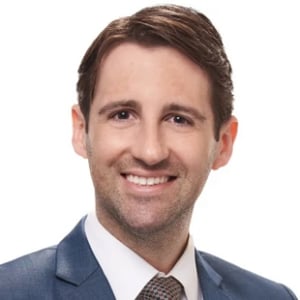
Senior Policy Advisor, EducationCounsel
Nathan Arnold previously served as Chief of Staff to the Acting Under Secretary and Senior Policy Advisor in the Office of Postsecondary Education at the U.S. Department of Education. In those capacities he directed high-stakes policy initiatives, providing insight and guidance to the Under Secretary and Secretary of Education in the Obama and Trump Administrations. He helped lead the most recent administration transition in the Department, ensuring the continued delivery of Department services to the higher education community and briefing incoming officials on time-sensitive decisions. He oversaw cross-agency teams in developing legislative proposals and new regulations governing over $1 trillion in federal student aid, leading to the creation and implementation of several federal regulations including new income-driven repayment plans, credit standards for parent PLUS and grad PLUS loans, campus debit and prepaid card rules, and provisions governing borrower defense to repayment. He led the Department's interagency task force on proprietary education and oversaw the Department's efforts supporting borrowers attending closed schools following the closure of Corinthian Colleges, Inc. and ITT Technical Institute, among others.
He began his career at the Department in the Office of Legislation and Congressional Affairs, preparing senior Department officials for Congressional hearings and building relationships with legislative staff to advance Department policy. He holds a Bachelor's Degree from the University of Wisconsin-Madison and a Juris Doctor from the University of Virginia.

Vice President, Center on Education Data and Policy at the Urban Institute
Matthew M. Chingos directs the Center on Education Data and Policy at the Urban Institute. He leads a team of scholars who undertake policy-relevant research on issues from prekindergarten through postsecondary education and create tools such as Urban’s Education Data Portal.
Chingos is coauthor of Game of Loans: The Rhetoric and Reality of Student Debt and Crossing the Finish Line: Completing College at America’s Public Universities. He has testified before Congress, and his work has been featured in media outlets such as the New York Times, the Washington Post, and NPR.
Before joining Urban, Chingos was a senior fellow at the Brookings Institution. He received a BA in government and economics and a PhD in government from Harvard University.

Senior Fellow, Foundation for Research on Equal Opportunity
Preston Cooper is a senior fellow in higher education policy at the Foundation for Research on Equal Opportunity (FREOPP), where his research focuses on the federal student loan program and the cost and value of college. He is the author of the report Is College Worth It? A Comprehensive Return on Investment Analysis, which calculated net financial returns for nearly 30,000 bachelor's degrees. His writing has appeared in the Wall Street Journal, the New York Times, the Washington Post, and several other national outlets. He is also a regular contributor to Forbes.
Prior to joining FREOPP, Preston studied higher education policy at the American Enterprise Institute and the Manhattan Institute. He lives in Alexandria, Virginia.
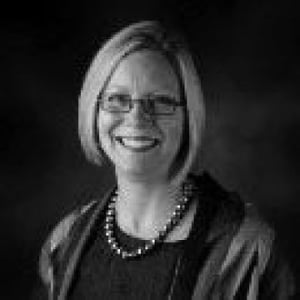
Former principal deputy under secretary, U.S. Department of Education
Diane Auer Jones recently retired from a thirty-year career as an educator, scientist, administrator, and public policy official. Although she began her career as a nursing assistant, upon completion of undergraduate and graduate degrees in biology and applied molecular biology, she worked as a molecular biology research and later as the founding director of an EPA-certified analytical chemistry laboratory. Through an adjunct faculty position at the Community College of Baltimore County (CCBC), she realized that working with students was her true passion and she joined the full-time faculty at CCBC. Over the course of her career, her work in higher education also included leadership positions at Princeton University, The Washington Campus and Career Education Corporation. Despite her passion for teaching, after serving as a program director at the National Science Foundation, Diane’s career focus shifted to science and education policy. She subsequently served as a professional staffer and acting staff director for the Research Subcommittee of the House Committee on Science and Technology and as the deputy to the associate director for science at the White House Office of Science and Technology Policy. She was nominated by President George W. Bush, and confirmed by the Senate, to serve as the assistant secretary for post-secondary education at the U.S. Department of Education. She returned to the U.S. Department of Education to conclude her career, serving as the principal deputy undersecretary delegated the duties of undersecretary during the Donald J. Trump administration.
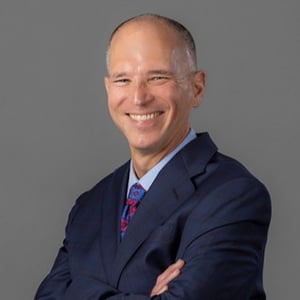
George Mason University Foundation Professor of Law, Antonin Scalia Law School, George Mason University
TODD J. ZYWICKI is George Mason University Foundation Professor of Law at Antonin Scalia Law School at George Mason University and Research Fellow of the George Mason Law and Economics Center. During the Fall 2023 semester he served as the Visiting Scholar in Conservative Thought and Policy for the Bruce Benson Center for the Study of Western Civilization at the University of Colorado-Boulder. From 2020-2021 he was Chair of the Consumer Financial Protection Bureau Taskforce on Federal Consumer Financial Law. In 2021 he was inducted to the American College of Consumer Financial Services Lawyers. He is also a Senior Fellow of the F.A. Hayek Program for the Advanced Study of Politics, Philosophy, and Economics at George Mason University and a former Senior Fellow of the Cato Institute. From 2015-2017 he was Executive Director of the George Mason Law and Economics Center. He served as Co-Editor of the Supreme Court Economic Review from 2006-2017. From 2003-2004, Professor Zywicki served as the Director of the Office of Policy Planning at the Federal Trade Commission. He has also taught at Vanderbilt University Law School, Georgetown University Law Center, Boston College Law School, Mississippi College School of Law, and China University of Political Science and Law.
Professor Zywicki clerked for Judge Jerry E. Smith of the U.S. Court of Appeals for the Fifth Circuit and worked as an associate at Alston & Bird in Atlanta, Georgia, where he practiced bankruptcy and commercial law. He received his J.D. from the University of Virginia, where he was executive editor of the Virginia Tax Review and John M. Olin Scholar in Law and Economics. Professor Zywicki also received an M.A. in Economics from Clemson University and an A.B. cum Laude with high honors in his major from Dartmouth College.
Professor Zywicki is also a Lone Mountain Fellow of the Property and Environment Research Center, a Fellow of the International Centre for Economic Research in Turin, Italy, and a former Senior Fellow of the Goldwater Institute. During the Fall 2008 Semester Professor Zywicki was the Searle Fellow of the George Mason University School of Law and was a 2008-09 W. Glenn Campbell and Rita Ricardo-Campbell National Fellow and the Arch W. Shaw National Fellow at the Hoover Institution on War, Revolution and Peace. He has lectured and consulted with government officials around the world, including Iceland, Italy, Japan, and Guatemala. In 2006 Professor Zywicki served as a Member of the United States Department of Justice Study Group on “Identifying Fraud, Abuse and Errors in the United States Bankruptcy System.”
Professor Zywicki is the author of more than 130 articles in leading law reviews and peer-reviewed economics journals. He is one of the Top 10 most-cited law professors in the field of Commercial Law and one of the Top 25 law professors on Twitter as measured by engagement levels. He is one of the Top 50 Most Downloaded Law Authors at the Social Science Research Network. He has testified multiple times before Congress on issues of consumer bankruptcy law and consumer credit and is a frequent commentator on legal issues in the print and broadcast media, including the Wall Street Journal, New York Times, The Washington Post, The Washington Times, Nightline, The Newshour with Jim Lehrer, Neil Cavuto Show, Fox & Friends, Smerconish, Fox News @ Night with Shannon Bream, Fox Business, CNN, CNBC, Bloomberg News, BBC, The Diane Rehm Show, Lou Dobbs Show, Jerry Doyle Show, and The Laura Ingraham Show.
Professor Zywicki is former Chairman and a current member of the Board of Directors of the Competitive Enterprise Institute, and is a member of the Board of Directors of the Institute for Humane Studies, Bill of Rights Institute, the Executive Committee for the Federalist Society's Financial Institutions and E-Commerce Practice Group, the Board of Trustees of the Foundation for Research on Economics and the Environment. He formerly served on the Governing Board and the Advisory Council for the Financial Services Research Program at George Washington University School of Business. He is currently the Chair of the Academic Advisory Council for the following organizations: The Bill of Rights Institute, the film “We the People in IMAX,” and the McCormick-Tribune Foundation “Freedom Museum” in Chicago, Illinois. He is a member of the Board of Visitors of Ralston College and was a member of the Board of Trustees of Yorktown University. From 2005-2009 he served as an elected Alumni Trustee of the Dartmouth College Board of Trustees.
Distinguished Fellow, Energy Policy Research Foundation
Diana Furchtgott-Roth, an Oxford-educated economist, is an Adjunct Professor at George Washington University and a Distinguished Fellow at the Energy Policy Research Foundation. She writes and comments regularly on energy, trade law, tariff authority, and regulatory policy, including recent work on Section 301 and executive trade power. From 2022 until February 2026, Diana headed the Center for Energy, Climate, and Environment at The Heritage Foundation. In President Trump's first term, she was Deputy Assistant Secretary for Research and Technology at the U.S. Department of Transportation and Acting Assistant Secretary for Economic Policy at the U.S. Department of Treasury. She served in the White House under Presidents Reagan, George H.W. Bush, and George W. Bush, including as Chief of Staff of the President's Council of Economic Advisers and Chief Economist of the U.S. Department of Labor, and has testified before Congress on economic and regulatory policy. Diana is the author or coauthor of six books, including Regulating to Disaster, and hundreds of articles in The Wall Street Journal, The Washington Post, The New York Times, National Review, Forbes, the UK’s Daily Telegraph and the New York Post.
Litigation Director, Center for Individual Rights
Caleb Kruckenberg is CIR’s Litigation Director.
Caleb previously worked as a prosecutor, a public defender, a lobbyist for a national advocacy organization and, most recently, an impact litigator protecting the separation of powers at both the Pacific Legal Foundation and the New Civil Liberties Alliance. He has won major victories against numerous federal agencies, including the U.S. Department of Justice, Department of Labor, Bureau of Alcohol Tobacco and Firearms, and the Securities and Exchange Commission. He is also proud to have sued every U.S. attorney general, eight so far, since he has been litigating against the government on behalf of liberty-minded clients. Caleb has also argued more than 20 times in the U.S. Courts of Appeals, winning cases in 8 of the 12 regional circuit courts.
He graduated cum laude from Temple University Beasley School of Law in Philadelphia, where he was the lead articles editor for the Temple Law Review. Caleb also attended the Pennsylvania Academy of the Fine Arts, where he studied figurative painting.
Distinguished Fellow, Energy Policy Research Foundation
Diana Furchtgott-Roth, an Oxford-educated economist, is an Adjunct Professor at George Washington University and a Distinguished Fellow at the Energy Policy Research Foundation. She writes and comments regularly on energy, trade law, tariff authority, and regulatory policy, including recent work on Section 301 and executive trade power. From 2022 until February 2026, Diana headed the Center for Energy, Climate, and Environment at The Heritage Foundation. In President Trump's first term, she was Deputy Assistant Secretary for Research and Technology at the U.S. Department of Transportation and Acting Assistant Secretary for Economic Policy at the U.S. Department of Treasury. She served in the White House under Presidents Reagan, George H.W. Bush, and George W. Bush, including as Chief of Staff of the President's Council of Economic Advisers and Chief Economist of the U.S. Department of Labor, and has testified before Congress on economic and regulatory policy. Diana is the author or coauthor of six books, including Regulating to Disaster, and hundreds of articles in The Wall Street Journal, The Washington Post, The New York Times, National Review, Forbes, the UK’s Daily Telegraph and the New York Post.
Litigation Director, Center for Individual Rights
Caleb Kruckenberg is CIR’s Litigation Director.
Caleb previously worked as a prosecutor, a public defender, a lobbyist for a national advocacy organization and, most recently, an impact litigator protecting the separation of powers at both the Pacific Legal Foundation and the New Civil Liberties Alliance. He has won major victories against numerous federal agencies, including the U.S. Department of Justice, Department of Labor, Bureau of Alcohol Tobacco and Firearms, and the Securities and Exchange Commission. He is also proud to have sued every U.S. attorney general, eight so far, since he has been litigating against the government on behalf of liberty-minded clients. Caleb has also argued more than 20 times in the U.S. Courts of Appeals, winning cases in 8 of the 12 regional circuit courts.
He graduated cum laude from Temple University Beasley School of Law in Philadelphia, where he was the lead articles editor for the Temple Law Review. Caleb also attended the Pennsylvania Academy of the Fine Arts, where he studied figurative painting.
Senior Fellow, American Enterprise Institute
Elizabeth “Beth” Akers is a senior fellow at the American Enterprise Institute (AEI), where she focuses on the economics of higher education. Before joining AEI, she worked as a senior fellow at the Manhattan Institute, a visiting research scholar at the Federal Reserve Board, a fellow at Brookings Institution, and a staff economist at the Council of Economic Advisers under President George W. Bush.
Dr. Akers is the coauthor of Game of Loans: The Rhetoric and Reality of Student Debt (Princeton University Press, 2016) and the coauthor of the chapter “Understanding Changes in the Distribution of Student Loan Debt over Time” in Student Loans and the Dynamics of Debt (Upjohn Institute Press, 2015).
She has testified before Congress, and her writing and research have been published or featured in Bloomberg View, Boston Globe, E21 Manhattan Institute, Education Next, New York Daily News, New York Post, Newsweek, Quartz, Time, The Hill, The New York Times, The Wall Street Journal, The Washington Post, and USA Today, among others. Her broadcast appearances include ABC News, Bloomberg Television, C-SPAN, and CNBC.
Dr. Akers has a PhD in economics from Columbia University and a BS in mathematics and economics from the State University of New York at Albany.
Vice President, Center on Education Data and Policy at the Urban Institute
Matthew M. Chingos directs the Center on Education Data and Policy at the Urban Institute. He leads a team of scholars who undertake policy-relevant research on issues from prekindergarten through postsecondary education and create tools such as Urban’s Education Data Portal.
Chingos is coauthor of Game of Loans: The Rhetoric and Reality of Student Debt and Crossing the Finish Line: Completing College at America’s Public Universities. He has testified before Congress, and his work has been featured in media outlets such as the New York Times, the Washington Post, and NPR.
Before joining Urban, Chingos was a senior fellow at the Brookings Institution. He received a BA in government and economics and a PhD in government from Harvard University.
Senior Fellow, Foundation for Research on Equal Opportunity
Preston Cooper is a senior fellow in higher education policy at the Foundation for Research on Equal Opportunity (FREOPP), where his research focuses on the federal student loan program and the cost and value of college. He is the author of the report Is College Worth It? A Comprehensive Return on Investment Analysis, which calculated net financial returns for nearly 30,000 bachelor's degrees. His writing has appeared in the Wall Street Journal, the New York Times, the Washington Post, and several other national outlets. He is also a regular contributor to Forbes.
Prior to joining FREOPP, Preston studied higher education policy at the American Enterprise Institute and the Manhattan Institute. He lives in Alexandria, Virginia.
Former principal deputy under secretary, U.S. Department of Education
Diane Auer Jones recently retired from a thirty-year career as an educator, scientist, administrator, and public policy official. Although she began her career as a nursing assistant, upon completion of undergraduate and graduate degrees in biology and applied molecular biology, she worked as a molecular biology research and later as the founding director of an EPA-certified analytical chemistry laboratory. Through an adjunct faculty position at the Community College of Baltimore County (CCBC), she realized that working with students was her true passion and she joined the full-time faculty at CCBC. Over the course of her career, her work in higher education also included leadership positions at Princeton University, The Washington Campus and Career Education Corporation. Despite her passion for teaching, after serving as a program director at the National Science Foundation, Diane’s career focus shifted to science and education policy. She subsequently served as a professional staffer and acting staff director for the Research Subcommittee of the House Committee on Science and Technology and as the deputy to the associate director for science at the White House Office of Science and Technology Policy. She was nominated by President George W. Bush, and confirmed by the Senate, to serve as the assistant secretary for post-secondary education at the U.S. Department of Education. She returned to the U.S. Department of Education to conclude her career, serving as the principal deputy undersecretary delegated the duties of undersecretary during the Donald J. Trump administration.
George Mason University Foundation Professor of Law, Antonin Scalia Law School, George Mason University
TODD J. ZYWICKI is George Mason University Foundation Professor of Law at Antonin Scalia Law School at George Mason University and Research Fellow of the George Mason Law and Economics Center. During the Fall 2023 semester he served as the Visiting Scholar in Conservative Thought and Policy for the Bruce Benson Center for the Study of Western Civilization at the University of Colorado-Boulder. From 2020-2021 he was Chair of the Consumer Financial Protection Bureau Taskforce on Federal Consumer Financial Law. In 2021 he was inducted to the American College of Consumer Financial Services Lawyers. He is also a Senior Fellow of the F.A. Hayek Program for the Advanced Study of Politics, Philosophy, and Economics at George Mason University and a former Senior Fellow of the Cato Institute. From 2015-2017 he was Executive Director of the George Mason Law and Economics Center. He served as Co-Editor of the Supreme Court Economic Review from 2006-2017. From 2003-2004, Professor Zywicki served as the Director of the Office of Policy Planning at the Federal Trade Commission. He has also taught at Vanderbilt University Law School, Georgetown University Law Center, Boston College Law School, Mississippi College School of Law, and China University of Political Science and Law.
Professor Zywicki clerked for Judge Jerry E. Smith of the U.S. Court of Appeals for the Fifth Circuit and worked as an associate at Alston & Bird in Atlanta, Georgia, where he practiced bankruptcy and commercial law. He received his J.D. from the University of Virginia, where he was executive editor of the Virginia Tax Review and John M. Olin Scholar in Law and Economics. Professor Zywicki also received an M.A. in Economics from Clemson University and an A.B. cum Laude with high honors in his major from Dartmouth College.
Professor Zywicki is also a Lone Mountain Fellow of the Property and Environment Research Center, a Fellow of the International Centre for Economic Research in Turin, Italy, and a former Senior Fellow of the Goldwater Institute. During the Fall 2008 Semester Professor Zywicki was the Searle Fellow of the George Mason University School of Law and was a 2008-09 W. Glenn Campbell and Rita Ricardo-Campbell National Fellow and the Arch W. Shaw National Fellow at the Hoover Institution on War, Revolution and Peace. He has lectured and consulted with government officials around the world, including Iceland, Italy, Japan, and Guatemala. In 2006 Professor Zywicki served as a Member of the United States Department of Justice Study Group on “Identifying Fraud, Abuse and Errors in the United States Bankruptcy System.”
Professor Zywicki is the author of more than 130 articles in leading law reviews and peer-reviewed economics journals. He is one of the Top 10 most-cited law professors in the field of Commercial Law and one of the Top 25 law professors on Twitter as measured by engagement levels. He is one of the Top 50 Most Downloaded Law Authors at the Social Science Research Network. He has testified multiple times before Congress on issues of consumer bankruptcy law and consumer credit and is a frequent commentator on legal issues in the print and broadcast media, including the Wall Street Journal, New York Times, The Washington Post, The Washington Times, Nightline, The Newshour with Jim Lehrer, Neil Cavuto Show, Fox & Friends, Smerconish, Fox News @ Night with Shannon Bream, Fox Business, CNN, CNBC, Bloomberg News, BBC, The Diane Rehm Show, Lou Dobbs Show, Jerry Doyle Show, and The Laura Ingraham Show.
Professor Zywicki is former Chairman and a current member of the Board of Directors of the Competitive Enterprise Institute, and is a member of the Board of Directors of the Institute for Humane Studies, Bill of Rights Institute, the Executive Committee for the Federalist Society's Financial Institutions and E-Commerce Practice Group, the Board of Trustees of the Foundation for Research on Economics and the Environment. He formerly served on the Governing Board and the Advisory Council for the Financial Services Research Program at George Washington University School of Business. He is currently the Chair of the Academic Advisory Council for the following organizations: The Bill of Rights Institute, the film “We the People in IMAX,” and the McCormick-Tribune Foundation “Freedom Museum” in Chicago, Illinois. He is a member of the Board of Visitors of Ralston College and was a member of the Board of Trustees of Yorktown University. From 2005-2009 he served as an elected Alumni Trustee of the Dartmouth College Board of Trustees.
Senior Policy Advisor, EducationCounsel
Nathan Arnold previously served as Chief of Staff to the Acting Under Secretary and Senior Policy Advisor in the Office of Postsecondary Education at the U.S. Department of Education. In those capacities he directed high-stakes policy initiatives, providing insight and guidance to the Under Secretary and Secretary of Education in the Obama and Trump Administrations. He helped lead the most recent administration transition in the Department, ensuring the continued delivery of Department services to the higher education community and briefing incoming officials on time-sensitive decisions. He oversaw cross-agency teams in developing legislative proposals and new regulations governing over $1 trillion in federal student aid, leading to the creation and implementation of several federal regulations including new income-driven repayment plans, credit standards for parent PLUS and grad PLUS loans, campus debit and prepaid card rules, and provisions governing borrower defense to repayment. He led the Department's interagency task force on proprietary education and oversaw the Department's efforts supporting borrowers attending closed schools following the closure of Corinthian Colleges, Inc. and ITT Technical Institute, among others.
He began his career at the Department in the Office of Legislation and Congressional Affairs, preparing senior Department officials for Congressional hearings and building relationships with legislative staff to advance Department policy. He holds a Bachelor's Degree from the University of Wisconsin-Madison and a Juris Doctor from the University of Virginia.

The Major Questions Doctrine: West Virginia v. EPA
National Lawyers Conference 2022
Washington, DCLitigation Update: Garrison v. U.S. Dept. of Ed.: A Challenge to Biden’s Student Loan Forgiveness
Diana Furchtgott-Roth, Caleb Kruckenberg
In August 2022, the Biden administration announced plans to cancel up to $20,000 in student...
Litigation Update: Garrison v. U.S. Dept. of Ed.: A Challenge to Biden’s Student Loan Forgiveness
Diana Furchtgott-Roth, Caleb Kruckenberg
In August 2022, the Biden administration announced plans to cancel up to $20,000 in student...
Litigation Update: Garrison v. U.S. Dept. of Ed.: A Challenge to Biden’s Student Loan Forgiveness
TeleforumThe Title IV Program: Time for a New Approach to Federal Student Loans?
Elizabeth Akers, Matthew Chingos, Preston Cooper, Diane A. Jones, Todd J. Zywicki, Nathan Arnold
Featuring: Elizabeth Akers, Senior Fellow, American Enterprise Institute Matt Chingos, Vice President, Urban Institute Preston Cooper,...
The Title IV Program: Time for a New Approach to Federal Student Loans?
Education Law & Policy Conference
Washington, DCEducation Law & Policy Conference
Co-Sponsored by the Defense of Freedom Institute for Policy Studies
Washington, DCTopics
ABA 2022 Annual Meeting
The American Bar Association recently held its 2022 Annual Meeting in Chicago, Illinois. The event included...
Topics
Religious Liberty Update on Congressional and Executive Branch Actions
Congress On July 19, 2022, the U.S. House of Representatives passed the “Respect for Marriage...
Topics
Department of Education Proposes Title IX Rule with Opportunity for Public Comment
In line with the Biden administration’s equity and gender identity policy priorities, the Department of...