
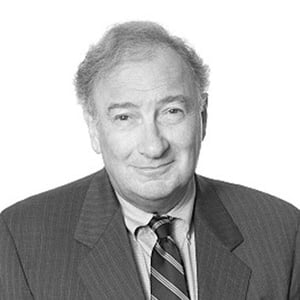
Retired, Winston & Strawn LLP
Jerry Loeser is of counsel in the Chicago office of Winston & Strawn, and his practice focuses on banking regulation. He has extensive experience in counseling financial services clients on, among other things, bank acquisitions, privacy, financial modernization, the USA PATRIOT Act, Basel II and III, lending limits, capital, trust, affiliate transactions, and Federal Reserve, OCC, FDIC, and CFPB regulations.
Prior to working at large corporate law firms, Jerry was chief regulatory and compliance counsel for Comerica Bank, where he also served as senior vice president and deputy general counsel and as general counsel of its retail bank division. Before that, he served as chief regulatory in-house counsel at Wells Fargo & Co. Jerry began his legal career advising the Board of Governors of the Federal Reserve System in Washington, D.C.
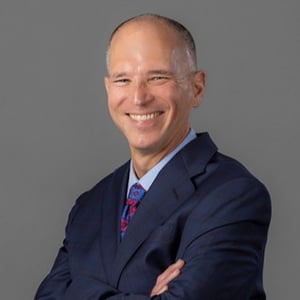
George Mason University Foundation Professor of Law, Antonin Scalia Law School, George Mason University
TODD J. ZYWICKI is George Mason University Foundation Professor of Law at Antonin Scalia Law School at George Mason University and Research Fellow of the George Mason Law and Economics Center. During the Fall 2023 semester he served as the Visiting Scholar in Conservative Thought and Policy for the Bruce Benson Center for the Study of Western Civilization at the University of Colorado-Boulder. From 2020-2021 he was Chair of the Consumer Financial Protection Bureau Taskforce on Federal Consumer Financial Law. In 2021 he was inducted to the American College of Consumer Financial Services Lawyers. He is also a Senior Fellow of the F.A. Hayek Program for the Advanced Study of Politics, Philosophy, and Economics at George Mason University and a former Senior Fellow of the Cato Institute. From 2015-2017 he was Executive Director of the George Mason Law and Economics Center. He served as Co-Editor of the Supreme Court Economic Review from 2006-2017. From 2003-2004, Professor Zywicki served as the Director of the Office of Policy Planning at the Federal Trade Commission. He has also taught at Vanderbilt University Law School, Georgetown University Law Center, Boston College Law School, Mississippi College School of Law, and China University of Political Science and Law.
Professor Zywicki clerked for Judge Jerry E. Smith of the U.S. Court of Appeals for the Fifth Circuit and worked as an associate at Alston & Bird in Atlanta, Georgia, where he practiced bankruptcy and commercial law. He received his J.D. from the University of Virginia, where he was executive editor of the Virginia Tax Review and John M. Olin Scholar in Law and Economics. Professor Zywicki also received an M.A. in Economics from Clemson University and an A.B. cum Laude with high honors in his major from Dartmouth College.
Professor Zywicki is also a Lone Mountain Fellow of the Property and Environment Research Center, a Fellow of the International Centre for Economic Research in Turin, Italy, and a former Senior Fellow of the Goldwater Institute. During the Fall 2008 Semester Professor Zywicki was the Searle Fellow of the George Mason University School of Law and was a 2008-09 W. Glenn Campbell and Rita Ricardo-Campbell National Fellow and the Arch W. Shaw National Fellow at the Hoover Institution on War, Revolution and Peace. He has lectured and consulted with government officials around the world, including Iceland, Italy, Japan, and Guatemala. In 2006 Professor Zywicki served as a Member of the United States Department of Justice Study Group on “Identifying Fraud, Abuse and Errors in the United States Bankruptcy System.”
Professor Zywicki is the author of more than 130 articles in leading law reviews and peer-reviewed economics journals. He is one of the Top 10 most-cited law professors in the field of Commercial Law and one of the Top 25 law professors on Twitter as measured by engagement levels. He is one of the Top 50 Most Downloaded Law Authors at the Social Science Research Network. He has testified multiple times before Congress on issues of consumer bankruptcy law and consumer credit and is a frequent commentator on legal issues in the print and broadcast media, including the Wall Street Journal, New York Times, The Washington Post, The Washington Times, Nightline, The Newshour with Jim Lehrer, Neil Cavuto Show, Fox & Friends, Smerconish, Fox News @ Night with Shannon Bream, Fox Business, CNN, CNBC, Bloomberg News, BBC, The Diane Rehm Show, Lou Dobbs Show, Jerry Doyle Show, and The Laura Ingraham Show.
Professor Zywicki is former Chairman and a current member of the Board of Directors of the Competitive Enterprise Institute, and is a member of the Board of Directors of the Institute for Humane Studies, Bill of Rights Institute, the Executive Committee for the Federalist Society's Financial Institutions and E-Commerce Practice Group, the Board of Trustees of the Foundation for Research on Economics and the Environment. He formerly served on the Governing Board and the Advisory Council for the Financial Services Research Program at George Washington University School of Business. He is currently the Chair of the Academic Advisory Council for the following organizations: The Bill of Rights Institute, the film “We the People in IMAX,” and the McCormick-Tribune Foundation “Freedom Museum” in Chicago, Illinois. He is a member of the Board of Visitors of Ralston College and was a member of the Board of Trustees of Yorktown University. From 2005-2009 he served as an elected Alumni Trustee of the Dartmouth College Board of Trustees.
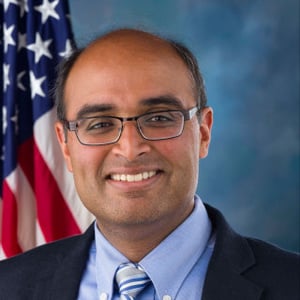
Consultant, American Edge Project and U.S. Chamber of Commerce
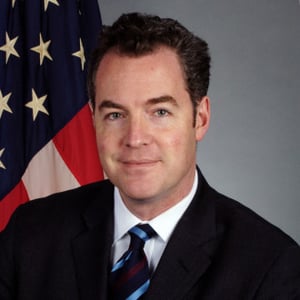
President and Founder, JKC Consulting LLC
John Kneuer is the President and Founder of JKC Consulting LLC. He sits on multiple public and private company boards.
Prior to starting Kneuer LLC, Mr. Kneuer served as the Assistant Secretary of Commerce for Communications and Information. In this capacity Mr. Kneuer was the principal advisor to the President of the United States on telecommunications policy and the Administrator of the National Telecommunications and Information Administration ("NTIA").In addition to representing the Executive Branch in domestic and international telecommunications and information policy activities, NTIA also manages the federal use of spectrum; performs cutting edge telecommunications research and engineering, including resolving technical telecommunications issues for the federal government and private sector; and administers infrastructure and public telecommunications facilities grants.
Prior to his service at NTIA, Mr. Kneuer served as a Senior Associate at the law firm of Piper Rudnick in Washington, D.C., providing regulatory and legislative representation to corporate clients in the telecommunications, defense, and transportation industries. Earlier in his career, Mr. Kneuer served as the Executive Director for Government Relations at the Industrial Telecommunications Association, and prior to that served as an Attorney-Advisor in the Commercial Wireless Division of the Federal Communications Commission's Wireless Bureau. Mr. Kneuer received B.A. and J.D. degrees from the Catholic University of America.

Senior Policy Director, Mobile Future
Rachael Bender is Senior Policy Director for Mobile Future, where she focuses on issues involving wireless technology, broadband, and spectrum. Prior to joining Mobile Future in 2011, Ms. Bender was a law clerk in the Department of Regulatory Affairs at CTIA – The Wireless Association. Ms. Bender graduated from the University of Maryland with a B.A. in Government & Politics, and from the Catholic University of America Columbus School of Law with a J.D. and certificate from the Institute for Communications Law Studies. During law school, she served as president of the Communications Law Student Association and competed in the National Telecommunications Moot Court Competition, for which she also served as Vice Chancellor during her third year. She is a member of the Pennsylvania and New Jersey Bars.
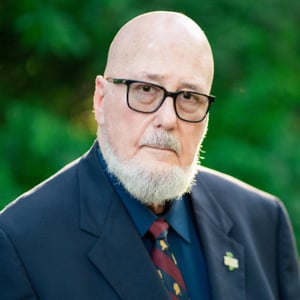
Senior Fellow, National Security Institute, Antonin Scalia School of Law, George Mason University; Retired Professor, Distinguished Fellow and Co-Founder, Center for National Security Law, University of Virginia School of Law (1987-2020)
Robert F. Turner holds both professional and academic doctorates from the University of Virginia School of Law. He co-founded the Center for National Security Law with Professor John Norton Moore in April 1981 and served as its associate director for 39 years, except for two periods of government service in the 1980s and during 1994-95, when he occupied the Charles H. Stockton Chair of International Law at the U.S. Naval War College in Newport, Rhode Island. He retired from UVA in January 2020 and currently serves as a non-resident senior fellow at the GMU National Security Institute. He also served briefly in 2020 as President of the Crime Prevention Research Center—one of the most respected pro-Second Amendment groups in the country—while its founder, Dr. John Lott, was on leave of absence.
A former Army captain and veteran of two tours in Vietnam, Turner served as a research associate and public affairs fellow at Stanford's Hoover Institution on War, Revolution and Peace before spending five years in the mid-1970s as national security adviser to U.S. Senator Robert P. Griffin, a member of the Senate Foreign Relations Committee (where Turner anticipated by seven years the Supreme Court’s landmark INS v. Chadha decision, striking down legislative vetoes). He also served in the executive branch during the Reagan administration as a member of the Senior Executive Service, first in the Pentagon as special assistant to the undersecretary of defense for policy, then in the White House as counsel to the President's Intelligence Oversight Board, and at the State Department as principal deputy and then acting assistant secretary for legislative affairs. In 1986, he became the first president of the congressionally established United States Institute of Peace.
A former three-term chairman of the ABA Standing Committee on Law and National Security (and for many years editor of the ABA National Security Law Report), Turner also chaired the Executive-Congressional Relations Subcommittee of the ABA Section on International Law and Practice and chaired or co-chaired the National Security Law Subcommittee of the Federalist Society’s International and National Security Law Practice Group for several years.
Turner taught undergraduate courses at Virginia on international law, U.S. foreign policy, the Vietnam War and foreign policy and the law in what is now the Woodrow Wilson Department of Politics. In addition, he co-taught National Security Law and advanced national security law seminars on the Indochina War and on war and peace with Moore at the Law School.
The author or editor of 18 books and monographs (including co-editor of the Center's 1,600-page National Security Law & Policy casebook, National Security Law Documents, and Legal Issues in the Struggle Against Terror) and numerous articles in law reviews and other professional journals, Turner has also contributed articles to most of the major U.S. newspapers, including The New York Times and USA Today. In an op-ed published in The International Herald Tribune in September 1990, he and Moore were the first to call for a war-crimes trial for Iraqi dictator Saddam Hussein and for international controls over Iraq's weapons of mass destruction, and the following month he wrote the lead story in The Washington Post Sunday Outlook Section, “Killing Saddam: Would It Be a Crime?,” arguing that Hussein would be a lawful target during Operation Desert Storm. (His reasoning contributed to the modern legal justification for drone strikes targeting specific terrorist leaders.) Three years before the terrorist attacks of September 11, 2001, Turner published an op-ed in USA Today entitled: “In Self-defense, U.S. Has Right to Kill bin Laden.”
In July 2007, he co-authored an article in The Washington Post with former U.S. Marine Corps Commandant General P.X. Kelley, “War Crimes and the White House,” criticizing the use of unlawful “enhanced interrogation techniques” by the Central Intelligence Agency. On the 40th anniversary of the fall of Saigon he authored an article in The Wall Street Journal, “Saigon’s Fall Still Echoes Today,” noting that after the war ended, Hanoi admitted it had made a decision in 1959 to open the Ho Chi Minh Trail and start sending troops, weapons and supplies into South Vietnam to overthrow its government — just as the United States had charged. In 2010 Turner received the first “person of the year” award from SACEI, a major Vietnamese-American human rights organization.
A frequent lecturer and debater, Turner has spoken at more than 100 law schools around the nation and in other fora — taking on as many as four opponents at a time. His debate opponents have included former or future deans of Yale, Stanford, the University of Chicago and Berkeley law schools. Following a 1987 debate against Dean Harlan Cleveland (Rhodes Scholar, U.S. Ambassador to NATO, and Presidential Medal of Freedom recipient) in which Turner defended the legality of U.S. support for the Nicaraguan contras during the Reagan Administration, the host student debating societies awarded Turner the victory by an 85-to-15 percent margin.
Turner has also written and lectured widely on University of Virginia founder and America’s third president Thomas Jefferson. In 2000-2001 he chaired the Jefferson-Hemings Scholars Commission. In his 2012 book Master of the Mountain, Jefferson critic Henry Wiencek described Turner as “Jefferson’s chief scholarly defender."
A former distinguished lecturer at the U.S. Military Academy at West Point, Turner is a member of the Council on Foreign Relations, the Academy of Political Science, the Committee on the Present Danger, The Heterodox Academy, and other professional organizations. He maintained a 4.0 gpa as a graduate student at Stanford in History and Political Science and in the UVA Department of Government and Foreign Affairs and was the first person admitted directly to the UVA academic law doctorate (SJD) program without first being required to earn an LL.M. master’s degree. He was selected for inclusion in Who’s Who in American Law less than two years after graduating from law school and Who’s Who in the World before he reached the age of 40. Turner has testified before more than a dozen different congressional committees on issues of international or constitutional law and other topics.
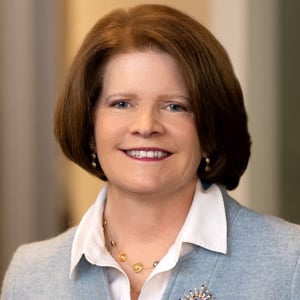
Partner, Antitrust and Competition, Wilson Sonsini Goodrich & Rosati
Maureen Ohlhausen is a partner in the Washington, D.C., office of Wilson Sonsini Goodrich & Rosati, where she advises industry-leading clients on complex antitrust and litigation matters, with a focus on high-profile cases. Sought after for her depth of experience on antitrust and Federal Trade Commission (FTC)-related issues, Maureen is known for her relationships with officials in the U.S. and abroad.
After finishing law school and clerking at the U.S. Court of Appeals for the D.C. Circuit, Maureen joined the FTC in 1997. She held a series of roles at the agency over the next 12 years, rising to the position of Director of the FTC Office of Policy Planning, where she led the agency’s work on e-commerce and headed the FTC’s Internet Access Task Force, which produced an influential report analyzing competition and consumer protection legal issues in the broadband and internet sectors. She then went into private practice at a leading telecommunications law firm, where she headed the FTC practice group.
In 2012, Maureen was confirmed by the Senate as a Commissioner of the FTC and was appointed Acting Chairman in January 2017, a role she held until May 2018. As Acting Chairman, Maureen directed all aspects of the agency’s antitrust work, including merger review, conduct enforcement, and all consumer protection enforcement, with an emphasis on privacy and technology issues. Under her leadership, the FTC won several influential merger challenges in court and reached a number of key digital privacy settlements.
To date, Maureen is the only FTC Commissioner to have received the Robert Pitofsky Lifetime Achievement Award in recognition of her contributions to the FTC.
Following the end of her term at the FTC, and immediately prior to joining Wilson Sonsini, Maureen was chair of the global antitrust and competition practice at Baker Botts, based in that firm’s Washington, D.C., office.
A recognized thought leader, Maureen is a frequent author and speaker, and is often quoted by leading print and broadcast media on antitrust, FTC, and privacy and data security matters. She has published dozens of articles on antitrust, privacy, intellectual property, regulation, FTC litigation, telecommunications, and international law issues in prestigious publications. During her tenure at the FTC and in private practice, she testified more than two dozen times before Congress, including before the Senate Commerce Committee and the House Energy and Commerce Antitrust Sub-Committee. She also testified before the Antitrust Modernization Commission.
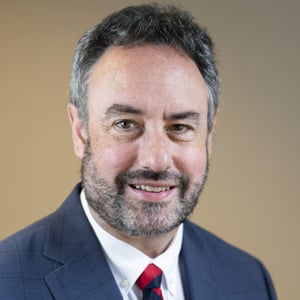
Research Director, Independence Institute
David B. Kopel is Research Director at the Independence Institute; Adjunct Scholar at the Cato Institute; and Senior Fellow at the University of Wyoming College of Law, Firearms Research Center. He received his B.A. in history with Highest Honors from Brown University and his J.D. magna cum laude from the University of Michigan Law School.
He is the author of over 20 books, including the textbook Firearm Law and the Second Amendment: Regulation, Rights, and Policy (Aspen Pubs. 4th ed. forthcoming 2026). His scholarship and briefs have been cited 7 Supreme Court cases--including Heller, McDonald, and Bruen--and in 140 lower courts opinions. He is the author of 120 scholarly articles. His shorter articles often appear on The Volokh Conspiracy blog, hosted by Reason magazine. His topics of interest include the right to arms throughout history, the Colorado Constitution, and law enforcement policy.
Investigative Counsel, U.S. House Committee on Education and the Workforce
Kent Talbert is a Washington, DC-based attorney with over 25 years’ experience in providing advice on education law and policy in Congress, the U.S. Department of Education, and the private sector. His practice includes legal and policy advice to colleges and universities, for-profit schools, accrediting agencies, the pre-K-12 sector, charter school organizations, trade associations, and education-focused companies, as well as service as an expert witness. He currently serves as Investigative Counsel, U.S. House Committee on Education and the Workforce.
Prior to establishing his firm, Mr. Talbert practiced at Talbert & Eitel, PLLC from 2010-2012. From 2006-2009 he served as General Counsel of the U.S. Department of Education, advising the Secretary of Education on a broad range of legal and policy matters, including the reauthorization of the Higher Education Act of 1965, the drafting and implementation of regulations under the No Child Left Behind Act of 2001, and major education law cases pending before the Supreme Court of the United States and other appellate and trial courts. During his tenure as General Counsel, Mr. Talbert served as the Chief Regulatory Officer for the Department, overseeing all documents for publication in the Federal Register.
He has provided legal and strategic advice on the No Child Left Behind Act of 2001, the Higher Education Opportunity Act of 2008, the Ensuring Continued Access to Student Loans Act of 2008, the Freedom of Information Act (FOIA), the Family Educational Rights and Privacy Act (FERPA), the Rehabilitation Act of 1973, the Americans With Disabilities Act, Title IX of the Education Amendments of 1972, the Jeanne Clery Disclosure of Campus Security Policy and Campus Crime Statistics Act ("Clery Act"), Federal Student Aid program reviews, negotiated rulemaking, and accreditation.
Prior to his service as General Counsel, Mr. Talbert served as the Department's Deputy General Counsel for Departmental and Legislative Service from 2001-2006. Earlier in his career, Mr. Talbert served for over 12 years on House and Senate staff, both as Education Policy Counsel for the Committee on Education and the Workforce in the U.S. House of Representatives, and as a professional staff member of the Committee on Labor and Human Resources (now Committee on Health, Education, Labor, and Pensions) in the U.S. Senate.
Mr. Talbert is a member of the Bars of the District of Columbia and South Carolina, the Alliance of Public Charter School Attorneys, and the National Association of College and University Attorneys where he serves on the Committee on Legal Education. He is admitted to practice before the United States Supreme Court, the United States Court of Federal Claims, the United States Court of Appeals for the District of Columbia Circuit, the United States Court of Appeals for the Fourth Circuit, and all federal courts in South Carolina and Washington, DC.
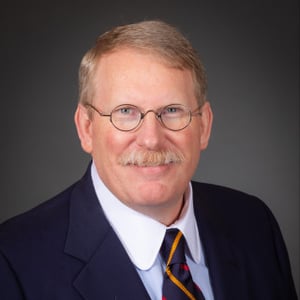
Co-Founder and President, Defense of Freedom Institute
Bob is a co-founder and President of DFI. He previously served as Senior Counselor to the Secretary of Education from 2017 through 2020 and Deputy General Counsel of the U.S. Department of Education from 2005 until 2009.
During his most recent tenure at the Department, Bob served on the Secretary’s Leadership Team as a strategic and legal adviser on higher education, civil rights, and congressional oversight matters. As the Department’s Regulatory Reform Officer, he also supervised the implementation of the Secretary’s regulatory agenda and was an architect of the Secretary’s reforms concerning Title IX and the Higher Education Act. As Deputy General Counsel, Bob advised on a wide variety of regulatory, legislative, and oversight matters.
Prior to joining the Department in 2017, Bob was vice president for regulatory compliance matters for several postsecondary institutions and practiced education and employment law in Washington, D.C. Before coming to the Department in 2005, he practiced law in New Orleans, litigating commercial, employment, and bankruptcy cases in Louisiana, Texas, and Mississippi.
Bob earned his A.B. in History from Georgetown University, studied British government and international politics at the London School of Economics and Political Science, and received his law degree from Tulane University Law School. His articles have been published by National Review, Real Clear Education, Washington Examiner, and other media outlets. Fox News has featured his work.
Bob is a member of the District of Columbia and Louisiana Bars and the Federalist Society for Law and Public Policy Studies.
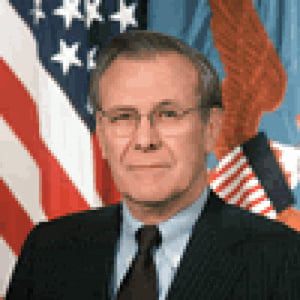
Former United States Secretary of Defense
Donald H. Rumsfeld was sworn in as the 21st Secretary of Defense on January 20, 2001, and served until December 18, 2006. A former Navy pilot, Secretary Rumsfeld has also served as the 13th Secretary of Defense, White House Chief of Staff, U.S. Ambassador to NATO, U.S. Congressman and chief executive officer of two Fortune 500 companies.
Secretary Rumsfeld was responsible for directing the actions of the Defense Department in response to the terrorist attacks on September 11, 2001, to include Operation Enduring Freedom in Afghanistan and Operation Iraqi Freedom. He did so while overseeing the reform and transformation of America's military to better address the threats of the 21st Century. Secretary Rumsfeld proposed and the President approved a significant reorganization of the worldwide command structure, known as the Unified Command Plan, that resulted in the establishment of the U.S. Northern Command and the U.S. Strategic Command. Under Secretary Rumsfeld's leadership, the Department initiated the most significant change of the military's global posture in a generation -- away from a static, defensive Cold War posture to more flexible arrangements that enable U.S. forces to respond to any contingency.
The Department also refocused its space capabilities and fashioned a new concept of strategic deterrence that increases security while reducing strategic nuclear weapons. To help strengthen the deterrent, the missile defense research and testing program was reorganized and revitalized, free of the restraints of the ABM treaty.
Mr. Rumsfeld attended Princeton University on academic and NROTC scholarships (A.B., 1954) and served in the U.S. Navy (1954-57) as an aviator and flight instructor. In 1957, he transferred to the Ready Reserve and continued his Naval service in flying and administrative assignments as a drilling reservist until 1975. He transferred to the Standby Reserve when he became Secretary of Defense in 1975 and to the Retired Reserve with the rank of Captain in 1989.
In 1957, he came to Washington, DC to serve as Administrative Assistant to a Congressman. After a stint with an investment banking firm, he was elected to the U.S. House of Representatives from Illinois in 1962, at the age of 30, and was re-elected in 1964, 1966, and 1968.
Mr. Rumsfeld resigned from Congress in 1969 during his fourth term to join the President's Cabinet. From 1969 to 1970, he served as Director of the Office of Economic Opportunity and Assistant to the President. From 1971 to 1972, he was Counsellor to the President and Director of the Economic Stabilization Program. In 1973, he left Washington, DC, to serve as U.S. Ambassador to the North Atlantic Treaty Organization (NATO) in Brussels, Belgium (1973-1974).
In August 1974, he was called back to Washington, DC, to serve as Chairman of the transition to the Presidency of Gerald R. Ford. He then became Chief of Staff of the White House and a member of the President's Cabinet (1974-1975). He served as the 13th U.S. Secretary of Defense, the youngest in the country's history (1975-1977).
From 1977 to 1985 he served as Chief Executive Officer, President, and then Chairman of G.D. Searle & Co., a worldwide pharmaceutical company. The successful turnaround there earned him awards as the Outstanding Chief Executive Officer in the Pharmaceutical Industry from the Wall Street Transcript (1980) and Financial World (1981). From 1985 to 1990 he was in private business.
Mr. Rumsfeld served as Chairman and Chief Executive Officer of General Instrument Corporation from 1990 to 1993. General Instrument Corporation was a leader in broadband transmission, distribution, and access control technologies. Until being sworn in as the 21st Secretary of Defense, Mr. Rumsfeld served as Chairman of the Board of Gilead Sciences, Inc., a pharmaceutical company.
Before returning for his second tour as Secretary of Defense, Mr. Rumsfeld chaired the bipartisan U.S. Ballistic Missile Threat Commission, in 1998, and the U.S. Commission to Assess National Security Space Management and Organization, in 2000.
During his business career, Mr. Rumsfeld continued his public service in a variety of Federal posts, including:
While in the private sector, Mr. Rumsfeld's civic activities included service as a member of the National Academy of Public Administration and a member of the boards of trustees of the Gerald R. Ford Foundation, the Hoover Institution at Stanford University, and the National Park Foundation, and as Chairman of the Eisenhower Exchange Fellowships, Inc.
In 1977, Mr. Rumsfeld was awarded the nation's highest civilian award, the Presidential Medal of Freedom.
Rumsfeld resigned as Secretary of Defense in 2006.
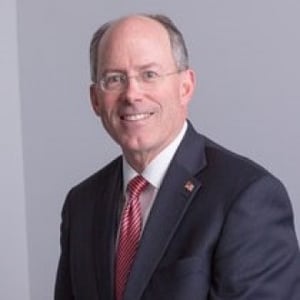
Chief Legal Officer, Pacem Solutions International
Prior to his current position as the Chief Legal Officer for PACEM Solutions, Mr. Schmitz served as a foreign policy/national security advisor to Donald J. Trump from March 2016 through the November 2016 election. His government service includes service as the 5th Senate-confirmed Inspector General of the Department of Defense from April 2002 to September 2005. For his service as Inspector General, Mr. Schmitz was awarded the Department of Defense Medal for Distinguished Public Service, the highest honorary award presented by the Secretary of Defense to non-career federal employees.
In 2013, Mr. Schmitz published “The Inspector General Handbook: Fraud, Waste, Abuse, and Other Constitutional ‘Enemies, Foreign and Domestic’,” the first-ever handbook for the inspector general profession – written also for those who work with inspectors general. Mr. Schmitz has extensive anti-corruption experience in overseeing compliance with various international and security-related laws, including but not limited to the Inspector General Act, Intelligence Oversight laws, the Posse Comitatus Act, the Foreign Corrupt Practices Act (FCPA), the International Traffic in Arms Regulations (ITAR), and laws administered by the Office of Foreign Assets Control (OFAC) and the Office to Monitor and Combat Trafficking in Persons.
Prior to his service as Inspector General of the Department of Defense, Mr. Schmitz was a Partner in the international law firm of Patton Boggs LLP, serving as head of the Aviation Practice Group, and at the same time a Captain in the United States Naval Reserves, serving as Inspector General of the Naval Reserve Intelligence Command. After his Inspector General service, Mr. Schmitz served as Chief Operating Officer and General Counsel of the Prince Group in McLean, Virginia, after which he served as Managing Director in the Washington D.C. Office of Freeh Group International. His pre-Inspector General public service included: twenty-seven years of naval service, first on active duty and then as a reserve officer; law clerk to the Honorable James L. Buckley, Circuit Judge, U.S. Court of Appeals for the D.C. Circuit; and Special Assistant to the Attorney General of the United States, the Honorable Edwin Meese III.
Mr. Schmitz has published numerous articles and has testified as a constitutional expert before U.S. Senate committees, and before various state legislature committees. From 1995 until 2002, he was an Adjunct Professor of Law at Georgetown University Law Center, where he developed and taught a seminar on advanced Constitutional Law.
Mr. Schmitz graduated with distinction from the U.S. Naval Academy in 1978, and received his Doctor of Jurisprudence from Stanford University in 1986. He is a Senior Fellow for the Center for Security Policy, and a regular Newsmax “Insider” on constitutional issues under the banner, “Support and Defend.” In 2013, Mr. Schmitz was inducted into the National Wrestling Hall of Fame (Virginia Chapter) as an “Outstanding American.” Joe and his wife of 40 years, Mollie, have raised six sons and two daughters.
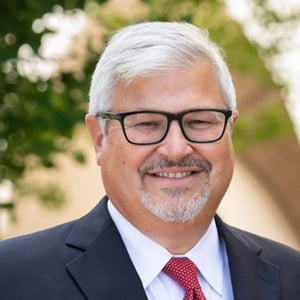
Learned Hand Professor of Law, Harvard Law School
Jack Goldsmith is the Learned Hand Professor of Law at Harvard Law School, a non-resident Senior Fellow at the American Enterprise Institute, and co-founder of Lawfare. He teaches and writes about presidential power, national security law, federal courts, conflict of laws, international law, and internet law. Before coming to Harvard, Professor Goldsmith served as Assistant Attorney General, Office of Legal Counsel from 2003-2004, and Special Counsel to the Department of Defense from 2002-2003. He was a Professor at the University of Chicago Law School from 1997-2002, and at the University of Virginia School of Law from 1994-1997. Before entering the academy, Professor Goldsmith was an associate at Covington & Burling in Washington, D.C., from 1992-1994. He clerked for Supreme Court Justice Anthony M. Kennedy from 1990-1991, for Court of Appeals Judge J. Harvie Wilkinson from 1989-1990, and for Judge George Aldrich on the Iran-U.S. Claims Tribunal from 1991-1992. Professor Goldsmith received a B.A. from Washington and Lee University, a B.A. and M.A. from Oxford University, and a J.D. from Yale Law School.

Developments at the Consumer Financial Protection Bureau: August 13, 2014 – September 9, 2014
Julius L. Loeser, Todd J. Zywicki, Asheesh Agarwal
Developments at the Consumer Financial Protection Bureau August 13, 2014 – September 9, 2014 Jerry...
Breakfast & Book Signing with Donald Rumsfeld
Washington, District of ColumbiaBook Review: America the Vulnerable: Inside the New Threat Matrix of Digital Espionage, Crime, and Warfare
Hartmann Young
America the Vulnerable: Inside the New Threat Matrix of Digital Espionage, Crime, and Warfare By...
Government Must Take Prompt, Decisive Action as Spectrum Deficit Looms for American Consumers
John Kneuer, Rachael M. Bender
Note from the Editor: This article is a discussion about the allocation of spectrum. As...
First Principles: Are Judicial and Legislative Oversight of NSA Constitutional?
Robert F. Turner
First Principles: Are Judicial and Legislative Oversight of NSA Constitutional? Robert F. Turner* This issue...
Benghazi: An Insider’s Perspective on What Really Happened
Tampa, FloridaNet Neutrality vs. Net Reality: Why an Evidence-Based Approach to Enforcement, And Not More Regulation, Could Protect Innovation on the Web
Maureen K. Ohlhausen
Related Links: Senate Committee on Commerce, Science, and Transportation, Hearing on “Network Neutrality” (testimony of...
Mexico's Federal Law of Firearms and Explosives
David B. Kopel
In recent years, gun control has become an important international issue. For example, some persons...
Event of Interest
The Road to a National Curriculum: The Legal Aspects of the Common Core Standards, Race to the Top, and Conditional Waivers
Kent D. Talbert, Robert S. Eitel
Note from the Editor: This paper examines the U.S. Department of Education’s administration of the...