
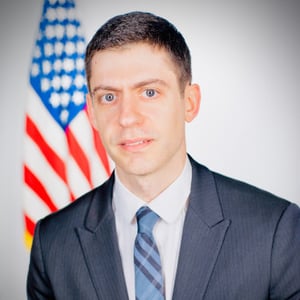
Partner, Quinn Emanuel
John F. Bash is an American attorney who served as the United States Attorney for the Western District of Texas from 2017 to 2020. After graduating from Harvard Law School, Mr. Bash clerked for Judge Kavanaugh during his first year on the bench and went on to clerk for Justice Antonin Scalia. He then served as an Assistant to the Solicitor General in the U.S. Department of Justice, where he argued ten cases in the United States Supreme Court. He also served briefly as Special Assistant to the President and Associate Counsel to the President before his appointment as United States Attorney.
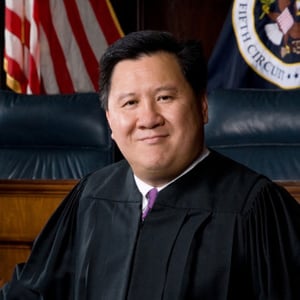
Judge, United States Court of Appeals, Fifth Circuit
James C. Ho is a Circuit Judge on the U.S. Court of Appeals for the Fifth Circuit. Before taking the bench on January 4, 2018, he was a partner and co-chair of the national Appellate and Constitutional Law practice group of Gibson, Dunn & Crutcher LLP.
As an appellate litigator for over a decade, including three years as the Solicitor General of Texas, Judge Ho presented 50 oral arguments in federal and state courts nationwide. He won numerous appeals, including three merits cases at the U.S. Supreme Court. He was routinely ranked among the nation’s leading lawyers by Benchmark, Chambers, Law360, The Legal 500, and The National Law Journal, among other publications. His work has been cited favorably by courts at every level of both the federal and state judiciaries. He won a Best Brief Award from the National Association of Attorneys General for every year that he served as solicitor general, and he is the only state solicitor general in history to be invited by the U.S. Supreme Court to express the views of a state.
Judge Ho has served in all three branches of the federal government. On the Senate Judiciary Committee, he served as chief counsel of the Subcommittees on the Constitution and Immigration under Senator John Cornyn. At the Justice Department, he served as Special Assistant to the Assistant Attorney General for Civil Rights and an attorney-advisor at the Office of Legal Counsel. He clerked for Judge Jerry E. Smith of the U.S. Court of Appeals for the Fifth Circuit and Justice Clarence Thomas of the U.S. Supreme Court.
His record of public service also includes appointments as vice chair of the Federal Judicial Evaluation Committee in Texas and co-chair of the National Asian Pacific American Bar Association Judiciary Committee, and as a member of the U.S. Magistrate Judge Merit Selection Panel for the Northern District of Texas, the U.S. delegation to the United Nations Committee on the Elimination of Racial Discrimination, and the Continuity of Government Commission.
In addition, Judge Ho has served as an Adjunct Professor of Law at the University of Texas School of Law, where he taught seminars on U.S. Supreme Court Litigation and Religious Liberty. He has authored numerous articles in respected law reviews nationwide, including an annual feature on exemplary judicial writing for The Green Bag Almanac & Reader. He previously served as senior editor of The Green Bag and as co-editor of Pub. L. Misc.
Judge Ho graduated from Stanford University with honors and a B.A. in Public Policy in 1995, and the University of Chicago Law School with high honors in 1999. Before law school, he was a legislative aide to California State Senator Quentin Kopp. He and his wife Allyson live in Dallas, Texas, with their twin daughter and son.
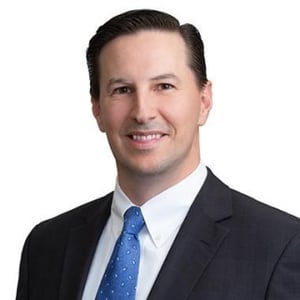
Chairman, Supreme Court and Constitutional Law Practice, Baker Botts LLP
Aaron Streett is the Chairman of Baker Botts’ Supreme Court and Constitutional Law Practice. He has presented oral argument in scores of appeals, covering the U.S. Supreme Court and courts around the country—including over 40 arguments between the Fifth and D.C. Circuits alone. Mr. Streett’s practice involves virtually all substantive areas of the law, including commercial litigation, statutory interpretation, constitutional law, administrative law, securities, and jurisdictional issues. Mr. Streett maintains an active practice in the Supreme Court of the United States, having represented parties in merits cases seven times since 2010, as well as filing numerous amicus and certiorari-stage briefs. Mr. Streett was named one of only six “Appellate MVPs” for 2014 by Law360, which had previously recognized him in 2011 as one of the top five appellate “Rising Stars” under age 40. Mr. Streett has been featured on National Law Journal’s Appellate Hot List three times in recent years and in 2021 was named Houston’s “Lawyer of the Year” for Appellate Practice by Best Lawyers magazine. Mr. Streett is an elected member of the American Law Institute and a fellow of the American Academy of Appellate Lawyers. He serves on the Board of Directors for the Fifth Circuit Bar Association and previously served as President of the Houston Lawyers Chapter of the Federalist Society. Mr. Streett speaks regularly on the Supreme Court and constitutional law to attorneys and law students around the country. Following graduation from Hillsdale College and University of Texas School of Law, Mr. Streett served as a law clerk to the Honorable David B. Sentelle of the United States Court of Appeals for the District of Columbia Circuit and to the Honorable William H. Rehnquist, Chief Justice of the United States.
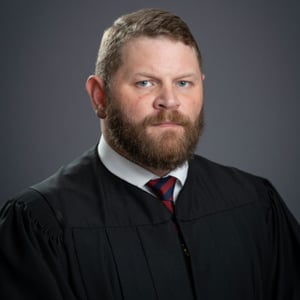
Justice, Texas Supreme Court
James P. Sullivan was appointed to the Texas Supreme Court by Governor Greg Abbott on January 7, 2025, after serving as his General Counsel. He is the proud husband of Alithea and father of Conan. Growing up in Austin, Judge Sully was an extra in the movie "Dazed & Confused." He was a highly unrecruited walk-on at Rice University, until an injury turned him into a debater. Once in law school, he met his wife, Alithea, on the Harvard Law Review. After graduating, he clerked on the D.C. Circuit for Judge Thomas B. Griffith. He also worked under then-Attorney General Abbott in the Office of the Solicitor General, in addition to stints as an adjunct professor at George Mason University and an appellate litigator in private practice.
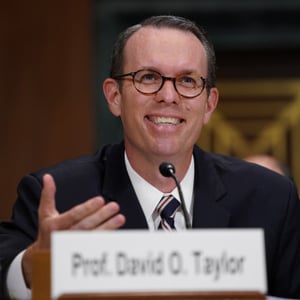
Robert G. Storey Distinguished Faculty Fellow; Associate Professor of Law Co-Director, Tsai Center for Law, Science and Innovation, SMU Dedman School of Law
David O. Taylor is an Associate Professor at the SMU Dedman School of Law in Dallas, Texas. He also founded and currently serves as a Co-Director of the school’s Tsai Center for Law, Science and Innovation.
Professor Taylor earned his bachelor of science, magna cum laude, in mechanical engineering from Texas A&M University and his juris doctor, cum laude, from Harvard Law School. Prior to law school, Professor Taylor worked as an applications engineer at National Instruments Corporation in Austin, Texas. While in law school, he served as an extern for the U.S. Attorney’s Office in Boston, as a member of both the Harvard Journal of Law & Technology and the Harvard Journal of Law & Public Policy, and as President of the law school's Texas Club.
After graduating from law school, Professor Taylor clerked for the current Chief Judge of the U.S. Court of Appeals for the Federal Circuit, the Honorable Sharon Prost. Professor Taylor also worked for seven years at the law firm of Baker Botts LLP in its Dallas office. While at Baker Botts, Professor Taylor engaged in patent litigation in various district courts and at the U.S. Court of Appeals for the Federal Circuit. His litigation experience includes both bench and jury trials. A registered patent attorney, he also gained significant experience in the fields of intellectual property licensing and patent prosecution. During his time in practice he assisted with several advanced patent law courses at SMU Dedman School of Law, including Patent Litigation, Intellectual Property Licensing, and Patent Prosecution, and successfully represented clients in pro bono matters, including before the U.S. Court of Veterans Appeals.
At SMU, Professor Taylor teaches in the areas of contracts and patent law. His scholarship focuses on patent law, patent policy, patent litigation, and civil procedure. Professor Taylor has published articles in various journals, including the Connecticut Law Review, Georgia Law Review, New York University Law Review, and in an assortment of intellectual property specialty journals. His publications have been cited by the U.S. Court of Appeals for the Federal Circuit and various district courts.
A frequent speaker, he has made academic presentations at law schools across the United States, including Boston College, California Berkeley, Cardozo, Chicago-Kent, DePaul, Houston, Kansas, San Diego, Stanford, and Texas, and internationally in Chongqing, China; Ho Chi Minh City, Vietnam; and Taipei, Taiwan. He also is a regular speaker at various continuing legal education (CLE) events, including events sponsored by the Dallas Bar Association, the Eastern District of Texas Bar Association, the Center for American and International Law, and the Federalist Society for Law and Public Policy Studies.
In addition to these activities, Professor Taylor has organized numerous symposia and conferences, helped launch SMU’s Patent and Trademark Clinics, and helped draft the proposal to secure the funding to launch the Tsai Center for Law, Science and Innovation. He serves on several law school committees and is an advisor to both the SMU Science and Technology Law Review and The International Lawyer. Professor Taylor also serves as an advisor to the law school's chapter of the Federalist Society, which regularly hosts speakers addressing hot topics in the field of constitutional law. SMU granted Professor Taylor tenure in 2016.
Professor Taylor serves in various leadership positions. He is a member of the Advisory Council for the U.S. Court of Appeals for the Federal Circuit. He serves on the Executive Board of the Institute for Law and Technology at the Center for American and International Law. He also is currently the Reporter for the Patentable Subject Matter Task Force of the American Intellectual Property Law Association (AIPLA), and he serves as a member of the AIPLA's Amicus Committee. He is a Director of the Intellectual Property Law Section of the Dallas Bar Association (DBA), and he previously served as the Chair of the Computer Law Section of the DBA. In addition to these leadership activities, Professor Taylor has served as an expert and consultant in various intellectual property disputes.
He has received several accolades. Professor Taylor is the recipient of a Thomas Edison Innovation Fellowship from the Center for the Protection of Intellectual Property at the George Mason University Antonin Scalia Law School. He has also been named a founding Barrister of the Honorable Barbara M.G. Lynn American Inn of Court, an Honorary Barrister of the SMU Dedman School of Law Board of Advocates, and an Outstanding Graduate of the Irving Independent School District. In addition to these awards, he has received numerous research and course development grants.
Outside of his work at the law school and the field of intellectual property law, Professor Taylor has engaged in public service with diverse groups including Advocates for Community Transformation, Texas Scottish Rite Hospital for Children, and the Veterans Consortium Pro Bono Program.
Professor Taylor is married. Together with his wife Rachel, he enjoys spending time with his three children: Caroline, Emily, and Joshua.
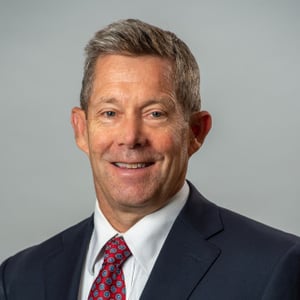
Chief Judge, United States Court of Appeals, Sixth Circuit
JEFFREY S. SUTTON is the Chief Judge of the United States Court of Appeals for the Sixth Circuit. He has served as Chair of the Federal Judicial Conference Committee on Rules of Practice and Procedure, Chair of the Advisory Committee on Appellate Rules, and Chair of the Supreme Court Fellows Commission. He currently serves as Chair of the Executive Committee of the Judicial Conference of the United States. Since 1993, Chief Judge Sutton has been an adjunct professor at The Ohio State University College of Law, where he teaches seminars on State Constitutional Law, the United States Supreme Court, and Appellate Advocacy. He also teaches a class on State Constitutional Law at Harvard Law School. Among other publications, he is the author of Who Decides? States as Laboratories of Constitutional Experimentation and 51 Imperfect Solutions: States and the Making of American Constitutional Law. He is the co-author of a casebook, State Constitutional Law: The Modern Experience, as well as The Law of Judicial Precedent. He is also the co-editor of The Essential Scalia: On the Constitution, the Courts, and the Rule of Law. In 2006, Chief Judge Sutton was elected to the American Law Institute, and in 2017 he was elected to its Council.
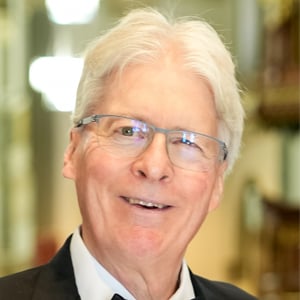
General Counsel, James Madison Center for Free Speech
General Counsel, James Madison Center for Free Speech
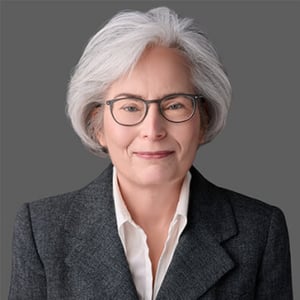
Partner, Rule Garza Howley LLP
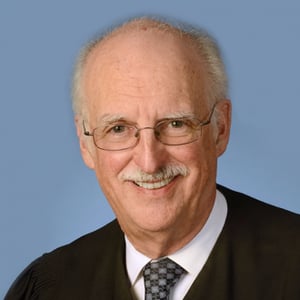
Senior Judge, United States Court of Appeals, District of Columbia Circuit
Circuit Judge Douglas H. Ginsburg was appointed to the United States Court of Appeals for the District of Columbia in 1986. After receiving his B.S. from Cornell University in 1970, and his J.D. from the University of Chicago Law School in 1973, he clerked on the D.C. Circuit and for Justice Thurgood Marshall on the United States Supreme Court. Thereafter, Judge Ginsburg was a professor at the Harvard Law School, the Deputy Assistant and then Assistant Attorney General for the Antitrust Division of the Department of Justice, as well as the Administrator of the Office of Information and Regulatory Affairs in the Office of Management and Budget. Concurrent with his service as a federal judge, Judge Ginsburg has taught at the University of Chicago Law School and the New York University School of Law. Judge Ginsburg is currently a Professor of Law at the George Mason University and a visiting professor at University College London, Faculty of Laws.
Judge Ginsburg is the Chairman of the International Advisory Board of the Global Antitrust Institute at the Law and Economics Center of the George Mason University School of Law. He also serves on the Advisory Boards of: Competition Policy International; the Harvard Journal of Law and Public Policy; the Journal of Competition Law and Economics; the Journal of Law, Economics & Policy; the Supreme Court Economic Review; the University of Chicago Law Review; the New York University Journal of Law and Liberty; and, at University College London, both the Centre for Law, Economics and Society and the Jevons Institute for Competition Law and Economics.
In 2020, Judge Ginsburg was the 11th recipient of the John Sherman Award, presented by the Antitrust Division of the Department of Justice in recognition of the awardee’s Lifetime Contributions to Antitrust Law and Policy.
In 2014, Judge Ginsburg received the Lifetime Achievement Award given annually by the Global Competition Review.
He is the author or co-author of several books and more than 100 articles on competition and regulation, including, most recently, Growing Convergence: The Limited Role of Antitrust in Standard Essential Patent Disputes, in CPI Antitrust Chronicle, Summer 2021, Vol. 1, No. 2.

Vice President and Director of Competition Policy, Progressive Policy Institute
Diana Moss joined the Progressive Policy Institute in 2023. She was previously President of the American Antitrust Institute from 2015-2023. An economist, Dr. Moss has developed and expanded competition enforcement and policy advocacy channels and strategies, and strengthened communications with enforcers, Congress, other advocacy groups, and the media. Her work spans both antitrust and regulation, with industry expertise in digital technology, electricity, petroleum, food and agriculture, airlines, telecommunications, and healthcare. Dr. Moss was previously at the Federal Energy Regulatory Commission, where she coordinated the agency’s competition analysis for electricity mergers. In the early 1990s, she consulted in private practice in the areas of regulation and antitrust. Dr. Moss has spoken widely on various topics involving competition policy and enforcement, testified before Congress, appeared before state and federal regulatory commissions, and made numerous radio and television appearances. She has published articles in a number of economic and legal academic journals, including: American Economic Review, Journal of Industrial Organization, the Energy Law Journal, and the Antitrust Bulletin. She is editor of Network Access, Regulation and Antitrust (2005). Dr. Moss is Adjunct Faculty in the Department of Economics at the University of Colorado at Boulder. She holds a M.A. degree from the University of Denver and a Ph.D. from the Colorado School of Mines.
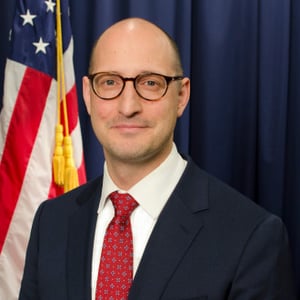
Partner, Cravath, Swaine & Moore LLP
Noah Joshua Phillips is Co-Chair of the Antitrust Practice and previously served as a Commissioner of the Federal Trade Commission. He advises clients on a range of antitrust issues, including mergers and acquisitions, business conduct and compliance, litigation and investigations, and data security and privacy.
On the FTC, Mr. Phillips played an integral role in precedent setting enforcement actions and regulatory efforts concerning antitrust, consumer protection and privacy. He decided dozens of merger and other antitrust enforcement matters across the economy, including in the consumer product, defense, energy, entertainment, healthcare, technology, pharmaceutical and retail industries. Mr. Phillips’ written antitrust opinions were consistently upheld by federal appellate courts.
As Commissioner, Mr. Phillips frequently testified before Congress and represented the FTC before international bodies, including the G7, the Competition Committee of the Organisation for Economic Co-operation and Development, and the International Conference of Data Protection and Privacy Commissioners. He speaks and writes frequently on a range of antitrust, consumer protection and privacy issues.
Prior to the FTC, Mr. Phillips served as Chief Counsel to U.S. Senator John Cornyn, of Texas, on the Senate Judiciary Committee. He advised Senator Cornyn on a variety of legal and policy issues, as well as judicial nominations.
Mr. Phillips received an A.B. magna cum laude from Dartmouth College in 2000 and a J.D. from Stanford Law School in 2005. He began his career at a New York-based investment bank. After law school, Mr. Phillips clerked for Hon. Edward C. Prado of the U.S. Court of Appeals for the Fifth Circuit and joined Cravath’s Litigation Department in 2006. He left the Firm in 2010, and he rejoined Cravath as a partner in December 2022.
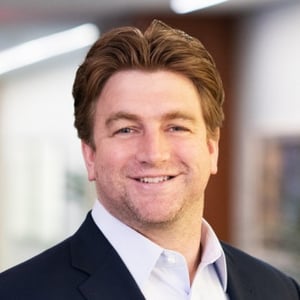
Founding Partner, Lodestar Law and Economics PLLC
Josh is the founder of Lodestar Law and Economics, PLLC. On January 1, 2013, the U.S. Senate unanimously confirmed Wright as a Commissioner of the Federal Trade Commission (FTC). He is a leading scholar in antitrust law, economics, intellectual property, regulation, and consumer protection, and has published more than 100 articles and book chapters, co-authored a leading antitrust casebook, and edited several book volumes focusing on these issues. Commentators have recognized Wright as “widely considered his generation’s greatest mind on antitrust law,” and his academic work ranks him as one of the most cited antitrust academics in the world. Wright was also awarded the Paul M. Bator Award by the Federalist Society in 2014 to “an academic who demonstrated excellence in legal scholarship, a commitment to teaching, a concern for students, and who has made a significant public impact.” Wright also served as the Executive Director of the Global Antitrust Institute, the world’s premiere academic institute focused upon antitrust education for judges and regulators and has taught hundreds of judges and thousands of regulators from dozens of countries.
Wright’s practice focuses upon helping clients solve complex competition, consumer protection, and regulatory problems by providing legal and economic analysis, strategic advice and counseling, and economic expert testimony.
Partner, Rule Garza Howley LLP
Senior Judge, United States Court of Appeals, District of Columbia Circuit
Circuit Judge Douglas H. Ginsburg was appointed to the United States Court of Appeals for the District of Columbia in 1986. After receiving his B.S. from Cornell University in 1970, and his J.D. from the University of Chicago Law School in 1973, he clerked on the D.C. Circuit and for Justice Thurgood Marshall on the United States Supreme Court. Thereafter, Judge Ginsburg was a professor at the Harvard Law School, the Deputy Assistant and then Assistant Attorney General for the Antitrust Division of the Department of Justice, as well as the Administrator of the Office of Information and Regulatory Affairs in the Office of Management and Budget. Concurrent with his service as a federal judge, Judge Ginsburg has taught at the University of Chicago Law School and the New York University School of Law. Judge Ginsburg is currently a Professor of Law at the George Mason University and a visiting professor at University College London, Faculty of Laws.
Judge Ginsburg is the Chairman of the International Advisory Board of the Global Antitrust Institute at the Law and Economics Center of the George Mason University School of Law. He also serves on the Advisory Boards of: Competition Policy International; the Harvard Journal of Law and Public Policy; the Journal of Competition Law and Economics; the Journal of Law, Economics & Policy; the Supreme Court Economic Review; the University of Chicago Law Review; the New York University Journal of Law and Liberty; and, at University College London, both the Centre for Law, Economics and Society and the Jevons Institute for Competition Law and Economics.
In 2020, Judge Ginsburg was the 11th recipient of the John Sherman Award, presented by the Antitrust Division of the Department of Justice in recognition of the awardee’s Lifetime Contributions to Antitrust Law and Policy.
In 2014, Judge Ginsburg received the Lifetime Achievement Award given annually by the Global Competition Review.
He is the author or co-author of several books and more than 100 articles on competition and regulation, including, most recently, Growing Convergence: The Limited Role of Antitrust in Standard Essential Patent Disputes, in CPI Antitrust Chronicle, Summer 2021, Vol. 1, No. 2.
Vice President and Director of Competition Policy, Progressive Policy Institute
Diana Moss joined the Progressive Policy Institute in 2023. She was previously President of the American Antitrust Institute from 2015-2023. An economist, Dr. Moss has developed and expanded competition enforcement and policy advocacy channels and strategies, and strengthened communications with enforcers, Congress, other advocacy groups, and the media. Her work spans both antitrust and regulation, with industry expertise in digital technology, electricity, petroleum, food and agriculture, airlines, telecommunications, and healthcare. Dr. Moss was previously at the Federal Energy Regulatory Commission, where she coordinated the agency’s competition analysis for electricity mergers. In the early 1990s, she consulted in private practice in the areas of regulation and antitrust. Dr. Moss has spoken widely on various topics involving competition policy and enforcement, testified before Congress, appeared before state and federal regulatory commissions, and made numerous radio and television appearances. She has published articles in a number of economic and legal academic journals, including: American Economic Review, Journal of Industrial Organization, the Energy Law Journal, and the Antitrust Bulletin. She is editor of Network Access, Regulation and Antitrust (2005). Dr. Moss is Adjunct Faculty in the Department of Economics at the University of Colorado at Boulder. She holds a M.A. degree from the University of Denver and a Ph.D. from the Colorado School of Mines.
Partner, Cravath, Swaine & Moore LLP
Noah Joshua Phillips is Co-Chair of the Antitrust Practice and previously served as a Commissioner of the Federal Trade Commission. He advises clients on a range of antitrust issues, including mergers and acquisitions, business conduct and compliance, litigation and investigations, and data security and privacy.
On the FTC, Mr. Phillips played an integral role in precedent setting enforcement actions and regulatory efforts concerning antitrust, consumer protection and privacy. He decided dozens of merger and other antitrust enforcement matters across the economy, including in the consumer product, defense, energy, entertainment, healthcare, technology, pharmaceutical and retail industries. Mr. Phillips’ written antitrust opinions were consistently upheld by federal appellate courts.
As Commissioner, Mr. Phillips frequently testified before Congress and represented the FTC before international bodies, including the G7, the Competition Committee of the Organisation for Economic Co-operation and Development, and the International Conference of Data Protection and Privacy Commissioners. He speaks and writes frequently on a range of antitrust, consumer protection and privacy issues.
Prior to the FTC, Mr. Phillips served as Chief Counsel to U.S. Senator John Cornyn, of Texas, on the Senate Judiciary Committee. He advised Senator Cornyn on a variety of legal and policy issues, as well as judicial nominations.
Mr. Phillips received an A.B. magna cum laude from Dartmouth College in 2000 and a J.D. from Stanford Law School in 2005. He began his career at a New York-based investment bank. After law school, Mr. Phillips clerked for Hon. Edward C. Prado of the U.S. Court of Appeals for the Fifth Circuit and joined Cravath’s Litigation Department in 2006. He left the Firm in 2010, and he rejoined Cravath as a partner in December 2022.
Founding Partner, Lodestar Law and Economics PLLC
Josh is the founder of Lodestar Law and Economics, PLLC. On January 1, 2013, the U.S. Senate unanimously confirmed Wright as a Commissioner of the Federal Trade Commission (FTC). He is a leading scholar in antitrust law, economics, intellectual property, regulation, and consumer protection, and has published more than 100 articles and book chapters, co-authored a leading antitrust casebook, and edited several book volumes focusing on these issues. Commentators have recognized Wright as “widely considered his generation’s greatest mind on antitrust law,” and his academic work ranks him as one of the most cited antitrust academics in the world. Wright was also awarded the Paul M. Bator Award by the Federalist Society in 2014 to “an academic who demonstrated excellence in legal scholarship, a commitment to teaching, a concern for students, and who has made a significant public impact.” Wright also served as the Executive Director of the Global Antitrust Institute, the world’s premiere academic institute focused upon antitrust education for judges and regulators and has taught hundreds of judges and thousands of regulators from dozens of countries.
Wright’s practice focuses upon helping clients solve complex competition, consumer protection, and regulatory problems by providing legal and economic analysis, strategic advice and counseling, and economic expert testimony.
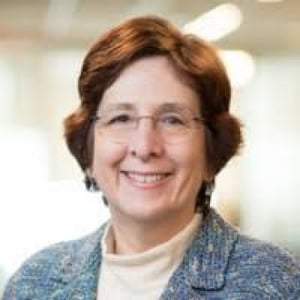
Partner, Wilson Sonsini Goodrich & Rosati PC
Susan Creighton is co-chair of the firm's antitrust practice. Susan's practice focuses on merger review, government conduct investigations, and antitrust litigation and counseling. Representative matters include serving as lead outside counsel for Google in the Federal Trade Commission's search investigation of the company, and representing Netflix in connection with the Justice Department's investigation of the proposed Comcast/TWC merger.
Susan was named "Lawyer of the Year" by Global Competition Review in 2013, and was one of The National Law Journal's "Outstanding Women Lawyers" in 2015. She has testified before the Antitrust Modernization Commission, the Federal Trade Commission, and the Senate on antitrust-related issues. She also has written a number of widely cited articles, including on issues related to mergers, intellectual property, and unilateral conduct.
From 2003 through the end of 2005, Susan served at the Federal Trade Commission as Director of the Bureau of Competition. From 2001 to 2003, she served as Deputy Director of the Bureau. Prior to joining the FTC, Susan wrote the white paper for Netscape that is credited with triggering the Department of Justice's investigation and eventual suit against Microsoft for illegal monopolization.
Susan has served in a variety of leadership roles within the firm, including on the board of directors.
Prior to joining the firm, she was a law clerk to U.S. Supreme Court Justice Sandra Day O'Connor. She also served as a law clerk to Federal District Judge Pamela Ann Rymer.
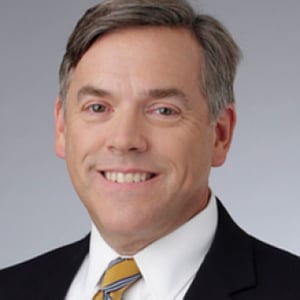
Partner, Paul, Weiss
Andrew Finch is co-chair of the Antitrust Practice Group and a partner in the Litigation Department. He recently rejoined the firm from the U.S. Department of Justice’s Antitrust Division, where he served as Principal Deputy Assistant Attorney General (April 2017-August 2019) and as Acting Assistant Attorney General (April-September 2017), overseeing all aspects of the Antitrust Division’s operations. A seasoned and pragmatic antitrust counselor and litigator, Andrew has extensive experience with civil and criminal antitrust investigations, litigation and appeals.
EXPERIENCE
Andrew’s practice focuses on antitrust investigations and litigation, both criminal and civil, including merger reviews. At the Antitrust Division, Andrew oversaw dozens of major merger reviews; supervised multiple litigations; negotiated civil and criminal settlements, including consent decrees involving divestitures, plea agreements and deferred prosecution agreements; and represented the Antitrust Division in meetings with other federal agencies, members of Congress, state attorneys general and foreign competition authorities. Throughout his tenure, Andrew played a leadership role in developing and implementing Antitrust Division policies and priorities, including the Division’s new policy regarding the consideration of effective antitrust compliance programs in criminal enforcement decisions. Andrew also has spoken extensively in the United States and abroad about antitrust issues relating to “big data” and technology platforms, acquisitions of nascent competitors, and the application of antitrust law to intellectual property disputes and standard-development organizations.
In private practice, Andrew has represented a broad range of clients, including in the financial services industry, payment networks, insurance, manufacturing, steel production, public performing rights, petroleum refining, publishing, retailing, shipping and air transportation industries, among others. Andrew’s notable representations include:
Between 2003 and 2005, Andrew served as Counsel to the Assistant Attorney General in the Antitrust Division. While at the DOJ, he participated in drafting the joint report of the DOJ and FTC, Antitrust Enforcement and Intellectual Property Rights: Promoting Innovation and Competition, and contributed to the Report of the DOJ’s Task Force on Intellectual Property.
Andrew served as a law clerk to the Honorable Dennis G. Jacobs in the U.S. Court of Appeals for the Second Circuit. At the University of Chicago Law School, Andrew was a John M. Olin Student Fellow in Law and Economics, the Topics and Comments Editor of The University of Chicago Law Review, and was elected to the Order of the Coif.
Andrew is a member of the American Bar Association’s Section of Antitrust Law, and currently serves on the ABA’s Task Force on the Future of Competition Law Standards. He previously served as vice-chair of the Books and Treatises Committee, as vice-chair of the Civil Practice and Procedure Committee, as a member of the Editorial Board of Antitrust Law Developments (Sixth), and as a principal editor of the Handbook on Interlocking Directorates.
Since 2014, Andrew has been recognized by Chambers USA as a leading lawyer in Antitrust. Clients commented that Andrew “is a very smart lawyer [who] has a very keen understanding of antitrust matters from the government perspective.” Following his tenure as one of the senior leadership of the Antitrust Division at the DOJ, Chambers USA has recognized Andrew as an “Eminent Practitioner” in the Antitrust (New York) category for his wide-ranging knowledge across criminal and civil antitrust issues. He is also highly recommended by The Legal 500 in the Antitrust: Cartel, Antitrust: Civil Litigation/Class Actions: Defense and Antitrust: Merger Control categories.
Andrew is a member of the Board of Directors of the School of American Ballet.
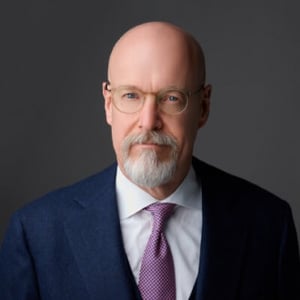
Partner, Rule Garza Howley LLP
Rick began his career in the 1980s in the Antitrust Division of the U.S. Department of Justice, becoming the Assistant Attorney General in charge of the Division from 1986-89 – the youngest person ever to be confirmed by the Senate to that position. Over the last 30+ years since leaving the Division, Rick has led the antitrust practices at several leading D.C. and New York firms including Covington & Burling and Paul, Weiss.
During his time in private practice, Rick has represented major multi-national companies and executives in virtually every industry – from, among others, agricultural and animal health (Monsanto, Elanco) to energy (ExxonMobil) to defense contractors (Northrop Grumman, United Technologies) to professional sports (NFL, NBA, MLB) to technology platforms (Microsoft, Nuance) to pharmaceutical manufacturers (Eli Lilly, Pfizer) to health insurers (Cigna). (For a complete list of industry experience, click here.)
Rick has represented his clients before the Antitrust Division, the Federal Trade Commission, State Attorneys General and major foreign antitrust regulators in connection with many of the most notable merger investigations, including Exxon’s merger with Mobil, US Airways’ merger with American Airlines, and Cigna’s acquisition of Express Scripts. At the same time, Rick has represented clients in some of most prominent government investigations of the last quarter century, including leading the team that settled the Government’s monopolization case against Microsoft and defending international companies and executives in major antitrust criminal investigations.
For four decades, Rick has been at the forefront of antitrust law and is uniquely capable of advising clients on the antitrust regulatory environment affecting the way they do business globally. As agencies and rules have evolved, he has helped clients to understand the dynamic legal framework, to assess the legal risk and rewards associated with a range of competitive strategies, and to work with government bodies to take advantage of, and ensure appropriate compliance with, the regulations governing the clients’ chosen strategy.
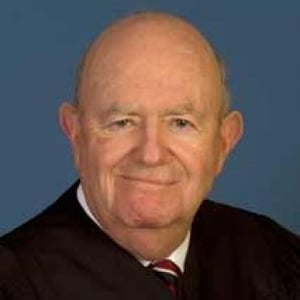
Judge, United States Court of Appeals, District of Columbia Circuit
LAURENCE HIRSCH SILBERMAN, senior circuit judge; recipient of the Presidential Medal of Freedom, June 19, 2008; born in York, PA, October 12, 1935; son of William Silberman and Anna (Hirsch); married to Rosalie G. Gaull on April 28, 1957 (deceased), married Patricia Winn on January 5, 2008; children: Robert Steven Silberman, Katherine DeBoer Fischer, and Anne Gaull Otis; B.A., Dartmouth College, 1957; LL.B., Harvard Law School, 1961; admitted to Hawaii Bar, 1962; District of Columbia Bar, 1973; associate, Moore, Torkildson and Rice, 1961–64; partner (Moore, Silberman and Schulze), Honolulu, 1964–67; attorney, National Labor Relations Board, Office of General Counsel, Appellate Division, 1967–69; Solicitor, Department of Labor, 1969–70; Under Secretary of Labor, 1970–73; partner, Steptoe and Johnson, 1973–74; Deputy Attorney General of the United States, 1974–75; Ambassador to Yugoslavia, 1975–77; President’s Special Envoy on ILO Affairs, 1976; senior fellow, American Enterprise Institute, 1977–78; visiting fellow, 1978–85; managing partner, Morrison and Foerster, 1978–79 and 1983–85; executive vice president, Crocker National Bank, 1979–83; lecturer, University of Hawaii, 1962–63; board of directors, Commission on Present Danger, 1978–85, Institute for Educational Affairs, New York, NY, 1981–85, member: General Advisory Committee on Arms Control and Disarmament, 1981–85; Defense Policy Board, 1981–85; vice chairman, State Department’s Commission on Security and Economic Assistance, 1983–84; American Bar Association (Labor Law Committee, 1965–72, Corporations and Banking Committee, 1973, Law and National Security Advisory Committee, 1981–85); Hawaii Bar Association Ethics Committee, 1965–67; Council on Foreign Relations, 1977–present; Judicial Conference Committee on Court Administration and Case Management, 1994; member, U.S. Foreign Intelligence Surveillance Act Court of Review, 1996–2003; Adjunct Professor of Law (Administrative Law and Labor Law) Georgetown Law Center, 1987–94; 1997; Adjunct Professor of Law, Harvard Law School, 1994-95, Adjunct Professor of Law, New York University Law School, 1995–96; Distinguished Visitor from the Judiciary, Georgetown Law Center, 2003–2019; co-chairman of the President’s Commission on The Intelligence Capabilities of the United States Regarding Weapons of Mass Destruction, 2004–05; appointed to the U.S. Court of Appeals for the District of Columbia Circuit by President Reagan on October 28, 1985.
Founding Partner, Lodestar Law and Economics PLLC
Josh is the founder of Lodestar Law and Economics, PLLC. On January 1, 2013, the U.S. Senate unanimously confirmed Wright as a Commissioner of the Federal Trade Commission (FTC). He is a leading scholar in antitrust law, economics, intellectual property, regulation, and consumer protection, and has published more than 100 articles and book chapters, co-authored a leading antitrust casebook, and edited several book volumes focusing on these issues. Commentators have recognized Wright as “widely considered his generation’s greatest mind on antitrust law,” and his academic work ranks him as one of the most cited antitrust academics in the world. Wright was also awarded the Paul M. Bator Award by the Federalist Society in 2014 to “an academic who demonstrated excellence in legal scholarship, a commitment to teaching, a concern for students, and who has made a significant public impact.” Wright also served as the Executive Director of the Global Antitrust Institute, the world’s premiere academic institute focused upon antitrust education for judges and regulators and has taught hundreds of judges and thousands of regulators from dozens of countries.
Wright’s practice focuses upon helping clients solve complex competition, consumer protection, and regulatory problems by providing legal and economic analysis, strategic advice and counseling, and economic expert testimony.
Partner, Wilson Sonsini Goodrich & Rosati PC
Susan Creighton is co-chair of the firm's antitrust practice. Susan's practice focuses on merger review, government conduct investigations, and antitrust litigation and counseling. Representative matters include serving as lead outside counsel for Google in the Federal Trade Commission's search investigation of the company, and representing Netflix in connection with the Justice Department's investigation of the proposed Comcast/TWC merger.
Susan was named "Lawyer of the Year" by Global Competition Review in 2013, and was one of The National Law Journal's "Outstanding Women Lawyers" in 2015. She has testified before the Antitrust Modernization Commission, the Federal Trade Commission, and the Senate on antitrust-related issues. She also has written a number of widely cited articles, including on issues related to mergers, intellectual property, and unilateral conduct.
From 2003 through the end of 2005, Susan served at the Federal Trade Commission as Director of the Bureau of Competition. From 2001 to 2003, she served as Deputy Director of the Bureau. Prior to joining the FTC, Susan wrote the white paper for Netscape that is credited with triggering the Department of Justice's investigation and eventual suit against Microsoft for illegal monopolization.
Susan has served in a variety of leadership roles within the firm, including on the board of directors.
Prior to joining the firm, she was a law clerk to U.S. Supreme Court Justice Sandra Day O'Connor. She also served as a law clerk to Federal District Judge Pamela Ann Rymer.
Partner, Paul, Weiss
Andrew Finch is co-chair of the Antitrust Practice Group and a partner in the Litigation Department. He recently rejoined the firm from the U.S. Department of Justice’s Antitrust Division, where he served as Principal Deputy Assistant Attorney General (April 2017-August 2019) and as Acting Assistant Attorney General (April-September 2017), overseeing all aspects of the Antitrust Division’s operations. A seasoned and pragmatic antitrust counselor and litigator, Andrew has extensive experience with civil and criminal antitrust investigations, litigation and appeals.
EXPERIENCE
Andrew’s practice focuses on antitrust investigations and litigation, both criminal and civil, including merger reviews. At the Antitrust Division, Andrew oversaw dozens of major merger reviews; supervised multiple litigations; negotiated civil and criminal settlements, including consent decrees involving divestitures, plea agreements and deferred prosecution agreements; and represented the Antitrust Division in meetings with other federal agencies, members of Congress, state attorneys general and foreign competition authorities. Throughout his tenure, Andrew played a leadership role in developing and implementing Antitrust Division policies and priorities, including the Division’s new policy regarding the consideration of effective antitrust compliance programs in criminal enforcement decisions. Andrew also has spoken extensively in the United States and abroad about antitrust issues relating to “big data” and technology platforms, acquisitions of nascent competitors, and the application of antitrust law to intellectual property disputes and standard-development organizations.
In private practice, Andrew has represented a broad range of clients, including in the financial services industry, payment networks, insurance, manufacturing, steel production, public performing rights, petroleum refining, publishing, retailing, shipping and air transportation industries, among others. Andrew’s notable representations include:
Between 2003 and 2005, Andrew served as Counsel to the Assistant Attorney General in the Antitrust Division. While at the DOJ, he participated in drafting the joint report of the DOJ and FTC, Antitrust Enforcement and Intellectual Property Rights: Promoting Innovation and Competition, and contributed to the Report of the DOJ’s Task Force on Intellectual Property.
Andrew served as a law clerk to the Honorable Dennis G. Jacobs in the U.S. Court of Appeals for the Second Circuit. At the University of Chicago Law School, Andrew was a John M. Olin Student Fellow in Law and Economics, the Topics and Comments Editor of The University of Chicago Law Review, and was elected to the Order of the Coif.
Andrew is a member of the American Bar Association’s Section of Antitrust Law, and currently serves on the ABA’s Task Force on the Future of Competition Law Standards. He previously served as vice-chair of the Books and Treatises Committee, as vice-chair of the Civil Practice and Procedure Committee, as a member of the Editorial Board of Antitrust Law Developments (Sixth), and as a principal editor of the Handbook on Interlocking Directorates.
Since 2014, Andrew has been recognized by Chambers USA as a leading lawyer in Antitrust. Clients commented that Andrew “is a very smart lawyer [who] has a very keen understanding of antitrust matters from the government perspective.” Following his tenure as one of the senior leadership of the Antitrust Division at the DOJ, Chambers USA has recognized Andrew as an “Eminent Practitioner” in the Antitrust (New York) category for his wide-ranging knowledge across criminal and civil antitrust issues. He is also highly recommended by The Legal 500 in the Antitrust: Cartel, Antitrust: Civil Litigation/Class Actions: Defense and Antitrust: Merger Control categories.
Andrew is a member of the Board of Directors of the School of American Ballet.
Partner, Rule Garza Howley LLP
Rick began his career in the 1980s in the Antitrust Division of the U.S. Department of Justice, becoming the Assistant Attorney General in charge of the Division from 1986-89 – the youngest person ever to be confirmed by the Senate to that position. Over the last 30+ years since leaving the Division, Rick has led the antitrust practices at several leading D.C. and New York firms including Covington & Burling and Paul, Weiss.
During his time in private practice, Rick has represented major multi-national companies and executives in virtually every industry – from, among others, agricultural and animal health (Monsanto, Elanco) to energy (ExxonMobil) to defense contractors (Northrop Grumman, United Technologies) to professional sports (NFL, NBA, MLB) to technology platforms (Microsoft, Nuance) to pharmaceutical manufacturers (Eli Lilly, Pfizer) to health insurers (Cigna). (For a complete list of industry experience, click here.)
Rick has represented his clients before the Antitrust Division, the Federal Trade Commission, State Attorneys General and major foreign antitrust regulators in connection with many of the most notable merger investigations, including Exxon’s merger with Mobil, US Airways’ merger with American Airlines, and Cigna’s acquisition of Express Scripts. At the same time, Rick has represented clients in some of most prominent government investigations of the last quarter century, including leading the team that settled the Government’s monopolization case against Microsoft and defending international companies and executives in major antitrust criminal investigations.
For four decades, Rick has been at the forefront of antitrust law and is uniquely capable of advising clients on the antitrust regulatory environment affecting the way they do business globally. As agencies and rules have evolved, he has helped clients to understand the dynamic legal framework, to assess the legal risk and rewards associated with a range of competitive strategies, and to work with government bodies to take advantage of, and ensure appropriate compliance with, the regulations governing the clients’ chosen strategy.
Judge, United States Court of Appeals, District of Columbia Circuit
LAURENCE HIRSCH SILBERMAN, senior circuit judge; recipient of the Presidential Medal of Freedom, June 19, 2008; born in York, PA, October 12, 1935; son of William Silberman and Anna (Hirsch); married to Rosalie G. Gaull on April 28, 1957 (deceased), married Patricia Winn on January 5, 2008; children: Robert Steven Silberman, Katherine DeBoer Fischer, and Anne Gaull Otis; B.A., Dartmouth College, 1957; LL.B., Harvard Law School, 1961; admitted to Hawaii Bar, 1962; District of Columbia Bar, 1973; associate, Moore, Torkildson and Rice, 1961–64; partner (Moore, Silberman and Schulze), Honolulu, 1964–67; attorney, National Labor Relations Board, Office of General Counsel, Appellate Division, 1967–69; Solicitor, Department of Labor, 1969–70; Under Secretary of Labor, 1970–73; partner, Steptoe and Johnson, 1973–74; Deputy Attorney General of the United States, 1974–75; Ambassador to Yugoslavia, 1975–77; President’s Special Envoy on ILO Affairs, 1976; senior fellow, American Enterprise Institute, 1977–78; visiting fellow, 1978–85; managing partner, Morrison and Foerster, 1978–79 and 1983–85; executive vice president, Crocker National Bank, 1979–83; lecturer, University of Hawaii, 1962–63; board of directors, Commission on Present Danger, 1978–85, Institute for Educational Affairs, New York, NY, 1981–85, member: General Advisory Committee on Arms Control and Disarmament, 1981–85; Defense Policy Board, 1981–85; vice chairman, State Department’s Commission on Security and Economic Assistance, 1983–84; American Bar Association (Labor Law Committee, 1965–72, Corporations and Banking Committee, 1973, Law and National Security Advisory Committee, 1981–85); Hawaii Bar Association Ethics Committee, 1965–67; Council on Foreign Relations, 1977–present; Judicial Conference Committee on Court Administration and Case Management, 1994; member, U.S. Foreign Intelligence Surveillance Act Court of Review, 1996–2003; Adjunct Professor of Law (Administrative Law and Labor Law) Georgetown Law Center, 1987–94; 1997; Adjunct Professor of Law, Harvard Law School, 1994-95, Adjunct Professor of Law, New York University Law School, 1995–96; Distinguished Visitor from the Judiciary, Georgetown Law Center, 2003–2019; co-chairman of the President’s Commission on The Intelligence Capabilities of the United States Regarding Weapons of Mass Destruction, 2004–05; appointed to the U.S. Court of Appeals for the District of Columbia Circuit by President Reagan on October 28, 1985.
Founding Partner, Lodestar Law and Economics PLLC
Josh is the founder of Lodestar Law and Economics, PLLC. On January 1, 2013, the U.S. Senate unanimously confirmed Wright as a Commissioner of the Federal Trade Commission (FTC). He is a leading scholar in antitrust law, economics, intellectual property, regulation, and consumer protection, and has published more than 100 articles and book chapters, co-authored a leading antitrust casebook, and edited several book volumes focusing on these issues. Commentators have recognized Wright as “widely considered his generation’s greatest mind on antitrust law,” and his academic work ranks him as one of the most cited antitrust academics in the world. Wright was also awarded the Paul M. Bator Award by the Federalist Society in 2014 to “an academic who demonstrated excellence in legal scholarship, a commitment to teaching, a concern for students, and who has made a significant public impact.” Wright also served as the Executive Director of the Global Antitrust Institute, the world’s premiere academic institute focused upon antitrust education for judges and regulators and has taught hundreds of judges and thousands of regulators from dozens of countries.
Wright’s practice focuses upon helping clients solve complex competition, consumer protection, and regulatory problems by providing legal and economic analysis, strategic advice and counseling, and economic expert testimony.

Supreme Court Review: Justice Gorsuch at Year One
2018 Texas Chapters Conference
Fort Worth, TX51 Imperfect Solutions: States and the Making of American Constitutional Law
Colorado Lawyers Chapter
Denver, COTed Suhl Litigation Update
James Bopp
On July 20, 2016, Ted Suhl, a former head of a behavioral health company in...
Ted Suhl Litigation Update
Criminal Law & Procedure Practice Group Teleforum
TeleforumThe Judicial Philosophy of Judge Kavanaugh
Wilmington, DEReception with Judge Grasz
Nebraska Lawyers Chapter
La Vista, NEPanel II: Current State-of-Play
Deborah A. Garza, Douglas H. Ginsburg, Diana L. Moss, Noah Joshua Phillips, Joshua D. Wright
In recent years, a new populist movement in antitrust law has been labeled “hipster antitrust,”...
Panel II: Current State-of-Play
Deborah A. Garza, Douglas H. Ginsburg, Diana L. Moss, Noah Joshua Phillips, Joshua D. Wright
In recent years, a new populist movement in antitrust law has been labeled “hipster antitrust,”...
Panel I: Generational Impact of The Antitrust
Susan Creighton, Andrew Corydon Finch, Charles "Rick" Rule, Laurence H. Silberman, Joshua D. Wright
In 1978, Judge Robert Bork published the book The Antitrust Paradox. The Antitrust Paradox has become one of...
Panel I: Generational Impact of The Antitrust
Susan Creighton, Andrew Corydon Finch, Charles "Rick" Rule, Laurence H. Silberman, Joshua D. Wright
In 1978, Judge Robert Bork published the book The Antitrust Paradox. The Antitrust Paradox has become one of...