

Laurence A. Tisch Professor of Law and Director, Classical Liberal Institute, New York University School of Law; Director, Classical Liberal Institute, Civitas Institute University of Texas at Austin
Richard A. Epstein is the inaugural Laurence A. Tisch Professor of Law at NYU School of Law. Prior to his joining the faculty, he was a visiting law professor at NYU from 2007 through 2009. He served as the Peter and Kirstin Bedford Senior Fellow at the Hoover Institution from 2000 to 2024. Since 2024 to the present he is a senior lecturer at the Civitas Institute at the University of Texas—Austin. Epstein is also the James Parker Hall Distinguished Service Professor of Law Emeritus and a senior lecturer at the University of Chicago. His initial law school appointment was at the University of Southern California from 1968 to 1972. Epstein received an LL.D., h.c. from the University of Ghent, 2003. He has been a member of the American Academy of Arts and Sciences since 1985 and was a Senior Fellow of the Center for Clinical Medical Ethics at the University of Chicago Division of Biological Sciences, also from 1983. to 2022 He served as editor of the Journal of Legal Studies from 1981 to 1991, and of the Journal of Law and Economics from 1991-2001. From 2001 to 2010 he was a director of the John M. Olin Program in Law and Economics at the University of Chicago.
His newest book, The Myth of Birthright Citizenship: What the Fourteenth Amendment Really Says was published in 2026 (Encounter Books). Prior to that he has published many books including, The Dubious Morality of the Modern Administrative State (Roman & Littlefield 2020).Earlier he published th Classical Liberal Constitution: The Uncertain Quest for Limited Government (Harvard 2014) iHis previous books include Design for Liberty: Private Property, Public Administration and the Rule of Law (Harvard 2011); The Case Against the Employee Free Choice Act (Hoover 2009); Supreme Neglect: How to Revive the Constitutional Protection of Property Rights (Oxford 2008); Antitrust Decrees in Theory and Practice: Why Less is More (AEI 2007); Overdose: How Excessive Government Regulation Stifles Pharmaceutical Innovation (Yale University Press. 2006); How Progressives Rewrote the Constitution (Cato 2006); Cases and Materials on Torts (Aspen Law & Business; 8th ed. 2004); Skepticism and Freedom: A Modern Case for Classical Liberalism (University of Chicago, 2003); Torts (Aspen Law & Business 1999); Principles for a Free Society: Reconciling Individual Liberty with the Common Good (Perseus Books, 1998): Mortal Peril: Our Inalienable Rights to Health Care (Addison-Wesley, 1997); Simple Rules for a Complex World (Harvard, 1995); Bargaining With the State (Princeton, 1993); Forbidden Grounds: The Case Against Employment Discrimination Laws (Harvard , 1992); Takings: Private Property and the Power of Eminent Domain (Harvard, 1985); and Modern Products Liability Law (Greenwood Press, 1980). He has also edited(with Catherine M. Sharkey) Cases and Materials on the Law of Torts (10th edition 2012).
Professor Epstein has written numerous articles on a wide range of legal and interdisciplinary subjects. He has taught courses in administrative law, antitrust law, civil procedure, communications, constitutional law, contracts, corporations, criminal law, employment discrimination law, environmental law, food and drug law health law and policy, legal history, labor law, property, real estate development and finance, jurisprudence, labor law; land use planning, patents, individual, estate and corporate taxation, Roman Law; torts, and workers' compensation.
Professor Epstein also writes a regular column for Civitas Institute, which also sponsors his podcast, The Libertarian with Charles C.W. Cooke, and Law Talk, with Cooke and John Yoo. He also does a podcast with John Batchelor. And appears regularly on the Freedom File with Judge Andrew Napolitano.
President, University of Pennsylvania Student Chapter
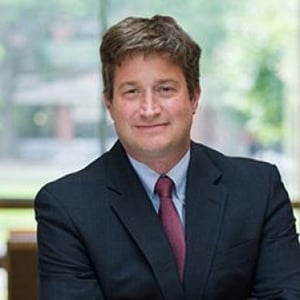
Dean and Bernard G. Segal Professor of Law, University of Pennsylvania Law School
Theodore Ruger brings fresh insight to the study of some of the oldest questions of American law – namely the theoretical justifications for, and empirical contours of, the application of judicial authority. In exploring these issues, Ruger supplements traditional legal analysis with the methods of other disciplines, including history and political science. His work has appeared in the Harvard Law Review, the Columbia Law Review, the University of Pennsylvania Law Review, the University of Pennsylvania Journal of Constitutional Law, the Northwestern Law Review, and as the centerpiece of a symposium in Perspectives on Politics, a leading peer-reviewed political science journal. In addition to his interests in constitutional law and legislation, Ruger also teaches and writes in the area of health law and pharmaceutical regulation. His current research in that field draws on his broader work on judicial power and constitutionalism, and addresses the manner in which American legal institutions – including the U.S. Supreme Court – have shaped the field of health law over the past two centuries.
U.S. Court of Appeals, Third Circuit
Anthony J. Scirica, Chief Judge of the United States Court of Appeals for the Third Circuit, is currently the chair of the Executive Committee of the Judicial Conference of the United States. Chief Judge Scirica is the former chair of the Standing Committee on Rules of Practice and Procedure of the Judicial Conference of the United States and was a member of the Advisory Committee on Civil Rules. He was also chair of the Judicial Conference Working Group on Mass Torts. He is a former member of the Judicial Panel on Multi-District Litigation.
Chief Judge Scirica practiced law in Pennsylvania, where he also served as an ssistant district attorney and a judge of the Court of Common Pleas. He was a member of the Pennsylvania Legislature and also served as chair of the Pennsylvania Sentencing Commission. In 1984 he was appointed to the United States District Court for the Eastern District of Pennsylvania, and in 1987, to the Court of Appeals. He is a member of the American Law Institute.
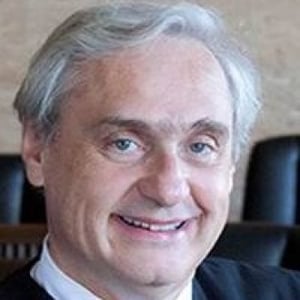
Former Judge, United States Court of Appeals, Ninth Circuit
Judge Kozinski served as a United States Circuit Judge for the Ninth Circuit from November 1985 until December 2017. He served as Chief Judge from 2007 to 2014. He graduated from UCLA, receiving an A.B. degree in 1972, and from UCLA Law School, receiving a J.D. degree in 1975.
Prior to his appointment to the appellate bench, Judge Kozinski served as Chief Judge of the United States Claims Court, 1982-85; Special Counsel, Merit Systems Protection Board, 1981-82; Assistant Counsel, Office of Counsel to the President, 1981; Deputy Legal Counsel, Office of President-Elect Reagan, 1980-81; Attorney, Covington & Burling, 1979-81; Attorney, Forry Golbert Singer & Gelles, 1977-79; Law Clerk to Chief Justice Warren E. Burger, 1976-77; and Law Clerk to Circuit Judge Anthony M. Kennedy, 1975-76.
Judge Kozinski is married to Marcy Jane Tiffany and has three children: Yale, Wyatt and Clayton, and three grandchildren: Quinn, Owen and Anna.

Former President & CEO, The Federalist Society for Law and Public Policy Studies
Eugene B. Meyer, former President and CEO of the Federalist Society, has served as Executive Director, CEO, and/or President of the organization for more than 40 years. He is responsible for shepherding the organization from a small group of law students to a community of 90,000 lawyers, law students, academics, judges, and others interested in the rule of law. The Society now includes a Student Chapter at nearly every ABA-accredited law school in the country and Lawyers Chapters in 220 major cities across the nation. Gene earned his B.A. in history at Yale in 1975 and his M.A. in political science from the London School of Economics in 1976. Gene currently serves on the boards of the U.S. Chess Center, the Holman Foundation, the Sarah Scaife Foundation, and the advisory board of the Adam Smith Society. He holds the title of International Chess Master.
U.S. Court of Appeals, Ninth Circuit
Stephen Roy Reinhardt is a federal appeals judge with the United States Court of Appeals for the Ninth Circuit in San Francisco. He joined the Court in 1980 after being nominated by President Jimmy Carter.
Born in New York City, New York, Reinhardt graduated from Pomona College with his Bachelor's degree in 1951 and later received a Bachelors of Laws degree, LL.B, from Yale Law School in 1954. Reinhardt served in the U.S. Air Force from 1954 to 1956 before becoming a law clerk for the Honorable Luther Youngdahl in the United States District Court for the District of Columbia until 1957. Reinhardt was a private practice attorney in the State of California from 1957 to 1980. Reinhardt was nominated to the United States Court of Appeals for the Ninth Circuit by President Jimmy Carter on November 30, 1979, to a new seat created by 92 Stat. 1629, which was approved by Congress. Reinhardt was confirmed by the U.S. Senate on September 11, 1980 and received commission on September 11, 1980.

Judge, United States Court of Appeals, Ninth Circuit
Judge Carlos Bea serves as a judge on the United States Court of Appeals for the Ninth Circuit. He received his Bachelor's Degree from Stanford University in 1956 and his J.D. from Stanford Law School in 1958. Judge Bea was born in San Sebastian, Spain, and immigrated with his family to Cuba in 1939. In 1952, he represented Cuba on the Cuban National basketball team in the Helsinki Olympics. Judge Bea became a naturalized citizen of the United States in 1958. He engaged in private practice in San Francisco, principally in the area of civil trials (jury and non-jury), from 1959-75 at Dunne, Phelps & Mills and from 1975-90 at Carlos Bea, A Law Corporation. He taught courses in civil litigation advocacy at Hastings College of Law and Stanford Law School. From 1990 to 2003, Judge Bea served as a judge of the San Francisco Superior Court. He was nominated by President George W. Bush to the United States Court of Appeals for the Ninth Circuit and was confirmed in 2003.
Judge Bea and his wife Louise reside in San Francisco, where they raised their four sons, Sebastian, Alexander, Nicholas, and Dominic.
Member, NLRB
Bill works with a broad range of clients, including trade associations, hospitals and other health care institutions, school districts, transportation and logistics companies and manufacturing companies.
He is a member of Littler Mendelson's Traditional Labor Practice Group and editor of the firm's traditional labor blog, Labor Relations Counsel. He also authored several amicus curiae briefs on behalf of trade associations in cases challenging state laws that allow labor unions to trespass on the private property of employers, including a landmark case now pending at the California Supreme Court.

Chief Economist and Head of Analytics, Trulia
As chief economist and head of analytics, Jed oversees Trulia’s research programs. Applying a background in economic development and research methods, he transforms real estate data, economic trends and public policy debate into digestible insights for home buyers, sellers and renters.
In Jed’s prior role as associate director and research fellow at the Public Policy Institute of California, he led research projects and advised policymakers and business leaders on economic, housing and technology policies. Before his work at PPIC, Jed directed Forrester Research’s consumer-technology market research, advising corporate executives on technology adoption and demand. Jed has also held positions at the Office of Federal Housing Enterprise Oversight (now FHFA), the World Bank and the Progressive Policy Institute.
Jed earned his bachelor’s degree in social studies and his doctorate in economics at Harvard University.
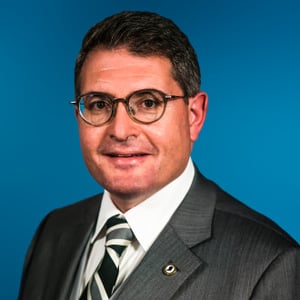
Co-Chairman, The Federalist Society for Law and Public Policy Studies
Leonard is Co-Chairman and former Executive Vice President of the Federalist Society, joining the organization over 25 years ago. Since that time he has been instrumental in helping the organization top 70,000, focusing on the growth of lawyers membership, operations and activities advancing limited, constitutional government. In addition to his work at the Society, Leonard has advised President Trump on judicial selection, assisted with the Gorsuch and Kavanaugh Supreme Court selection and confirmation process, and served as a member of the transition team. He also organized the outside coalition efforts in support of the Roberts and Alito U.S. Supreme Court confirmations. Leonard was appointed by President George W. Bush to three terms to the U.S. Commission on International Religious Freedom as chairman. He was also a U.S. Delegate to the UN Council and UN Commission on Human Rights during the Bush Administration. Leonard was the recipient of the 2009 Bradley Prize, along with the other founders and directors of the Federalist Society, for his work in advancing freedom and the rule of law. He is the coeditor of Presidential Leadership: Rating the Best and the Worst in the White House, as well as the author of opinion editorials in the New York Times,The Wall Street Journal, and Washington Post. Leonard holds degrees from Cornell University and Cornell Law School. He presently resides in Northern Virginia, where he and his wife Sally have raised their seven children.
Attorney, Spiro Moss LLP
Mr. Leviant is a civil litigation attorney with over 11 years of experience (10 as an attorney) handling complex and class action matters. Over the last five years, Mr. Leviant litigated class actions at several large plaintiffs' firms. Before that, Mr. Leviant worked at the small civil litigation firm Stanbury & Fishelman, Inc., where he handled increasingly sophisticated matters, including complex commercial litigations, class actions, appellate matters and civil trials.
Mr. Leviant has obtained several published appellate decisions, including Ghazaryan v. Diva Limousine, Ltd. 169 Cal. App. 4th 1524 (2009), which reversed a denial of class certification and obtained an Order of the Court of Appeal directing certification of the proposed class, Laliberte v. Pacific Mercantile Bank, 147 Cal. App. 4th 1 (2007), which reversed an adverse trial court ruling and reaffirmed the expansive nature of the “community of interest” concept in California class actions, andJohnson v. Glaxosmithkline, Inc., 166 Cal. App. 4th 1497 (2008), as modified (October 14, 2008), rev. denied, which reversed an adverse trial court ruling and questioned the rationale and viability of Alvarez v. May Dept. Stores Co., 143 Cal. App. 4th 1223 (2006).
Mr. Leviant is also the founder, primary author and Editor-in-Chief of The Complex Litigator, a legal blog focusing on developments in the areas of class action practice, complex litigation, and technology for small firms. In addition to his blog, Mr. Leviant has authored or co-authored various published articles.
Mr. Leviant is in his third year of service on the Board of Governors for the Consumer Attorneys of California.
Mr. Leviant is admitted to practice before the United States Supreme Court, the United States Court of Appeals for the Eighth and Ninth Circuits, the United States District Courts for the Central, Southern and Northern Districts of California and all California Courts.
Mr. Leviant received his undergraduate degree from Occidental College. Graduating cum laude, Mr. Leviant majored in economics and received a “minor” emphasis in mathematics. Along with his study of economics and mathematics, he also had an emphasis in physics. This combination of scientific and economic education has been of assistance during his litigation of complex civil actions. Mr. Leviant received his law degree from the University of Southern California Law Center.
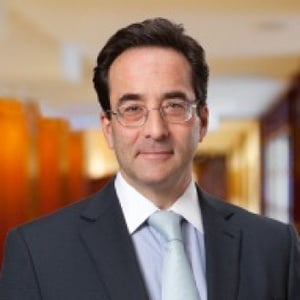
Partner, Irell & Manella LLP
David Schwarz is a member of the litigation practice group. Although he has represented clients in a broad range of complex commercial disputes and internal investigations, a primary focus of Mr. Schwarz's practice has been the defense of class actions, with emphasis on securities and shareholder claims against public corporations and parallel SEC investigations and enforcement actions. He has litigated a wide range of federal and state class actions alleging anti-discrimination claims, unfair labor practices, wage-and-hour disputes, anti-trust and unfair business claims.
Mr. Schwarz’s appellate experience in state and federal courts is extensive, and includes two matters now before the California Supreme Court, as well as numerous appeals pending in the U.S. Court of Appeals for the Ninth Circuit and in the California Courts of Appeal. His current representations include the successful defense of Gerawan Farming, Inc., the nation’s largest grower of peaches, in two precedent-setting constitutional challenges to the compulsory arbitration procedures under the California Agricultural Labor Relations Act (ALRA). He also represents the City of San Jose in appellate proceedings challenging the constitutionality of the City’s 2012 landmark pension reform referendum.
Recognized as a leading trade secrets litigator by The Legal 500, Mr. Schwarz has litigated numerous cases involving idea submission and trade secret mis-appropriation in industries ranging from avionics and rocket propulsion systems to consumer goods and food processing techniques. Prior representations include Space Exploration Technologies Corporation ("SpaceX"), Eclipse Aviation, Pacific Scientific Aerospace, Marquez Brothers International, Williams-Sonoma, and Pottery Barn.
Mr. Schwarz also represents clients in matters relating to IP disputes, involving patent infringement and patent licensing, trademarks and copyright. In the area of trademarks, recent representative matters include KFC National Council and Advertising Cooperative, Inc. v. KFC Corporation (Delaware Court of Chancery), in which Mr. Schwarz successfully defended KFC Corp.'s right to maintain control over brand advertising funded through a Delaware corporation jointly managed by KFC franchisees and the company.
Mr. Schwarz has written on a variety of topics relating to securities litigation, securities reform legislation, white-collar criminal defense, and the defense of attorneys, accountants, and other professionals in securities class actions. Past speaking engagements include the Practicing Law Institute, the California Society of CPAs, and the Class and Derivative Litigation Institute. He served as a member of the Advisory Board of the Duke University Global Capital Markets Center and was a featured panelist at the Directors' Education Institute at Duke University and the Smith School of Business Corporate Governance Program (University of Maryland).
Mr. Schwarz also served as the Special Assistant to the Staff Director of the United States Commission on Civil Rights. Following graduation from Duke University School of Law, Mr. Schwarz clerked for the Honorable Alex Kozinski, former Chief Judge of the United States Court of Appeals for the Ninth Circuit, after which he served as Special Assistant to the Honorable Morris B. Abram, the United States Permanent Representative to the European Office of the United Nations and Other International Organizations. In that capacity, Mr. Schwarz advised U.S. delegations on a wide range of public international law issues. He also served as U.S. Delegate to a number of International and United Nations conferences, including the United Nations Human Rights Commission, the World Intellectual Property Conference, and the International Labor Conference.
Mr. Schwarz was appointed in 2001 by President George W. Bush as U.S. Delegate to the United Nations Human Rights Commission. He is also a former Trustee of the Washington Institute for Near East Policy.
Mr. Schwarz served two terms (2007-2016) as a gubernatorial appointee and Vice-Chairman of the Milton Marks "Little Hoover" Commission on California State Government Organization and Economy, an independent, bi-partisan government oversight board.
Mr. Schwarz is former chair and currently a member of the Firm's Pro Bono Committee. Public Counsel named him its "Advocate of the Year" for his work in the area of elder law advocacy. Mr. Schwarz is also a member of the Board of Directors of the Los Angeles Metropolitan Debate League, which is focused on bringing competitive debate to inner-city schools, and serves on the board of LDOS Media Lab, a non-profit whose mission is the development of science curriculum in public schools.
Laurence A. Tisch Professor of Law and Director, Classical Liberal Institute, New York University School of Law; Director, Classical Liberal Institute, Civitas Institute University of Texas at Austin
Richard A. Epstein is the inaugural Laurence A. Tisch Professor of Law at NYU School of Law. Prior to his joining the faculty, he was a visiting law professor at NYU from 2007 through 2009. He served as the Peter and Kirstin Bedford Senior Fellow at the Hoover Institution from 2000 to 2024. Since 2024 to the present he is a senior lecturer at the Civitas Institute at the University of Texas—Austin. Epstein is also the James Parker Hall Distinguished Service Professor of Law Emeritus and a senior lecturer at the University of Chicago. His initial law school appointment was at the University of Southern California from 1968 to 1972. Epstein received an LL.D., h.c. from the University of Ghent, 2003. He has been a member of the American Academy of Arts and Sciences since 1985 and was a Senior Fellow of the Center for Clinical Medical Ethics at the University of Chicago Division of Biological Sciences, also from 1983. to 2022 He served as editor of the Journal of Legal Studies from 1981 to 1991, and of the Journal of Law and Economics from 1991-2001. From 2001 to 2010 he was a director of the John M. Olin Program in Law and Economics at the University of Chicago.
His newest book, The Myth of Birthright Citizenship: What the Fourteenth Amendment Really Says was published in 2026 (Encounter Books). Prior to that he has published many books including, The Dubious Morality of the Modern Administrative State (Roman & Littlefield 2020).Earlier he published th Classical Liberal Constitution: The Uncertain Quest for Limited Government (Harvard 2014) iHis previous books include Design for Liberty: Private Property, Public Administration and the Rule of Law (Harvard 2011); The Case Against the Employee Free Choice Act (Hoover 2009); Supreme Neglect: How to Revive the Constitutional Protection of Property Rights (Oxford 2008); Antitrust Decrees in Theory and Practice: Why Less is More (AEI 2007); Overdose: How Excessive Government Regulation Stifles Pharmaceutical Innovation (Yale University Press. 2006); How Progressives Rewrote the Constitution (Cato 2006); Cases and Materials on Torts (Aspen Law & Business; 8th ed. 2004); Skepticism and Freedom: A Modern Case for Classical Liberalism (University of Chicago, 2003); Torts (Aspen Law & Business 1999); Principles for a Free Society: Reconciling Individual Liberty with the Common Good (Perseus Books, 1998): Mortal Peril: Our Inalienable Rights to Health Care (Addison-Wesley, 1997); Simple Rules for a Complex World (Harvard, 1995); Bargaining With the State (Princeton, 1993); Forbidden Grounds: The Case Against Employment Discrimination Laws (Harvard , 1992); Takings: Private Property and the Power of Eminent Domain (Harvard, 1985); and Modern Products Liability Law (Greenwood Press, 1980). He has also edited(with Catherine M. Sharkey) Cases and Materials on the Law of Torts (10th edition 2012).
Professor Epstein has written numerous articles on a wide range of legal and interdisciplinary subjects. He has taught courses in administrative law, antitrust law, civil procedure, communications, constitutional law, contracts, corporations, criminal law, employment discrimination law, environmental law, food and drug law health law and policy, legal history, labor law, property, real estate development and finance, jurisprudence, labor law; land use planning, patents, individual, estate and corporate taxation, Roman Law; torts, and workers' compensation.
Professor Epstein also writes a regular column for Civitas Institute, which also sponsors his podcast, The Libertarian with Charles C.W. Cooke, and Law Talk, with Cooke and John Yoo. He also does a podcast with John Batchelor. And appears regularly on the Freedom File with Judge Andrew Napolitano.
President, University of Pennsylvania Student Chapter
Dean and Bernard G. Segal Professor of Law, University of Pennsylvania Law School
Theodore Ruger brings fresh insight to the study of some of the oldest questions of American law – namely the theoretical justifications for, and empirical contours of, the application of judicial authority. In exploring these issues, Ruger supplements traditional legal analysis with the methods of other disciplines, including history and political science. His work has appeared in the Harvard Law Review, the Columbia Law Review, the University of Pennsylvania Law Review, the University of Pennsylvania Journal of Constitutional Law, the Northwestern Law Review, and as the centerpiece of a symposium in Perspectives on Politics, a leading peer-reviewed political science journal. In addition to his interests in constitutional law and legislation, Ruger also teaches and writes in the area of health law and pharmaceutical regulation. His current research in that field draws on his broader work on judicial power and constitutionalism, and addresses the manner in which American legal institutions – including the U.S. Supreme Court – have shaped the field of health law over the past two centuries.
U.S. Court of Appeals, Third Circuit
Anthony J. Scirica, Chief Judge of the United States Court of Appeals for the Third Circuit, is currently the chair of the Executive Committee of the Judicial Conference of the United States. Chief Judge Scirica is the former chair of the Standing Committee on Rules of Practice and Procedure of the Judicial Conference of the United States and was a member of the Advisory Committee on Civil Rules. He was also chair of the Judicial Conference Working Group on Mass Torts. He is a former member of the Judicial Panel on Multi-District Litigation.
Chief Judge Scirica practiced law in Pennsylvania, where he also served as an ssistant district attorney and a judge of the Court of Common Pleas. He was a member of the Pennsylvania Legislature and also served as chair of the Pennsylvania Sentencing Commission. In 1984 he was appointed to the United States District Court for the Eastern District of Pennsylvania, and in 1987, to the Court of Appeals. He is a member of the American Law Institute.
Judge, United States Court of Appeals, Eighth Circuit
Morris Sheppard Arnold is a federal judge on the United States Court of Appeals for the 8th Circuit. He joined the court in 1992 after being nominated by President George H.W. Bush. Prior to his appointment, he served on the U.S. District Court for the Western District of Arkansas after a nomination by Ronald Reagan in 1985. He assumed senior status on October 9, 2006.
Morris also served as a judge on the Foreign Intelligence Surveillance Court of Review from 2008 to 2013. He was the presiding judge on that court from 2012 to 2013.
Judge, United States Court of Appeals, Fifth Circuit
Edith Jones graduated from Alamo Heights High School, where she was a National Merit Scholar. In 1971, she received her B.A. in Economics from Cornell University, graduating with honors. In 1974, she was awarded her J.D. at the University of Texas Law School, where she was a law review editor and received the Order of the Coif.
Judge Jones was the first female partner at Andrews, Kurth, Campbell & Jones (now Hunton Andrews Kurth) where she practiced various types of litigation and bankruptcy cases. Judge Jones went on the federal bench on June 1, 1985.
Judge Jones served as a former member of the National Bankruptcy Review Commission, and as a member of the Judicial Conference Commission on Bankruptcy Rules. Judge Jones served on the White House Fellows Commission. Judge Jones served on the board of the Sam Houston Area Council of the Boy Scouts of America. She has been a member of the Garland Walker Inn of Court in Houston for more than 20 years and its President for at least ten years. Judge Jones is also on the Board of the Calvin Coolidge Presidential Foundation.
Distinguished Fellow, Hudson Institute
Christopher DeMuth is a distinguished fellow at Hudson Institute. He was president of the American Enterprise Institute for Public Policy Research (AEI) from 1986 to 2008 and was the D.C. Searle Senior Fellow at AEI from 2008 to 2011.
Mr. DeMuth was raised in Kenilworth, Illinois, and attended the Lawrenceville School (1964), Harvard College (A.B. 1968), and the University of Chicago Law School (J.D. 1973). He served as staff assistant to President Richard M. Nixon from 1969 to 1970, working first for Daniel P. Moynihan (then assistant to the President for Urban Affairs) on urban policy matters and then as chairman of the White House Task Force on Environmental Policy. Following law school, he practiced regulatory, antitrust, and general corporate law with Sidley & Austin in Chicago (1973-1976) and was associate general counsel of the Consolidated Rail Corporation (Conrail) in Philadelphia (1976-1977).
From 1977 to 1981, Mr. DeMuth was lecturer in public policy at the Kennedy School of Government at Harvard University, and director of the Harvard Faculty Project on Regulation. There he taught courses on law, economics, and regulatory policy and conducted and sponsored research on health, safety, environmental, and economic regulation.
Returning to Washington in 1981, Mr. DeMuth served as administrator for information and regulatory affairs in the U.S. Office of Management and Budget, and as executive director of the Presidential Task Force on Regulatory Relief during President Ronald Reagan’s first term of office. From 1984 to 1986, he was managing director of Lexecon Inc., a law-and-economics consulting firm; in 1986, he was also publisher and editor-in-chief of Regulation magazine. He was elected president of the American Enterprise Institute in December 1986.
Many of Mr. DeMuth’s articles, lectures, and occasional talks are posted on his website (https://www.ccdemuth.com).

Professor of Law, Antonin Scalia Law School, George Mason University
Professor of Law Michael S. Greve joined the faculty of the Antonin Scalia Law School, George Mason University in fall 2012 after having served as John G. Searle Scholar at the American Enterprise Institute (AEI), where he specialized in constitutional law, courts, and business regulation and served as chairman of the Competitive Enterprise Institute. Prior to joining AEI, Greve was founder and co-director of the Center for Individual Rights, a public interest law firm specializing in constitutional litigation.
Greve has served previously as an adjunct professor at a number of universities, including Cornell and Johns Hopkins Universities, and has been a visiting professor at Boston College since 2004. He was awarded a PhD and an MA in government by Cornell University. Greve also earned a Diploma from the University of Hamburg in Germany.
A prolific writer, Greve is the author of nine books and a multitude of articles appearing in scholarly publications, as well as numerous editorials, short articles, and book reviews. He is a frequent speaker for professional and scholarly organizations and has made many appearances on radio and television.
In addition Greve has provided congressional and state legislative testimony, has lobbied and consulted in federal agency proceedings, and has provided litigation services and management in over 30 cases, including matters before the U.S. Supreme Court.

William T. Comfort, III Professor of Law, New York University School of Law
Roderick Hills teaches and writes in public law areas, including constitutional law, local government law, land-use regulation, administrative law, and statutory interpretation. His focus in each area is on the rules and policies governing division of powers between central and subcentral governments. He holds bachelor’s and law degrees from Yale University. Following law school, he served as a law clerk for Judge Patrick Higginbotham of the US Court of Appeals for the Fifth Circuit and practiced law in Colorado. Hills previously taught at the University of Michigan Law School from 1994 to 2006. He is a member of the state bar of New York and the U.S. Supreme Court.

Associate Justice, Supreme Court of the United States
Associate Justice Brett Kavanaugh was born in Washington, D.C., on February 12, 1965. He married Ashley Estes in 2004, and they have two daughters - Margaret and Liza. He received a B.A. from Yale College in 1987 and a J.D. from Yale Law School in 1990. He served as a law clerk for Judge Walter Stapleton of the U.S. Court of Appeals for the Third Circuit from 1990-1991, for Judge Alex Kozinski of the U.S. Court of Appeals for the Ninth Circuit from 1991-1992, and for Justice Anthony M. Kennedy of the U.S. Supreme Court during the 1993 Term. In 1992-1993, he was an attorney in the Office of the Solicitor General of the United States. From 1994 to 1997 and for a period in 1998, he was Associate Counsel in the Office of Independent Counsel. He was a partner at a Washington, D.C., law firm from 1997 to 1998 and again from 1999 to 2001. From 2001 to 2003, he was Associate Counsel and then Senior Associate Counsel to President George W. Bush. From 2003 to 2006, he was Assistant to the President and Staff Secretary for President Bush. He was appointed a Judge of the United States Court of Appeals for the District of Columbia Circuit in 2006. President Donald J. Trump nominated him as an Associate Justice of the Supreme Court, and he took his seat on October 6, 2018.
Senior Fellow, Governance Studies, The Brookings Institution
Benjamin Wittes is a senior fellow in Governance Studies at The Brookings Institution. He co-founded and is the editor-in-chief of the Lawfare blog, which is devoted to sober and serious discussion of "Hard National Security Choices," and is a member of the Hoover Institution's Task Force on National Security and Law. He is the author of Detention and Denial: The Case for Candor After Guantanamo, published in November 2011, co-editor of Constitution 3.0: Freedom and Technological Change, published in December 2011, and editor of Campaign 2012: Twelve Independent Ideas for Improving American Public Policy (Brookings Institution Press, May 2012). He is also writing a book on data and technology proliferation and their implications for security. He is the author of Law and the Long War: The Future of Justice in the Age of Terror, published in June 2008 by The Penguin Press, and the editor of the 2009 Brookings book, Legislating the War on Terror: An Agenda for Reform.
His previous books include Starr: A Reassessment, published in 2002 by Yale University Press, and Confirmation Wars: Preserving Independent Courts in Angry Times, published in 2006 by Rowman & Littlefield and the Hoover Institution.
Between 1997 and 2006, he served as an editorial writer for The Washington Post specializing in legal affairs. Before joining the editorial page staff of The Washington Post, Wittes covered the Justice Department and federal regulatory agencies as a reporter and news editor at Legal Times. His writing has also appeared in a wide range of journals and magazines including The Atlantic, Slate, The New Republic, The Wilson Quarterly, The Weekly Standard, Policy Review, and First Things.
Benjamin Wittes was born in Boston, Massachusetts. He graduated from Oberlin College in 1990, and he has a black belt in taekwondo.
David and Mary Harrison Distinguished Professor of Law Emeritus, University of Virginia School of Law
Lillian BeVier taught constitutional law (with special emphasis on First Amendment issues), intellectual property (trademark, copyright), real property and torts from 1973-2010 at the Law School, and now teaches a January Term course on judicial philosophy.
At Stanford Law School, BeVier was revising editor for the Stanford Law Review and a member of the Order of the Coif. Before coming to Virginia, she was associate professor of law at the University of Santa Clara Law School; practiced law with Spaeth Blase Valentine & Klein in Palo Alto, Calif.; served as research associate to Professor William F. Baxter at Stanford University Law School, working on the FAA-ABA study of the legal aspects of airport noise and the sonic boom; and was assistant to the general secretary and assistant staff legal counsel for Stanford University.
BeVier received the University of Virginia Alumni Association Distinguished Professor Award in 2006. The Raven Society elected her to membership in 1993 and honored her with the faculty award in 2010. She delivered the Henry Miller Memorial Lecture at Georgia State Law School in 2005, the Coen Memorial Lecture at the University of Colorado Law School in 2000, and the David C. Baum Lecture on Civil Rights and Civil Liberties at the University of Illinois Law School in 1996. In 1999, at the invitation of the Supreme Court Historical Society, she spoke to the Society on Free Expression in the Warren and Burger Courts. Suffolk University awarded her an honorary S.J.D. degree in 1998. In the fall of 2003, she was a visiting scholar at the National Constitution Center in Philadelphia.
Having been nominated by President Bush and confirmed by the Senate in 2003, she served as vice-chair of the Board of Directors of the Legal Services Corporation until 2009. She serves on the national Board of Visitors of the Federalist Society. Within the Charlottesville community, BeVier has served as chair of the Board of Trustees of St. Anne’s-Belfield School and of the Martha Jefferson Hospital. She is currently chair of the board of the Martha Jefferson Health Services Corporation and of Piedmont CASA (Court-Appointed Special Advocates).
United States Court of Appeals, Fourth Circuit
James Harvie Wilkinson III is an Article III federal judge on the United States Court of Appeals for the Fourth Circuit. He joined the Court in 1984 after being nominated by President Ronald Reagan.
Born in New York City, New York, Wilkinson graduated from Yale University with his Bachelor's degree in 1967. Wilkinson served in the United States Army from 1968 to 1969 and received his Juris Doctor degree from the University of Virginia School of Law in 1972.
On the recommendation of Virginia U.S. Senator John Warner, Wilkinson was nominated to the United States Court of Appeals for the Fourth Circuit by President Ronald Reagan on January 30, 1984 to a seat vacated by John Butzner, Jr.,. Wilkinson was confirmed by the Senate on August 9, 1984 on a Senate vote and received commission on August 13, 1984. Wilkinson served as the Chief Judge of the Court from 1996 to 2003.
Associate Justice, Supreme Court of the United States
Associate Justice Brett Kavanaugh was born in Washington, D.C., on February 12, 1965. He married Ashley Estes in 2004, and they have two daughters - Margaret and Liza. He received a B.A. from Yale College in 1987 and a J.D. from Yale Law School in 1990. He served as a law clerk for Judge Walter Stapleton of the U.S. Court of Appeals for the Third Circuit from 1990-1991, for Judge Alex Kozinski of the U.S. Court of Appeals for the Ninth Circuit from 1991-1992, and for Justice Anthony M. Kennedy of the U.S. Supreme Court during the 1993 Term. In 1992-1993, he was an attorney in the Office of the Solicitor General of the United States. From 1994 to 1997 and for a period in 1998, he was Associate Counsel in the Office of Independent Counsel. He was a partner at a Washington, D.C., law firm from 1997 to 1998 and again from 1999 to 2001. From 2001 to 2003, he was Associate Counsel and then Senior Associate Counsel to President George W. Bush. From 2003 to 2006, he was Assistant to the President and Staff Secretary for President Bush. He was appointed a Judge of the United States Court of Appeals for the District of Columbia Circuit in 2006. President Donald J. Trump nominated him as an Associate Justice of the Supreme Court, and he took his seat on October 6, 2018.
Solicitor General, Kansas, and Professor of Law, University of Kansas School of Law
 Stephen R. McAllister is a native Kansan who grew up in Lucas, Kansas and graduated from Lucas-Luray High School. Growing up, he also lived in Hiawatha and Chanute, Kansas. He received both his B.A. and his J.D. degrees from the University of Kansas.
Following his graduation from law school, Steve clerked for Judge Richard Posner of the United States Court of Appeals for the Seventh Circuit in Chicago, and then for Justices Byron White and Clarence Thomas of the Supreme Court of the United States. After his clerkships Steve worked in the Washington, D.C. office of the Los Angeles law firm, Gibson, Dunn & Crutcher.
In 1993, Steve returned to his alma mater as a visiting professor of law. In 1999 he received tenure and promotion to the rank of full Professor. He served as Dean of the KU Law School from 2000 – 2005.
As a professor, Steve teaches constitutional law, constitutional litigation and torts. He won the Frederick J. Moreau Award for student advising in 1997, and a W.T. Kemper Award for excellence in teaching in 1999. As a scholar, Steve has written on a variety of constitutional topics, including affirmative action, capital punishment, federalism, and sex offender laws. Steve is an elected a Fellow of the American Bar Foundation and a Trustee of the Supreme Court Historical Society.
Steve also has appeared before the Supreme Court of the United States several times. From 1999 – 2003, he served as the first State Solicitor for Kansas, assisting the Kansas Attorney General’s office in state cases raising important constitutional issues. In both 2001 and 2002, Supreme Court briefs that Steve authored for the State of Kansas won Best Brief Prizes at the annual summer meeting of the National Association of Attorneys General.
From May 2006 until March 2007, Steve served as Legislative Counsel for Kansas, advising the legislature regarding legal issues. In that capacity, Steve participated in the Kansas school finance litigation in the Kansas Supreme Court, filing a brief on behalf of the Kansas Legislature and presenting oral argument on behalf of the State as a special assistant attorney general. Since May 2007, Steve has served as Solicitor General of Kansas in the office of the Kansas Attorney General, briefing and arguing important cases involving abortion, the death penalty, freedom of speech, and right to a jury trial.
Steve speaks regularly on a variety of constitutional topics, as well as judicial confirmation and the Supreme Court as an institution.
Clerk, Judge Richard Posner, U.S. Court of Appeals, 7th Circuit 1988-89; Clerk, Justice Byron White, U.S. Supreme Court 1989-91; Clerk, Justice Clarence Thomas, U.S. Supreme Court 1991-1992; Associate, Gibson, Dunn & Crutcher, DC, 1992-93; Visiting Associate Professor, Kansas 1993-95, Associate Professor, Kansas 1995-98, Professor since 1999; Associate Dean of Academic Affairs 1999-2000; Dean 2000-2005; Interim Director, Dole Institute of Politics 2003-04.
J.D. 1988, Kansas, Articles Editor, University of Kansas Law Review; B.A. 1985, Kansas

Is the Affordable Care Act Constitutional?
Richard A. Epstein, Daniel Pollack, Theodore Ruger, Anthony J. Scirica
On February 22, 2012, the University of Pennsylvania Student Chapter of the Federalist Society hosted...
Is the Affordable Care Act Constitutional?
Pennsylvania Student Chapter
Philadelphia, PAHow Religion Has Affected the Law and (Maybe) Judges
Bankruptcy Abuse Prevention & Consumer Protection Act
The Upside-Down Constitution
Washington, District of ColumbiaThe Rule of Law
Separation of Powers in the Bush & Obama Administrations
A Conversation Between Judge Kozinski and Judge Reinhardt
Alex Kozinski, Eugene B. Meyer, Stephen Reinhardt
This discussion between Judge Alex Kozinski and Judge Stephen Reinhardt was featured at the Sixth...
California in Crisis: Are People and Jobs Leaving for Better Pastures?
Carlos T. Bea, William J. Emanuel, Jed Kolko, Leonard A. Leo, Scott Leviant, David A. Schwarz, Kate Comerford Todd
Much has been written lately about companies’ unwillingness to invest or create new jobs in...
Do the Courts Subvert the Constitution?
Austin, Texas