
Counsel, White & Case
Antonio Garza served as the U.S. Ambassador to Mexico from 2002 through 2009 and is now Counsel to White & Case in Mexico City. Garza is currently a Director to both Kansas City Southern (NYSE:KSU), where he is member of the Executive Committee and Chairman of the company's subsidiary, Kansas City Southern de Mexico, and MoneyGram (NYSE:MGI) where he serves as Chairman of the company's Committee on Compliance and Ethics. Additionally, Garza is a Trustee at Southern Methodist University (J.D.,1983) and acts as Chairman of the university's Committee on Legal and Governmental Affairs and is a past-Chairman and President of the TexasExes, the alumni association of the University of Texas at Austin (B.B.A.,1980). Mr. Garza served as Chairman of the Texas Railroad Commission from 1998-2002, and prior to that as Texas 99th Secretary of State and Cameron County Judge , 1988-1994.

Principal, Navigators Global
Andy Keiser served 14 years on Capitol Hill for former House Intelligence Committee Chairman Mike Rogers - as Senior Advisor to the Committee, Chief of Staff, and Legislative Director handling all national security policy issues.
As Deputy National Security Senior Advisor to the pre-election phase of the Trump for America transition team, Mr. Keiser prepared and advised the transition's policy, personnel and agency action teams on all aspects of the national security portfolio. This included work in the Departments of Defense, State, Justice, Homeland Security, the Intelligence Community, and the National Security Council.
He was also the head writer for a nationally-syndicated radio program and assisted in the production of the CNN series “Declassified.”
Mr. Keiser has written extensively on intelligence, space and cyber policy, missile defense, Afghanistan, China, Iran, ISIS, North Korea, and Russia. He also helped shepherd six Intelligence Authorization Acts into law and managed Chairman Rogers’ cyber threat sharing legislation, which passed the House twice and the core of which was later signed into law by President Obama.
He has a Bachelor of Arts from Michigan State University and a Master of Arts from the United States Naval War College. He is active on various national security-focused policy projects at the Center for the Study of the Presidency and Congress, where he serves as a Senior Advisor, and at the National Security Institute at George Mason University’s Antonin Scalia Law School, where he serves as a Fellow. He also is a member of the OSS Society and serves on the Meridian International Center’s Global Leadership Council.
Mr. Keiser is currently a Principal at Navigators Global, where he focuses on cybersecurity and other national security priorities. Dubbed a “national security expert” by the Washington Post, Andy is a regular media commentator on national security issues.
Professor of Law, Vanderbilt Law School

Professor Emeritus of Law, Antonin Scalia Law School, George Mason University
Jeremy A. Rabkin is a Professor Emeritus of Law at the Antonin Scalia Law School, George Mason University. Before joining the faculty in June 2007, he was for over two decades a professor in the Department of Government at Cornell University. Professor Rabkin serves on the board of directors of the Center for Individual Rights, a public interest law firm based in Washington, D.C. Previously he was a board member of the U.S. Institute of Peace and the board of academic advisors of the American Enterprise Institute.
Professor Rabkin’s books include Law Without Nations? (Princeton University Press, 2005). He authored “If You Need a Friend, Don’t Call a Cosmopolitan,” a chapter in Varieties of Sovereignty and Citizenship (Sigal R. Ben-Porath & Rogers M. Smith eds., University of Pennsylvania Press, 2012). His articles have appeared in major law reviews and political science journals and his journalistic contributions in a range of magazines and newspapers, including the Washington Post and the Wall Street Journal.
General Counsel & Parliamentarian, U. S. House of Representatives, Financial Services Committee
Molly Boyl Fromm is the General Counsel and Parliamentarian for the Financial Services Committee in U.S. House of Representatives. Prior to this role she has served the House as the General Counsel and Parliamentarian for the Committee on Science, Space and Technology and as Deputy General Counsel and Parliamentarian for the Oversight and Government Reform Committee.
She received her Bachelor of Arts in Political Science from the University of California, Berkley and her law degree from The Catholic University of America, Columbus School of Law.
Vice President, Networks, The Federalist Society for Law and Public Policy Studies
Nathan Kaczmarek is Vice President for Networks at the Federalist Society. He began his legal career in Detroit representing nationwide clients in all phases of healthcare litigation and complex medical malpractice claims. He has since served as a Senior Legal and Policy Advisor in the U.S. House of Representatives and as Counsel for the Subcommittee on Regulatory Affairs and Federal Management in the U.S. Senate. Prior to overseeing the Networks, he was Director of the Practice Groups, the Regulatory Transparency Project, and the Article I Initiative for the Federalist Society.
Nathan holds degrees from Hillsdale College and Thomas M. Cooley Law School. He is a Liaison Representative for The Administrative Conference of the United States. He also serves as Vice President of the Associates of St. John Bosco, a Virginia based non-profit dedicated to Catholic high school and college students.
Editor, Modern Age
Daniel McCarthy is the Editor of Modern Age, an American conservative academic quarterly journal. Previously, he was the editor-at-large of The American Conservative from 2010 through 2016. His writing has appeared in The New York Times, USA Today, The Spectator, The National Interest, Reason, Modern Age, and other publications. He has been interviewed on National Public Radio, the BBC, Fox Business, and many other outlets. Outside of journalism, he has worked as internet communications coordinator of the Ron Paul 2008 presidential campaign and senior editor of ISI Books. He is a graduate of Washington University in St. Louis, where he studied classics.
Partner, Akin Gump Strauss Hauer & Feld LLP
Mr. Pomper formerly served as chief international trade counsel to Senate Finance Committee Chairman Max Baucus (D-MT). In that role, he was responsible for advising Chairman Baucus and other members of the Senate Finance Committee on all aspects of the Committee’s international trade and economic agenda.
In his current practice, Mr. Pomper represents companies before Congress, the White House and federal agencies on a diverse set of public policy matters, including market access, investment, international trade disputes, intellectual property, international tax and customs issues.
Mr. Pomper also serves as an adjunct professor teaching international trade policy and politics at George Washington’s Graduate School of Political Management. He was elected 2011 to serve a three-year term as a member of the Steering Committee for the International Law Section of the D.C. Bar. He is an Educational Counselor for the Massachusetts Institute of Technology, for which he interviews students from the Thomas Jefferson High School for Science and Technology in Alexandria, Virginia applying to MIT.
Mr. Pomper is a member of the U.S. patent bar.
With a practice at the intersection of law, economics, domestic politics and international relations, John Herrmann represents clients before all U.S. trade agencies. He counsels U.S. producers of steel, metal, chemical and agricultural products in antidumping and countervailing duty proceedings, and represents clients in major litigation arising from such proceedings. Mr. Herrmann advises on customs-related matters such as classification, duty drawback and civil penalty issues. Mr. Herrmann also counsels clients regarding export control and sanctions-related issues, as well as the preparation and implementation of internal compliance policies and procedures.
Mr. Herrmann returned to Kelley Drye in 2009 following service in the administration of President George W. Bush, including work at the White House on the National Security Council staff. Mr. Herrmann worked as the Special Assistant to the President and Senior Director for International Trade, Energy and Environment. In that position, he was responsible for advising the President on international trade and investment issues and for the international aspects of energy and environmental policy.
At the White House, Mr. Herrmann’s work on key issues included the WTO Doha Round negotiations, efforts to conclude and secure Congressional approval of free trade agreements, overseeing activities of the President’s Interagency Working Group on Import Safety and representing the National Security Council at meetings of the Committee on Foreign Investment in the United States (CFIUS). Mr. Herrmann was also involved in export control and sanctions issues and preparing for meetings of the cabinet-level U.S.-E.U. Transatlantic Economic Council, the U.S.-India Economic Dialogue and CEO Forum, and the U.S.-China Strategic Economic Dialogue, including preparation for the November 2008 G-20 financial summit. Mr. Herrmann was one of only a handful of senior National Security Council staff asked to carryover with the administration of President Barack H. Obama to assist on transition activities.
In addition, Mr. Herrmann served as a senior advisor to the Assistant Secretary of Commerce for Import Administration at the U.S. Department of Commerce, where he advised the Assistant Secretary on issues raised in antidumping, countervailing duty and textile-related proceedings and policy matters before the agency. Mr. Herrmann also worked as a law clerk to former Chief Judge Gregory W. Carman at the United States Court of International Trade, as well as a legal intern to the Chairman of the U.S. International Trade Commission. He began his career at the White House as the Executive Assistant to the Assistant to the President for Economic and Domestic Policy.
Chair, International Trade & National Security Practice Group, Buchanan Ingersoll & Rooney
Mr. Pickard counsels U.S. and international clients on the laws and regulations governing international trade, with particular emphasis on import remedy, anti-bribery, national security, and export control issues. He represents and advises clients in matters related to trade remedy investigations (including antidumping, countervailing duty, and safeguard cases), U.S. economic sanctions, export controls, anti-boycott measures, and the Foreign Corrupt Practices Act (FCPA). Mr. Pickard provides comprehensive international trade law compliance guidance, including assessing and resolving sensitive national security matters; developing corporate compliance programs; establishing compliance with the National Industrial Security Program (NISP) and mitigating Foreign Ownership, Control, or Influence (FOCI) issues; conducting internal investigations relating to potential violations; and appearing before the relevant agencies in connection with investigations, licensing, and enforcement actions. He also teams with the firm’s Election Law & Government Ethics Group to provide guidance pertaining to the Foreign Agents Registration Act (FARA).
Mr. Pickard represents clients before the U.S. International Trade Commission (ITC), the U.S. Department of the Treasury’s Office of Foreign Assets Control (OFAC), the U.S. Department of Justice (DOJ), the U.S. Department of State’s Directorate of Defense Trade Controls (DDTC), the U.S. Department of Commerce’s Bureau of Industry and Security (BIS) and International Trade Administration (ITA), the U.S. Department of Defense’s Defense Security Service (DSS), the Committee on Foreign Investment in the United States (CFIUS), the U.S. Court of International Trade, and the U.S. Court of Appeals for the Federal Circuit.
Professor of Law, Georgetown University Law Center
Alvaro Santos is Professor of Law and Director of the Center for the Advancement of the Rule of Law in the Americas (CAROLA) at Georgetown University. He teaches and writes in the areas of international trade, economic development, drug policy, transnational labor law and the future of NAFTA.
Professor Santos is co-editor of Law and the New Developmental State: The Brazilian Experience in Latin America (2013) and The New Law and Economic Development: A Critical Appraisal (2006). He is also the author of a number of articles and book chapters, including “Carving Out Policy Autonomy for Developing Countries in the World Trade Organization: The Experience of Brazil and Mexico” in the Virginia Journal of International Law (2012), and "Three Transnational Discourses of Labor Law in Domestic Reforms" in the University of Pennsylvania Journal of International Law (2010). In 2016, he contributed to a research manifesto authored by working group at the Harvard Institute for Global Law and Policy, examining the role of law in global value chains. Professor Santos serves on the editorial boards of the American Journal of Comparative Law, the Journal of International Economic Law, the Law and Development Review, and the Latin American Journal of International Trade Law. He regularly teaches at Georgetown's WTO Academy and Harvard's Institute for Global Law and Policy (IGLP) and has also taught at the University of Texas, Tufts University, Melbourne Law School, and the University of Turin. Santos received a JD with high honors from Universidad Nacional Autonóma de México and an LLM and SJD from Harvard Law School.
Senior Legal Fellow, the Meese Institute for the Rule of Law, Advancing American Freedom
Paul J. Larkin is a Senior Legal Fellow in the Meese Institute for the Rule of Law at Advancing American Freedom. Paul has held various positions in the federal and state governments throughout his career, such as being an attorney in the Organized Crime and Racketeering Section of the Criminal Division at the U.S. Department of Justice, an Assistant to the Solicitor General in the Office of the Solicitor General at the U.S. Department of Justice, Special Agent-in-Charge and Acting Director of the Criminal Investigation Division at the Environmental Protection Agency, and a member of the Parole Abolition and Sentencing Reform Commission and of the Juvenile Justice Reform Commission in the Office of Virginia Governor George Allen.
He has also worked at Verizon Communications and two law firms in Washington, D.C. His current research is principally in the fields of drug policy, criminal justice policy, and administrative law and policy. He has published numerous articles in law and public policy journals, both in print and online.

Stevenson Bernard Professor, George Washington University Law School
The Honorable F. Scott Kieff is the Stevenson Bernard Professor at George Washington University Law School and a Visiting Fellow at Stanford University’s Hoover Institution.
He served as Commissioner of the U.S. International Trade Commission from 2013-2017. He also served during the Bush, Obama, and Trump Administrations in the part-time leadership of the national security defense-intelligence community.
He was previously a professor of law and medicine at Washington University in Saint Louis and a Senior Fellow at Hoover. A former law clerk to U.S. Circuit Judge Giles S. Rich, he is a graduate of Penn Law School and MIT, where he studied molecular biology and microeconomics. He was elected to the European Academy of Sciences and Arts in 2012 and the Academia Europaea in 2024.
His private sector work through Kieff Strategies LLC (www.kieffstrategies.com) provides neutral services including mediation and compliance, and expert services including crisis management, advising, and testimony.

Professor of Law, Antonin Scalia Law School, George Mason University
Adam Mossoff is Professor of Law at Antonin Scalia Law School, George Mason University. He has published extensively on why patents, copyrights, and other intellectual property rights have been—and should be—legally secured to innovators and creators as property rights. His scholarship has been relied on by the United States Supreme Court, by lower federal courts, and by U.S. federal agencies. He has been invited to testify numerous times before the U.S. Senate and the House of Representatives on intellectual property legislation. His writings on intellectual property policy have also appeared in the Wall Street Journal, New York Times, Forbes, Investors Business Daily, and in other media outlets. His journal articles can be downloaded here.
Professor Mossoff is a longstanding member of the Executive Committee of the Intellectual Property Practice Group of the Federalist Society, on which he served as Chairperson from 2016-2018, and he is Chair of the Intellectual Property Working Group of the Regulatory Transparency Project of the Federalist Society. He is a Senior Fellow and Chair of the Forum for Intellectual Property at the Hudson Institute, a Visiting Intellectual Property Fellow at the Heritage Foundation, and a member of the Board of Directors of the Center for Intellectual Property Understanding. He is a member of the Intellectual Property Rights Policy Committee of ANSI and he has served as Chair and Vice-Chair of the Intellectual Property Committee of the IEEE-USA, on which he remains a member in good standing.
Partner, Cravath, Swaine & Moore LLP
Noah Joshua Phillips is Co-Chair of the Antitrust Practice and previously served as a Commissioner of the Federal Trade Commission. He advises clients on a range of antitrust issues, including mergers and acquisitions, business conduct and compliance, litigation and investigations, and data security and privacy.
On the FTC, Mr. Phillips played an integral role in precedent setting enforcement actions and regulatory efforts concerning antitrust, consumer protection and privacy. He decided dozens of merger and other antitrust enforcement matters across the economy, including in the consumer product, defense, energy, entertainment, healthcare, technology, pharmaceutical and retail industries. Mr. Phillips’ written antitrust opinions were consistently upheld by federal appellate courts.
As Commissioner, Mr. Phillips frequently testified before Congress and represented the FTC before international bodies, including the G7, the Competition Committee of the Organisation for Economic Co-operation and Development, and the International Conference of Data Protection and Privacy Commissioners. He speaks and writes frequently on a range of antitrust, consumer protection and privacy issues.
Prior to the FTC, Mr. Phillips served as Chief Counsel to U.S. Senator John Cornyn, of Texas, on the Senate Judiciary Committee. He advised Senator Cornyn on a variety of legal and policy issues, as well as judicial nominations.
Mr. Phillips received an A.B. magna cum laude from Dartmouth College in 2000 and a J.D. from Stanford Law School in 2005. He began his career at a New York-based investment bank. After law school, Mr. Phillips clerked for Hon. Edward C. Prado of the U.S. Court of Appeals for the Fifth Circuit and joined Cravath’s Litigation Department in 2006. He left the Firm in 2010, and he rejoined Cravath as a partner in December 2022.

Executive Vice President, The Federalist Society
Dean Reuter is Executive Vice President at the Federalist Society for Law and Public Policy Studies. He has served in two federal government agency Offices of the Inspector General, as Counsel to the Inspector General and Deputy Inspector General, responsible for policing the use of federal funds granted and contracted through those agencies. As such, he helped conduct and oversee criminal investigations across the country. He is the principal author of the non-fiction book, The Hidden Nazi: The Untold Story of America's Deal with the Devil, and editor of Liberty’s Nemesis: The Unchecked Expansion of the State and Confronting Terror: 9/11 and the Future of American National Security. He was appointed by the President and served as Vice-Chairman of the Board of Directors of the Corporation for National and Community Service, and recently served as an appointee on the U.S. Commission on Presidential Scholars. He is a graduate of Hood College (BA with Honors) and the University of Maryland School of Law.

Chief Judge, United States Court of Appeals, Fifth Circuit
Jennifer Walker Elrod is the Chief Judge of the United States Court of Appeals for the Fifth Circuit. She was nominated to the Fifth Circuit in 2007, and she served as a Circuit Judge on the court until assuming the role of Chief Judge in October 2024. Prior to serving as a Circuit Judge, Chief Judge Elrod was appointed and then twice elected Judge of the 190th District Court of Harris County, Texas, where she spent over five years presiding over more than 200 jury and non-jury trials.
Chief Judge Elrod graduated cum laude from Harvard Law School, where she was an active member of the Harvard Federalist Society, an Ames Moot Court finalist, and a Senior Editor of the Harvard Journal of Law & Public Policy. She clerked for the Honorable Sim Lake in the Southern District of Texas. Before serving as a judge, Chief Judge Elrod worked in private practice, focusing on civil litigation, antitrust, and employment matters.
She has been repeatedly recognized for her work as a jurist, as well as for her pro bono work and contributions to the community. She has been named the 2022 Texas Review of Law & Politics’ Jurist of the Year, the 2018 Harvard Federalist Society’s Alumni of the Year, the 2016–17 Texas Association of Civil Trial and Appellate Specialists’ Appellate Judge of the Year, and the 2008 Mexican-American Bar Association of Texas’s Judge of the Year.
Chief Judge Elrod is actively engaged in the academic and legal communities. Chief Judge Elrod currently serves on the Board of Directors and as the Jurist-in-Residence at the South Texas College of Law, where she teaches civil procedure and First Amendment law. She is also a member of the American Law Institute and of the Board of Advisors for the Harvard Journal of Law & Public Policy, and she is a former member of the Board of Regents of her alma mater, Baylor University, and the Board of Visitors at Brigham Young University Law School. She previously served as the Chair of the Codes of Conduct Committee for the Judicial Conference of the United States. She has also served as the M.D. Anderson Visiting Public Service Professor at the Texas Tech University School of Law and as Jurist-in-Residence at Brigham Young University Law School, and she has taught legal writing at the University of Houston Law Center. She presented the Lewis F. Powell, Jr. Distinguished Lecture at the Washington and Lee University School of Law and is a frequent speaker on the topics of trial and appellate procedure, ethics, employment law, and constitutional law. Chief Judge Elrod also serves on the board of the Garland R. Walker Inn of Court, and co-produces an annual musical CLE, for which her pupilage group has won multiple national awards.
Chief Judge Elrod’s publications include: Trial by Siri: AI Comes to the Courtroom; Don’t Mess with Texas Judges: In Praise of the State Judiciary; For Good: Enriching Your Practice and Your Life Through Pro Bono and Community Service; Is the Jury Still Out?: A Case for the Continued Viability of the American Jury; and W(h)ither the Jury? The Diminishing Role of the Jury Trial in our Legal System.

Maurice and Hilda Friedman Professor of Law, Columbia Law School; CEO, New Civil Liberties Alliance
Philip Hamburger is the Maurice and Hilda Friedman Professor of Law at Columbia Law School, and Chief Executive Officer at the New Civil Liberties Alliance. Before coming to Columbia, he was the John P. Wilson Professor at the University of Chicago Law School.
He writes on constitutional law and its history—with particular emphasis on religious liberty, freedom of speech and the press, judicial office, administrative power, and unconstitutional conditions.
His books are Separation of Church and State (Harvard 2002), Law and Judicial Duty (Harvard 2008), Is Administrative Law Unlawful? (Chicago 2014), The Administrative Threat (Encounter 2017), and Liberal Suppression: Section 501(c)(3) and the Taxation of Speech (Chicago 2018). A forthcoming book is Purchasing Submission: Conditions, Power, and Freedom (Harvard 2021).
He is a member of the American Academy of Arts and Sciences, and he has served on the board of directors of the American Society for Legal History. He has twice received the Sutherland Prize for the most significant contribution to English legal history, and has been awarded the Henry Paolucci - Walter Bagehot Book Award, the Hayek Book Prize, and the Bradley Prize.

Associate Dean for Research and Intellectual Life, McKnight Presidential Professor in Law, Distinguished McKnight University Professor, Harlan Albert Rogers Professor in Law, Associate Director, Corporate Institute, University of Minnesota Law School
Professor Kristin E. Hickman is the McKnight Presidential Professor in Law, a Distinguished McKnight University Professor, and Harlan Albert Rogers Professor in Law at the University of Minnesota Law School. She also has taught at Harvard Law School and Northwestern University School of Law. Professor Hickman teaches and writes primarily in the areas of administrative law, tax administration, and statutory interpretation. Her articles on these topics have appeared in the Columbia Law Review, Cornell Law Review, Virginia Law Review, Duke Law Journal, and other publications. She also co-authors the Administrative Law Treatise with Richard J. Pierce, Jr., and a casebook on federal administrative law with Pierce and Christopher J. Walker. Her scholarly work has been cited several times in opinions of the United States Supreme Court as well as regularly in lower court judicial opinions and court briefs.
In 2018-19, Professor Hickman served as Special Adviser to the Administrator of the Office of Information and Regulatory Affairs in Washington, D.C. She presently serves as a Senior Fellow, and previously served as a public member and chair of the judicial review committee, for the Administrative Conference of the United States. She also is a Fellow of the American College of Tax Counsel.
Professor Hickman received her B.S. degree in business administration with a concentration in accounting and a secondary major in history from Trinity University in San Antonio, Texas. After practicing for several years as a certified public accountant, Professor Hickman earned her J.D. degree, magna cum laude, from Northwestern University School of Law, where she was awarded the Raoul Berger Prize and the Lowden Wigmore Prize for her scholarly writings. Following law school, Professor Hickman clerked for The Honorable David B. Sentelle of the United States Court of Appeals for the District of Columbia Circuit and practiced law as an associate with the Chicago office of Skadden, Arps, Slate, Meagher & Flom, concentrating on corporate and international tax transactions and matters.

Charles Evans Hughes Professor of Law, Columbia Law School
THOMAS W. MERRILL is the Charles Evans Hughes Professor of Law at Columbia Law School. He previously taught at Northwestern University School of Law and Yale Law School. He has undergraduate degrees from Grinnell College and Oxford University, where he studied as a Rhodes Scholar, and a law degree from the University of Chicago. He clerked on the D.C. Circuit (for Chief Judge David Bazelon) and the U.S. Supreme Court (for Justice Harry Blackmun). From 1987-1990 he served as Deputy Solicitor General, U.S. Department of Justice. Professor Merrill’s writings related to property include Property: Principles and Policies (Foundation Press Second Edition, 2012) (with Henry E. Smith); Property: The Oxford Introductions to U.S. Law (Oxford U. Press, 2010); Property: Takings (Foundation Press, 2002)(with David Dana); and numerous articles, including “The Economics of Public Use” (Cornell Law Review 1986); “The Landscape of Constitutional Property” (Virginia Law Review 2000); and “The Character of the Governmental Action” (Vermont Law Review 2012). He is a member of the American Academy of Arts and Sciences.
Benjamin Mazur Summer Research Professor of Law Affiliated Faculty, Ford Motor Company Center for Global Citizenship, Northwestern University School of Law
Jide Nzelibe joined Northwestern's faculty as an assistant professor in 2004 became a full Professor in 2008. He served as the Bigelow Teaching Fellow and Lecturer in Law at the University of Chicago before joining Northwestern Law. In addition to his JD from Yale Law School, he also holds an MPA in international relations from Princeton University, where he was awarded a fellowship from the Woodrow Wilson Foundation and a pre-doctoral fellowship from the Ford Foundation. His research and teaching interests include international trade, foreign relations law, public and private international law and contracts.
Executive Vice President, The Federalist Society
Dean Reuter is Executive Vice President at the Federalist Society for Law and Public Policy Studies. He has served in two federal government agency Offices of the Inspector General, as Counsel to the Inspector General and Deputy Inspector General, responsible for policing the use of federal funds granted and contracted through those agencies. As such, he helped conduct and oversee criminal investigations across the country. He is the principal author of the non-fiction book, The Hidden Nazi: The Untold Story of America's Deal with the Devil, and editor of Liberty’s Nemesis: The Unchecked Expansion of the State and Confronting Terror: 9/11 and the Future of American National Security. He was appointed by the President and served as Vice-Chairman of the Board of Directors of the Corporation for National and Community Service, and recently served as an appointee on the U.S. Commission on Presidential Scholars. He is a graduate of Hood College (BA with Honors) and the University of Maryland School of Law.
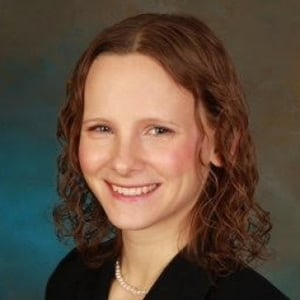
Executive Director, Center for Election Confidence
Lisa L. Dixon serves as the Executive Director of the Center for Election Confidence (formerly known as Lawyers Democracy Fund). Lisa is also a consultant for the Republican National Lawyers Association, serving as their Legal Counsel. Previously, Lisa practiced at Holtzman Vogel, where she specialized in tax-exempt organizations, campaign finance and election law, and lobbying compliance.
During law school, she interned for the Office of Chief Counsel, Procedure and Administration, at the Internal Revenue Service and at the Center for Law and Religious Freedom. Before law school, she served as the Assistant Student Division Director at The Federalist Society for Law and Public Policy Studies and interned at The Heritage Foundation’s Center for Legal and Judicial Studies.
Lisa earned a J.D. from the University of Virginia School of Law, an M.A. in History from the University of Virginia, and a B.A. in History from Hillsdale College. After 18 years on the East Coast, mostly in northern Virginia, she recently returned to her native Michigan, where she lives with her husband and three sons.
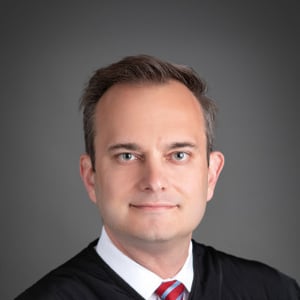
United States Magistrate Judge, Eastern District of North Carolina
Robert T. Numbers, II serves as a United States Magistrate Judge in the United States District Court for the Eastern District of North Carolina.
Judge Numbers received degrees in Political Science and Economics, with honors, from Wake Forest University. After completing his undergraduate work, Judge Numbers obtained his law degree from the University of Notre Dame where he served on the Notre Dame Law Review.
Upon his graduation from law school, Judge Numbers joined the Winston-Salem office of a large, regional law firm. From 2005 until 2010, Judge Numbers’ practice focused on civil rights claims against local municipalities and government contractors. In 2010, Judge Numbers joined the firm’s Raleigh office and concentrated his practice on complex business litigation in state and federal courts.
Associate Dean for Research and Intellectual Life, McKnight Presidential Professor in Law, Distinguished McKnight University Professor, Harlan Albert Rogers Professor in Law, Associate Director, Corporate Institute, University of Minnesota Law School
Professor Kristin E. Hickman is the McKnight Presidential Professor in Law, a Distinguished McKnight University Professor, and Harlan Albert Rogers Professor in Law at the University of Minnesota Law School. She also has taught at Harvard Law School and Northwestern University School of Law. Professor Hickman teaches and writes primarily in the areas of administrative law, tax administration, and statutory interpretation. Her articles on these topics have appeared in the Columbia Law Review, Cornell Law Review, Virginia Law Review, Duke Law Journal, and other publications. She also co-authors the Administrative Law Treatise with Richard J. Pierce, Jr., and a casebook on federal administrative law with Pierce and Christopher J. Walker. Her scholarly work has been cited several times in opinions of the United States Supreme Court as well as regularly in lower court judicial opinions and court briefs.
In 2018-19, Professor Hickman served as Special Adviser to the Administrator of the Office of Information and Regulatory Affairs in Washington, D.C. She presently serves as a Senior Fellow, and previously served as a public member and chair of the judicial review committee, for the Administrative Conference of the United States. She also is a Fellow of the American College of Tax Counsel.
Professor Hickman received her B.S. degree in business administration with a concentration in accounting and a secondary major in history from Trinity University in San Antonio, Texas. After practicing for several years as a certified public accountant, Professor Hickman earned her J.D. degree, magna cum laude, from Northwestern University School of Law, where she was awarded the Raoul Berger Prize and the Lowden Wigmore Prize for her scholarly writings. Following law school, Professor Hickman clerked for The Honorable David B. Sentelle of the United States Court of Appeals for the District of Columbia Circuit and practiced law as an associate with the Chicago office of Skadden, Arps, Slate, Meagher & Flom, concentrating on corporate and international tax transactions and matters.

New NAFTA or Else ... What?
Antonio Garza, Andy Keiser, Timothy Meyer, Jeremy A. Rabkin
Last month, the Trump administration announced completion of a U.S.-Canada-Mexico-Agreement, intended to supersede the 1993...
The Legislative Branch and Trade
Molly Boyl Fromm, Stephen Claeys, Nathan Kaczmarek, Daniel McCarthy, Brian Arthur Pomper
American trade policy has been the subject of much interest and media attention over the...
Re-Negotiating NAFTA: Non-National Tribunals and the Constitution
John M. Herrmann II, Daniel B. Pickard, Alvaro Santos
Chapters 11 and 19 of the North American Free Trade Agreement (NAFTA) provide for international...
The Justice Department’s Third-Party Payment Practice, the Antideficiency Act, and Legal Ethics
Paul James Larkin
Note from the Editor: This article argues that the Justice Department’s practice of distributing settlement...
Balancing Patent Rights and Litigation Abuses
F. Scott Kieff, Adam Mossoff, Noah Joshua Phillips, Dean Reuter
Policy makers on Capitol Hill are poised to press forward with legislation thatpurports to address what...
Showcase Panel III: Formalism and Deference in Administrative Law
Jennifer Walker Elrod, Philip A. Hamburger, Kristin E. Hickman, Thomas W. Merrill, Jide Okechuku Nzelibe, Dean Reuter
Chevron U.S.A. Inc. v. Natural Resources Defense Council, Inc., 467 U.S. 837 (1984) is a...
A Return to "the Heady Days"? The Supreme Court Addresses Whether the Bivens Doctrine Should Extend to Employees of Government Contractors in Minneci v. Pollard
Lisa L. Dixon, Robert T. Numbers
I. Introduction On November 1, 2011, the Supreme Court heard oral arguments in Minneci v....
SCOTUScast 1-27-09 featuring Kristin Hickman
Kristin E. Hickman
On Tuesday, November 4, the Supreme Court heard oral argument in United States v. Eurodif....