

Chief Operating Officer and General Counsel, North American Meat Institute
Mark Dopp is the chief operating officer and general counsel for the North American Meat Institute (NAMI), previously serving as its senior vice president of regulatory affairs and general counsel. In his role, Dopp oversees policy development and represents industry views on significant regulatory, scientific, legislative, and communications matters. He also provides legal counsel to NAMI and oversees its administration and financial matters.
Dopp became the Meat Institute’s outside general counsel in May 1995 and in 1999 he formally joined the Institute and assumed responsibility for its legal and regulatory affairs. Before joining NAMI, Dopp worked at Hogan and Hartson (now Hogan Lovells), where he was active in areas of food and agricultural law on behalf of many clients, including domestic and foreign corporations. He joined Hogan and Hartson in 1989 as an associate and in January 1993 became a partner. Dopp began his career in USDA's Office of the General Counsel in 1984 and entered private practice in 1985.
Dopp received his Bachelor of Science-Agriculture degree in agricultural economics from the University of Wisconsin and his Master of Science from Michigan State University in 1981, also in agricultural economics. He received his law degree in 1984 from the University of Missouri.
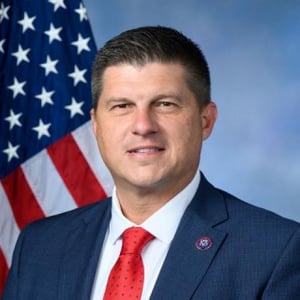
U.S. Congressman, (MN-01)
Congressman Brad Finstad was elected to Congress in a special election on August 9, 2022, and was sworn in three days later with his family by his side as he took the Oath of Office to proudly represent Minnesota’s First District.
Brad is a fourth-generation farmer and resident of the New Ulm area. He and his wife, Jackie, met on the school bus in second grade and they are now the proud parents of seven children. A graduate of the University of Minnesota with a degree in Agriculture Education and an emphasis in Rural Leadership Development, Brad and Jackie now operate an agriculture business in New Ulm while working alongside extended family to run their generational family farm.
Brad is proud to have served as State Director for USDA Rural Development in Minnesota where he worked to support infrastructure improvements, business development, homeownership, community services such as schools, public safety, health care, and high-speed internet access in rural areas. He previously served three terms in the Minnesota Legislature. He also held executive positions with the Minnesota Turkey Growers Association and the Center for Rural Policy and Development.
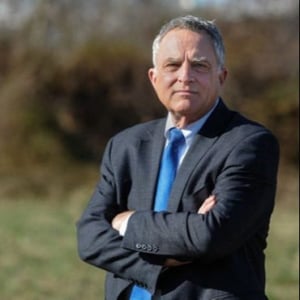
President, Board of Directors, Farm Action
Joe Maxwell is a co-founder of Farm Action. He focuses his work on a vision of an inclusive U.S. economy that works for all people, providing them an equitable opportunity to share in the prosperity they help build, rather than an economy that works for just a handful of individuals and multi-national corporations.
Joe has held key positions in both political and initiative petition campaigns. During the last election cycle, he assisted Presidential, U.S. Senate and U.S. House of Representatives candidates in developing their antitrust, agriculture, and food policy positions.
Joe holds degrees in agriculture economics and law from the University of Missouri. He served as a Missouri state legislator, as Missouri’s Lieutenant Governor, and is retired from the Army National Guard, where he served as a First Sergeant in the Field Artillery. Joe and his brother, Steve, are Missouri family farmers. Joe’s work has been profiled by The Hill, Huffington Post, Mother Jones, Politico, and The Nation. He has been cited by CNN, The New York Times, NPR, USA Today, Washington Post, and more.

Deputy Secretary of Agriculture, U.S. Department of Agriculture
Judge Stephen Alexander Vaden was appointed as the Deputy Secretary of the U.S. Department of Agriculture on July 7, 2025. Alongside Secretary Brooke L. Rollins, Deputy Secretary Vaden leads the Department’s operations and implements policies that support America’s food and farm systems. A native of Union City, Tennessee, Deputy Secretary Vaden brings expertise in agricultural policy, law, and rural development. Previously, he served as a judge on the U.S. Court of International Trade and as General Counsel of USDA. Throughout Deputy Secretary Vaden’s time as General Counsel, he led successful Supreme Court litigation, advanced regulatory reform, and supported the implementation of the 2018 Farm Bill. He is a graduate of Yale Law School and Vanderbilt University. A public servant with strong agricultural roots, Deputy Secretary Vaden is committed to revitalizing rural America and ensuring an abundant, affordable, and safe U.S. food supply.

Judge, U.S. Court of Appeals for the Third Circuit
Hon. Jennifer Mascott served as Associate Professor of Law and Director of the Separation of Powers Institute at The Catholic University of America’s Columbus School of Law before her appointment to the federal bench. On July 16, 2025, President Donald J. Trump nominated her to the U.S. Court of Appeals for the Third Circuit (Delaware), and she was confirmed on October 9, 2025.
Prior to her confirmation, Judge Mascott wrote extensively in administrative and constitutional law, statutory interpretation, and the separation of powers. Her scholarship—published in leading journals including the Stanford Law Review, Notre Dame Law Review, and Supreme Court Review—was cited by the U.S. Supreme Court and multiple federal courts. She also contributed Supreme Court commentary for NBC Universal.
Before joining Catholic Law, she was an Assistant Professor and Co-Director of The C. Boyden Gray Center at George Mason University’s Antonin Scalia Law School. In 2022 she became co-author of Beermann, Cass & Diver’s Administrative Law: Cases and Materials (9th ed.). In 2023 she received the Justice Joseph Story Award for excellence in scholarship, teaching, and advancing the rule of law.
Judge Mascott also served as a Council Member of the ABA’s Administrative Law Section and as a Public Member of the Administrative Conference of the United States. She frequently testified before Congress on executive power, regulatory reform, and judicial jurisdiction, and participated in multiple Supreme Court confirmation hearings.
From 2019 to 2021, she took leave from academia to serve as Deputy Assistant Attorney General in the Department of Justice’s Office of Legal Counsel and later as Associate Deputy Attorney General, where she argued federal cases and assisted with Justice Amy Coney Barrett’s confirmation. Earlier in her career, she clerked for Justice Clarence Thomas and for then-Judge Brett M. Kavanaugh on the D.C. Circuit.
Judge Mascott earned her J.D. summa cum laude from the George Washington University Law School and her B.A. from the same institution.
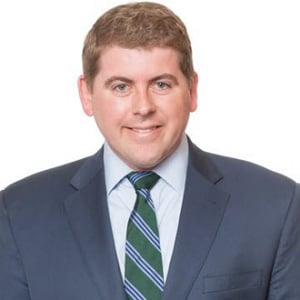
Partner, Dechert LLP
Michael H. McGinley, Global Co-Chair of the Securities and Complex Litigation practice group at Dechert, focuses his practice on high-stakes litigation, specifically appellate and complex commercial matters. Mr. McGinley has experience representing clients at every level of the federal judiciary, as well as in numerous federal agencies and state courts. In early 2025, he argued three cases before the United States Supreme Court in a span of four months.
He has litigated a wide range of issues, including federal jurisdiction, Chevron deference, federalism, preemption, antitrust, arbitration, labor law, tort law, antidumping and trade-remedy disputes, securities and corporate law, contract rights, voting rights, free speech, religious freedom and many other constitutional issues. Mr. McGinley also regularly advises individual, corporate and government clients on strategic, criminal defense, and regulatory matters.
Prior to joining Dechert, Mr. McGinley served as Associate Counsel and Special Assistant to the President in the White House Counsel's Office, where his primary responsibilities included the review of major legislative and regulatory actions and the confirmation of judicial nominees, including Justice Gorsuch. During his time in the White House, Mr. McGinley worked closely with the Department of Justice, the Office of Management and Budget, a number of federal agencies, and various congressional committees. He also previously served as a law clerk to Justice Samuel A. Alito, Jr. of the Supreme Court of the United States and to then-Judge Neil M. Gorsuch, of the United States Court of Appeals for the Tenth Circuit.
Mr. McGinley has been ranked by Chambers USA in Band 1 for appellate litigation in Pennsylvania and recognized by The Legal 500 for his expertise in financial services litigation, general commercial disputes, and international litigation. He was named an “Appellate MVP of the Year” for 2025 by Law360, and his appellate victories helped earn Dechert a place on the National Law Journal’s “Appellate Hot List” in 2025. Mr. McGinley is named among the Financial Times’ Top 10 “Most Innovative Legal Practitioners in North America” as part of the FT’s Innovative Lawyers Awards 2025 for North America.
Mr. McGinley is an elected member of the American Law Institute. He was appointed by the President to the governing Council of the Administrative Conference of the United States, which is an independent agency charged with convening experts from the public and private sectors to recommend improvements to administrative process and procedure. He also serves as the Co-Chair of the American Bar Association’s Administrative Rulemaking Committee.
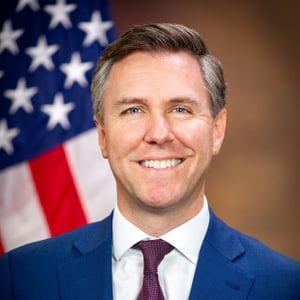
Assistant Attorney General, Civil Division, United States Department of Justice
Brett A. Shumate was sworn in as the Civil Division’s 36th Assistant Attorney General on June 11, 2025. He previously served in the Civil Division from 2017 to 2019 as the Deputy Assistant Attorney General for the Federal Programs Branch. Prior to rejoining the Department, Mr. Shumate was a partner at Jones Day in Washington, D.C.
Mr. Shumate clerked for Judge Edith H. Jones on the United States Court of Appeals for the Fifth Circuit. He graduated from Wake Forest University School of Law and Furman University.
Deputy Secretary of Agriculture, U.S. Department of Agriculture
Judge Stephen Alexander Vaden was appointed as the Deputy Secretary of the U.S. Department of Agriculture on July 7, 2025. Alongside Secretary Brooke L. Rollins, Deputy Secretary Vaden leads the Department’s operations and implements policies that support America’s food and farm systems. A native of Union City, Tennessee, Deputy Secretary Vaden brings expertise in agricultural policy, law, and rural development. Previously, he served as a judge on the U.S. Court of International Trade and as General Counsel of USDA. Throughout Deputy Secretary Vaden’s time as General Counsel, he led successful Supreme Court litigation, advanced regulatory reform, and supported the implementation of the 2018 Farm Bill. He is a graduate of Yale Law School and Vanderbilt University. A public servant with strong agricultural roots, Deputy Secretary Vaden is committed to revitalizing rural America and ensuring an abundant, affordable, and safe U.S. food supply.

Samuel H. McCoy II Professor of Law, University of Virginia School of Law
John F. Duffy is the Samuel H. McCoy II Professor of Law and Class of 1966 Research Professor of Law at the University of Virginia School of Law, where he teaches administrative law, torts and intellectual property. Professor Duffy has published articles on a wide range of administrative law and regulatory issues in journals such as University of Chicago Law Review, Yale Law Journal, Stanford Law Review, Virginia Law Review, Columbia Law Review, Texas Law Review, Northwestern University Law Review, NYU Law Review, University of Pennsylvania Law Review and the Supreme Court Review. His 1998 article Administrative Common Law in Judicial Review, 77 Tex. L. Rev. 113 (1998), was one of the first articles to criticize the Chevron doctrine as being irreconcilable with § 706 of the APA; it won the American Bar Association’s Scholarship Award in Administrative Law. His 2008 article “Are Administrative Patent Judges Unconstitutional?” was covered on National Public Radio), in the New York Times (Adam Liptak, In One Flaw, Questions on Validity of 46 Judges, May 6, 2008), and in the Wall Street Journal (Dan Slater, Patently Unconstitutional, May 6, 2008). The NYT and WSJ agreed that he was “a different kind of law professor,” “one of the lucky few” whose “writings actually wind up changing the law.”
As an attorney in the courts, Duffy has twice successfully convinced the Supreme Court to overturn lower court doctrines that had been applied in many cases over decades but that were unanimously held to be irreconcilable with Supreme Court precedents. See TC Heartland v. Kraft Foods Group Brands, 581 U.S. 258 (2017); KSR v. Teleflex, 550 U.S. 398 (2007).
Prior to entering legal academics, Duffy clerked on the D.C. Circuit for Stephen Williams and on the Supreme Court for Antonin Scalia. While clerking, he became known as Justice Scalia’s “hapless law clerk,” who had been tasked with unearthing three-quarters of a century of legislative history that made “no difference” to the outcome in an otherwise forgettable case. See Conroy v. Aniskoff, 507 U.S. 511, 527-28 (1993) (Scalia, J., concurring in the judgment).
In earlier days, Duffy enjoyed being a professional blackjack player unwelcome in all Atlantic City casinos and a semi-professional road runner (best marathon time 2:24:33). He holds an A.B. in physics from Harvard and a J.D. from the University of Chicago.

Maurice and Hilda Friedman Professor of Law, Columbia Law School; CEO, New Civil Liberties Alliance
Philip Hamburger is the Maurice and Hilda Friedman Professor of Law at Columbia Law School, and Chief Executive Officer at the New Civil Liberties Alliance. Before coming to Columbia, he was the John P. Wilson Professor at the University of Chicago Law School.
He writes on constitutional law and its history—with particular emphasis on religious liberty, freedom of speech and the press, judicial office, administrative power, and unconstitutional conditions.
His books are Separation of Church and State (Harvard 2002), Law and Judicial Duty (Harvard 2008), Is Administrative Law Unlawful? (Chicago 2014), The Administrative Threat (Encounter 2017), and Liberal Suppression: Section 501(c)(3) and the Taxation of Speech (Chicago 2018). A forthcoming book is Purchasing Submission: Conditions, Power, and Freedom (Harvard 2021).
He is a member of the American Academy of Arts and Sciences, and he has served on the board of directors of the American Society for Legal History. He has twice received the Sutherland Prize for the most significant contribution to English legal history, and has been awarded the Henry Paolucci - Walter Bagehot Book Award, the Hayek Book Prize, and the Bradley Prize.

Associate Dean for Research and Intellectual Life, McKnight Presidential Professor in Law, Distinguished McKnight University Professor, Harlan Albert Rogers Professor in Law, Associate Director, Corporate Institute, University of Minnesota Law School
Professor Kristin E. Hickman is the McKnight Presidential Professor in Law, a Distinguished McKnight University Professor, and Harlan Albert Rogers Professor in Law at the University of Minnesota Law School. She also has taught at Harvard Law School and Northwestern University School of Law. Professor Hickman teaches and writes primarily in the areas of administrative law, tax administration, and statutory interpretation. Her articles on these topics have appeared in the Columbia Law Review, Cornell Law Review, Virginia Law Review, Duke Law Journal, and other publications. She also co-authors the Administrative Law Treatise with Richard J. Pierce, Jr., and a casebook on federal administrative law with Pierce and Christopher J. Walker. Her scholarly work has been cited several times in opinions of the United States Supreme Court as well as regularly in lower court judicial opinions and court briefs.
In 2018-19, Professor Hickman served as Special Adviser to the Administrator of the Office of Information and Regulatory Affairs in Washington, D.C. She presently serves as a Senior Fellow, and previously served as a public member and chair of the judicial review committee, for the Administrative Conference of the United States. She also is a Fellow of the American College of Tax Counsel.
Professor Hickman received her B.S. degree in business administration with a concentration in accounting and a secondary major in history from Trinity University in San Antonio, Texas. After practicing for several years as a certified public accountant, Professor Hickman earned her J.D. degree, magna cum laude, from Northwestern University School of Law, where she was awarded the Raoul Berger Prize and the Lowden Wigmore Prize for her scholarly writings. Following law school, Professor Hickman clerked for The Honorable David B. Sentelle of the United States Court of Appeals for the District of Columbia Circuit and practiced law as an associate with the Chicago office of Skadden, Arps, Slate, Meagher & Flom, concentrating on corporate and international tax transactions and matters.
Deputy Secretary of Agriculture, U.S. Department of Agriculture
Judge Stephen Alexander Vaden was appointed as the Deputy Secretary of the U.S. Department of Agriculture on July 7, 2025. Alongside Secretary Brooke L. Rollins, Deputy Secretary Vaden leads the Department’s operations and implements policies that support America’s food and farm systems. A native of Union City, Tennessee, Deputy Secretary Vaden brings expertise in agricultural policy, law, and rural development. Previously, he served as a judge on the U.S. Court of International Trade and as General Counsel of USDA. Throughout Deputy Secretary Vaden’s time as General Counsel, he led successful Supreme Court litigation, advanced regulatory reform, and supported the implementation of the 2018 Farm Bill. He is a graduate of Yale Law School and Vanderbilt University. A public servant with strong agricultural roots, Deputy Secretary Vaden is committed to revitalizing rural America and ensuring an abundant, affordable, and safe U.S. food supply.
Judge, U.S. Court of Appeals for the Third Circuit
Hon. Jennifer Mascott served as Associate Professor of Law and Director of the Separation of Powers Institute at The Catholic University of America’s Columbus School of Law before her appointment to the federal bench. On July 16, 2025, President Donald J. Trump nominated her to the U.S. Court of Appeals for the Third Circuit (Delaware), and she was confirmed on October 9, 2025.
Prior to her confirmation, Judge Mascott wrote extensively in administrative and constitutional law, statutory interpretation, and the separation of powers. Her scholarship—published in leading journals including the Stanford Law Review, Notre Dame Law Review, and Supreme Court Review—was cited by the U.S. Supreme Court and multiple federal courts. She also contributed Supreme Court commentary for NBC Universal.
Before joining Catholic Law, she was an Assistant Professor and Co-Director of The C. Boyden Gray Center at George Mason University’s Antonin Scalia Law School. In 2022 she became co-author of Beermann, Cass & Diver’s Administrative Law: Cases and Materials (9th ed.). In 2023 she received the Justice Joseph Story Award for excellence in scholarship, teaching, and advancing the rule of law.
Judge Mascott also served as a Council Member of the ABA’s Administrative Law Section and as a Public Member of the Administrative Conference of the United States. She frequently testified before Congress on executive power, regulatory reform, and judicial jurisdiction, and participated in multiple Supreme Court confirmation hearings.
From 2019 to 2021, she took leave from academia to serve as Deputy Assistant Attorney General in the Department of Justice’s Office of Legal Counsel and later as Associate Deputy Attorney General, where she argued federal cases and assisted with Justice Amy Coney Barrett’s confirmation. Earlier in her career, she clerked for Justice Clarence Thomas and for then-Judge Brett M. Kavanaugh on the D.C. Circuit.
Judge Mascott earned her J.D. summa cum laude from the George Washington University Law School and her B.A. from the same institution.
Partner, Dechert LLP
Michael H. McGinley, Global Co-Chair of the Securities and Complex Litigation practice group at Dechert, focuses his practice on high-stakes litigation, specifically appellate and complex commercial matters. Mr. McGinley has experience representing clients at every level of the federal judiciary, as well as in numerous federal agencies and state courts. In early 2025, he argued three cases before the United States Supreme Court in a span of four months.
He has litigated a wide range of issues, including federal jurisdiction, Chevron deference, federalism, preemption, antitrust, arbitration, labor law, tort law, antidumping and trade-remedy disputes, securities and corporate law, contract rights, voting rights, free speech, religious freedom and many other constitutional issues. Mr. McGinley also regularly advises individual, corporate and government clients on strategic, criminal defense, and regulatory matters.
Prior to joining Dechert, Mr. McGinley served as Associate Counsel and Special Assistant to the President in the White House Counsel's Office, where his primary responsibilities included the review of major legislative and regulatory actions and the confirmation of judicial nominees, including Justice Gorsuch. During his time in the White House, Mr. McGinley worked closely with the Department of Justice, the Office of Management and Budget, a number of federal agencies, and various congressional committees. He also previously served as a law clerk to Justice Samuel A. Alito, Jr. of the Supreme Court of the United States and to then-Judge Neil M. Gorsuch, of the United States Court of Appeals for the Tenth Circuit.
Mr. McGinley has been ranked by Chambers USA in Band 1 for appellate litigation in Pennsylvania and recognized by The Legal 500 for his expertise in financial services litigation, general commercial disputes, and international litigation. He was named an “Appellate MVP of the Year” for 2025 by Law360, and his appellate victories helped earn Dechert a place on the National Law Journal’s “Appellate Hot List” in 2025. Mr. McGinley is named among the Financial Times’ Top 10 “Most Innovative Legal Practitioners in North America” as part of the FT’s Innovative Lawyers Awards 2025 for North America.
Mr. McGinley is an elected member of the American Law Institute. He was appointed by the President to the governing Council of the Administrative Conference of the United States, which is an independent agency charged with convening experts from the public and private sectors to recommend improvements to administrative process and procedure. He also serves as the Co-Chair of the American Bar Association’s Administrative Rulemaking Committee.
Assistant Attorney General, Civil Division, United States Department of Justice
Brett A. Shumate was sworn in as the Civil Division’s 36th Assistant Attorney General on June 11, 2025. He previously served in the Civil Division from 2017 to 2019 as the Deputy Assistant Attorney General for the Federal Programs Branch. Prior to rejoining the Department, Mr. Shumate was a partner at Jones Day in Washington, D.C.
Mr. Shumate clerked for Judge Edith H. Jones on the United States Court of Appeals for the Fifth Circuit. He graduated from Wake Forest University School of Law and Furman University.
Deputy Secretary of Agriculture, U.S. Department of Agriculture
Judge Stephen Alexander Vaden was appointed as the Deputy Secretary of the U.S. Department of Agriculture on July 7, 2025. Alongside Secretary Brooke L. Rollins, Deputy Secretary Vaden leads the Department’s operations and implements policies that support America’s food and farm systems. A native of Union City, Tennessee, Deputy Secretary Vaden brings expertise in agricultural policy, law, and rural development. Previously, he served as a judge on the U.S. Court of International Trade and as General Counsel of USDA. Throughout Deputy Secretary Vaden’s time as General Counsel, he led successful Supreme Court litigation, advanced regulatory reform, and supported the implementation of the 2018 Farm Bill. He is a graduate of Yale Law School and Vanderbilt University. A public servant with strong agricultural roots, Deputy Secretary Vaden is committed to revitalizing rural America and ensuring an abundant, affordable, and safe U.S. food supply.
Samuel H. McCoy II Professor of Law, University of Virginia School of Law
John F. Duffy is the Samuel H. McCoy II Professor of Law and Class of 1966 Research Professor of Law at the University of Virginia School of Law, where he teaches administrative law, torts and intellectual property. Professor Duffy has published articles on a wide range of administrative law and regulatory issues in journals such as University of Chicago Law Review, Yale Law Journal, Stanford Law Review, Virginia Law Review, Columbia Law Review, Texas Law Review, Northwestern University Law Review, NYU Law Review, University of Pennsylvania Law Review and the Supreme Court Review. His 1998 article Administrative Common Law in Judicial Review, 77 Tex. L. Rev. 113 (1998), was one of the first articles to criticize the Chevron doctrine as being irreconcilable with § 706 of the APA; it won the American Bar Association’s Scholarship Award in Administrative Law. His 2008 article “Are Administrative Patent Judges Unconstitutional?” was covered on National Public Radio), in the New York Times (Adam Liptak, In One Flaw, Questions on Validity of 46 Judges, May 6, 2008), and in the Wall Street Journal (Dan Slater, Patently Unconstitutional, May 6, 2008). The NYT and WSJ agreed that he was “a different kind of law professor,” “one of the lucky few” whose “writings actually wind up changing the law.”
As an attorney in the courts, Duffy has twice successfully convinced the Supreme Court to overturn lower court doctrines that had been applied in many cases over decades but that were unanimously held to be irreconcilable with Supreme Court precedents. See TC Heartland v. Kraft Foods Group Brands, 581 U.S. 258 (2017); KSR v. Teleflex, 550 U.S. 398 (2007).
Prior to entering legal academics, Duffy clerked on the D.C. Circuit for Stephen Williams and on the Supreme Court for Antonin Scalia. While clerking, he became known as Justice Scalia’s “hapless law clerk,” who had been tasked with unearthing three-quarters of a century of legislative history that made “no difference” to the outcome in an otherwise forgettable case. See Conroy v. Aniskoff, 507 U.S. 511, 527-28 (1993) (Scalia, J., concurring in the judgment).
In earlier days, Duffy enjoyed being a professional blackjack player unwelcome in all Atlantic City casinos and a semi-professional road runner (best marathon time 2:24:33). He holds an A.B. in physics from Harvard and a J.D. from the University of Chicago.
Maurice and Hilda Friedman Professor of Law, Columbia Law School; CEO, New Civil Liberties Alliance
Philip Hamburger is the Maurice and Hilda Friedman Professor of Law at Columbia Law School, and Chief Executive Officer at the New Civil Liberties Alliance. Before coming to Columbia, he was the John P. Wilson Professor at the University of Chicago Law School.
He writes on constitutional law and its history—with particular emphasis on religious liberty, freedom of speech and the press, judicial office, administrative power, and unconstitutional conditions.
His books are Separation of Church and State (Harvard 2002), Law and Judicial Duty (Harvard 2008), Is Administrative Law Unlawful? (Chicago 2014), The Administrative Threat (Encounter 2017), and Liberal Suppression: Section 501(c)(3) and the Taxation of Speech (Chicago 2018). A forthcoming book is Purchasing Submission: Conditions, Power, and Freedom (Harvard 2021).
He is a member of the American Academy of Arts and Sciences, and he has served on the board of directors of the American Society for Legal History. He has twice received the Sutherland Prize for the most significant contribution to English legal history, and has been awarded the Henry Paolucci - Walter Bagehot Book Award, the Hayek Book Prize, and the Bradley Prize.
Associate Dean for Research and Intellectual Life, McKnight Presidential Professor in Law, Distinguished McKnight University Professor, Harlan Albert Rogers Professor in Law, Associate Director, Corporate Institute, University of Minnesota Law School
Professor Kristin E. Hickman is the McKnight Presidential Professor in Law, a Distinguished McKnight University Professor, and Harlan Albert Rogers Professor in Law at the University of Minnesota Law School. She also has taught at Harvard Law School and Northwestern University School of Law. Professor Hickman teaches and writes primarily in the areas of administrative law, tax administration, and statutory interpretation. Her articles on these topics have appeared in the Columbia Law Review, Cornell Law Review, Virginia Law Review, Duke Law Journal, and other publications. She also co-authors the Administrative Law Treatise with Richard J. Pierce, Jr., and a casebook on federal administrative law with Pierce and Christopher J. Walker. Her scholarly work has been cited several times in opinions of the United States Supreme Court as well as regularly in lower court judicial opinions and court briefs.
In 2018-19, Professor Hickman served as Special Adviser to the Administrator of the Office of Information and Regulatory Affairs in Washington, D.C. She presently serves as a Senior Fellow, and previously served as a public member and chair of the judicial review committee, for the Administrative Conference of the United States. She also is a Fellow of the American College of Tax Counsel.
Professor Hickman received her B.S. degree in business administration with a concentration in accounting and a secondary major in history from Trinity University in San Antonio, Texas. After practicing for several years as a certified public accountant, Professor Hickman earned her J.D. degree, magna cum laude, from Northwestern University School of Law, where she was awarded the Raoul Berger Prize and the Lowden Wigmore Prize for her scholarly writings. Following law school, Professor Hickman clerked for The Honorable David B. Sentelle of the United States Court of Appeals for the District of Columbia Circuit and practiced law as an associate with the Chicago office of Skadden, Arps, Slate, Meagher & Flom, concentrating on corporate and international tax transactions and matters.
Deputy Secretary of Agriculture, U.S. Department of Agriculture
Judge Stephen Alexander Vaden was appointed as the Deputy Secretary of the U.S. Department of Agriculture on July 7, 2025. Alongside Secretary Brooke L. Rollins, Deputy Secretary Vaden leads the Department’s operations and implements policies that support America’s food and farm systems. A native of Union City, Tennessee, Deputy Secretary Vaden brings expertise in agricultural policy, law, and rural development. Previously, he served as a judge on the U.S. Court of International Trade and as General Counsel of USDA. Throughout Deputy Secretary Vaden’s time as General Counsel, he led successful Supreme Court litigation, advanced regulatory reform, and supported the implementation of the 2018 Farm Bill. He is a graduate of Yale Law School and Vanderbilt University. A public servant with strong agricultural roots, Deputy Secretary Vaden is committed to revitalizing rural America and ensuring an abundant, affordable, and safe U.S. food supply.
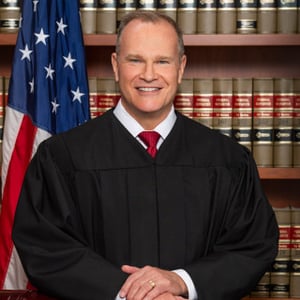
Judge, U.S. District Court for the Central District of California
John W. Holcomb is a U.S. District Judge for the Central District of California, Southern Division, in Santa Ana, California. Judge Holcomb was nominated for that position by President Donald J. Trump in November 2019 and was confirmed by the U.S. Senate in September 2020.
Judge Holcomb earned his S.B. in civil engineering from the Massachusetts Institute of Technology in 1984. For the next five years, Judge Holcomb served as a commissioned officer in the United States Navy, including assignments aboard the battleship U.S.S. New Jersey (BB62) and with the Joint Staff at the Pentagon. In 1993, Judge Holcomb received his M.B.A. from Harvard Business School and his J.D., cum laude, from Harvard Law School. Judge Holcomb then served as a law clerk for Judge Ronald Barliant of the U.S. Bankruptcy Court for the Northern District of Illinois.
Thereafter, Judge Holcomb joined Irell & Manella LLP as an associate, practicing bankruptcy law and general civil litigation. In 1997, Judge Holcomb joined the intellectual property law firm of Knobbe, Martens, Olson & Bear, LLP, and he was elevated to partner in 2002. As a partner at Knobbe Martens, Judge Holcomb participated in several speaking engagements regarding the intersection of intellectual property and bankruptcy law. In 2014, Judge Holcomb co-authored the chapter on U.S. Law in Licenses and Insolvency, A Practical Guide to the Effects of Insolvency on IP License Agreements, which was published by the International Bar Association. Judge Holcomb retired from Knobbe Martens in 2018, and he briefly practiced as a bankruptcy and litigation sole-practitioner before joining the firm Greenberg Gross LLP as a partner in 2019.

U.S. Court of Federal Claims and Jurist-In-Residence Professor of Law, The University of Akron School of Law
Judge Ryan T. Holte was sworn in as a judge on the United States Court of Federal Claims in July 2019. Prior to confirmation he served as the David L. Brennan Professor of Law and Director of the Center for Intellectual Property Law and Technology at The University of Akron School of Law (2017-2019) and an assistant professor of law at Southern Illinois University School of Law (2013-2017). Judge Holte has written and presented widely on patent law subjects and empirical legal studies of Federal Circuit and district court patent law cases. His most recent articles were published in the Iowa Law Review (2019), George Mason Law Review (2018), and Washington Law Review (2017).
In practice, Judge Holte served for six years as general counsel and partner of an electrical engineering technology company and is co-inventor of multiple patents related to Systems and Methods for Countering Satellite-Navigated Munitions. Prior to entering academia, Judge Holte practiced as a litigation attorney at the Federal Trade Commission and an associate in the Intellectual Property Practice Group at Jones Day. Prior to practice, he served as a law clerk to Judge Stanley F. Birch, Jr. on the United States Court of Appeals for the Eleventh Circuit and as a law clerk to Judge Loren A. Smith on the United States Court of Federal Claims.
Judge Holte received his JD from the University of California Davis School of Law and his BS, magna cum laude, in engineering from the California Maritime Academy where he was a First Class graduate of the Corps of Cadets Third Engineering Division and sailed as a U.S. Merchant Marine oiler.

Associate Dean for Academic Affairs, Austin E. Owen Research Scholar & Professor of Law, The University of Richmond School of Law
Dean Kristen Jakobsen Osenga teaches and writes in the areas of patent law, antitrust, and legislation and regulation. Some of her recent scholarship focuses on standard development organizations, patent eligible subject matter, patent licensing firms, litigation and remedies for patent infringement, and patent law reform. She has written numerous law review articles on these and other topics, as well as book chapters and op eds on various aspects of patent law. Additionally, she has spoken on these issues at many academic conferences and bar events. Dean Osenga is Chief Policy Counselor for the Inventors Defense Alliance, as well as an active member of the Federal Circuit Bar Association and the American Intellectual Property Law Association.
Dean Osenga received a B.S. degree in Biomedical Engineering from the University of Iowa, an M.S. degree in Electrical Engineering from Southern Illinois University – Carbondale, and a J.D. from the University of Illinois College of Law, where she graduated magna cum laude. After law school, she practiced at the law firm of Finnegan, Henderson, Farabow, Garrett, & Dunner LLP, (now Finnegan) where she did patent prosecution and litigation. She then clerked for the Judge Richard Linn of the U.S. Court of Appeals for the Federal Circuit. After clerking, she entered academia, teaching first at Chicago-Kent College of Law and then at the University of Richmond, where she has been since 2006. She has also been a Visiting Professor at Emory University School of Law and at William & Mary School of Law.

Vice President and Counsel of Government Affairs, QUALCOMM Incorporated
Laurie Self is Vice President and Counsel of Government Affairs at Qualcomm Incorporated, where she specializes in U.S. patent policy matters at the federal and state level. Based in Washington, D.C., Ms. Self also supports Qualcomm’s government affairs initiatives to promote strong intellectual property rights in emerging markets. Ms. Self’s particular focus is to ensure that U.S. intellectual property laws and policies provide the necessary protections and incentives to support the Company’s R&D-driven business model. Prior to her arrival at Qualcomm in July 2012, Ms. Self was a partner at the law firm Covington & Burling where she chaired the firm’s intellectual property practice group.

Head of Patent Policy, Google
Laura Sheridan is Head of Patent Policy at Google, advocating for an effective patent examination process, a patent litigation system that operates fairly for all participants, and transparency in these areas. She has shared her views on patent issues in numerous policy dialogues, including testifying before Congress on the intersection of AI and patents. Her patent policy work is shaped by years of private practice experience in patent prosecution, litigation, due diligence, and post-grant practice before the Patent Office.
An active member of the IP community, Laura is part of the Intellectual Property Owners Association delegation to IP5 Industry, a group which engages on procedural harmonization matters with the IP5 Offices (the Offices of China, Europe, Japan, Korea, and the US). Laura also helped to form the New York chapter of ChIPs and is a member of the Advisory Board for the NYU Law Engelberg Center on Innovation Law & Policy. Laura studied mechanical engineering at Cornell University and received her J.D. from Fordham Law School.

Sterling Professor of Law and Political Science, Yale Law School
Akhil Reed Amar is Sterling Professor of Law and Political Science at Yale University, where he teaches constitutional law in both Yale College and Yale Law School. After graduating from Yale College, summa cum laude, in 1980 and from Yale Law School in 1984, and clerking for Judge (later Justice) Stephen Breyer, Amar joined the Yale faculty in 1985 at the age of 26. He is Yale’s only living professor to have won the University’s unofficial triple crown — the Sterling Chair for scholarship, the DeVane Medal for teaching, and the Lamar Award for alumni service.
Amar’s work has won awards from both the American Bar Association and the Federalist Society, and he has been cited by Supreme Court justices across the spectrum in more than 50 cases — tops among scholars under age 70. According to both Fred Shapiro’s landmark 2021 study of lifetime scholarly citations and Heinonline’s most recent tabulation of lifetime law-review citations, Amar is America’s second most-cited legal scholar still under age 70. He is a member of the American Academy of Arts and Sciences and has written widely for popular publications, including The New York Times, The Washington Post, The Wall Street Journal, Time, and The Atlantic. He was an informal consultant to the popular TV show The West Wing and his scholarship has been showcased on many broadcasts, including The Colbert Report, Morning Joe, AC360, Velshi, Fox News @ Night with Shannon Bream, Fareed Zakaria GPS, Erin Burnett Outfront, and Constitution USA with Peter Sagal.
He is the author of more than a hundred law review articles and several books, including The Bill of Rights (1998 — winner of the Yale University Press Governors’ Award), America’s Constitution (2005 — winner of the ABA’s Silver Gavel Award), America’s Unwritten Constitution (2012 — named one of the year’s 100 best nonfiction books by The Washington Post), and The Constitution Today (2016 — named one of the year’s top ten nonfiction books by Time magazine). The first volume of his ambitious trilogy on American constitutional history from the Founding to the present, The Words That Made Us: America’s Constitutional Conversation, 1760-1840, came out in May 2021. The second volume, Born Equal: Remaking America’s Constitution, 1840-1920, will be published in September 2025 and is already available for pre-order. All together, his nonfiction books have won two starred reviews from Publishers Weekly and three starred reviews from Kirkus—tops, it is believed, among legal scholars under age 70. Together with Vikram David Amar (YLS ’88), he has a bi-weekly column on the Supreme Court on the distinguished website SCOTUSblog. Along with Andy Lipka, he co-hosts a popular and free weekly podcast, Amarica’s Constitution, whose listeners are eligible for CLE credit in most American jurisdictions. A wide assortment of his articles and op-eds and video links to many of his public lectures and free online courses may be found at akhilamar.com.

Senior Scholar, Manhattan Institute; Professor of Law Emerita, University of San Diego
Gail Heriot is a Senior Scholar at the Manhattan Institute, a Professor of Law Emerita at the University of San Diego and the Chairman of the Board of the American Civil Rights Project. She served on the U.S. Commission on Civil Rights for 18 years. Her new book is entitled “Why We Walk on Eggshells: How Our Civil Rights Laws Stifle Our Public Discourse.”
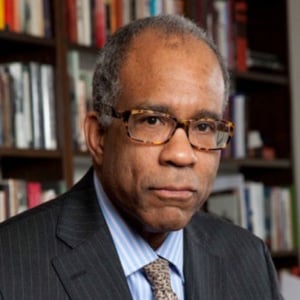
Michael R. Klein Professor of Law, Harvard Law School
Randall Kennedy is Michael R. Klein Professor at Harvard Law School where he teaches courses on contracts, criminal law, and the regulation of race relations. He was born in Columbia, South Carolina. For his education he attended St. Albans School, Princeton University, Oxford University, and Yale Law School. He served as a law clerk for Judge J. Skelly Wright of the United States Court of Appeals and for Justice Thurgood Marshall of the United States Supreme Court. He is a member of the bar of the District of Columbia and the Supreme Court of the United States. Awarded the 1998 Robert F. Kennedy Book Award for Race, Crime, and the Law, Mr Kennedy writes for a wide range of scholarly and general interest publications. His other books are For Discrimination: Race, Affirmative Action, and the Law (2013), The Persistence of the Color Line: Racial Politics and the Obama Presidency (2011), Sellout: The Politics of Racial Betrayal (2008), Interracial Intimacies: Sex, Marriage, Identity, and Adoption (2003), and Nigger: The Strange Career of a Troublesome Word (2002). A member of the American Law Institute, the American Academy of Arts and Sciences, and the American Philosophical Association, Mr. Kennedy is also a Trustee emeritus of Princeton University.
Deputy Secretary of Agriculture, U.S. Department of Agriculture
Judge Stephen Alexander Vaden was appointed as the Deputy Secretary of the U.S. Department of Agriculture on July 7, 2025. Alongside Secretary Brooke L. Rollins, Deputy Secretary Vaden leads the Department’s operations and implements policies that support America’s food and farm systems. A native of Union City, Tennessee, Deputy Secretary Vaden brings expertise in agricultural policy, law, and rural development. Previously, he served as a judge on the U.S. Court of International Trade and as General Counsel of USDA. Throughout Deputy Secretary Vaden’s time as General Counsel, he led successful Supreme Court litigation, advanced regulatory reform, and supported the implementation of the 2018 Farm Bill. He is a graduate of Yale Law School and Vanderbilt University. A public servant with strong agricultural roots, Deputy Secretary Vaden is committed to revitalizing rural America and ensuring an abundant, affordable, and safe U.S. food supply.

Assistant Secretary for Civil Rights, U.S. Department of Agriculture
Devon Westhill is the Assistant Secretary for Civil Rights at the U.S. Department of Agriculture. The U.S. Senate confirmed President Donald Trump’s nomination of Westhill on October 7, 2025.
Westhill returns to the USDA where he previously headed the civil rights office as Deputy Assistant Secretary in President Trump’s first term. His previous government appointments also include service at the U.S. Department of Labor, liaison to the Administrative Conference of the U.S., and liaison to the White House Initiative on Historically Black Colleges and Universities. Prior to returning to government service, Westhill was President and General Counsel of a nonprofit civil rights organization.
Westhill has testified on civil rights matters before Congress, federal agencies, and as an expert witness in federal court. He has spoken hundreds of times at college campuses, conferences, and on radio and TV programs, and he is frequently quoted in print publications, and his writing has appeared in numerous national outlets. A U.S. Navy veteran, Westhill earned his BA from the University of North Carolina at Chapel Hill and his JD from the University of Florida.

Antitrust Law Down on the Farm: Farmers, Food Inflation, and a Fair Deal
Breakout Panel 4 - Is Humphrey’s Executor Still Relevant?
ERBXII
Washington, DCBreakout Panel 4 - Is Humphrey’s Executor Still Relevant?
Jenn L. Mascott, Michael McGinley, Jed Shugerman, Brett Shumate, Stephen Alexander Vaden
Earlier this year Judge Jones and Judge Willett released dueling opinions on the applicability of...
Twelfth Annual Executive Branch Review Conference: Register Now or Join Via Livestream!
This year, we are excited to host the Twelfth Annual Executive Branch Review Conference on Tuesday, April...
The Fourth Branch & Our Constitutional Order
Nashville Young Lawyers Chapter
Nashville, TNChevron Under Review: Courthouse Steps Preview: Loper Bright & Relentless
John F. Duffy, Philip A. Hamburger, Kristin E. Hickman, Stephen Alexander Vaden
Chevron v. NRDC (1984) and subsequent precedents held that courts should defer to agency interpretations...
Chevron Under Review: Courthouse Steps Preview: Loper Bright & Relentless
John F. Duffy, Philip A. Hamburger, Kristin E. Hickman, Stephen Alexander Vaden
Chevron v. NRDC (1984) and subsequent precedents held that courts should defer to agency interpretations...
Chevron Under Review: Courthouse Steps Preview: Loper Bright & Relentless
The Injunction Function: Is IP Law Promoting Markets for Innovators and Creators?
John W. Holcomb, Ryan T. Holte, Kristen Osenga, Laurie Self, Laura Sheridan
In patent and copyright law, injunctions are now a subject of significant policy debate. Innovators...
SFFA and Beyond
Akhil Reed Amar, Gail L. Heriot, Randall Kennedy, Stephen Alexander Vaden, Devon Westhill
This year the Supreme Court issued its long-awaited decision in Students for Fair Admissions Inc....