
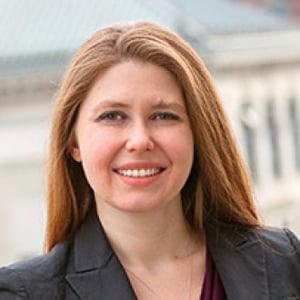
Professor of Law, Brooklyn Law School
Professor Mulligan teaches Internet law, intellectual property law, and trusts & estates. Her research addresses efforts to adapt intellectual property law for the digital age, the relationship between law and technology, and theories of constitutional interpretation. Recently, she has written about the Internet of Things, robot punishment, and early translations of the Constitution.
While at Brooklyn, Professor Mulligan researched as a visiting scholar at the Georgetown Center for the Constitution and taught as a visiting associate professor at Yale Law School. Previously, she taught at the University of Georgia and was a postdoctoral associate and lecturer in law at the Information Society Project at Yale Law School. Her scholarship has been published in a variety of journals and law reviews, including Georgia Law Review, SMU Law Review, and Constitutional Commentary.
Professor Mulligan earned her bachelor’s degree cum laude and her law degree cum laude from Harvard University, where she worked as a production and article editor for the Harvard Journal of Law & Technology. Before entering academia, she served as a law clerk for Judge Charles F. Lettow of the U.S. Court of Federal Claims.
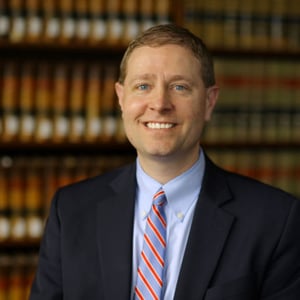
Executive Director, Salmon P. Chase Center for Civics, Culture, and Society, The Ohio State University
Professor Lee J. Strang serves as the inaugural executive director of the Salmon P. Chase Center for Civics, Culture, and Society at The Ohio State University.
Initiated in 2023 by the state of Ohio, the Chase Center will be an academic home at Ohio State for teaching, research, and programing on the foundations of the American constitutional order and its impact on society. As executive director, Professor Strang is responsible for organizing the center, overseeing the hiring and appointment of the center’s faculty, developing curriculum, and delivering student and academic programming. He also holds a faculty appointment in the Moritz College of Law at Ohio State.
Professor Strang is a nationally recognized legal scholar who has published dozens of articles in leading journals in the fields of constitutional law and interpretation, property law, and religion and the First Amendment. He co-edits the textbook Federal Constitutional Law, and his most recent book, Originalism’s Promise: A Natural Law Account of the American Constitution is the first book-length, natural law justification for originalism. He currently is writing on civic thought and leadership, and he is finalizing a book on the history of American Catholic legal education (with John M. Breen).
Before joining Ohio State, Professor Strang served as the inaugural director of the University of Toledo’s Institute of American Constitutional Thought & Leadership. He joined the Toledo College of Law faculty in 2008, was granted tenure in 2010, and was named John W. Stoepler Professor of Law & Values in 2015. The University of Toledo awarded Professor Strang its Outstanding Faculty Research and Scholarship Award in 2017. Before that, he was a visiting professor at Michigan State University College of Law. A graduate of the University of Iowa, where he was articles editor of the Iowa Law Review and Order of the Coif, Professor Strang holds an LL.M. degree from Harvard Law School.
Professor Strang has been a visiting scholar at the Georgetown Center for the Constitution and a visiting fellow at the James Madison Program at Princeton University. In 2016, he was appointed to the Ohio Advisory Committee of the U.S. Commission on Civil Rights and reappointed as chair in 2023.
Prior to teaching, Professor Strang served as a judicial clerk for Judge Alice M. Batchelder of the U.S. Court of Appeals for the Sixth Circuit. He was also an associate for Jenner & Block LLP in Chicago, where he practiced in general and appellate litigation.
Professor Strang is a frequent presenter at scholarly conferences. He is the president of the Board of Trustees of Northwest Ohio Classical Academy, Ohio’s first classical charter school. He is also a regular participant in debates at law schools across the country, a contributor to the media, and a speaker to political, civic, and religious groups.
Professor of Law, Brigham Young University
Professor Paul Stancil joined the Brigham Young University law faculty in 2014. Prior to this, Professor Stancil was a professor at Illinois University College of Law and a shareholder at Godfrey & Kahn, S.C. (Milwaukee), where his practice focused on antitrust and trade regulation matters. Professor Stancil teaches Antitrust Law, Civil Procedure, Public Choice Theory, and Mergers & Acquisitions.
Professor Stancil has broad research interests in law and economics, antitrust law, civil procedure, and public choice theory. He specializes in analyzing the complex incentives that motivate individuals and groups in both the creation and application of law. Professor Stancil has written on the legitimacy of statutory interpretation by courts and the economic incentives facing parties in civil and criminal litigation; he has also written articles exploring the influence of interest groups in various aspects of the political process. Professor Stancil’s research strives to connect a rich theoretical account of law and lawmaking with the complex and often messy dynamics of the real world. He is particularly interested in the role transaction costs play in motivating real-world individual and group behavior.
Professor Stancil’s articles have appeared in the Virginia Law Review, the William & Mary Law Review, the Cardozo Law Review, and the Baylor Law Review, among others.
Professor Stancil earned his B.A. in economics and Spanish from the University of Virginia and graduated Order of the Coif from the University of Virginia School of Law. After law school graduation, Professor Stancil worked for Baker Botts (Houston) and another small Texas firm as an antitrust and litigation associate before leaving to help start an antitrust practice group at Godfrey & Kahn.
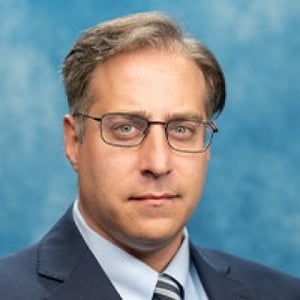
Interim Dean, Florida International University College of Law
Dan Epstein was Vice President at America First Legal and an Associate Professor of Law at St. Thomas University in Miami, Florida. He also advises individuals and small businesses in affirmative and defensive actions against government overreach. Previously, he advised startups on regulatory matters as Director at a venture capital firm. His federal service includes being a Special Assistant to and Senior Associate Counsel to the President and a counsel for the House of Representatives Committee on Oversight and Government Reform. Earlier in his career, Mr. Epstein founded and ran Cause of Action, where he represented clients in government investigations and litigated regulatory, constitutional, political, and public law matters.
He holds a Ph.D. from George Washington University in Political Economy, a J.D. from Emory University School of Law, and a B.A. from Kenyon College. He is active in the Palm Beach community as a member of the Fourth Court of Appeals Judicial Nominating Commission in Florida, a transition team member to Florida Attorney General James Uthmeier, and the Chairman and Trustee of Palm Beach State College.

Thomas M. Siebel Senior Fellow, The Hoover Institution, Stanford University; Gary T. Schwartz Distinguished Professor of Law Emeritus, UCLA School of Law
Eugene Volokh is the Thomas M. Siebel Senior Fellow at the Hoover Institution (Stanford), as well as the Gary T. Schwartz Distinguished Professor of Law Emeritus and Distinguished Research Professor at UCLA School of Law. He recently retired from teaching at UCLA, after 30 years there, and is now focusing on research.
Volokh is the author of the textbooks The First Amendment and Related Statutes (8th ed. 2023), and Academic Legal Writing (5th ed. 2016), as well as over 100 academic law journal articles, mostly on First Amendment law. He is a member of The American Law Institute; the editor-in-chief of the Journal of Free Speech Law; and the creator and coauthor of The Volokh Conspiracy, a leading legal blog founded in 2002 (hosted at the Washington Post from 2014 to 2017 and now at Reason Magazine).
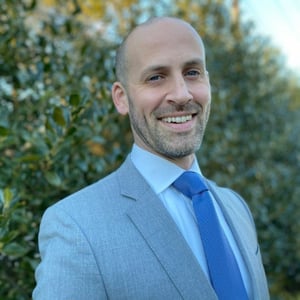
Partner, Lehotsky Keller LLP
The New York Times recognized Scott A. Keller as a “legal heavyweight,” who “is praised by opponents as a formidable advocate.”
Mr. Keller has argued 12 cases before the U.S. Supreme Court and 12 cases before the Texas Supreme Court. He is the only practicing lawyer to have argued at least 10 cases in both courts. Mr. Keller frequently represents parties in high stakes appeals, and he has argued many cases in federal courts of appeals throughout the nation. He has earned individual accolades from Lawdragon 500 Leading Litigators in America, Chambers, Legal 500, The American Lawyer, The National Law Journal, Law360, Super Lawyers, The Best Lawyers in America, and other publications.
Before founding Lehotsky Keller Cohn LLP, Mr. Keller headed Baker Botts LLP’s Supreme Court Practice. He also has significant experience at the highest levels in all three branches of government. Mr. Keller served as the Solicitor General of Texas, the State’s chief appellate litigator. He was U.S. Senator Ted Cruz’s chief counsel on the Senate Judiciary Committee. Mr. Keller was a law clerk for Justice Anthony Kennedy of the Supreme Court of the United States and Chief Judge Alex Kozinski of the U.S. Court of Appeals for the Ninth Circuit. He was also a Bristow Fellow in the U.S. Department of Justice’s Office of the Solicitor General.
Mr. Keller represents clients in cases where public communications strategy is crucial, and he has made numerous media appearances in major outlets such as The New York Times, The Wall Street Journal, BBC, Fox News, NPR, and Politico. As a sought after speaker and writer, Mr. Keller’s articles have appeared in the Stanford Law Review, Virginia Law Review, and Texas Law Review. He has also served as an adjunct professor of constitutional litigation, Supreme Court practice, and federal courts at the University of Texas School of Law.
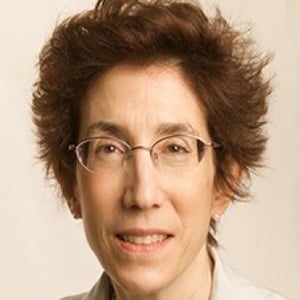
U.S. Court of Appeals, Ninth Circuit
Sandra Segal Ikuta was confirmed as a judge of the U.S. Court of Appeals for the Ninth Circuit on June 19, 2006. She filled a judgeship vacant since September 1, 2000, when Chief Judge Emeritus James R. Browning took senior status.
Before becoming a U.S. Circuit Judge, California Gov. Arnold Schwarzenegger appointed her to be deputy secretary and general counsel of the California Resources Agency in January 2004.
Prior to her political appointment, Judge Ikuta was a partner at the Los Angeles office of O'Melveny & Myers LLP. She joined the law firm in 1990 as an associate and became a partner in 1997. She specialized in environmental and natural resources law and co-chaired the firm's environmental practice group. She previously served as a law clerk for U.S. Supreme Court Justice Sandra Day O'Connor, 1989-90, and Judge Alex Kozinski of the U.S. Court of Appeals for the Ninth Circuit, 1988-89.
Prior to her legal career, Judge Ikuta took an unorthodox career path, which included serving as the first female editor-in-chief of a national martial arts magazine.
She received her J.D. from the University of California at Los Angeles School of Law and a Master of Science from Columbia University School of Journalism. She earned her undergraduate degree from the University of California at Berkeley in 1976.
In addition to her duties as an active U.S. Circuit Judge, Judge Ikuta was an appointed member of the Judicial Conference of the U.S. Advisory Committee on Bankruptcy Rules.
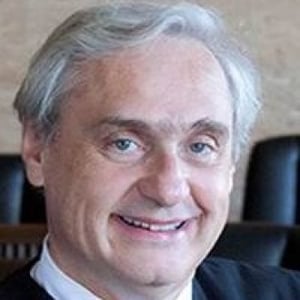
Former Judge, United States Court of Appeals, Ninth Circuit
Judge Kozinski served as a United States Circuit Judge for the Ninth Circuit from November 1985 until December 2017. He served as Chief Judge from 2007 to 2014. He graduated from UCLA, receiving an A.B. degree in 1972, and from UCLA Law School, receiving a J.D. degree in 1975.
Prior to his appointment to the appellate bench, Judge Kozinski served as Chief Judge of the United States Claims Court, 1982-85; Special Counsel, Merit Systems Protection Board, 1981-82; Assistant Counsel, Office of Counsel to the President, 1981; Deputy Legal Counsel, Office of President-Elect Reagan, 1980-81; Attorney, Covington & Burling, 1979-81; Attorney, Forry Golbert Singer & Gelles, 1977-79; Law Clerk to Chief Justice Warren E. Burger, 1976-77; and Law Clerk to Circuit Judge Anthony M. Kennedy, 1975-76.
Judge Kozinski is married to Marcy Jane Tiffany and has three children: Yale, Wyatt and Clayton, and three grandchildren: Quinn, Owen and Anna.
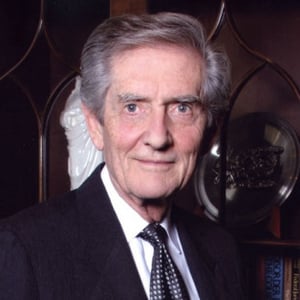
U.S. Court of Appeals, Ninth Circuit
Judge, U.S. District Court for the Southern District of California
Nominated by Richard M. Nixon on October 7, 1970, to a new seat authorized by 84 Stat. 294. Confirmed by the Senate on October 13, 1970, and received commission on October 16, 1970. Service terminated on July 14, 1972, due to appointment to another judicial position.
Judge, U.S. Court of Appeals for the Ninth Circuit
Nominated by Richard M. Nixon on May 22, 1972, to a seat vacated by James Marshall Carter. Confirmed by the Senate on June 28, 1972, and received commission on June 28, 1972. Served as chief judge, 1991-1996. Assumed senior status on April 8, 1996.

Petrella v. Metro-Goldwyn-Mayer - Post-Decision SCOTUScast
Christina M. Mulligan
On May 19, 2014, the Supreme Court issued its opinion in Petrella v. Metro-Goldwyn-Mayer. The...
Mechanisms of the Slippery Slope
Austin, TexasNorthwest, Inc. v. Ginsberg - Post-Decision SCOTUScast
Lee J. Strang
On April 2, 2014, the Supreme Court issued its decision in Northwest, Inc. v. Ginsberg....
Walden v. Fiore - Post-Decision SCOTUScast
Paul J. Stancil
On February 25, 2014, the Supreme Court issued its decision in in Walden v. Fiore....
A Discussion of the Federal Judicial Confirmation Process
Fort Worth, TexasEmerging Privacy Issues
Being a Federal Appellate Court Judge on the 9th Circuit
An Interview with Chief Judge Alex Kozinski
Redressing Politicized Spending
Daniel Z. Epstein
Note from the Editor: This article is about politicized spending in the federal discretionary budget. ...
The Founders' View of the Religion Clause: How High Is the Wall?
California-Davis Student Chapter
Davis, CA