
Assistant Professor of Law, Vanderbilt Law School
Partner, Troutman Pepper Locke LLP
Misha leads Troutman Peppers' national appellate and Supreme Court practice. Most recently, he successfully obtained orders from the Supreme Court blocking an unconstitutional restriction on places of worship, as well as overturning a lower court order that had blocked several state election laws. He has also argued and prevailed before the Supreme Court in Gill v. Whitford, one of the most significant redistricting cases in decades, as well as Murr v. Wisconsin, a high-stakes regulatory taking case.
Before joining Troutman, Misha served as Solicitor General of the State of Wisconsin. Misha previously served as a law clerk for the Honorable Anthony M. Kennedy of the Supreme Court, Janice Rogers Brown of the D.C. Circuit, and Alex Kozinski of the 9th Circuit. He graduated from Georgetown University Law Center, where he was President of the Federalist Society Chapter.
Partner, Ford & Harrison LLP
Robin W. Hutton has successfully litigated numerous employment matters in both state and federal courts and achieved favorable results before numerous administrative boards and agencies in numerous states. Robbin works with clients in developing and implementing employment policies, as well as training on the major areas of employment and labor law. She has conducted training and seminars on various employment-related topics to include sexual harassment/discrimination, FMLA, FLSA, immigration issues, union issues, and ADA, as well as conducted many work-related investigations for clients, as well as HR audits for employers.
Prior to joining Ford & Harrison, Robbin was Of Counsel in the Memphis office of a national labor and employment law firm where she worked the areas of employment and labor law, insurance defense, and civil litigation.
Senior Executive Counsel, NFIB Small Business Legal Center
Elizabeth Milito serves as Senior Executive Counsel with the National Federation of Independent Business, a position she has held since March 2004. Ms. Milito came to NFIB from the U.S. Department of Veteran's Affairs where she defended the agency in employment and labor lawsuits and was responsible for training and counseling managers on fair employment and HR practices. She has an extensive background in tort, medical malpractice and employment law.
Prior to serving as an attorney at the Department of Veteran's Affairs, Ms. Milito worked as a trial attorney at Nationwide Insurance Company. At Nationwide, she completed over 100 trials to verdict. Ms. Milito was the editor of notes and comments for the Maryland Law Review at the University of Maryland School of Law where she earned her Juris Doctor degree in May of 1996. Following her education, she served as a clerk to the Honorable Alan M. Wilner on the Maryland Court of Appeals, the state's highest court.
Ms. Milito is responsible for managing litigation and amicus work for NFIB. She has testified before Congress, federal agencies, and state legislatures on the small business impact of labor and employment issues. She also comments and writes regularly on small business cases before federal and state courts. Ms. Milito frequently counsels businesses facing employment discrimination charges, wage and hour claims, wrongful termination lawsuits, and in most other areas of human resources law. She also provides and develops on-line and on-site training on a variety of employment law matters and is a frequent media spokesperson on employment and labor matters.

Partner and Co-Chair, Constitutional and Appellate Law Practice Group, Gibson, Dunn & Crutcher LLP
Allyson N. Ho is a partner in the Dallas office of Gibson, Dunn & Crutcher LLP and co‐chair of the Firm’s nationwide Appellate and Constitutional Law practice group.
Mrs. Ho is “undoubtedly one of the premier appellate lawyers in the United States” (Chambers). She has presented over 100 oral arguments in federal and state courts nationwide, including multiple high‐stakes cases on behalf of business before the U.S. Supreme Court.
Her most significant winning arguments include a U.S. Supreme Court reversal worth billions of dollars for unionized employers in the Sixth Circuit; a U.S. Supreme Court reversal limiting the power of federal regulators; a multi‐billion dollar environmental win in the Fifth Circuit; a multi‐billion dollar commercial victory for the founder of a technology company in the Appellate Division of the New York Supreme Court; a billion dollar environmental win in the Houston Court of Appeals; a nine‐figure commercial victory in the Corpus Christi Court of Appeals; and a nine‐figure arbitration win in the Fifth Circuit.
Among her numerous accolades, Mrs. Ho is one of only a small group of appellate lawyers nationwide, and the only one in Texas, to be nationally ranked by Chambers every year for the past ten years (2012‐21). She is also one of the few appellate lawyers nationwide to be named to the BTI Client Service All‐Stars List, an honor bestowed by the corporate counsel community for lawyers “who stand above all the others in delivering the absolute best in client service.” She is also routinely named as a leading appellate lawyer by Benchmark, The Best Lawyers in America®, The Legal 500, Texas Super Lawyers, and D Magazine.
Mrs. Ho has received the Gregory S. Coleman Outstanding Appellate Lawyer Award (Texas Bar Foundation, June 22, 2018), been named a “Distinguished Leader” (Texas Lawyer, Sep. 1, 2017) and “Appellate MVP” (Law360, Nov. 23, 2015), and been recognized on the “Appellate Hot List” (National Law Journal, Nov. 16, 2015). In addition, she has been profiled in “Texas Powerhouse” (Law360, Aug. 2, 2021), “Texas Appellate Power Couple” (Texas Lawbook, January 7, 2021), “Litigators of the Week” (The American Lawyer, May 8, 2020), “Litigation Powerhouse” (Law360, Aug. 10, 2016), “Supreme Court Insider” (National Law Journal, July 21, 2016), “Supreme Court Specialists, Mostly Male, Dominated Arguments This Term” (National Law Journal, May 11, 2016), “Attorney of the Year Finalist” (Texas Lawyer, Nov. 2, 2015), “Litigation Department of the Year” (Texas Lawyer, June 1, 2015), “Employment Group of the Year” (Law360, Jan. 13, 2015), “A Supreme Month: Lawyer Credits Preparedness in Ability to Argue Two U.S. High Court Cases in Three Weeks” (Texas Lawyer, Dec. 8, 2014), “High Court Debuts for Two Lawyers” (National Law Journal, Nov. 3, 2014), “Women in Business Awards” (Dallas Business Journal, Aug 29, 2014), “Litigation Departments of the Year” (Texas Lawyer, June 2, 2014), “Winning Women” (Texas Lawyer, Aug. 22, 2011), and “High court practitioners: increasingly diverse” (National Law Journal, June 6, 2011).
Federal and State Appellate Practice
Mrs. Ho has argued a series of high stakes, landmark cases on behalf of the business community before the U.S. Supreme Court. National Law Journal called her a “Veteran SCOTUS Advocate” in the “upper echelons of Supreme Court practice.” Law360 named her a “Supreme Court Star” and “one of the nation’s preeminent appellate lawyers.” And EmpiricalSCOTUS.com ranked her among “the most successful attorneys that currently practice before the Court.” Mrs. Ho once argued two significant business cases before the Court within the span of 21 days—including a “significant ruling for employers” that “paved a new path for companies paying millions of dollars in retiree health care benefits” (Law360), as well as a landmark administrative law dispute in which “several justices agreed with Ho’s contention that SCOTUS should revisit and overrule its own precedent” (Law360). She also prevailed against the EEOC in a case that the employment defense bar called “good news for employers across the country.” And in “the most important patent case in modern history” according to patent law experts, her argument before the Court was credited for “pick[ing] up two votes that pundits thought unreachable.”
She has appeared before every federal court of appeals in the country, including en banc arguments before the Fourth and Sixth Circuits. She has successfully represented business clients in every circuit, including the First (Pruco Life Insurance Company), Second (Swiss Federation; Rite Aid), Third (Johnson & Johnson), Fourth (Genex Services), Fifth (United Space Alliance LLC; Elliott Co.; MERSCORP; 24 Hour Fitness USA, Inc.; Stream Energy; Health Management Systems), Sixth (Deutsche Bank; American Airlines; M&G Polymers), Seventh (Expedia), Eighth (Cotter), Ninth (Boeing; JP Morgan Chase Bank), Tenth (Mitchell International), Eleventh (AstraZeneca), D.C. (FedEx), and Federal (Repros Therapeutics) Circuits.
In addition, Mrs. Ho regularly appears in state appellate courts across the country. She has argued numerous cases in the Texas Supreme Court, Texas appellate courts in Dallas, Houston, San Antonio, Corpus Christi, and Eastland, and state appellate courts in Arizona, Michigan, New York, Ohio, Oklahoma, and West Virginia, prevailing on behalf of Ford Motor Company, PepsiCo, International Paper, Tenet, GameStop, Deutsche Bank, and Unit.
Government and Public Service Experience
Mrs. Ho has a distinguished record of experience at the highest levels of the federal government. She served as Special Assistant to President George W. Bush, Counselor to Attorney General John Ashcroft, and law clerk to Justice Sandra Day O’Connor of the U.S. Supreme Court and Judge Jacques L. Wiener Jr. of the U.S. Court of Appeals for the Fifth Circuit.
Her record of public service also includes appointments to various boards and commissions. Among the most notable are her election as a member of the Administrative Conference of the United States, a trustee of the United States Supreme Court Historical Society, and a trustee of the Texas Supreme Court Historical Society. She is also vice chair of the Federal Judicial Evaluation Committee, appointed by U.S. Senators John Cornyn and Ted Cruz to evaluate potential appointments of all federal judges and U.S. Attorneys in Texas, and has previously served on the U.S. Magistrate Judge Merit Selection Panel for the Northern District of Texas.
Other Background Information
An active pro bono litigator, Mrs. Ho works most frequently with the First Liberty Institute and as amicus counsel for the State and Local Legal Center, the National Organization for Victim Assistance, and the National Crime Victim Law Institute. She is a frequent public speaker and active member of the Federalist Society, the American Law Institute, and the Washington Legal Foundation’s Legal Policy Advisory Board.
Mrs. Ho graduated from Duke University magna cum laude with a B.A. in English, Rice University with an M.A. and Ph.D. in English Literature, and the University of Chicago Law School with high honors. She was a member of the Law Review and Order of the Coif. She and her husband Jim, a federal judge, have a twin daughter and son.
Senior Attorney, Pacific Legal Foundation
Brian Hodges is a Senior Attorney at PLF’s Pacific Northwest office in Bellevue, Washington. Brian focuses his practice on defending of the right of individuals to make reasonable use of their property, free of unnecessary and oppressive regulations.
In 2013, Brian second-chaired Koontz v. St. Johns River Water Management District before the U.S. Supreme Court, a case that placed constitutional limits on the government’s common practice of demanding that landowners fund unrelated public projects in exchange for a permit approval. And in the 2008 case, Citizens’ Alliance for Property Rights v. Sims, Brian successfully challenged a Seattle-area ordinance that required all rural property owners to dedicate at least half their land as conservation areas as a mandatory condition of any new development without any showing that rural development would impact the environment.
Brian graduated from Seattle University of Law in 2001 with honors. After which, he served as a judicial clerk at the Washington State Court of Appeals, then entered private practice where he focused on appellate advocacy for several years before joining PLF in 2006.
Brian came to the liberty movement by an uncommon route: the arts. Brian played guitar and keyboards in several Seattle-area bands before eventually studying music composition and literature at the University of Washington—earning two Bachelor’s Degrees and a Master of Arts. Through that experience, he came to firmly believe that the goal of art—indeed, the goal of any creative ambition—is to maximize individual freedom and expression, tempered by personal responsibility and ownership, rather than outside oversight or arbitrary restriction. Carrying that philosophy into law school naturally led him to fight for individual rights.
Shareholder, Brownstein, Hyatt, Farber, Shreck
With more than 20 years of experience both as a first-chair litigator and in public service, Greg Brower’s practice focuses on civil and criminal litigation, as well as regulatory and enforcement actions, corporate investigations, cybersecurity matters and federal and state government relations.
Most recently, Greg served as the assistant director for the Office of Congressional Affairs at the Federal Bureau of Investigation (FBI), serving as the FBI’s chief liaison to Congress on a wide range of critical oversight and investigative matters. He previously served as the FBI’s Deputy General Counsel, managing a diverse portfolio of legal matters, including litigation, privacy, procurement, compliance and ethics. During his time as a senior FBI executive, spanning two administrations, he worked closely with high-ranking officials in the U.S. Department of Justice (DOJ), the U.S. intelligence community and with key leaders on Capitol Hill. Greg is a regular commentator and contributor on national security, legal and cybersecurity issues, regularly appearing on CNN and MSNBC, and he is the featured contributor on white collar crime and corporate compliance for the Washington Legal Foundation’s Legal Pulse blog.
Greg has a long history of public service. At the federal level, he previously served as the U.S. Attorney for the District of Nevada, and as both General Counsel and Inspector General at the U.S. Government Publishing Office. Greg also served at DOJ as Legislative Counsel in the Executive Office for U.S. Attorneys. At the state level, he has served in a variety of public policy roles, including five terms in the Nevada Legislature, where he was chairman of the Senate Judiciary Committee. He has also served on the Nevada Gaming Policy Committee, the Nevada Advisory Commission on the Administration of Justice, the Nevada Sentencing Commission and the Nevada Juvenile Justice Commission.
Throughout his career, Greg has served the Nevada legal community as an adjunct professor of law at the William S. Boyd School of Law at the University of Nevada, Las Vegas, where he has taught courses in national security law and trial advocacy. Before attending law school, Greg served in the U.S. Navy as a Surface Warfare Officer.
Executive Director, National Association of Criminal Defense Lawyers
Norman Reimer is the Executive Director of the National Association of Criminal Defense Lawyers (NACDL). Prior to assuming this post, he practiced as a criminal defense lawyer for 28 years, most recently at Gould Reimer Walsh Goffin Cohn LLP in New York City.
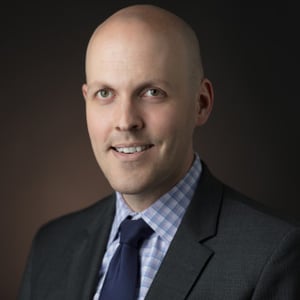
Partner, Barr & Klein PLLC
Steve Klein, a partner at Barr & Klein PLLC, is an experienced free speech attorney who has successfully fought for the First Amendment rights of his clients against local, state and federal regulators. As a lobbyist, Steve’s advocacy has led to the successful amendment of state laws to respect political engagement and prevented the enactment of laws that burden it. Steve has published articles in several legal journals, and his commentary has appeared in The Wall Street Journal, The Washington Times, The Detroit News, and other outlets. Steve earned a bachelors degree in politics at Hillsdale College and a law degree from Ave Maria School of Law, where he served as Managing Editor of the Ave Maria Law Review. He is licensed to practice law in the District of Columbia, Illinois and Michigan.
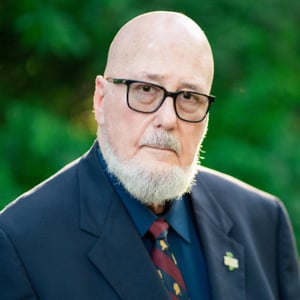
Senior Fellow, National Security Institute, Antonin Scalia School of Law, George Mason University; Retired Professor, Distinguished Fellow and Co-Founder, Center for National Security Law, University of Virginia School of Law (1987-2020)
Robert F. Turner holds both professional and academic doctorates from the University of Virginia School of Law. He co-founded the Center for National Security Law with Professor John Norton Moore in April 1981 and served as its associate director for 39 years, except for two periods of government service in the 1980s and during 1994-95, when he occupied the Charles H. Stockton Chair of International Law at the U.S. Naval War College in Newport, Rhode Island. He retired from UVA in January 2020 and currently serves as a non-resident senior fellow at the GMU National Security Institute. He also served briefly in 2020 as President of the Crime Prevention Research Center—one of the most respected pro-Second Amendment groups in the country—while its founder, Dr. John Lott, was on leave of absence.
A former Army captain and veteran of two tours in Vietnam, Turner served as a research associate and public affairs fellow at Stanford's Hoover Institution on War, Revolution and Peace before spending five years in the mid-1970s as national security adviser to U.S. Senator Robert P. Griffin, a member of the Senate Foreign Relations Committee (where Turner anticipated by seven years the Supreme Court’s landmark INS v. Chadha decision, striking down legislative vetoes). He also served in the executive branch during the Reagan administration as a member of the Senior Executive Service, first in the Pentagon as special assistant to the undersecretary of defense for policy, then in the White House as counsel to the President's Intelligence Oversight Board, and at the State Department as principal deputy and then acting assistant secretary for legislative affairs. In 1986, he became the first president of the congressionally established United States Institute of Peace.
A former three-term chairman of the ABA Standing Committee on Law and National Security (and for many years editor of the ABA National Security Law Report), Turner also chaired the Executive-Congressional Relations Subcommittee of the ABA Section on International Law and Practice and chaired or co-chaired the National Security Law Subcommittee of the Federalist Society’s International and National Security Law Practice Group for several years.
Turner taught undergraduate courses at Virginia on international law, U.S. foreign policy, the Vietnam War and foreign policy and the law in what is now the Woodrow Wilson Department of Politics. In addition, he co-taught National Security Law and advanced national security law seminars on the Indochina War and on war and peace with Moore at the Law School.
The author or editor of 18 books and monographs (including co-editor of the Center's 1,600-page National Security Law & Policy casebook, National Security Law Documents, and Legal Issues in the Struggle Against Terror) and numerous articles in law reviews and other professional journals, Turner has also contributed articles to most of the major U.S. newspapers, including The New York Times and USA Today. In an op-ed published in The International Herald Tribune in September 1990, he and Moore were the first to call for a war-crimes trial for Iraqi dictator Saddam Hussein and for international controls over Iraq's weapons of mass destruction, and the following month he wrote the lead story in The Washington Post Sunday Outlook Section, “Killing Saddam: Would It Be a Crime?,” arguing that Hussein would be a lawful target during Operation Desert Storm. (His reasoning contributed to the modern legal justification for drone strikes targeting specific terrorist leaders.) Three years before the terrorist attacks of September 11, 2001, Turner published an op-ed in USA Today entitled: “In Self-defense, U.S. Has Right to Kill bin Laden.”
In July 2007, he co-authored an article in The Washington Post with former U.S. Marine Corps Commandant General P.X. Kelley, “War Crimes and the White House,” criticizing the use of unlawful “enhanced interrogation techniques” by the Central Intelligence Agency. On the 40th anniversary of the fall of Saigon he authored an article in The Wall Street Journal, “Saigon’s Fall Still Echoes Today,” noting that after the war ended, Hanoi admitted it had made a decision in 1959 to open the Ho Chi Minh Trail and start sending troops, weapons and supplies into South Vietnam to overthrow its government — just as the United States had charged. In 2010 Turner received the first “person of the year” award from SACEI, a major Vietnamese-American human rights organization.
A frequent lecturer and debater, Turner has spoken at more than 100 law schools around the nation and in other fora — taking on as many as four opponents at a time. His debate opponents have included former or future deans of Yale, Stanford, the University of Chicago and Berkeley law schools. Following a 1987 debate against Dean Harlan Cleveland (Rhodes Scholar, U.S. Ambassador to NATO, and Presidential Medal of Freedom recipient) in which Turner defended the legality of U.S. support for the Nicaraguan contras during the Reagan Administration, the host student debating societies awarded Turner the victory by an 85-to-15 percent margin.
Turner has also written and lectured widely on University of Virginia founder and America’s third president Thomas Jefferson. In 2000-2001 he chaired the Jefferson-Hemings Scholars Commission. In his 2012 book Master of the Mountain, Jefferson critic Henry Wiencek described Turner as “Jefferson’s chief scholarly defender."
A former distinguished lecturer at the U.S. Military Academy at West Point, Turner is a member of the Council on Foreign Relations, the Academy of Political Science, the Committee on the Present Danger, The Heterodox Academy, and other professional organizations. He maintained a 4.0 gpa as a graduate student at Stanford in History and Political Science and in the UVA Department of Government and Foreign Affairs and was the first person admitted directly to the UVA academic law doctorate (SJD) program without first being required to earn an LL.M. master’s degree. He was selected for inclusion in Who’s Who in American Law less than two years after graduating from law school and Who’s Who in the World before he reached the age of 40. Turner has testified before more than a dozen different congressional committees on issues of international or constitutional law and other topics.
Assistant Professor of Law, Vanderbilt Law School
Partner, Troutman Pepper Locke LLP
Misha leads Troutman Peppers' national appellate and Supreme Court practice. Most recently, he successfully obtained orders from the Supreme Court blocking an unconstitutional restriction on places of worship, as well as overturning a lower court order that had blocked several state election laws. He has also argued and prevailed before the Supreme Court in Gill v. Whitford, one of the most significant redistricting cases in decades, as well as Murr v. Wisconsin, a high-stakes regulatory taking case.
Before joining Troutman, Misha served as Solicitor General of the State of Wisconsin. Misha previously served as a law clerk for the Honorable Anthony M. Kennedy of the Supreme Court, Janice Rogers Brown of the D.C. Circuit, and Alex Kozinski of the 9th Circuit. He graduated from Georgetown University Law Center, where he was President of the Federalist Society Chapter.

Regulating the Regulators: North Carolina Board of Dental Examiners v. Federal Trade Commission - Podcast
Rebecca Haw Allensworth, Misha Tseytlin
The North Carolina State Board of Dental Examiners is the state agency responsible for regulating...
Regulating the Regulators: North Carolina Board of Dental Examiners v. Federal Trade Commission
TeleforumReligious Accommodation in the Workplace: Current Trends Under Title VII
Robbin W. Hutton
Arecent survey of American workers suggests that religious discrimination is a growing workplace concern.1 Indeed,...
Asserting Influence and Power in the 21st Century: The NLRB Focuses on Assisting Non-Union Employees
Elizabeth Milito
Note from the Editor: This article is a discussion about the National Labor Relations Board’s relationship...
CTS Corp. v. Waldburger - Post-Argument SCOTUScast
Allyson Newton Ho
On April 23, 2014, the Supreme Court heard oral argument in CTS Corp. v. Waldburger. The...
Worker Centers: Charities or Labor Organizations Masquerading as Charities?—and the Impact of an IRS
Heidi Abegg
Note from the Editor: This article is a discussion about worker centers and their status...
Koontz v. St. Johns River Water Management District and Its Implications for Takings Law
Brian T. Hodges
Note from the Editor: This article is about the Supreme Court's decision in Koontz v....
Maryland v. King: Possibly The Most Important Criminal Procedure Case in Decades
Greg Brower, Norman Reimer
Maryland v. King: Possibly The Most Important Criminal Procedure Case in Decades An Exchange Between...
Bailey v. Maine Commission on Governmental Ethics: Another Step Toward the End of Political Privacy
Stephen R. Klein
Note from the Editor: This article discusses the Bailey v. Maine Commission on Governmental Ethics...
First Principles: Are Judicial and Legislative Oversight of NSA Constitutional?
Robert F. Turner
First Principles: Are Judicial and Legislative Oversight of NSA Constitutional? Robert F. Turner* This issue...