

Paul J. Schierl Professor of Law, University of Notre Dame Law School
Professor Richard W. Garnett teaches and writes in the areas of constitutional law, criminal law, the First Amendment, and law and religion. He is a leading authority on questions and debates regarding religious freedom and church-state relations, and is the founding director of Notre Dame Law School’s Program on Church, State, and Society.
Garnett clerked for the late Chief Justice of the United States, William H. Rehnquist, and also for the late Chief Judge of the United States Court of Appeals for the Eighth Circuit, Richard S. Arnold. He earned his J.D. from Yale Law School in 1995 and his B.A., summa cum laude, from Duke University in 1990. He joined the faculty in 1999 after practicing law in Washington, D.C. with Miller, Cassidy, Larroca & Lewin.
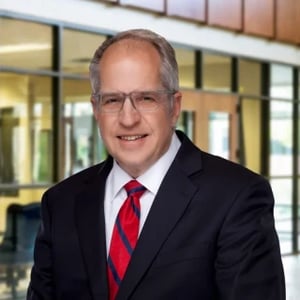
Senior Counsel, First Liberty Institute
Jordan Lorence is Senior Counsel in FLI’s Washington, D.C. office, where he represents First Liberty in strategic efforts promoting religious liberty, and works on important First Amendment projects and litigation, including those at the U.S. Supreme Court.
Lorence has a long career of litigating religious liberty cases since 1984. He has worked for many public interest law firms, including Alliance Defending Freedom, Home School Legal Defense Association, the North Star Legal Center and Concerned Women for America.
He has worked on important religious liberty cases. Lorence worked on school choice cases at the Supreme Court, such as Witters v. Washington Department of Services for the Blind (1986), and Trinity Lutheran (2016), which laid the foundation for First Liberty’s crucial win in Carson v. Makin (2022), requiring Maine to include religious schools in its school choice program.
Lorence argued before the U.S. Supreme Court in Regents of the University of Wisconsin v. Southworth (2000). He represented prolife Christian law students from the University of Wisconsin Law School who objected to the University’s requirement that they pay a mandatory student fee that funded the advocacy of student pro-abortion groups. Other Supreme Court cases Lorence has worked on include NIFLA v. Becerra (2018), protecting prolife pregnancy centers from a California statute requiring them to post signs explaining how pregnant women could obtain state-funded abortions; Masterpiece Cakeshop (2017), involving a Christian cake artist sued by the State of Colorado for declining to design a case celebrating the wedding of a same-sex couple and other cases such as Christian Legal Society v. Martinez (2012), Rosenberger v. University of Virginia (1995), Hurley v. GLIB (1995) and Lamb’s Chapel v. Center Moriches Center Moriches School District (1993).
Churches and other religious groups in New York City obtained the right to rent vacant public schools on weekends to conduct worship services after Lorence’s tenacious 20 years of litigation in Bronx Household of Faith. Lorence won protection for churches facing eviction from discriminatory zoning ordinances in Minnesota in Cornerstone Bible Church v. City of Hastings, Minnesota (1991). He also argued at the New Mexico Supreme Court one of the first cases in the nation defending a Christian wedding photographer charged by the State of New Mexico with discrimination for declining to create photos celebrating the commitment ceremony of a lesbian couple in Elane Photography v. Willock (2013).
Lorence defended home schooling families from intrusive school officials during his time working at Home School Legal Defense Association (HSLDA) in the 1980s and 1990s. HSLDA also tasked Lorence with establishing a sister organization in Canada to protect home schooling families there. He traveled extensively in Canada from British Columbia to Prince Edward Island speaking to families how they could protect their right to home school under relevant Canadian law.
Lorence earned his undergraduate degree in journalism from Stanford University and his law degree from the University of Minnesota, his home state. Lorence was born and raised in Minnesota, where he worked one summer building Mighty Dump trucks at Tonka Toys in Mound, Minnesota. For two years immediately after he graduated from law school, Lorence served as the head administrator for a Minnesota Senate committee.
He speaks extensively on First Amendment and other legal issues. Lorence has spoken at least 75 law schools and many legal conferences. Prominent publications such as the Wall Street Journal, the Washington Post and others have printed his opinion pieces on key legal issues involving religious liberty and freedom of speech. He has appeared on such media outlets as Fox News, CNN, National Public Radio, NBC’s Today Show, BBC radio and many others.
Lorence and his wife Marilyn have been married 40 years. They live in the Washington, D.C. area where they raised their seven children.

Chief Judge, United States Court of Appeals, Eleventh Circuit
William H. Pryor Jr. serves as Chief Circuit Judge on the United States Court of Appeals for the Eleventh Circuit.
In 2013–18, he served on the United States Sentencing Commission and, in 2017–18, served as Acting Chair.
He has taught as a visiting professor at the University of Alabama School of Law and previously taught as an adjunct professor at the Cumberland School of Law of Samford University.
He served as the 45th Attorney General of Alabama from 1997 to 2004. When he took office, he was the youngest attorney general in the nation. In his reelection, he received the highest percentage of votes of any statewide candidate.
He graduated magna cum laude from Tulane Law School where he finished first in the common-law curriculum and was editor in chief of the Tulane Law Review. He then served as a law clerk for Judge John Minor Wisdom of the U.S. Court of Appeals for the Fifth Circuit.
He is a member of The American Law Institute and an Adviser for the RESTATEMENT OF THE LAW THIRD, CONFLICT OF LAWS. He is a coauthor with Bryan Garner, Justices Gorsuch and Kavanaugh, and several other judges of a treatise, THE LAW OF JUDICIAL PRECEDENT. He has published in the Yale Law Journal, Columbia Law Review, Virginia Law Review, Notre Dame Law Review, Harvard Journal of Law & Public Policy, Yale Law & Policy Review, George Mason Law Review, Florida Law Review, Alabama Law Review, Case Western Reserve Law Review, and Tulane Law Review. He has published op-eds in The Wall Street Journal, The New York Times, National Review, and USA Today. He has debated at National Lawyers’ Conventions of the Federalist Society (including on National Public Radio) and at the Oxford Union in the United Kingdom. And he is listed among several “widely admired judicial writers” in Bryan Garner’s The Redbook: A Manual on Legal Style.
He is a member of the Tulane Law School Hall of Fame and has received the Defender of the Constitution Award from the Heritage Foundation, the Jurist of the Year Award from the Texas Review of Law & Politics, and the St. Thomas More Award from the St. Thomas More Society of Atlanta. Judge Pryor is also a proud member of the National Society of the Sons of the American Revolution.
Partner, Jenner & Block LLP
Paul M. Smith is a partner in the Firm's Litigation Department. He is a member of the Firm's Policy Committee. He is Chair of the Appellate and Supreme Court Practice and a Co-Chair of the Creative Content, Media and First Amendment, and Election Law and Redistricting Practices. Mr. Smith is AV Peer Review Rated, Martindale-Hubbell's highest peer recognition for ethical standards and legal ability.
Mr. Smith has had an active Supreme Court practice for two decades, including oral arguments in thirteen Supreme Court cases. These arguments have included Crawford v. Marion County Election Board (2008), the Indiana Voter ID case; LULAC v. Perry (2006), and Vieth v. Jubelirer (2003), two congressional redistricting cases; Lawrence v. Texas (2003), involving the constitutionality of the Texas sodomy statute; United States v. American Library Ass'n (2003), involving a First Amendment challenge to the Children's Internet Protection Act and Mathias v. WorldCom (2001), dealing with the Eleventh Amendment immunity of state commissions. His first argument was in Celotex Corp. v. Catrett in 1986. Mr. Smith also worked extensively on several other First Amendment cases in the Supreme Court, involving issues ranging from commercial speech to defamation to "adult" speech on the Internet.
Mr. Smith also represents various clients in trial and appellate cases involving commercial and telecommunications issues, the First Amendment, intellectual property, antitrust, and redistricting and voting rights, among other areas. His recent trial work has included several cases involving congressional redistricting as well as challenges to state video game restrictions under the First Amendment.
Mr. Smith graduated summa cum laude and Phi Beta Kappa from Amherst College in 1976 and received a J.D. from Yale Law School in 1979, where he served as Editor-in-Chief of the Yale Law Journal. The following year, Mr. Smith was a law clerk to Judge James L. Oakes of the United States Court of Appeals for the Second Circuit. From 1980-81, Mr. Smith was a law clerk to Supreme Court Justice Lewis F. Powell, Jr.
Mr. Smith was a member of the Board of Governors of the District of Columbia Bar from 2002-2008. He is a former board member and former Chair of the National Board of Directors of The American Constitution Society, Co-Chair of the Board of Directors of Lambda Legal and a member of the Board of Directors of the Washington Lawyers Committee for Civil Rights and Urban Affairs.
Since 2003, Chambers USA has named him one of the country's leading lawyers in the areas of Appellate Litigation and Media & Entertainment Law. In 2007, 2008, 2009 and 2010 Chambers USA also named him one of the country's leading lawyers in the area of First Amendment Litigation. Mr. Smith was recognized in the 2007, 2008, 2009 and 2010 Editions of Washington DC Super Lawyers for Appellate Law and as one of the Top 100 Lawyers in DC. In 2010, Mr. Smith was named one of the Top 10 lawyers in Washington, DC by Washington DC Super Lawyers and one of "Washington's Top Lawyers" by Washingtonian magazine. Mr. Smith was also named one of the "Decade's Most Influential Lawyers" by The National Law Journal in 2010. The Firm was also selected as 2010 "Copyright Firm of the Year" by Managing Intellectual Property magazine. In 2010, Mr. Smith was awarded the Thurgood Marshall Award from the American Bar Association Section of Individual Rights and Responsibilities.
Mr. Smith is admitted to practice in Maryland, New York and the District of Columbia.

Thomas M. Siebel Senior Fellow, The Hoover Institution, Stanford University; Gary T. Schwartz Distinguished Professor of Law Emeritus, UCLA School of Law
Eugene Volokh is the Thomas M. Siebel Senior Fellow at the Hoover Institution (Stanford), as well as the Gary T. Schwartz Distinguished Professor of Law Emeritus and Distinguished Research Professor at UCLA School of Law. He recently retired from teaching at UCLA, after 30 years there, and is now focusing on research.
Volokh is the author of the textbooks The First Amendment and Related Statutes (8th ed. 2023), and Academic Legal Writing (5th ed. 2016), as well as over 100 academic law journal articles, mostly on First Amendment law. He is a member of The American Law Institute; the editor-in-chief of the Journal of Free Speech Law; and the creator and coauthor of The Volokh Conspiracy, a leading legal blog founded in 2002 (hosted at the Washington Post from 2014 to 2017 and now at Reason Magazine).
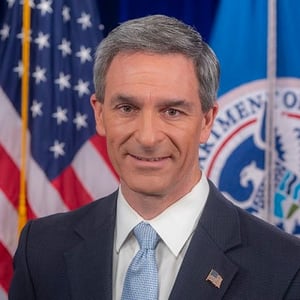
Former Acting Deputy Secretary, Department of Homeland Security
Senior Fellow for Homeland Security at The Center for Renewing America, Mr. Cuccinelli has been a trial and appellate litigator, including constitutional law, for over 25 years. Additionally, Mr. Cuccinelli served in state government in the Virginia State Senate from 2002-2010, and as Virginia’s Attorney General from 2010-2014. As Virginia’s Attorney General, Mr. Cuccinelli led national litigation against Obamacare and other illegal and unconstitutional federal overreach. He also led Virginia from being among the worst states in fighting human trafficking to becoming one of the best; and his successful prosecutorial efforts resulted in record enforcement against gangs, health care fraud and child predators, all while protecting life and constitutional rights.
Mr. Cuccinelli also served in the federal government, first as the Acting Director of
United States Citizenship & Immigration Services, and then as the Acting Deputy
Secretary for the Department of Homeland Security. During his tenure, Mr. Cuccinelli
was a leading spokesman for the administration on immigration, election security and
homeland security issues. He was responsible for planning and managing a budget of
over $50 billion per year, while serving as the chief operating officer for the Department
of the federal government responsible for responding to most forms of crises in the
United States. Mr. Cuccinelli was appointed by the President to serve as an original
member of the Coronavirus Task Force upon the emergence of the Covid-19 pandemic.
Following his time in federal service, Mr. Cuccinelli assumed leadership of the joint
Susan B. Anthony List/American Principles Project Election Transparency Initiative, in
which position Mr. Cuccinelli seeks to fend off a federal takeover of state elections while
at the same time advancing election reforms to achieve security, transparency and
accountability in our elections.
Mr. Cuccinelli continues to be a frequent media contributor on the wide array of
subjects in which he is an expert.
Mr. Cuccinelli and his wife, Teiro, grew up and live in Virginia and they have seven
children, two sons-in-law and most joyously of all – four grandchildren (so far).
In his spare time, Mr. Cuccinelli enjoys spending time with his family, reading, shooting,
playing ultimate frisbee and watching college basketball.

Dr. John Eastman is the former Henry Salvatori Professor of Law & Community Service and former Dean at Chapman University's Dale E. Fowler School of Law, where he had been a member of the faculty since 1999, specializing in Constitutional Law, Legal History, and Property. He is a founding director of the Center for Constitutional Jurisprudence, a public interest law firm affiliated with the Claremont Institute that he founded in 1999. He has a Ph.D. in Government from the Claremont Graduate School and a J.D. from the University of Chicago Law School, and a B.A. in Politics and Economics from the University of Dallas. He serves as the Chairman of the Board of the National Organization for Marriage.
Prior to joining the Chapman law faculty, Dr. Eastman served as a law clerk to the Honorable Clarence Thomas, Associate Justice, Supreme Court of the United States, and to the Honorable J. Michael Luttig, Judge, United States Court of Appeals for the Fourth Circuit and practiced law with the national law firm of Kirkland & Ellis. Dr. Eastman has also represented numerous clients in important constitutional law matters and has argued before the Supreme Court. On behalf of the Claremont Institute Center for Constitutional Jurisprudence, he has participated as amicus curiae before the Supreme Court of the United States, U.S. Courts of Appeals, and State Supreme Courts in more than one hundred cases of constitutional significance, including Boy Scouts of America v. Dale, Zelman v. Simmons-Harris (the school vouchers case), Kelo v. New London, Ct. (eminent domain), and Van Orden v. Perry (the 10 Commandments case). He has also appeared as an expert legal commentator on numerous television and radio programs, including C-SPAN, Fox News, PBS, NewsHour, and The O'Reilly Factor.

Professor of Law, The George Washington University Law School; CEO Emeritus, National Constitution Center
Jeffrey Rosen is the CEO Emeritus of the National Constitution Center, a professor of law at the George Washington University Law School, a senior fellow at the Foundation for Individual Rights and Expression (FIRE), and a contributing editor of The Atlantic. Host of "The Blessings of Liberty" podcast, he was previously the legal affairs editor of The New Republic and a staff writer for the New Yorker.
Rosen is the author of the New York Times bestsellers The Pursuit of Happiness and Conversations with RBG. His new book is The Pursuit of Liberty: How Hamilton vs. Jefferson Ignited the Lasting Battle Over Power in America.
Rosen is a graduate of Harvard College; Oxford University, where he was a Marshall Scholar; and Yale Law School. He is an elected member of the American Philosophical Society and the American Law Institute. In 2024, the French government recognized him as a Chevalier in the Ordre des Arts et des Lettres.

Chief Judge, United States Court of Appeals, Sixth Circuit
JEFFREY S. SUTTON is the Chief Judge of the United States Court of Appeals for the Sixth Circuit. He has served as Chair of the Federal Judicial Conference Committee on Rules of Practice and Procedure, Chair of the Advisory Committee on Appellate Rules, and Chair of the Supreme Court Fellows Commission. He currently serves as Chair of the Executive Committee of the Judicial Conference of the United States. Since 1993, Chief Judge Sutton has been an adjunct professor at The Ohio State University College of Law, where he teaches seminars on State Constitutional Law, the United States Supreme Court, and Appellate Advocacy. He also teaches a class on State Constitutional Law at Harvard Law School. Among other publications, he is the author of Who Decides? States as Laboratories of Constitutional Experimentation and 51 Imperfect Solutions: States and the Making of American Constitutional Law. He is the co-author of a casebook, State Constitutional Law: The Modern Experience, as well as The Law of Judicial Precedent. He is also the co-editor of The Essential Scalia: On the Constitution, the Courts, and the Rule of Law. In 2006, Chief Judge Sutton was elected to the American Law Institute, and in 2017 he was elected to its Council.
Senior Fellow, Manhattan Institute's Center for Legal Policy
 Marie Gryphon is a Senior Fellow with the Center for Legal Policy. As an attorney in private practice, she worked on ERISA, securities, class action, commercial contract, legal malpractice, and constitutional law cases. She has also been a legal and policy analyst with the Cato Institute, working on issues related to education policy.
Co-Founder, Dickey & Campbell PLC
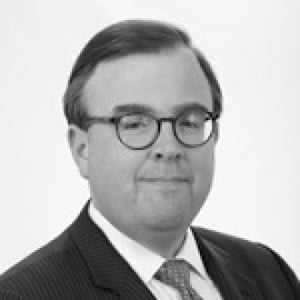
Partner, Morgan, Lewis & Bockius LLP
Michael Edney defends executives and corporations in criminal prosecutions and agency enforcement actions, successfully challenging numerous regulatory agencies—from the Justice Department to the US Securities and Exchange Commission and the US Commodity Futures Trading Commission, among others—against federal government overreach. Many of the regulations Mike has convinced the courts to reverse would have arbitrarily ended hundreds of businesses absent the courts’ intervention. He has also successfully challenged government decisions to break contracts and end projects in cooperation with private industry.
In addition to his criminal defense practice, Mike regularly brings actions challenging government agency regulations as illegal and unconstitutional before they are enforced. He has sued government agencies and reversed their attempted regulations seeking to upend the energy, financial, and tobacco industries.
His civil litigation practice spans beyond anti-regulatory suits. He has brought some of the leading First Amendment cases in the country. On behalf of The Washington Free Beacon, he vindicated the publication’s First Amendment right to access sealed court records before the Arizona Supreme Court. He has defended corporations in bet-the-company litigation concerning securities, environmental, employment, and fair housing. He has represented states at the request of their governors. He has repeatedly served as counsel for former Attorneys General of the United States when they appear as amici curiae before the Supreme Court.
Mike also represents clients on numerous national security matters, including the Classified Information Procedures Act, the Foreign Agent Registration Act, matters before the Committee on Foreign Investment in the United States, government cybersecurity investigations into companies regarded as critical national infrastructure, the handling of classified information by government contractors, and prepublication review of books authored by former government officials for sensitive and classified information.
His private practice draws from a half decade of prior government service. During the administration of former President George W. Bush, he served as deputy legal advisor to the National Security Council at the White House and in the Office of Legal Counsel at the United States Department of Justice, where he helped the administration address many legal issues pertaining to the United States' post-9/11 campaign against terrorism.
Before joining Morgan Lewis, Mike was a litigation partner at another global law firm.
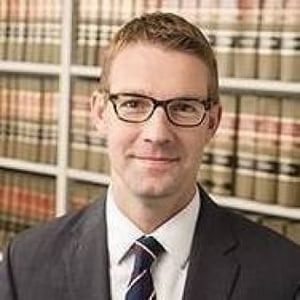
Chief Policy Advisor and Senior Legal Counsel, Office of Governor Kim Reynolds
David Berger Professor for the Administration of Justice Emeritus, University of Pennsylvania Carey Law School
Assistant Professor of Law, Brooklyn Law School
Robin Effron teaches civil procedure and business law courses. Her articles on complex litigation have been published in several law reviews. Fluent in German, she spent an academic year in Germany as a fellow in the D.A.A.D. Program for International Lawyers and worked with attorneys in the legal department of a large investment bank to research questions of German and U.S. law. She also edits the Civil Procedure and Federal Courts Blog for the Law Professors Blog Network.
Prior to joining Brooklyn Law School's faculty, Professor Effron served as a Bigelow Fellow and Lecturer in Law at the University of Chicago Law School. She also served as a law clerk to Judge Alvin K. Hellerstein of the U.S. District Court for the Southern District of New York. In law school, she was articles editor on the NYU Law Review.
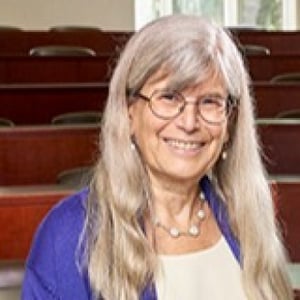
Herman O. Loewenstein Professor of Law Emerita, Vanderbilt Law School
Suzanna Sherry's work in the area of constitutional law has earned her national recognition as one of the most well-known scholars in the field. The author of more than 100 books and articles, she also writes extensively on federal courts and federal court procedures. After graduating from law school, Professor Sherry was a clerk for the Honorable John C. Godbold of the United States Court of Appeals for the Fifth Circuit in Montgomery, Alabama, and then served as an associate with the law firm of Miller Cassidy Larroca & Lewin in Washington, D.C. She joined the Vanderbilt faculty in 2000 as the inaugural holder of the Cal Turner Chair, having previously served on the faculty of the University of Minnesota Law School since 1982. She was named the Herman O. Loewenstein Professor of Law in 2006.
Professor, University of Illinois College of Law
Professor Suja A. Thomas's research interests include the Fifth, Sixth, and Seventh Amendment jury provisions, civil procedure, employment law, theories of constitutional interpretation, and consumer issues. She is currently working on two books, one entitled The Missing American Jury: Restoring Its Fundamental Constitutional Role, which Cambridge University Press will publish, and the other, co-authored with Sandra Sperino, entitled Unequal Justice: Why Employment Discrimination Plaintiffs Lose, which Oxford University Press will publish. Her article "Why Summary Judgment is Unconstitutional," published by the Virginia Law Review, has been the basis of arguments in the federal courts and was featured in a piece in The New York Times where her argument was referred to as "perfectly plausible." A panel of the 6th Circuit referred to her historical analysis in that article as "interesting," and her article was the impetus for a symposium of the Iowa Law Review. Professor Thomas's other work has also been influential. Her article on remittitur was the basis of a petition for certiorari to the Supreme Court, and a federal judge has commented that "her caution [regarding the effective elimination of the jury trial right through remittitur] merits evaluation by the federal courts." Also, recently, theWall Street Journal ran an article based on her co-authored article "Employer Costs and Conflicts Under the Affordable Care Act," published by the Cornell Law Review Online.
Professor Thomas earned her bachelor of arts from Northwestern University in mathematics and received her law degree from New York University School of Law. At N.Y.U., she served as an articles editor on the N.Y.U. Law Review, and she received several awards including the Leonard M. Henkin Prize for her note on equal rights under the 14th Amendment, the Mendes Hershman Prize for excellence in writing in the field of property law and the William Miller Memorial Award for outstanding scholarship in the field of municipal law. After graduating from law school and a federal clerkship in Chicago, Professor Thomas practiced law in New York City with Cravath, Swaine & Moore, Vladeck, Waldman, Elias & Engelhard, P.C. and Weil, Gotshal & Manges, LLP.
Professor Thomas began her academic career as a professor at the University of Cincinnati College of Law in 2000 and was a visiting professor at Vanderbilt University Law School in the spring of 2008. She joined the University of Illinois College of Law faculty in the fall of 2008.
Back in the day, Professor Thomas ran several marathons, including Boston, with a personal best of 3:02. She lives in Urbana with her husband Scott and dog Javi.
University Research Professor of Law, University of Alabama School of Law
Michael J. Marks Professor of Law, University of Chicago Law School
M. Todd Henderson is the Michael J. Marks Professor of Law at the University of Chicago Law School. Professor Henderson’s research interests include corporations, securities regulation, and law and economics. He has taught classes ranging from Banking Regulation to Torts to American Indian Law.
Professor Henderson received an engineering degree cum laude from Princeton University in 1993. He worked for several years designing and building dams in California before matriculating at the Law School. While at the Law School, Todd was an editor of the Law Review and captained the Law School's all-University champion intramural football team. He graduated magna cum laude in 1998 and was elected to the Order of the Coif. Following law school, Todd served as clerk to the Hon. Dennis Jacobs of the US Court of Appeals for the Second Circuit. He then practiced appellate litigation at Kirkland & Ellis in Washington, DC, and was an engagement manager at McKinsey & Company in Boston, where he specialized in counseling telecommunications and high-tech clients on business and regulatory strategy.
C. Ben Dutton Professor of Law, Indiana University Maurer School of Law
Professor Nagy joined the law school faculty in 2006 as the C. Ben Dutton Professor of Business Law. She began her teaching career in 1994 at the University of Cincinnati College of Law, where she served as Interim Dean from 2004-05 and as Associate Dean for Faculty Development from 2002-04. In Spring 2001, she was a Visiting Professor of Law at the University of Illinois College of Law, and was a Visiting Scholar at the University of Canterbury School of Law in Christchurch, New Zealand in Spring 2002.
Professor Nagy teaches and writes in the areas of securities litigation, securities regulation, and corporations. Her scholarship includes articles in the Cornell Law Review, the Notre Dame Law Review, and the Ohio State Law Journal as well as two co-authored books, one on the law of insider trading and a casebook on Securities Litigation and Enforcement. She is a frequent speaker on securities regulation and litigation topics at law schools and professional conferences. She also served as Chair of the AALS Section on Securities Regulation in 2004-05; as Chair of the AALS Standing Committee on Sections and the Annual Meeting in 2007-08; and as a Vice President and Member of the Board of Trustees of the SEC Historical Society from 2008-11.
Prior to teaching, Professor Nagy was an associate with Debevoise & Plimpton in Washington, D.C., specializing in securities enforcement and litigation. She was named interim executive associate dean for academic affairs in August 2013 and executive associate dean in January 2014.

Partner, Gibson Dunn & Crutcher LLP
Miguel A. Estrada is a partner in the Washington, D.C. office of Gibson, Dunn & Crutcher.
Mr. Estrada has represented clients before federal and state courts throughout the country in a broad range of matters. He has argued 24 cases before the United States Supreme Court, and briefed many others. He has also argued dozens of appeals in the lower federal courts.
Best Lawyers® recognized Mr. Estrada as a 2020 Lawyer of the Year in Intellectual Property Litigation and as a Lawyer of the Year in Appellate Practice. He has been recognized by Benchmark Litigation as a 2020 U.S. Appellate Litigation “Star”. In 2014, The American Lawyer named Mr. Estrada a “Litigator of the Year,” praising his “brains and tenacity” and noting he is the lawyer to call for “a tough, potentially unwinnable case.” From 2014-2021, Chambers & Partners has named him as one of a handful of attorneys that it ranked in the top tier among the nation’s leading appellate lawyers. Chambers & Partners noted that “clients are impressed by his intellect and ability, with one saying, ‘His papers are just blindingly clear in what they say and devastating in how they marshal the arguments.’” The Atlantic described his oral argument in a 2014 high-profile separation-of-powers case as “one of the most dazzling arguments the marble chamber has heard in many years.”
Mr. Estrada was selected by his peers for inclusion in the 2020 edition of The Best Lawyers in America® in the area of Appellate Law, in addition to previous recognition by the publication in the specialties of Bet-the-Company Litigation, Commercial Litigation and Criminal Defense: White Collar, Intellectual Property Litigation, and Regulatory Enforcement Litigation in the areas of SEC, Telecom, and Energy. In 2017, he was elected as a member of the American Law Institute. In 2021, Mr. Estrada was named among the Lawdragon 500 Leading Lawyers in America. In 2004, Legal Times named him one of the top 12 appellate litigators in the D.C. area, noting that “people who follow appellate practice in Washington have known for several years that Estrada . . . is one of the best around.” Also in 2004, Washingtonian Magazine named him one of the top constitutional law lawyers “who could become one of the legends of the Supreme Court bar.”
Mr. Estrada joined Gibson Dunn in 1997, after serving for five years as Assistant to the Solicitor General of the United States. He previously served as Assistant U.S. Attorney and Deputy Chief of the Appellate Section, U.S. Attorney’s Office, Southern District of New York. In those capacities, Mr. Estrada represented the government in numerous jury trials and in many appeals before the U.S. Court of Appeals for the Second Circuit. Before joining the U.S. Attorney’s Office, Mr. Estrada practiced corporate law in New York with Wachtell, Lipton, Rosen & Katz.
Mr. Estrada is a Trustee of the Supreme Court Historical Society. He was formerly a member of the Board of Visitors of Harvard Law School.
Mr. Estrada served as a law clerk to the Honorable Anthony M. Kennedy in the U.S. Supreme Court from 1988 to 1989 and to the Honorable Amalya L. Kearse in the U.S. Court of Appeals for the Second Circuit from 1986 to 1987. He received a J.D. degree magna cum laude in 1986 from Harvard Law School, where he was editor of the Harvard Law Review. Mr. Estrada graduated with an A.B. degree magna cum laude and Phi Beta Kappa in 1983 from Columbia College, New York. He is fluent in Spanish and proficient in French.
Representative Supreme Court matters include:
In 2011, the Supreme Court appointed Mr. Estrada to brief and argue two criminal cases –Dorsey v. United States and Hill v. United States – in which the Solicitor General declined to defend the judgments of the court of appeals. Mr. Estrada was appointed to argue the position that the Solicitor General had declined to defend.
Mr. Estrada was also part of the team that successfully presented then Governor Bush’s position to the Supreme Court in Bush v. Gore (2000). Other cases that Mr. Estrada handled in the Supreme Court include Granholm v. Heald (2005) (dormant Commerce Clause and Twenty-First Amendment), Vermont Agency of Natural Resources v. United States ex rel. Stevens (2000) (False Claims Act, Article III standing and Eleventh Amendment immunity), Old Chief v. United States (1997) (rules of evidence), United States v. Mezzanatto (1995) (evidence and plea bargaining), United States v. Robertson (1995) (constitutional limits on Congress’s Commerce Clause powers), Citizens Bank of Maryland v. Strumpf (1995) (bankruptcy law), and NOW, Inc. v. Scheidler (1994) (RICO).
Recent Court of Appeals matters include:
In addition, Mr. Estrada is lead appellate counsel to Vivendi S.A. in two securities-fraud appeals from jury verdicts that are currently pending in the Second Circuit, and to the National Association of Broadcasters in a challenge to certain procedures promulgated by the FCC in connection with the upcoming Spectrum Auction. Mr. Estrada also recently presented argument before the D.C. Circuit on behalf of the tobacco industry in a first amendment challenge to certain compelled disclosures that were imposed as part of the government’s long-running civil RICO case against the industry.
Other matters:

Judge, United States Court of Appeals, Seventh Circuit
Judge Sykes was nominated to the Seventh Circuit by President George W. Bush and confirmed by the Senate in 2004. Prior to her appointment to the federal bench, Judge Sykes served as a justice on the Wisconsin Supreme Court. Governor Tommy G. Thompson appointed her in September 1999 to fill a mid-term vacancy on the state supreme court, and she was elected to a full ten-year term in April 2000. From 1992-1999, Judge Sykes served on the state trial bench in Milwaukee County (elected in 1992 and re-elected in 1998). From 1985-1992, Judge Sykes practiced law with the Milwaukee firm of Whyte & Hirschboeck, S.C., and from 1984-1985, was a law clerk to Federal Judge Terence T. Evans.
Born and raised in the Milwaukee area, Judge Sykes earned a bachelor’s degree in journalism from Northwestern University in 1980 and a law degree from Marquette University Law School in 1984. Between college and law school, Judge Sykes worked as a reporter for The Milwaukee Journal.
Judge Sykes has two sons.
Associate, Jones Day
Shay Dvoretzky specializes in appellate advocacy, complex motions in trial courts, and legal strategy. He has argued before numerous courts, including the U.S. Courts of Appeals for the Second, Sixth, Eighth, Ninth, Eleventh, and District of Columbia Circuits. He has represented Firm clients in the Supreme Court of the United States and in federal and state courts throughout the country. His practice has spanned a wide range of subject areas, including constitutional law, Title VII, ERISA, LMRA, the NLRA, election law and voting rights, intellectual property, securities fraud, RICO, administrative law, products liability, section 1983 claims, energy law, taxation, bankruptcy, and general commercial litigation.
Shay has particular experience in labor and employment law and employment class actions. For example, he has successfully argued appeals involving the vesting of retiree health benefits and the arbitrability of disputes over such benefits after a collective bargaining agreement expires, see Crown Cork & Seal Co. v. International Association of Machinists and Aerospace Workers, __ F.3d __, 2007 WL 2701208 (8th Cir. Sept. 18, 2007); ERISA's anti-cutback and merger rules, see McCay v. Siemens Corp., 2007 WL 2119827 (11th Cir. July 25, 2007); and the denial of certification of a 3,000-member class, see Love v. Johanns, 439 F.3d 723 (D.C. Cir. 2006).
In addition, Shay maintains an active pro bono practice and has represented indigent individuals in numerous cases. For example, in Turner v. Bagley, 401 F.3d 718 (6th Cir. 2005), which Shay argued before the Sixth Circuit, the court of appeals reversed the district court's judgment and granted Jones Day's client a writ of habeas corpus based on constitutional violations related to his state conviction.
Shay regularly speaks and writes on issues including appellate advocacy, the Supreme Court, and employment law. He also serves as the D.C. Circuit editor for the ABA Appellate Practice Journal, frequently judges moot courts for various organizations, and belongs to the Edward Coke Appellate Inn of Court.
Shay joined Jones Day following clerkships on the U.S. Court of Appeals for the Fourth Circuit and the Supreme Court of the United States. Before law school he worked for several years as a management consultant.
Law Clerk to Hon. J. Michael Luttig, U.S. Court of Appeals, Fourth Circuit (2000-2001) and Law Clerk to Hon. Antonin Scalia, Supreme Court of the United States (2001-2002)
Yale University (Phi Beta Kappa; Distinction in the Political Science Major; James Bennett Prize for Outstanding Senior Thesis; B.A. summa cum laude 1995; Coker Fellow; Olin Fellow; Yale Club Scholar; William Wang Prize in Corporate Law; Yale Law Journal; J.D. 2000)

Professorial Lecturer in Law, The George Washington University
Paul Rosenzweig is an accomplished writer and speaker with a national reputation in cyber security and homeland security. He is the founder of Red Branch Consulting PLLC, a homeland security consulting company. He is also a Senior Advisor to The Chertoff Group. Mr. Rosenzweig formerly served as Deputy Assistant Secretary for Policy in the Department of Homeland Security.
He is a Professorial Lecturer in Law at George Washington University, and a Senior Fellow in the Tech, Law & Security Program at the American University, Washington College of Law. He serves as an advisor to and former member of the American Bar Association Standing Committee on Law and National Security, and a Contributing Editor of the Lawfare blog. He is a member of the ABA Cybersecurity Legal Task Force and of the United States Court of Appeals for the District of Columbia Circuit Advisory Committee on Admissions and Grievances. He serves, as well, as a Hearing Committee Member of the District of Columbia Board of Professional Responsibility. In 2011 he was a Carnegie Fellow in National Security Journalism at the Medill School of Journalism, Northwestern University.
Mr. Rosenzweig is a cum laude graduate of the University of Chicago Law School. He has an M.S. in Chemical Oceanography from the Scripps Institution of Oceanography, University of California at San Diego and a B.A from Haverford College. Following graduation from law school he served as a law clerk to the Honorable R. Lanier Anderson, III of the United States Court of Appeals for the Eleventh Circuit.
He is the author of Cyber Warfare: How Conflicts in Cyberspace are Challenging America and Changing the World and of three video lecture series from The Great Courses, Thinking About Cybersecurity: From Cyber Crime to Cyber Warfare; The Surveillance State: Big Data, Freedom, and You; and Investigating American Presidents.
He is the co-author (with James Jay Carafano) of Winning the Long War: Lessons from the Cold War for Defeating Terrorism and Preserving Freedom and co-editor (with Jill D. Rhodes and Robert S. Litt) of the Cybersecurity Handbook (3rd ed.). He is also co-editor (with Timothy McNulty and Ellen Shearer) of two books, Whistleblowers, Leaks and the Media: The First Amendment and National Security, and National Security Law in the News: A Guide for Journalists, Scholars, and Policymakers. Mr. Rosenzweig is a member of the Literary Society of Washington.
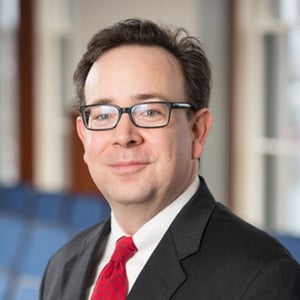
Professor of Law, Oklahoma City University School of Law
Professor O’Shea is a nationally recognized expert on firearms law and the Second Amendment. He is a co-author of the first law school casebook on the subject, Firearms Law and the Second Amendment: Regulation, Rights, and Policy, published in 2012. He serves as the Associate Director of OCU Law’s Center for State Constitutional Law and Government.
Professor O’Shea is an honors graduate of Harvard College and Harvard Law School. He also holds a master’s degree in philosophy from the University of Pittsburgh. Before coming to Oklahoma City University School of Law in 2006, he practiced commercial litigation in Chicago and in his hometown of Kansas City, Missouri. He also served as a law clerk to Chief Judge Danny J. Boggs of the U.S. Court of Appeals for the Sixth Circuit and to Judge John R. Gibson of the U.S. Court of Appeals for the Eighth Circuit.

Religious Liberties: Christian Legal Society vs. Martínez
Richard W. Garnett, Jordan Lorence, William H. Pryor, Paul Smith, Eugene Volokh
Prof. Richard W. Garnett, IV, Associate Dean, University of Notre Dame Law School Mr. Jordan...
Federalism: Is There Any Remaining Limit to Federal Power?
Kenneth T. Cuccinelli, John C. Eastman, Jeffrey Rosen, Jeffrey S. Sutton
Prof. John C. Eastman, Donald P. Kennedy Chair in Law, Director, Center for Constitutional Jurisprudence,...
One Nation Under Arrest: How Crazy Laws, Rogue Prosecutors, and Activist Judges Threaten Your Liberty
New York, New YorkMilavetz v. United States - Post-Decision SCOTUScast
Marie Gryphon
On March 8, 2010, the Supreme Court announced its decision in Milavetz v. United States....
From Guantanamo Bay to Thomson, Illinois: A Debate on the Detention and Prosecution of Alleged Terrorists in 2010 and Beyond
Angela Campbell, Michael J. Edney, Larry J. Eisenhauer, Ryan G. Koopmans
Approximately one year after President Barack Obama announced his intention to close the detainee holding...
Panel 2: Civil Pleading Standards After Iqbal
Stephen B. Burbank, Robin Effron, Suzanna Sherry, Suja Thomas, Adam Steinman
Prof. Suzanna Sherry, Vanderbilt University Law School Prof. Suja Thomas, University of Illinois College of...
Securities Fraud: Should Congress Overturn Stoneridge and Expose Lawyers & Financial Advisors to More Liability?
Armen Boyajian, Todd Henderson, Donna M. Nagy, Casey J. Plant
The Federalist Society's Indiana - Bloomington Student Chapter presented this panel discussion on November 17, 2009, at Indiana...
Professional Responsibility: The Role of Government Attorneys and the Global War on Terror
Miguel A. Estrada, Diane S. Sykes, Bradley Wendel
In the aftermath of the attacks of September 11, 2001, government attorneys in the White...
Supreme Court Preview: What Does the 2009-10 Term Hold?
SCOTUScast 7-28-09 featuring Shay Dvoretzky
Shay Dvoretzky
On Thursday, June 18, 2009, the Supreme Court announced its decision in Gross v. FBL....