
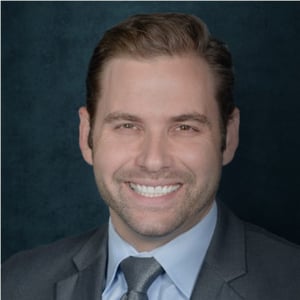
Vice President for the Program on Technology, Criminal Justice and Civil Liberties, Lincoln Network
Arthur Rizer is the Vice President for the Program on Technology, Criminal Justice and Civil Liberties at Lincoln Network. In addition to his work at Lincoln, Arthur is a visiting lecturer at University College London, and an adjunct professor at George Mason University’s Antonin Scalia Law School. Arthur is also a member of Columbia University Justice Lab’s Executive Session for the Future of Justice Policy, the Federalist Society’s Executive Committee of the Criminal Law Practice Group, the Virginia Advisory Committee to the U.S. Commission on Civil Rights, and other advisory bodies.
Before joining Lincoln, Arthur was founding director of the R Street Institute’s program on criminal justice and civil liberties. Prior to that, Arthur taught at West Virginia University’s College of Law, and was a visiting professor at Georgetown University Law Center. He also served as a trial attorney with the U.S. Justice Department, primarily as a federal prosecutor in the Criminal Division, where he targeted command-and-control drug cartel leaders and narco-terrorists. He also served as a prosecutor in the U.S. Attorney’s Office for the Southern District of California and in the civil division. Earlier in his career, Arthur served in the U.S. Army, originally enlisting as a private before later receiving a commission. He served as an armor officer, later becoming the commander of a military police company and a Reserve Officers’ Training Corps assistant professor. He deployed to Fallujah, Iraq, with the mission to train the Iraqi Infantry and served as an MP acting battalion commander and executive officer. He retired as a lieutenant colonel from the U.S. Army (WVNG). During his Army career, Arthur received the Bronze Star, Purple Heart, Meritorious Service and Iraq Campaign medals.
Arthur is the author of three books: Lincoln’s Counsel (2010); The National Security Implications of Immigration Law (2013); and Jefferson’s Pen: The Art of Persuasion (2016).
Arthur earned his bachelor’s degree in political science from Pacific Lutheran University; a master of laws, with distinction, from Georgetown University’s Law Center; and his JD, magna cum laude, from Gonzaga University School of Law. He is also a graduate of the U.S. Marine Corps’ Command Staff College. He is in the final stages of a doctorate at the University of Oxford, Faculty of Law, Centre of Criminology that focuses on policing.
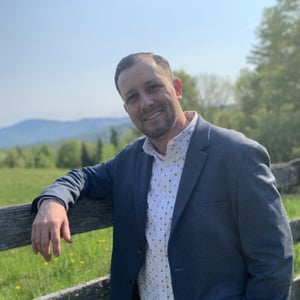
Assistant Professor of Law and Assistant Director of the Academic Success Program, Vermont Law School
Professor Richard Sala is the Assistant Director of the Academic Success Program and an Assistant Professor of Law. He joined the VLS faculty in 2019.
Professor Sala enlisted in the United States Marine Corps in 1997, and served as an infantryman for more than a decade, achieving the rank of Staff Sergeant. Professor Sala’s enlisted time included service with Marine Corps Ground Defense/Security Force, Guantanamo Bay, Cuba, 2nd Battalion, 6th Marines, Camp Lejeune, North Carolina, and 6th Marines Regimental Headquarters, Camp Lejeune, North Carolina —during which time he deployed with the 22nd Marine Expeditionary Unit, Special Operations Capable, participating in operations in and around the former Yugoslavia, including Operation Dynamic Response in Kosovo.
In 2001, Professor Sala was selected for commissioned service through the Broadened Opportunity for Officer Selection and Training program. Professor Sala graduated from the University of Colorado in 2003 with bachelor’s degrees in Political Science and International Affairs, a minor in Italian, and a certificate in Central and Eastern European History. He was commissioned as a Second Lieutenant in 2007 through the Naval Reserve Officer Training Corps program. After completing The Basic School and Infantry Officer Course, he reported to 1st Light Armored Reconnaissance Battalion, in Camp Pendleton, California, where he served as a platoon commander, and company executive officer with Company C—completing a deployment in support of Operation Iraqi Freedom.
In 2010, Professor Sala was selected for service a Judge Advocate through the Excess Leave Program. He attended Vermont Law School graduating with a Juris Doctorate (Cum Laude) and a Masters in Environmental Law and Policy (Magna Cum Laude). He was also the recipient of the Maximilian W. Kempner Award.
After completing law school, Professor Sala reported to Legal Services Support Team, Camp Pendleton where he served as a criminal prosecutor with Legal Team Echo and later, as a criminal prosecutor and Officer-in-Charge of Legal Team Delta.
In 2015, Professor Sala joined 1st Battalion, 4th Marines aboard Camp Pendleton, California, where he served as Judge Advocate to the Commanding Officer of Marine Rotational Force-Darwin—completing a deployment to Darwin, Australia in support of bilateral and multilateral training with the Australian Defense Force and regional allies and partners throughout the Indo-Pacific.
Upon returning from Australia, Professor Sala served as Assistant Deputy Staff Judge Advocate to the Commanding General of the 1st Marine Division.
In 2016, Professor Sala was selected to serve as Assistant Professor and Marine Officer Instructor at the University of Rochester where he also earned a Masters in Business Administration from the University of Rochester’s Simon Business School.
Professor Sala retired from the United States Marine Corps in 2018.
Upon retiring, Professor Sala joined the New Hampshire Department of Justice serving as the Attorney to the Commissioner of the New Hampshire Department of Education.
His personal decorations include the Navy and Marine Corps Commendation Medal (x2) and the Navy and Marine Corps Achievement Medal (x2). He is also the recipient of the Lieutenant Colonel Vic Taylor/Major General Edwin B. Wheeler Award for being the Distinguished Graduate of Infantry Officer’s Course, Class 2-08.
Vice President for the Program on Technology, Criminal Justice and Civil Liberties, Lincoln Network
Arthur Rizer is the Vice President for the Program on Technology, Criminal Justice and Civil Liberties at Lincoln Network. In addition to his work at Lincoln, Arthur is a visiting lecturer at University College London, and an adjunct professor at George Mason University’s Antonin Scalia Law School. Arthur is also a member of Columbia University Justice Lab’s Executive Session for the Future of Justice Policy, the Federalist Society’s Executive Committee of the Criminal Law Practice Group, the Virginia Advisory Committee to the U.S. Commission on Civil Rights, and other advisory bodies.
Before joining Lincoln, Arthur was founding director of the R Street Institute’s program on criminal justice and civil liberties. Prior to that, Arthur taught at West Virginia University’s College of Law, and was a visiting professor at Georgetown University Law Center. He also served as a trial attorney with the U.S. Justice Department, primarily as a federal prosecutor in the Criminal Division, where he targeted command-and-control drug cartel leaders and narco-terrorists. He also served as a prosecutor in the U.S. Attorney’s Office for the Southern District of California and in the civil division. Earlier in his career, Arthur served in the U.S. Army, originally enlisting as a private before later receiving a commission. He served as an armor officer, later becoming the commander of a military police company and a Reserve Officers’ Training Corps assistant professor. He deployed to Fallujah, Iraq, with the mission to train the Iraqi Infantry and served as an MP acting battalion commander and executive officer. He retired as a lieutenant colonel from the U.S. Army (WVNG). During his Army career, Arthur received the Bronze Star, Purple Heart, Meritorious Service and Iraq Campaign medals.
Arthur is the author of three books: Lincoln’s Counsel (2010); The National Security Implications of Immigration Law (2013); and Jefferson’s Pen: The Art of Persuasion (2016).
Arthur earned his bachelor’s degree in political science from Pacific Lutheran University; a master of laws, with distinction, from Georgetown University’s Law Center; and his JD, magna cum laude, from Gonzaga University School of Law. He is also a graduate of the U.S. Marine Corps’ Command Staff College. He is in the final stages of a doctorate at the University of Oxford, Faculty of Law, Centre of Criminology that focuses on policing.
Assistant Professor of Law and Assistant Director of the Academic Success Program, Vermont Law School
Professor Richard Sala is the Assistant Director of the Academic Success Program and an Assistant Professor of Law. He joined the VLS faculty in 2019.
Professor Sala enlisted in the United States Marine Corps in 1997, and served as an infantryman for more than a decade, achieving the rank of Staff Sergeant. Professor Sala’s enlisted time included service with Marine Corps Ground Defense/Security Force, Guantanamo Bay, Cuba, 2nd Battalion, 6th Marines, Camp Lejeune, North Carolina, and 6th Marines Regimental Headquarters, Camp Lejeune, North Carolina —during which time he deployed with the 22nd Marine Expeditionary Unit, Special Operations Capable, participating in operations in and around the former Yugoslavia, including Operation Dynamic Response in Kosovo.
In 2001, Professor Sala was selected for commissioned service through the Broadened Opportunity for Officer Selection and Training program. Professor Sala graduated from the University of Colorado in 2003 with bachelor’s degrees in Political Science and International Affairs, a minor in Italian, and a certificate in Central and Eastern European History. He was commissioned as a Second Lieutenant in 2007 through the Naval Reserve Officer Training Corps program. After completing The Basic School and Infantry Officer Course, he reported to 1st Light Armored Reconnaissance Battalion, in Camp Pendleton, California, where he served as a platoon commander, and company executive officer with Company C—completing a deployment in support of Operation Iraqi Freedom.
In 2010, Professor Sala was selected for service a Judge Advocate through the Excess Leave Program. He attended Vermont Law School graduating with a Juris Doctorate (Cum Laude) and a Masters in Environmental Law and Policy (Magna Cum Laude). He was also the recipient of the Maximilian W. Kempner Award.
After completing law school, Professor Sala reported to Legal Services Support Team, Camp Pendleton where he served as a criminal prosecutor with Legal Team Echo and later, as a criminal prosecutor and Officer-in-Charge of Legal Team Delta.
In 2015, Professor Sala joined 1st Battalion, 4th Marines aboard Camp Pendleton, California, where he served as Judge Advocate to the Commanding Officer of Marine Rotational Force-Darwin—completing a deployment to Darwin, Australia in support of bilateral and multilateral training with the Australian Defense Force and regional allies and partners throughout the Indo-Pacific.
Upon returning from Australia, Professor Sala served as Assistant Deputy Staff Judge Advocate to the Commanding General of the 1st Marine Division.
In 2016, Professor Sala was selected to serve as Assistant Professor and Marine Officer Instructor at the University of Rochester where he also earned a Masters in Business Administration from the University of Rochester’s Simon Business School.
Professor Sala retired from the United States Marine Corps in 2018.
Upon retiring, Professor Sala joined the New Hampshire Department of Justice serving as the Attorney to the Commissioner of the New Hampshire Department of Education.
His personal decorations include the Navy and Marine Corps Commendation Medal (x2) and the Navy and Marine Corps Achievement Medal (x2). He is also the recipient of the Lieutenant Colonel Vic Taylor/Major General Edwin B. Wheeler Award for being the Distinguished Graduate of Infantry Officer’s Course, Class 2-08.
Vice President for the Program on Technology, Criminal Justice and Civil Liberties, Lincoln Network
Arthur Rizer is the Vice President for the Program on Technology, Criminal Justice and Civil Liberties at Lincoln Network. In addition to his work at Lincoln, Arthur is a visiting lecturer at University College London, and an adjunct professor at George Mason University’s Antonin Scalia Law School. Arthur is also a member of Columbia University Justice Lab’s Executive Session for the Future of Justice Policy, the Federalist Society’s Executive Committee of the Criminal Law Practice Group, the Virginia Advisory Committee to the U.S. Commission on Civil Rights, and other advisory bodies.
Before joining Lincoln, Arthur was founding director of the R Street Institute’s program on criminal justice and civil liberties. Prior to that, Arthur taught at West Virginia University’s College of Law, and was a visiting professor at Georgetown University Law Center. He also served as a trial attorney with the U.S. Justice Department, primarily as a federal prosecutor in the Criminal Division, where he targeted command-and-control drug cartel leaders and narco-terrorists. He also served as a prosecutor in the U.S. Attorney’s Office for the Southern District of California and in the civil division. Earlier in his career, Arthur served in the U.S. Army, originally enlisting as a private before later receiving a commission. He served as an armor officer, later becoming the commander of a military police company and a Reserve Officers’ Training Corps assistant professor. He deployed to Fallujah, Iraq, with the mission to train the Iraqi Infantry and served as an MP acting battalion commander and executive officer. He retired as a lieutenant colonel from the U.S. Army (WVNG). During his Army career, Arthur received the Bronze Star, Purple Heart, Meritorious Service and Iraq Campaign medals.
Arthur is the author of three books: Lincoln’s Counsel (2010); The National Security Implications of Immigration Law (2013); and Jefferson’s Pen: The Art of Persuasion (2016).
Arthur earned his bachelor’s degree in political science from Pacific Lutheran University; a master of laws, with distinction, from Georgetown University’s Law Center; and his JD, magna cum laude, from Gonzaga University School of Law. He is also a graduate of the U.S. Marine Corps’ Command Staff College. He is in the final stages of a doctorate at the University of Oxford, Faculty of Law, Centre of Criminology that focuses on policing.
Assistant Professor of Law and Assistant Director of the Academic Success Program, Vermont Law School
Professor Richard Sala is the Assistant Director of the Academic Success Program and an Assistant Professor of Law. He joined the VLS faculty in 2019.
Professor Sala enlisted in the United States Marine Corps in 1997, and served as an infantryman for more than a decade, achieving the rank of Staff Sergeant. Professor Sala’s enlisted time included service with Marine Corps Ground Defense/Security Force, Guantanamo Bay, Cuba, 2nd Battalion, 6th Marines, Camp Lejeune, North Carolina, and 6th Marines Regimental Headquarters, Camp Lejeune, North Carolina —during which time he deployed with the 22nd Marine Expeditionary Unit, Special Operations Capable, participating in operations in and around the former Yugoslavia, including Operation Dynamic Response in Kosovo.
In 2001, Professor Sala was selected for commissioned service through the Broadened Opportunity for Officer Selection and Training program. Professor Sala graduated from the University of Colorado in 2003 with bachelor’s degrees in Political Science and International Affairs, a minor in Italian, and a certificate in Central and Eastern European History. He was commissioned as a Second Lieutenant in 2007 through the Naval Reserve Officer Training Corps program. After completing The Basic School and Infantry Officer Course, he reported to 1st Light Armored Reconnaissance Battalion, in Camp Pendleton, California, where he served as a platoon commander, and company executive officer with Company C—completing a deployment in support of Operation Iraqi Freedom.
In 2010, Professor Sala was selected for service a Judge Advocate through the Excess Leave Program. He attended Vermont Law School graduating with a Juris Doctorate (Cum Laude) and a Masters in Environmental Law and Policy (Magna Cum Laude). He was also the recipient of the Maximilian W. Kempner Award.
After completing law school, Professor Sala reported to Legal Services Support Team, Camp Pendleton where he served as a criminal prosecutor with Legal Team Echo and later, as a criminal prosecutor and Officer-in-Charge of Legal Team Delta.
In 2015, Professor Sala joined 1st Battalion, 4th Marines aboard Camp Pendleton, California, where he served as Judge Advocate to the Commanding Officer of Marine Rotational Force-Darwin—completing a deployment to Darwin, Australia in support of bilateral and multilateral training with the Australian Defense Force and regional allies and partners throughout the Indo-Pacific.
Upon returning from Australia, Professor Sala served as Assistant Deputy Staff Judge Advocate to the Commanding General of the 1st Marine Division.
In 2016, Professor Sala was selected to serve as Assistant Professor and Marine Officer Instructor at the University of Rochester where he also earned a Masters in Business Administration from the University of Rochester’s Simon Business School.
Professor Sala retired from the United States Marine Corps in 2018.
Upon retiring, Professor Sala joined the New Hampshire Department of Justice serving as the Attorney to the Commissioner of the New Hampshire Department of Education.
His personal decorations include the Navy and Marine Corps Commendation Medal (x2) and the Navy and Marine Corps Achievement Medal (x2). He is also the recipient of the Lieutenant Colonel Vic Taylor/Major General Edwin B. Wheeler Award for being the Distinguished Graduate of Infantry Officer’s Course, Class 2-08.
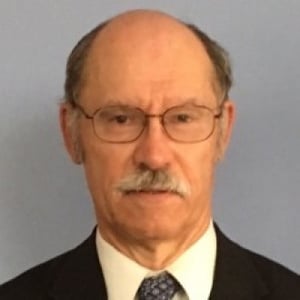
Professorial Lecturer in Law, George Washington University Law School
Theodore C. (Ted) Hirt was an attorney in the Department of Justice's Civil Division from August 1979 to March 2016. He was in its Federal Programs Branch from 1979 to 2008 (trial attorney, senior trial counsel, assistant director), and then in its Office of Immigration Litigation from 2008 to 2016 (trial attorney and senior litigation counsel). Among his responsibilities (September 2001 to March 2016) was being an advisor to the Assistant Attorneys General for the Civil Division, who serve ex officio on the Civil Rules Advisory Committee. Mr. Hirt’s areas of specialization include First Amendment issues, internet and telecommunications law, and electronic discovery. From 1976 to 1979, he was an associate at Fried, Frank, Harris, Shriver & Kampelman. From 1975 to 1976 he was an attorney in the Prehearing Division of the Michigan Court of Appeals.
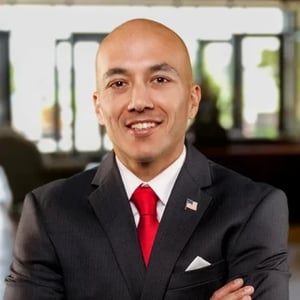
Executive Director of External Affairs and Senior Counsel, First Liberty Institute
Mike Berry serves as Executive Director of External Affairs and Senior Counsel at First Liberty Institute. Mike returned to First Liberty after serving as Chief Counsel to United States Senator Ted Cruz.
Prior to working on the Hill, Mike spent many years in public interest litigation including with First Liberty from 2013-2024. Prior to that, Mike served for seven years as an attorney with the U.S. Marine Corps, leaving active duty in 2013. Among his numerous positions within the Marine Corps, Mike deployed to Afghanistan in 2008 and he served as an Adjunct Professor of Law at the United States Naval Academy. Mike continues to proudly serve our nation as a member of the Marine Corps Reserve.
Mike earned his bachelor’s degree from Texas A&M University, and he earned his law degree from The Ohio State University.
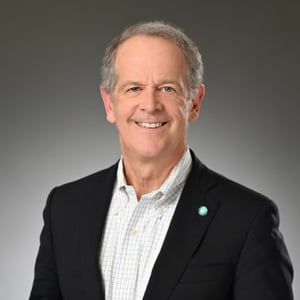
Visiting Professor of Public and International Affairs, Charles and Marie Robertson Visiting Professor, Princeton School of Public and International Affairs
Martin S. Flaherty is a longtime is Visiting Professor at the Princeton School of Public and International Affairs, where he was Fellow in the Program in Law and Public Affairs. He is also Leitner Family Professor of International Human Rights Law and Founding Co-Director of the Leitner Center for International Law and Justice at Fordham Law School. Professor Flaherty also currently teaches at Columbia Law School and Barnard College. Previously he has taught at China University of Political Science and Law and the National Judges College in Beijing, Sungkyunkwan University in Seoul, Queen’s University Belfast. Professor Flaherty earlier served as a law clerk for Justice Byron R. White of the U.S. Supreme Court and Chief Judge John Gibbons of the U.S. Court of Appeals for the Third Circuit.
Flaherty received a J.D. from Columbia Law School, where he was Book Reviews and Articles Editor of the Columbia Law Review, an M.A. and M.Phil., with distinction, from Yale (in history), and B.A. summa cum laude from Princeton. For the Leitner Center, Human Rights First, and the New York City Bar Association, he has led or participated in human rights missions to Northern Ireland, Turkey, Hong Kong, Mexico, Malaysia, Kenya, Romania and China. Professor Flaherty is currently the President of the American Association of the International Commission of Jurists, https://www.aaicj.org, a member of the Council on Foreign Relations, and a legal expert advisor at the Sixth Committee of the United Nations General Assembly.
Flaherty’s scholarly publications focus upon international human rights, foreign affairs, and constitutional law and history, and appear in such journals as the Columbia Law Review, the Yale Law Journal, the Michigan Law Review, the University of Chicago Law Review, Constitutional Commentary, the Harvard Journal of Law and Policy, and the Harvard Human Rights Journal. He has written, appeared, or been quoted in The New York Times, The Washington Post, The New Yorker, The Boston Globe, The Daily News, Newsday, the PBS Newshour, CNN, MSNBC, and NPR. He is also the author of the Restoring the Global Judiciary: Why the Supreme Court Should Rule in Foreign Affairs (Princeton University Press, 2019).
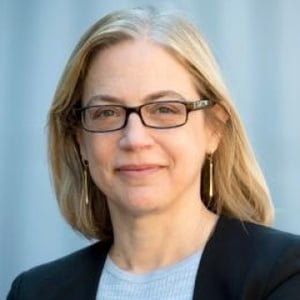
Harlan Fiske Stone Professor of Constitutional Law, Columbia Law School
A leading administrative and constitutional law scholar, Gillian Metzger ’96 writes and teaches in the areas of administrative law, constitutional law, and federal courts, with an emphasis on federalism and privatization. In 2023-2024, she served as Acting Assistant Attorney General and Deputy Assistant Attorney General in the Office of Legal Counsel in the Department of Justice.
Metzger's recent work covers topics ranging from constitutional attacks on the administrative state to appropriations, administrative law under the Roberts Court, and the role of administrative agencies in a polarized world. In 2015, Metzger won the American Bar Association Administrative Law Section Annual Scholarship Award for “The Constitutional Duty to Supervise,” which examined presidential control and oversight of the modern administrative state. She is a co-editor of Gellhorn & Byse’s Administrative Law: Cases and Comments, 13th ed. (Foundation Press, 2023), a seminal administrative law casebook.
Professor Metzger was recently elected to the American Academy of Arts & Sciences and is a Senior Fellow of the Administrative Conference of the United States. In 2020, she was awarded Columbia University's Faculty Mentorship Award and in 2014, the Law School’s graduating class awarded Metzger the Willis L.M. Reese Prize for Excellence in Teaching, recognizing, among many other accomplishments, her commitment to mentoring new generations of law students.
In 2012, Metzger helped launch Columbia Law School’s Center for Constitutional Governance (CCG)—where she now serves as faculty director—a nonpartisan legal and policy organization devoted to the study of constitutional structure and authority. CCG brings together a diverse group of constitutional scholars to explore policy areas such as health care, civil rights, immigration, financial regulation, and national security.
Metzger also has co-authored and filed numerous amicus briefs in major constitutional and administrative law challenges before the Supreme Court and other courts. Most recently, Metzger filed a brief in Seila Law Center v. CFPB, a separation of powers challenge, and in Kisor v. Wilkie, a case involving judicial deference to agencies. She has also filed briefs in cases involving reproductive rights and the Affordable Care Act, among others.
Previously, Metzger served as vice dean of intellectual life at Columbia Law School. Before joining the Law School, she worked as an attorney with the Brennan Center for Justice. Metzger also clerked for U.S. Supreme Court Justice Ruth Bader Ginsburg ’59 and Judge Patricia M. Wald of the U.S. Circuit Court of Appeals for the District of Columbia. In 2018, Metzger moderated a panel discussion with Justice Ginsburg on impact litigation at Columbia Law School.
C. Ben Dutton Professor of Law, Indiana University Maurer School of Law
Professor Nagy joined the law school faculty in 2006 as the C. Ben Dutton Professor of Business Law. She began her teaching career in 1994 at the University of Cincinnati College of Law, where she served as Interim Dean from 2004-05 and as Associate Dean for Faculty Development from 2002-04. In Spring 2001, she was a Visiting Professor of Law at the University of Illinois College of Law, and was a Visiting Scholar at the University of Canterbury School of Law in Christchurch, New Zealand in Spring 2002.
Professor Nagy teaches and writes in the areas of securities litigation, securities regulation, and corporations. Her scholarship includes articles in the Cornell Law Review, the Notre Dame Law Review, and the Ohio State Law Journal as well as two co-authored books, one on the law of insider trading and a casebook on Securities Litigation and Enforcement. She is a frequent speaker on securities regulation and litigation topics at law schools and professional conferences. She also served as Chair of the AALS Section on Securities Regulation in 2004-05; as Chair of the AALS Standing Committee on Sections and the Annual Meeting in 2007-08; and as a Vice President and Member of the Board of Trustees of the SEC Historical Society from 2008-11.
Prior to teaching, Professor Nagy was an associate with Debevoise & Plimpton in Washington, D.C., specializing in securities enforcement and litigation. She was named interim executive associate dean for academic affairs in August 2013 and executive associate dean in January 2014.
Jacob E. Davis and Jacob E. Davis II Chair in Law, Moritz Colleg, The Ohio State University
Professor Shane came to Ohio State in 2003 from Carnegie Mellon University's H. John Heinz III School of Public Policy and Management. He is an internationally recognized scholar in administrative law, with a specialty in separation of powers law, and has co-authored leading casebooks on each subject. He has served on the faculty at the University of Iowa College of Law and was dean at the University of Pittsburgh School of Law.
In addition to his outstanding law teaching and scholarship, Professor Shane has received a National Science Foundation grant for interdisciplinary study related to cyberspace and democracy. At Ohio State, he provides strong leadership in interdisciplinary scholarship and teaching.
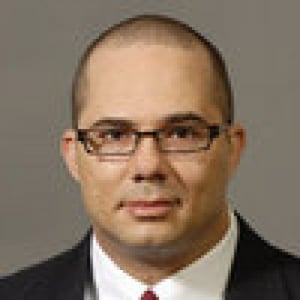
Senior Counsel, YetterColeman LLP
Chris’s practice focuses on complex appeals. He has represented major corporations in a variety of industries—including energy, insurance, and financial services—as well as governmental entities and private parties in litigation against governmental entities in federal and state courts throughout the country and in the U.S. Supreme Court. He has briefed numerous successful appeals and orally argued in federal and state appellate courts. Chris is admitted to practice in Texas, the United States Supreme Court, the United States Courts of Appeals for the Second, Fifth, Ninth, and District of Columbia Circuits, and the United States District Courts of Texas. Chris was a law clerk for the Honorable Will Garwood of the U.S. Court of Appeals for the Fifth Circuit. Before attending law school, he worked as a Latin teacher, for the Republican Party of Texas, and for Texas State Senator Jane Nelson.
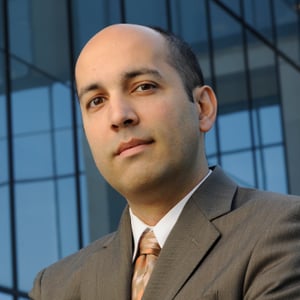
Professor of Law, Villanova University Charles Widger School of Law
Tuan Samahon teaches and writes in the areas of federal courts and constitutional law. His articles have been published in the Stanford Law Review, Ohio State Law Journal, Hastings Law Journal, William & Mary Bill of Rights Journal, University of Chicago Legal Forum, Denver Law Review, and Villanova Law Review, among others.
Beyond his scholarship, Tuan is engaged in interpreting and fashioning federal constitutional law. He has testified before the U.S. Senate Judiciary Committee, Subcommittee on the Constitution, and has served as counsel in separation-of-powers and Freedom of Information Act litigation in federal trial and appellate courts. Recently, Tuan prevailed against the CIA in a civil action for the release of the draft fifth volume of its secret history of the 1961 Bay of Pigs operation. In addition to representing others, for a book he is researching, Tuan successfully sued the FBI for the release of agency records detailing high-ranking executive and judicial officers' abuses of power.
Tuan received his B.A. from Brigham Young University and his J.D. from Georgetown University Law Center, where he was an Olin Law and Economics Research Fellow and was co-awarded the Olin Prize in Law and Economics. Prior to entering teaching, he clerked for U.S. District Judge Raymond A. Jackson on the Eastern District of Virginia and for U.S. Circuit Judge Jay S. Bybee on the Ninth Circuit. He also practiced in the Washington, D.C. office of Covington & Burling. Professor Samahon was named "Professor of the Year" by his students at the University of Nevada, Las Vegas. He teaches civil procedure, federal courts, and constitutional law subjects.
During spring 2017, Tuan served as a Fulbright scholar with the law faculty at the University of Zagreb, Croatia.
Vice President for the Program on Technology, Criminal Justice and Civil Liberties, Lincoln Network
Arthur Rizer is the Vice President for the Program on Technology, Criminal Justice and Civil Liberties at Lincoln Network. In addition to his work at Lincoln, Arthur is a visiting lecturer at University College London, and an adjunct professor at George Mason University’s Antonin Scalia Law School. Arthur is also a member of Columbia University Justice Lab’s Executive Session for the Future of Justice Policy, the Federalist Society’s Executive Committee of the Criminal Law Practice Group, the Virginia Advisory Committee to the U.S. Commission on Civil Rights, and other advisory bodies.
Before joining Lincoln, Arthur was founding director of the R Street Institute’s program on criminal justice and civil liberties. Prior to that, Arthur taught at West Virginia University’s College of Law, and was a visiting professor at Georgetown University Law Center. He also served as a trial attorney with the U.S. Justice Department, primarily as a federal prosecutor in the Criminal Division, where he targeted command-and-control drug cartel leaders and narco-terrorists. He also served as a prosecutor in the U.S. Attorney’s Office for the Southern District of California and in the civil division. Earlier in his career, Arthur served in the U.S. Army, originally enlisting as a private before later receiving a commission. He served as an armor officer, later becoming the commander of a military police company and a Reserve Officers’ Training Corps assistant professor. He deployed to Fallujah, Iraq, with the mission to train the Iraqi Infantry and served as an MP acting battalion commander and executive officer. He retired as a lieutenant colonel from the U.S. Army (WVNG). During his Army career, Arthur received the Bronze Star, Purple Heart, Meritorious Service and Iraq Campaign medals.
Arthur is the author of three books: Lincoln’s Counsel (2010); The National Security Implications of Immigration Law (2013); and Jefferson’s Pen: The Art of Persuasion (2016).
Arthur earned his bachelor’s degree in political science from Pacific Lutheran University; a master of laws, with distinction, from Georgetown University’s Law Center; and his JD, magna cum laude, from Gonzaga University School of Law. He is also a graduate of the U.S. Marine Corps’ Command Staff College. He is in the final stages of a doctorate at the University of Oxford, Faculty of Law, Centre of Criminology that focuses on policing.
Assistant Professor of Law and Assistant Director of the Academic Success Program, Vermont Law School
Professor Richard Sala is the Assistant Director of the Academic Success Program and an Assistant Professor of Law. He joined the VLS faculty in 2019.
Professor Sala enlisted in the United States Marine Corps in 1997, and served as an infantryman for more than a decade, achieving the rank of Staff Sergeant. Professor Sala’s enlisted time included service with Marine Corps Ground Defense/Security Force, Guantanamo Bay, Cuba, 2nd Battalion, 6th Marines, Camp Lejeune, North Carolina, and 6th Marines Regimental Headquarters, Camp Lejeune, North Carolina —during which time he deployed with the 22nd Marine Expeditionary Unit, Special Operations Capable, participating in operations in and around the former Yugoslavia, including Operation Dynamic Response in Kosovo.
In 2001, Professor Sala was selected for commissioned service through the Broadened Opportunity for Officer Selection and Training program. Professor Sala graduated from the University of Colorado in 2003 with bachelor’s degrees in Political Science and International Affairs, a minor in Italian, and a certificate in Central and Eastern European History. He was commissioned as a Second Lieutenant in 2007 through the Naval Reserve Officer Training Corps program. After completing The Basic School and Infantry Officer Course, he reported to 1st Light Armored Reconnaissance Battalion, in Camp Pendleton, California, where he served as a platoon commander, and company executive officer with Company C—completing a deployment in support of Operation Iraqi Freedom.
In 2010, Professor Sala was selected for service a Judge Advocate through the Excess Leave Program. He attended Vermont Law School graduating with a Juris Doctorate (Cum Laude) and a Masters in Environmental Law and Policy (Magna Cum Laude). He was also the recipient of the Maximilian W. Kempner Award.
After completing law school, Professor Sala reported to Legal Services Support Team, Camp Pendleton where he served as a criminal prosecutor with Legal Team Echo and later, as a criminal prosecutor and Officer-in-Charge of Legal Team Delta.
In 2015, Professor Sala joined 1st Battalion, 4th Marines aboard Camp Pendleton, California, where he served as Judge Advocate to the Commanding Officer of Marine Rotational Force-Darwin—completing a deployment to Darwin, Australia in support of bilateral and multilateral training with the Australian Defense Force and regional allies and partners throughout the Indo-Pacific.
Upon returning from Australia, Professor Sala served as Assistant Deputy Staff Judge Advocate to the Commanding General of the 1st Marine Division.
In 2016, Professor Sala was selected to serve as Assistant Professor and Marine Officer Instructor at the University of Rochester where he also earned a Masters in Business Administration from the University of Rochester’s Simon Business School.
Professor Sala retired from the United States Marine Corps in 2018.
Upon retiring, Professor Sala joined the New Hampshire Department of Justice serving as the Attorney to the Commissioner of the New Hampshire Department of Education.
His personal decorations include the Navy and Marine Corps Commendation Medal (x2) and the Navy and Marine Corps Achievement Medal (x2). He is also the recipient of the Lieutenant Colonel Vic Taylor/Major General Edwin B. Wheeler Award for being the Distinguished Graduate of Infantry Officer’s Course, Class 2-08.

Topics
The Prosecution of Military Retirees Under the Uniform Code of Military Justice
On November 20, 2020, Judge Richard J. Leon launched what might prove to be a...
Courthouse Steps Decision Teleforum: United States v. Briggs
Arthur Rizer, Richard K. Sala
On December 10, 2020, the Supreme Court released its decision in United States v. Briggs. Consolidated...
Courthouse Steps Decision Teleforum: United States v. Briggs
TeleforumUnited States v. Briggs - Post-Decision SCOTUScast
Arthur Rizer, Richard K. Sala
On December 10, 2020 the Supreme Court decided United States v. Briggs. The question presented...
Topics
Marbury v. Madison: Overruled
The Federalist Society is pleased to announce its Student Blog Initiative, a project of the...
United States v. Briggs- Post-Argument SCOTUScast
Arthur Rizer, Richard K. Sala
On October 13, 2020, The Supreme Court heard oral arguments regarding United States v. Collins...
Is Our Modern Administrative State Unmoored from the Morality of Law?
Ted Hirt
A review of The Dubious Morality of Modern Administrative Law, by Richard A. Epstein (Manhattan Institute...
Religious Liberty in the Armed Forces - Podcast
Michael D. Berry
The Court of Appeals for the Armed Forces recently granted review in United States v....
PCAOB Debate
Martin Flaherty, Gillian E. Metzger, Donna M. Nagy, Peter M. Shane, Christian J. Ward, Tuan Samahon
This debate will focus on the following questions: Is the Sarbanes-Oxley Act consistent with the...
Bar Watch Bulletin August 8, 2006
The American Bar Association's Annual Meeting takes place in Honolulu from Thursday, August 3 to...