

Director, Center for Legal Policy, Manhattan Institute for Policy Research
James R. Copland is a senior fellow at the Manhattan Institute and director of Legal Policy. In those roles, he develops and communicates novel, sound ideas on how to improve America’s civil- and criminal-justice systems. His forthcoming book, The Unelected: How an Unaccountable Elite is Governing America (Encounter Books) will be released on September 8, 2020. He has testified before Congress as well as state and municipal legislatures; and has authored many policy briefs, book chapters, articles and opinion pieces in a variety of publications, including the Harvard Business Law Review and Yale Journal on Regulation, the Wall Street Journal, National Law Journal, and USA Today. Copland speaks regularly on civil- and criminal-justice issues; has made hundreds of media appearances in such outlets as PBS, Fox News, MSNBC, CNBC, Fox Business, Bloomberg, C-Span, and NPR; and is frequently cited in news articles in the New York Times, Washington Post, The Economist, and Forbes. In 2011 and 2012, he was named to the National Association of Corporate Directors “Directorship 100” list, which designates the individuals most influential over U.S. corporate governance.
Prior to joining MI, Copland was a management consultant with McKinsey and Company in New York. Earlier, he was a law clerk for Ralph K. Winter on the U.S. Court of Appeals for the Second Circuit. Copland has been a director of two privately held manufacturing companies since 1997 and has served on many public and nonprofit boards. He holds a J.D. and an M.B.A. from Yale, where he was an Olin Fellow in Law and Economics; an M.Sc. in the politics of the world economy from the London School of Economics; and a B.A. in economics from the University of North Carolina at Chapel Hill, where he was a Morehead Scholar.
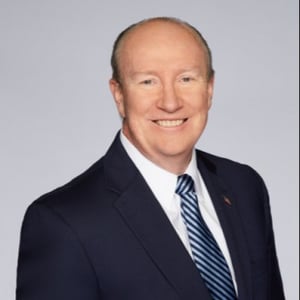
Senior Fellow, National Review
Bestselling author Andrew C. McCarthy is a contributing editor at National Review, a senior fellow at National Review Institute, and a Fox News contributor. He is a former Chief Assistant United States Attorney in the Southern District of New York and led the terrorism prosecution against the “Blind Sheikh” (Omar Abdel Rahman) and eleven other jihadists for conducting a war of urban terrorism against the United States that included the 1993 World Trade Center bombing and a plot to bomb New York City landmarks. During is 20-year career as a prosecutor, he received numerous honors, including the Justice Department’s highest awards. Andy speaks and writes widely on law and national security, radical Islam, politics, and culture. He has testified before Congress as an expert on issues of constitutional law, counterterrorism, and law-enforcement. He is a columnist for The Hill, and his essays and book reviews appear frequently at The New Criterion. His most recent New York Times bestselling book is Ball of Collusion (Encounter Books, 2019), about the Russiagate controversy (an updated version was published in 2020). His other books include Willful Blindness (2008), The Grand Jihad (2010), Spring Fever: The Illusion of Islamic Democracy (2012), and Faithless Execution (2014). He has also written several pamphlets in the Broadside series published by Encounter Books, most recently Islam and Free Speech (2015).

Senior Vice President, Strand Consult
Roslyn Layton, PhD is a leading international expert on technology policy. She is Senior Vice President of Strand Consult, an independent consultancy serving the global mobile telecom industry. She is also a Visiting Researcher at Aalborg University Copenhagen where she earned a doctoral thesis on network neutrality by measuring the outcome of the policy across 53 countries over 5 years. She served on the Presidential Transition Team for the Federal Communications Commission (FCC), and her work was critical to the FCC’s defense for the Restoring Internet Freedom Order. She has testified to the United States Senate and House on multiple topics including spectrum, broadband, mobile mergers, competition, and privacy. She founded the think tank China Tech Threat to study the problems of technology produced by the People’s Republic of China. She serves as the Program Chair for the Telecom Policy Research Conference, the leading interdisciplinary academic gathering. Her recent paper on rural broadband describes the empirical case for policy reform to recover network infrastructure costs from streaming video entertainment providers. She is a Senior Contributor to Forbes.

Vice Dean and Professor of Law, Villanova University School of Law
Professor Michael Risch joined the Villanova faculty in 2010 from the West Virginia University College of Law, where he directed the Entrepreneurship, Innovation and Law Program. Prior to joining the West Virginia faculty, he served as an Olin Fellow in Law at Stanford Law School. Professor Risch’s teaching and scholarship focus on intellectual property and internet law, with an emphasis on patents, trade secrets and information access. His articles have been published in the Stanford Law Review and Duke Law Journal, among others; online in the Yale Law Journal Online and PENNumbra; and less formally at the Madisonian, Prawfsblawg, and Patently-O blogs. Two of his articles have been cited by the United States Supreme Court. Professor Risch received his A.B. with honors and distinction in Public Policy and with distinction in Quantitative Economics from Stanford University, and his J.D. with high honors from the University of Chicago Law School. Prior to entering academia, he was a partner at intellectual property boutique Russo & Hale LLP in Palo Alto, California.
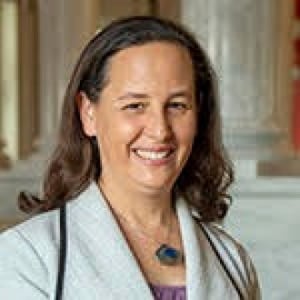
Office of the General Counsel, U.S. Copyright Office
Jordana Rubel works on a wide range of legal matters within the Copyright Office, including advising the Department of Justice on litigation matters and providing guidance to departments within the Copyright Office. Jordana joined the Copyright Office in 2018 after more than ten years as a litigator in private practice, where she represented clients on copyright, trademark, false advertising, and trade secret matters. She clerked for David Hamilton, now on the Seventh Circuit Court of Appeals, when he was a district court judge in the Southern District of Indiana. She earned her JD from Emory University, her MEd from Harvard University, and her BA from Haverford College.

CoFounder, RightsClick
Steven’s extensive background in IP law and policy began as an attorney for the U.S. Senate Judiciary Committee, after which, he served as senior counsel for Policy and International Affairs at the U.S. Copyright Office and then as Chief Intellectual Property Counsel for the Global Intellectual Property Center of the U.S. Chamber of Commerce. Before co-founding RightsClick, he started the IP consultancy Sentinel Worldwide, and teaches copyright law at George Washington University Law School.

Partner, Gibson, Dunn & Crutcher, LLP
Svetlana S. Gans is a partner in the Washington, D.C. office of Gibson, Dunn & Crutcher, LLP where she helps clients navigate complex consumer protection, privacy, and competition related regulatory proceedings before the U.S. Federal Trade Commission (FTC), , U.S. Department of Justice Antitrust Division, State Attorneys General and other enforcement bodies. Ms. Gans also assists on litigation matters and provides strategic counseling and advice related to public policy issues.
Before joining Gibson Dunn, she served as the Vice President & Associate General Counsel at NCTA, the Internet & Television Association, where she helped lead the association’s consumer protection and competition policy work. Prior to joining NCTA, Ms. Gans served with distinction as Chief of Staff to Acting Chairman Maureen K. Ohlhausen at the FTC. As the agency chief of staff, Ms. Gans managed and oversaw agency operations, including bureau and office heads reporting to the Chairman, a seven-member office staff, and an agency budget of over $300 million. She also served as the Acting Chairman’s key advisor on consumer protection and competition investigations and litigation, working with a diverse team of attorneys and economists to preserve competition and protect U.S. consumers. She created, executed, and oversaw several strategic initiatives for the agency, including the agency process reform, regulatory reform, and data security transparency initiatives. Previously, Ms. Gans had the unique experience of serving in both litigating bureaus of the FTC: the Bureau of Competition and the Bureau of Consumer Protection.
Prior to her time in government, Ms. Gans worked as an antitrust associate at major law firms. Her practice focused on defending consumer product, financial services, and trade association clients in regulatory and private investigations alleging conspiracy and violations of antitrust and consumer protection laws.
Ms. Gans has been an active leader in the ABA Antitrust Law Section (“Section”) for two decades, and currently serves as the Section’s Marketing Officer. Ms. Gans helped create the Section’s Young Lawyer Representative Program, now in its 10th year, and the Section’s Law Ambassador Program, each aimed at developing and promoting the next generation of consumer protection and competition attorneys. Ms. Gans is also active in the Federal Communications Bar Association, currently serving as Co-Chair of the Diversity Pipeline Initiative and the Women’s Leadership Committee.
Ms. Gans received her law degree with high honors from the University of Denver College of Law. During law school, Ms. Gans served as a Judicial Intern to the Honorable John L. Kane, Jr. and as an Honors Program Paralegal for the United States Department of Justice Antitrust Division, Merger Taskforce. Ms. Gans earned her undergraduate degree cum laude from Boston University.
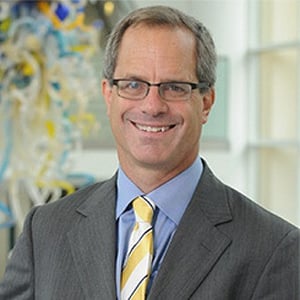
Elizabeth and Thomas Holder Chair, Scheller College of Business, Georgia Institute of Technology
Peter Swire has been a leading privacy and cyberlaw scholar, government leader, and practitioner since the rise of the Internet in the 1990’s. He came to the Georgia Institute of Technology in 2013, where he is the Elizabeth and Tommy Holder Chair in the Scheller College of Business, and Professor in the School of Cybersecurity and Privacy. He is senior counsel with the law firm of Alston & Bird LLP.
Swire served as one of five members of President Obama’s Review Group on Intelligence and Communications Technology. Prior to that, he was co-chair of the global Do Not Track process for the World Wide Web Consortium. He is a Senior Fellow with the Future of Privacy Forum, and has served on the National Academy of Sciences & Engineering Forum on Cyber Resilience.
Under President Clinton, Swire was the Chief Counselor for Privacy, in the U.S. Office of Management and Budget, the first person to have U.S. government-wide responsibility for privacy policy. Under President Obama, he was Special Assistant to the President for Economic Policy.
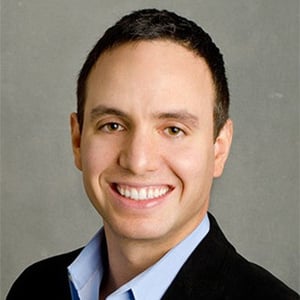
Professor of Economics, Stuart School of Business, Illinois Institute of Technology
Liad Wagman is Professor of Economics at the Illinois Institute of Technology’s Stuart School of Business.
Professor Wagman works on topics in the areas of Information Economics, Industrial Organization, Law and Economics, and Entrepreneurship, studying issues of data and privacy, information trade and utilization, and new venture financing. He is a recipient of the Sigma Xi Excellence in Research Award, the Bauer Family University Excellence in Teaching Award, the Yahoo Faculty Research and Engagement Award, and has been selected into Poet & Quants 2015 Top 40 Business School Faculty Under 40.
Professor Wagman is the Senior Economic and Technology Advisor of the Federal Trade Commission’s Office of Policy Planning, and was a Visiting Associate Professor of Executive Education and Managerial Economics & Decision Sciences at Northwestern University’s Kellogg School of Management, a Visiting Scholar at the Duke University Economics Department, a research fellow at the Duke University Computer Science Department, a research fellow at the Duke University Social Sciences Research Institute, a recipient of the Program for Advanced Study in the Social Sciences Fellowship, a recipient of the Education and Research Initiative Award, a recipient of the Institute of Industrial and Systems Engineers Best Paper Award, and a recipient of the International Conference on Artificial Intelligence Outstanding Paper Award.
Professor Wagman’s work is published in academic journals in economics, finance, operations research, and marketing, including the RAND Journal of Economics, the American Economic Journal: Microeconomics, the Journal of Corporate Finance, and Marketing Science.
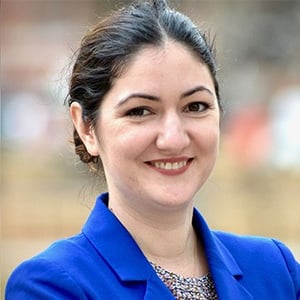
Senior Counsel, Future of Privacy Forum
Dr. Gabriela Zanfir-Fortuna is Senior Counsel for the Future of Privacy Forum, where she leads the work on Global privacy developments and European data protection law and policy, with their impact on all focus areas of FPF, including de-identification, AI, mobility, adtech and education.
Prior to moving to the US in 2016, Gabriela worked for the European Data Protection Supervisor in Brussels, being part of the team that advised the EU legislator on the GDPR during its legislative process. She dealt with both enforcement and policy matters, was a member of the EDPS litigation team, as well as actively participated in the work of the Article 29 Working Party. She worked on the assessments of both the draft EU-US Privacy Shield and the draft EU-US Umbrella Agreement during her time at the EDPS and the Article 29 Working Party.
Gabriela is currently serving as a Program Chair (Law) for the ACM Fairness, Accountability and Transparency Conference 2020 and she served as a member of the Program Advisory Committee for the ICDPPC 2019 Conference in Tirana. She is also a member of the Program Committee of PLSC Europe, CPDP – academic track, ACM – AIES 2020 and the ENISA Annual Privacy Forum.
She holds a PhD in law (2013, University of Craiova) with a thesis on the rights of the data subject from the perspective of their adjudication in civil law and an LLM in Human Rights (2010), after obtaining her law degree at the same university (2009). She is also an associated researcher with the Law, Science, Technology and Society Center at Vrije Universiteit Brussel and a Project Scientist supporting the IoT Privacy Infrastructure Project within the Institute for Software Research of Carnegie Mellon University.
Gabriela is a contributor-author to ‘The EU General Data Protection Regulation – A Commentary‘, edited by C. Kuner, C. Docksey and L.A. Bygrave, Oxford University Press, 2020 (on Articles 13, 14, 15, 21 and 82). She is also the author of the volume ‘Protecția Datelor Personale. Drepturile Persoanei Vizate‘, C.H. Beck, Bucharest, 2015.

President and General Counsel, New Civil Liberties Alliance
NCLA’s President and General Counsel, Mark Chenoweth, has observed the administrative state up close and personal from perches in all four branches of the federal government. Mark served as the first chief of staff to Congressman Mike Pompeo, as legal counsel to Commissioner Anne Northup at the U.S. Consumer Product Safety Commission, as an attorney advisor in the Office of Legal Policy at the U.S. Department of Justice, and as a law clerk to the Hon. Danny J. Boggs on the U.S. Court of Appeals for the Sixth Circuit.
Mark has worked in several different roles in the private sector as well. He began his legal career in D.C. as a regulatory associate at Wilmer, Cutler & Pickering. He then returned to his home state of Kansas to serve as in-house counsel for Koch Industries. Most recently he spent over four years as general counsel of the Washington Legal Foundation.
Mark is a graduate of Yale College and the University of Chicago Law School, where he co-founded the Institute for Justice Clinic on Entrepreneurship and became a Tony Patiño Fellow. Mark has been widely quoted and/or published in newspapers and websites including the New York Times, San Francisco Chronicle, New Hampshire Union Leader, and Metropolitan Corporate Counsel. He has also had recurring op-eds in the Los Angeles Daily Journal, and at Forbes.com.

Partner, McGuireWoods
Leveraging his background as former deputy director of the Office of Federal Contract Compliance Programs (OFCCP), a role in which he managed the agency's enforcement and policymaking activities, Bill defends clients in enforcement litigation, audits, and complaint investigations brought by the OFCCP.
Bill focuses his practice onOFCCP-related compliance issues, including matters of agency jurisdiction, privileged compensation self-evaluations and adverse impact analyses, Affirmative Action Program development and implementation, and Internet Applicant requirements.
He also defends systemic discrimination claims investigated or brought by the U.S. Equal Employment Opportunity Commission (EEOC). And when clients embark on workforce reduction implementation, Bill also provides assistance with federal law matters like privileged statistical risk studies and compliance withOlder Workers Benefit Protection Act (OWBPA), and the Worker Adjustment and Retraining Notification Act (WARN).
Bill has more than two decades of experience assisting clients across a broad range of industries, including petrochemical, energy, consumer products, manufacturing, technology, transportation, retail, pharmaceuticals, and financial services.
Bill is an active participant in community affairs and pro bono work. He has an active federal pro bono practice helping veterans obtain U.S. Department of Veterans Affairs (VA) benefits. He served as lead counsel in Military Order of the Purple Heart v. Sec’y of Veterans Affairs, 580 F.3d 1293 (Fed. Cir. 2009) (invalidating VA’s “extraordinary award review,” and thereby precluding VA from annuallyoverturning 400 benefits awards of $25,000 or more to veterans).
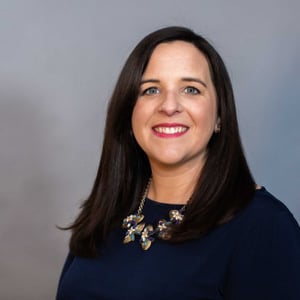
Litigation Counsel, New Civil Liberties Alliance
Kara Rollins, Litigation Counsel, comes to NCLA with experience in vindicating client’s rights from agency overreach and holding the administrative state accountable through government transparency projects. Before joining NCLA, Kara was Counsel for Cause of Action Institute where she represented clients in various Federal Trade Commission enforcement actions. She also engaged in strategic research and oversight of Executive Branch agencies, focusing on administrative rulemaking and government oversight and compliance. Prior to joining the Cause of Action Institute in 2016, she clerked for the Hon. Karen M. Cassidy, A.J.S.C. in the Superior Court of New Jersey, Union Vicinage. Preceding her legal career, Kara served as the Political Programs Manager for the National Federation of Independent Business, where she worked with small business owners throughout the country and learned firsthand about the adverse impact the regulatory state has on individuals.
Kara graduated with honors from Rutgers College, Rutgers University with a B.A. in Political Science in 2007, and cum laude from Catholic University’s Columbus School of Law in 2014. During law school, she was a member of The Catholic University Law Review and a Moot Court Associate for the Seigenthaler-Sutherland Cup National First Amendment Moot Court Competition.
Kara is admitted to practice in the District of Columbia, New York, and New Jersey, as well as to the U.S. District Court for the District of Columbia, the U.S. Court of Appeals for the Eleventh Circuit, and the U.S. Supreme Court.
Her work has been published on The Hill.com.
Director, Center for Legal Policy, Manhattan Institute for Policy Research
James R. Copland is a senior fellow at the Manhattan Institute and director of Legal Policy. In those roles, he develops and communicates novel, sound ideas on how to improve America’s civil- and criminal-justice systems. His forthcoming book, The Unelected: How an Unaccountable Elite is Governing America (Encounter Books) will be released on September 8, 2020. He has testified before Congress as well as state and municipal legislatures; and has authored many policy briefs, book chapters, articles and opinion pieces in a variety of publications, including the Harvard Business Law Review and Yale Journal on Regulation, the Wall Street Journal, National Law Journal, and USA Today. Copland speaks regularly on civil- and criminal-justice issues; has made hundreds of media appearances in such outlets as PBS, Fox News, MSNBC, CNBC, Fox Business, Bloomberg, C-Span, and NPR; and is frequently cited in news articles in the New York Times, Washington Post, The Economist, and Forbes. In 2011 and 2012, he was named to the National Association of Corporate Directors “Directorship 100” list, which designates the individuals most influential over U.S. corporate governance.
Prior to joining MI, Copland was a management consultant with McKinsey and Company in New York. Earlier, he was a law clerk for Ralph K. Winter on the U.S. Court of Appeals for the Second Circuit. Copland has been a director of two privately held manufacturing companies since 1997 and has served on many public and nonprofit boards. He holds a J.D. and an M.B.A. from Yale, where he was an Olin Fellow in Law and Economics; an M.Sc. in the politics of the world economy from the London School of Economics; and a B.A. in economics from the University of North Carolina at Chapel Hill, where he was a Morehead Scholar.

Race and Policing
James R. Copland
In this teleforum, James R. Copland will discuss competing legislative proposals in Congress, in the...
Courthouse Steps Oral Argument Teleforum: Google v. Oracle
TeleforumTopics
The FCC Should Not Engage in Section 230 Rulemaking
That's Debatable is a new blog initiative bringing together legal and policy experts with differing perspectives...
Deep Dive Episode 139 – Implications of Data Portability: A Consumer Protection Tool or Burden?
A Regulatory Transparency Project Teleforum
TeleforumThe Accidental Defender of the Constitution
Andrew McCarthy
A Review of Defender in Chief: Donald Trump’s Fight for Presidential Power, by John Yoo,...
Adjudicating Employment Discrimination in Federal Contracting: Is OFCCP Regulating Without Authority?
Administrative Law Practice Group Teleforum
TeleforumRace and Policing
TeleforumHow Can the FCC Improve Provision of Telecommunications Services for the Deaf and Hearing Impaired?
Roslyn Layton
Note from the Editor: The Federalist Society takes no positions on particular legal and public...
Topics
Life After Seila Law: The Emerging Presidential Removal Power Docket at the Supreme Court
The Federalist Society is pleased to announce its Student Blog Initiative, a project of the...
Topics
The FCC Should Address Distortions of Section 230
That's Debatable is a new blog initiative bringing together legal and policy experts with differing perspectives...