
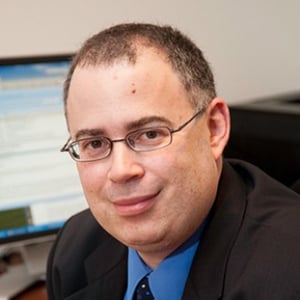
Vice Dean and Professor of Law, Villanova University School of Law
Professor Michael Risch joined the Villanova faculty in 2010 from the West Virginia University College of Law, where he directed the Entrepreneurship, Innovation and Law Program. Prior to joining the West Virginia faculty, he served as an Olin Fellow in Law at Stanford Law School. Professor Risch’s teaching and scholarship focus on intellectual property and internet law, with an emphasis on patents, trade secrets and information access. His articles have been published in the Stanford Law Review and Duke Law Journal, among others; online in the Yale Law Journal Online and PENNumbra; and less formally at the Madisonian, Prawfsblawg, and Patently-O blogs. Two of his articles have been cited by the United States Supreme Court. Professor Risch received his A.B. with honors and distinction in Public Policy and with distinction in Quantitative Economics from Stanford University, and his J.D. with high honors from the University of Chicago Law School. Prior to entering academia, he was a partner at intellectual property boutique Russo & Hale LLP in Palo Alto, California.
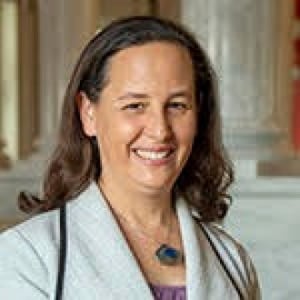
Office of the General Counsel, U.S. Copyright Office
Jordana Rubel works on a wide range of legal matters within the Copyright Office, including advising the Department of Justice on litigation matters and providing guidance to departments within the Copyright Office. Jordana joined the Copyright Office in 2018 after more than ten years as a litigator in private practice, where she represented clients on copyright, trademark, false advertising, and trade secret matters. She clerked for David Hamilton, now on the Seventh Circuit Court of Appeals, when he was a district court judge in the Southern District of Indiana. She earned her JD from Emory University, her MEd from Harvard University, and her BA from Haverford College.

CoFounder, RightsClick
Steven’s extensive background in IP law and policy began as an attorney for the U.S. Senate Judiciary Committee, after which, he served as senior counsel for Policy and International Affairs at the U.S. Copyright Office and then as Chief Intellectual Property Counsel for the Global Intellectual Property Center of the U.S. Chamber of Commerce. Before co-founding RightsClick, he started the IP consultancy Sentinel Worldwide, and teaches copyright law at George Washington University Law School.
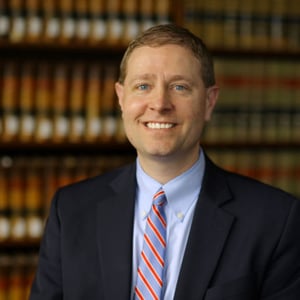
Executive Director, Salmon P. Chase Center for Civics, Culture, and Society, The Ohio State University
Professor Lee J. Strang serves as the inaugural executive director of the Salmon P. Chase Center for Civics, Culture, and Society at The Ohio State University.
Initiated in 2023 by the state of Ohio, the Chase Center will be an academic home at Ohio State for teaching, research, and programing on the foundations of the American constitutional order and its impact on society. As executive director, Professor Strang is responsible for organizing the center, overseeing the hiring and appointment of the center’s faculty, developing curriculum, and delivering student and academic programming. He also holds a faculty appointment in the Moritz College of Law at Ohio State.
Professor Strang is a nationally recognized legal scholar who has published dozens of articles in leading journals in the fields of constitutional law and interpretation, property law, and religion and the First Amendment. He co-edits the textbook Federal Constitutional Law, and his most recent book, Originalism’s Promise: A Natural Law Account of the American Constitution is the first book-length, natural law justification for originalism. He currently is writing on civic thought and leadership, and he is finalizing a book on the history of American Catholic legal education (with John M. Breen).
Before joining Ohio State, Professor Strang served as the inaugural director of the University of Toledo’s Institute of American Constitutional Thought & Leadership. He joined the Toledo College of Law faculty in 2008, was granted tenure in 2010, and was named John W. Stoepler Professor of Law & Values in 2015. The University of Toledo awarded Professor Strang its Outstanding Faculty Research and Scholarship Award in 2017. Before that, he was a visiting professor at Michigan State University College of Law. A graduate of the University of Iowa, where he was articles editor of the Iowa Law Review and Order of the Coif, Professor Strang holds an LL.M. degree from Harvard Law School.
Professor Strang has been a visiting scholar at the Georgetown Center for the Constitution and a visiting fellow at the James Madison Program at Princeton University. In 2016, he was appointed to the Ohio Advisory Committee of the U.S. Commission on Civil Rights and reappointed as chair in 2023.
Prior to teaching, Professor Strang served as a judicial clerk for Judge Alice M. Batchelder of the U.S. Court of Appeals for the Sixth Circuit. He was also an associate for Jenner & Block LLP in Chicago, where he practiced in general and appellate litigation.
Professor Strang is a frequent presenter at scholarly conferences. He is the president of the Board of Trustees of Northwest Ohio Classical Academy, Ohio’s first classical charter school. He is also a regular participant in debates at law schools across the country, a contributor to the media, and a speaker to political, civic, and religious groups.

President and General Counsel, New Civil Liberties Alliance
NCLA’s President and General Counsel, Mark Chenoweth, has observed the administrative state up close and personal from perches in all four branches of the federal government. Mark served as the first chief of staff to Congressman Mike Pompeo, as legal counsel to Commissioner Anne Northup at the U.S. Consumer Product Safety Commission, as an attorney advisor in the Office of Legal Policy at the U.S. Department of Justice, and as a law clerk to the Hon. Danny J. Boggs on the U.S. Court of Appeals for the Sixth Circuit.
Mark has worked in several different roles in the private sector as well. He began his legal career in D.C. as a regulatory associate at Wilmer, Cutler & Pickering. He then returned to his home state of Kansas to serve as in-house counsel for Koch Industries. Most recently he spent over four years as general counsel of the Washington Legal Foundation.
Mark is a graduate of Yale College and the University of Chicago Law School, where he co-founded the Institute for Justice Clinic on Entrepreneurship and became a Tony Patiño Fellow. Mark has been widely quoted and/or published in newspapers and websites including the New York Times, San Francisco Chronicle, New Hampshire Union Leader, and Metropolitan Corporate Counsel. He has also had recurring op-eds in the Los Angeles Daily Journal, and at Forbes.com.
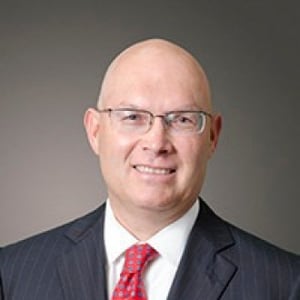
Partner, McGuireWoods
Leveraging his background as former deputy director of the Office of Federal Contract Compliance Programs (OFCCP), a role in which he managed the agency's enforcement and policymaking activities, Bill defends clients in enforcement litigation, audits, and complaint investigations brought by the OFCCP.
Bill focuses his practice onOFCCP-related compliance issues, including matters of agency jurisdiction, privileged compensation self-evaluations and adverse impact analyses, Affirmative Action Program development and implementation, and Internet Applicant requirements.
He also defends systemic discrimination claims investigated or brought by the U.S. Equal Employment Opportunity Commission (EEOC). And when clients embark on workforce reduction implementation, Bill also provides assistance with federal law matters like privileged statistical risk studies and compliance withOlder Workers Benefit Protection Act (OWBPA), and the Worker Adjustment and Retraining Notification Act (WARN).
Bill has more than two decades of experience assisting clients across a broad range of industries, including petrochemical, energy, consumer products, manufacturing, technology, transportation, retail, pharmaceuticals, and financial services.
Bill is an active participant in community affairs and pro bono work. He has an active federal pro bono practice helping veterans obtain U.S. Department of Veterans Affairs (VA) benefits. He served as lead counsel in Military Order of the Purple Heart v. Sec’y of Veterans Affairs, 580 F.3d 1293 (Fed. Cir. 2009) (invalidating VA’s “extraordinary award review,” and thereby precluding VA from annuallyoverturning 400 benefits awards of $25,000 or more to veterans).

Litigation Counsel, New Civil Liberties Alliance
Kara Rollins, Litigation Counsel, comes to NCLA with experience in vindicating client’s rights from agency overreach and holding the administrative state accountable through government transparency projects. Before joining NCLA, Kara was Counsel for Cause of Action Institute where she represented clients in various Federal Trade Commission enforcement actions. She also engaged in strategic research and oversight of Executive Branch agencies, focusing on administrative rulemaking and government oversight and compliance. Prior to joining the Cause of Action Institute in 2016, she clerked for the Hon. Karen M. Cassidy, A.J.S.C. in the Superior Court of New Jersey, Union Vicinage. Preceding her legal career, Kara served as the Political Programs Manager for the National Federation of Independent Business, where she worked with small business owners throughout the country and learned firsthand about the adverse impact the regulatory state has on individuals.
Kara graduated with honors from Rutgers College, Rutgers University with a B.A. in Political Science in 2007, and cum laude from Catholic University’s Columbus School of Law in 2014. During law school, she was a member of The Catholic University Law Review and a Moot Court Associate for the Seigenthaler-Sutherland Cup National First Amendment Moot Court Competition.
Kara is admitted to practice in the District of Columbia, New York, and New Jersey, as well as to the U.S. District Court for the District of Columbia, the U.S. Court of Appeals for the Eleventh Circuit, and the U.S. Supreme Court.
Her work has been published on The Hill.com.
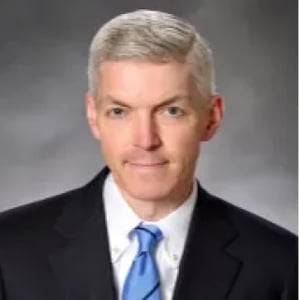
Executive Vice President, Chief Legal Officer, Gates Corporation
Matthew R. A. Heiman joined the Company in May 2026 and has served as the Company’s Chief Legal Officer and Corporate Secretary since June 2026. As Chief Legal Officer, Mr. Heiman is responsible for all legal functions for Gates, including securities and corporate governance, M&A, litigation, commercial, regulatory, compliance, patents and trademarks, real estate, employment and labor, sustainability and environmental matters. Prior to joining Gates, Mr. Heiman held senior legal leadership roles at Waystar, where he served as Chief Legal & Administrative Officer from 2023 to 2025 and as General Counsel and Corporate Secretary from 2020 to 2023. Prior to that, he was with Johnson Controls, where he served as Vice President, Corporate Secretary, and Associate General Counsel. Mr. Heiman has been a Senior Fellow for the National Security Institute at George Mason University’s Antonin Scalia School of Law since 2018.

Senior Counselor, The Brunswick Group
Robert B. Zoellick is a Principal of Brunswick Group’s Geopolitical advisory offer and a Senior Fellow at the Belfer Center for Science and International Affairs at Harvard University’s Kennedy School of Government. In addition, Zoellick serves on the boards of Temasek, Singapore’s Sovereign Wealth Fund, and Twitter, Inc., and is on the Advisory Board of Swiss Re. He is a member of the boards of the Peterson Institute for International Economics and the Carnegie Endowment, chairs the Global Tiger Initiative, and is a member of the Global Leadership Council of Mercy Corps, a global humanitarian agency.
Zoellick was the President of the World Bank Group from 2007-12, U.S. Trade Representative from 2001 to 2005, and Deputy Secretary of State from 2005 to 2006. From 1985 to 1993, Zoellick served as Counselor to the Secretary of the Treasury and Under Secretary of State, as well as White House Deputy Chief of Staff.
Zoellick is a recipient of the Distinguished Service Award, the Department of State’s highest honor, the Alexander Hamilton Award of the Department of the Treasury, and the Medal for Distinguished Public Service of the Department of Defense. The German government awarded him the Knight Commanders Cross for his achievements in the course of German unification. The Mexican and Chilean governments awarded him their highest honors for non-citizens, the Aztec Eagle and the Order of Merit, for recognition of his work on free trade, development, and the environment.
Zoellick holds a J.D. magna cum laude from the Harvard Law School, a master's degree in public policy from Harvard's Kennedy School of Government, and a bachelor's degree from Swarthmore College.
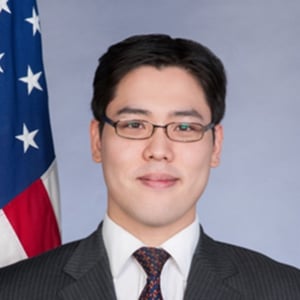
Managing Director, Chief US Economist and Head of Macro Strategy, BNP Paribas
Dr. Daniel P. Ahn is a Managing Director, the Chief U.S. Economist, and Head of Markets 360 – North America at BNP Paribas in New York. He is also a non-residential Global Fellow at the Woodrow Wilson International Center for Scholars.
Until 2018, he was the chief economist at the U.S. Department of State, where he advised the Secretary of State and senior principals on a wide range of international economic and security topics relevant to U.S. foreign policy, including global macroeconomic growth, financial stability, economic sanctions, international trade, and energy and environmental issues.
Prior to entering public service in 2014, Dr. Ahn was the chief economist for energy and commodities at Citigroup in New York and also held senior positions at Citadel, Barclays Capital, and Lehman Brothers. He has held research and teaching positions at Harvard University, the National Bureau of Economic Research, Columbia University, the Council on Foreign Relations, the International Monetary Fund, Johns Hopkins School of Advanced International Studies, Georgetown University, and the U.S. Federal Reserve Board of Governors.
He is the author of multiple research articles, Congressional testimony, and a textbook, Principles of Commodity Economics and Finance with MIT Press.
Dr. Ahn has extensive experience using state-of-the-art econometrics, data science, geospatial imagery, and machine-learning for economic forecasting, data analysis, financial risk management, project financing, commercial strategy, public policy, and operational solutions.
He was featured in Forbes Magazine as one of 30 under 30 in Finance. He is the recipient of both the Superior Honor Award and the Meritorious Honor Award from the U.S. Department of State.
He completed his A.B. in economics and finance with honors from Princeton University, and his Ph.D. in economics from Harvard University.
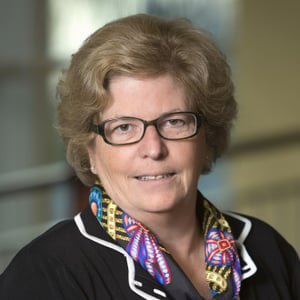
Former Managing Director, BlackRock Inc.
Joanne Medero was until July 2020 a Managing Director at BlackRock where she was member of their Global Public Policy Group and a Senior Advisor to the Vice Chairman on the intersection of public policy and corporate governance. In June 2021, Ms. Medero was appointed a director/trustee of the Nuveen Funds.
Ms. Medero's service with BlackRock dates back to 1996, including her years with Barclays Global Investors (BGI), which merged with BlackRock in 2009. She joined BGI as its Global General Counsel in 1996 and after more than ten years in that role, became the global head of Government Relations and Public Policy for Barclays’ investment banking and investment management businesses. Prior to joining BGI, Ms. Medero was a partner with Orrick, Herrington and Sutcliffe specializing in derivatives and market regulation issues. Ms. Medero also served as general counsel of the Commodity Futures Trading Commission (1989-1993) and as an associate director for legal and financial affairs at the Office of Presidential Personnel, The White House (1986-1989).
Ms. Medero is a graduate of St. Lawrence University and received her JD from George Washington University.
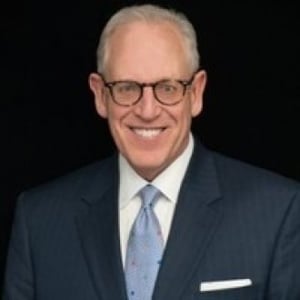
Senior Fellow, George Mason University National Security Institute
Bryan Smith is a Senior Fellow at the George Mason University National Security Institute.

Executive Director, Committee for Justice
Ashley Baker is Executive Director of the Committee for Justice and founder of the Alliance on Antitrust coalition. Her work focuses on antitrust law, technology regulation, administrative-agency authority, the Supreme Court, and judicial nominations. She closely follows the Federal Trade Commission and the Department of Justice’s Antitrust Division, with particular attention to merger review, agency procedure, and the effects of regulation on American innovation and competitiveness. She is also founder of the Alliance on Antitrust Coalition.
Ashley has testified before the United States Senate on antitrust law. Her writing has appeared in Fox News, USA Today, The Boston Globe, The Hill, RealClearPolitics, The American Spectator, and other national publications. She also provides policy analysis through congressional testimony and correspondence, regulatory comments, and public commentary.
Ashley serves on the Federalist Society’s Regulatory Transparency Project and Antitrust and Consumer Protection Practice Group Executive Committee. She is also active in the Republican National Lawyers Association and has spoken on the Supreme Court and the federal judiciary. An authority on the judicial-confirmation process, she worked closely on the successful confirmation efforts for Justices Neil Gorsuch and Brett Kavanaugh, as well as multiple federal appellate judges.

Founder and Managing Principal, Elevecon LLC
Jay Ezrielev is the former economic advisor to Federal Trade Commission Chairman Joseph Simons. He specializes in the economics of industrial organization, econometrics, and antitrust policy. With more than 19 years in economic consulting and government, Dr. Ezrielev has advised clients on numerous high-profile antitrust and other matters. He has worked with many Fortune 500 companies. Dr. Ezrielev participated in drafting the Vertical Merger Guidelines. Dr. Ezrielev has extensive experience leading economic analyses, providing agency advocacy, assisting in preparation of expert reports and testimony, advising counsel on expert examinations, developing economic models, and performing econometric analysis of large data sets. He has been retained on a wide range of matters, including merger reviews, monopolization litigation, regulatory hearings, price–fixing litigation, intellectual property matters, contractual disputes, and class certification matters. He also taught financial economics as adjunct professor at Johns Hopkins University. Dr. Ezrielev earned a Ph.D. in Economics from New York University, an M.S. in Electrical Engineering from Rutgers University, and a B.S. in Electrical Engineering from Rutgers University. Dr. Ezrielev previously worked as a scientist and software developer at Siemens Medical Systems and Goldman Sachs.

Partner, Cleary Gottlieb Steen & Hamilton LLP
D. Bruce Hoffman’s practice focuses on antitrust enforcement, including merger clearance and conduct investigations, and antitrust and other complex commercial litigation.
Bruce joined the firm as a partner after serving as Director of the Federal Trade Commission’s Bureau of Competition from August 2017 until late December of 2019. As Director, he was the head of the FTC’s antitrust enforcement and was responsible for developing Bureau policy, supervising all of the Bureau’s investigations and litigation, and conducting high-level relations with other leading antitrust enforcers, including the U.S. Department of Justice Antitrust Division, the Directorate-General for Competition of the European Commission and other international enforcers, and state Attorneys General, as well as communications with Congress. Bruce also spearheaded the creation of the Bureau of Competition’s Technology Task Force (now known as the Technology Enforcement Division) to monitor competition in U.S. technology markets, investigate potential anticompetitive conduct in those markets, and take enforcement actions when warranted.
Bruce’s role as Bureau Director was his second stint at the FTC. He previously served at the agency from 2001-2004, starting as Associate Director for Regional Litigation and then being elevated to Deputy Director of the Bureau of Competition. In these roles, Bruce oversaw the Bureau’s programs, activities, and investigations. He also led numerous high-profile cases involving mergers, price fixing, monopolization, conspiracies, and other issues in a broad range of industries, and he participated in amicus brief efforts before the U.S. Supreme Court.
Prior to joining the FTC in 2001, and then again from 2005 to 2017, Bruce developed and led successful antitrust practices as a partner at leading global law firms. Bruce had an extensive merger review practice, including transactions before the DOJ, FTC, EC, several U.S. states, and other enforcers. He also has wide-ranging experience in high-profile antitrust litigation and investigations, including representing clients in some of the largest antitrust class actions ever filed, as well as competitor lawsuits and conduct investigations. Bruce has handled every aspect of federal and state court litigation, including appellate arguments, jury and bench trials, and numerous court hearings and arguments, as well as arbitration proceedings.
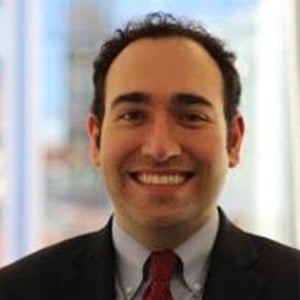
Policy Counsel, Public Knowledge
Alex is a Policy Counsel at Public Knowledge, where he focuses on digital platform competition issues. Prior to joining Public Knowledge, Alex worked for Senator Amy Klobuchar, Senator Richard Blumenthal, the House Committee on Oversight and Reform, and Senator Joe Donnelly. Alex received his J.D., cum laude, from Georgetown University Law Center and his B.A. from Yale College in Economics and Political Science with distinction. He was born and raised in Lexington, KY and enjoys Kentucky basketball, trivia, fantasy football, and romantic comedies.
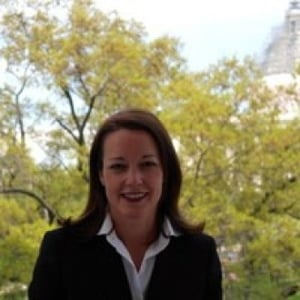
Staff Director, Committee on House Administration

Searching Devices at the Border: What Does the Fourth Amendment Require?
In Alasaad v. Wolf, both the U.S. government and plaintiffs – 11 U.S. citizens and...
Courthouse Steps Oral Argument Teleforum: Google v. Oracle
Michael Risch, Jordana Rubel, Steven M. Tepp
Google copied over 11,000 lines of computer code, called declaring code, owned by Oracle. Ten...
Topics
Rights for Thee, But Not for Mai
The Federalist Society is pleased to announce its Student Blog Initiative, a project of the...
Can Originalism Constrain the Imperial Presidency?
Lee J. Strang
A review of The Living Presidency: An Originalist Argument Against Its Ever-Expanding Powers, by Saikrishna...
Book Review: America in the World: A History of U.S. Diplomacy and Foreign Policy
TeleforumTopics
Do Term Limits Make a Difference?
The Federalist Society is pleased to announce its Student Blog Initiative, a project of the...
Supply Chain Security and Global Power Competition: Should the United States Get China Out of its Supply Chain?
TeleforumDeep Dive Episode 141 – Interoperability and Data Sharing: An Antitrust Remedy in Search of a Market Problem?
A Regulatory Transparency Project Teleforum
TeleforumThe War of the Branches: Congress and the Executive
Brigham Young Student Chapter
Provo, UTAdjudicating Employment Discrimination in Federal Contracting: Is OFCCP Regulating Without Authority?
Mark Chenoweth, William Doyle, Kara Rollins
In the landmark Title VII of the Civil Rights Act of 1964, Congress legislated a...