

Partner, Klaros Group
Jonah Crane is an experienced advisor to financial technology companies with innovative products or business models. Jonah provides creative advice on business and product strategy, regulatory and compliance risk, and regulatory engagement. He excels where business model and product innovations don't fit easily within existing regulatory frameworks, and has helped companies such as Plaid and Monzo navigate complex regulatory frameworks. Jonah has also helped financial regulators around the World develop policy frameworks to facilitate innovation and financial inclusion, and led the drafting of the first comprehensive code of conduct for trading digital assets. Jonah served as a Senior Advisor and Deputy Assistant Secretary in the U.S. Treasury Department from 2013-2017, with responsibility for financial stability and regulatory coordination. Prior to that, Jonah was an advisor to U.S. Senator Chuck Schumer on financial regulatory policy, including the Dodd-Frank Act and JOBS Act. Jonah was previously a mergers and acquisitions lawyer at Milbank LLP in New York City.
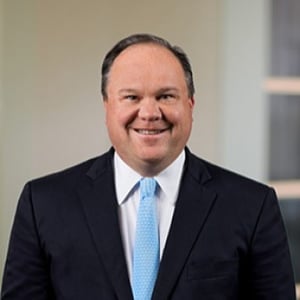
Counsel, BakerHostetler
Kevin Edgar’s extensive career in public policy, strategy, financial services and the macro-political process spans from work in the New York Stock Exchange to the United States House of Representatives. Kevin joined the firm after working for more than a decade on Capitol Hill, first as a senior counsel and then Chief Counsel of the House Financial Services Committee. He served on the Committee staff during the financial crisis and the enactment of the Dodd-Frank Wall Street Reform and Consumer Protection Act (P.L. 111-203). Kevin communicates public policy goals, analyzes and develops regulatory and legislative initiatives. He possesses a deep understanding of legislative and regulatory processes, and how government agencies interact with one another. Utilizing his substantial comprehension of financial laws and regulations, Kevin provides strategic advice and advises clients on compliance measures and industry best practices. Additionally, his market intel and broad network enable him to counsel clients on how the Congress and regulatory agencies can impact corporate governance, lending, investing, innovation and growth. With over 20 years of experience, Kevin brings a wealth of industry and public policy insight to his clients’ matters.

Partner, Mayer Brown
Andrew Olmem is a partner in Mayer Brown’s Washington DC office and a member of its Public Policy, Regulatory & Government Affairs, and Financial Services Regulatory & Enforcement practices. His practice focuses on complex financial services regulatory and public policy matters.
Andrew previously served as the Deputy Assistant to the President for Economic Policy and Deputy Director of the National Economic Council (NEC), where he oversaw the development and coordination of the administrations’ domestic economic policies, including for financial services, technology, telecom, energy, and infrastructure.
Earlier, he also served as the Republican Chief Counsel and Deputy Staff Director at the U.S. Senate Committee on Banking, Housing and Urban Affairs. Andrew began his legal career practicing corporate and securities law at Mayer Brown in New York City. Prior to attending law school, he served as an Assistant Economist at the Federal Reserve Bank of Richmond.

Executive Director, Milken Institute Center for Financial Markets
Michael S. Piwowar is the executive director of the Milken Institute Center for Financial Markets. Dr. Piwowar served as a Commissioner at the U.S. Securities and Exchange Commission from August 15, 2013 to July 6, 2018. He was first appointed to the SEC by President Barack Obama and was designated Acting Chairman of the Commission by President Donald Trump from January 23, 2017 to May 4, 2017. He was previously the Republican chief economist for the U.S. Senate Committee on Banking, Housing, and Urban Affairs under Senators Mike Crapo (R-ID) and Richard Shelby (R-AL) and served as the lead Republican economist on the four SEC-related titles of the Dodd-Frank Act and the JOBS Act. During the financial crisis and its immediate aftermath, Dr. Piwowar served in a one-year fixed-term position at the White House as a senior economist at the President’s Council of Economic Advisers (CEA) in both the George W. Bush and Barack Obama Administrations. Before joining the White House, Dr. Piwowar worked as a Principal at the Securities Litigation and Consulting Group (SLCG). He received a B.A. in Foreign Service and International Politics from the Pennsylvania State University, an M.B.A. from Georgetown University, and a Ph.D. in Finance from the Pennsylvania State University.

Senior Fellow, Stand Together Trust
Vikrant Reddy is a senior fellow at Stand Together Trust, specializing in the area of criminal justice reform. Reddy previously served as a senior policy analyst at the Texas Public Policy Foundation (TPPF), where he managed the launch of TPPF’s national Right on Crime initiative in 2010. He has worked as a research assistant at the Cato Institute, as a judicial clerk to the Hon. Gina M. Benavides in Texas, and as an attorney in private practice. He is a member of the State Bar of Texas, and he serves on the Executive Committee of the Criminal Law Practice Group of the Federalist Society. He is also an appointee to the U.S. Commission on Civil Rights Texas State Advisory Committee.
Reddy’s research and scholarly opinions have appeared in a range of national media outlets, including USA Today, National Review, The Federalist, and others.
Reddy earned his law degree from the Southern Methodist University School of Law. He received his undergraduate degree from the University of Texas at Austin.
Partner, Klaros Group
Jonah Crane is an experienced advisor to financial technology companies with innovative products or business models. Jonah provides creative advice on business and product strategy, regulatory and compliance risk, and regulatory engagement. He excels where business model and product innovations don't fit easily within existing regulatory frameworks, and has helped companies such as Plaid and Monzo navigate complex regulatory frameworks. Jonah has also helped financial regulators around the World develop policy frameworks to facilitate innovation and financial inclusion, and led the drafting of the first comprehensive code of conduct for trading digital assets. Jonah served as a Senior Advisor and Deputy Assistant Secretary in the U.S. Treasury Department from 2013-2017, with responsibility for financial stability and regulatory coordination. Prior to that, Jonah was an advisor to U.S. Senator Chuck Schumer on financial regulatory policy, including the Dodd-Frank Act and JOBS Act. Jonah was previously a mergers and acquisitions lawyer at Milbank LLP in New York City.
Counsel, BakerHostetler
Kevin Edgar’s extensive career in public policy, strategy, financial services and the macro-political process spans from work in the New York Stock Exchange to the United States House of Representatives. Kevin joined the firm after working for more than a decade on Capitol Hill, first as a senior counsel and then Chief Counsel of the House Financial Services Committee. He served on the Committee staff during the financial crisis and the enactment of the Dodd-Frank Wall Street Reform and Consumer Protection Act (P.L. 111-203). Kevin communicates public policy goals, analyzes and develops regulatory and legislative initiatives. He possesses a deep understanding of legislative and regulatory processes, and how government agencies interact with one another. Utilizing his substantial comprehension of financial laws and regulations, Kevin provides strategic advice and advises clients on compliance measures and industry best practices. Additionally, his market intel and broad network enable him to counsel clients on how the Congress and regulatory agencies can impact corporate governance, lending, investing, innovation and growth. With over 20 years of experience, Kevin brings a wealth of industry and public policy insight to his clients’ matters.
Partner, Mayer Brown
Andrew Olmem is a partner in Mayer Brown’s Washington DC office and a member of its Public Policy, Regulatory & Government Affairs, and Financial Services Regulatory & Enforcement practices. His practice focuses on complex financial services regulatory and public policy matters.
Andrew previously served as the Deputy Assistant to the President for Economic Policy and Deputy Director of the National Economic Council (NEC), where he oversaw the development and coordination of the administrations’ domestic economic policies, including for financial services, technology, telecom, energy, and infrastructure.
Earlier, he also served as the Republican Chief Counsel and Deputy Staff Director at the U.S. Senate Committee on Banking, Housing and Urban Affairs. Andrew began his legal career practicing corporate and securities law at Mayer Brown in New York City. Prior to attending law school, he served as an Assistant Economist at the Federal Reserve Bank of Richmond.
Executive Director, Milken Institute Center for Financial Markets
Michael S. Piwowar is the executive director of the Milken Institute Center for Financial Markets. Dr. Piwowar served as a Commissioner at the U.S. Securities and Exchange Commission from August 15, 2013 to July 6, 2018. He was first appointed to the SEC by President Barack Obama and was designated Acting Chairman of the Commission by President Donald Trump from January 23, 2017 to May 4, 2017. He was previously the Republican chief economist for the U.S. Senate Committee on Banking, Housing, and Urban Affairs under Senators Mike Crapo (R-ID) and Richard Shelby (R-AL) and served as the lead Republican economist on the four SEC-related titles of the Dodd-Frank Act and the JOBS Act. During the financial crisis and its immediate aftermath, Dr. Piwowar served in a one-year fixed-term position at the White House as a senior economist at the President’s Council of Economic Advisers (CEA) in both the George W. Bush and Barack Obama Administrations. Before joining the White House, Dr. Piwowar worked as a Principal at the Securities Litigation and Consulting Group (SLCG). He received a B.A. in Foreign Service and International Politics from the Pennsylvania State University, an M.B.A. from Georgetown University, and a Ph.D. in Finance from the Pennsylvania State University.
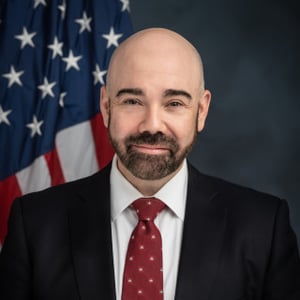
Assistant Secretary for Fair Housing and Equal Opportunity, United States Department of Housing and Urban Development
Craig Trainor is Assistant Secretary for Fair Housing and Equal Opportunity at the United States Department of Housing and Urban Development. President Trump nominated Mr. Trainor for this position on February 11, 2025, and the United States Senate confirmed him on October 7, 2025.
A “Day One” Trump-Vance Administration official, he previously served as Acting Assistant Secretary for Civil Rights and Principal Deputy Assistant Secretary for Civil Rights at the United States Department of Education, where he spearheaded the Department’s efforts to reorient America’s civil rights regime from an unjust spoils system to one that protects the rights of all Americans. Mr. Trainor’s February 14, 2025, “Dear Colleague” letter is widely considered the Trump Administration’s blueprint for enforcing civil rights laws and restoring the Constitution’s promise of equal protection.
Prior to serving in the Trump-Vance Administration, he was Senior Special Counsel with the United States House of Representatives Committee on the Judiciary under Chairman Jim Jordan (R-OH), and Senior Litigation Counsel with the America First Policy Institute under the Honorable Pam Bondi.
For over ten years, Mr. Trainor was a criminal defense and civil rights lawyer in New York City, litigating cases in New York state court and the United States District Court for the Southern and Eastern Districts of New York.
Prior to founding his law practice, he served as a New York City prosecutor, an associate attorney at a white collar criminal defense firm, and a law clerk to Chief Judge Frederick J. Scullin, Jr., United States District Court for the Northern District of New York.
Senior Fellow, Stand Together Trust
Vikrant Reddy is a senior fellow at Stand Together Trust, specializing in the area of criminal justice reform. Reddy previously served as a senior policy analyst at the Texas Public Policy Foundation (TPPF), where he managed the launch of TPPF’s national Right on Crime initiative in 2010. He has worked as a research assistant at the Cato Institute, as a judicial clerk to the Hon. Gina M. Benavides in Texas, and as an attorney in private practice. He is a member of the State Bar of Texas, and he serves on the Executive Committee of the Criminal Law Practice Group of the Federalist Society. He is also an appointee to the U.S. Commission on Civil Rights Texas State Advisory Committee.
Reddy’s research and scholarly opinions have appeared in a range of national media outlets, including USA Today, National Review, The Federalist, and others.
Reddy earned his law degree from the Southern Methodist University School of Law. He received his undergraduate degree from the University of Texas at Austin.

Director, Center for Judicial Engagement, Institute for Justice
Anthony Sanders is the Director of the Center for Judicial Engagement (CJE) at the Institute for Justice and a senior attorney. He joined IJ in 2010. As CJE’s director, he educates the public about the proper role of judges in enforcing constitutional limits on the size and scope of government. As a senior attorney he litigates cutting-edge constitutional cases protecting economic liberty, private property, freedom of speech and other individual liberties in both federal and state courts across the country.
One area of Anthony’s expertise is on using state constitutions to protect individual rights. He is the author of the book, published by University of Michigan Press, Baby Ninth Amendments: How Americans Embraced Unenumerated Rights and Why It Matters. He has also written several law review articles on state constitutional law, unenumerated rights, judicial review, economic liberty, property rights, international law, and other subjects. His work has appeared in publications such as the Iowa Law Review, Minnesota Law Review, American University Law Review, and Rutgers Law Review, and he has published opinion pieces in leading media outlets across the country. Further, he frequently speaks to various audiences on these matters and others, including judicial engagement, free speech, civil forfeiture, and the continuing importance of Magna Carta. Additionally, he hosts the weekly Short Circuit podcast, which often records live in front of law student audiences.
Anthony has litigated several cases in various state courts on state constitutional protections, as well as in federal courts on matters such as economic liberty, free speech, administrative law, and fines and fees abuse. Prior to joining IJ, Anthony served as a law clerk to Justice W. William Leaphart on the Montana Supreme Court. Anthony also worked for several years in private practice in Chicago where he was an active member of the Chicago Bar Association and chaired its Civil Rights Committee.
Anthony received his law degree cum laude from the University of Minnesota Law School in 2004, where he served as an articles submission editor for the Minnesota Law Review. He received his undergraduate degree from Hamline University in St. Paul, Minnesota, and his master’s degree from the University of Wisconsin-Madison. A dual U.S. and U.K. citizen, Anthony grew up on the islands of Vashon in Washington State, and Alderney in the British Channel Islands.

Topics
Don’t Fear Volatility in Cryptocurrency Prices; Fear Regulations that Will Harm America’s Crypto Lead
After a massive runup since the beginning of the year, the cryptocurrency market finally experienced...
Topics
Remembering a Time When Broadband Policy Was Bipartisan
Last week, the House Energy and Commerce Committee held a hearing entitled Broadband Equity: Addressing...
Panel 1: Did Dodd-Frank Live Up to Its Promise?
Sponsored by the Financial Services & E-Commerce Practice Group
Panel 1: Did Dodd-Frank Live Up to Its Promise?
Jonah Crane, Kevin R. Edgar, Andrew Olmem, Michael Piwowar
Ten years after its passage, the Dodd-Frank Act remains the subject of much debate. The...
Topics
Assessing the Nondelegation Challenge in Texas’s Keystone XL Pipeline Lawsuit Against the Biden Administration
Justice Alito’s concurrence in the recent case of Gundy v. United States signaled that the...
In the Rush to Reform, Prudence Is Among the Highest Duties: How to Responsibly Reform Cash Bail
Craig Trainor
Over the last two decades, the politics of American criminal law has made strange bedfellows....
Courthouse Steps Oral Argument Teleforum: Terry v. United States
Vikrant P. Reddy
Thirteen years ago, Tarahrick Terry was charged with possession with intent to distribute 3.9 grams...
Which Rights Are We Mediating?
Anthony Sanders
A review of How Rights Went Wrong: Why Our Obsession With Rights Is Tearing America...
Courthouse Steps Oral Argument Teleforum: Terry v. United States
TeleforumTopics
A Foundation for Rethinking Administrative Law
New casebooks can be hard to justify. Many legal doctrines and their canonical cases are...