
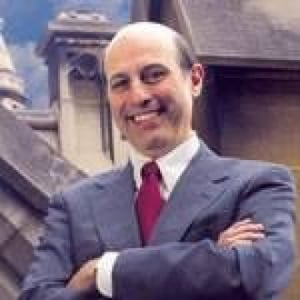
Garwood Visiting Professor and Visiting Fellow, James Madison Pr, Cleveland-Marshall College of Law
David F. Forte is Professor of Law at Cleveland State University, where he was the inaugural holder of the Charles R. Emrick, Jr.- Calfee Halter & Griswold Endowed Chair. This fall, Professor Forte will be the Garwood Visiting Professor at Princeton University in the Department of Politics, and Visiting Fellow at the James Madison Program in American Ideals and Institutions. He holds degrees from Harvard College, Manchester University, England, the University of Toronto and Columbia University.
During the Reagan administration, Professor Forte served as chief counsel to the United States delegation to the United Nations and alternate delegate to the Security Council. He has authored a number of briefs before the United States Supreme Court, and has frequently testified before the United States Congress and consulted with the Department of State on human rights and international affairs issues. His advice was specifically sought on the approval of the Genocide Convention, on world-wide religious persecution, and Islamic extremism. He has appeared and spoken frequently on radio and television, both nationally and internationally. In 2002, the Department of State sponsored a speaking tour for Professor Forte in Amman, Jordan, and he was also a featured speaker to the Meeting of Peoples in Rimini, Italy, a meeting which gathers over 500,000 people from all over Europe. He has also been called to testify before the state legislatures of Ohio, Kansas, and Idaho as well as the New York City Council. He has assisted in drafting a number of pieces of legislation for the Ohio General Assembly dealing with abortion, international trade, and federalism. He has sat as acting judge on the municipal court of Lakewood Ohio and was chairman of Professional Ethics Committee of the Cleveland Bar Association. He has received a number of awards for his public service, including the Cleveland Bar Association’s President’s Award, the Cleveland State University Award for Distinguished Service, the Cleveland State University Distinguished Teaching Award, and the Cleveland-Marshall College of Law Alumni Award for Faculty Excellence. He served as Consultor to the Pontifical Council for the Family under Pope St. John Paul II and Pope Benedict XVI. In 2003, Dr. Forte was a Distinguished Fulbright Chair at the University of Trento and returned there in 2004 as a Visiting Professor. For the academic year, 2008-2009, Professor Forte was Senior Visiting Scholar at the Center for the Study of Religion and the Constitution in at the Witherspoon Institute in Princeton, New Jersey. He was the Robert E. Henderson Constitution Day Lecturer at the Ashbrook Center at Ashland University, and he has given over 300 invited addresses and papers at more than 100 academic institutions. His work has been cited by the U.S. Supreme Court.
Professor Forte was a Bradley Scholar at the Heritage Foundation, and Visiting Scholar at the Liberty Fund. He has been President of the Ohio Association of Scholars, was on the Board of Directors of the Philadelphia Society, and is also adjunct Scholar at the Ashbrook Center. He has been appointed to the Ohio State Advisory Committee to the U.S. Commission on Civil Rights. He has also been a Civil War re-enactor and a Merit Badge Counselor for the Boy Scouts.
He writes and speaks nationally on topics such as constitutional law, religious liberty, Islamic law, the rights of families, and international affairs. He served as book review editor for the American Journal of Jurisprudence and has edited a volume entitled, Natural Law and Contemporary Public Policy, published by Georgetown University Press. His book, Islamic Law Studies: Classical and Contemporary Applications, has been published by Austin & Winfield. He is Senior Editor of The Heritage Guide to the Constitution (2006), 2d edition (2014), published by Regnery & Co, a clause by clause analysis of the Constitution of the United States.
His teaching competencies include Constitutional Law, the First Amendment, Islamic Law, Jurisprudence, Natural Law, International Law, International Human Rights, the Presidency, and Constitutional History.
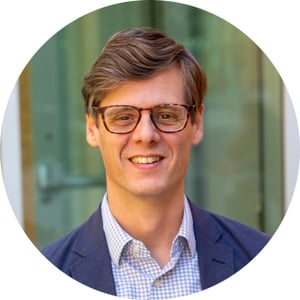
Chief Economist, Abundance Institute

Laurence A. Tisch Professor of Law and Director, Classical Liberal Institute, New York University School of Law; Director, Classical Liberal Institute, Civitas Institute University of Texas at Austin
Richard A. Epstein is the inaugural Laurence A. Tisch Professor of Law at NYU School of Law. Prior to his joining the faculty, he was a visiting law professor at NYU from 2007 through 2009. He served as the Peter and Kirstin Bedford Senior Fellow at the Hoover Institution from 2000 to 2024. Since 2024 to the present he is a senior lecturer at the Civitas Institute at the University of Texas—Austin. Epstein is also the James Parker Hall Distinguished Service Professor of Law Emeritus and a senior lecturer at the University of Chicago. His initial law school appointment was at the University of Southern California from 1968 to 1972. Epstein received an LL.D., h.c. from the University of Ghent, 2003. He has been a member of the American Academy of Arts and Sciences since 1985 and was a Senior Fellow of the Center for Clinical Medical Ethics at the University of Chicago Division of Biological Sciences, also from 1983. to 2022 He served as editor of the Journal of Legal Studies from 1981 to 1991, and of the Journal of Law and Economics from 1991-2001. From 2001 to 2010 he was a director of the John M. Olin Program in Law and Economics at the University of Chicago.
His newest book, The Myth of Birthright Citizenship: What the Fourteenth Amendment Really Says was published in 2026 (Encounter Books). Prior to that he has published many books including, The Dubious Morality of the Modern Administrative State (Roman & Littlefield 2020).Earlier he published th Classical Liberal Constitution: The Uncertain Quest for Limited Government (Harvard 2014) iHis previous books include Design for Liberty: Private Property, Public Administration and the Rule of Law (Harvard 2011); The Case Against the Employee Free Choice Act (Hoover 2009); Supreme Neglect: How to Revive the Constitutional Protection of Property Rights (Oxford 2008); Antitrust Decrees in Theory and Practice: Why Less is More (AEI 2007); Overdose: How Excessive Government Regulation Stifles Pharmaceutical Innovation (Yale University Press. 2006); How Progressives Rewrote the Constitution (Cato 2006); Cases and Materials on Torts (Aspen Law & Business; 8th ed. 2004); Skepticism and Freedom: A Modern Case for Classical Liberalism (University of Chicago, 2003); Torts (Aspen Law & Business 1999); Principles for a Free Society: Reconciling Individual Liberty with the Common Good (Perseus Books, 1998): Mortal Peril: Our Inalienable Rights to Health Care (Addison-Wesley, 1997); Simple Rules for a Complex World (Harvard, 1995); Bargaining With the State (Princeton, 1993); Forbidden Grounds: The Case Against Employment Discrimination Laws (Harvard , 1992); Takings: Private Property and the Power of Eminent Domain (Harvard, 1985); and Modern Products Liability Law (Greenwood Press, 1980). He has also edited(with Catherine M. Sharkey) Cases and Materials on the Law of Torts (10th edition 2012).
Professor Epstein has written numerous articles on a wide range of legal and interdisciplinary subjects. He has taught courses in administrative law, antitrust law, civil procedure, communications, constitutional law, contracts, corporations, criminal law, employment discrimination law, environmental law, food and drug law health law and policy, legal history, labor law, property, real estate development and finance, jurisprudence, labor law; land use planning, patents, individual, estate and corporate taxation, Roman Law; torts, and workers' compensation.
Professor Epstein also writes a regular column for Civitas Institute, which also sponsors his podcast, The Libertarian with Charles C.W. Cooke, and Law Talk, with Cooke and John Yoo. He also does a podcast with John Batchelor. And appears regularly on the Freedom File with Judge Andrew Napolitano.
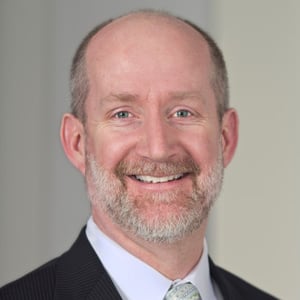
Nonresident Senior Fellow, American Enterprise Institute
Jim Harper is a nonresident senior fellow at the American Enterprise Institute (AEI), where he focuses on privacy issues, and select legal and constitutional law issues.
A lawyer by training, Mr. Harper has served as counsel for the Subcommittee on Commercial, and Administrative Law of the US House Committee on the Judiciary and as counsel for the Senate Committee on Government Affairs. More recently, he worked at the Competitive Enterprise Institute and the Cato Institute, where he wrote on the intersection of business, technology, and public policy, including privacy, surveillance, data security, telecommunications, and cryptocurrencies. He also served as global policy counsel for the Bitcoin Foundation. Mr. Harper was a founding member of the Department of Homeland Security’s Data Privacy and Integrity Advisory Committee. Early in his post-Hill career, he represented companies such as PayPal and Verisign before Congress.
Mr. Harper is the co-editor of “Terrorizing Ourselves: Why U.S. Counterterrorism Policy Is Failing and How to Fix It” (Cato Institute, 2010) and the author of “Identity Crisis: How Identification Is Overused and Misunderstood” (Cato Institute, 2006). He has written several amicus briefs in Fourth Amendment cases before the U.S. Supreme Court and has published scholarly articles in a variety of law journals. In the popular press, Mr. Harper has been published in The New York Times and The Wall Street Journal, among many other publications.
Mr. Harper has a law degree from the U.C. Hastings College of the Law, where he was editor-in-chief of the Hastings Constitutional Law Quarterly, and a BA from the University of California, Santa Barbara.

President, The Free State Foundation
Randolph J. May is Founder and President of The Free State Foundation. The Free State Foundation is an independent, non-profit free market-oriented think tank founded in 2006.
From October 1999-May 2006, May was a Senior Fellow and Director of Communications Policy Studies at The Progress & Freedom Foundation, a Washington, DC-based think tank. Prior to joining PFF, he practiced communications, administrative, and regulatory law as a partner at major national law firms. From 1978 to 1981, May served as Assistant General Counsel and Associate General Counsel at the Federal Communication Commission.
May has held numerous leadership positions in bar associations. He is a past Chair of the American Bar Association’s Section of Administrative Law and Regulatory Practice. He is a Fellow of the National Academy of Public Administration. Mr. May also has served as a Public Member of the Administrative Conference of the United States and currently is a Senior Fellow at ACUS.
Mr. May has published more than two hundred articles and essays on communications, administrative and constitutional law topics. He is author of A Call for a Radical New Communications Policy: Proposals for Free Market Reform, and co-author of #CommActUpdate: A Communications Law Fit for the Digital Age and The Constitutional Foundations of Intellectual Property. Mr. May is editor of two books, Communications Law and Policy in the Digital Age: The Next Five Years and New Directions in Communications Policy. In addition, he is the co-editor of two other books, Net Neutrality or Net Neutering: Should Broadband Internet Services Be Regulated? and Communications Deregulation and FCC Reform. In the past, Mr. May has written regular columns on legal and regulatory affairs for Legal Times and the National Law Journal, leading national legal periodicals.
He received his A.B. from Duke University and his J.D. from Duke Law School, where he serves as a member of the Board of Visitors.

Vice President for Legal Affairs, Cato Institute
Roger Pilon is the Cato’s Institute’s vice president for legal affairs, the founding director of Cato’s Robert A. Levy Center for Constitutional Studies, the inaugural holder of Cato’s B. Kenneth Simon Chair in Constitutional Studies, and the founding publisher of the Cato Supreme Court Review.
Prior to joining Cato, Pilon held five senior posts in the Reagan administration, including at State and Justice, and was a national fellow at Stanford’s Hoover Institution. In 1989 the Bicentennial Commission presented him with its Benjamin Franklin Award for excellence in writing on the U.S. Constitution. In 2001 Columbia University’s School of General Studies awarded him its Alumni Medal of Distinction. Pilon lectures and debates at universities and law schools across the country and testifies often before Congress.
His writing has appeared in the Wall Street Journal, the Washington Post, the New York Times, the Los Angeles Times, Legal Times, National Law Journal, Harvard Journal of Law and Public Policy, Stanford Law and Policy Review, and elsewhere. He has appeared on ABC’s Nightline, CBS’s 60 Minutes II, Fox News Channel, NPR, CNN, MSNBC, CNBC, C-SPAN, and other media.
Pilon holds a BA from Columbia University, an MA and a PhD from the University of Chicago, and a JD from the George Washington University School of Law.
Mizuho Financial Group Professor of Finance, Harvard Business Sc, Harvard Law School
Mihir A. Desai is the Mizuho Financial Group Professor of Finance at Harvard Business School and a Professor of Law at Harvard Law School. He received his Ph.D. in political economy from Harvard University; his MBA as a Baker Scholar from Harvard Business School; and a bachelor's degree in history and economics from Brown University. In 1994, he was a Fulbright Scholar to India.
Professor Desai's areas of expertise include tax policy, international finance, and corporate finance. His academic publications have appeared in leading economics, finance, and law journals. His work has emphasized the appropriate design of tax policy in a globalized setting, the links between corporate governance and taxation, and the internal capital markets of multinational firms. His research has been cited in The Economist, BusinessWeek, The New York Times, and several other publications. He is a Research Associate in the National Bureau of Economic Research's Public Economics and Corporate Finance Programs, and served as the co-director of the NBER's India program.
His general interest publications include opinion pieces on varied topics, including tax policy and the effects of globalization on domestic welfare, in The Washington Post, The Wall Street Journal, Tax Notes and The New York Times. He has also written for practitioners in the Harvard Business Review on the role of the Global CFO, on how to reform the U.S. tax system, and how changing incentive systems have contributed to the degradation of American competitiveness. He has testified several times to Congressional bodies, including most recently to the Senate Finance Committee on corporate tax reform and inversions.
Professor Desai has taught extensively as an award-winning teacher at HBS and at Harvard University. As a second-year professor teaching finance in the required curriculum, he received the Student Association Award for teaching excellence from the HBS Class of 2001. He subsequently built a second-year elective on International Financial Management, and his many cases on international finance are collected in a casebook published by John Wiley and are taught around the world. Since 1999, he has co-taught Public Economics (EC 1410) at Harvard College. He has also taught seminars and classes on tax policy at Harvard Law School, NYU Law School, and Columbia Law School. Most recently, Professor Desai has been active in delivering various executive education programs at HBS, including the General Managers Program (GMP), on campus and around the world. In 2011, Professor Desai launched, with Professor Joe Lassiter, the first offering at HBS for Harvard undergraduates, Innovation and Entrepreneurship, that is also included as part of the General Education curriculum at Harvard College. In the fall of 2014, Professor Desai began teaching Taxation at Harvard Law School.
From 2008 to 2011, Professor Desai led HBS's doctoral programs, which include the DBA and joint programs with the Graduate School of Arts and Sciences. In that role, he led the restructuring of various programs and initiated a terminal master's program. From 2010 to 2014, Professor Desai was the Senior Associate Dean for Planning and University Affairs, where he was part of the senior management team of the Business School focused on integration with the rest of the University. Specifically, he has launched a program for Harvard undergraduates to collaborate on research with HBS professors (PRIMO), led the course for undergraduates described above, helped launch the Harvard Innovation Lab, worked on campus planning efforts including the design of Tata Hall and served on the newly created Harvard Libraries Board.
His professional experiences include working at CS First Boston (1989-1991), McKinsey & Co. (1992), and advising a number of firms and governmental organizations. He is also on the Advisory Board of the International Tax Policy Forum and the Centre for Business Taxation at Oxford University.
Senior Lecturer on Law, Harvard Law School
Stephen E. Shay is a Senior Lecturer at Harvard Law School.
Before joining the Harvard Law School faculty as a Professor of Practice in 2011, Mr. Shay was Deputy Assistant Secretary for International Tax Affairs in the United States Department of the Treasury. Prior to re-joining the Treasury Department in 2009, Mr. Shay was a tax partner for 22 years with Ropes & Gray, LLP. Mr. Shay served in the Office of International Tax Counsel at the Department of the Treasury, including as International Tax Counsel, from 1982 to 1987, during which Mr. Shay actively participated in the development and enactment of international provisions in the Tax Reform Act of 1986.
Mr. Shay has published scholarly and practice articles relating to international taxation, and testified for law reform before Congressional tax-writing committees. He has had extensive practice experience in the international tax area and while in active practice was recognized as a leading practitioner in Chambers Global: The World's Leading Lawyers, Chambers USA: America's Leading Lawyers, The Best Lawyers in America, Euromoney's Guide to The World's Leading Tax Advisers and Euromoney's, Guide to The Best of the Best. Mr. Shay discloses certain related interests and activities not connected with his position at Harvard Law School on the Harvard Law School website.
Mr. Shay is President of the American Tax Policy Institute Board of Trustees and is the IBFD Professor in Residence for 2015. Mr. Shay serves on the Executive Committee of the New York State Bar Association Tax Section and has been active in the American Bar Association Tax Section as a Council Director and Chair of the Committee on Foreign Activities of U.S. Taxpayers, in the American Law Institute as an Associate Reporter and in the Taxes Committee of the International Bar Association. Mr. Shay is a 1972 graduate of Wesleyan University, and he earned his J.D. and his M.B.A. from Columbia University in 1976.
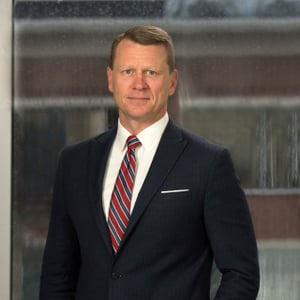
Partner, Phelps Dunbar LLP
Mike Hurst is a partner with Phelps Dunbar LLP where he optimizes his in-depth knowledge of the court system, investigative and prosecutorial agencies, the regulatory arena, and the public policy realm to help clients facing government investigations, enforcement actions, regulatory matters, general litigation and policy issues. Mike currently serves as the General Counsel of the Republican National Committee and as Chairman of the Mississippi Republican Party. He previously served as the U.S. Attorney for the Southern District of Mississippi from 2017-2021, and with over 20 years of experience before judges, juries and policy makers, handling some of the largest and most high-profile cases in Mississippi, he's known for untangling the most complex legal issues.
As U.S. Attorney, Mike was described as a “hard charger,” leading efforts to combat violent crime, human trafficking and public corruption, among many other issues, throughout Mississippi. He almost tripled prosecutions in the U.S. Attorney’s Office over a three-year period, resulting in the most indictments and federal defendants indicted in a one-year period in Mississippi history. He created innovative and national award-winning crime-fighting solutions, like “Project EJECT,” and he established the first statewide, multilevel and multidisciplinary human trafficking body, the Mississippi Human Trafficking Council, to comprehensively and holistically address this criminal scourge.
During his tenure as U.S. Attorney, Mike oversaw some of the biggest cases in Mississippi history: the largest health care fraud scheme (Wade Walters, et. al.), the largest Ponzi scheme (Lamar Adams), the largest False Claims Act health care fraud settlement (Region 8), and the largest nursing home False Claim Act settlement (Hyperion). In addition, as Chief Federal Law Enforcement Officer for the Southern District, Mike coordinated the largest single-state immigration worksite enforcement operation in our nation’s history, involving hundreds of federal law enforcement agents covering seven different locations operated by multiple companies.
Mike’s no show pony – he’s a work horse. Before his tenure as U.S. Attorney, Mike was an Assistant U.S. Attorney for the Southern District of Mississippi for more than eight years. He handled some of the most difficult and complex cases in that office, dealing with white collar crimes, public corruption and financial fraud, including numerous jury trials before almost every federal judge in the Southern District.
He also has experience in the private sector. He has practiced law in Washington, D.C., and has served as a litigator and general counsel for a conservative nonprofit. He also has extensive experience in public policy, having served as the Legislative Director to a U.S. Congressman and as Counsel to the House Judiciary Committee.
Mike has also testified before both the United States Senate and the U.S. House of Representatives on issues ranging from crime to Presidential pardons. He has worked on all sides of the legal, regulatory, investigative, prosecutorial and policy spectrum. The incredible insight gained from this varied experience enables him to find a path forward for clients, no matter how complicated the case.
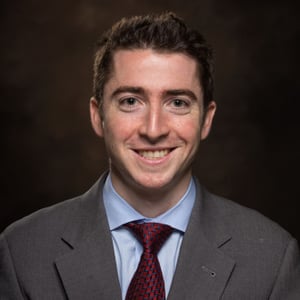
Associate Professor, Northern Illinois University
Evan Bernick joined the NIU Law faculty in 2021. He teaches courses in constitutional law, criminal law, criminal procedure, administrative law and legislation.
From 2020 to 2021, Professor Bernick was a visiting professor at the Georgetown University Law Center and the executive director of the Georgetown Center for the Constitution. Before that, he served as a clerk to Judge Diane S. Sykes of the United States Court of Appeals for the Seventh Circuit. From April 2017 to April 2019, he was a visiting lecturer at Georgetown and a resident fellow of the Center for the Constitution.
His scholarship covers a range of topics, from constitutional law, to philosophy of law, to social movements, to law enforcement. He has published with the Georgetown Law Journal, the Notre Dame Law Review, the William and Mary Law Review and the George Mason Law Review, among other journals. His book, The Original Meaning of the Fourteenth Amendment: Its Letter and Spirit (2021), with Randy E. Barnett, was published by Harvard University Press under its Belknap imprint "for books of long-lasting importance, superior in scholarship and physical production, chosen whether or not they might be profitable."
Professor Bernick received his bachelor's degree in 2008 from the University of Chicago, where he studied philosophy and graduated with honors. He received his juris doctorate in 2011 from the University of Chicago Law School.
Mizuho Financial Group Professor of Finance, Harvard Business Sc, Harvard Law School
Mihir A. Desai is the Mizuho Financial Group Professor of Finance at Harvard Business School and a Professor of Law at Harvard Law School. He received his Ph.D. in political economy from Harvard University; his MBA as a Baker Scholar from Harvard Business School; and a bachelor's degree in history and economics from Brown University. In 1994, he was a Fulbright Scholar to India.
Professor Desai's areas of expertise include tax policy, international finance, and corporate finance. His academic publications have appeared in leading economics, finance, and law journals. His work has emphasized the appropriate design of tax policy in a globalized setting, the links between corporate governance and taxation, and the internal capital markets of multinational firms. His research has been cited in The Economist, BusinessWeek, The New York Times, and several other publications. He is a Research Associate in the National Bureau of Economic Research's Public Economics and Corporate Finance Programs, and served as the co-director of the NBER's India program.
His general interest publications include opinion pieces on varied topics, including tax policy and the effects of globalization on domestic welfare, in The Washington Post, The Wall Street Journal, Tax Notes and The New York Times. He has also written for practitioners in the Harvard Business Review on the role of the Global CFO, on how to reform the U.S. tax system, and how changing incentive systems have contributed to the degradation of American competitiveness. He has testified several times to Congressional bodies, including most recently to the Senate Finance Committee on corporate tax reform and inversions.
Professor Desai has taught extensively as an award-winning teacher at HBS and at Harvard University. As a second-year professor teaching finance in the required curriculum, he received the Student Association Award for teaching excellence from the HBS Class of 2001. He subsequently built a second-year elective on International Financial Management, and his many cases on international finance are collected in a casebook published by John Wiley and are taught around the world. Since 1999, he has co-taught Public Economics (EC 1410) at Harvard College. He has also taught seminars and classes on tax policy at Harvard Law School, NYU Law School, and Columbia Law School. Most recently, Professor Desai has been active in delivering various executive education programs at HBS, including the General Managers Program (GMP), on campus and around the world. In 2011, Professor Desai launched, with Professor Joe Lassiter, the first offering at HBS for Harvard undergraduates, Innovation and Entrepreneurship, that is also included as part of the General Education curriculum at Harvard College. In the fall of 2014, Professor Desai began teaching Taxation at Harvard Law School.
From 2008 to 2011, Professor Desai led HBS's doctoral programs, which include the DBA and joint programs with the Graduate School of Arts and Sciences. In that role, he led the restructuring of various programs and initiated a terminal master's program. From 2010 to 2014, Professor Desai was the Senior Associate Dean for Planning and University Affairs, where he was part of the senior management team of the Business School focused on integration with the rest of the University. Specifically, he has launched a program for Harvard undergraduates to collaborate on research with HBS professors (PRIMO), led the course for undergraduates described above, helped launch the Harvard Innovation Lab, worked on campus planning efforts including the design of Tata Hall and served on the newly created Harvard Libraries Board.
His professional experiences include working at CS First Boston (1989-1991), McKinsey & Co. (1992), and advising a number of firms and governmental organizations. He is also on the Advisory Board of the International Tax Policy Forum and the Centre for Business Taxation at Oxford University.
Senior Lecturer on Law, Harvard Law School
Stephen E. Shay is a Senior Lecturer at Harvard Law School.
Before joining the Harvard Law School faculty as a Professor of Practice in 2011, Mr. Shay was Deputy Assistant Secretary for International Tax Affairs in the United States Department of the Treasury. Prior to re-joining the Treasury Department in 2009, Mr. Shay was a tax partner for 22 years with Ropes & Gray, LLP. Mr. Shay served in the Office of International Tax Counsel at the Department of the Treasury, including as International Tax Counsel, from 1982 to 1987, during which Mr. Shay actively participated in the development and enactment of international provisions in the Tax Reform Act of 1986.
Mr. Shay has published scholarly and practice articles relating to international taxation, and testified for law reform before Congressional tax-writing committees. He has had extensive practice experience in the international tax area and while in active practice was recognized as a leading practitioner in Chambers Global: The World's Leading Lawyers, Chambers USA: America's Leading Lawyers, The Best Lawyers in America, Euromoney's Guide to The World's Leading Tax Advisers and Euromoney's, Guide to The Best of the Best. Mr. Shay discloses certain related interests and activities not connected with his position at Harvard Law School on the Harvard Law School website.
Mr. Shay is President of the American Tax Policy Institute Board of Trustees and is the IBFD Professor in Residence for 2015. Mr. Shay serves on the Executive Committee of the New York State Bar Association Tax Section and has been active in the American Bar Association Tax Section as a Council Director and Chair of the Committee on Foreign Activities of U.S. Taxpayers, in the American Law Institute as an Associate Reporter and in the Taxes Committee of the International Bar Association. Mr. Shay is a 1972 graduate of Wesleyan University, and he earned his J.D. and his M.B.A. from Columbia University in 1976.
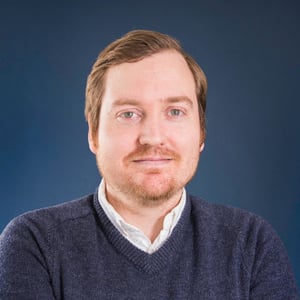
Vice President of Law & Policy, Property and Environment Research Center
Jonathan Wood is vice president of law and policy at the Property and Environment Research Center (PERC). An attorney, Jonathan has litigated environmental and property-rights cases in the Supreme Court of the United States, federal and state appellate courts, and trial courts across the country. His writing has appeared in the Wall Street Journal, Washington Post, National Review, Reason, and other outlets. And his research has been published in journals such as Environmental Law Reporter, Yale Journal on Regulation Notice & Comment, Pace Environmental Law Review, and California Western Law Review.
Prior to coming to PERC, Jonathan was a senior attorney at Pacific Legal Foundation, where he litigated cases concerning the Endangered Species Act, Clean Water Act, and other federal environmental laws. He was co-counsel for forest landowners in Weyerhaeuser Co. v. U.S. Fish and Wildlife Service, in which the Supreme Court ruled unanimously that private land could not be arbitrarily regulated as critical habitat under the ESA. He also led a successful effort to reform regulation of threatened species to better align the incentives of private landowners with the interests of rare species.
Jonathan has testified before several congressional committees on wildlife conservation and endangered species topics. He has also appeared on national television and radio, including NPR’s All Things Considered, C-Span’s Washington Journal, Stossel, Fox News, and Hill.TV.
Jonathan has a law degree from the New York University School of Law, a masters degree in economic policy from the London School of Economics, and a bachelor’s degree in economics from the University of Texas. He is on the executive committee for the Federalist Society’s Environmental Law and Property Rights Practice Group and a steering committee member for the Environmental Law Institute’s Emerging Leaders Initiative.

Topics
Turning back the leviathan of the administrative state
Federalist Society members Will Haun and David McIntosh write for the Washington Examiner: There are...
Isn't It Time We Stopped Trusting Judges--What Would the Framers Advise?
IrvineTopics
Supreme Court Puts Brakes on EPA Effort to "Aggressively Transform" Domestic Energy Industry
It is no secret that climate change policy has been at the top of the...
Intellectual Property and First Principles
Hosted by The Federalist Society's Intellectual Property Practice Group and The Cato Institute's Center for Constitutional Studies
Washington, DCIs the Long Arm of the Law Shrinking? Geographic Boundaries for the Approval of Wiretaps and Bugs and the Shifting Jurisdictional Reach of Federal Judges to Authorize Electronic Surveillance
Mike Hurst
Recent court decisions from around the country are raising serious questions as to the potential...
Book Review: The Right to Try
Evan D. Bernick
Note from the Editor: This book review discusses the controversial concept of the constitutional “right...
Corporate Inversions: Tax Dodge, or Symptom of the Tax Code? - Podcast
Mihir A. Desai, Stephen E. Shay
Corporate inversions are transactions, such as mergers or acquisitions, that involve a U.S. and foreign...
Corporate Inversions: Tax Dodge, or Symptom of the Tax Code?
TeleforumPeople for the Ethical Treatment of Property Owners v. U.S. Fish and Wildlife Service: Did Gonzalez v. Raich Eviscerate All Constitutional Limits on Federal Power?
Jonathan Wood
Note from the Editor: This article discusses an ongoing case questioning the constitutionality of the...
Topics
Motives, Perception, and the Right to Assemble
Heffernan v. City of Paterson involves a New Jersey police officer who was demoted after...