

Partner, Schaerr | Jaffe LLP
Erik Jaffe has been involved in appeals on a broad range of legal issues, including First Amendment challenges to campaign finance reform, Commerce Clause challenges to Health Care Reform and other federal legislation, Equal Protection Clause challenges to affirmative action in education, First Amendment challenges to school vouchers, Fifth Amendment challenges to takings of property, Second Amendment challenges to restrictions on gun ownership, and a wide variety of cases involving patents, copyrights, ERISA, securities fraud, federal preemption, environmental regulation, and other state and federal constitutional and statutory matters. He has represented businesses and non-profit groups, Judges, Senators, former government officials, Nobel Prize winners, and a broad cross-section of private individuals. Mr. Jaffe has been involved in over 120 Supreme Court matters, including filing over 30 cert. petitions, representing half-a-dozen parties on the merits, and filing over 70 amicus briefs at both the cert. and merits stages.
A 1990 graduate of the Columbia University School of Law, Mr. Jaffe was a law clerk to Judge Douglas H. Ginsburg of the United States Court of Appeals for the District of Columbia Circuit from 1990 to 1991. Following that clerkship he spent five years in litigation practice with the Washington, D.C. law firm of Williams & Connolly. In the summer of 1996 he left Williams & Connolly to clerk for Supreme Court Justice Clarence Thomas. At the end of that clerkship he started his own practice, and he was a sole practitioner from 1997 to 2018. He joined the firm of Schaerr | Jaffe LLP in 2018.

Partner, Holtzman Vogel Josefiak Torchinsky PLLC
Matt Petersen is a former Chairman of the Federal Election Commission (FEC) with two decades of high-level legal experience in political and administrative law. Matt—who also previously served in senior staff positions in both houses of Congress—is recognized nationally for his expertise in campaign finance, elections, lobbying, free speech, and government ethics.
Matt was nominated to the FEC by President George W. Bush in 2008 and served as its Chairman in 2010 and 2016 and its Vice Chairman in 2009, 2015, and 2019. His FEC tenure coincided with several court cases that significantly changed campaign finance law, most notably the Supreme Court’s opinion in Citizens United v. FEC. Consequently, Matt played a large role in shaping the post-Citizens United legal framework governing Super PACs (and candidate involvement in their fundraising activities) and corporate and union political speech.
Matt was also a strong advocate for protecting the Internet as a tool for political speech and democratic participation and ensuring that emerging technologies can continue to flourish without being stymied by unnecessary regulation. Finally, Matt helped draft new procedures affording enhanced rights and protections for individuals and organizations involved in FEC enforcement matters, audits, and advisory opinion requests.
Prior to joining the FEC, Matt served as Republican chief counsel to the Senate Committee on Rules and Administration (2005-08) and as counsel to the U.S. House of Representatives Committee on House Administration (2002-05). He was extensively involved in the crafting of the Help America Vote Act of 2002—the sweeping election reform bill passed in the wake of the 2000 presidential recount—and was chief adviser to the Republican floor manager during the Senate debate on the Honest Leadership and Open Government Act of 2007, the most recent comprehensive revision of federal lobbying and government ethics laws.
Matt received his J.D. in 1999 from the University of Virginia School of Law, where he was a member of the Virginia Law Review, and graduated magna cum laude with a B.A. in philosophy from Brigham Young University in 1996. He also received an A.S. with high honors from Utah Valley University.
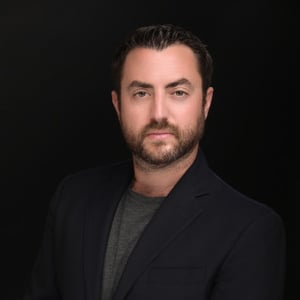
Newsweek Senior Editor-at-Large, Syndicated Columnist, Host of "The Josh Hammer Show," Article III Project Senior Counsel, Newsweek, Salem Media, Article III Project, David Horowitz Freedom Center
Josh Hammer is the senior editor-at-large of Newsweek and host of "The Josh Hammer Show," a podcast, a syndicated radio show, and TV program on Salem News Channel. A syndicated columnist through Creators Syndicate, Josh is a frequent pundit and essayist on political, legal, and cultural issues. He is also senior counsel for the Article III Project and Internet Accountability Project, as well as a Shillman Fellow with the David Horowitz Freedom Center and a fellow with the Palm Beach Freedom Institute.
An outspoken conservative, Josh opines on conservative intellectual trends, contemporary domestic and foreign policy debates, constitutional and legal issues, and the intersection of law, politics and culture. He has been published by many leading outlets, including the Los Angeles Times, the New York Post, Daily Mail, Newsweek, the Claremont Review of Books, National Affairs, American Affairs, The New Criterion, The National Interest, National Review, RealClearPolitics, First Things, City Journal, Public Discourse, Law & Liberty, Tablet Magazine, Deseret Magazine, Compact Magazine, Chronicles Magazine, The Spectator, The American Mind, The American Conservative, The European Conservative, American Greatness, American Compass, The Federalist, Blaze Media, TomKlingenstein.com, Townhall, The Daily Wire, The Daily Signal, The Daily Caller, The Epoch Times, Anchoring Truths, Fortune, Fox Business, The Jerusalem Post, The Times of Israel, The Forward, Jewish Telegraphic Agency and the Jewish Journal. He has also had legal scholarship published by the Harvard Journal of Law & Public Policy and the University of St. Thomas Law Journal.
Josh is a college campus speaker through Young America's Foundation and the Intercollegiate Studies Institute, and a law school campus speaker through the Federalist Society. Prior to Newsweek and The Daily Wire, where he was an editor, Josh worked at Kirkland & Ellis LLP and clerked for the Hon. James C. Ho on the U.S. Court of Appeals for the Fifth Circuit. Josh has also served as a John Marshall Fellow with the Claremont Institute and as a Fellow with the James Wilson Institute. He is the former host of "America on Trial with Josh Hammer," a one-season daily podcast with The First that covered the unique legal issues surrounding the 2024 presidential election.
Josh graduated from Duke University, where he majored in economics, and from the University of Chicago Law School. He lives in Florida, but remains an active member of the State Bar of Texas.
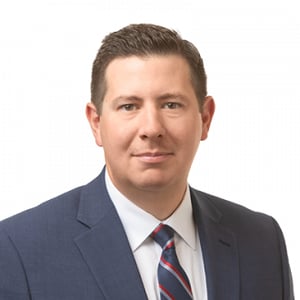
Senior Associate, Husch Blackwell
Dave guides clients through a wide range of complex public law litigation in state and federal courts.
Clients appreciate Dave’s experience serving in Nebraska’s Attorney General’s Office as Assistant Attorney General and as the state’s first Deputy Solicitor General; in the Civil Litigation Bureau; and in the Agriculture, Environment and Natural Resources Bureau. In these roles, he routinely handled high-profile matters at the trial and appellate levels in both state and federal courts including:
Dave maintains a robust appellate practice, counseling clients through all stages of appeals including briefing and oral argument. He has argued more than 20 civil appeals before the U.S. Court of Appeals for the Eighth Circuit, the Nebraska Supreme Court and the Nebraska Court of Appeals, obtaining favorable results in the overwhelming majority of those cases. He has a unique perspective on the importance of strategic amicus curiae support in the appellate process, having advised the Nebraska Attorney General on the state’s amicus participation and authorship in courts across the country.
He understands how regulatory agencies think – having helped develop and implement policy and guide governmental regulatory activities – and offers this insight to clients as they proactively approach compliance or navigate investigations.
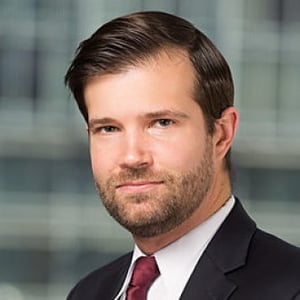
Research Fellow, CATO Institute
Jay Schweikert is a research fellow with the Cato Institute’s Project on Criminal Justice. His research and advocacy focuses on accountability for prosecutors and law enforcement, plea bargaining, Sixth Amendment trial rights, and the provision and structuring of indigent defense.
Before joining Cato, Schweikert spent four years doing civil and criminal litigation at Williams & Connolly LLP. He holds a JD from Harvard Law School, where he was an articles editor for the Harvard Law Review, and chaired the Harvard Federalist Society’s student colloquium program. Following law school, Schweikert clerked for Judge Diane Sykes of the U.S. Court of Appeals for the Seventh Circuit and Judge Laurence Silberman of the U.S. Court of Appeals for the DC Circuit.
He holds a BA in political science and economics from Yale University.
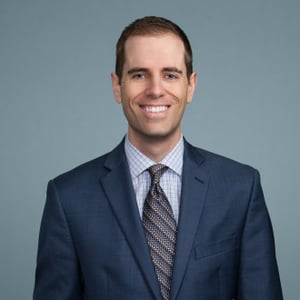
Senior Associate, Hilgers Graben PLLC
Trent represents sophisticated clients in civil litigation and appeals. His experience includes taking fact- and expert-witness depositions, assisting in fact development, document production, and witness preparation, and drafting and responding to a range of dispositive and non-dispositive motions. Besides his experience as an associate at two renowned law firms in Denver and Washington, D.C., Trent was a law clerk to The Honorable D. Brooks Smith on the U.S. Court of Appeals for the Third Circuit.
Trent lives in Lincoln with his wife and three children and enjoys cycling, trap shooting, and reading (especially American frontier novels).
Wayne A. Abernathy, Wild Bells
Wayne A. Abernathy is a former U.S. Treasury Assistant Secretary for Financial Institutions under President George W. Bush, receiving the Alexander Hamilton Award in recognition of his service. In that office he was also a member of the Board of Directors of the Securities Investor Protection Corporation. Prior to his work at the Treasury, Mr. Abernathy served as Staff Director of the Senate Banking Committee, under Chairman Phil Gramm.
Following his service at the Treasury, Mr. Abernathy worked for 15 years on the staff of the American Bankers Association, as Executive Vice President for Financial Institutions Policy and Regulatory Affairs.
Previous experience with the Senate Banking Committee includes serving as Staff Director of the Subcommittee on Securities during 1995-1998. From 1989 until 1994, Mr. Abernathy was a Republican economist for the committee. He previously worked as a senior legislative assistant for Senator Gramm during 1987-1989 and as an economist for the Banking Committee’s Subcommittee on International Finance and Monetary Policy during 1981-1986, under Chairman Jake Garn.
Mr. Abernathy earned his bachelor’s degree in International Studies from The Johns Hopkins University in 1978. In 1980, he received a master’s degree in International Studies from the School of Advanced International Studies of The Johns Hopkins University.

Improving Congressional Oversight
Early this year, the House Modernization Committee held a hearing focused on restoring the capacity...
Federalization of Elections
Election Law Teleforum Series
Teleforum“Better Than Nothing”: Supreme Court in Mazars Devises a New Four-Factor Test for Congressional Subpoenas of a President’s Personal Documents
On July 9, 2020, the Supreme Court delivered its long-awaited opinions in two cases concerning...
Where Congress Needs More Centralization, Not Less
Among the critiques often levied against the current House of Representatives is that too much...
Topics
A Legacy Communications Act Requirement Hamstrings Rural Broadband Deployment
The Federal Communications Commission relies, in part, upon what's called the Universal Service Fund (USF)...
Qualified Immunity: A Debate
Nebraska Lawyers Chapter
The Resolution of Too Big to Fail
Wayne A. Abernathy
Note from the Editor: The Federalist Society takes no positions on particular legal and public...
Rebuilding Congress’ Policy Capacity
Earlier this month, the Select Committee on the Modernization of Congress held a hearing on...
Topics
Getting Broadband Subsidies Right This Time
With the COVID-19 pandemic drawing increased attention to the nation’s Digital Divide, many lawmakers want...
Announcing the Modernization of Congress Series
On January 4, 2019, the U.S. House of Representatives established the Select Committee on the Modernization...