




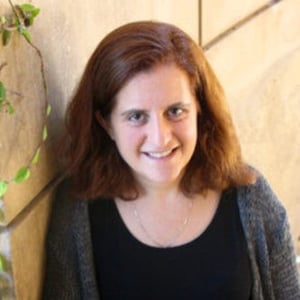
At Stanford Law School, O’Connell teaches Administrative Law, Advanced Administrative Law, and Constitutional Law. The class of 2020 chose her to receive the Hurlbut Award, which is given to one professor “who strives to make teaching an art.” She co-chaired the steering committee for Stanford University’s Faculty Women’s Forum, which works to enable all women faculty to thrive, from August 2022 to January 2024 and jointly conducted two surveys on COVID’s impacts on faculty for FWF. Prior to joining Stanford University in 2018, O’Connell was the George Johnson Professor of Law at the University of California, Berkeley. While there, she received the Distinguished Teaching Award (the campus’s most prestigious honor for teaching) in 2016 and Berkeley Law’s Rutter Award for Teaching Distinction in 2012. From April 2013 to July 2015, she served as associate dean for faculty development and research under three different deans. In 2013-2014, O’Connell was co-president of the Society for Empirical Legal Studies (co-organizing the 2014 Conference on Empirical Legal Studies).
Before joining the Berkeley Law faculty in 2004, O’Connell clerked for Justice Ruth Bader Ginsburg of the U.S. Supreme Court during the October 2003 term. From 2001 to 2003, she was a trial attorney for the Federal Programs Branch of the U.S. Department of Justice’s Civil Division, receiving commendations for her work. She clerked for Judge Stephen F. Williams of the U.S. Court of Appeals for the D.C. Circuit from 2000 to 2001. A Truman Scholar, O’Connell worked for a number of federal agencies in earlier years, including the Department of Defense (Offices of the General Counsel and Inspector General), Federal Trade Commission (Bureau of Competition), Department of Justice (Office of Legal Counsel), and U.S. Army (RDE). She is a member of the New York bar and served as a volunteer for the Biden-Harris Campaign’s policy team.


Plenary Session 3: From Sea to Shining Sea—Lawfare and Hot Topics in State Legislatures
Featuring: Hon. Derek Brown, Attorney General, State of Utah Mr. O.H. Skinner, Executive Director, Alliance...
FACE Act
Matthew P. Cavedon, Jeremy Dys, Erin M. Hawley, Casey Mattox
Is the FACE Act being enforced as Congress originally intended or has its selected application...
From Kyiv to the Capitol: How Nations Choose Their Judges
Duke Student Chapter
Durham, NCLegislative or Executive? The Curious Case of the Library of Congress
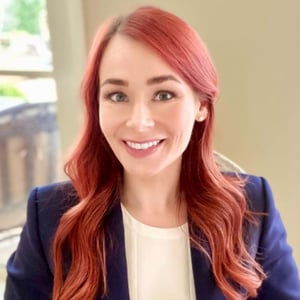
Anne Joseph O'Connell, Robert J. Rando, Zvi Rosen, Devin Watkins
The recent dismissal of the Librarian of Congress and the Register of Copyrights by President...
Disparate-Impact Liability: Unfounded, Unconstitutional, & Not Long For This World
Dan Morenoff
For more than fifty years—ever since the Supreme Court decided Griggs v. Duke Power Co.[1]—almost...
Topics
When AI Defames: Global Precedents and the Stakes in Starbuck v. Meta
The rapid rise of generative artificial intelligence (AI) has sparked concerns about its potential to...
Daniel Webster Debate Series: Is It Time for DC Statehood?
The Federalist Society's Georgetown Law Chapter'sDaniel Webster Debate Series presents Daniel Webster Debate Series:Is...
The Weaponization of DOJ?
Brendan Ballou, Stephen James Demanovich, John F. Lauro
High-profile politically adjacent actions (including prosecutions, pardons, & dismissals) from both the current and past...
Panel 4: Modern Lawfare and the American Democracy
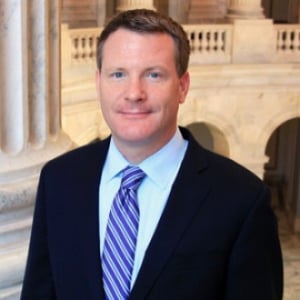
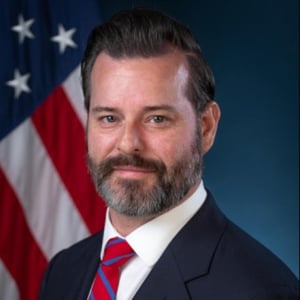
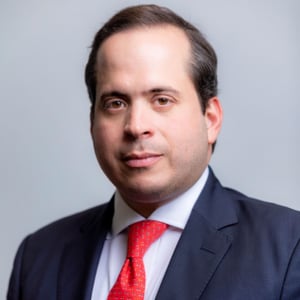
Michael D. Berry, Anna Bower, Mike Davis, Jason A. Reding Quiñones, Jesus Manuel Suarez
The courtroom has emerged as the new battleground for political wars. Increasingly, political candidates are...
Topics
Does DC Have Standing to Sue the Federal Government? Probably Not.
If a house divided against itself cannot stand, then why would federal courts allow the...