

Head of AI Policy, Abundance Institute
Neil Chilson is the Head of AI Policy at the Abundance Institute. Prior to this position, he served as a Senior Research Fellow at the Center for Growth and Opportunity. Chilson is a lawyer, computer scientist, and author of the book “Getting Out of Control: Emergent Leadership in a Complex World.”
Chilson was previously the senior research fellow for Technology and Innovation at Stand Together, where he guided efforts to understand and promote the legal and cultural paradigms that best enable people to discover, innovate, and improve all our lives.
Before Stand Together, Chilson was the Chief Technologist at the Federal Trade Commission, where he focused on the economics of privacy and blockchain-related issues. Previously, he was an attorney advisor to Acting FTC Chairman Maureen K. Ohlhausen. In both roles he advised Chairman Ohlhausen and worked with staff on nearly every major technology-related case, report, workshop, or other FTC proceeding since January 2014. Neil joined the FTC from telecom firm Wilkinson Barker Knauer. Neil is frequently quoted by the press and his work has appeared in numerous news outlets, including The Wall Street Journal, The Washington Post, USAToday, and Newsweek. Neil has a J.D. from The George Washington Law School, a M.S. in computer science from University of Illinois, Urbana-Champaign, and a B.S. in computer science from Harding University.
Senior Fellow, American Enterprise Institute
Zack Cooper is a senior fellow at the American Enterprise Institute, where he studies US strategy in Asia, including alliance dynamics and US-China competition. He also teaches at Princeton University, serves as chair of the board of the Open Technology Fund, and co-hosts the Net Assessment podcast.
Before joining AEI, Dr. Cooper was the senior fellow for Asian security at the Center for Strategic and International Studies. He previously worked as codirector of the Alliance for Securing Democracy and senior fellow at the German Marshall Fund of the United States and research fellow at the Center for Strategic and Budgetary Assessments. He also served on staff at the National Security Council and in the Office of the Secretary of Defense.
Dr. Cooper is the author of Tides of Fortune: The Rise and Decline of Great Militaries from Yale University Press. He has also co-authored books, reports, and articles on US strategy and alliances in Asia. His writing has appeared in academic journals and popular press, including International Security, Security Studies, Foreign Affairs, the New York Times, the Washington Post, and the Wall Street Journal, among other outlets. Dr. Cooper graduated from Princeton University with a PhD and an MA in security studies and an MPA in international relations. He received a BA in public policy from Stanford University.

AI Innovation and Law Fellow, University of Texas School of Law
Kevin Frazier is an AI Innovation and Law Fellow with University of Texas School of Law.
Senior Adviser (Non-resident), CSIS
James Lewis writes on technology and strategy at the Center for Strategic and International Studies (CSIS). Before joining CSIS, he was a diplomat and a member of the Senior Executive Service. Lewis has a track record of being among the first to identify new tech and security issues and devise polices to address them. He developed groundbreaking policies on cybersecurity, remote sensing, encryption, spectrum management, and high-tech exports to China, including 5G, software, and semiconductors. He also helped create the Wassenaar Arrangement. Lewis was a senior adviser for four UN Groups of Governmental Experts on Information Security, and his work on norms to build stability in cyberspace is foundational. He leads a long-running track 2 dialogue with the China Institutes of Contemporary International Relations. His current work looks at how countries innovate and at digitalization and its political, economic, and security effects. Early in his career, Lewis was a political adviser to two combatant commanders. Lewis has authored numerous publications since coming to CSIS (see the full list here). He is frequently quoted in the media, has served on several federal advisory committees, and has testified numerous times before Congress. He received his PhD from the University of Chicago.
Senior Policy Director, Americans for Responsible Innovation
President and Executive Director, Electronic Privacy Information Center
Marc Rotenberg is President and Executive Director of the Electronic Privacy Information Center (EPIC) in Washington, DC. He teaches information privacy law at Georgetown University Law Center and frequently testifies before Congress on emerging privacy and civil liberties issues. He testified before the 9-11 Commission on "Security and Liberty: Protecting Privacy, Preventing Terrorism." He has served on several national and international advisory panels, including the expert panels on Cryptography Policy and Computer Security for the OECD, the Legal Experts on Cyberspace Law for UNESCO, and the Countering Spam program of the ITU. He chairs the ABA Committee on Privacy and Information Protection. He is a founding board member and former Chair of the Public Interest Registry, which manages the .ORG domain. He is editor of "The Privacy Law Sourcebook," and co-editor of "Information Privacy Law" (Aspen Publishing 2006) and "Litigation Under the Federal Open Government Laws" (EPIC 2010). He is a graduate of Harvard College and Stanford Law School. He served as Counsel to Senator Patrick J. Leahy on the Senate Judiciary Committee after graduation from law school. He is the recipient of several awards, including the World Technology Award in Law, the American Lawyer Award for Top Lawyers Under 45, the Norbert Weiner Award for Social and Professional Responsibility, and the Vicennial medal from Georgetown University.
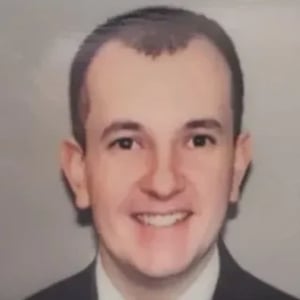
Judicial Law Clerk, 31st Circuit Court of Virginia
Peter is a legal professional, receiving his J.D. in 2024 from the Antonin Scalia Law School at George Mason University. He has experience in both the public and private sectors, having worked as a crime analyst for Memphis Police Department, and a geographic information systems analyst for Geomni, a private aerial imaging firm. He also has experience in historical and geopolitical research and analysis, including a peer-reviewed essay on U.S.-Pakistani relations during the Soviet-Afghan War, published in BYU's journal for undergraduate historical research. He is an American patriot and wants to use his analytical skill to serve his nation and community.
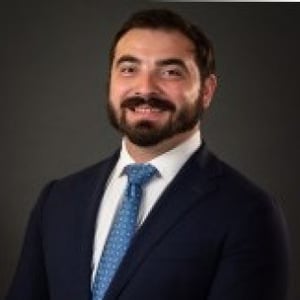
Honor Law Graduate Attorney, U.S. Nuclear Regulatory Commission
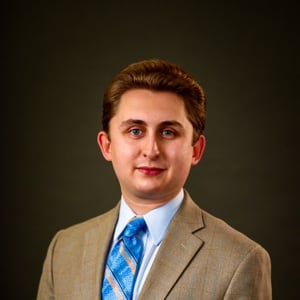
Judicial Law Clerk, U.S. District Court for the Eastern District of Texas
Leo O'Malley graduated, with honors, from the University of Notre Dame School of Law, where he served as a Showcase Team Oralist on the Moot Court Board and the Director of the 2022-23 Religious Freedom Tournament. He recently completed a clerkship with Justice Janine Kern of the South Dakota Supreme Court and is currently clerking on the United States District Court for the Eastern District of Texas. He will go on to clerk for the United States Court of Appeals for the Third Circuit during the 2027-28 term.
A National Merit Scholarship Recipient, Leo previously graduated summa cum laude from Wheaton College, IL in 2020, with a BS in Applied Mathematics and a BM in Organ Performance. While in high school, Leo performed on classical violin at a competitive level, being recognized at numerous local and national music competitions and participating in the Chicago Youth Symphony Orchestras and the Midwest Young Artists Conservatory. In his free time, Leo enjoys reading fantasy novels and experiencing historical architecture. His passion lies in finding innovative and pragmatic solutions to the political, economic, and societal issues facing America in the 21st Century.
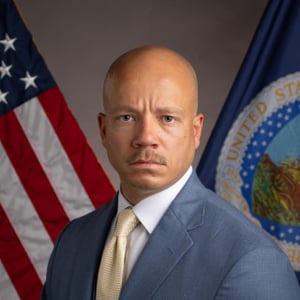
Assistant Secretary for Civil Rights, U.S. Department of Agriculture
Devon Westhill is the Assistant Secretary for Civil Rights at the U.S. Department of Agriculture. The U.S. Senate confirmed President Donald Trump’s nomination of Westhill on October 7, 2025.
Westhill returns to the USDA where he previously headed the civil rights office as Deputy Assistant Secretary in President Trump’s first term. His previous government appointments also include service at the U.S. Department of Labor, liaison to the Administrative Conference of the U.S., and liaison to the White House Initiative on Historically Black Colleges and Universities. Prior to returning to government service, Westhill was President and General Counsel of a nonprofit civil rights organization.
Westhill has testified on civil rights matters before Congress, federal agencies, and as an expert witness in federal court. He has spoken hundreds of times at college campuses, conferences, and on radio and TV programs, and he is frequently quoted in print publications, and his writing has appeared in numerous national outlets. A U.S. Navy veteran, Westhill earned his BA from the University of North Carolina at Chapel Hill and his JD from the University of Florida.
Judge, U.S. District Court, Eastern and Western Districts of Missouri
Josh Divine was most recently the Solicitor General of Missouri, where he oversaw the office's appellate and special litigation divisions. As Solicitor General, Mr. Divine led Missouri's trial and appellate teams to some of its most significant victories. Mr. Divine was lead counsel in blocking $700 billion in student loan bailouts attempted by the federal government. He was lead counsel in obtaining a $25 billion judgment against China for antitrust violations. And he was lead counsel in successfully defending the Missouri law that prohibits gender transition interventions in minors, making Missouri the only state in the nation to prevail at trial against an equal protection challenge to one of these laws. In addition, Mr. Divine's work at the trial court in Missouri v. Biden (restyled Murthy v. Missouri) helped expose systemic violations of the First Amendment by the federal government, which the trial court found was unconstitutionally pressuring social media companies to suppress millions of free speech posts.
Before serving as Solicitor General, Mr. Divine was Chief Counsel to U.S. Senator Josh Hawley, where he oversaw all legal issues, managed matters related to the Judiciary Committee, and developed tech policy. Mr. Divine clerked on the Supreme Court for Justice Thomas and on the Eleventh Circuit for Judge William Pryor. He received a J.D. from Yale Law School and a Bachelor of Science degree in mathematics from the University of Northern Colorado. His recent legal scholarship has appeared in the Virginia Law Review and the Hastings Law Journal.
Partner, Graves Garrett Greim LLC
Edward “Eddie” Greim focuses his practice on complex commercial litigation, free speech and election law, and internal investigations and whistleblower claims. He has been recognized for his successful representation of businesses and individuals in commercial litigation while also being named a “go-to” lawyer on policy and constitutional issues.
Eddie was named a Constitutional and Election Law Trailblazer by the National Law Journal in 2020. His free speech and election law practice has included numerous constitutional challenges to election and campaign finance laws; representation of clients in state and federal ethics and campaign finance enforcement actions and investigations; initiative petition drafting and litigation; litigation and advice regarding First Amendment protections for petition circulation; representation of not-for-profit clients before state regulators; litigation of state and federal redistricting issues; and advice on campaign and election law compliance.
Eddie complements his trial work in complex, high-profile commercial and constitutional cases with oral advocacy and briefing in important appeals. Recognized as a Missouri Lawyers Media POWER 30 Appellate Attorney in 2021, he has argued before the Missouri and Kansas supreme courts multiple times, other state appellate courts across the country, and before the Sixth, Seventh, Eighth, and Tenth U.S. Courts of Appeals.
Eddie’s notable work for clients includes:
Recovering substantial compensation and injunctive relief for plaintiffs, in complex multiyear litigation, as lead counsel in the first and only nationwide class action certified against the Internal Revenue Service for violating taxpayer protection statutes when it targeted hundreds of groups based on their political viewpoints.
Successful First Amendment challenge to Missouri’s 2016 campaign finance restrictions.
Successful challenge to a vast, multiyear, secret criminal investigation into Wisconsin political groups and nonprofits, and follow-up challenge to expose role of state ethics board which secretly aided the investigation and was later dissolved by the legislature.
U.S. Supreme Court amicus brief for the National Republican Redistricting Trust in the 2019 Rucho litigation, and federal and state redistricting litigation and advice since 2011.
Challenges under the First Amendment in federal court, and in briefing to the Michigan Supreme Court on state constitutional grounds, to unprecedented emergency powers claimed by Michigan Governor in 2020.
Representation of numerous public officials and private citizens who are subject to “lawfare” attacks based on their political viewpoints or policy objectives.
Oversight of multiple internal investigations.
Eddie received his law degree from Harvard Law School in 2002, where he taught on the Board of Student Advisers, received the Dean’s Award for Leadership, and served as President of the Harvard Catholic Law Students Association. He received two bachelor’s degrees, summa cum laude, in economics and political science from the University of Missouri.
A native of Excelsior Springs, Missouri, Eddie lives in Kansas City with his family. He enjoys Missouri and military history. On many weekends, he can be found with his wife and daughters exploring sites of local interest. He enjoys reading and debating and has given presentations or organized discussions at numerous gatherings, formal and informal, of professional and personal interest.
Raymond & Miriam Ehrlich Eminent Scholar Chair in US Constitutional Law, University of Florida Levin College of Law
Lyrissa Lidsky is the Raymond & Miriam Ehrlich Eminent Scholar Chair in U.S. Constitutional Law at Florida Law. She previously served as Dean of the University of Missouri School of Law from 2017-2022. The focus of her research and teaching is the intersection of Tort Law and the First Amendment, with an emphasis on defamation and free speech issues in social media. Missouri Lawyers Media named Lidsky its 2020 Woman of the Year based on her scholarship, passion for law, mentorship of students, and engagement of constituencies supporting the school of law.
Before becoming dean at Missouri, Lidsky served in a variety of leadership roles at UF Law, including as associate dean for graduate and international programs and associate dean for faculty development. She also held the Stephen C. O’Connell Chair in Law and received a number of teaching awards during her 23-year tenure at UF, including student-selected awards such as Teacher of the Year (twice) and Faculty Graduation Speaker (three times), as well as Teacher of the Year, which was selected by a faculty committee.
Lidsky is co-reporter on the Restatement of Defamation and Privacy, which is now in progress. She is co-author of a leading Media Law casebook, a First Amendment casebook, and a reference book on press freedom and has published dozens of articles, culminating in a forthcoming article in the Virginia Law Review, co-authored with Professor Christina Koningisor, called First Amendment Disequilibrium. Her work on anonymous speech has been cited by a number of state supreme courts and the highest courts of Canada and Hong Kong.
Before becoming a law professor, Lidsky served as a clerk for the Honorable Joseph T. Sneed of the United States Court of Appeals for the Ninth Circuit in San Francisco, Calif. Lidsky received her law degree from the University of Texas School of Law with high honors. She was initiated into Order of the Coif in recognition of her scholastic achievement and served as articles editor of the Texas Law Review. Before law school, she was a Fulbright Scholar at Cambridge University in England, studying medieval legal history and early development of the Common Law. She received her bachelor’s degree, summa cum laude, in English and political science from Texas A&M University.
Visiting Associate Professor of Law and Research Fellow for the Study of Objectivism
An accomplished scholar on Objectivism and privacy law, Professor Amy Peikoff has served as a faculty member at universities around the country over the past decade, teaching and writing in the areas of Contemporary Moral Problems, Contracts, Ethics, Information Privacy Law, Morality and Business, Philosophy of Law, Political Philosophy and Professional Responsibility. She served as a visiting lecturer at the University of Texas at Austin in 2003, a visiting assistant professor at the University of North Carolina at Chapel Hill in 2004, an assistant and associate professor at the U.S. Air Force Academy from 2005 to 2008, and as a visiting fellow at Chapman University School of Law from 2008 to 2012.
She joined Southwestern’s adjunct faculty in January 2013, also serving as a research fellow, and was appointed as Visiting Associate Professor and Research Fellow for the Study of Objectivism at Southwestern in July 2014. She is teaching courses in Law and Literature, Education Law and Jurisprudence Seminar. In her role as a Research Fellow, Professor Peikoff will engage in scholarly work related to the philosophy and writings of Ayn Rand. The Fellowship is funded by the Anthem Foundation for Objectivist Scholarship.
In trying to convey to her students some effective ways to approach their studies, Professor Peikoff shares what she found to be true in her own law school career. “If you care about what the law says about a particular issue, you will remember it and do better on exams,” she says. “Always try to connect what you're learning in school to things and people you value.”
Professor Peikoff’s articles have been published in a variety of scholarly journals such as Brandeis Law Journal, NYU Journal of Law & Liberty, St. John’s Law Review and Virginia Journal of Social Policy & The Law, among others. She has lectured and served as a panelist on privacy issues and individual rights at dozens of Objectivist conferences and scholarly forums around the country, including DePaul College of Law, Keck Graduate Institute, Stanford, UCLA and University of Texas at Austin, as well as the Liberty Conference in Brazil.
Professor Peikoff finds the most exciting aspect of her area of interest to be “seeing a problem and coming up with a solution that can affect something you care about.” For example, after writing about privacy issues for many years, she found her interest waning, until the 2012 Supreme Court decision in United States v. Jones inspired her to solve the problem of the "third-party doctrine" and, one year later, “Edward Snowden's revelations made that solution more relevant than ever.”
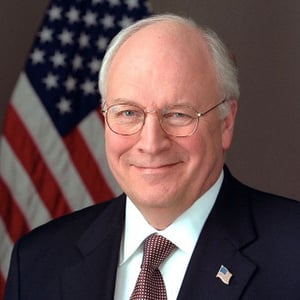
Former Vice President of the United States
Vice President Richard B. Cheney has had a distinguished career as a businessman and public servant, serving four Presidents and as an elected official. Throughout his service, Mr. Cheney served with duty, honor, and unwavering leadership, gaining him the respect of the American people during trying military times.
Mr. Cheney was born in Lincoln, Nebraska, on January 30, 1941 and grew up in Casper, Wyoming. He earned his bachelor's and master's of arts degrees from the University of Wyoming. His career in public service began in 1969 when he joined the Nixon Administration, serving in a number of positions at the Cost of Living Council, at the Office of Economic Opportunity, and within the White House.
When Gerald Ford assumed the Presidency in August 1974, Mr. Cheney served on the transition team and later as Deputy Assistant to the President. In November 1975, he was named Assistant to the President and White House Chief of Staff, a position he held throughout the remainder of the Ford Administration.
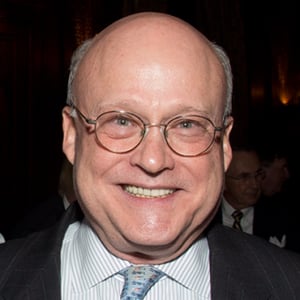
President Emeritus, Intercollegiate Studies Institute
T. Kenneth Cribb Jr. is the former president of the Intercollegiate Studies Institute. Mr. Cribb was Assistant to the President for Domestic Affairs in the Reagan administration, serving as President Reagan’s top adviser on domestic matters. Earlier in the administration he held the position of Counselor to the Attorney General. He also served as Vice Chairman of the Fulbright Foreign Scholarship Board from 1989 to 1992.
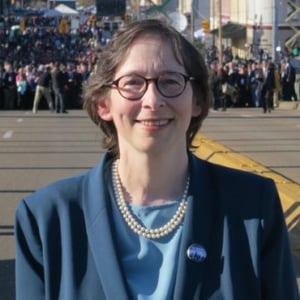
Kenneth and Harle Montgomery Professor of Public Interest Law and Co-Director, Supreme Court Litigation Clinic, Stanford Law School
A productive scholar and an award-winning teacher, Pamela S. Karlan is co-director of the school’s Supreme Court Litigation Clinic, where students litigate live cases before the Court. One of the nation’s leading experts on voting and the political process, she has served as a commissioner on the California Fair Political Practices Commission, an assistant counsel and cooperating attorney for the NAACP Legal Defense Fund, and a Deputy Assistant Attorney General in the Civil Rights Division of the U.S. Department of Justice (where she received the Attorney General’s Award for Exceptional Service – the department’s highest award for employee performance – as part of the team responsible for implementing the Supreme Court’s decision in United States v. Windsor). Professor Karlan is the co-author of leading casebooks on constitutional law, constitutional litigation, and the law of democracy, as well as numerous scholarly articles.
Before joining the Stanford Law School faculty in 1998, she was a professor of law at the University of Virginia School of Law and served as a law clerk to Justice Harry A. Blackmun of the U.S. Supreme Court and Judge Abraham D. Sofaer of the U.S. District Court for the Southern District of New York. Karlan is a member of the American Academy of Arts and Sciences, the American Academy of Appellate Lawyers, and the American Law Institute.
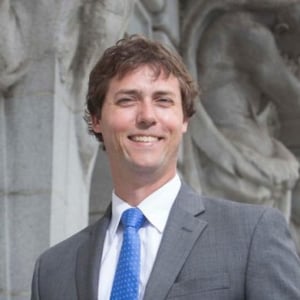
Professor of Law, The College of the Law, University of California San Francisco
Professor Zachary Price has taught at UC Law SF since 2013 and currently holds the Eucalyptus Foundation Endowed Chair. He joined UC Law SF following a fellowship at the Stanford Constitutional Law Center, and before entering academics, he served for three years as an attorney in the U.S. Justice Department’s Office of Legal Counsel. He has also worked as a litigator in private practice and clerked for Judge Catherine C. Blake of the U.S. District Court for the District of Maryland, Judge David S. Tatel of the U.S. Court of Appeals for the District of Columbia Circuit, and Justice Anthony M. Kennedy of the U.S. Supreme Court. He graduated from Harvard Law School magna cum laude and from Stanford University with honors and distinction.
Professor Zachary S. Price teaches and writes about constitutional law, administrative law, and criminal and civil law enforcement. His book Constitutional Symmetry: Judging in a Divided Republic is forthcoming with Cambridge University Press in summer 2024. His scholarly articles include “Faithful Execution in the Fifty States” in the Georgia Law Review, “Congress’s Power Over Military Offices” in the Texas Law Review, “Funding Restrictions and Separation of Powers” in the Vanderbilt Law Review, “Enforcement Discretion and Executive Duty” in the Vanderbilt Law Review, and “NAMUDNO’s Non-Existent Principle of State Equality” in the New York University Law Review Online. Professor Price has also contributed to publications including the Wall Street Journal, Washington Post, Scotusblog, Notice and Comment, Administrative and Regulatory News, Law and Liberty, Balkinization, the Supreme Court of California Blog, the State and Local Government Blog, and the Take Care Blog. In fall 2023, Professor Price was the Bruce Bromley Visiting Professor of Law at Harvard Law School.

Professor of Law, Georgetown University Law Center
Nicholas Quinn Rosenkranz teaches constitutional law and federal jurisdiction, and he writes articles for the Harvard Law Review and the Stanford Law Review.
He is currently developing a new theory of constitutional interpretation and judicial review. The first installment, entitledThe Subjects of the Constitution, was published in the Stanford Law Review in May of 2010, and it is among the most downloaded articles about constitutional interpretation, judicial review, and/or federal courts in the history of SSRN. The second installment, The Objects of the Constitution, was published in May of 2011, also in the Stanford Law Review. And the comprehensive version is forthcoming as a book by Oxford University Press.
Rosenkranz has served and advised the federal government in a variety of capacities. He clerked for Judge Frank H. Easterbrook on the U.S. Court of Appeals for the Seventh Circuit (1999-2000) and for Justice Anthony M. Kennedy at the U.S. Supreme Court (October Term 2001). He served as an Attorney-Advisor at the Office of Legal Counsel in the U.S. Department of Justice (November 2002 - July 2004). He often testifies before Congress as a constitutional expert—most recently before the House Financial Services Oversight Subcommittee, regarding the Obama Administration's use of bank settlement agreements to circumvent the Appropriations Clause. He has also filed briefs and presented oral argument before the U.S. Supreme Court. His most recent Supreme Court brief, in Los Angeles v. Patel, was cited by Justice Alito in dissent.
Rosenkranz is a member of the New York Bar and the U.S. Supreme Court Bar. He is a Senior Fellow at the Cato Institute. He serves on the Board of Directors of the Foundation for Individual Rights in Education (FIRE). He is a founding member of Heterodox Academy and a member of its Executive Committee. He also serves on the Board of Directors of the Federalist Society and as the faculty advisor to the Georgetown chapter.
Professor of Law, UCLA School of Law
Sander has been working on questions of social and economic inequality for nearly all of his career. He was born in Washington, D.C., but spent most of his childhood in small towns in northwest Indiana. After earning a B.A. in Social Studies at Harvard, Sander in 1978 joined the federal Vista program and worked for a small neighborhood housing group on Chicago's south side. While organizing tenant unions and building receiverships, he was deeply impressed with the work of the South Shore Bank, an experimental, community-development bank owned by churches and foundations. Sander secured funding from three federal agencies and, with the Woodstock Institute, completed the first detailed study of the bank. South Shore Bank was widely imitated as an instrument for community revitalization in other urban areas over the next two decades.
Sander attended graduate school at Northwestern University from 1983 to 1988, earning degrees in law (J.D., 1988) and economics (M.A. 1985, Ph.D., 1990). In his law review comment and his dissertation, Sander sought to understand why fair housing laws had seemingly produced widespread integration in some American metropolitan areas, but very little integration in most. During much of this period, Sander served on the board of the Rogers Park Tenants Committee, and worked on the election effort and subsequent transition team of Harold Washington, Chicago’s first black mayor.
In 1989, Sander joined the faculty of the UCLA School of Law. During this period, he continued his work on housing segregation, but also pursued two new interests: the reasons behind the American legal profession’s explosive growth since the mid-1960s, and the structure and effects of law school admissions policies. With Kris Knaplund, he published in 1995 the first comparative evaluation of academic support programs used in legal education. After California voters approved Propostion 209 in 1996 – banning the use of race in various government programs, including admissions at the University of California – Sander successfully argued for the adoption of class-based preferences in the law school’s admissions, and published a study on the results of this experiment in 1997.
During the 1990s, Sander was involved in several Los Angeles civic initiatives. He served as President of the Fair Housing Congress of Southern California from 1984 to 1996; founded the Fair Housing Institute in 1996, and helped the City of Los Angeles design and implement in 1997 what was, at the time, the nation's most ambitious living wage law. Sander also persuaded regional authorities to develop outreach programs that sharply increased local usage of the Earned Income Tax Credit, generating tens of millions of dollars annually for LA's poorest working families.
Sander was one of seven UCLA faculty members and staff who launched the Program in Public Interest Law and Policy, which created a distinct curriculum aimed at public interest students. From 1998 to 2004, Sander helped to steer the "After the JD" study, the first national panel study of law school graduates. In 1998-99, Sander and others at the School of Law launched the Empirical Research Group (ERG), an entity designed to help faculty members undertake ambitious empirical projects and introduce more quantitative and methodological sophistication into their policy-related work.
In 2004, Sander published a comprehensive study of affirmative action in American law schools, focusing particularly on the ways in which large preferences imposed unexpected but substantial costs on their intended beneficiaries.
Sander teaches courses in Property, Quantitative Methods, Urban Housing, and Policy Analysis. He is married to astrophysicist Fiona Harrison, and has a son, Robert. He lives in the Los Feliz neighborhood of Los Angeles.

Panel IV: AI, Information Warfare, and the Battle for Truth
Neil Chilson, Zack Cooper, Kevin Frazier, James Andrew Lewis, Morgan C. Plummer, Marc Rotenberg
Featuring: Dr. Zack Cooper, Senior Fellow, American Enterprise Institute Prof. Kevin Frazier, AI Innovation & Law...
Topics
Education Department Dear Colleague Letter Implements Trump Administration Anti-Discrimination Policies in Education
Time’s up. Schools throughout the country were fighting the calendar after a recent Dear Colleague...
New Voices in Civil Rights: How Universities are Responding to SFFA
Peter Abernathy, Samuel Gellen, Leo O'Malley, Anthony Pericolo, Devon Westhill
Institutions of higher education released demographic data for their first classes admitted after the Supreme...
CLE Seminar on Equity, Diversity, Inclusivity and Constitutional Litigation
Denver, COPanel One: Big Tech: Government Regulation of Social Media Content Moderation by Big Tech: Good or Bad?
Josh Divine, Edward D. Greim, Lyrissa Lidsky, Amy Peikoff
The 2022 Missouri Chapters Conference took place on January 24, 2022, at the Missouri State...
Address by Secretary of Defense Richard Cheney [Archive Collection]
Richard B. Cheney, T. Kenneth Cribb
On January 19-20, 1990, The Federalist Society hosted a conference at the Mayflower Hotel in...
Topics
A New Federalism: Can the Judicial Right and Left Unite as Unlikely Allies?
Recent events are creating strange legal bedfellows. Following President Trump’s election, the administration took swift...
Islamic Law and the West: Issues for 2017 and Beyond
Greenville, South CarolinaTopics
Kennedy, Korematsu, and the Travel Ban
President Trump’s recent travel ban sparked an interesting constitutional discussion regarding the limits of executive...
Political Correctness on Campus
Pamela S. Karlan, Zachary Price, Nicholas Quinn Rosenkranz, Richard H. Sander
Political correctness in the classroom can be seen as a consequence of a lack of...