

Clayton J. and Henry R. Barber Professor of Law, Northwestern University Pritzker School of Law and Co-Chairman, Board of Directors, The Federalist Society
STEVEN GOW CALABRESI is the Clayton J. & Henry R. Barber Professor at Northwestern Pritzker School of Law. He has also co-taught in the Fall semester at Yale Law School from 2013 to the present. Calabresi clerked for Justice Antonin Scalia and Judges Robert H. Bork and Ralph K. Winter. He was a Special Assistant to Attorney General Meese from 1985 to 1987 and worked with Ken Cribb as his deputy in 1987 on the second floor of the West Wing of the Reagan White House. Calabresi has written books on presidential power and comparative constitutional law and the origins of judicial review. He and Gary Lawson are the co-editors of a casebook on U.S. Constitutional Law, and Calabresi is also the co-editor of a casebook on comparative constitutional law. He has written over seventy law review articles since 1990.

Alexander M. Bickel Professor of Public Law, Yale Law School
Degrees from Davidson College, B.A. summa cum laude, 1973; Harvard University, M.A., 1974; Yale Law School, J.D, 1978. Clerked for Edward Weinfeld, 1978-79; Attorney at Shea & Gardner, 1979-82; Law Professor since 1982, tenured at Georgetown and Yale, visiting professor at Stanford, NYU, Toronto, Harvard, Columbia, Penn, Fordham, Vanderbilt. Author of casebooks on legislation and sexuality, gender and law, as well as monographs on statutory interpretation and the rights of sexual and gender minorities. Author of dozens of articles, by one empirical count a top ten most cited law professors.

Judge, United States Court of Appeals, Fifth Circuit
Edith Jones graduated from Alamo Heights High School, where she was a National Merit Scholar. In 1971, she received her B.A. in Economics from Cornell University, graduating with honors. In 1974, she was awarded her J.D. at the University of Texas Law School, where she was a law review editor and received the Order of the Coif.
Judge Jones was the first female partner at Andrews, Kurth, Campbell & Jones (now Hunton Andrews Kurth) where she practiced various types of litigation and bankruptcy cases. Judge Jones went on the federal bench on June 1, 1985.
Judge Jones served as a former member of the National Bankruptcy Review Commission, and as a member of the Judicial Conference Commission on Bankruptcy Rules. Judge Jones served on the White House Fellows Commission. Judge Jones served on the board of the Sam Houston Area Council of the Boy Scouts of America. She has been a member of the Garland Walker Inn of Court in Houston for more than 20 years and its President for at least ten years. Judge Jones is also on the Board of the Calvin Coolidge Presidential Foundation.
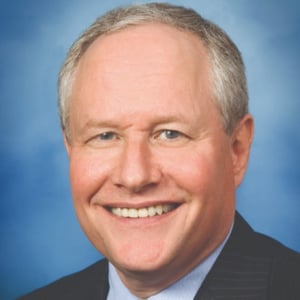
Editor, The Weekly Standard
William Kristol is the editor of The Weekly Standard. He is also a regular panelist on Fox News Sunday, a contributor for the Fox News Channel, and a monthly columnist for the Washington Post. Before starting the Weekly Standard in 1995, Mr. Kristol led the Project for the Republican Future, where he helped shape the strategy that produced the 1994 Republican congressional victory. Prior to that, Mr. Kristol served as chief of staff to Vice President Dan Quayle during the first Bush Administration, and to Education Secretary William Bennett under President Reagan. Before coming to Washington in 1985, Mr. Kristol was on the faculty of Harvard University’s Kennedy School of Government and the Department of Political Science at the University of Pennsylvania.
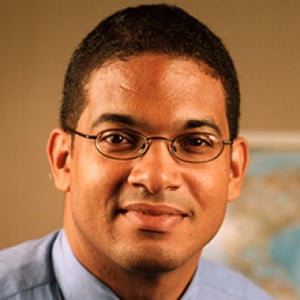
Benjamin Mazur Summer Research Professor of Law Affiliated Faculty, Ford Motor Company Center for Global Citizenship, Northwestern University School of Law
Jide Nzelibe joined Northwestern's faculty as an assistant professor in 2004 became a full Professor in 2008. He served as the Bigelow Teaching Fellow and Lecturer in Law at the University of Chicago before joining Northwestern Law. In addition to his JD from Yale Law School, he also holds an MPA in international relations from Princeton University, where he was awarded a fellowship from the Woodrow Wilson Foundation and a pre-doctoral fellowship from the Ford Foundation. His research and teaching interests include international trade, foreign relations law, public and private international law and contracts.

Executive Vice President, The Federalist Society
Dean Reuter is Executive Vice President at the Federalist Society for Law and Public Policy Studies. He has served in two federal government agency Offices of the Inspector General, as Counsel to the Inspector General and Deputy Inspector General, responsible for policing the use of federal funds granted and contracted through those agencies. As such, he helped conduct and oversee criminal investigations across the country. He is the principal author of the non-fiction book, The Hidden Nazi: The Untold Story of America's Deal with the Devil, and editor of Liberty’s Nemesis: The Unchecked Expansion of the State and Confronting Terror: 9/11 and the Future of American National Security. He was appointed by the President and served as Vice-Chairman of the Board of Directors of the Corporation for National and Community Service, and recently served as an appointee on the U.S. Commission on Presidential Scholars. He is a graduate of Hood College (BA with Honors) and the University of Maryland School of Law.
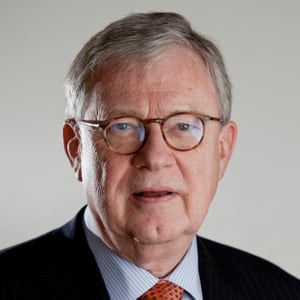
Senior Political Analyst, Washington Examiner
Michael Barone is a Senior Political Analyst for the Washington Examiner, where he writes a twice-weekly column and contributes to their Beltway Confidential blog. He is also a frequent contributor during Fox News Channel's election coverage.

Laurence A. Tisch Professor of Law and Director, Classical Liberal Institute, New York University School of Law; Senior Fellow, The Civitas Institute, University of Texas at Austin
Richard A. Epstein is the inaugural Laurence A. Tisch Professor of Law at NYU School of Law. Prior to his joining the faculty, he was a visiting law professor at NYU from 2007 through 2009. He served as the Peter and Kirstin Bedford Senior Fellow at the Hoover Institution from 2000 to 2024. Since 2024 to the present he is a senior lecturer at the Civitas Institute at the University of Texas—Austin. Epstein is also the James Parker Hall Distinguished Service Professor of Law Emeritus and a senior lecturer at the University of Chicago. His initial law school appointment was at the University of Southern California from 1968 to 1972. Epstein received an LL.D., h.c. from the University of Ghent, 2003. He has been a member of the American Academy of Arts and Sciences since 1985 and was a Senior Fellow of the Center for Clinical Medical Ethics at the University of Chicago Division of Biological Sciences, also from 1983. to 2022 He served as editor of the Journal of Legal Studies from 1981 to 1991, and of the Journal of Law and Economics from 1991-2001. From 2001 to 2010 he was a director of the John M. Olin Program in Law and Economics at the University of Chicago.
His newest book, The Myth of Birthright Citizenship: What the Fourteenth Amendment Really Says was published in 2026 (Encounter Books). Prior to that he has published many books including, The Dubious Morality of the Modern Administrative State (Roman & Littlefield 2020).Earlier he published th Classical Liberal Constitution: The Uncertain Quest for Limited Government (Harvard 2014) iHis previous books include Design for Liberty: Private Property, Public Administration and the Rule of Law (Harvard 2011); The Case Against the Employee Free Choice Act (Hoover 2009); Supreme Neglect: How to Revive the Constitutional Protection of Property Rights (Oxford 2008); Antitrust Decrees in Theory and Practice: Why Less is More (AEI 2007); Overdose: How Excessive Government Regulation Stifles Pharmaceutical Innovation (Yale University Press. 2006); How Progressives Rewrote the Constitution (Cato 2006); Cases and Materials on Torts (Aspen Law & Business; 8th ed. 2004); Skepticism and Freedom: A Modern Case for Classical Liberalism (University of Chicago, 2003); Torts (Aspen Law & Business 1999); Principles for a Free Society: Reconciling Individual Liberty with the Common Good (Perseus Books, 1998): Mortal Peril: Our Inalienable Rights to Health Care (Addison-Wesley, 1997); Simple Rules for a Complex World (Harvard, 1995); Bargaining With the State (Princeton, 1993); Forbidden Grounds: The Case Against Employment Discrimination Laws (Harvard , 1992); Takings: Private Property and the Power of Eminent Domain (Harvard, 1985); and Modern Products Liability Law (Greenwood Press, 1980). He has also edited(with Catherine M. Sharkey) Cases and Materials on the Law of Torts (10th edition 2012).
Professor Epstein has written numerous articles on a wide range of legal and interdisciplinary subjects. He has taught courses in administrative law, antitrust law, civil procedure, communications, constitutional law, contracts, corporations, criminal law, employment discrimination law, environmental law, food and drug law health law and policy, legal history, labor law, property, real estate development and finance, jurisprudence, labor law; land use planning, patents, individual, estate and corporate taxation, Roman Law; torts, and workers' compensation.
Professor Epstein also writes a regular column for Civitas Institute, which also sponsors his podcast, The Libertarian with Charles C.W. Cooke, and Law Talk, with Cooke and John Yoo. He also does a podcast with John Batchelor. And appears regularly on the Freedom File with Judge Andrew Napolitano.
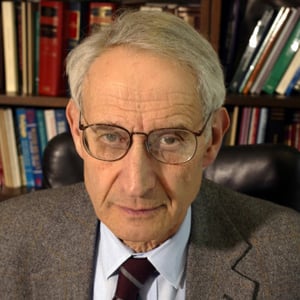
Beneficial Professor of Law, Harvard Law School
Educated at Princeton, Oxford and Columbia Law School, Charles Fried, the Beneficial Professor of Law, has been teaching at Harvard Law School since 1961. He was Solicitor General of the United States, 1985-89, and an Associate Justice of the Supreme Judicial Court of Massachusetts, 1995-99. His scholarly and teaching interests have been moved by the connection between normative theory and the concrete institutions of public and private law. During his career at Harvard he has taught Criminal Law, Commercial Law, Roman Law, Torts, Contracts, Labor Law, Constitutional Law and Federal Courts, Appellate and Supreme Court Advocacy. The author of many books and articles, his Anatomy of Values (1970), Right and Wrong (1978), and Modern Liberty (2006) develop themes in moral and political philosophy with applications to law. Contract as Promise (1980), Making Tort Law (2003, with David Rosenberg) and Saying What the Law Is: The Constitution in the Supreme Court (2004) are fundamental inquiries into broad legal institutions. Order & Law: Arguing the Reagan Revolution (1991) discusses major themes developed in Fried's time as Solicitor General. In recent years Fried has taught Constitutional Law and Contracts. During his time as a teacher he has also argued a number of major cases in state and federal courts, most notably Daubert v. Merrell Dow Pharmaceuticals, in which the Supreme Court established the standards for the use of expert and scientific evidence in federal courts.

United States Court of Appeals, Fourth Circuit
James Harvie Wilkinson III is an Article III federal judge on the United States Court of Appeals for the Fourth Circuit. He joined the Court in 1984 after being nominated by President Ronald Reagan.
Born in New York City, New York, Wilkinson graduated from Yale University with his Bachelor's degree in 1967. Wilkinson served in the United States Army from 1968 to 1969 and received his Juris Doctor degree from the University of Virginia School of Law in 1972.
On the recommendation of Virginia U.S. Senator John Warner, Wilkinson was nominated to the United States Court of Appeals for the Fourth Circuit by President Ronald Reagan on January 30, 1984 to a seat vacated by John Butzner, Jr.,. Wilkinson was confirmed by the Senate on August 9, 1984 on a Senate vote and received commission on August 13, 1984. Wilkinson served as the Chief Judge of the Court from 1996 to 2003.
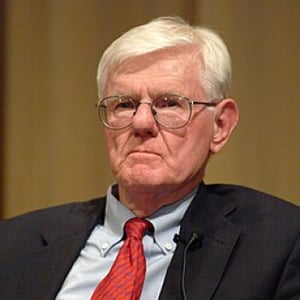
Gordon Stewart Wood is an American historian and professor at Brown University. He is a recipient of the 1993 Pulitzer Prize for History for The Radicalism of the American Revolution (1992). His book The Creation of the American Republic, 1776–1787 (1969) won the 1970 Bancroft Prize. In 2010, he was awarded the National Humanities Medal by President Barack Obama.
Clayton J. and Henry R. Barber Professor of Law, Northwestern University Pritzker School of Law and Co-Chairman, Board of Directors, The Federalist Society
STEVEN GOW CALABRESI is the Clayton J. & Henry R. Barber Professor at Northwestern Pritzker School of Law. He has also co-taught in the Fall semester at Yale Law School from 2013 to the present. Calabresi clerked for Justice Antonin Scalia and Judges Robert H. Bork and Ralph K. Winter. He was a Special Assistant to Attorney General Meese from 1985 to 1987 and worked with Ken Cribb as his deputy in 1987 on the second floor of the West Wing of the Reagan White House. Calabresi has written books on presidential power and comparative constitutional law and the origins of judicial review. He and Gary Lawson are the co-editors of a casebook on U.S. Constitutional Law, and Calabresi is also the co-editor of a casebook on comparative constitutional law. He has written over seventy law review articles since 1990.
Roger Williams University School of Law
Professor Bogus has achieved national prominence in two areas -- (1) tort law, and especially, products liability; and (2) gun control, including issues involving the Second Amendment.
His work in the first area includes Why Lawsuits Are Good for America: Disciplined Democracy, Big Business and the Common Law (NYU Press). His Constitutional Law research proposes the thesis that James Madison wrote the Second Amendment to ensure that the federal government could not subvert the slave system by disarming the militia, on which the South relied for slave control. Professor Bogus has testified before Congress and spoken about and debated these subjects at many venues across the country, including at Harvard, Columbia, Chicago, Stanford, and Vanderbilt law schools, and his writings on these subjects have been published by law reviews, as well as opinion journals such as The Nation and The American Prospect, and newspapers including USA Today, Boston Globe, Washington Times, and the Providence Journal. Most recently, he was interviewed by National Public Radio. One of his interests is how ideology influences the law, and he is presently at work on a biography of William F. Buckley, Jr. and the conservative movement.

Distinguished University Professor, Antonin Scalia Law School, George Mason University
University Professor Nelson Lund is the author of Rousseau’s Rejuvenation of Political Philosophy: A New Introduction. He has also written widely in the field of constitutional law, including articles on constitutional interpretation, federalism, separation of powers, the Second Amendment, the Commerce Clause, the Speech or Debate Clause, the Equal Protection Clause, and the Uniformity Clause. In addition, he has published articles in the fields of employment discrimination and civil rights, the legal regulation of medical ethics, and the application of economic analysis to legal institutions and legal ethics.
Professor Lund graduated from St. John's College in Annapolis, Maryland, after which he received an MA in philosophy from the Catholic University of America and a PhD in political science from Harvard University. He left the faculty of the University of Chicago to attend its law school, where he served as executive editor of the University of Chicago Law Review and chapter chairman of the Federalist Society for Law and Public Policy Studies. After law school, he held positions at the United States Department of Justice in the Office of the Solicitor General and the Office of Legal Counsel. He also served as a law clerk to the Honorable Patrick E. Higginbotham of the United States Court of Appeals for the Fifth Circuit and to the Honorable Sandra Day O'Connor of the United States Supreme Court. Following his clerkship with Justice O'Connor, Professor Lund served in the White House as associate counsel to the president from 1989 to 1992.
Since joining the faculty at George Mason University's Antonin Scalia Law School, Professor Lund has taught Constitutional Law, Legislation, Federal Election Law, Employment Discrimination, State and Local Government, and seminars on the Second Amendment and on a variety of topics in Jurisprudence.
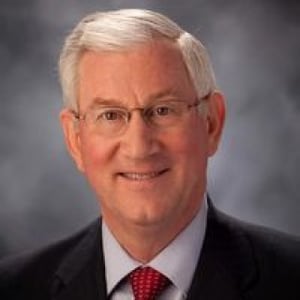
Of Counsel, Erickson & Sederstrom
Professional Positions
Former Member of National Association of Attorneys General Executive Committee (2002)
Member, Society of Attorneys General Emeritus (SAGE)
Washington Legal Foundation, Policy Advisory Board
Federalist Society, Member of the Federalism Subcommittee for Federalism and Separation of Powers
Former Member, TRANSLink Transmission Co., Board of Directors
Former Member, U.S. Chamber of Commerce Federalism Working Group
Former Chair, Nebraska Crime Commission
Honors and Accomplishments
Argued cases in the United States Supreme Court
Phi Beta Kappa
Republican Nominee for U.S. Senate in Nebraska (2000)
Founding Member of the Republican Attorneys General Association
Nebraska Fertilizer and Ag Chemical Institute's Government Official of the Year (2000)
Nebraska Coalition for Victims of Crime's Public Policy Award (1999)
Lincoln Independent Business Association's Business Champion Award (1997)
Lincoln Jaycees Outstanding Young Individual Award (1981)
Prior to Becoming of Counsel to Erickson & Sederstrom, P.C.
Attorney General of Nebraska (1991-2003)
Legal Counsel to the Governor of Nebraska (1979-1983)
University of Nebraska, Lincoln, B.A. (1970)
Harvard Business School, M.B.A. (1974)
Harvard Law School, J.D. (cum laude) (1974)
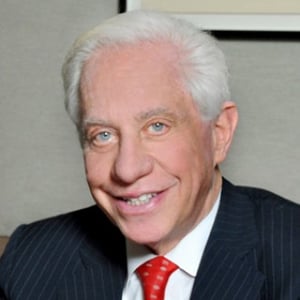
Partner, Shook, Hardy & Bacon LLP
Victor Schwartz chairs the firm's Public Policy Practice Group, which focuses on integrating litigation, government affairs and public relations. The group seeks to be the vanguard of developing public policy issues that will help improve our civil justice system. Mr. Schwartz also has an active appellate practice and advises product manufacturers on liability prevention, litigation and public relations issues.
Sought by print and broadcast media, Mr. Schwartz is frequently quoted in The Wall Street Journal, The Washington Post and The New York Times. He has appeared on Oprah, 60 Minutes and leading news programs. The Legal Times of Washington has named Mr. Schwartz one of Washington’s Top 30 “Visionary” lawyers, and The National Law Journal named Mr. Schwartz one of the 100 most influential lawyers in the United States in March 2013.
Mr. Schwartz is on the Board of Directors of the Searle Civil Justice Institute at George Mason University School of Law. He is a frequent participant in judicial education programs. Mr. Schwartz serves as General Counsel to the American Tort Reform Association.
Prior to entering the full time practice of law, Mr. Schwartz was a professor and dean at the University of Cincinnati College of Law. He currently serves on the College’s Board of Visitors. In 2012, the College established the Professor Victor E. Schwartz Chair in Tort Law.
Mr. Schwartz, while at the U.S. Department of Commerce, served as chair of the Federal Inter-Agency Task Force on Product Liability, and the Federal Inter-Agency Council on Insurance. He was the principal author of the Uniform Product Liability Act and the Federal Risk Retention Act. He received the Secretary of Commerce’s Award for Professional Excellence.
Mr. Schwartz is co-author of the most widely used torts casebook in the United States, Prosser, Wade and Schwartz’s Torts (12th ed. 2010). He is author of the leading text Comparative Negligence (5th ed. 2010).
Mr. Schwartz has been an advisor for each of the American Law Institute’s (ALI) Restatement (Third) of Torts projects; Products Liability, Apportionment of Liability, and Liability for Physical Injury and Emotional Harm. He is a life member of the ALI.
Mr. Schwartz’s law review articles have analyzed almost every major subject of modern tort and civil justice public policy issues. His articles are frequently cited by both state and federal courts.

Showcase Panel III: Term Limits, Entitlement Reform, and Random Assignment of Members of Congress to Committees
Steven G. Calabresi, William N. Eskridge, Edith H. Jones, William Kristol, Jide Okechuku Nzelibe, Dean Reuter
The Constitution does not mention congressional committees anywhere in the text, and Congress’ power to...
Beacon of Freedom: Does America Have a Special Mission?
Michael Barone, Richard A. Epstein, Charles Fried, J. Harvie Wilkinson, Gordon S. Wood
This panel examines the question whether there is an American ideology of exceptionalism that is...
Pirates We Be
Steven G. Calabresi
The Wall Street Journal Wednesday, May 14, 2003 P. A14 Rule of Law by Stephen...
Firearms Litigation, Tort Liability, and the Second Amendment - A Symposium
Carl T. Bogus, John Coale, Nelson Lund, Donald B. Stenberg, Victor E. Schwartz
Editor's Note: At the 1999 National Lawyers Convention in Washington, D.C., the Civil Rights Practice Group...