
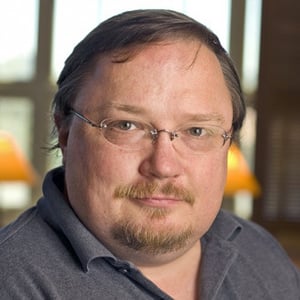
William D. Warren Professor of Law, UCLA School of Law
Stephen Bainbridge is the William D. Warren Distinguished Professor of Law at UCLA School of Law, where he currently teaches Business Associations, Advanced Corporation Law, and Mergers and Acquisitions. In past years, he has also taught Corporate Finance, Securities Regulation, Unincorporated Business Associations and Catholic Social Thought and the Law. Professor Bainbridge previously taught at the University of Illinois Law School (1988-1996). He has also taught at Harvard Law School as the Joseph Flom Visiting Professor of Law and Business (2000-2001), and as a visiting professor at La Trobe University in Melbourne (2005 and 2007) and at Aoyama Gakuin University in Tokyo (1999).
In 2008, Bainbridge received the UCLA School of Law's Rutter Award for Excellence in Teaching. In 1990, the graduating class of the University of Illinois College of Law voted him "Professor of the Year."
Professor Bainbridge is a prolific scholar, whose work covers a variety of subjects, but with a strong emphasis on the law and economics of public corporations. He has written over 100 law review articles which have appeared in such leading journals as the Harvard Law Review, Virginia Law Review, Northwestern University Law Review, Cornell Law Review, Stanford Law Review, and Vanderbilt Law Review. Bainbridge has also written 19 books, including seven in multiple editions. His most recent books include: Outsourcing the Board: How Board Service Providers Can Improve Corporate Governance (Cambridge University Press, 2018) (with M. Todd Henderson); Business Associations: Cases and Materials on Agency, Partnerships, and Corporations (Foundation Press, 10th ed., 2018) (with Klein and Ramseyer); Mergers and Acquisitions: A Transactional Perspective (Foundation Press, 2017) (with Iman Anabtawi).
According to Gregory Sisk and Brian Leiter’s rankings of law professors by scholarly impact, Professor Bainbridge was the third most-frequently cited scholar in corporate and securities law for the period 2013-2017. According to Hein Online, Bainbridge is the 29th most frequently cited scholar in their database of legal publications over the last 10 years and the 23rd most cited for the period January 2018 through August 2019. In SSRN.com’s ranking of the top 3000 legal authors by all-time downloads, Bainbridge is ranked 10th. By that metric, he is the highest ranked member of the UCLA law school faculty. In SSRN.com’s ranking of the top 3000 legal authors by all-time citations to their work, Bainbridge is ranked 55th. By that metric, he is the second highest ranked member of the UCLA law school faculty.
Professor Bainbridge has been a Salvatori Fellow with the Heritage Foundation, a member of the American Bar Association’s Committee on Corporate Laws, a member of the Editorial Advisory Board of the Journal of Markets and Morality, and Chair of the Executive Committee of the Federalist Society’s Corporations, Securities & Antitrust Practice Group.
In May 2014, Professor Bainbridge was the Cameron Fellow at the University of Auckland Faculty of Law. He was the Francis G. Pileggi Distinguished Lecturer in Law at Widener University School of Law in September 2005, and a Distinguished Visiting Scholar at the University of Maryland School of Law in November 2005.
In 2008, 2011, and 2012, Professor Bainbridge was named by the National Association of Corporate Directors' Directorship magazine to its list of the 100 most influential people in the field of corporate governance.
His blog, ProfessorBainbridge.com, was named by the ABA Journal as one of the Top 100 Law Blogs of 2007, 2008, 2010, 2011, and 2012.
William D. Warren Professor of Law, UCLA School of Law
Stephen Bainbridge is the William D. Warren Distinguished Professor of Law at UCLA School of Law, where he currently teaches Business Associations, Advanced Corporation Law, and Mergers and Acquisitions. In past years, he has also taught Corporate Finance, Securities Regulation, Unincorporated Business Associations and Catholic Social Thought and the Law. Professor Bainbridge previously taught at the University of Illinois Law School (1988-1996). He has also taught at Harvard Law School as the Joseph Flom Visiting Professor of Law and Business (2000-2001), and as a visiting professor at La Trobe University in Melbourne (2005 and 2007) and at Aoyama Gakuin University in Tokyo (1999).
In 2008, Bainbridge received the UCLA School of Law's Rutter Award for Excellence in Teaching. In 1990, the graduating class of the University of Illinois College of Law voted him "Professor of the Year."
Professor Bainbridge is a prolific scholar, whose work covers a variety of subjects, but with a strong emphasis on the law and economics of public corporations. He has written over 100 law review articles which have appeared in such leading journals as the Harvard Law Review, Virginia Law Review, Northwestern University Law Review, Cornell Law Review, Stanford Law Review, and Vanderbilt Law Review. Bainbridge has also written 19 books, including seven in multiple editions. His most recent books include: Outsourcing the Board: How Board Service Providers Can Improve Corporate Governance (Cambridge University Press, 2018) (with M. Todd Henderson); Business Associations: Cases and Materials on Agency, Partnerships, and Corporations (Foundation Press, 10th ed., 2018) (with Klein and Ramseyer); Mergers and Acquisitions: A Transactional Perspective (Foundation Press, 2017) (with Iman Anabtawi).
According to Gregory Sisk and Brian Leiter’s rankings of law professors by scholarly impact, Professor Bainbridge was the third most-frequently cited scholar in corporate and securities law for the period 2013-2017. According to Hein Online, Bainbridge is the 29th most frequently cited scholar in their database of legal publications over the last 10 years and the 23rd most cited for the period January 2018 through August 2019. In SSRN.com’s ranking of the top 3000 legal authors by all-time downloads, Bainbridge is ranked 10th. By that metric, he is the highest ranked member of the UCLA law school faculty. In SSRN.com’s ranking of the top 3000 legal authors by all-time citations to their work, Bainbridge is ranked 55th. By that metric, he is the second highest ranked member of the UCLA law school faculty.
Professor Bainbridge has been a Salvatori Fellow with the Heritage Foundation, a member of the American Bar Association’s Committee on Corporate Laws, a member of the Editorial Advisory Board of the Journal of Markets and Morality, and Chair of the Executive Committee of the Federalist Society’s Corporations, Securities & Antitrust Practice Group.
In May 2014, Professor Bainbridge was the Cameron Fellow at the University of Auckland Faculty of Law. He was the Francis G. Pileggi Distinguished Lecturer in Law at Widener University School of Law in September 2005, and a Distinguished Visiting Scholar at the University of Maryland School of Law in November 2005.
In 2008, 2011, and 2012, Professor Bainbridge was named by the National Association of Corporate Directors' Directorship magazine to its list of the 100 most influential people in the field of corporate governance.
His blog, ProfessorBainbridge.com, was named by the ABA Journal as one of the Top 100 Law Blogs of 2007, 2008, 2010, 2011, and 2012.
William D. Warren Professor of Law, UCLA School of Law
Stephen Bainbridge is the William D. Warren Distinguished Professor of Law at UCLA School of Law, where he currently teaches Business Associations, Advanced Corporation Law, and Mergers and Acquisitions. In past years, he has also taught Corporate Finance, Securities Regulation, Unincorporated Business Associations and Catholic Social Thought and the Law. Professor Bainbridge previously taught at the University of Illinois Law School (1988-1996). He has also taught at Harvard Law School as the Joseph Flom Visiting Professor of Law and Business (2000-2001), and as a visiting professor at La Trobe University in Melbourne (2005 and 2007) and at Aoyama Gakuin University in Tokyo (1999).
In 2008, Bainbridge received the UCLA School of Law's Rutter Award for Excellence in Teaching. In 1990, the graduating class of the University of Illinois College of Law voted him "Professor of the Year."
Professor Bainbridge is a prolific scholar, whose work covers a variety of subjects, but with a strong emphasis on the law and economics of public corporations. He has written over 100 law review articles which have appeared in such leading journals as the Harvard Law Review, Virginia Law Review, Northwestern University Law Review, Cornell Law Review, Stanford Law Review, and Vanderbilt Law Review. Bainbridge has also written 19 books, including seven in multiple editions. His most recent books include: Outsourcing the Board: How Board Service Providers Can Improve Corporate Governance (Cambridge University Press, 2018) (with M. Todd Henderson); Business Associations: Cases and Materials on Agency, Partnerships, and Corporations (Foundation Press, 10th ed., 2018) (with Klein and Ramseyer); Mergers and Acquisitions: A Transactional Perspective (Foundation Press, 2017) (with Iman Anabtawi).
According to Gregory Sisk and Brian Leiter’s rankings of law professors by scholarly impact, Professor Bainbridge was the third most-frequently cited scholar in corporate and securities law for the period 2013-2017. According to Hein Online, Bainbridge is the 29th most frequently cited scholar in their database of legal publications over the last 10 years and the 23rd most cited for the period January 2018 through August 2019. In SSRN.com’s ranking of the top 3000 legal authors by all-time downloads, Bainbridge is ranked 10th. By that metric, he is the highest ranked member of the UCLA law school faculty. In SSRN.com’s ranking of the top 3000 legal authors by all-time citations to their work, Bainbridge is ranked 55th. By that metric, he is the second highest ranked member of the UCLA law school faculty.
Professor Bainbridge has been a Salvatori Fellow with the Heritage Foundation, a member of the American Bar Association’s Committee on Corporate Laws, a member of the Editorial Advisory Board of the Journal of Markets and Morality, and Chair of the Executive Committee of the Federalist Society’s Corporations, Securities & Antitrust Practice Group.
In May 2014, Professor Bainbridge was the Cameron Fellow at the University of Auckland Faculty of Law. He was the Francis G. Pileggi Distinguished Lecturer in Law at Widener University School of Law in September 2005, and a Distinguished Visiting Scholar at the University of Maryland School of Law in November 2005.
In 2008, 2011, and 2012, Professor Bainbridge was named by the National Association of Corporate Directors' Directorship magazine to its list of the 100 most influential people in the field of corporate governance.
His blog, ProfessorBainbridge.com, was named by the ABA Journal as one of the Top 100 Law Blogs of 2007, 2008, 2010, 2011, and 2012.
William D. Warren Professor of Law, UCLA School of Law
Stephen Bainbridge is the William D. Warren Distinguished Professor of Law at UCLA School of Law, where he currently teaches Business Associations, Advanced Corporation Law, and Mergers and Acquisitions. In past years, he has also taught Corporate Finance, Securities Regulation, Unincorporated Business Associations and Catholic Social Thought and the Law. Professor Bainbridge previously taught at the University of Illinois Law School (1988-1996). He has also taught at Harvard Law School as the Joseph Flom Visiting Professor of Law and Business (2000-2001), and as a visiting professor at La Trobe University in Melbourne (2005 and 2007) and at Aoyama Gakuin University in Tokyo (1999).
In 2008, Bainbridge received the UCLA School of Law's Rutter Award for Excellence in Teaching. In 1990, the graduating class of the University of Illinois College of Law voted him "Professor of the Year."
Professor Bainbridge is a prolific scholar, whose work covers a variety of subjects, but with a strong emphasis on the law and economics of public corporations. He has written over 100 law review articles which have appeared in such leading journals as the Harvard Law Review, Virginia Law Review, Northwestern University Law Review, Cornell Law Review, Stanford Law Review, and Vanderbilt Law Review. Bainbridge has also written 19 books, including seven in multiple editions. His most recent books include: Outsourcing the Board: How Board Service Providers Can Improve Corporate Governance (Cambridge University Press, 2018) (with M. Todd Henderson); Business Associations: Cases and Materials on Agency, Partnerships, and Corporations (Foundation Press, 10th ed., 2018) (with Klein and Ramseyer); Mergers and Acquisitions: A Transactional Perspective (Foundation Press, 2017) (with Iman Anabtawi).
According to Gregory Sisk and Brian Leiter’s rankings of law professors by scholarly impact, Professor Bainbridge was the third most-frequently cited scholar in corporate and securities law for the period 2013-2017. According to Hein Online, Bainbridge is the 29th most frequently cited scholar in their database of legal publications over the last 10 years and the 23rd most cited for the period January 2018 through August 2019. In SSRN.com’s ranking of the top 3000 legal authors by all-time downloads, Bainbridge is ranked 10th. By that metric, he is the highest ranked member of the UCLA law school faculty. In SSRN.com’s ranking of the top 3000 legal authors by all-time citations to their work, Bainbridge is ranked 55th. By that metric, he is the second highest ranked member of the UCLA law school faculty.
Professor Bainbridge has been a Salvatori Fellow with the Heritage Foundation, a member of the American Bar Association’s Committee on Corporate Laws, a member of the Editorial Advisory Board of the Journal of Markets and Morality, and Chair of the Executive Committee of the Federalist Society’s Corporations, Securities & Antitrust Practice Group.
In May 2014, Professor Bainbridge was the Cameron Fellow at the University of Auckland Faculty of Law. He was the Francis G. Pileggi Distinguished Lecturer in Law at Widener University School of Law in September 2005, and a Distinguished Visiting Scholar at the University of Maryland School of Law in November 2005.
In 2008, 2011, and 2012, Professor Bainbridge was named by the National Association of Corporate Directors' Directorship magazine to its list of the 100 most influential people in the field of corporate governance.
His blog, ProfessorBainbridge.com, was named by the ABA Journal as one of the Top 100 Law Blogs of 2007, 2008, 2010, 2011, and 2012.

Associate Justice, Supreme Court of the United States
Associate Justice Brett Kavanaugh was born in Washington, D.C., on February 12, 1965. He married Ashley Estes in 2004, and they have two daughters - Margaret and Liza. He received a B.A. from Yale College in 1987 and a J.D. from Yale Law School in 1990. He served as a law clerk for Judge Walter Stapleton of the U.S. Court of Appeals for the Third Circuit from 1990-1991, for Judge Alex Kozinski of the U.S. Court of Appeals for the Ninth Circuit from 1991-1992, and for Justice Anthony M. Kennedy of the U.S. Supreme Court during the 1993 Term. In 1992-1993, he was an attorney in the Office of the Solicitor General of the United States. From 1994 to 1997 and for a period in 1998, he was Associate Counsel in the Office of Independent Counsel. He was a partner at a Washington, D.C., law firm from 1997 to 1998 and again from 1999 to 2001. From 2001 to 2003, he was Associate Counsel and then Senior Associate Counsel to President George W. Bush. From 2003 to 2006, he was Assistant to the President and Staff Secretary for President Bush. He was appointed a Judge of the United States Court of Appeals for the District of Columbia Circuit in 2006. President Donald J. Trump nominated him as an Associate Justice of the Supreme Court, and he took his seat on October 6, 2018.
Director of Policy and Special Counsel, AFL-CIO
Damon A. Silvers is the Director of Policy and Special Counsel for the AFL-CIO. He joined the AFL-CIO as Associate General Counsel in 1997.
Mr. Silvers serves on a pro bono basis as a Special Assistant Attorney General for the state of New York. Mr. Silvers is also a member of the Investor Advisory Committee of the Securities and Exchange Commission, the Treasury Department’s Financial Research Advisory Committee, the Public Company Accounting Oversight Board’s Standing Advisory Group and its Investor Advisory Group.
Mr. Silvers served as the Deputy Chair of the Congressional Oversight Panel for TARP from 2008 to 2011. Between 2006 and 2008, Mr. Silvers served as the Chair of the Competition Subcommittee of the United States Treasury Department Advisory Committee on the Auditing Profession and as a member of the United States Treasury Department Investor’s Practice Committee of the President’s Working Group on Financial Markets.
Prior to working for the AFL-CIO, Mr. Silvers worked for the Harvard Union of Clerical and Technical Workers, the Amalgamated Clothing and Textile Workers, and as a law clerk at the Delaware Court of Chancery for Chancellor William T. Allen and Vice-Chancellor Bernard Balick.
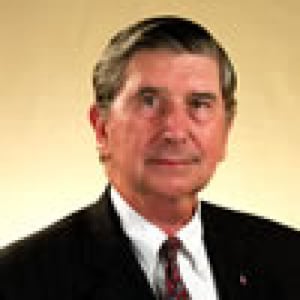
Special Counsel, Gordon, Fournaris & Mammarella, PA and former C, Delaware Supreme Court
E. NORMAN VEASEY joined the Wilmington law firm of Gordon, Fournaris & Mammarella, P.A. in January 2014. He is the former Chief Justice of the Delaware Supreme Court, having served a 12-year term through May 2004. After his retirement from the Supreme Court, he was a Senior Partner at Weil, Gotshal & Manges LLP, until the end of 2013.
At GFM, he will concentrate on serving as an arbitrator, mediator, special master, and provide other neutral services in complex corporate, contract, and commercial litigation. Chief Justice Veasey is listed on the National Roster of Arbitrators and Mediators of the American Arbitration Association (AAA) and as a distinguished neutral of the Institute for Conflict Prevention and Resolution (CPR).
During his tenure as Chief Justice, and thereafter, the United States Chamber of Commerce ranked Delaware’s courts first in the nation for their fair, reasonable, and efficient litigation environment. Chief Justice Veasey has been credited with leading nationwide programs to restore professionalism to the practice of law and to adopt best practices in the running of America’s courts. In 2004, his final year of service in the Delaware Supreme Court, he was awarded the Order of the First State by the Governor of Delaware, the highest honor for meritorious service the State’s governor can grant.
As Senior Partner at Weil, he served as a strategic adviser to the firm’s roster of prominent global clients on a wide range of issues related to mergers & acquisitions, restructuring, and litigation. He also advised on corporate governance issues involving the responsibilities of corporate directors in complex financial transactions and crisis management.
He was President of the Conference of Chief Justices, Chair of the board of the National Center for State Courts, Chair of the Section of Business Law of the American Bar Association (ABA), Chair of the ABA Special Commission on Evaluation of the Rules of Professional Conduct (Ethics 2000), Chair of the Committee on Corporate Laws of the ABA Section of Business Law, and President of the Delaware State Bar Association.
During 1992-93, Chief Justice Veasey was the editor of Volume 48 of The Business Lawyer, the scholarly legal journal published by the Section of Business Law of the ABA. He is co-author, with Weil’s Christine Di Guglielmo, of a book, published by Oxford University Press, on the challenges of modern-day corporate general counsel. The book is entitled, E. Norman Veasey & Christine T. Di Guglielmo, Indispensable Counsel: The Chief Legal Officer in the New Reality (2012). The Wall Street Journal recently called it “a field manual to aid [chief legal officers] with their new tasks.” (March 9, 2012)
He is a Fellow of the American College of Trial Lawyers; included in Best Lawyers in America; a director of the Institute for Law and Economics at the University of Pennsylvania; a member of the American Law Institute; a member of the International Advisory Board of the Centre for Corporate Law and Securities Regulation; a frequent panelist and lecturer on the corporation law, corporate governance, ethics, and professionalism; and an Adjunct Professor at the University of Pennsylvania Law School, where he teaches a course entitled, “The Real World of Ethical Corporate Lawyering.” He served in previous years as an Adjunct Professor teaching this course at New York University School of Law, the University of Virginia School of Law, and at Wake Forest University School of Law.
He is a graduate of Dartmouth College (A.B. 1954) and the University of Pennsylvania Law School (LLB 1957). He has been awarded honorary degrees of Doctor of Laws from the University of Delaware and Widener University.
Recent Honors include Josiah Marvel Cup presented by the Delaware Chamber of Commerce, January, 2014, presented annually to a citizen of Delaware who has given outstanding service to the state, community, and society; Common Cause of Delaware Good Government award, November 2014; named “Corporate Governance Lawyer of the Year” in 2009-2012; Michael Franck Professional Responsibility Award; Daniel L. Herrmann Professional Conduct Award; Order of the First State-2004; Annual Ethics Award from ACCA-2002; Paul C. .Reardon Award from the National Center for State Courts-2002; St. Thomas More Society Award; Alumni of Merit Award from the University of Pennsylvania; Lewis F. Powell, Jr., Award for Professionalism and Ethics from the American Inns of Court Foundation-1996; Class of 1954 Award from Dartmouth College.
From 1957 until he took office as Chief Justice in 1992, he practiced law with the Wilmington, Delaware, law firm of Richards, Layton & Finger, where he concentrated on business law, corporate transactions, litigation, and counseling. He served at various times as managing partner and the chief executive officer of the firm. During 1961-63, he was Deputy Attorney General and Chief Deputy Attorney of the State of Delaware, and from 2011 to 2014 he served the State of Delaware as Independent Counsel and Special Deputy Attorney General to investigate campaign funding law violations.
Chief Justice Veasey and his wife, Suzanne, live in Wilmington, Delaware. They have four grown children and eleven grandchildren.

George C. Dix Professor in Constitutional Law, Northwestern University Pritzker School of Law
John O. McGinnis is a graduate of Harvard College and Harvard Law School where he was an editor of the Harvard Law Review. He also has an MA degree from Balliol College, Oxford, in philosophy and theology. Professor McGinnis clerked on the U.S. Court of Appeals for the District of Columbia. From 1987 to 1991, he was deputy assistant attorney general in the Office of Legal Counsel at the Department of Justice. He is the author of Accelerating Democracy: Transforming Government Through Technology (Princeton 2013) and Originalism and the Good Constitution (Harvard 2013) (with M. Rappaport). He is a past winner of the Paul Bator award given by the Federalist Society to an outstanding academic under 40. He has been listed by the United States on the roster of panelists who may be called upon to decide World Trade Organization Disputes.
Partner, Coppersmith, Gordon, Schermer, Owns & Nelson PLC
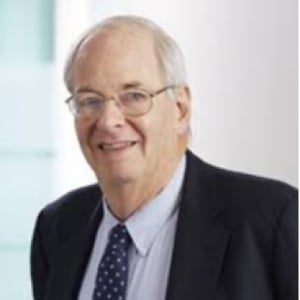
Professor of Law, UCLA Law School
Daniel Lowenstein was the first American law professor to specialize in Election Law and established a leading reputation in that field. He authored the first twentieth century textbook in the field — Election Law: Cases and Materials (Carolina Academic Press, 1995), now in its sixth edition. As co-editor with Professor Rick Hasen he inaugurated the Election Law Journal, the leading journal in the field. On January 29, 2010, leading scholars in Election Law put on a festschrift celebrating Lowenstein’s work in the field.
On July 1, 2009, Lowenstein became Director of the new UCLA Center for the Liberal Arts and Free Institutions (CLAFI), intended to facilitate and promote study of the great works and achievements of western civilization. He currently teaches undergraduate courses, primarily in literature.
Lowenstein worked as a staff attorney at California Rural Legal Assistance for two and one-half years beginning in 1968. While working for California's Secretary of State, Edmund G. Brown Jr. starting in 1971, he specialized in Election Law and was the main drafter of the Political Reform Act, an initiative statute that California voters approved in 1974, thereby creating a new Fair Political Practices Commission. Governor Brown appointed Lowenstein as first chairman of the Commission in 1975. Lowenstein has served on the national governing board of Common Cause and has been a board member and a vice president of Americans for Nonsmokers' Rights. He has also served as chairman of the Board of Directors of the award-winning theatre troupe Interact and regularly brings the company to the School of Law to perform plays with legal themes, such as Sophocles' Antigone, Ibsen’s An Enemy of the People, and Wouk's The Caine Mutiny Court Martial.
Professor Lowenstein’s published research runs the gamut of Election Law subjects, including campaign finance, redistricting, voting rights, political parties, and initiatives. He has also published literary criticism on works such as The Merchant of Venice and Bleak House.
To obtain news and information about CLAFI or about the Interact play readings at the School of Law, please write to Lowenstein at Lowenstein@law.ucla.edu.
Managing Attorney of the Washington Office, Institute for Justice
William R. Maurer is the Managing Attorney of the Washington state office of the Institute for Justice, which engages in litigation in the areas of economic liberty, private property rights, educational choice, & freedom of speech.
Maurer is an advocate against the criminalization of poverty and the governmental use of the criminal and civil enforcement systems to raise revenue. He was lead counsel in a class action challenging the use of tickets to raise revenue in the city of Pagedale, Missouri. The suit resulted in a federal consent decree that reformed the city’s ticketing and municipal court system. He regularly speaks, teaches, and writes about the abuse of fines and fees in the criminal justice system. He was a participant in summits on taxation by citation put on by the White House and Department of Justice during the Obama Administration. His work on the issue includes serving as an advisory board member of the Fines and Fees Justice Center.
In addition to his work on criminal and civil justice reform, Maurer is a First Amendment litigator. In 2011, he successfully argued before the U.S. Supreme Court that Arizona’s punitive campaign financing regime was unconstitutional. Before the Washington Supreme Court, he successfully argued against efforts to classify radio commentary as a contribution under the state’s campaign finance law.
His cases and advocacy have been covered in the Washington Post, the New York Times, the Economist, the Wall Street Journal, and other major media outlets.
Maurer was named a “Washington Superlawyer” by Washington Law & Politics Magazine for several years. He is a chapter author in numerous legal reference works and has written several articles for law reviews and legal publications across the country.
Prior to joining IJ-WA, Maurer clerked for Washington Supreme Court Justice Richard Sanders and then practiced law at Perkins Coie LLP. Maurer received his law degree in 1994 from the University of Wisconsin – Madison, where he was an editor of the Wisconsin Law Review. He received his BA from Bard College in 1989.
Senior Attorney, DC, Pacific Legal Foundation
Steve Simpson joined PLF in 2019 to head up its Separation of Powers practice group.
Steve’s career in public interest law started at the Institute for Justice in 2001, where he litigated free speech, campaign finance, and economic liberty cases. Among other high-profile cases in which Steve was involved, he was co-counsel in Arizona Free Enterprise Club’s Freedom Club PAC v. Bennett, IJ’s successful Supreme Court challenge to Arizona’s public financing law for political campaigns. He was the lead litigator in SpeechNow.org v. FEC, a joint effort between IJ and the Institute for Free Speech that led to the creation of super PACs. And he was co-counsel in Swedenburg v. Kelly, IJ’s successful Supreme Court challenge to New York’s ban on the interstate shipping of wine.
In 2013, Steve moved into the policy arena as the Ayn Rand Institute’s director of Legal Studies, where he spent five years writing and speaking on a wide variety of legal and cultural issues. From there, he moved back into law as senior litigation counsel at the New Civil Liberties Alliance in Washington, D.C.
Steve has spoken and written on a wide variety of legal and policy issues. He has testified in Congress and briefed congressional staffers. He has been interviewed on scores of television and radio programs, including PBS News Hour, Stossel, and The Rubin Report. His writings have appeared in many publications, including The Wall Street Journal and The Washington Post. In 2014, Steve was a Lincoln Fellow at the Claremont Institute. He is the editor of Defending Free Speech (ARI Press, 2016).
Steve earned his law degree magna cum laude from New York Law School in 1994. Following law school, he clerked for a federal district judge in the Southern District of Florida and spent several years as a litigator at Shearman & Sterling.
When he’s not at work or spending time with his wife and three daughters, Steve can usually be found mucking around in the woods at his cabin on Shenandoah Mountain.
Amelia Lewis Professor of Constitutional Law, Sandra Day O'Conno, ASU
President, Center for Individual Rights
Todd Gaziano is the President of the Center for Individual Rights. Mr. Gaziano received his J.D. in 1988 from the University of Chicago Law School, where he was a John M. Olin Fellow in Law and Economics. He received his B.A. from West Virginia University, summa cum laude in 1985. He was selected as a Truman Scholar from West Virginia while an undergraduate.
Mr. Gaziano’s previous legal work includes service as a law clerk for U.S. Court of Appeals for the Fifth Circuit Judge Edith Jones, as an attorney in the U.S. Department of Justice Office of Legal Counsel, as a chief subcommittee counsel in the U.S. House of Representatives, as a Houston trial attorney, and as a chief corporate legal officer. He also served a six-year term as commissioner on the U.S. Commission on Civil Rights (2008-2013), where he helped conduct oversight and investigations of civil rights agencies.
For most of the last 25 years, Mr. Gaziano was a legal scholar and public interest law leader, promoting individual liberty in the Supreme Court and Congress. From 1997 to 2013, he was the founding director of the Edwin Meese Center for Legal and Judicial Studies at The Heritage Foundation. From 2014 until he joined CIR, he was the Chief of Legal Policy and Strategic Research, and Director of the Center for the Separation of Powers, at Pacific Legal Foundation.
Professor of Law, UCLA Law School
Daniel Lowenstein was the first American law professor to specialize in Election Law and established a leading reputation in that field. He authored the first twentieth century textbook in the field — Election Law: Cases and Materials (Carolina Academic Press, 1995), now in its sixth edition. As co-editor with Professor Rick Hasen he inaugurated the Election Law Journal, the leading journal in the field. On January 29, 2010, leading scholars in Election Law put on a festschrift celebrating Lowenstein’s work in the field.
On July 1, 2009, Lowenstein became Director of the new UCLA Center for the Liberal Arts and Free Institutions (CLAFI), intended to facilitate and promote study of the great works and achievements of western civilization. He currently teaches undergraduate courses, primarily in literature.
Lowenstein worked as a staff attorney at California Rural Legal Assistance for two and one-half years beginning in 1968. While working for California's Secretary of State, Edmund G. Brown Jr. starting in 1971, he specialized in Election Law and was the main drafter of the Political Reform Act, an initiative statute that California voters approved in 1974, thereby creating a new Fair Political Practices Commission. Governor Brown appointed Lowenstein as first chairman of the Commission in 1975. Lowenstein has served on the national governing board of Common Cause and has been a board member and a vice president of Americans for Nonsmokers' Rights. He has also served as chairman of the Board of Directors of the award-winning theatre troupe Interact and regularly brings the company to the School of Law to perform plays with legal themes, such as Sophocles' Antigone, Ibsen’s An Enemy of the People, and Wouk's The Caine Mutiny Court Martial.
Professor Lowenstein’s published research runs the gamut of Election Law subjects, including campaign finance, redistricting, voting rights, political parties, and initiatives. He has also published literary criticism on works such as The Merchant of Venice and Bleak House.
To obtain news and information about CLAFI or about the Interact play readings at the School of Law, please write to Lowenstein at Lowenstein@law.ucla.edu.
Hugh and Hazel Darling Foundation Professor of Law; Director, Center for the Study of Constitutional Originalism, University of San Diego School of Law
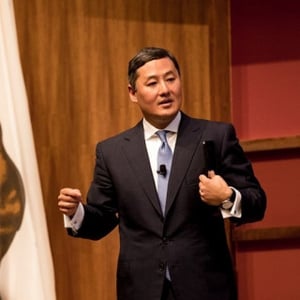
Emanuel S. Heller Professor of Law, University of California at Berkeley; Thomas Smith Senior Research Fellow, Civitas Institute, University of Texas at Austin
John Yoo is the Emanuel Heller Professor of Law at the University of California at Berkeley. He is also the Thomas Smith Senior Research Fellow, Civitas Institute, at the University of Texas at Austin. He is also a Nonresident Senior Fellow at the American Enterprise Institute.
His most recent book, The Politically Incorrect Guide to the Supreme Court, co-authored with Robert Delahunty, was published in 2023. Professor Yoo’s other books include Defender-in-Chief: Trump’s Fight for Presidential Power; Striking Power: How Cyber, Robots, and Space Weapons Change the Rules for War; Point of Attack: Preventive War, International Law, and Global Welfare; and Crisis and Command: A History of Executive Power from George Washington to George Bush.
He is a co-author of volumes 1 and 2 of R. Rossum, G. Tarr, V. Munoz & J. Yoo American Constitution Law (Routledge, 2026), and a co-editor of the eight-volume series on the 250th anniversary of the American Revolution, We Hold These Truths, with Yuval Levin and Adam White of the American Enterprise Institute.
Professor Yoo has published more than 100 articles in academic journals on subjects including national security, constitutional law, international law, and the Supreme Court. He also regularly contributes to the editorial pages of the Wall Street Journal, New York Times, Washington Post, Los Angeles Times, and National Review, among others.
Professor Yoo has served in all three branches of government. He was an official in the U.S. Department of Justice, where he worked on national security and terrorism issues after the 9/11 attacks. He served as general counsel of the U.S. Senate Judiciary Committee. He has been a law clerk for Supreme Court Justice Clarence Thomas and federal appeals Judge Laurence Silberman. He has been a visiting professor at the University of Texas at Austin’s School of Civic Leadership, Seoul National University, the Interdisciplinary Center Herzliya, Keio University, Trento University, the University of Chicago, and the Free University of Amsterdam.
Professor Yoo supervises the Public Law and Policy Program and the California Constitution Center. He also serves on the boards of Founding Forward, the Washington Legal Foundation, the Pacific Legal Foundation, the Ulysses Grant Institute, the Federalist Society’s Separation of Powers and Federalism Division, the Universidad Cientifica del Sur Law School, and the Asia-Pacific Law Institute at Seoul National University. He is a winner of the Federalist Society’s Paul Bator award and the Heritage Foundation’s Edwin Meese III Originalism Lectureship.
Professor Yoo graduated from Yale Law School and summa cum laude from Harvard College.
William D. Warren Professor of Law, UCLA School of Law
Stephen Bainbridge is the William D. Warren Distinguished Professor of Law at UCLA School of Law, where he currently teaches Business Associations, Advanced Corporation Law, and Mergers and Acquisitions. In past years, he has also taught Corporate Finance, Securities Regulation, Unincorporated Business Associations and Catholic Social Thought and the Law. Professor Bainbridge previously taught at the University of Illinois Law School (1988-1996). He has also taught at Harvard Law School as the Joseph Flom Visiting Professor of Law and Business (2000-2001), and as a visiting professor at La Trobe University in Melbourne (2005 and 2007) and at Aoyama Gakuin University in Tokyo (1999).
In 2008, Bainbridge received the UCLA School of Law's Rutter Award for Excellence in Teaching. In 1990, the graduating class of the University of Illinois College of Law voted him "Professor of the Year."
Professor Bainbridge is a prolific scholar, whose work covers a variety of subjects, but with a strong emphasis on the law and economics of public corporations. He has written over 100 law review articles which have appeared in such leading journals as the Harvard Law Review, Virginia Law Review, Northwestern University Law Review, Cornell Law Review, Stanford Law Review, and Vanderbilt Law Review. Bainbridge has also written 19 books, including seven in multiple editions. His most recent books include: Outsourcing the Board: How Board Service Providers Can Improve Corporate Governance (Cambridge University Press, 2018) (with M. Todd Henderson); Business Associations: Cases and Materials on Agency, Partnerships, and Corporations (Foundation Press, 10th ed., 2018) (with Klein and Ramseyer); Mergers and Acquisitions: A Transactional Perspective (Foundation Press, 2017) (with Iman Anabtawi).
According to Gregory Sisk and Brian Leiter’s rankings of law professors by scholarly impact, Professor Bainbridge was the third most-frequently cited scholar in corporate and securities law for the period 2013-2017. According to Hein Online, Bainbridge is the 29th most frequently cited scholar in their database of legal publications over the last 10 years and the 23rd most cited for the period January 2018 through August 2019. In SSRN.com’s ranking of the top 3000 legal authors by all-time downloads, Bainbridge is ranked 10th. By that metric, he is the highest ranked member of the UCLA law school faculty. In SSRN.com’s ranking of the top 3000 legal authors by all-time citations to their work, Bainbridge is ranked 55th. By that metric, he is the second highest ranked member of the UCLA law school faculty.
Professor Bainbridge has been a Salvatori Fellow with the Heritage Foundation, a member of the American Bar Association’s Committee on Corporate Laws, a member of the Editorial Advisory Board of the Journal of Markets and Morality, and Chair of the Executive Committee of the Federalist Society’s Corporations, Securities & Antitrust Practice Group.
In May 2014, Professor Bainbridge was the Cameron Fellow at the University of Auckland Faculty of Law. He was the Francis G. Pileggi Distinguished Lecturer in Law at Widener University School of Law in September 2005, and a Distinguished Visiting Scholar at the University of Maryland School of Law in November 2005.
In 2008, 2011, and 2012, Professor Bainbridge was named by the National Association of Corporate Directors' Directorship magazine to its list of the 100 most influential people in the field of corporate governance.
His blog, ProfessorBainbridge.com, was named by the ABA Journal as one of the Top 100 Law Blogs of 2007, 2008, 2010, 2011, and 2012.
Director of Policy and Special Counsel, AFL-CIO
Damon A. Silvers is the Director of Policy and Special Counsel for the AFL-CIO. He joined the AFL-CIO as Associate General Counsel in 1997.
Mr. Silvers serves on a pro bono basis as a Special Assistant Attorney General for the state of New York. Mr. Silvers is also a member of the Investor Advisory Committee of the Securities and Exchange Commission, the Treasury Department’s Financial Research Advisory Committee, the Public Company Accounting Oversight Board’s Standing Advisory Group and its Investor Advisory Group.
Mr. Silvers served as the Deputy Chair of the Congressional Oversight Panel for TARP from 2008 to 2011. Between 2006 and 2008, Mr. Silvers served as the Chair of the Competition Subcommittee of the United States Treasury Department Advisory Committee on the Auditing Profession and as a member of the United States Treasury Department Investor’s Practice Committee of the President’s Working Group on Financial Markets.
Prior to working for the AFL-CIO, Mr. Silvers worked for the Harvard Union of Clerical and Technical Workers, the Amalgamated Clothing and Textile Workers, and as a law clerk at the Delaware Court of Chancery for Chancellor William T. Allen and Vice-Chancellor Bernard Balick.
Special Counsel, Gordon, Fournaris & Mammarella, PA and former C, Delaware Supreme Court
E. NORMAN VEASEY joined the Wilmington law firm of Gordon, Fournaris & Mammarella, P.A. in January 2014. He is the former Chief Justice of the Delaware Supreme Court, having served a 12-year term through May 2004. After his retirement from the Supreme Court, he was a Senior Partner at Weil, Gotshal & Manges LLP, until the end of 2013.
At GFM, he will concentrate on serving as an arbitrator, mediator, special master, and provide other neutral services in complex corporate, contract, and commercial litigation. Chief Justice Veasey is listed on the National Roster of Arbitrators and Mediators of the American Arbitration Association (AAA) and as a distinguished neutral of the Institute for Conflict Prevention and Resolution (CPR).
During his tenure as Chief Justice, and thereafter, the United States Chamber of Commerce ranked Delaware’s courts first in the nation for their fair, reasonable, and efficient litigation environment. Chief Justice Veasey has been credited with leading nationwide programs to restore professionalism to the practice of law and to adopt best practices in the running of America’s courts. In 2004, his final year of service in the Delaware Supreme Court, he was awarded the Order of the First State by the Governor of Delaware, the highest honor for meritorious service the State’s governor can grant.
As Senior Partner at Weil, he served as a strategic adviser to the firm’s roster of prominent global clients on a wide range of issues related to mergers & acquisitions, restructuring, and litigation. He also advised on corporate governance issues involving the responsibilities of corporate directors in complex financial transactions and crisis management.
He was President of the Conference of Chief Justices, Chair of the board of the National Center for State Courts, Chair of the Section of Business Law of the American Bar Association (ABA), Chair of the ABA Special Commission on Evaluation of the Rules of Professional Conduct (Ethics 2000), Chair of the Committee on Corporate Laws of the ABA Section of Business Law, and President of the Delaware State Bar Association.
During 1992-93, Chief Justice Veasey was the editor of Volume 48 of The Business Lawyer, the scholarly legal journal published by the Section of Business Law of the ABA. He is co-author, with Weil’s Christine Di Guglielmo, of a book, published by Oxford University Press, on the challenges of modern-day corporate general counsel. The book is entitled, E. Norman Veasey & Christine T. Di Guglielmo, Indispensable Counsel: The Chief Legal Officer in the New Reality (2012). The Wall Street Journal recently called it “a field manual to aid [chief legal officers] with their new tasks.” (March 9, 2012)
He is a Fellow of the American College of Trial Lawyers; included in Best Lawyers in America; a director of the Institute for Law and Economics at the University of Pennsylvania; a member of the American Law Institute; a member of the International Advisory Board of the Centre for Corporate Law and Securities Regulation; a frequent panelist and lecturer on the corporation law, corporate governance, ethics, and professionalism; and an Adjunct Professor at the University of Pennsylvania Law School, where he teaches a course entitled, “The Real World of Ethical Corporate Lawyering.” He served in previous years as an Adjunct Professor teaching this course at New York University School of Law, the University of Virginia School of Law, and at Wake Forest University School of Law.
He is a graduate of Dartmouth College (A.B. 1954) and the University of Pennsylvania Law School (LLB 1957). He has been awarded honorary degrees of Doctor of Laws from the University of Delaware and Widener University.
Recent Honors include Josiah Marvel Cup presented by the Delaware Chamber of Commerce, January, 2014, presented annually to a citizen of Delaware who has given outstanding service to the state, community, and society; Common Cause of Delaware Good Government award, November 2014; named “Corporate Governance Lawyer of the Year” in 2009-2012; Michael Franck Professional Responsibility Award; Daniel L. Herrmann Professional Conduct Award; Order of the First State-2004; Annual Ethics Award from ACCA-2002; Paul C. .Reardon Award from the National Center for State Courts-2002; St. Thomas More Society Award; Alumni of Merit Award from the University of Pennsylvania; Lewis F. Powell, Jr., Award for Professionalism and Ethics from the American Inns of Court Foundation-1996; Class of 1954 Award from Dartmouth College.
From 1957 until he took office as Chief Justice in 1992, he practiced law with the Wilmington, Delaware, law firm of Richards, Layton & Finger, where he concentrated on business law, corporate transactions, litigation, and counseling. He served at various times as managing partner and the chief executive officer of the firm. During 1961-63, he was Deputy Attorney General and Chief Deputy Attorney of the State of Delaware, and from 2011 to 2014 he served the State of Delaware as Independent Counsel and Special Deputy Attorney General to investigate campaign funding law violations.
Chief Justice Veasey and his wife, Suzanne, live in Wilmington, Delaware. They have four grown children and eleven grandchildren.
Associate Justice, Supreme Court of the United States
Associate Justice Brett Kavanaugh was born in Washington, D.C., on February 12, 1965. He married Ashley Estes in 2004, and they have two daughters - Margaret and Liza. He received a B.A. from Yale College in 1987 and a J.D. from Yale Law School in 1990. He served as a law clerk for Judge Walter Stapleton of the U.S. Court of Appeals for the Third Circuit from 1990-1991, for Judge Alex Kozinski of the U.S. Court of Appeals for the Ninth Circuit from 1991-1992, and for Justice Anthony M. Kennedy of the U.S. Supreme Court during the 1993 Term. In 1992-1993, he was an attorney in the Office of the Solicitor General of the United States. From 1994 to 1997 and for a period in 1998, he was Associate Counsel in the Office of Independent Counsel. He was a partner at a Washington, D.C., law firm from 1997 to 1998 and again from 1999 to 2001. From 2001 to 2003, he was Associate Counsel and then Senior Associate Counsel to President George W. Bush. From 2003 to 2006, he was Assistant to the President and Staff Secretary for President Bush. He was appointed a Judge of the United States Court of Appeals for the District of Columbia Circuit in 2006. President Donald J. Trump nominated him as an Associate Justice of the Supreme Court, and he took his seat on October 6, 2018.
William D. Warren Professor of Law, UCLA School of Law
Stephen Bainbridge is the William D. Warren Distinguished Professor of Law at UCLA School of Law, where he currently teaches Business Associations, Advanced Corporation Law, and Mergers and Acquisitions. In past years, he has also taught Corporate Finance, Securities Regulation, Unincorporated Business Associations and Catholic Social Thought and the Law. Professor Bainbridge previously taught at the University of Illinois Law School (1988-1996). He has also taught at Harvard Law School as the Joseph Flom Visiting Professor of Law and Business (2000-2001), and as a visiting professor at La Trobe University in Melbourne (2005 and 2007) and at Aoyama Gakuin University in Tokyo (1999).
In 2008, Bainbridge received the UCLA School of Law's Rutter Award for Excellence in Teaching. In 1990, the graduating class of the University of Illinois College of Law voted him "Professor of the Year."
Professor Bainbridge is a prolific scholar, whose work covers a variety of subjects, but with a strong emphasis on the law and economics of public corporations. He has written over 100 law review articles which have appeared in such leading journals as the Harvard Law Review, Virginia Law Review, Northwestern University Law Review, Cornell Law Review, Stanford Law Review, and Vanderbilt Law Review. Bainbridge has also written 19 books, including seven in multiple editions. His most recent books include: Outsourcing the Board: How Board Service Providers Can Improve Corporate Governance (Cambridge University Press, 2018) (with M. Todd Henderson); Business Associations: Cases and Materials on Agency, Partnerships, and Corporations (Foundation Press, 10th ed., 2018) (with Klein and Ramseyer); Mergers and Acquisitions: A Transactional Perspective (Foundation Press, 2017) (with Iman Anabtawi).
According to Gregory Sisk and Brian Leiter’s rankings of law professors by scholarly impact, Professor Bainbridge was the third most-frequently cited scholar in corporate and securities law for the period 2013-2017. According to Hein Online, Bainbridge is the 29th most frequently cited scholar in their database of legal publications over the last 10 years and the 23rd most cited for the period January 2018 through August 2019. In SSRN.com’s ranking of the top 3000 legal authors by all-time downloads, Bainbridge is ranked 10th. By that metric, he is the highest ranked member of the UCLA law school faculty. In SSRN.com’s ranking of the top 3000 legal authors by all-time citations to their work, Bainbridge is ranked 55th. By that metric, he is the second highest ranked member of the UCLA law school faculty.
Professor Bainbridge has been a Salvatori Fellow with the Heritage Foundation, a member of the American Bar Association’s Committee on Corporate Laws, a member of the Editorial Advisory Board of the Journal of Markets and Morality, and Chair of the Executive Committee of the Federalist Society’s Corporations, Securities & Antitrust Practice Group.
In May 2014, Professor Bainbridge was the Cameron Fellow at the University of Auckland Faculty of Law. He was the Francis G. Pileggi Distinguished Lecturer in Law at Widener University School of Law in September 2005, and a Distinguished Visiting Scholar at the University of Maryland School of Law in November 2005.
In 2008, 2011, and 2012, Professor Bainbridge was named by the National Association of Corporate Directors' Directorship magazine to its list of the 100 most influential people in the field of corporate governance.
His blog, ProfessorBainbridge.com, was named by the ABA Journal as one of the Top 100 Law Blogs of 2007, 2008, 2010, 2011, and 2012.
Director of Policy and Special Counsel, AFL-CIO
Damon A. Silvers is the Director of Policy and Special Counsel for the AFL-CIO. He joined the AFL-CIO as Associate General Counsel in 1997.
Mr. Silvers serves on a pro bono basis as a Special Assistant Attorney General for the state of New York. Mr. Silvers is also a member of the Investor Advisory Committee of the Securities and Exchange Commission, the Treasury Department’s Financial Research Advisory Committee, the Public Company Accounting Oversight Board’s Standing Advisory Group and its Investor Advisory Group.
Mr. Silvers served as the Deputy Chair of the Congressional Oversight Panel for TARP from 2008 to 2011. Between 2006 and 2008, Mr. Silvers served as the Chair of the Competition Subcommittee of the United States Treasury Department Advisory Committee on the Auditing Profession and as a member of the United States Treasury Department Investor’s Practice Committee of the President’s Working Group on Financial Markets.
Prior to working for the AFL-CIO, Mr. Silvers worked for the Harvard Union of Clerical and Technical Workers, the Amalgamated Clothing and Textile Workers, and as a law clerk at the Delaware Court of Chancery for Chancellor William T. Allen and Vice-Chancellor Bernard Balick.
Special Counsel, Gordon, Fournaris & Mammarella, PA and former C, Delaware Supreme Court
E. NORMAN VEASEY joined the Wilmington law firm of Gordon, Fournaris & Mammarella, P.A. in January 2014. He is the former Chief Justice of the Delaware Supreme Court, having served a 12-year term through May 2004. After his retirement from the Supreme Court, he was a Senior Partner at Weil, Gotshal & Manges LLP, until the end of 2013.
At GFM, he will concentrate on serving as an arbitrator, mediator, special master, and provide other neutral services in complex corporate, contract, and commercial litigation. Chief Justice Veasey is listed on the National Roster of Arbitrators and Mediators of the American Arbitration Association (AAA) and as a distinguished neutral of the Institute for Conflict Prevention and Resolution (CPR).
During his tenure as Chief Justice, and thereafter, the United States Chamber of Commerce ranked Delaware’s courts first in the nation for their fair, reasonable, and efficient litigation environment. Chief Justice Veasey has been credited with leading nationwide programs to restore professionalism to the practice of law and to adopt best practices in the running of America’s courts. In 2004, his final year of service in the Delaware Supreme Court, he was awarded the Order of the First State by the Governor of Delaware, the highest honor for meritorious service the State’s governor can grant.
As Senior Partner at Weil, he served as a strategic adviser to the firm’s roster of prominent global clients on a wide range of issues related to mergers & acquisitions, restructuring, and litigation. He also advised on corporate governance issues involving the responsibilities of corporate directors in complex financial transactions and crisis management.
He was President of the Conference of Chief Justices, Chair of the board of the National Center for State Courts, Chair of the Section of Business Law of the American Bar Association (ABA), Chair of the ABA Special Commission on Evaluation of the Rules of Professional Conduct (Ethics 2000), Chair of the Committee on Corporate Laws of the ABA Section of Business Law, and President of the Delaware State Bar Association.
During 1992-93, Chief Justice Veasey was the editor of Volume 48 of The Business Lawyer, the scholarly legal journal published by the Section of Business Law of the ABA. He is co-author, with Weil’s Christine Di Guglielmo, of a book, published by Oxford University Press, on the challenges of modern-day corporate general counsel. The book is entitled, E. Norman Veasey & Christine T. Di Guglielmo, Indispensable Counsel: The Chief Legal Officer in the New Reality (2012). The Wall Street Journal recently called it “a field manual to aid [chief legal officers] with their new tasks.” (March 9, 2012)
He is a Fellow of the American College of Trial Lawyers; included in Best Lawyers in America; a director of the Institute for Law and Economics at the University of Pennsylvania; a member of the American Law Institute; a member of the International Advisory Board of the Centre for Corporate Law and Securities Regulation; a frequent panelist and lecturer on the corporation law, corporate governance, ethics, and professionalism; and an Adjunct Professor at the University of Pennsylvania Law School, where he teaches a course entitled, “The Real World of Ethical Corporate Lawyering.” He served in previous years as an Adjunct Professor teaching this course at New York University School of Law, the University of Virginia School of Law, and at Wake Forest University School of Law.
He is a graduate of Dartmouth College (A.B. 1954) and the University of Pennsylvania Law School (LLB 1957). He has been awarded honorary degrees of Doctor of Laws from the University of Delaware and Widener University.
Recent Honors include Josiah Marvel Cup presented by the Delaware Chamber of Commerce, January, 2014, presented annually to a citizen of Delaware who has given outstanding service to the state, community, and society; Common Cause of Delaware Good Government award, November 2014; named “Corporate Governance Lawyer of the Year” in 2009-2012; Michael Franck Professional Responsibility Award; Daniel L. Herrmann Professional Conduct Award; Order of the First State-2004; Annual Ethics Award from ACCA-2002; Paul C. .Reardon Award from the National Center for State Courts-2002; St. Thomas More Society Award; Alumni of Merit Award from the University of Pennsylvania; Lewis F. Powell, Jr., Award for Professionalism and Ethics from the American Inns of Court Foundation-1996; Class of 1954 Award from Dartmouth College.
From 1957 until he took office as Chief Justice in 1992, he practiced law with the Wilmington, Delaware, law firm of Richards, Layton & Finger, where he concentrated on business law, corporate transactions, litigation, and counseling. He served at various times as managing partner and the chief executive officer of the firm. During 1961-63, he was Deputy Attorney General and Chief Deputy Attorney of the State of Delaware, and from 2011 to 2014 he served the State of Delaware as Independent Counsel and Special Deputy Attorney General to investigate campaign funding law violations.
Chief Justice Veasey and his wife, Suzanne, live in Wilmington, Delaware. They have four grown children and eleven grandchildren.
Associate Justice, Supreme Court of the United States
Associate Justice Brett Kavanaugh was born in Washington, D.C., on February 12, 1965. He married Ashley Estes in 2004, and they have two daughters - Margaret and Liza. He received a B.A. from Yale College in 1987 and a J.D. from Yale Law School in 1990. He served as a law clerk for Judge Walter Stapleton of the U.S. Court of Appeals for the Third Circuit from 1990-1991, for Judge Alex Kozinski of the U.S. Court of Appeals for the Ninth Circuit from 1991-1992, and for Justice Anthony M. Kennedy of the U.S. Supreme Court during the 1993 Term. In 1992-1993, he was an attorney in the Office of the Solicitor General of the United States. From 1994 to 1997 and for a period in 1998, he was Associate Counsel in the Office of Independent Counsel. He was a partner at a Washington, D.C., law firm from 1997 to 1998 and again from 1999 to 2001. From 2001 to 2003, he was Associate Counsel and then Senior Associate Counsel to President George W. Bush. From 2003 to 2006, he was Assistant to the President and Staff Secretary for President Bush. He was appointed a Judge of the United States Court of Appeals for the District of Columbia Circuit in 2006. President Donald J. Trump nominated him as an Associate Justice of the Supreme Court, and he took his seat on October 6, 2018.
President, Center for Individual Rights
Todd Gaziano is the President of the Center for Individual Rights. Mr. Gaziano received his J.D. in 1988 from the University of Chicago Law School, where he was a John M. Olin Fellow in Law and Economics. He received his B.A. from West Virginia University, summa cum laude in 1985. He was selected as a Truman Scholar from West Virginia while an undergraduate.
Mr. Gaziano’s previous legal work includes service as a law clerk for U.S. Court of Appeals for the Fifth Circuit Judge Edith Jones, as an attorney in the U.S. Department of Justice Office of Legal Counsel, as a chief subcommittee counsel in the U.S. House of Representatives, as a Houston trial attorney, and as a chief corporate legal officer. He also served a six-year term as commissioner on the U.S. Commission on Civil Rights (2008-2013), where he helped conduct oversight and investigations of civil rights agencies.
For most of the last 25 years, Mr. Gaziano was a legal scholar and public interest law leader, promoting individual liberty in the Supreme Court and Congress. From 1997 to 2013, he was the founding director of the Edwin Meese Center for Legal and Judicial Studies at The Heritage Foundation. From 2014 until he joined CIR, he was the Chief of Legal Policy and Strategic Research, and Director of the Center for the Separation of Powers, at Pacific Legal Foundation.
Professor of Law, UCLA Law School
Daniel Lowenstein was the first American law professor to specialize in Election Law and established a leading reputation in that field. He authored the first twentieth century textbook in the field — Election Law: Cases and Materials (Carolina Academic Press, 1995), now in its sixth edition. As co-editor with Professor Rick Hasen he inaugurated the Election Law Journal, the leading journal in the field. On January 29, 2010, leading scholars in Election Law put on a festschrift celebrating Lowenstein’s work in the field.
On July 1, 2009, Lowenstein became Director of the new UCLA Center for the Liberal Arts and Free Institutions (CLAFI), intended to facilitate and promote study of the great works and achievements of western civilization. He currently teaches undergraduate courses, primarily in literature.
Lowenstein worked as a staff attorney at California Rural Legal Assistance for two and one-half years beginning in 1968. While working for California's Secretary of State, Edmund G. Brown Jr. starting in 1971, he specialized in Election Law and was the main drafter of the Political Reform Act, an initiative statute that California voters approved in 1974, thereby creating a new Fair Political Practices Commission. Governor Brown appointed Lowenstein as first chairman of the Commission in 1975. Lowenstein has served on the national governing board of Common Cause and has been a board member and a vice president of Americans for Nonsmokers' Rights. He has also served as chairman of the Board of Directors of the award-winning theatre troupe Interact and regularly brings the company to the School of Law to perform plays with legal themes, such as Sophocles' Antigone, Ibsen’s An Enemy of the People, and Wouk's The Caine Mutiny Court Martial.
Professor Lowenstein’s published research runs the gamut of Election Law subjects, including campaign finance, redistricting, voting rights, political parties, and initiatives. He has also published literary criticism on works such as The Merchant of Venice and Bleak House.
To obtain news and information about CLAFI or about the Interact play readings at the School of Law, please write to Lowenstein at Lowenstein@law.ucla.edu.
Hugh and Hazel Darling Foundation Professor of Law; Director, Center for the Study of Constitutional Originalism, University of San Diego School of Law
Emanuel S. Heller Professor of Law, University of California at Berkeley; Thomas Smith Senior Research Fellow, Civitas Institute, University of Texas at Austin
John Yoo is the Emanuel Heller Professor of Law at the University of California at Berkeley. He is also the Thomas Smith Senior Research Fellow, Civitas Institute, at the University of Texas at Austin. He is also a Nonresident Senior Fellow at the American Enterprise Institute.
His most recent book, The Politically Incorrect Guide to the Supreme Court, co-authored with Robert Delahunty, was published in 2023. Professor Yoo’s other books include Defender-in-Chief: Trump’s Fight for Presidential Power; Striking Power: How Cyber, Robots, and Space Weapons Change the Rules for War; Point of Attack: Preventive War, International Law, and Global Welfare; and Crisis and Command: A History of Executive Power from George Washington to George Bush.
He is a co-author of volumes 1 and 2 of R. Rossum, G. Tarr, V. Munoz & J. Yoo American Constitution Law (Routledge, 2026), and a co-editor of the eight-volume series on the 250th anniversary of the American Revolution, We Hold These Truths, with Yuval Levin and Adam White of the American Enterprise Institute.
Professor Yoo has published more than 100 articles in academic journals on subjects including national security, constitutional law, international law, and the Supreme Court. He also regularly contributes to the editorial pages of the Wall Street Journal, New York Times, Washington Post, Los Angeles Times, and National Review, among others.
Professor Yoo has served in all three branches of government. He was an official in the U.S. Department of Justice, where he worked on national security and terrorism issues after the 9/11 attacks. He served as general counsel of the U.S. Senate Judiciary Committee. He has been a law clerk for Supreme Court Justice Clarence Thomas and federal appeals Judge Laurence Silberman. He has been a visiting professor at the University of Texas at Austin’s School of Civic Leadership, Seoul National University, the Interdisciplinary Center Herzliya, Keio University, Trento University, the University of Chicago, and the Free University of Amsterdam.
Professor Yoo supervises the Public Law and Policy Program and the California Constitution Center. He also serves on the boards of Founding Forward, the Washington Legal Foundation, the Pacific Legal Foundation, the Ulysses Grant Institute, the Federalist Society’s Separation of Powers and Federalism Division, the Universidad Cientifica del Sur Law School, and the Asia-Pacific Law Institute at Seoul National University. He is a winner of the Federalist Society’s Paul Bator award and the Heritage Foundation’s Edwin Meese III Originalism Lectureship.
Professor Yoo graduated from Yale Law School and summa cum laude from Harvard College.

The Current Financial Crisis
The Current Economic Crisis
The Current Financial Crisis
Stockholders at the Wheel: Shareholder Access Rule
Stephen Bainbridge, John Olson, Damon A. Silvers, E. Norman Veasey, Brett M. Kavanaugh
On November 28, 2007, the Securities and Exchange Commission voted to adopt an amendment to...
Stockholders at the Wheel: Shareholder Access Rule
Stephen Bainbridge, John Olson, Damon A. Silvers, E. Norman Veasey, Brett M. Kavanaugh
On November 28, 2007, the Securities and Exchange Commission voted to adopt an amendment to...
Stockholders at the Wheel: Shareholder Access Rule
Corporations, Securities, and Antitrust Practice Group
Washington, DCDebating the Future of Electoral College
Should Campaign Finance Laws or Disclosure Restrictions Apply to Ballot Measure Campaigns?
The Development of Originalism
Todd F. Gaziano, Daniel H. Lowenstein, Michael B. Rappaport, John C. Yoo
In honor of former Attorney General Edwin Meese III, the Federalist Society held an all...
The Development of Originalism
The Legacy of the Department of Justice Under Attorney General Edwin Meese, III
Simi Valley, CA