
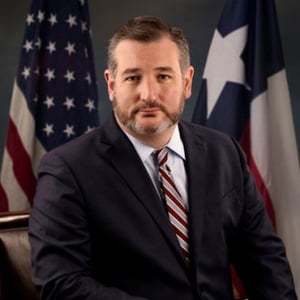
United States Senator, Texas
Ted Cruz represents 28 million Texans in the U.S. Senate as a passionate fighter for limited government and economic growth. He has authored 39 legislative measures signed into law. Recent victories include expanding 529 college savings accounts to allow parents to save for K–12 public, private, and religious education, leading the effort to repeal Obamacare’s individual mandate, imposing sanctions on terrorists who use civilians as human shields, designating North Korea as a state sponsor of terrorism, reauthorizing and reforming NASA, ensuring the availability of additional records to help solve civil rights cold cases, supporting thousands of Texas jobs, and leading the fight to confirm principled constitutionalists to our courts.
Senator Cruz is a graduate of Princeton University and Harvard Law School, a former law clerk to Chief Justice William Rehnquist, and former solicitor general of Texas. He has argued nine cases before the Supreme Court. In November of 2018, he was re-elected to the Senate by the people of Texas.
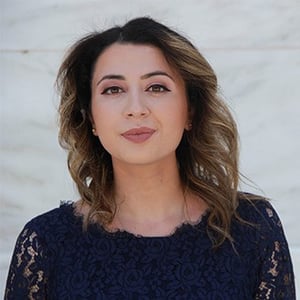
Senior Legal Fellow, The Future of Free Speech, Vanderbilt University
Ashkhen Kazaryan is a renowned expert in First Amendment law and technology policy, specializing in digital free speech, artificial intelligence, and the intersection of constitutional rights with emerging technologies. As a Senior Legal Fellow at the Future of Free Speech at Vanderbilt University, she leads initiatives to protect free expression and shape policies that uphold the First Amendment in the digital age.
Previously, Ashkhen was the lead for North and Latin America on the content regulation team at Meta, where she also served as the company’s policy lead on Section 230. She has also been a Senior Fellow at Stand Together and the Director of Civil Liberties at TechFreedom, where she worked extensively on platform liability, free speech, and internet governance. She is currently Fellow for the First Amendment at the Freedom Forum.
Ashkhen earned her specialist in law degree summa cum laude from Lomonosov Moscow State University in 2012 and later received a master of law degree from Yale Law School in 2016. During her time at Yale, she contributed as an articles editor for the Yale Journal of Law and Feminism, a senior editor for the Yale Law and Policy Review, and an editor for the Yale Journal of Law and Technology, while also serving as co-chair of the Public Interest Fellowship.
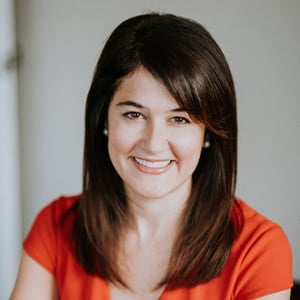
Senior Director of Policy, Conservative Partnership Institute
Rachel Bovard has over a decade of experience fighting for conservative policies in Washington. Beginning in 2006, she served in both the House and Senate in various roles including as legislative director for Senator Rand Paul.
Rachel went on to serve as policy director for the Senate Steering Committee under the successive chairmanships of Senator Pat Toomey (R-PA) and Senator Mike Lee (R-UT), where she advised Committee members on strategy related to floor procedure and policy matters. In the House, she worked as senior legislative assistant to Congressman Donald Manzullo (R-IL), and Congressman Ted Poe (R-TX). She also served as director of policy services for The Heritage Foundation.
Born and raised in Dansville, NY, she received her bachelor’s degree, summa cum laude from Grove City College in 2006. She also holds a master’s degree from the Graduate School of Political Management at George Washington University.
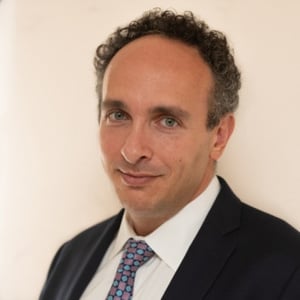
Assistant Professor of Cybersecurity Law, The United States Naval Academy
Jeff Kosseff is an Assistant Professor of Cybersecurity Law at the United States Naval Academy. He is the author of Cybersecurity Law (Wiley), the first comprehensive textbook on U.S. cybersecurity laws and regulations, and in spring 2019 he published The Twenty-Six Words that Created the Internet (Cornell University Press), a nonfiction narrative history of Section 230 of the Communications Decency Act. He currently is writing a third book, also for Cornell University Press, tentatively titled United States of Anonymous, about the history of the First Amendment right to anonymous speech in the United States, from the Federalist Papers to online postings. He received a 2019 Andrew Carnegie Fellowship to research and write the book.
His articles about cybersecurity and Internet law have appeared in Iowa Law Review, Wake Forest Law Review, IEEE Security & Privacy, Computer Law and Security Review, Columbia Science and Technology Law Review, and other publications. In October 2017, he testified about online sex trafficking and Section 230 before the House Judiciary Committee's Subcommittee on Crime, Terrorism, Homeland Security, and Investigations. In March 2017, he testified about Section 702 of the Foreign Intelligence Surveillance Act before the House Judiciary Committee.
Jeff has practiced cybersecurity and privacy law, and clerked for Judge Milan D. Smith, Jr. of the U.S. Court of Appeals for the Ninth Circuit and for Judge Leonie M. Brinkema of the U.S. District Court for the Eastern District of Virginia. He is a graduate of Georgetown University Law Center and the University of Michigan. Before becoming a lawyer, he was a journalist for The Oregonian and was a finalist for the Pulitzer Prize for national reporting.
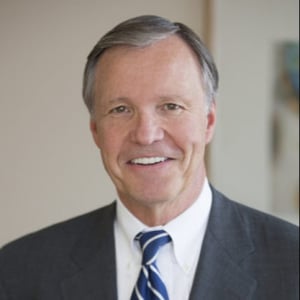
Former Representative, United States House of Representatives, California
Chris Cox serves on the boards of privately held companies in the health care, real estate, regulatory compliance, and technology industries. In 2020 he retired as president of Morgan Lewis Consulting LLC and as partner at the international law firm of Morgan, Lewis & Bockius LLP. His 21-year career in private legal practice also included partnerships at Latham & Watkins LLP and Bingham McCutchen LLP.
During a 23-year Washington career, Chris was a White House counsel to President Ronald Reagan, chairman of the US Securities and Exchange Commission, chairman of the Homeland Security Committee in the US House of Representatives, and the fifth-ranking elected leader in the House. Prior to his Washington service he was a member of the faculty at Harvard Business School.
Chris has recently been recognized by Thomson Reuters as a 2019 "Super Lawyer," by Los Angeles Magazine as one of the "Top Attorneys in Southern California," and by The Best Lawyers in America in the areas of Corporate Governance and Corporate Law, as well as being named Orange County "Corporate Lawyer of the Year" for 2016 and "Corporate Governance Lawyer of the Year" for 2014. He has led numerous corporate governance programs and from 2011 - 2015 served as Chairman of the Forum for Corporate Directors.
In Congress, in addition to his role as chairman of the Committee on Homeland Security, Chris was chairman of the Select Committee on US National Security and a senior member of the Energy and Commerce Committee and the Financial Services Committee. For 10 years he served as chairman of the House Policy Committee. In each of these capacities he was responsible for significant legislation, including the Internet Tax Freedom Act, the Securities Litigation Reform Act, and the Support for Eastern European Democracy Act.
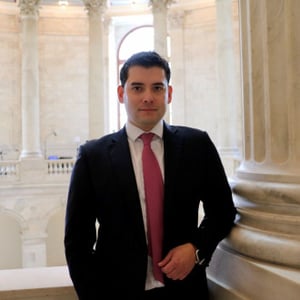
General Counsel, Office of Sen. Marsha Blackburn
Jon Adame serves as General Counsel to Senator Marsha Blackburn, where he advises her on all tech-related issues across her committee assignments (Commerce, Judiciary, Armed Services). He previously worked for her on the House Energy & Commerce Committee. Jon graduated from the University of Colorado School of Law, and received his B.A. from the University of New Mexico.

Professor of Law, Michigan State University (currently serving as FCC General Counsel)
Professor Candeub joined the MSU Law faculty in fall 2004. He is also a Fellow with MSU's Institute of Public Utilities. Prior to joining MSU, he served as an advisor at the Federal Communications Commission (FCC). From 1998 to 2000, Professor Candeub was a litigation associate for the Washington D.C. firm of Jones, Day, Reavis & Pogue and also has served as a corporate associate with Cleary, Gottlieb, Steen & Hamilton, also in Washington, D.C. Immediately following law school, he clerked for Chief Judge J. Clifford Wallace, U.S. Court of Appeals for the Ninth Circuit. While in law school, Professor Candeub was an articles editor for the University of Pennsylvania Law Review.
Professor Candeub's scholarly interests focus on the law and regulation of communications, internet, technology. His numerous law review articles and scholarly papers have placed him at the center of legal and policy controversies, and he often writes for popular outlets such as the Wall Street Journal and US News. Federal courts, including the U.S. Supreme Court, have cited and relied upon his work.
He joined the Trump administration in 2019 as Deputy Assistant Secretary of Commerce for Telecommunications and Information and assumed the role of Acting Assistant Secretary. He later joined the Department of Justice as Deputy Associate Attorney General.
Professor Candeub is a senior fellow at the D.C.-based Center of Renewing America.
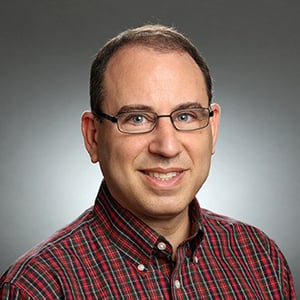
Professor of Law and Co-Director, High Tech Law Institute, Santa Clara University School of Law
Eric Goldman is a Professor of Law, and Co-Director of the High Tech Law Institute, at Santa Clara University School of Law. Before he became a full-time academic in 2002, he practiced Internet law for 8 years in the Silicon Valley. His research and teaching focuses on Internet, IP and advertising law topics, and he blogs on these topics at the Technology & Marketing Law Blog [http://blog.ericgoldman.org]. Managing IP magazine has twice named him to a shortlist of North American “IP Thought Leaders,” and he has been named an “IP Vanguard” by the California State Bar’s IP Section.
Senior Legal Fellow, The Future of Free Speech, Vanderbilt University
Ashkhen Kazaryan is a renowned expert in First Amendment law and technology policy, specializing in digital free speech, artificial intelligence, and the intersection of constitutional rights with emerging technologies. As a Senior Legal Fellow at the Future of Free Speech at Vanderbilt University, she leads initiatives to protect free expression and shape policies that uphold the First Amendment in the digital age.
Previously, Ashkhen was the lead for North and Latin America on the content regulation team at Meta, where she also served as the company’s policy lead on Section 230. She has also been a Senior Fellow at Stand Together and the Director of Civil Liberties at TechFreedom, where she worked extensively on platform liability, free speech, and internet governance. She is currently Fellow for the First Amendment at the Freedom Forum.
Ashkhen earned her specialist in law degree summa cum laude from Lomonosov Moscow State University in 2012 and later received a master of law degree from Yale Law School in 2016. During her time at Yale, she contributed as an articles editor for the Yale Journal of Law and Feminism, a senior editor for the Yale Law and Policy Review, and an editor for the Yale Journal of Law and Technology, while also serving as co-chair of the Public Interest Fellowship.
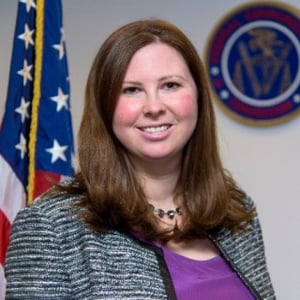
Legislative Director for Senator Marsha Blackburn, U.S. Senate
Jamie Susskind is the Legislative Director for Senator Marsha Blackburn (R-TN). Prior to becoming Legislative Director, she served for two years as the Senator’s Technology Policy Advisor. In that role, she advised on issues such as data privacy, cybersecurity, broadband, spectrum, content moderation, and antitrust, in addition to staffing the Senator on the Senate Commerce Subcommittee on Consumer Protection, Product Safety, and Data Security. Susskind previously worked on the Hill as Chief Counsel to Senator Deb Fischer (R-NE) and as an FCC Detailee for the Senate Committee on Commerce, Science, and Transportation. She also served as Chief of Staff to FCC Commissioner Brendan Carr and as Vice President of Policy and Regulatory Affairs at the Consumer Technology Association. A native Michigander, Susskind earned a Juris Doctor from the Antonin Scalia Law School and a Bachelor of Arts degree from the University of Michigan (Go Blue!).
General Counsel, Office of Sen. Marsha Blackburn
Jon Adame serves as General Counsel to Senator Marsha Blackburn, where he advises her on all tech-related issues across her committee assignments (Commerce, Judiciary, Armed Services). He previously worked for her on the House Energy & Commerce Committee. Jon graduated from the University of Colorado School of Law, and received his B.A. from the University of New Mexico.
Professor of Law, Michigan State University (currently serving as FCC General Counsel)
Professor Candeub joined the MSU Law faculty in fall 2004. He is also a Fellow with MSU's Institute of Public Utilities. Prior to joining MSU, he served as an advisor at the Federal Communications Commission (FCC). From 1998 to 2000, Professor Candeub was a litigation associate for the Washington D.C. firm of Jones, Day, Reavis & Pogue and also has served as a corporate associate with Cleary, Gottlieb, Steen & Hamilton, also in Washington, D.C. Immediately following law school, he clerked for Chief Judge J. Clifford Wallace, U.S. Court of Appeals for the Ninth Circuit. While in law school, Professor Candeub was an articles editor for the University of Pennsylvania Law Review.
Professor Candeub's scholarly interests focus on the law and regulation of communications, internet, technology. His numerous law review articles and scholarly papers have placed him at the center of legal and policy controversies, and he often writes for popular outlets such as the Wall Street Journal and US News. Federal courts, including the U.S. Supreme Court, have cited and relied upon his work.
He joined the Trump administration in 2019 as Deputy Assistant Secretary of Commerce for Telecommunications and Information and assumed the role of Acting Assistant Secretary. He later joined the Department of Justice as Deputy Associate Attorney General.
Professor Candeub is a senior fellow at the D.C.-based Center of Renewing America.
Professor of Law and Co-Director, High Tech Law Institute, Santa Clara University School of Law
Eric Goldman is a Professor of Law, and Co-Director of the High Tech Law Institute, at Santa Clara University School of Law. Before he became a full-time academic in 2002, he practiced Internet law for 8 years in the Silicon Valley. His research and teaching focuses on Internet, IP and advertising law topics, and he blogs on these topics at the Technology & Marketing Law Blog [http://blog.ericgoldman.org]. Managing IP magazine has twice named him to a shortlist of North American “IP Thought Leaders,” and he has been named an “IP Vanguard” by the California State Bar’s IP Section.
Senior Legal Fellow, The Future of Free Speech, Vanderbilt University
Ashkhen Kazaryan is a renowned expert in First Amendment law and technology policy, specializing in digital free speech, artificial intelligence, and the intersection of constitutional rights with emerging technologies. As a Senior Legal Fellow at the Future of Free Speech at Vanderbilt University, she leads initiatives to protect free expression and shape policies that uphold the First Amendment in the digital age.
Previously, Ashkhen was the lead for North and Latin America on the content regulation team at Meta, where she also served as the company’s policy lead on Section 230. She has also been a Senior Fellow at Stand Together and the Director of Civil Liberties at TechFreedom, where she worked extensively on platform liability, free speech, and internet governance. She is currently Fellow for the First Amendment at the Freedom Forum.
Ashkhen earned her specialist in law degree summa cum laude from Lomonosov Moscow State University in 2012 and later received a master of law degree from Yale Law School in 2016. During her time at Yale, she contributed as an articles editor for the Yale Journal of Law and Feminism, a senior editor for the Yale Law and Policy Review, and an editor for the Yale Journal of Law and Technology, while also serving as co-chair of the Public Interest Fellowship.
Legislative Director for Senator Marsha Blackburn, U.S. Senate
Jamie Susskind is the Legislative Director for Senator Marsha Blackburn (R-TN). Prior to becoming Legislative Director, she served for two years as the Senator’s Technology Policy Advisor. In that role, she advised on issues such as data privacy, cybersecurity, broadband, spectrum, content moderation, and antitrust, in addition to staffing the Senator on the Senate Commerce Subcommittee on Consumer Protection, Product Safety, and Data Security. Susskind previously worked on the Hill as Chief Counsel to Senator Deb Fischer (R-NE) and as an FCC Detailee for the Senate Committee on Commerce, Science, and Transportation. She also served as Chief of Staff to FCC Commissioner Brendan Carr and as Vice President of Policy and Regulatory Affairs at the Consumer Technology Association. A native Michigander, Susskind earned a Juris Doctor from the Antonin Scalia Law School and a Bachelor of Arts degree from the University of Michigan (Go Blue!).

President, Cass & Associates, PC
Ronald A. Cass is Dean Emeritus of Boston University School of Law (where he was Dean from 1990-2004), President of Cass & Associates, PC, former Vice-Chairman and Commissioner of the U.S. International Trade Commission, former faculty member at Boston University School of Law and the University of Virginia Law School, and Distinguished Senior Fellow at the C. Boyden Gray Center for the Study of the Administrative State. Dean Cass also sits as an arbitrator for commercial, international, and intellectual property rights disputes, and is a former United States member of the Panel of Conciliators of the International Centre for Settlement of Investment Disputes. He is a member of the Council of the Administrative Conference of the United States and has received seven presidential appointments, spanning Presidents Ronald Reagan to Donald J. Trump.
As a law professor, lecturer, and scholar, Dean Cass has been teaching and writing about a wide array of legal issues on topics such as administrative law and regulation, antitrust, constitutional law, communications, intellectual property, international trade, separation of powers, and legal process. He has published more than 160 scholarly books, chapters, articles, and papers, including a leading casebook on administrative law. Dean Cass has taught judges as well as students in schools of law, economics, business, and public policy and has held academic appointments in the United States, Europe, and Latin America.
In addition to his academic work, Dean Cass has participated in numerous important legal cases as an amicus, consultant, or expert, and has advised businesses, law firms, investment funds, and government agencies on a range of trade, antitrust, intellectual property, and regulatory issues. He has a broad range of affiliations with professional groups, and has received numerous honors, fellowships and awards.
Dean Cass is a graduate of the University of Virginia and the University of Chicago Law School.

Head of AI Policy, Abundance Institute
Neil Chilson is the Head of AI Policy at the Abundance Institute. Prior to this position, he served as a Senior Research Fellow at the Center for Growth and Opportunity. Chilson is a lawyer, computer scientist, and author of the book “Getting Out of Control: Emergent Leadership in a Complex World.”
Chilson was previously the senior research fellow for Technology and Innovation at Stand Together, where he guided efforts to understand and promote the legal and cultural paradigms that best enable people to discover, innovate, and improve all our lives.
Before Stand Together, Chilson was the Chief Technologist at the Federal Trade Commission, where he focused on the economics of privacy and blockchain-related issues. Previously, he was an attorney advisor to Acting FTC Chairman Maureen K. Ohlhausen. In both roles he advised Chairman Ohlhausen and worked with staff on nearly every major technology-related case, report, workshop, or other FTC proceeding since January 2014. Neil joined the FTC from telecom firm Wilkinson Barker Knauer. Neil is frequently quoted by the press and his work has appeared in numerous news outlets, including The Wall Street Journal, The Washington Post, USAToday, and Newsweek. Neil has a J.D. from The George Washington Law School, a M.S. in computer science from University of Illinois, Urbana-Champaign, and a B.S. in computer science from Harding University.
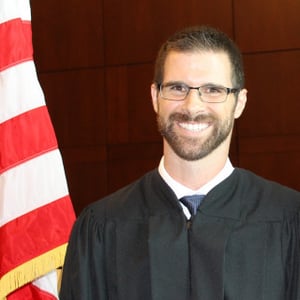
Judge, U.S. District Court, Eastern and Western Districts of Missouri
Josh Divine was most recently the Solicitor General of Missouri, where he oversaw the office's appellate and special litigation divisions. As Solicitor General, Mr. Divine led Missouri's trial and appellate teams to some of its most significant victories. Mr. Divine was lead counsel in blocking $700 billion in student loan bailouts attempted by the federal government. He was lead counsel in obtaining a $25 billion judgment against China for antitrust violations. And he was lead counsel in successfully defending the Missouri law that prohibits gender transition interventions in minors, making Missouri the only state in the nation to prevail at trial against an equal protection challenge to one of these laws. In addition, Mr. Divine's work at the trial court in Missouri v. Biden (restyled Murthy v. Missouri) helped expose systemic violations of the First Amendment by the federal government, which the trial court found was unconstitutionally pressuring social media companies to suppress millions of free speech posts.
Before serving as Solicitor General, Mr. Divine was Chief Counsel to U.S. Senator Josh Hawley, where he oversaw all legal issues, managed matters related to the Judiciary Committee, and developed tech policy. Mr. Divine clerked on the Supreme Court for Justice Thomas and on the Eleventh Circuit for Judge William Pryor. He received a J.D. from Yale Law School and a Bachelor of Science degree in mathematics from the University of Northern Colorado. His recent legal scholarship has appeared in the Virginia Law Review and the Hastings Law Journal.
VP, Legal Policy and Copyright Counsel, Copyright Alliance
Terry Hart joined the Copyright Alliance in 2013. He has been quoted by publications such as Politico, The Hollywood Reporter, and BNA’s Patent, Trademark, and Copyright Daily. His articles have appeared in publications including the George Mason Law Review, SCOTUSBlog, and IP Watchdog. He speaks regularly and has appeared at events such as the Copyright Society Mid-Winter Meeting, the Fordham IP Law & Policy Conference, the CPIP Fall Conference, the IPO Annual Meeting, and the WIPO/USPTO Summer School on IP.
Since 2010, Terry has blogged at Copyhype on copyright law, history, and policy. The blog was named one of the top 100 legal blogs by the American Bar Association in 2011 and has been cited in law review articles, legal filings, and books.
In addition, he is an adjunct professor at George Mason University School of Law, where he teaches copyright law.
Counsel, Hunton Andrews Kurth
The former Principal Deputy Solicitor General in Virginia’s Office of the Attorney General, Matt is a seasoned appellate and trial court attorney. As counsel, Matt focuses on appellate litigation as well as helping clients frame complex legal issues before trial courts and administrative agencies.
Before joining Hunton Andrews Kurth LLP, Matt served for nearly four years in the Solicitor General’s division of the Office of the Attorney General of Virginia. He represented the Commonwealth, its agencies and its officials in significant and sensitive cases pending before the US Supreme Court, the US Courts of Appeals, the Supreme Court of Virginia and federal and state trial courts. Before the US Supreme Court, Matt briefed, argued and won a 5-4 victory in Currier v. Virginia, 138 S. Ct. 2144 (2018). That case involved a “complicated” constitutional question about the double jeopardy clause, which resulted in one commentator noting “the exceptionally high intellectual plane of the Supreme Court’s discourse” during the argument (SCOTUSBlog 2018). Matt was also the principal attorney defending the sentence imposed on Lee Boyd Malvo, one of the “D.C. Snipers,” including drafting the successful petition for writ of certiorari, granted by the US Supreme Court in 2019. Recently, Matt argued before the full en banc US Court of Appeals for the Fourth Circuit in Manning v. Caldwell, a case challenging the constitutionality of Virginia’s habitual drunkard laws, and successfully represented the Virginia State Bar before the Supreme Court of Virginia in Morrissey v. Virginia State Bar.
Before joining the Attorney General’s office, Matt frequently represented clients before the Federal Energy Regulatory Commission (FERC) in proceedings arising under the Federal Power Act and the Natural Gas Act. Immediately after law school, Matt served as a law clerk for Judge E. Grady Jolly on the US Court of Appeals for the Fifth Circuit.
Matt also co-teaches a course on the Constitution and State Attorneys General at the University of Richmond School of Law.
Professor, The University of Texas at Austin
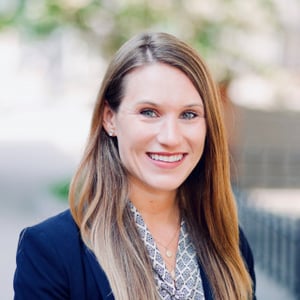
Counsel, Becket Fund for Religious Liberty
Amanda Salz is counsel at the Becket Fund for Religious Liberty, where her practice focuses on First Amendment litigation at both the trial and appellate levels. She is also a member of the Federalist Society’s Religious Liberties Executive Committee.
Before joining Becket, Amanda worked as an associate at Morgan, Lewis & Bockius LLP. As a member of the firm’s appellate group, Amanda litigated many cases involving constitutional and administrative issues. In addition to her experience in private practice, Amanda clerked for the Honorable Andrew S. Oldham of the U.S. Court of Appeals for the Fifth Circuit and the Honorable Reed C. O’Connor of the U.S. District Court for the Northern District of Texas.
Vice President of Speakers, Texas Student Chapter

Laurence H. Silberman Chair in Constitutional Governance, American Enterprise Institute; Executive Director, Antonin Scalia Law School’s C. Boyden Gray Center for the Study of the Administrative State
Adam J. White is the Laurence H. Silberman Chair in Constitutional Governance and senior fellow at the American Enterprise Institute, where he focuses on the Supreme Court and the administrative state. He also directs the Antonin Scalia Law School’s C. Boyden Gray Center for the Study of the Administrative State.
He writes on regulation and constitutional government for a variety of publications. He practiced law in Washington, D.C., after clerking for the D.C. Circuit's Judge David Sentelle. He also has been chairman of the ABA's Administrative Law Section.
In 2021, he served on the Presidential Commission on the Supreme Court of the United States, where he criticized “Court packing” and other efforts to restructure the Supreme Court.

Agnes Williams Sesquicentennial Professor of Federal Courts, Georgetown Law
Stephen I. Vladeck is a professor of law at the Georgetown University Law Center, and is a nationally recognized expert on the federal courts; the Supreme Court; national security law; and military justice.
Vladeck is author of the New York Times bestselling book, “The Shadow Docket: How the Supreme Court Uses Stealth Rulings to Amass Power and Undermine the Republic,” which won the 2023 Writers’ League of Texas Book Award for Non-Fiction and was a finalist for the 2024 ABA Silver Gavel Award for Media and the Arts. Vladeck is also a highly regarded appellate advocate, having argued three cases before the U.S. Supreme Court and over a dozen before various lower federal civilian and military courts. He has received numerous awards for his influential and widely cited legal scholarship, his prolific popular writing, his teaching, and his service to the legal profession—including the 2024 University of Texas President’s Research Impact Award and his selection by the Order of the Coif to serve as its Distinguished Visiting Professor for 2025.
Vladeck is CNN’s Supreme Court analyst and editor and author of “One First,” a popular weekly newsletter about the Supreme Court. Together with Bobby Chesney, Vladeck co-hosts the popular and award-winning “National Security Law Podcast.” He is also a co-author of Aspen Publishers’ leading national security law and counterterrorism law casebooks. And he is a member of the Board of Trustees of EarthJustice—the nation’s premier nonprofit public interest environmental law organization.
Vladeck graduated from Yale Law School in 2004—where he was executive editor of the Yale Law Journal and won the Harlan Fiske Stone Prize for outstanding moot court oralist and shared the Potter Stewart Prize for best moot court team performance. After law school, he clerked for the Honorable Marsha S. Berzon on the U.S. Court of Appeals for the Ninth Circuit and the Honorable Rosemary Barkett on the U.S. Court of Appeals for the Eleventh Circuit. He earned a B.A. summa cum laude with Highest Distinction in History and Mathematics from Amherst College in 2001—where he wrote his senior thesis on “Leipzig’s Shadow: The War Crimes Trials of the First World War and Their Implications from Nuremberg to the Present.” A native New Yorker and hopeless Mets fan, Vladeck lives in the District with his wife, Karen (Founder and Managing Partner of Risepoint Search Partners); their daughters, Madeleine and Sydney; and their eleven-year-old pug, Roxanna.


Leave a Decent Comment: Section 230 & the Fight for the Future of the Internet
Ted Cruz, Ashkhen Kazaryan, Rachel Bovard, Jeff Kosseff, C. Christopher Cox
When politicians and big tech clash over political bias, fake news, and content moderation, who...
Deep Dive Episode 131 – Free Speech in the Digital Era: Section 230 and the FCC
Jon Adame, Adam Candeub, Eric Goldman, Ashkhen Kazaryan, Jamie Susskind
Section 230 of the Communications Decency Act provides liability protection to platforms, internet service providers,...
Free Speech in the Digital Era: Section 230 and the Federal Communications Commission
Jon Adame, Adam Candeub, Eric Goldman, Ashkhen Kazaryan, Jamie Susskind
Section 230 of the Communications Decency Act provides liability protection to platforms, internet service providers,...
Section 230 of the Communications Decency Act
Ronald A. Cass, Neil Chilson, Josh Divine
Section 230 of Communications Decency Act protects platforms from liability for the content produced by...
Deep Dive Episode 76 – State-Sponsored Piracy? The Allen v. Cooper Case
Michael Bynum, Terry Hart, Matthew McGuire
What happens when a state agency uses without authorization copyrighted videos and pictures of Blackbeard’s...
The Free Speech Vernacular
Tara A. Smith, Amanda Salz, Ashley H. Terrazas
Is there something wrong with the way we speak about speech? Tara Smith, Professor of...
Article III Standing and the Texas Immigration Case - Podcast
Adam White, Stephen I. Vladeck
The Supreme Court will soon decide whether to hear a challenge by Texas (and 25...