

Milton R. Underwood Chair in Free Enterprise, Vanderbilt University Law School
Brian Fitzpatrick is the Milton R. Underwood Chair in Free Enterprise and Professor of Law at Vanderbilt Law School, where his research focuses on class action litigation, federal courts, judicial selection, and constitutional law. He is best known for his empirical studies of class action settlements as well as his book The Conservative Case for Class Actions (University of Chicago Press, 2019). Professor Fitzpatrick joined Vanderbilt's law faculty in 2007 after serving as the John M. Olin Fellow at New York University School of Law. He graduated first in his class from Harvard Law School and went on to clerk for Judge Diarmuid O'Scannlain on the U.S. Court of Appeals for the Ninth Circuit and Justice Antonin Scalia on the U.S. Supreme Court. After his clerkships, Professor Fitzpatrick practiced commercial and appellate litigation for several years at Sidley Austin in Washington, D.C., and served as Special Counsel for Supreme Court Nominations to U.S. Senator John Cornyn. Before earning his law degree, Fitzpatrick graduated summa cum laude with a bachelor's of science in chemical engineering from the University of Notre Dame. He has received the Hall-Hartman Outstanding Professor Award, which recognizes excellence in classroom teaching, for his Civil Procedure and Federal Courts courses.
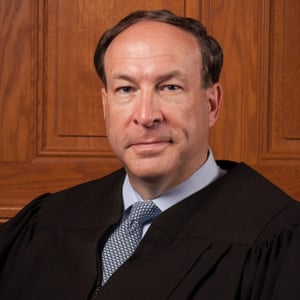
Judge, United States Court of Appeals, Seventh Circuit
Michael B. Brennan was confirmed and sworn in as a Circuit Judge for the U.S. Court of Appeals for the Seventh Circuit in May 2018.
He previously worked as a partner in the Milwaukee law firm of Gass Weber Mullins LLC, where he tried cases and handled appeals in federal and state courts, as a judge on the Milwaukee County Circuit, where he presided over a variety of criminal and civil calendars, and as an assistant district attorney in the Milwaukee County District Attorney’s office.
Brennan’s undergraduate degree is from the University of Notre Dame, and his law degree from Northwestern University School of Law, where he was an editor on the law review and the moot court champion. He served as a law clerk on the U.S. District Court for the Eastern District of Wisconsin and the U.S. Court of Appeals for the Seventh Circuit.

Supreme Court Director, Institute for Constitutional Advocacy & Protection, Georgetown Law
Kelsi Corkran is the Supreme Court Director at the Institute for Constitutional Advocacy & Protection and a Senior Lecturer at Georgetown Law. Kelsi has served as lead counsel in numerous civil rights cases before the Supreme Court, including Trump v. CASA, Grants Pass v. Johnson, Acheson Hotels v. Laufer, Torres v. Madrid, and City of Hays v. Vogt. She has also argued over 30 cases in the courts of appeals, including 12 of the 13 U.S. Courts of Appeals and the en banc Sixth and Ninth Circuits.
Immediately prior to joining ICAP, Kelsi was the Head of the Supreme Court Practice at Orrick, Herrington & Sutcliffe. She previously served as a law clerk to Justice Ruth Bader Ginsburg of the United States Supreme Court and Judge David S. Tatel of the U.S. Court of Appeals for the D.C. Circuit. Among other positions, she was as an attorney with the Civil Appellate Staff at the U.S. Department of Justice and in the Communications Office of the White House’s Executive Office of the President, where she assisted with judicial nominations, including the confirmation hearings of Justice Sonia Sotomayor. Before law school, she was a social worker in Philadelphia’s foster care system.
Kelsi is a member of the American Law Institute, the Executive Committee of the Board of Directors for the Washington Lawyers Committee for Civil Rights and Urban Affairs, and the D.C. Circuit Advisory Committee on Procedures. She previously served on the Supreme Court Practitioners’ Committee for the Presidential Commission on the Supreme Court of the United States and on the Executive Committee of the Board of Trustees for the Legal Aid Society of the District of Columbia. She received her B.A. from the University of Pennsylvania and her J.D. and M.P.P. from the University of Chicago.
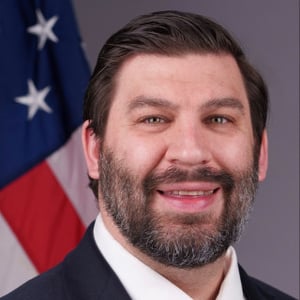
Deputy Counsel, the President
Gary currently is the Deputy Counsel to the President. He was previously a partner at the Dhillon Law Group and worked at the Department of the Interior and Federal Election Commission. He is a native of Virginia, and earned his B.A. and J.D. from the University of Virginia.
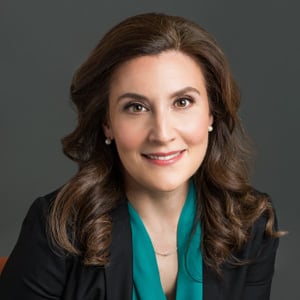
Board Member, U.S. Privacy and Civil Liberties Oversight Board
Beth A. Williams is a Board Member of the United States Privacy and Civil Liberties Oversight Board, an agency whose mission is to ensure that the federal government's efforts to prevent terrorism are balanced with the need to protect privacy and civil liberties.
Prior to her Board service, Ms. Williams was the Assistant Attorney General for the Office of Legal Policy at the United States Department of Justice from August 2017 to December 2020. In that role, she served as the primary policy advisor to the Attorney General and the Deputy Attorney General, and as the Chief Regulatory Officer for the Department. Ms. Williams also led the judicial nomination process for the Department, assisting in the selection and confirmation of more than 230 Article III judges to the bench.
Prior to becoming Assistant Attorney General, Ms. Williams was a litigation and appellate partner at a national law firm, where her practice focused on complex commercial, securities, appellate, and First Amendment litigation. From 2005-2006, Ms. Williams served as Special Counsel to the United States Senate Committee on the Judiciary, where she assisted with the confirmation of Chief Justice John G. Roberts, Jr. and Associate Justice Samuel A. Alito, Jr. to the United States Supreme Court.
Ms. Williams clerked for the Hon. Richard C. Wesley on the United State Court of Appeals for the Second Circuit. She graduated from Harvard College magna cum laude, with a degree in History and Literature, and she earned her law degree from Harvard Law School, where she served as Executive Editor of the Harvard Journal of Law and Public Policy.

Professor, University of Minnesota Law School
Ilan Wurman is the Julius E. Davis Professor of Law at the University of Minnesota, where he teaches administrative law and constitutional law. He previously taught at Arizona State University. He writes primarily on the Fourteenth Amendment, administrative law, separation of powers, and constitutionalism. His academic writing has appeared in the Yale Law Journal, the Stanford Law Review, the University of Chicago Law Review, the University of Pennsylvania Law Review, the Virginia Law Review, the Duke Law Journal, the Minnesota Law Review, the Notre Dame Law Review, and the Texas Law Review among other journals.
Professor Wurman is the author of a casebook, Administrative Law Theory and Fundamentals: An Integrated Approach (Foundation Press 2d ed. 2024). He is also the author of A Debt Against the Living: An Introduction to Originalism (Cambridge 2017), and The Second Founding: An Introduction to the Fourteenth Amendment (Cambridge 2020). His next book, The Constitution of 1789: A New Introduction, is also forthcoming with Cambridge University Press.
Professor Wurman practices law with the firm Tully Bailey. He has litigated a variety of administrative law and constitutional law cases, including cases involving COVID-19 restrictions, transmission lines, and Appointments Clause challenges. He also devised winning public nuisance theories to force city governments to address the increasingly challenging public camping crises throughout the country.
President, EmpiriLaw
Dr. Adam Feldman is the creator and author of the blog Empirical SCOTUS and the Substack Legalytics. He is also the statistics editor for SCOTUSblog. He also runs the legal analytics/AI consulting business Empiri-Law and teaches college courses in political science. He has a law degree from U.C. Berkeley's Boalt Hall School of Law and practiced law as a trial lawyer for several years before starting a Ph.D. in Political Science from the University of Southern California. Upon completion of the Ph.D. Adam pursued a postdoctoral fellowship through Columbia Law School. He has fifteen published articles in law and peer-reviewed journals.
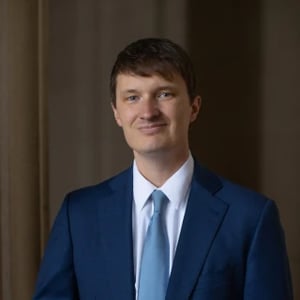
Partner, Boyden Gray PLLC
Trent McCotter is a partner with Boyden Gray PLLC. He previously served as Deputy Associate Attorney General of the United States and as an Assistant U.S. Attorney.
Mr. McCotter maintains an extensive appellate practice. He has considerable experience identifying and briefing cases that draw the Supreme Court’s attention, having persuaded the Court to grant certiorari in numerous cases raising issues of sovereignty, constitutional rights, due process, and criminal law. He has authored and submitted over 60 briefs at the Court.
He has also personally argued more than fifteen federal appeals across the Second, Fourth, Fifth, Sixth, Ninth, Eleventh, Federal, and D.C. Circuits—including once arguing three separate appeals in just four days. He has also twice argued before the 17-judge en banc Fifth Circuit. He has been counsel in over 50 other appeals raising matters from FOIA and the APA to constitutional rights and statutory construction.
As Deputy Associate Attorney General, Mr. McCotter oversaw DOJ’s Civil Appellate and Federal Programs branches, which are responsible for defending nearly all major litigation against the federal government. During his three years as a federal trial attorney in the Eastern District of Virginia’s “Rocket Docket,” Mr. McCotter won the Attorney General’s Award for Distinguished Service.
During his DOJ tenures, Mr. McCotter also assisted with the confirmations of two Supreme Court justices and over a dozen lower-court judges.
Mr. McCotter served as an inaugural clerk to the Hon. Steven J. Menashi on the U.S. Court of Appeals for the Second Circuit and also clerked for the Hon. R. Lanier Anderson III on the U.S. Court of Appeals for the Eleventh Circuit.

Executive Vice President, The Federalist Society
Dean Reuter is Executive Vice President at the Federalist Society for Law and Public Policy Studies. He has served in two federal government agency Offices of the Inspector General, as Counsel to the Inspector General and Deputy Inspector General, responsible for policing the use of federal funds granted and contracted through those agencies. As such, he helped conduct and oversee criminal investigations across the country. He is the principal author of the non-fiction book, The Hidden Nazi: The Untold Story of America's Deal with the Devil, and editor of Liberty’s Nemesis: The Unchecked Expansion of the State and Confronting Terror: 9/11 and the Future of American National Security. He was appointed by the President and served as Vice-Chairman of the Board of Directors of the Corporation for National and Community Service, and recently served as an appointee on the U.S. Commission on Presidential Scholars. He is a graduate of Hood College (BA with Honors) and the University of Maryland School of Law.
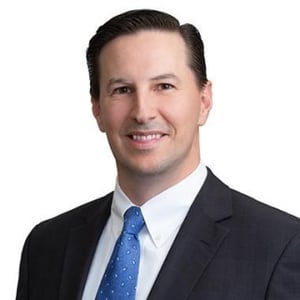
Chairman, Supreme Court and Constitutional Law Practice, Baker Botts LLP
Aaron Streett is the Chairman of Baker Botts’ Supreme Court and Constitutional Law Practice. He has presented oral argument in scores of appeals, covering the U.S. Supreme Court and courts around the country—including over 40 arguments between the Fifth and D.C. Circuits alone. Mr. Streett’s practice involves virtually all substantive areas of the law, including commercial litigation, statutory interpretation, constitutional law, administrative law, securities, and jurisdictional issues. Mr. Streett maintains an active practice in the Supreme Court of the United States, having represented parties in merits cases seven times since 2010, as well as filing numerous amicus and certiorari-stage briefs. Mr. Streett was named one of only six “Appellate MVPs” for 2014 by Law360, which had previously recognized him in 2011 as one of the top five appellate “Rising Stars” under age 40. Mr. Streett has been featured on National Law Journal’s Appellate Hot List three times in recent years and in 2021 was named Houston’s “Lawyer of the Year” for Appellate Practice by Best Lawyers magazine. Mr. Streett is an elected member of the American Law Institute and a fellow of the American Academy of Appellate Lawyers. He serves on the Board of Directors for the Fifth Circuit Bar Association and previously served as President of the Houston Lawyers Chapter of the Federalist Society. Mr. Streett speaks regularly on the Supreme Court and constitutional law to attorneys and law students around the country. Following graduation from Hillsdale College and University of Texas School of Law, Mr. Streett served as a law clerk to the Honorable David B. Sentelle of the United States Court of Appeals for the District of Columbia Circuit and to the Honorable William H. Rehnquist, Chief Justice of the United States.
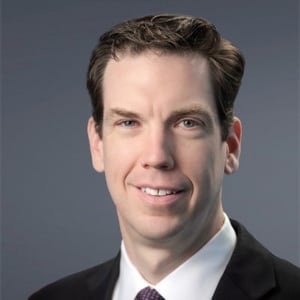
Partner, Fusion Law, PLLC
Paul is the founding partner of Fusion Law, PLLC. He has extensive experience with state, federal, and global regulators building coalitions and implementing policies to promote innovation in financial services. He is responsible for designing and implementing the first state (Arizona) and federal (CFPB) FinTech sandboxes in the United States. He also designed the CFPB no-action letter and trial disclosure policies. He helped found the first global regulatory innovation coalition (Global Financial Innovation Network) and led the founding of the first U.S. regulatory innovation coalition (American Consumer Financial Innovation Network). He served on the Financial Stability Oversight Council subcommittee on digital assets. He also has drafted state-level laws on blockchain and utility tokens.
Paul also has significant enforcement and litigation experience. He led many multi-state consumer protection enforcement matters as Civil Litigation Division Chief at the Arizona Attorney General’s Office.
Prior to his government service, Paul practiced law in the areas of securities litigation and transactional work for approximately six years at two well-known law firms. He also clerked on the U.S. Court of Appeals for the Fourth Circuit.
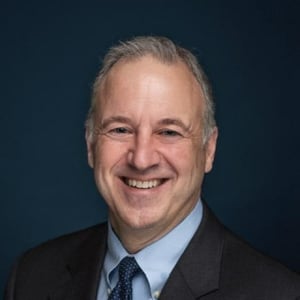
Senior Counsel, Litigation, Defense of Freedom Institute
Don Daugherty is Senior Counsel, Litigation, at the Defense of Freedom Institute for Policy Studies. He previously served as a Senior Counsel at the Institute for Free Speech and the Wisconsin Institute for Law & Liberty. Before that, he was a partner at three of Wisconsin’s largest firms, with nearly 30 years of trial and appellate litigation experience. He has been consistently recognized as among the “Best Lawyers in America,” as well as Wisconsin’s “Super Lawyers.” He received his B.A. from the University of Virginia and his J.D. from Northwestern University Law School. After law school, he served as a clerk to the Honorable Roger J. Miner of the United States Court of Appeals for the Second Circuit.
Don is on the Board of Advisors for the Milwaukee Lawyers’ Chapter of the Federalist Society, and on the Executive Committee of the Federalist Society’s Litigation Practice Group.
Supreme Court Director, Institute for Constitutional Advocacy & Protection, Georgetown Law
Kelsi Corkran is the Supreme Court Director at the Institute for Constitutional Advocacy & Protection and a Senior Lecturer at Georgetown Law. Kelsi has served as lead counsel in numerous civil rights cases before the Supreme Court, including Trump v. CASA, Grants Pass v. Johnson, Acheson Hotels v. Laufer, Torres v. Madrid, and City of Hays v. Vogt. She has also argued over 30 cases in the courts of appeals, including 12 of the 13 U.S. Courts of Appeals and the en banc Sixth and Ninth Circuits.
Immediately prior to joining ICAP, Kelsi was the Head of the Supreme Court Practice at Orrick, Herrington & Sutcliffe. She previously served as a law clerk to Justice Ruth Bader Ginsburg of the United States Supreme Court and Judge David S. Tatel of the U.S. Court of Appeals for the D.C. Circuit. Among other positions, she was as an attorney with the Civil Appellate Staff at the U.S. Department of Justice and in the Communications Office of the White House’s Executive Office of the President, where she assisted with judicial nominations, including the confirmation hearings of Justice Sonia Sotomayor. Before law school, she was a social worker in Philadelphia’s foster care system.
Kelsi is a member of the American Law Institute, the Executive Committee of the Board of Directors for the Washington Lawyers Committee for Civil Rights and Urban Affairs, and the D.C. Circuit Advisory Committee on Procedures. She previously served on the Supreme Court Practitioners’ Committee for the Presidential Commission on the Supreme Court of the United States and on the Executive Committee of the Board of Trustees for the Legal Aid Society of the District of Columbia. She received her B.A. from the University of Pennsylvania and her J.D. and M.P.P. from the University of Chicago.
Judge, United States Court of Appeals, Seventh Circuit
Michael B. Brennan was confirmed and sworn in as a Circuit Judge for the U.S. Court of Appeals for the Seventh Circuit in May 2018.
He previously worked as a partner in the Milwaukee law firm of Gass Weber Mullins LLC, where he tried cases and handled appeals in federal and state courts, as a judge on the Milwaukee County Circuit, where he presided over a variety of criminal and civil calendars, and as an assistant district attorney in the Milwaukee County District Attorney’s office.
Brennan’s undergraduate degree is from the University of Notre Dame, and his law degree from Northwestern University School of Law, where he was an editor on the law review and the moot court champion. He served as a law clerk on the U.S. District Court for the Eastern District of Wisconsin and the U.S. Court of Appeals for the Seventh Circuit.
Deputy Counsel, the President
Gary currently is the Deputy Counsel to the President. He was previously a partner at the Dhillon Law Group and worked at the Department of the Interior and Federal Election Commission. He is a native of Virginia, and earned his B.A. and J.D. from the University of Virginia.
Board Member, U.S. Privacy and Civil Liberties Oversight Board
Beth A. Williams is a Board Member of the United States Privacy and Civil Liberties Oversight Board, an agency whose mission is to ensure that the federal government's efforts to prevent terrorism are balanced with the need to protect privacy and civil liberties.
Prior to her Board service, Ms. Williams was the Assistant Attorney General for the Office of Legal Policy at the United States Department of Justice from August 2017 to December 2020. In that role, she served as the primary policy advisor to the Attorney General and the Deputy Attorney General, and as the Chief Regulatory Officer for the Department. Ms. Williams also led the judicial nomination process for the Department, assisting in the selection and confirmation of more than 230 Article III judges to the bench.
Prior to becoming Assistant Attorney General, Ms. Williams was a litigation and appellate partner at a national law firm, where her practice focused on complex commercial, securities, appellate, and First Amendment litigation. From 2005-2006, Ms. Williams served as Special Counsel to the United States Senate Committee on the Judiciary, where she assisted with the confirmation of Chief Justice John G. Roberts, Jr. and Associate Justice Samuel A. Alito, Jr. to the United States Supreme Court.
Ms. Williams clerked for the Hon. Richard C. Wesley on the United State Court of Appeals for the Second Circuit. She graduated from Harvard College magna cum laude, with a degree in History and Literature, and she earned her law degree from Harvard Law School, where she served as Executive Editor of the Harvard Journal of Law and Public Policy.
Professor, University of Minnesota Law School
Ilan Wurman is the Julius E. Davis Professor of Law at the University of Minnesota, where he teaches administrative law and constitutional law. He previously taught at Arizona State University. He writes primarily on the Fourteenth Amendment, administrative law, separation of powers, and constitutionalism. His academic writing has appeared in the Yale Law Journal, the Stanford Law Review, the University of Chicago Law Review, the University of Pennsylvania Law Review, the Virginia Law Review, the Duke Law Journal, the Minnesota Law Review, the Notre Dame Law Review, and the Texas Law Review among other journals.
Professor Wurman is the author of a casebook, Administrative Law Theory and Fundamentals: An Integrated Approach (Foundation Press 2d ed. 2024). He is also the author of A Debt Against the Living: An Introduction to Originalism (Cambridge 2017), and The Second Founding: An Introduction to the Fourteenth Amendment (Cambridge 2020). His next book, The Constitution of 1789: A New Introduction, is also forthcoming with Cambridge University Press.
Professor Wurman practices law with the firm Tully Bailey. He has litigated a variety of administrative law and constitutional law cases, including cases involving COVID-19 restrictions, transmission lines, and Appointments Clause challenges. He also devised winning public nuisance theories to force city governments to address the increasingly challenging public camping crises throughout the country.

CANCELED: Nationwide Injunctions after Trump v. CASA: Prof. Brian Fitzpatrick on the Future of Class Actions
Orange County Lawyer Chapter
Irvine, CAStructure Over Spectacle: The Supreme Court's 2024 Term
Donald A. Daugherty, David C. Tryon
After several years of headline-grabbing decisions that reshaped national political debate—from abortion and affirmative action...
The Forces Shaping Administrative Law: Executive, Courts, and Beyond
Administrative Law Practice Group
Washington, DCThe Forces Shaping Administrative Law: Executive, Courts, and Beyond
Recent Supreme Court decisions—often via the interim, or emergency, docket—are redefining administrative law’s boundaries and...
The Forces Shaping Administrative Law: Executive, Courts, and Beyond
Kelsi Corkran, Michael B. Brennan, Gary Lawkowski, Beth A. Williams, Ilan Wurman
CLE credit for this event is available at On-Demand CLE. Recent Supreme Court decisions—often via the...
The Forces Shaping Administrative Law: Executive, Courts, and Beyond
Administrative Law Practice Group
Washington, DCJudicial Oversight of District Courts After CASA
CLE credit for this event is available at On-Demand CLE. In recent years, leaders of both...
Judicial Oversight of District Courts After CASA
Federalism & Separation of Powers Practice Group
Washington, DCJudicial Oversight of District Courts After CASA
Federalism & Separation of Powers Practice Group
Washington, DCToday’s Business Risks
Businesses in the Courts Conference
Las Vegas, NV