
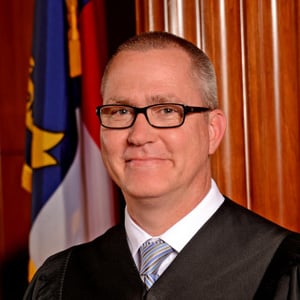
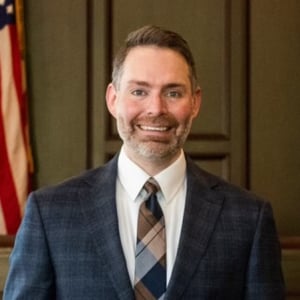
Curtis "Trey" Allen was born in Robeson County to Curtis and Elaine Allen. He obtained a bachelor's degree from UNC Pembroke and a law degree from UNC Chapel Hill.
Trey began his legal career as a judge advocate in the United States Marine Corps. He spent most of his time in the USMC overseas, and his military service included a deployment to Iraq during Operation Iraqi Freedom. As a judge advocate, Trey advised commanding generals and subordinate commanders on military justice and operational law matters, prosecuted violations of the Uniform Code of Military Justice, and helped fellow Marines resolve personal legal issues.
After being honorably discharged, Trey completed a clerkship with Justice (now Chief Justice) Paul Newby of the NC Supreme Court. He then practiced education law and became a partner at Tharrington Smith LLP in Raleigh. While in private practice, Trey successfully litigated cases involving constitutional and other claims before administrative agencies, federal and state trial courts, and appellate courts, including the NC Supreme Court. In 2013 he joined the faculty at UNC Chapel Hill, where his research, writing, and teaching focused on local government law. Trey was named Coates Distinguished Term Associate Professor of Public Law and Government for 2020-2022.
Following Paul Newby's installation as Chief Justice in January 2021, Trey was appointed General Counsel for the NC Administrative Office of the Courts. In that capacity, he provides legal guidance on a broad range of subjects to court officials across the state.
Trey is married to Teryn Melissa Smith Allen, another Robeson County native. Together they have five (awesome) children, all of whom they homeschool. Church activities, sports, and Scouting take up much of the family's free time.
Curtis "Trey" Allen was born in Robeson County to Curtis and Elaine Allen. He obtained a bachelor's degree from UNC Pembroke and a law degree from UNC Chapel Hill.
Trey began his legal career as a judge advocate in the United States Marine Corps. He spent most of his time in the USMC overseas, and his military service included a deployment to Iraq during Operation Iraqi Freedom. As a judge advocate, Trey advised commanding generals and subordinate commanders on military justice and operational law matters, prosecuted violations of the Uniform Code of Military Justice, and helped fellow Marines resolve personal legal issues.
After being honorably discharged, Trey completed a clerkship with Justice (now Chief Justice) Paul Newby of the NC Supreme Court. He then practiced education law and became a partner at Tharrington Smith LLP in Raleigh. While in private practice, Trey successfully litigated cases involving constitutional and other claims before administrative agencies, federal and state trial courts, and appellate courts, including the NC Supreme Court. In 2013 he joined the faculty at UNC Chapel Hill, where his research, writing, and teaching focused on local government law. Trey was named Coates Distinguished Term Associate Professor of Public Law and Government for 2020-2022.
Following Paul Newby's installation as Chief Justice in January 2021, Trey was appointed General Counsel for the NC Administrative Office of the Courts. In that capacity, he provides legal guidance on a broad range of subjects to court officials across the state.
Trey is married to Teryn Melissa Smith Allen, another Robeson County native. Together they have five (awesome) children, all of whom they homeschool. Church activities, sports, and Scouting take up much of the family's free time.

Shareholder, Baker Do`nelson
John is a complex-problem solver and seasoned litigator who has successfully represented clients in a wide range of commercial litigation matters for almost 20 years. He frequently advocates for clients in cases involving contract and corporate ownership issues, real estate and eminent domain disputes, and claims of unfair competition or fraud. John regularly practices in federal and state trial and appellate courts throughout North Carolina, including the North Carolina Business Court. He has been admitted pro hac in a number of states in the South and the Midwest, and he handles binding arbitrations before the American Arbitration Association and other quasi-judicial bodies. In addition to his advocacy work, John serves as a trusted advisor for his clients, providing strategic, solution-oriented advice both before and after disputes arise.
John also maintains an active constitutional and political law practice. His clients have included multiple presidential, senatorial, and congressional campaigns; gubernatorial and other statewide candidates and campaigns; legislative, judicial, and local candidates; and national- and state-level political party committees. He has represented legislative officers in multiple states and defended state agencies' actions when challenged on constitutional or statutory grounds. John previously served as General Counsel for the North Carolina Republican Party and as both chairman and a member of the North Carolina State Board of Ethics and Election Enforcement.
John also counsels his clients on various employment and education law issues, including discrimination and wage and hour claims, as well as school choice and charter school issues.
After law school, John served as a law clerk for the Honorable Glen M. Williams, Senior U.S. District Judge for the Western District of Virginia. He has lived in Raleigh since completing his clerkship.
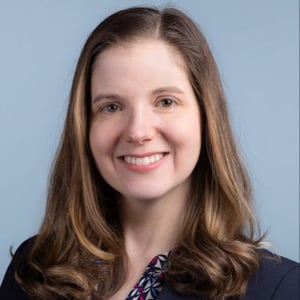
Vice President and Deputy Chief Counsel, U.S. Chamber Litigation Center, U.S. Chamber of Commerce
Jennifer B. Dickey is vice president and deputy chief counsel at the U.S. Chamber Litigation Center, the litigation arm of the U.S. Chamber of Commerce. Dickey handles a variety of litigation matters for the Chamber.
Dickey joined the Chamber following her service as Acting Assistant Attorney General and Principal Deputy Assistant Attorney General in the Civil Division at the U.S. Department of Justice. She also previously served as Deputy Associate Attorney General, providing strategic oversight of the Civil Division, Civil Rights Division, and Foreign Claims Settlement Commission, as well as Special Assistant to the President and Associate Counsel to the President. In the latter capacity, she provided legal advice on a wide array of executive actions and rulemakings, civil litigation, and judicial nominations.
Dickey also practiced law at Kirkland & Ellis LLP before her government service. She was a commercial and appellate litigator, representing businesses in federal and state courts.
Earlier in her career, Dickey served as a law clerk for the Honorable Clarence Thomas of the Supreme Court of the United States and the Honorable William H. Pryor Jr. of the United States Court of Appeals for the Eleventh Circuit.
Dickey earned her law degree magna cum laude from Duke University School of Law, where she was an Executive Editor of the Duke Law Journal, and her undergraduate degree magna cum laude from Dartmouth College.
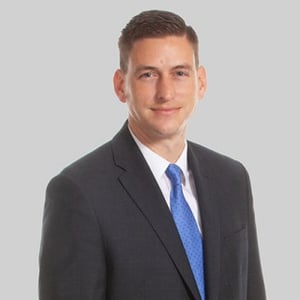
Partner, Fox Rothschild LLP
Matt is Co-Chair of the firm’s Appellate Practice Group and leads a national team that serves clients before the U.S. Supreme Court, every federal circuit court and the state appellate courts.
Widely recognized for his work as a litigator and strategist, Matt is often hired to handle appeals in cases that met with unfavorable results in the lower courts. He centers his practice on helping businesses navigate complex state and federal litigation and appeals, including bet-the-company and other high-stakes litigation.
Matt co-authored a comprehensive legal treatise, North Carolina Appellate Practice and Procedure, that discusses in depth the constitutional provisions, statutes, rules, cases and customs governing North Carolina appellate law. He is a Board Certified Specialist in Appellate Practice by the North Carolina State Bar. In 2022, Matt was one of only four lawyers ranked in Band 1 by Chambers & Partners for Appellate Litigation in North Carolina. He was also inducted into Business North Carolina magazine’s Legal Elite “Hall of Fame” for appellate practice.
Matt’s clients range from large health systems and private equity firms to small businesses and individuals.
He regularly helps clients with:
Businesses facing litigation in North Carolina for the first time often look for a legal team with an established reputation and comprehensive knowledge of local customs and practices. Matt takes the time to listen to a client’s overall business and litigation goals, and then builds the right team to advance a strategic plan to meet those goals. Cases and appeals are won or lost on those careful, strategic decisions, in conjunction with excellent persuasive writing and oral advocacy.
Clients value Matt’s business sense and his ability to translate complex legal issues. In fact, Matt is often hired by lawyers in other firms to provide strategic guidance or to represent them in complex litigation where the firms themselves are parties.
Matt’s experience includes:
Matt regularly appears on behalf of clients in North Carolina's specialized Business Court and served on that court’s inaugural Rules Advisory Committee.
Matt previously served as Managing Partner of the Raleigh Office and on Fox Rothschild’s Executive Committee.
Matt is a founder and regular writer for the North Carolina Appellate Practice Blog, NCAPB.com, which provides news, information, tips and resources for practicing law in North Carolina's state and federal appellate courts.
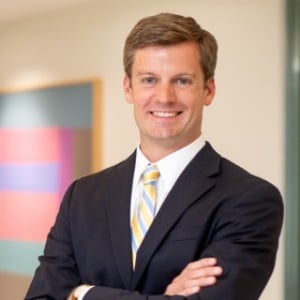
Partner, Brooks Pierce
Craig Schauer is a trusted litigator who advises and advocates for clients. He has been fortunate to counsel clients through a wide variety of disputes and legal problems, ranging from business disagreements, to regulatory battles, to constitutional lawsuits.
Craig has represented businesses of all sizes—from small partnerships to Fortune 100 corporations—in state and federal courts, arbitration proceedings, and various regulatory agencies with disputes regarding contractual relationships, constitutional rights, class actions, unfair competition claims, government regulations, defamation, and other commercial issues. He has worked with clients in a variety of sectors, including healthcare, construction, professional sports, nonprofit, franchises, energy, financial services, public utilities, and local and state government.
Curtis "Trey" Allen was born in Robeson County to Curtis and Elaine Allen. He obtained a bachelor's degree from UNC Pembroke and a law degree from UNC Chapel Hill.
Trey began his legal career as a judge advocate in the United States Marine Corps. He spent most of his time in the USMC overseas, and his military service included a deployment to Iraq during Operation Iraqi Freedom. As a judge advocate, Trey advised commanding generals and subordinate commanders on military justice and operational law matters, prosecuted violations of the Uniform Code of Military Justice, and helped fellow Marines resolve personal legal issues.
After being honorably discharged, Trey completed a clerkship with Justice (now Chief Justice) Paul Newby of the NC Supreme Court. He then practiced education law and became a partner at Tharrington Smith LLP in Raleigh. While in private practice, Trey successfully litigated cases involving constitutional and other claims before administrative agencies, federal and state trial courts, and appellate courts, including the NC Supreme Court. In 2013 he joined the faculty at UNC Chapel Hill, where his research, writing, and teaching focused on local government law. Trey was named Coates Distinguished Term Associate Professor of Public Law and Government for 2020-2022.
Following Paul Newby's installation as Chief Justice in January 2021, Trey was appointed General Counsel for the NC Administrative Office of the Courts. In that capacity, he provides legal guidance on a broad range of subjects to court officials across the state.
Trey is married to Teryn Melissa Smith Allen, another Robeson County native. Together they have five (awesome) children, all of whom they homeschool. Church activities, sports, and Scouting take up much of the family's free time.
Judge, North Carolina Court of Appeals
Richard Dietz has served as a judge on the North Carolina Court of Appeals for eight years.
Judge Dietz comes from a mountain family of railroad and telephone workers. From an early age, his parents encouraged him to study hard and to get an education. He succeeded, becoming the first in his family to attend college. He went on to graduate first in his class from Wake Forest University School of Law and later earned a master’s degree from Duke University School of Law.
As a lawyer, Judge Dietz became one of the most accomplished appellate advocates in North Carolina. He has personally argued in the U.S. Supreme Court—something only a handful of lawyers in the State have ever done—and is a board-certified specialist in appellate practice. He handled cases in a wide range of constitutional areas including gun rights, religious liberty, and the free speech rights of students.
Before joining the Court of Appeals, Judge Dietz was a partner at Kilpatrick Townsend & Stockton LLP, a 650-lawyer international law firm with its roots in North Carolina. He also served as a law clerk for two highly regarded federal judges—Judge Emory Widener on the U.S. Court of Appeals for the Fourth Circuit and Judge Samuel Wilson on the U.S. District Court in Virginia—and served as a research fellow in international law at Kyushu University in Japan.
Judge Dietz joined the Court of Appeals in 2014 and is now the third-most senior judge on the 15-member court. He has distinguished himself on the Court by writing thoughtful opinions that are concise and easy for the public to read and understand.
Judge Dietz is happily married to Kelley Dietz, who is both the love of his life and his most trusted advisor. Kelley is a former Capitol Hill staffer and political appointee of President George W. Bush who now works in higher education.
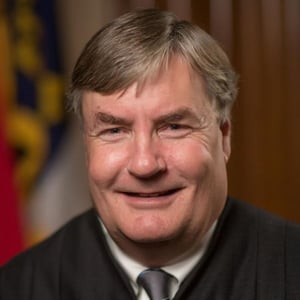
North Carolina Court of Appeals
Sam J. Ervin, IV, was born in Morganton, North Carolina, on November 18, 1955. He attended the public schools in Burke County, North Carolina, graduating from Freedom High School in 1974. In 1978, Judge Ervin was awarded an A.B., magna cum laude, from Davidson College. After graduating from Davidson, he attended Harvard Law School, from which he received a J.D., cum laude, in 1981.
From 1981 until 1999, Judge Ervin practiced law with the Morganton, North Carolina firm of Byrd, Byrd, Ervin, Whisnant, McMahon, P.A., and its predecessors. While in private practice, Judge Ervin handled a wide variety of civil, criminal, and administrative matters, including many appeals to the North Carolina Court of Appeals and the Supreme Court of North Carolina.
In 1999, Judge Ervin was nominated for a seat on the North Carolina Utilities Commission by Governor James B. Hunt, Jr. He was nominated for a second term on the Utilities Commission by Governor Michael F. Easley in 2007. Both appointments were confirmed by the General Assembly. The Utilities Commission is a quasi-judicial body that is responsible for regulating electric, natural gas, telecommunications, water and sewer, and certain types of transportation service provided to retail customers in North Carolina by privately-owned entities. During his service as a member of the Utilities Commission, Judge Ervin was involved in deciding many important regulatory matters, including, but not limited to, electric and natural gas rate proceedings, electric and natural gas business combination proceedings, proceedings involving applications by electric utilities for authority to construct new generation and transmission facilities, proceedings involving the approval of telecommunications price regulation plans, proceedings arbitrating or otherwise examining the terms and conditions under which competitive telecommunications providers were allowed to interconnect with incumbents, and proceedings addressing issues relating to the adequacy of water and sewer service in certain specific locations.
In addition, Judge Ervin was extensively involved in the activities of the National Association of Regulatory Utility Commissioners (NARUC), having served as Chairman of that organization's Subcommittee on Nuclear Issues and Waste Disposal from 2002 until 2005; as Chairman of that organization's Committee on Electricity from 2004 until 2007; and as a member of its Task Force on Climate Policy from 2007 through 2008. As part of his involvement in NARUC, Judge Ervin supervised its participation in the process that led to the implementation of the Energy Policy Act of 2005. While a member of the Utilities Commission, Judge Ervin testified on two different occasions before the Subcommittee on Energy and Air Quality of the Committee on Commerce of the United States House of Representatives. Judge Ervin was a regular speaker at energy-related conferences and seminars during his service as a Utilities Commissioner.
Judge Ervin has also been, at various times, involved in a wide variety of church-related, bar-related, and charitable activities. He is married to Mary Temple Ervin and has two children and two step-children.
Judge Ervin was elected to the North Carolina Court of Appeals at the November 4, 2008, general election. His term as a member of the Court of Appeals commenced on January 1, 2009, and extends until December 31, 2017.
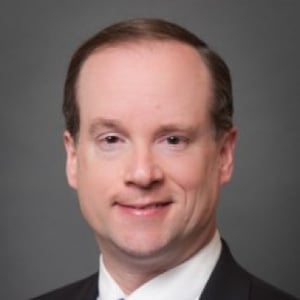
President, John William Pope Foundation
John Hood is president of the John William Pope Foundation. Hood also serves on the board of the John Locke Foundation, the state policy think tank he helped found in 1989 and led as its president for more than two decades.
Since 1986, Hood has written a syndicated column on politics and public policy for North Carolina newspapers. It appears regularly in more than 50 papers across the state. A frequent radio and television commentator, Hood is the author of seven nonfiction books on such subjects as business, advertising, public policy, and political history. His latest three books — Mountain Folk, Forest Folk, and Water Folk — are historical-fantasy novels set in early America.
A former Bradley Fellow at the Heritage Foundation, Hood teaches at Duke University’s Sanford School of Public Policy. His articles have appeared in magazines such as Readers’ Digest, The New Republic, National Review, Military History, and Reason as well as newspapers such as The Wall Street Journal and USA Today. His broadcast appearances include CNN, NBC News, National Public Radio, and Fox News.
At Locke, Hood created the E.A. Morris Fellowship for Emerging Leaders, which prepares young North Carolinians for leadership roles in the public and private sectors. He also serves on the faculty and as board chair of the NC Institute of Public Leadership; as co-chair of the North Carolina Leadership Forum, based at Duke University; as vice-chair of the James G. Martin Center for Academic Renewal, State Policy Network, and the Carolina Liberty Foundation; and on the board the Student Free Press Association.
Hood received his BA in journalism from the University of North Carolina at Chapel Hill, where he serves as vice chair of North Carolina Public Radio-WUNC and on the foundation board of the Hussman School of Journalism and Media. He earned a MA in liberal studies and a graduate certificate in nonprofit management from UNC-Greensboro.
A native of Mecklenburg County, Hood now resides in Wake County with his wife, two sons, and a stepdaughter.
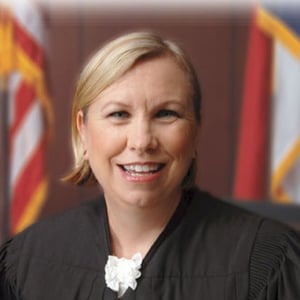
Judge, North Carolina Court of Appeals
Lucy Inman, a judge on the North Carolina Court of Appeals, is a candidate for the North Carolina Supreme Court in 2020. Judge Inman was elected statewide to the Court of Appeals in 2014.
Judge Inman was raised in Raleigh by parents who taught her the value of hard work and respect for people of all races, faiths, and walks of life. She graduated from Sanderson High School and earned a degree in English from N.C. State University.
Judge Inman’s first career was as a newspaper reporter. While covering court proceedings, she was inspired to participate in the justice system. She then moved to Chapel Hill and earned her law degree from UNC School of Law in 1990. Her first job after law school was working as a law clerk for North Carolina Supreme Court Chief Justice Jim Exum.
Judge Inman went on to practice civil litigation for 18 years, first in Los Angeles and then back home in Raleigh. Her clients included small business owners, large corporations, famous individuals, and lesser known -- but no less important -- survivors of negligence, fraud, and sexual abuse.
In 2010, Judge Inman was appointed by Governor Beverly Perdue to serve as a special superior court judge. She served in that role for four years, presiding in hearings and jury trials across North Carolina. Since her election to the Court of Appeals, Judge Inman has authored over 400 appellate decisions in a wide variety of cases, including criminal, civil, and constitutional disputes. She has presided in thousands of other cases.
Judge Inman brings hard work and respect for all others to her personal and professional life every day. She hopes to bring these values, and equal justice for all, to the North Carolina Supreme Court.
Judge Inman and her husband Billy Warden live in Raleigh. They have two college-age children and a black lab rescue who keeps their nest from ever being empty.
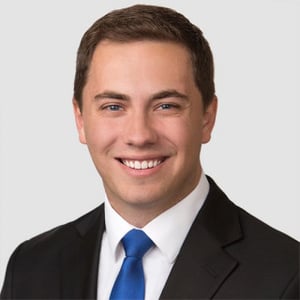
Associate, Holtzman Vogel Baran Torchinsky & Josefiak PLLC
Ken Daines is an associate at Holtzman Vogel Baran Torchinsky & Josefiak PLLC. His practice focuses on trial and appellate litigation in federal and state courts, including matters presenting constitutional law, redistricting, and election-related issues.
Before joining the firm, Ken clerked for Judge Ryan D. Nelson on the U.S. Court of Appeals for the Ninth Circuit and Judge Dee V. Benson on the U.S. District Court for the District of Utah. He also practiced election law and government ethics at a large law firm in Washington, D.C.
Ken earned his J.D. from Stanford Law School and a B.A. in International Relations and Chinese, magna cum laude, from Brigham Young University. While in law school, he worked as a student attorney for the Religious Liberty Clinic and served as Executive Vice-President for the Stanford Law chapter of the Federalist Society. Ken is a member of the District of Columbia and Maryland Bars, the J. Reuben Clark Law Society, and the Federalist Society.
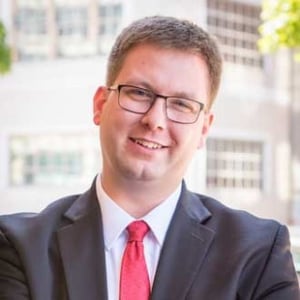
Senior Associate, Holtzman Vogel Josefiak Torchinsky PLLC
Drew Watkins is a senior associate with Holtzman Vogel Josefiak Torchinsky PLLC, providing counsel in the areas of campaign finance and election law, lobbying and ethics compliance, and tax-exempt organizations.
Prior to joining the firm, Drew served as a law clerk to the Honorable Joseph R. Goeke, Senior Judge of the United States Tax Court in Washington, D.C., and worked in the Office of General Counsel for the Governor of Kentucky, Matthew G. Bevin. While in law school, Drew served as a law clerk for the Kentucky Executive Branch Ethics Commission and interned for Senate Majority Leader Mitch McConnell in his office in Washington, D.C.
Drew graduated from the University of Louisville with a B.S. in Justice Administration. He earned his Juris Doctor, magna cum laude, from the University of Kentucky College of Law and was a member of the Order of the Coif. During law school, he served as a senior staff editor on the Kentucky Law Journal and authored a published student note on the Justice Against Sponsors of Terrorism Act. He is a member of the Kentucky, D.C. and Virginia bars and the Federalist Society.
Curtis "Trey" Allen was born in Robeson County to Curtis and Elaine Allen. He obtained a bachelor's degree from UNC Pembroke and a law degree from UNC Chapel Hill.
Trey began his legal career as a judge advocate in the United States Marine Corps. He spent most of his time in the USMC overseas, and his military service included a deployment to Iraq during Operation Iraqi Freedom. As a judge advocate, Trey advised commanding generals and subordinate commanders on military justice and operational law matters, prosecuted violations of the Uniform Code of Military Justice, and helped fellow Marines resolve personal legal issues.
After being honorably discharged, Trey completed a clerkship with Justice (now Chief Justice) Paul Newby of the NC Supreme Court. He then practiced education law and became a partner at Tharrington Smith LLP in Raleigh. While in private practice, Trey successfully litigated cases involving constitutional and other claims before administrative agencies, federal and state trial courts, and appellate courts, including the NC Supreme Court. In 2013 he joined the faculty at UNC Chapel Hill, where his research, writing, and teaching focused on local government law. Trey was named Coates Distinguished Term Associate Professor of Public Law and Government for 2020-2022.
Following Paul Newby's installation as Chief Justice in January 2021, Trey was appointed General Counsel for the NC Administrative Office of the Courts. In that capacity, he provides legal guidance on a broad range of subjects to court officials across the state.
Trey is married to Teryn Melissa Smith Allen, another Robeson County native. Together they have five (awesome) children, all of whom they homeschool. Church activities, sports, and Scouting take up much of the family's free time.
Judge, North Carolina Court of Appeals
Richard Dietz has served as a judge on the North Carolina Court of Appeals for eight years.
Judge Dietz comes from a mountain family of railroad and telephone workers. From an early age, his parents encouraged him to study hard and to get an education. He succeeded, becoming the first in his family to attend college. He went on to graduate first in his class from Wake Forest University School of Law and later earned a master’s degree from Duke University School of Law.
As a lawyer, Judge Dietz became one of the most accomplished appellate advocates in North Carolina. He has personally argued in the U.S. Supreme Court—something only a handful of lawyers in the State have ever done—and is a board-certified specialist in appellate practice. He handled cases in a wide range of constitutional areas including gun rights, religious liberty, and the free speech rights of students.
Before joining the Court of Appeals, Judge Dietz was a partner at Kilpatrick Townsend & Stockton LLP, a 650-lawyer international law firm with its roots in North Carolina. He also served as a law clerk for two highly regarded federal judges—Judge Emory Widener on the U.S. Court of Appeals for the Fourth Circuit and Judge Samuel Wilson on the U.S. District Court in Virginia—and served as a research fellow in international law at Kyushu University in Japan.
Judge Dietz joined the Court of Appeals in 2014 and is now the third-most senior judge on the 15-member court. He has distinguished himself on the Court by writing thoughtful opinions that are concise and easy for the public to read and understand.
Judge Dietz is happily married to Kelley Dietz, who is both the love of his life and his most trusted advisor. Kelley is a former Capitol Hill staffer and political appointee of President George W. Bush who now works in higher education.
North Carolina Court of Appeals
Sam J. Ervin, IV, was born in Morganton, North Carolina, on November 18, 1955. He attended the public schools in Burke County, North Carolina, graduating from Freedom High School in 1974. In 1978, Judge Ervin was awarded an A.B., magna cum laude, from Davidson College. After graduating from Davidson, he attended Harvard Law School, from which he received a J.D., cum laude, in 1981.
From 1981 until 1999, Judge Ervin practiced law with the Morganton, North Carolina firm of Byrd, Byrd, Ervin, Whisnant, McMahon, P.A., and its predecessors. While in private practice, Judge Ervin handled a wide variety of civil, criminal, and administrative matters, including many appeals to the North Carolina Court of Appeals and the Supreme Court of North Carolina.
In 1999, Judge Ervin was nominated for a seat on the North Carolina Utilities Commission by Governor James B. Hunt, Jr. He was nominated for a second term on the Utilities Commission by Governor Michael F. Easley in 2007. Both appointments were confirmed by the General Assembly. The Utilities Commission is a quasi-judicial body that is responsible for regulating electric, natural gas, telecommunications, water and sewer, and certain types of transportation service provided to retail customers in North Carolina by privately-owned entities. During his service as a member of the Utilities Commission, Judge Ervin was involved in deciding many important regulatory matters, including, but not limited to, electric and natural gas rate proceedings, electric and natural gas business combination proceedings, proceedings involving applications by electric utilities for authority to construct new generation and transmission facilities, proceedings involving the approval of telecommunications price regulation plans, proceedings arbitrating or otherwise examining the terms and conditions under which competitive telecommunications providers were allowed to interconnect with incumbents, and proceedings addressing issues relating to the adequacy of water and sewer service in certain specific locations.
In addition, Judge Ervin was extensively involved in the activities of the National Association of Regulatory Utility Commissioners (NARUC), having served as Chairman of that organization's Subcommittee on Nuclear Issues and Waste Disposal from 2002 until 2005; as Chairman of that organization's Committee on Electricity from 2004 until 2007; and as a member of its Task Force on Climate Policy from 2007 through 2008. As part of his involvement in NARUC, Judge Ervin supervised its participation in the process that led to the implementation of the Energy Policy Act of 2005. While a member of the Utilities Commission, Judge Ervin testified on two different occasions before the Subcommittee on Energy and Air Quality of the Committee on Commerce of the United States House of Representatives. Judge Ervin was a regular speaker at energy-related conferences and seminars during his service as a Utilities Commissioner.
Judge Ervin has also been, at various times, involved in a wide variety of church-related, bar-related, and charitable activities. He is married to Mary Temple Ervin and has two children and two step-children.
Judge Ervin was elected to the North Carolina Court of Appeals at the November 4, 2008, general election. His term as a member of the Court of Appeals commenced on January 1, 2009, and extends until December 31, 2017.
President, John William Pope Foundation
John Hood is president of the John William Pope Foundation. Hood also serves on the board of the John Locke Foundation, the state policy think tank he helped found in 1989 and led as its president for more than two decades.
Since 1986, Hood has written a syndicated column on politics and public policy for North Carolina newspapers. It appears regularly in more than 50 papers across the state. A frequent radio and television commentator, Hood is the author of seven nonfiction books on such subjects as business, advertising, public policy, and political history. His latest three books — Mountain Folk, Forest Folk, and Water Folk — are historical-fantasy novels set in early America.
A former Bradley Fellow at the Heritage Foundation, Hood teaches at Duke University’s Sanford School of Public Policy. His articles have appeared in magazines such as Readers’ Digest, The New Republic, National Review, Military History, and Reason as well as newspapers such as The Wall Street Journal and USA Today. His broadcast appearances include CNN, NBC News, National Public Radio, and Fox News.
At Locke, Hood created the E.A. Morris Fellowship for Emerging Leaders, which prepares young North Carolinians for leadership roles in the public and private sectors. He also serves on the faculty and as board chair of the NC Institute of Public Leadership; as co-chair of the North Carolina Leadership Forum, based at Duke University; as vice-chair of the James G. Martin Center for Academic Renewal, State Policy Network, and the Carolina Liberty Foundation; and on the board the Student Free Press Association.
Hood received his BA in journalism from the University of North Carolina at Chapel Hill, where he serves as vice chair of North Carolina Public Radio-WUNC and on the foundation board of the Hussman School of Journalism and Media. He earned a MA in liberal studies and a graduate certificate in nonprofit management from UNC-Greensboro.
A native of Mecklenburg County, Hood now resides in Wake County with his wife, two sons, and a stepdaughter.
Judge, North Carolina Court of Appeals
Lucy Inman, a judge on the North Carolina Court of Appeals, is a candidate for the North Carolina Supreme Court in 2020. Judge Inman was elected statewide to the Court of Appeals in 2014.
Judge Inman was raised in Raleigh by parents who taught her the value of hard work and respect for people of all races, faiths, and walks of life. She graduated from Sanderson High School and earned a degree in English from N.C. State University.
Judge Inman’s first career was as a newspaper reporter. While covering court proceedings, she was inspired to participate in the justice system. She then moved to Chapel Hill and earned her law degree from UNC School of Law in 1990. Her first job after law school was working as a law clerk for North Carolina Supreme Court Chief Justice Jim Exum.
Judge Inman went on to practice civil litigation for 18 years, first in Los Angeles and then back home in Raleigh. Her clients included small business owners, large corporations, famous individuals, and lesser known -- but no less important -- survivors of negligence, fraud, and sexual abuse.
In 2010, Judge Inman was appointed by Governor Beverly Perdue to serve as a special superior court judge. She served in that role for four years, presiding in hearings and jury trials across North Carolina. Since her election to the Court of Appeals, Judge Inman has authored over 400 appellate decisions in a wide variety of cases, including criminal, civil, and constitutional disputes. She has presided in thousands of other cases.
Judge Inman brings hard work and respect for all others to her personal and professional life every day. She hopes to bring these values, and equal justice for all, to the North Carolina Supreme Court.
Judge Inman and her husband Billy Warden live in Raleigh. They have two college-age children and a black lab rescue who keeps their nest from ever being empty.
Curtis "Trey" Allen was born in Robeson County to Curtis and Elaine Allen. He obtained a bachelor's degree from UNC Pembroke and a law degree from UNC Chapel Hill.
Trey began his legal career as a judge advocate in the United States Marine Corps. He spent most of his time in the USMC overseas, and his military service included a deployment to Iraq during Operation Iraqi Freedom. As a judge advocate, Trey advised commanding generals and subordinate commanders on military justice and operational law matters, prosecuted violations of the Uniform Code of Military Justice, and helped fellow Marines resolve personal legal issues.
After being honorably discharged, Trey completed a clerkship with Justice (now Chief Justice) Paul Newby of the NC Supreme Court. He then practiced education law and became a partner at Tharrington Smith LLP in Raleigh. While in private practice, Trey successfully litigated cases involving constitutional and other claims before administrative agencies, federal and state trial courts, and appellate courts, including the NC Supreme Court. In 2013 he joined the faculty at UNC Chapel Hill, where his research, writing, and teaching focused on local government law. Trey was named Coates Distinguished Term Associate Professor of Public Law and Government for 2020-2022.
Following Paul Newby's installation as Chief Justice in January 2021, Trey was appointed General Counsel for the NC Administrative Office of the Courts. In that capacity, he provides legal guidance on a broad range of subjects to court officials across the state.
Trey is married to Teryn Melissa Smith Allen, another Robeson County native. Together they have five (awesome) children, all of whom they homeschool. Church activities, sports, and Scouting take up much of the family's free time.
Judge, North Carolina Court of Appeals
Richard Dietz has served as a judge on the North Carolina Court of Appeals for eight years.
Judge Dietz comes from a mountain family of railroad and telephone workers. From an early age, his parents encouraged him to study hard and to get an education. He succeeded, becoming the first in his family to attend college. He went on to graduate first in his class from Wake Forest University School of Law and later earned a master’s degree from Duke University School of Law.
As a lawyer, Judge Dietz became one of the most accomplished appellate advocates in North Carolina. He has personally argued in the U.S. Supreme Court—something only a handful of lawyers in the State have ever done—and is a board-certified specialist in appellate practice. He handled cases in a wide range of constitutional areas including gun rights, religious liberty, and the free speech rights of students.
Before joining the Court of Appeals, Judge Dietz was a partner at Kilpatrick Townsend & Stockton LLP, a 650-lawyer international law firm with its roots in North Carolina. He also served as a law clerk for two highly regarded federal judges—Judge Emory Widener on the U.S. Court of Appeals for the Fourth Circuit and Judge Samuel Wilson on the U.S. District Court in Virginia—and served as a research fellow in international law at Kyushu University in Japan.
Judge Dietz joined the Court of Appeals in 2014 and is now the third-most senior judge on the 15-member court. He has distinguished himself on the Court by writing thoughtful opinions that are concise and easy for the public to read and understand.
Judge Dietz is happily married to Kelley Dietz, who is both the love of his life and his most trusted advisor. Kelley is a former Capitol Hill staffer and political appointee of President George W. Bush who now works in higher education.
North Carolina Court of Appeals
Sam J. Ervin, IV, was born in Morganton, North Carolina, on November 18, 1955. He attended the public schools in Burke County, North Carolina, graduating from Freedom High School in 1974. In 1978, Judge Ervin was awarded an A.B., magna cum laude, from Davidson College. After graduating from Davidson, he attended Harvard Law School, from which he received a J.D., cum laude, in 1981.
From 1981 until 1999, Judge Ervin practiced law with the Morganton, North Carolina firm of Byrd, Byrd, Ervin, Whisnant, McMahon, P.A., and its predecessors. While in private practice, Judge Ervin handled a wide variety of civil, criminal, and administrative matters, including many appeals to the North Carolina Court of Appeals and the Supreme Court of North Carolina.
In 1999, Judge Ervin was nominated for a seat on the North Carolina Utilities Commission by Governor James B. Hunt, Jr. He was nominated for a second term on the Utilities Commission by Governor Michael F. Easley in 2007. Both appointments were confirmed by the General Assembly. The Utilities Commission is a quasi-judicial body that is responsible for regulating electric, natural gas, telecommunications, water and sewer, and certain types of transportation service provided to retail customers in North Carolina by privately-owned entities. During his service as a member of the Utilities Commission, Judge Ervin was involved in deciding many important regulatory matters, including, but not limited to, electric and natural gas rate proceedings, electric and natural gas business combination proceedings, proceedings involving applications by electric utilities for authority to construct new generation and transmission facilities, proceedings involving the approval of telecommunications price regulation plans, proceedings arbitrating or otherwise examining the terms and conditions under which competitive telecommunications providers were allowed to interconnect with incumbents, and proceedings addressing issues relating to the adequacy of water and sewer service in certain specific locations.
In addition, Judge Ervin was extensively involved in the activities of the National Association of Regulatory Utility Commissioners (NARUC), having served as Chairman of that organization's Subcommittee on Nuclear Issues and Waste Disposal from 2002 until 2005; as Chairman of that organization's Committee on Electricity from 2004 until 2007; and as a member of its Task Force on Climate Policy from 2007 through 2008. As part of his involvement in NARUC, Judge Ervin supervised its participation in the process that led to the implementation of the Energy Policy Act of 2005. While a member of the Utilities Commission, Judge Ervin testified on two different occasions before the Subcommittee on Energy and Air Quality of the Committee on Commerce of the United States House of Representatives. Judge Ervin was a regular speaker at energy-related conferences and seminars during his service as a Utilities Commissioner.
Judge Ervin has also been, at various times, involved in a wide variety of church-related, bar-related, and charitable activities. He is married to Mary Temple Ervin and has two children and two step-children.
Judge Ervin was elected to the North Carolina Court of Appeals at the November 4, 2008, general election. His term as a member of the Court of Appeals commenced on January 1, 2009, and extends until December 31, 2017.
President, John William Pope Foundation
John Hood is president of the John William Pope Foundation. Hood also serves on the board of the John Locke Foundation, the state policy think tank he helped found in 1989 and led as its president for more than two decades.
Since 1986, Hood has written a syndicated column on politics and public policy for North Carolina newspapers. It appears regularly in more than 50 papers across the state. A frequent radio and television commentator, Hood is the author of seven nonfiction books on such subjects as business, advertising, public policy, and political history. His latest three books — Mountain Folk, Forest Folk, and Water Folk — are historical-fantasy novels set in early America.
A former Bradley Fellow at the Heritage Foundation, Hood teaches at Duke University’s Sanford School of Public Policy. His articles have appeared in magazines such as Readers’ Digest, The New Republic, National Review, Military History, and Reason as well as newspapers such as The Wall Street Journal and USA Today. His broadcast appearances include CNN, NBC News, National Public Radio, and Fox News.
At Locke, Hood created the E.A. Morris Fellowship for Emerging Leaders, which prepares young North Carolinians for leadership roles in the public and private sectors. He also serves on the faculty and as board chair of the NC Institute of Public Leadership; as co-chair of the North Carolina Leadership Forum, based at Duke University; as vice-chair of the James G. Martin Center for Academic Renewal, State Policy Network, and the Carolina Liberty Foundation; and on the board the Student Free Press Association.
Hood received his BA in journalism from the University of North Carolina at Chapel Hill, where he serves as vice chair of North Carolina Public Radio-WUNC and on the foundation board of the Hussman School of Journalism and Media. He earned a MA in liberal studies and a graduate certificate in nonprofit management from UNC-Greensboro.
A native of Mecklenburg County, Hood now resides in Wake County with his wife, two sons, and a stepdaughter.
Judge, North Carolina Court of Appeals
Lucy Inman, a judge on the North Carolina Court of Appeals, is a candidate for the North Carolina Supreme Court in 2020. Judge Inman was elected statewide to the Court of Appeals in 2014.
Judge Inman was raised in Raleigh by parents who taught her the value of hard work and respect for people of all races, faiths, and walks of life. She graduated from Sanderson High School and earned a degree in English from N.C. State University.
Judge Inman’s first career was as a newspaper reporter. While covering court proceedings, she was inspired to participate in the justice system. She then moved to Chapel Hill and earned her law degree from UNC School of Law in 1990. Her first job after law school was working as a law clerk for North Carolina Supreme Court Chief Justice Jim Exum.
Judge Inman went on to practice civil litigation for 18 years, first in Los Angeles and then back home in Raleigh. Her clients included small business owners, large corporations, famous individuals, and lesser known -- but no less important -- survivors of negligence, fraud, and sexual abuse.
In 2010, Judge Inman was appointed by Governor Beverly Perdue to serve as a special superior court judge. She served in that role for four years, presiding in hearings and jury trials across North Carolina. Since her election to the Court of Appeals, Judge Inman has authored over 400 appellate decisions in a wide variety of cases, including criminal, civil, and constitutional disputes. She has presided in thousands of other cases.
Judge Inman brings hard work and respect for all others to her personal and professional life every day. She hopes to bring these values, and equal justice for all, to the North Carolina Supreme Court.
Judge Inman and her husband Billy Warden live in Raleigh. They have two college-age children and a black lab rescue who keeps their nest from ever being empty.

What is the Role of the North Carolina Supreme Court?
Cape Fear Lawyers Chapter
Wilmington, NCNorth Carolina's Take-No-Chances Constitution with Justice Trey Allen
North Carolina Student Chapter
Chapel Hill, NCPanel Two: Navigating Turbulent Waters: North Carolina Conservatives in the Legal Community
Raleigh, NCFelon Re-Enfranchisement Requirements Upheld by North Carolina Supreme Court
Ken Daines, Andrew Watkins
When lawsuits challenge state legislative enactments as racially discriminatory or motivated by invidious intent, courts...
Supreme Court Candidate Forum
Trey Allen, Richard Dietz, Samuel J. Ervin, John Hood, Lucy Inman
Featuring: Trey Allen, General Counsel, Administrative Office of the Courts Hon. Richard Dietz, Judge, North Carolina...
Supreme Court Candidate Forum
Trey Allen, Richard Dietz, Samuel J. Ervin, John Hood, Lucy Inman
Featuring: Trey Allen, General Counsel, Administrative Office of the Courts Hon. Richard Dietz, Judge, North Carolina...
Supreme Court Candidate Forum
Inaugural North Carolina Chapters Conference
Raleigh, NC