
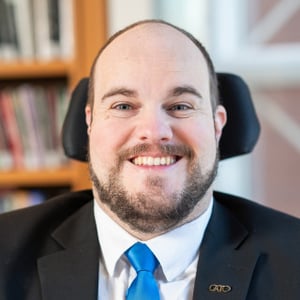
Director, Project on Criminal Justice, Cato Institute
Matthew Cavedon is the Director of the Cato Institute’s Project on Criminal Justice. He focuses on reforming plea-driven mass adjudication, ensuring police accountability, and defending constitutional criminal originalism. Cavedon’s scholarship has been published (or is forthcoming in) publications including the Arizona State Law Journal, Cato Supreme Court Review, Seattle University Law Review, and Georgetown Journal of Law and Public Policy. Formerly a Georgia public defender and fellow at the Institute for Justice, Cavedon has taught law school courses on criminal law and procedure, as well as the First Amendment. Cavedon clerked for a U.S. district court and the Supreme Court of Georgia. He came to Cato following a fellowship at the Emory University Center for the Study of Law and Religion.
Assistant Attorney General & Senior Trial Counsel to the Criminal Bureau, Massachusetts Attorney General
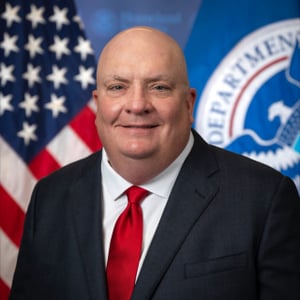
Acting Assistant Commissioner of Customs and Border Protection, Office of Professional Responsibility, U.S. Department of Homeland Security
Brian M. Fish is currently the Senior Advisor to the General Counsel at the Department of Homeland Security where he works on immigration and law enforcement issues. Previously, he was a trial attorney with the United States Immigration and Customs Enforcement, where he represented the Department of Homeland Security in removal hearings before the U.S. Immigration Court. Additionally, he was a Special Assistant United States Attorney and a Baltimore City homicide prosecutor. He is a member of the Federalist Society's Criminal Law & Procedure Practice Group Executive Committee and the President of its Baltimore Lawyers Chapter. He earned his B.A. from LaSalle University in 1992 and his J.D. from Loyola University New Orleans School of Law in 1998.
Associate Professor, Indiana University Maurer School of Law
Professor Scott joined the Indiana University Maurer School of Law faculty in 2009. He teaches and writes on criminal law and procedure, statutory interpretation, and federal courts. Professor Scott's research examines structural and procedural interactions between the judicial branch and other branches of government, particularly in the criminal context. He has written on efforts to control the composition of the judiciary, including the judicial appointments process, legislative strategies for encouraging judicial retirements, and the semi-retirement program of senior judges. Professor Scott also studies efforts to influence judicial decision making directly by placing constraints on judicial discretion. His current project examines changes in inter-judge sentencing disparity under the United States Sentencing Guidelines, one of Congress's most ambitious efforts to restrict judges in the performance of a historically discretionary function.After graduating from law school, Professor Scott clerked for Judge Michael W. McConnell of the United States Court of Appeals for the Tenth Circuit. He then served as a Bristow Fellow in the Office of the Solicitor General of the United States. Before joining the faculty, he worked for two years as an associate in the Supreme Court and appellate practice at O'Melveny & Myers LLP in Washington, D.C.
Emeritus Professor of Criminal Justice, University of Nebraska at Omaha
Professor Samuel Walker is a widely quoted expert on issues of civil liberties, policing and criminal justice policy. He is Emeritus Professor of Criminal Justice at the University of Nebraska at Omaha, where he taught from 1974 to 2005. He received a Ph.D. in American history from Ohio State University in 1973.
Prof. Walker is the author of 14 books on those subjects, which have appeared in a combined total of 32 editions. He has been interviewed in every major media outlet in the United States and around the world, including The New York Times, The Washington Post, PBS/Frontline, CNN and others. His book, Presidents and Civil Liberties From Wilson to Obama, won the Langum Prize for the Best Book in American Legal History for 2012.
Prof. Walker is perhaps best known for his work on police accountability (including two books and two reports on “Driving While Female”) and for his definitive history of the American Civil Liberties Union, In Defense of American Liberties, which was first published in 1990 and issued in a revised edition in 2000 by Southern Illinois University Press. He is currently a member of the International Association of Chiefs of Police’s National Working Group on Sexual Offenses by Police Officers.
Former Adjunct Professor of Law; former Special Counsel to the President; former federal prosecutor, Georgetown Law (ret.)
Bill Otis is a former Adjunct Professor of Law at Georgetown University, a one-time federal prosecutor, and a former Special White House Counsel for President George H. W. Bush. After graduating from Stanford Law School, he started his career in the Criminal Division of the Justice Department, then became chief of appeals for the US Attorney's Office for the Eastern District of Virginia. In the 1980's he served on the Department's "Train the Trainer" team, which taught US Attorneys Offices across the county how to implement the then-new Sentencing Reform Act. He has held several posts in the federal government, including Special Assistant to the Secretary of Energy and Counselor to the head of the Drug Enforcement Administration, in addition to the White House post. He has testified before Congress on issues in criminal procedure, illegal drugs, the US Sentencing Commission, and the death penalty, and has given numerous media interviews on those and other subjects. He currently teaches a seminar at Georgetown Law titled "Conservatism in Law in America" with his wife, Federalist Society co-founder Lee Liberman Otis.

Professor of Law, Stanford Law School
Orin S. Kerr is a Professor of Law at Stanford Law School, where he teaches and writes in the areas of criminal procedure and computer crime law. Kerr earned mechanical engineering degrees from Princeton University and Stanford University before graduating with a J.D. from Harvard Law School. He is a former law clerk to Justice Anthony M. Kennedy at the United States Supreme Court and Judge Leonard I. Garth of the U.S. Court of Appeals for the Third Circuit.
Deputy District Attorney, Philadelphia District Attorney's Office
Ronald Eisenberg heads the Law Division of the Philadelphia District Attorney's Office. The 60 lawyers in the division handle appeals, habeas corpus and civil litigation, and legislative matters. Mr. Eisenberg has appeared at all levels of the state and federal court system, and has argued several cases in the United States Supreme Court.
Mr. Eisenberg is a member of the Pennsylvania Supreme Court Investigating Grand Jury Task Force and the Advisory Committee for the Pennsylvania Suggested Standard Criminal Jury Instructions. He has represented his office on the Pennsylvania Advisory Committee on Wrongful Convictions, was an adjunct professor at Temple University School of Law, teaching legal writing and research, and has served on the Pennsylvania Criminal Rules and Appellate Rules Committees. He is a past president and current board member of the Association of Government Attorneys in Capital Litigation, a national organization of capital prosecutors.
Mr. Eisenberg received his bachelor's degree from Haverford College in 1978 and his law degree from the University of Pennsylvania Law School in 1981.
J.D., University of Pennsylvania
B.A., Haverford College
Professor of Law, Stanford Law School
Orin S. Kerr is a Professor of Law at Stanford Law School, where he teaches and writes in the areas of criminal procedure and computer crime law. Kerr earned mechanical engineering degrees from Princeton University and Stanford University before graduating with a J.D. from Harvard Law School. He is a former law clerk to Justice Anthony M. Kennedy at the United States Supreme Court and Judge Leonard I. Garth of the U.S. Court of Appeals for the Third Circuit.

Topics
What Caused Last Year’s Spike in Violent Crime?
The spike in violent crime last year was a serious departure from recent crime patterns...
Supreme Court Criminal Law Roundup: A Look Back and a Look Ahead
Matthew P. Cavedon, Dean A. Mazzone
Join Dean Mazzone and Matt Cavedon for a discussion of major criminal cases at the...
Courthouse Steps Decision Teleforum: Kansas v. Glover
Brian M. Fish
On April 6, 2020, the Supreme Court, by a vote of 8-1, held that reasonable...
Courthouse Steps Oral Argument: Kansas v. Glover
Brian M. Fish
In Kansas v. Glover, a state police officer pulled a Charles Glover Jr. over after...
Heien v. North Carolina - Post-Decision SCOTUScast
Ryan Scott
On December 15, 2014, the Supreme Court issued its decision in Heien v. North Carolina,...
Heien v. North Carolina - Post-Argument SCOTUScast
Ryan Scott
On October 6, 2014, the Supreme Court heard oral argument in Heien v. North Carolina. The...
Federal Monitoring of Local Policing - Podcast
Samuel Walker, William G. Otis
Is it within a federal court's authority to order local police officers to wear video...
The Tail Light Case
Orin S. Kerr
Prof. Orin Kerr previews the upcoming Supreme Court case, Heien v. North Carolina, that looks at whether...
SCOTUScast 6-19-09 featuring Ronald Eisenberg
Ronald Eisenberg
On Monday, January 26, the Supreme Court announced its decision in Arizona v. Johnson. In...
SCOTUScast 7-12-07 featuring Orin Kerr
Orin S. Kerr
On June 18, 2007, the U.S. Supreme Court decided the case of Brendlin v. California....