

Thomas M. Siebel Senior Fellow, The Hoover Institution, Stanford University; Gary T. Schwartz Distinguished Professor of Law Emeritus, UCLA School of Law
Eugene Volokh is the Thomas M. Siebel Senior Fellow at the Hoover Institution (Stanford), as well as the Gary T. Schwartz Distinguished Professor of Law Emeritus and Distinguished Research Professor at UCLA School of Law. He recently retired from teaching at UCLA, after 30 years there, and is now focusing on research.
Volokh is the author of the textbooks The First Amendment and Related Statutes (8th ed. 2023), and Academic Legal Writing (5th ed. 2016), as well as over 100 academic law journal articles, mostly on First Amendment law. He is a member of The American Law Institute; the editor-in-chief of the Journal of Free Speech Law; and the creator and coauthor of The Volokh Conspiracy, a leading legal blog founded in 2002 (hosted at the Washington Post from 2014 to 2017 and now at Reason Magazine).

Vice Dean and Professor of Law, Villanova University School of Law
Professor Michael Risch joined the Villanova faculty in 2010 from the West Virginia University College of Law, where he directed the Entrepreneurship, Innovation and Law Program. Prior to joining the West Virginia faculty, he served as an Olin Fellow in Law at Stanford Law School. Professor Risch’s teaching and scholarship focus on intellectual property and internet law, with an emphasis on patents, trade secrets and information access. His articles have been published in the Stanford Law Review and Duke Law Journal, among others; online in the Yale Law Journal Online and PENNumbra; and less formally at the Madisonian, Prawfsblawg, and Patently-O blogs. Two of his articles have been cited by the United States Supreme Court. Professor Risch received his A.B. with honors and distinction in Public Policy and with distinction in Quantitative Economics from Stanford University, and his J.D. with high honors from the University of Chicago Law School. Prior to entering academia, he was a partner at intellectual property boutique Russo & Hale LLP in Palo Alto, California.

Vilas Research Fellow & Professor of Law, University of Wisconsin Law School
Shubha Ghosh has taught in the fields of intellectual property, business organizations, tort law, antitrust, property, and law & economics since Fall 1996. He is the author of over fifty articles and book chapters. He is the co-author of two intellectual property casebooks: Intellectual Property: Private Rights, The Public Interest, and the Regulation of Creative Activity (Thomson West 2007) and Intellectual Property in Business Organizations (Lexis-Nexis 2006).
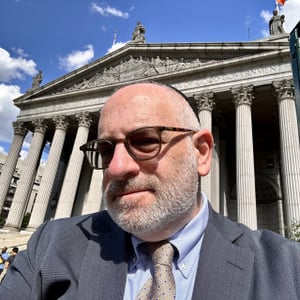
Owner, Coleman Law Firm, PC
Ron Coleman has shaped the law relating to the use and abuse of intellectual property as a tool of competition. A leader in social media for lawyers, his blog about copyright, trademark and free speech, LIKELIHOOD OF CONFUSION®, has since its inception in 2005 become one of the most influential publications in IP law.
Recent representations include:
Author of the first article on Internet law in the ABA Journal (1995), Ron was co-author of the chapter on “Responses to Complaints” in Business and Commercial Litigation in the Federal Courts (ABA / West Group 1998). More recently, his chapter on the interplay of rights of publicity and trademark was included in In the Arena: A Sports Law Handbook. Other publications include the Computer and Internet Law Journal, the NYSBA Journal and the NJ Law Journal. Ron has been a featured speaker at a host of legal conferences. These include the International Trademark Association (INTA), the New Jersey, New York City and New York County Bar Associations, the Copyright Society of the USA, the American Intellectual Property Law Association, the Intellectual Property Owners Association, the Ohio Intellectual Property Law Society, Minnesota CLE and the Berkman Center for Internet and Society at Harvard. He was recently reappointed to the Internet Committee of INTA.
Ron has represented clients of every size in state and federal courts, bench and jury trials, the TTAB and in arbitrations and mediations throughout the country. He has also been retained as an expert on trademark law and practice in professional liability litigation. A graduate of Princeton University, he received his JD from Northwestern University School of Law.

Professor of Law, Antonin Scalia Law School, George Mason University
Adam Mossoff is Professor of Law at Antonin Scalia Law School, George Mason University. He has published extensively on why patents, copyrights, and other intellectual property rights have been—and should be—legally secured to innovators and creators as property rights. His scholarship has been relied on by the United States Supreme Court, by lower federal courts, and by U.S. federal agencies. He has been invited to testify numerous times before the U.S. Senate and the House of Representatives on intellectual property legislation. His writings on intellectual property policy have also appeared in the Wall Street Journal, New York Times, Forbes, Investors Business Daily, and in other media outlets. His journal articles can be downloaded here.
Professor Mossoff is a longstanding member of the Executive Committee of the Intellectual Property Practice Group of the Federalist Society, on which he served as Chairperson from 2016-2018, and he is Chair of the Intellectual Property Working Group of the Regulatory Transparency Project of the Federalist Society. He is a Senior Fellow and Chair of the Forum for Intellectual Property at the Hudson Institute, a Visiting Intellectual Property Fellow at the Heritage Foundation, and a member of the Board of Directors of the Center for Intellectual Property Understanding. He is a member of the Intellectual Property Rights Policy Committee of ANSI and he has served as Chair and Vice-Chair of the Intellectual Property Committee of the IEEE-USA, on which he remains a member in good standing.

Professor of Law, Seton Hall University School of Law
Professor Opderbeck's work focuses on the regulation of access to scientific and technological information. His published work has employed the tools of game theory, classical microeconomics, and statistical analysis to address issues such as intellectual property restrictions on essential medicines in developing countries, open source biotechnology, patent damages reform, and the interaction of law and social norms concerning music file sharing.
In addition to his traditional legal scholarship, Professor Opderbeck is interested in the philosophical and moral foundations of information policy and other aspects of the law. He has written on a virtue ethics approach to biotechnology law, and most recently has explored the philosophical aspects of information policy in a groundbreaking essay that seeks to apply a critical realist approach to the ontology of information. He is a principal organizer of a conference on "Religious Legal Theory: State of the Art" that will be held at the Law School in 2009.
Professor Opderbeck graduated cum laude from Seton Hall Law School in 1991 and earned an LL.M. in Trade Regulation from New York University Law School in 1998. He previously was a Partner in the Intellectual Property / Trade Regulation group at McCarter & English, LLP, where he represented clients in the life sciences, consumer products, telecommunications, computer software, and other industries. Representative litigated cases include Wedeco UV Technologies, Inc. v. Calgon Corp, 2006 WL 1867201 (D.N.J. 2006); Bamberger v. Rohm & Hass Corp., 1998 WL 684263, 40 Fed.R.Serv.3d 667 (D.N.J. 1998); McCall v. Metropolitan Life Ins. Co., 956 F. Supp. 1172 (D.N.J. 1996).
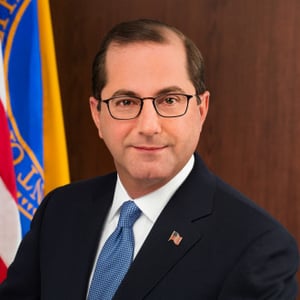
Secretary, U.S. Department of Health & Human Services
Alex M. Azar II was sworn in as the Secretary of Health and Human Services on Jan. 29, 2018. Azar has spent his career working in both the public and private sectors, as an attorney and in senior leadership roles focused on advancing healthcare reform, research and innovation.
From 2001 to 2007, Azar served at the U.S. Department of Health and Human Services – first as its General Counsel (2001–2005) and then as Deputy Secretary. During his time as Deputy Secretary, Azar was involved in improving the department’s operations; advancing its emergency preparedness and response capabilities as well as its global health affairs activities; and helping oversee the rollout of the Medicare Part D prescription drug program.
In 2007, Azar rejoined the private sector as senior vice president for corporate affairs and communications at Eli Lilly and Co. From 2012 to 2017, he served as president of Lilly USA LLC, the company’s largest affiliate.
Azar clerked for U.S. Supreme Court Justice Antonin Scalia prior to practicing law for several years.
Azar graduated summa cum laude with a bachelor’s degree in economics and government from Dartmouth College and earned his law degree from Yale University.
For the past 10 years, Azar has lived in Indiana with his wife and their two children.

Of Counsel, Stanley Law Group
Stephen Gardner serves of counsel to the Dallas-based Stanley Law Group, a plaintiffs firm. Previously, Mr. Gardner was Director of Litigation for the Washington, DC based advocacy group Center for Science in the Public Interest 2004-2014); Of Counsel to the National Consumer Law Center (2002-2006); Assistant Dean of Clinical Education at Southern Methodist University School of Law (1994-1995); Visiting Assistant Professor of Law at Southern Methodist University School of Law (1992-1995); Assistant Attorney General in the Consumer Protection Division of the State of Texas (1984-1991); Assistant Attorney General in the Bureau of Consumer Frauds of the State of New York (1982-1984); Students Attorney at the University of Texas (1981-1982); and a staff attorney at the legal aid office in Austin, now part of Texas RioGrande Legal Services (1976-1981). He is a frequent author and speaker on consumer advocacy issues.

The Court Speaks on Free Speech - Podcast
Eugene Volokh
On Jun 18, the U.S. Supreme Court decided two cases with free speech implications. In...
Walker v. Texas Division, Sons of Confederate Veterans, Inc and Reed v. Town of Gilbert - Post-Decision SCOTUScast
Eugene Volokh
On June 18, 2015, the Supreme Court issued two highly anticipated decisions in free speech...
Hana Financial v. Hana Bank - Post-Decision SCOTUScast
Michael Risch
On January 21, 2014, the Supreme Court issued its decision in Hana Financial, Inc. v....
Foxes, Drugs, WMDs, and YouTube: What Kind of Property is Intellectual Property?
Shubha Ghosh
On February 15, 2011, the Wisconsin Student Chapter hosted an event on intellectual property. The featured speaker was Prof. Shubha...
Trademark, Copyright, and the Internet: Time to Return Balance to Civil Litigation
Ronald D. Coleman
The law and business of intellectual property are in upheaval today. Essentially, the concepts that...
Copyright v. Copyleft
Adam Mossoff, David W. Opderbeck
The Federalist Society's Seton Hall Student Chapter presented this panel discussion on September 17, 2009, at Seton...
Does IP Harm or Help Developing Countries?
Bruce A. Lehman, Robert Sherwood, Jerome H. Reichman, Graeme B. Dinwoodie, Alex M. Azar
Introduction: My name is Bruce Lehman. I’m at Akin Gump Strauss Hauer & Feld. I’m...
The Problem with Metaullics
Stephen Gardner
INTRODUCTION The Supreme Court's and the Federal Circuit's opinions in Markman v. Westview Instruments, Inc.,...