
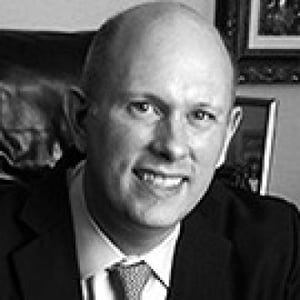
Of Counsel, Spencer Fane LLP
Anthony J. “A.J.” Ferate has built a multi-faceted background in the areas of the law, policy, energy, campaigns and elections, and defense over the last 20 years.
Through recent representation as Vice President of Regulatory Affairs for the Oklahoma Independent Petroleum Association (“OIPA”), A.J. held responsibilities over government efforts outside of the legislative branch on matters as broad as water, electric generation, commodity marketing, land matters, and seismicity. A.J. also maintained responsibility for legal matters at OIPA, including amicus briefing in appellate matters. A.J.’s extensive experience also includes management of public policy strategy for a Fortune 500 company.
For the past eleven years, A.J. has volunteered as General Counsel and spokesman for the Oklahoma Republican Party and has represented a number of elected officials, including U.S. Senator James Lankford, former statewide elected officials, a number of state legislators, and members of Congress.
Additionally, A.J. has assisted elected officials serve their constituents in all branches of government. Early in his career, A.J. held legislative aide duties in the Nebraska Legislature, then went on to work for former Nebraska Treasurer David Heineman. A.J. gained experience in the judiciary while serving Judge Gary L. Lumpkin at the Oklahoma Court of Criminal Appeals, the highest criminal appellate court in Oklahoma. Following this service, A.J. began work with Denise A. Bode of the Oklahoma Corporation Commission, assisting her in her duties regulating 70 percent of Oklahoma’s economy, including oil and gas and electric utilities.
A.J. honorably served ten years as an intelligence analyst for the United States Naval Reserve, including time at the Office of Naval Intelligence in the greater Washington DC area.
Opinion pieces authored or ghostwritten by A.J. have been published in the Seattle Times, Politico, Law360, The Oklahoman, Tulsa World and The Journal Record. A.J. has also been interviewed by national and international newspapers, and has also appeared on national radio programs including NPR’s The Diane Rehm Show and On Point with Tom Ashbrook.
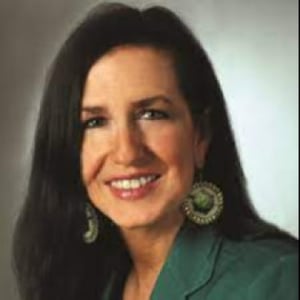
Shareholder, Greenberg Traurig
Jennifer Weddle is the Co-Chair of Greenberg Traurig's American Indian Law Practice and has wide-ranging experience in complex regulatory and jurisdictional issues, with a focus in Indian law, handling a variety of matters for tribal and non-tribal clients. She has a dynamic, inter-disciplinary practice that centers on providing strategies for resolving complex jurisdictional problems. Much of her practice focuses in the areas of tribal economic development and natural resources development. Jennifer also has U.S. Supreme Court experience, including serving as one of the attorneys for the respondent in Nevada v. Hicks (2001) and representing the petitioners in Ute Mountain Ute Tribe v. Padilla (2012) and Grand Canyon Skywalk Development, LLC v. Grand Canyon Resort Corporation (2013) and cert stage amici in Saginaw-Chippewa Tribe v. NLRB (2016) and United States v. Cooley (2020) and amici on the merits in Lewis v. Clarke (2017), U.S. v. Washington (2018), Carpenter v. Murphy (2018), McGirt v. Oklahoma (2020), and United States v. Cooley (2021).
Jennifer's work also includes negotiations for mineral leasing employment matters and representation before federal agencies. She has also been involved in civil litigation, working on numerous complex federal, state and tribal litigation matters, including class action tort litigation and large commercial disputes. Her transactional experience includes oil and gas renewables projects throughout the west, as well as Endangered Species Act work. Jennifer frequently assists tribes, banks and non-bank entities with financing and regulatory matters with Indian law components. Jennifer has wide-ranging project siting experience, including the application of NEPA, NHPA, and other environmental laws on tribal and public lands, including with respect to large linear multi-state energy and infrastructure projects. Jennifer has deep transactional, regulatory and litigation experience involving very complex matters with both legal and policy components.
Jennifer is past President of the National Native American Bar Association and past two-term Chair of the Federal Bar Association Indian Law Section. She currently serves as the Tenth Circuit Representative on the American Bar Association Standing Committee on the Federal Judiciary, a role she has held since 2018, spanning the evaluations for more than two dozen federal judicial nominees at every level of the federal courts. She is a ’00 graduate of Harvard Law School and a ’97 graduate of the University of Michigan (Classical Languages and Literature).
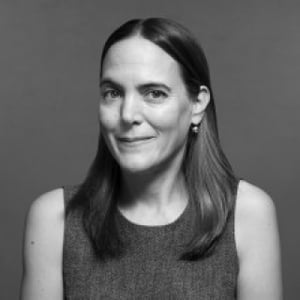
Senior DIrector, Brennan Center for Justice
Lauren-Brooke Eisen is director of the Brennan Center’s Justice Program where she leads the organization’s work to end mass incarceration. Her team focuses on exposing the profound social and economic hardships that impact those who encounter the justice system while creating policies that ultimately shrink its size and scope.
Eisen has authored several nationally recognized reports and articles on how to reduce America’s reliance on incarceration. Her work has been featured in media outlets across the country, including the New York Times, USA Today, Time, U.S. News & World Report, the Daily News, and the Marshall Project and has appeared on MSNBC, CNN, CBS News, NBC News, Fox News, National Public Radio, as well as many other television and radio news programs.
Eisen is the author of Inside Private Prisons: An American Dilemma in the Age of Mass Incarceration (Columbia University Press, 2017) and a Pulitzer Center on Crisis Reporting journalism grantee. She co-chaired Manhattan DA-elect Alvin Bragg’s transition team to ensure they have the tools to enact innovative reforms in the criminal legal system and has served on the Advisory Council of the New York City Bar’s Task Force on Mass Incarceration and the transition committee for Brooklyn District Attorney Eric Gonzalez. In 2020, Eisen became a founding member of the Council on Criminal Justice, which works to advance understanding of the criminal justice policy choices facing the nation and build consensus for solutions that enhance safety and justice for all. Eisen taught an undergraduate seminar on mass incarceration at Yale University and served as an adjunct instructor at John Jay College of Criminal Justice.
Before joining the Brennan Center, Eisen was a senior program associate at the Vera Institute of Justice, where she worked on the sentencing and corrections team to implement policies in multiple states to improve public safety while reducing prison populations. She also previously served as an assistant district attorney in New York City, where she worked in the Appeals Bureau, the Criminal Court Bureau, and the Sex Crimes Special Victims Bureau. Before entering law school, Eisen worked as a beat reporter for a daily newspaper in Laredo, Texas, covering criminal justice and immigration. Eisen holds an AB from Princeton University and a JD from the Georgetown University Law Center.
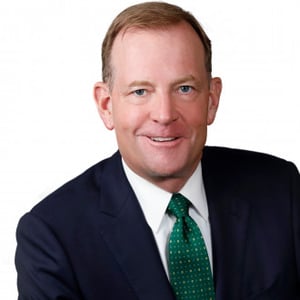
Partner, King & Spalding LLP
Former U.S. Attorney for the Eastern District of California, a 34-county district with an area that stretches from the Oregon border to Bakersfield, Greg Scott is an experienced trial lawyer who represents major companies facing government investigations and litigation, with a focus in the healthcare, retail, and construction industries. He has extensive knowledge on matters involving consumer protection, construction disputes, the Foreign Corrupt Practices Act (FCPA) and the False Claims Act (FCA).
Greg represents corporations under investigation by state district attorneys concerning potential violations of consumer protection laws, as well as corporations operating senior assisted livingfacilities under investigation by the state attorney general regarding potential violations of elder abuse laws. In addition, he represents construction companies under investigation by state district attorneys when employees are involved in serious accidents at worksites.
A retired Lieutenant Colonel after serving more than 20 years in the California Army National Guard & United States Army Reserve, Greg went on to become a deputy district attorney in Contra Costa County and twice-elected District Attorney of Shasta County. He also served as an Adjunct Professor of National Security Law at the University of the Pacific, McGeorge School of Law following his first term as U.S. Attorney for the E.D. of California. Between his two terms as U.S. Attorney for the E.D. of California, Greg was the vice chair of the white-collar defense and corporate investigations practice at an AmLaw 50 firm.

Senior Legal Fellow and Manager, National Security Law Program, The Heritage Foundation
Charles “Cully” Stimson is a widely recognized expert in national security, homeland security, crime control, drug policy and immigration. A senior legal fellow at The Heritage Foundation since 2007, Stimson became Manager of the National Security Law Program in Heritage’s Institute for Constitutional Government in April 2013 after serving as Heritage’s chief of staff for a year.
Stimson writes and lectures on policy issues such as the law of armed conflict, terrorist detainee policy and interrogations, the Geneva Conventions, military commissions, the Patriot Act and FISA, criminal law and the death penalty, immigration and the war on drugs. As chief of staff to then-Heritage President Edwin J. Feulner, he was a key adviser on public policy matters as well as manager of Feulner’s office staff and Heritage’s day-to-day operations.
Stimson’s many research papers, op-eds and articles include special reports such as “Adult Time for Adult Crime,” a comprehensive study on the constitutionality of life sentences for teen-age murderers, and Sexual Assault in the Military: Understanding the Problem and How to Fix It, a ground-breaking paper detailing the inner workings of the military justice system compared to its civilian counterpart. His work on criminal and immigration law has been cited in briefs before the U.S. Supreme Court.
He testifies before the U.S. Senate and House on national security issues, and recently testified before the Senate Armed Services Committee on the Law of Armed Conflict, Law of War, and the 2001 Authorization for Use of Military Force.
Before joining the think tank in 2007, Stimson served as Deputy Assistant Secretary of Defense for Detainee Affairs. He advised then-Secretaries of Defense Donald Rumsfeld and Robert Gates and coordinated the Pentagon’s global detention policy and operations, including at Guantanamo Bay and in Iraq and Afghanistan. He was chairman of detainee-related panels such as the Defense Senior Leadership Oversight Committee, and the Special Detainee Follow Up Group. He represented the United States before the U.N. in Geneva, Switzerland in May 2006 where he led the DOD delegation in defense of the United States’ Second Period Report on the Convention Against Torture.
An accomplished trial lawyer, Stimson worked as a prosecutor at the local, state and federal levels, where he concentrated on violent crimes such as homicide, sexual assault and domestic violence. A third generation naval officer, Cully also served as a military prosecutor, defense counsel, and recently served as Deputy Chief Judge of the Navy-Marine Corps Trial Judiciary. He continues to serve, with the rank of Captain, as the Commanding Officer of the Preliminary Hearing Unit.
Stimson’s thousands of media interviews and appearances include Fox News Channel, MSNBC, CNN, BBC, NPR and C-SPAN. He has been quoted by most major newspapers, including The Washington Post, Wall Street Journal, New York Times, Los Angeles Times, and London Times.
A businessman and educator by training, Stimson is Vice Chairman of his family’s commercial real estate company in Seattle. Before 9/11, he was a Vice President at a New York-based global financial services and insurance brokerage firm where ran the private equity mergers and acquisitions D.C. operation.
Stimson holds a law degree from the George Mason University School of Law, where he later taught as an Adjunct Professor of Law. He is a graduate of Kenyon College, where he was Captain of the men’s varsity soccer team and an All-Conference player. He also studied at Harvard and Exeter universities. An avid soccer player and triathlete, he serves as Chairman of the Board of the United States Soccer Foundation, the charitable giving arm of U.S. Soccer.
Of Counsel, Spencer Fane LLP
Anthony J. “A.J.” Ferate has built a multi-faceted background in the areas of the law, policy, energy, campaigns and elections, and defense over the last 20 years.
Through recent representation as Vice President of Regulatory Affairs for the Oklahoma Independent Petroleum Association (“OIPA”), A.J. held responsibilities over government efforts outside of the legislative branch on matters as broad as water, electric generation, commodity marketing, land matters, and seismicity. A.J. also maintained responsibility for legal matters at OIPA, including amicus briefing in appellate matters. A.J.’s extensive experience also includes management of public policy strategy for a Fortune 500 company.
For the past eleven years, A.J. has volunteered as General Counsel and spokesman for the Oklahoma Republican Party and has represented a number of elected officials, including U.S. Senator James Lankford, former statewide elected officials, a number of state legislators, and members of Congress.
Additionally, A.J. has assisted elected officials serve their constituents in all branches of government. Early in his career, A.J. held legislative aide duties in the Nebraska Legislature, then went on to work for former Nebraska Treasurer David Heineman. A.J. gained experience in the judiciary while serving Judge Gary L. Lumpkin at the Oklahoma Court of Criminal Appeals, the highest criminal appellate court in Oklahoma. Following this service, A.J. began work with Denise A. Bode of the Oklahoma Corporation Commission, assisting her in her duties regulating 70 percent of Oklahoma’s economy, including oil and gas and electric utilities.
A.J. honorably served ten years as an intelligence analyst for the United States Naval Reserve, including time at the Office of Naval Intelligence in the greater Washington DC area.
Opinion pieces authored or ghostwritten by A.J. have been published in the Seattle Times, Politico, Law360, The Oklahoman, Tulsa World and The Journal Record. A.J. has also been interviewed by national and international newspapers, and has also appeared on national radio programs including NPR’s The Diane Rehm Show and On Point with Tom Ashbrook.
Shareholder, Greenberg Traurig
Jennifer Weddle is the Co-Chair of Greenberg Traurig's American Indian Law Practice and has wide-ranging experience in complex regulatory and jurisdictional issues, with a focus in Indian law, handling a variety of matters for tribal and non-tribal clients. She has a dynamic, inter-disciplinary practice that centers on providing strategies for resolving complex jurisdictional problems. Much of her practice focuses in the areas of tribal economic development and natural resources development. Jennifer also has U.S. Supreme Court experience, including serving as one of the attorneys for the respondent in Nevada v. Hicks (2001) and representing the petitioners in Ute Mountain Ute Tribe v. Padilla (2012) and Grand Canyon Skywalk Development, LLC v. Grand Canyon Resort Corporation (2013) and cert stage amici in Saginaw-Chippewa Tribe v. NLRB (2016) and United States v. Cooley (2020) and amici on the merits in Lewis v. Clarke (2017), U.S. v. Washington (2018), Carpenter v. Murphy (2018), McGirt v. Oklahoma (2020), and United States v. Cooley (2021).
Jennifer's work also includes negotiations for mineral leasing employment matters and representation before federal agencies. She has also been involved in civil litigation, working on numerous complex federal, state and tribal litigation matters, including class action tort litigation and large commercial disputes. Her transactional experience includes oil and gas renewables projects throughout the west, as well as Endangered Species Act work. Jennifer frequently assists tribes, banks and non-bank entities with financing and regulatory matters with Indian law components. Jennifer has wide-ranging project siting experience, including the application of NEPA, NHPA, and other environmental laws on tribal and public lands, including with respect to large linear multi-state energy and infrastructure projects. Jennifer has deep transactional, regulatory and litigation experience involving very complex matters with both legal and policy components.
Jennifer is past President of the National Native American Bar Association and past two-term Chair of the Federal Bar Association Indian Law Section. She currently serves as the Tenth Circuit Representative on the American Bar Association Standing Committee on the Federal Judiciary, a role she has held since 2018, spanning the evaluations for more than two dozen federal judicial nominees at every level of the federal courts. She is a ’00 graduate of Harvard Law School and a ’97 graduate of the University of Michigan (Classical Languages and Literature).
Of Counsel, Spencer Fane LLP
Anthony J. “A.J.” Ferate has built a multi-faceted background in the areas of the law, policy, energy, campaigns and elections, and defense over the last 20 years.
Through recent representation as Vice President of Regulatory Affairs for the Oklahoma Independent Petroleum Association (“OIPA”), A.J. held responsibilities over government efforts outside of the legislative branch on matters as broad as water, electric generation, commodity marketing, land matters, and seismicity. A.J. also maintained responsibility for legal matters at OIPA, including amicus briefing in appellate matters. A.J.’s extensive experience also includes management of public policy strategy for a Fortune 500 company.
For the past eleven years, A.J. has volunteered as General Counsel and spokesman for the Oklahoma Republican Party and has represented a number of elected officials, including U.S. Senator James Lankford, former statewide elected officials, a number of state legislators, and members of Congress.
Additionally, A.J. has assisted elected officials serve their constituents in all branches of government. Early in his career, A.J. held legislative aide duties in the Nebraska Legislature, then went on to work for former Nebraska Treasurer David Heineman. A.J. gained experience in the judiciary while serving Judge Gary L. Lumpkin at the Oklahoma Court of Criminal Appeals, the highest criminal appellate court in Oklahoma. Following this service, A.J. began work with Denise A. Bode of the Oklahoma Corporation Commission, assisting her in her duties regulating 70 percent of Oklahoma’s economy, including oil and gas and electric utilities.
A.J. honorably served ten years as an intelligence analyst for the United States Naval Reserve, including time at the Office of Naval Intelligence in the greater Washington DC area.
Opinion pieces authored or ghostwritten by A.J. have been published in the Seattle Times, Politico, Law360, The Oklahoman, Tulsa World and The Journal Record. A.J. has also been interviewed by national and international newspapers, and has also appeared on national radio programs including NPR’s The Diane Rehm Show and On Point with Tom Ashbrook.
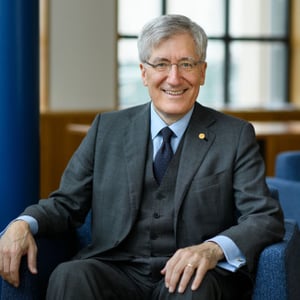
McCormick Professor of Jurisprudence; Director, James Madison Program, Princeton University
Robert P. George is McCormick Professor of Jurisprudence and Director of the James Madison Program in American Ideals and Institutions at Princeton University. He has several times been a Visiting Professor at Harvard Law School. He has served as Chairman of the U.S. Commission on International Religious Freedom and on the U.S. Commission on Civil Rights and the President’s Council on Bioethics. He has also served as the U.S. member of UNESCO’s World Commission on the Ethics of Scientific Knowledge and Technology. He was a Judicial Fellow at the Supreme Court of the United States, where he received the Justice Tom C. Clark Award. A Phi Beta Kappa graduate of Swarthmore, he holds the degrees of J.D. and M.T.S. from Harvard University and the degrees of D.Phil., B.C.L., D.C.L., and D.Litt. from Oxford University, in addition to twenty-one honorary doctorates. He is a recipient of the U.S. Presidential Citizens Medal, the Honorific Medal for the Defense of Human Rights of the Republic of Poland, the Canterbury Medal of the Becket Fund for Religious Liberty, the Bradley Prize, the Irving Kristol Award of the American Enterprise Institute, and Princeton University’s President’s Award for Distinguished Teaching. His books include Making Men Moral: Civil Liberties and Public Morality and In Defense of Natural Law (both published by Oxford University Press), as well as The Clash of Orthodoxies and Conscience and Its Enemies (both published by ISI Books).

Director of the Program in Human Rights, Catholic University of America
William L. Saunders is Chair Emeritus of the Religious Liberties Practice Group of the Federalist Society. He is also a religious liberty and human rights scholar as well as director of the Center for Human rights at The Catholic University of America. He is Law Fellow with the Institute for Human Ecology, Professor and Director of the Program in Human Rights in the School of Arts & Sciences and Co-director of the Center for Religious Liberty at the Columbus School of Law. Before joining The Catholic University of America, Mr. Saunders served as Senior Vice President and Senior Counsel with Americans United for Life for ten years. From 1999 to 2009, he was Senior Fellow in Bioethics and Human Rights Counsel at the Family Research Council.
Mr. Saunders attended the University of North Carolina at Chapel Hill on a Morehead scholarship. He obtained his degree in law from the Harvard Law School.
Mr. Saunders was featured in Harvard’s first Guide to Conservative Public Interest Law in 2003 and again in the 2008 edition. He served on Harvard’s Advisory Committee for its 2008 celebration of public interest law. A member of the Supreme Court bar, he has authored numerous legal briefs in state, federal, foreign, and international courts.
Mr. Saunders’ book, Unborn Human Life and Fundamental Rights: Leading Constitutional Cases Under Scrutiny, was published in 2019. His articles and book chapters have been published by the university presses of Harvard, Villanova, Brigham Young, Fordham, Georgetown, Houston, Scranton, and the Catholic University of America, as well as by the Intercollegiate Studies Institute, Freedom House, Greenhaven Press, Rowan & Littlefield, Praeger, St. Augustine’s, and Intervarsity press. He has given lectures and participated in debates at many colleges, universities, and law schools, including Princeton, Harvard, Georgetown, and Notre Dame. He delivered the annual J. Michael Miller Lecture at the University of St. Thomas (on international law) in February 2007, the annual R. Wayne Kraft Memorial Lecture (on bioethics) at DeSales University in February 2004 and the annual James Moore Lecture (on human rights violations in Sudan) at Millikin University in 1999. He has also lectured, and/or has been published, in many foreign countries, including Italy, Germany, Poland, Austria, Spain, Greece, Slovakia, Mexico, Qatar, Malaysia, Romania, the Philippines, Hong Kong, and the United Kingdom.
In addition to speaking and writing frequently on bioethics topics, Mr. Saunders has submitted testimony to the President’s Council on Bioethics, as well as to UNESCO’s Committee on Bioethics, and has briefed Congressional staff and state legislatures. He is a regular columnist for the National Catholic Bioethics Quarterly.
Mr. Saunders has appeared often in the media, including BBC World News, CNN, Fox News, Vatican Radio, and National Public Radio. His articles on issues have appeared in a variety of journals, such as First Things, Human Events, Human Life Review, The Legal Times, Communio, The Family in America: A Journal of Public Policy, Ethics & Medics, and Touchstone.
Mr. Saunders served on the official United States delegation to the UN Special Session on Children in 2001/02. In 2011, he was a speaker at an official briefing at the UN, addressing the topic, why euthanasia is not a human right.
In 2004, he served on the NGO Working Committee in connection with the Doha Intergovernmental Conference for the Family.
Mr. Saunders is Senior Fellow with the Religious Freedom Institute, and Affiliated Scholar with the Pellegrino Center for Clinical Ethics at the Georgetown University School of Medicine. He is President of the Fellowship of Catholic Scholars and a member of the boards of the International Association of Catholic Bioethicists, the International Right to Life Federation, the Institute on Religion and Democracy, and the Society of Catholic Social Scientists.
In 1999, Mr. Saunders founded Sudan Relief and Rescue, Inc., to aid the persecuted church in Sudan. He has worked for and written on behalf of the persecuted church for many years.

Dr. John Eastman is the former Henry Salvatori Professor of Law & Community Service and former Dean at Chapman University's Dale E. Fowler School of Law, where he had been a member of the faculty since 1999, specializing in Constitutional Law, Legal History, and Property. He is a founding director of the Center for Constitutional Jurisprudence, a public interest law firm affiliated with the Claremont Institute that he founded in 1999. He has a Ph.D. in Government from the Claremont Graduate School and a J.D. from the University of Chicago Law School, and a B.A. in Politics and Economics from the University of Dallas. He serves as the Chairman of the Board of the National Organization for Marriage.
Prior to joining the Chapman law faculty, Dr. Eastman served as a law clerk to the Honorable Clarence Thomas, Associate Justice, Supreme Court of the United States, and to the Honorable J. Michael Luttig, Judge, United States Court of Appeals for the Fourth Circuit and practiced law with the national law firm of Kirkland & Ellis. Dr. Eastman has also represented numerous clients in important constitutional law matters and has argued before the Supreme Court. On behalf of the Claremont Institute Center for Constitutional Jurisprudence, he has participated as amicus curiae before the Supreme Court of the United States, U.S. Courts of Appeals, and State Supreme Courts in more than one hundred cases of constitutional significance, including Boy Scouts of America v. Dale, Zelman v. Simmons-Harris (the school vouchers case), Kelo v. New London, Ct. (eminent domain), and Van Orden v. Perry (the 10 Commandments case). He has also appeared as an expert legal commentator on numerous television and radio programs, including C-SPAN, Fox News, PBS, NewsHour, and The O'Reilly Factor.
Managing Director, Banking Supervision and Regulation Group, Patomak Global Partners
Brian Johnson is Managing Director in the Banking Supervision and Regulation Group at Patomak Global Partners.
In this role, Mr. Johnson spearheads projects related to the regulation of consumer financial products under Keith Noreika, Executive Vice President and Chairman of the Banking Supervision and Regulation Group and former acting Comptroller of the Currency.
Prior to joining Patomak, Mr. Johnson was a partner in Alston & Bird LLP’s financial services and products group. There, he advised financial institutions on consumer finance regulatory issues relating to product compliance, examination, enforcement investigations, and compliance management systems, and on strategic engagement with independent federal regulatory agencies and with Congress.
Mr. Johnson previously served as Deputy Director of the Consumer Financial Protection Bureau (CFPB), where he oversaw the agency’s rulemaking, supervision, and enforcement activities. He conceived and led the creation of high-profile agency initiatives, including the Office of Innovation, Taskforce on Federal Consumer Financial Law, policy symposia series, and Start Small, Save Up emergency savings program. He also served as the CFPB representative to the Financial Stability Oversight Council Deputies’ Committee and advised on interagency matters involving the Federal Deposit Insurance Corporation and the Federal Financial Institutions Examination Council.
Mr. Johnson held various positions on Capitol Hill, including policy director and chief financial institutions counsel on the House Committee on Financial Services, where his portfolio covered consumer protection and credit, mortgage origination, credit reporting, banking, and data security. His efforts on the committee involved drafting legislation to provide regulatory relief to bank, credit union, and nondepository financial institutions, as well as conducting oversight of the activities of the CFPB, Financial Stability Oversight Council, Federal Deposit Insurance Corporation, Office of Financial Research, Office of the Comptroller of the Currency, Federal Reserve System, and National Credit Union Administration.
Mr. Johnson received his juris doctorate from the University of Virginia School of Law and his bachelor’s in economics from the University of Virginia.

Professor of Law, Antonin Scalia Law School, George Mason University
Eric R. Claeys is Professor of Law at the Antonin Scalia Law School, George Mason University. He has written widely in the fields of property, private law, and constitutional law. Professor Claeys’s current research interests focus on flourishing- and labor-based natural rights justifications for property—in American property theory, in intellectual property, and in contemporary regulation of shale gas exploration and hydraulic fracturing. He is a member of the American Law Institute, he serves on the ALI’s Members’ Consultative Group for the first Restatement of Copyright, and he also serves as an adviser to the Restatement (Fourth) of the Law of Property.
Professor Claeys received his JD from the University of Southern California Gould School of Law. He received his AB from Princeton University, and he is a former visiting fellow and current member of Princeton’s Politics Department’s James Madison Program in American Ideals and Institutions. After law school, Professor Claeys clerked for the Hon. Melvin Brunetti, U.S. Court of Appeals for the Ninth Circuit, and the Hon. William H. Rehnquist, Chief Justice of the United States.
Professor Claeys’s main teaching interests include Property, Torts, Jurisprudence, and Intellectual Property. In recent years, he has also taught Water Law, Remedies, Estates and Trusts, Trade Secrecy, Constitutional Law, Torts, and Oil and Gas law. Spring 2018, he is teaching Torts and Jurisprudence as a Visiting Professor at Harvard Law School.
Attorneys' Title Professor, Florida State University College of Law
Professor Hannah Wiseman’s research explores the role of regulation in protecting the character of living spaces and environmental quality, from the sublocal to the national level. As a law student, Professor Wiseman was a managing editor of the Yale Journal on Regulation and received the Israel H. Peres prize for the best student note or comment appearing in the Yale Law Journal in 2007. Professor Wiseman clerked for the Honorable Patrick E. Higginbotham of the U.S. Court of Appeals for the Fifth Circuit. She joined the Florida State University College of Law in 2012 and teaches Energy Law, Environmental Law and Land Use Regulation.
Dr. John Eastman is the former Henry Salvatori Professor of Law & Community Service and former Dean at Chapman University's Dale E. Fowler School of Law, where he had been a member of the faculty since 1999, specializing in Constitutional Law, Legal History, and Property. He is a founding director of the Center for Constitutional Jurisprudence, a public interest law firm affiliated with the Claremont Institute that he founded in 1999. He has a Ph.D. in Government from the Claremont Graduate School and a J.D. from the University of Chicago Law School, and a B.A. in Politics and Economics from the University of Dallas. He serves as the Chairman of the Board of the National Organization for Marriage.
Prior to joining the Chapman law faculty, Dr. Eastman served as a law clerk to the Honorable Clarence Thomas, Associate Justice, Supreme Court of the United States, and to the Honorable J. Michael Luttig, Judge, United States Court of Appeals for the Fourth Circuit and practiced law with the national law firm of Kirkland & Ellis. Dr. Eastman has also represented numerous clients in important constitutional law matters and has argued before the Supreme Court. On behalf of the Claremont Institute Center for Constitutional Jurisprudence, he has participated as amicus curiae before the Supreme Court of the United States, U.S. Courts of Appeals, and State Supreme Courts in more than one hundred cases of constitutional significance, including Boy Scouts of America v. Dale, Zelman v. Simmons-Harris (the school vouchers case), Kelo v. New London, Ct. (eminent domain), and Van Orden v. Perry (the 10 Commandments case). He has also appeared as an expert legal commentator on numerous television and radio programs, including C-SPAN, Fox News, PBS, NewsHour, and The O'Reilly Factor.

Emanuel S. Heller Professor of Law, University of California at Berkeley; Thomas Smith Senior Research Fellow, The Civitas Institute, University of Texas at Austin
John Yoo is the Emanuel Heller Professor of Law at the University of California at Berkeley. He is also the Thomas Smith Senior Research Fellow, Civitas Institute, at the University of Texas at Austin. He is also a Nonresident Senior Fellow at the American Enterprise Institute.
His most recent book, The Politically Incorrect Guide to the Supreme Court, co-authored with Robert Delahunty, was published in 2023. Professor Yoo’s other books include Defender-in-Chief: Trump’s Fight for Presidential Power; Striking Power: How Cyber, Robots, and Space Weapons Change the Rules for War; Point of Attack: Preventive War, International Law, and Global Welfare; and Crisis and Command: A History of Executive Power from George Washington to George Bush.
He is a co-author of volumes 1 and 2 of R. Rossum, G. Tarr, V. Munoz & J. Yoo American Constitution Law (Routledge, 2026), and a co-editor of the eight-volume series on the 250th anniversary of the American Revolution, We Hold These Truths, with Yuval Levin and Adam White of the American Enterprise Institute.
Professor Yoo has published more than 100 articles in academic journals on subjects including national security, constitutional law, international law, and the Supreme Court. He also regularly contributes to the editorial pages of the Wall Street Journal, New York Times, Washington Post, Los Angeles Times, and National Review, among others.
Professor Yoo has served in all three branches of government. He was an official in the U.S. Department of Justice, where he worked on national security and terrorism issues after the 9/11 attacks. He served as general counsel of the U.S. Senate Judiciary Committee. He has been a law clerk for Supreme Court Justice Clarence Thomas and federal appeals Judge Laurence Silberman. He has been a visiting professor at the University of Texas at Austin’s School of Civic Leadership, Seoul National University, the Interdisciplinary Center Herzliya, Keio University, Trento University, the University of Chicago, and the Free University of Amsterdam.
Professor Yoo supervises the Public Law and Policy Program and the California Constitution Center. He also serves on the boards of Founding Forward, the Washington Legal Foundation, the Pacific Legal Foundation, the Ulysses Grant Institute, the Federalist Society’s Separation of Powers and Federalism Division, the Universidad Cientifica del Sur Law School, and the Asia-Pacific Law Institute at Seoul National University. He is a winner of the Federalist Society’s Paul Bator award and the Heritage Foundation’s Edwin Meese III Originalism Lectureship.
Professor Yoo graduated from Yale Law School and summa cum laude from Harvard College.

Legal Director & General Counsel, Criminal Justice Legal Foundation
Kent S. Scheidegger has been the Legal Director of the Criminal Justice Legal Foundation since December 1986. He also served as Chairman of the Criminal Law Practice Group of the Federalist Society 2003 to 2005. His articles on criminal and constitutional law have been published in law reviews, national legal publications, and congressional reports. Legal arguments authored by Mr. Scheidegger have been cited and incorporated in several precedent-setting United States Supreme Court decisions.
After receiving a degree in physics with honors from New Mexico State University in 1976, Mr. Scheidegger served for six years in the United States Air Force as a Nuclear Research Officer. He took his law degree with distinction from the University of the Pacific, McGeorge School of Law in 1982 and practiced civil law in Northern California. He was general counsel of California Cooler, Inc. from 1984 until 1986, when he joined the Foundation.

Courthouse Steps Decision: Arizona v. Navajo Nation
Anthony J. Ferate, Jennifer H. Weddle
On Thursday, June 22, 2023, the Supreme Court issued its decision in Arizona v. Navajo...
Panel 3: Progressive Prosecutors: Decarceration, “Harm of Policing” and Bail Reform
Lauren-Brooke Eisen, McGregor W. Scott, Charles "Cully" Stimson
George Soros has contended that “there is no connection between the election of reform-minded prosecutors...
Courthouse Steps Decisions: Denezpi and Ysleta
Anthony J. Ferate, Jennifer H. Weddle
On June 13 and 15, 2022, the Supreme Court decided Denezpi v. United States and...
Courthouse Steps Decision Webinar: Yellen v. Confederated Tribes of the Chehalis Reservation
Anthony J. Ferate, Jennifer H. Weddle
The Supreme Court issued its decision in Yellen, Secretary of Treasury v. Confederated Tribes of...
Courthouse Steps Oral Argument: United States v. Cooley
Anthony J. Ferate
On March 23, 2021, the Supreme Court will hear oral argument in United States v. Cooley. ...
The Commission on Unalienable Rights Report, Human Rights, and U.S. Foreign Policy
Robert P. George, William L. Saunders
The U.S. State Department’s Commission on Unalienable Rights was formed in July 2019 to advise...
Courthouse Steps Decision Teleforum: Seila Law LLC v. Consumer Financial Protection Bureau (CFPB)
John C. Eastman, Brian C. Johnson
In Seila Law LLC v. Consumer Financial Protection Bureau (CFPB), the Supreme Court decided the constitutionality of...
Who Controls Fracking?: Two Critical Court Decisions - Podcast
Eric R. Claeys, Hannah J. Wiseman
Unconventional oil and gas production (or "fracking") has generated new wealth, new jobs, and new...
Debating Birthright Citizenship - Podcast
John C. Eastman, John C. Yoo
The Citizenship Clause of the Fourteenth Amendment to the United States Constitution states that "All...
Supreme Court to Consider Oklahoma Execution Method - Podcast
Kent Scheidegger
On Wednesday, April 29, 2015, the Supreme Court heard oral arguments in Glossip v. Gross....