
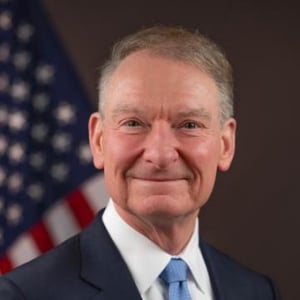
Chairman of the Securities and Exchange Commission
Paul S. Atkins was sworn into office as the 34th Chairman of the Securities and Exchange Commission on April 21, 2025, after being nominated by President Donald J. Trump on January 20, 2025, and confirmed by the U.S. Senate on April 9, 2025.
Prior to returning to the SEC, Chairman Atkins was most recently chief executive of Patomak Global Partners, a company he founded in 2009. Chairman Atkins helped lead efforts to develop best practices for the digital asset sector. He served as an independent director and non-executive chairman of the board of BATS Global Markets, Inc. from 2012 to 2015.
Chairman Atkins was appointed by President George W. Bush to serve as a Commissioner of the SEC from 2002 to 2008. During his tenure, he advocated for transparency, consistency, and the use of cost-benefit analysis at the agency. Chairman Atkins also represented the SEC at meetings of the President’s Working Group on Financial Markets and the U.S.-EU Transatlantic Economic Council. From 2009 to 2010, he was appointed a member of the Congressional Oversight Panel for the Troubled Asset Relief Program.
Before serving as an SEC Commissioner, Chairman Atkins was a consultant on securities and investment management industry matters, especially regarding issues of strategy, regulatory compliance, risk management, new product development, and organizational control.
From 1990 to 1994, Chairman Atkins served on the staff of two chairmen of the SEC, Richard C. Breeden and Arthur Levitt, ultimately as chief of staff and counselor, respectively. He received the SEC’s 1992 Law and Policy Award for work regarding corporate governance matters.
Chairman Atkins began his career as a lawyer in New York, focusing on a wide range of corporate transactions for U.S. and foreign clients, including public and private securities offerings and mergers and acquisitions. He was resident for 2½ years in his firm's Paris office and admitted as conseil juridique in France.
A member of the New York and Florida bars, Chairman Atkins received his J.D. from Vanderbilt University School of Law in 1983 and was Senior Student Writing Editor of the Vanderbilt Law Review. He received his A.B., Phi Beta Kappa, from Wofford College in 1980.
Originally from Lillington, North Carolina, Chairman Atkins grew up in Tampa, Florida. He and his wife Sarah have three sons.
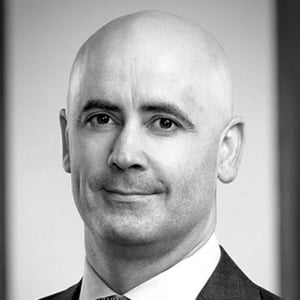
Partner, Cravath, Swaine & Moore LLP
Jeffrey T. Dinwoodie is a member of the Financial Institutions Group at Cravath, Swaine & Moore LLP. Mr. Dinwoodie previously served as Chief Counsel to the Chairman of the Securities and Exchange Commission (SEC) and as Head of the Office of Financial Institutions at the U.S. Department of the Treasury.
Mr. Dinwoodie has broad experience advising financial institutions, companies and investors, as well as government officials, across multiple disciplines. His practice focuses on advising clients on financial regulation and compliance, enforcement and examinations, and M&A and other corporate transactions. Mr. Dinwoodie’s practice also covers policy and regulatory strategy matters. Mr. Dinwoodie’s clients include established institutions, emerging companies and entrepreneurs—and his work spans both traditional finance and innovation‑related and crypto asset issues.
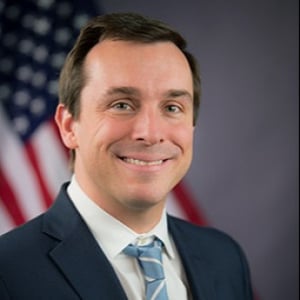
Professor of Law, New York University School of Law
Robert J. Jackson, Jr. is Professor of Law, Co-Director of the Institute for Corporate Governance and Finance, and Director of the Program on Corporate Law and Policy at the New York University School of Law. He was nominated and unanimously confirmed by the Senate to be Commissioner of the U.S. Securities and Exchange Commission in 2017 and served in that role until February 2020. Commissioner Jackson was an outspoken advocate for protecting investors, consistently calling for more transparency in capital markets and championing evidence-driven policymaking.
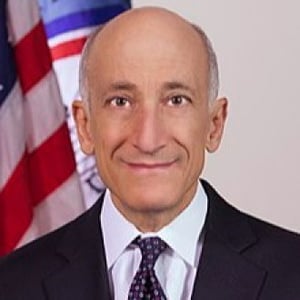
Research Fellow, Harvard Kennedy School
Timothy Massad is currently a Research Fellow at the Kennedy School of Government at Harvard University, an Adjunct Professor of Law at Georgetown Law School and a consultant on financial regulatory and fintech issues.
Mr. Massad served as Chairman of the U.S. Commodity Futures Trading Commission from 2014-2017. Under his leadership, the agency implemented the Dodd Frank reforms of the over-the-counter swaps market and harmonized many aspects of cross-border regulation, including reaching a landmark agreement with the European Union on clearinghouse oversight. The agency also declared virtual currencies to be commodities, introduced reforms to address automated trading and strengthened cybersecurity protections.
Previously, Mr. Massad served as the Assistant Secretary for Financial Stability of the U.S. Department of the Treasury. In that capacity, he oversaw the Troubled Asset Relief Program (TARP), the principal U.S. governmental response to the 2008 financial crisis. During his tenure, Treasury recovered more on all the crisis investments than was disbursed. Mr. Massad was with the Treasury from 2009 to 2014 and also served as a counselor to the Treasury Secretary.
Prior to his government service, Mr. Massad was a partner in the law firm of Cravath, Swaine & Moore, LLP. His practice included corporate finance, derivatives and advising boards of directors. He managed the firm’s Hong Kong office from 1998 to 2002 and represented governments and corporations on transactions throughout Asia. Mr. Massad was also one of a small group of lawyers who drafted the original ISDA standard agreements for swaps.
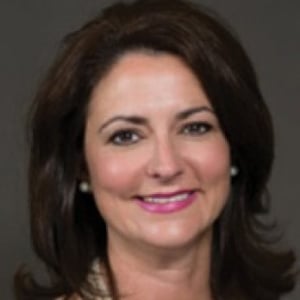
Chair of the Derivatives Practice Group, Patomak Global Partners LLC
Ms. Sommers brings almost three decades of experience in the derivatives industry and has a deep expertise in listed derivatives and swaps regulations under Title VII of the Dodd-Frank Act.
Based on her experience at the Commodity Futures Trading Commission (CFTC), Ms. Sommers advises companies on compliance issues and how to work with regulators to promote a more efficient and workable regulatory regime.
Ms. Sommers served two consecutive terms as a CFTC Commissioner from 2007 to 2013. She served as Chairman and Designated Federal Official of the Global Markets Advisory Committee, which discussed the regulatory challenges of a global marketplace. She had the opportunity to represent the United States internationally, working with regulators from over 100 countries as a Commission Representative to the Technical Committee meetings of the International Organization of Securities Commissions.
She has served on the boards of both the Securities and Exchange Commission and CFTC regulated exchanges and as an independent director for the National Futures Association. She has held a variety of roles within the industry, including as Policy Director and Head of Government Affairs for the International Swaps and Derivatives Association and Managing Director of Regulatory Affairs for the Chicago Mercantile Exchange.
A native of Kansas, Ms. Sommers graduated from the University of Kansas and started her career working for Senator Robert J. Dole (R-KS). She has continued her engagement with members of Congress and federal regulators on a variety of financial and commodity industry issues. She currently serves on the boards of Everybody Wins! D.C., and the Ethics & Compliance Initiative.
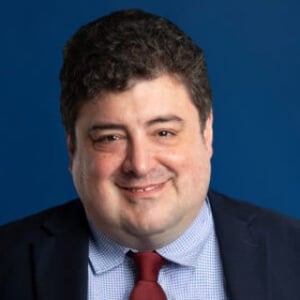
Senior Fellow and Director of Finance Policy, Competitive Enterprise Institute
John Berlau is a senior fellow and Director of Finance Policy at the Competitive Enterprise Institute. His work focuses on how public policy affects access to capital, entrepreneurship, and investments made by the public and business community alike. In recent years, he has studied the consequences of financial reform efforts passed by Congress like the Sarbanes-Oxley Act, the government’s response to the 2008 financial crisis including the Dodd-Frank Act, the placement of Fannie Mae and Freddie Mac into conservatorship, and the rise of cryptocurrency.
He is also the author of the book George Washington: Entrepreneur: How Our Founding Father’s Private Business Pursuits Changed America and the World. The book received rave reviews in the Wall Street Journal and other forums, and was endorsed by eminent historians and scholars such as Richard Brookhiser, Amity Shlaes, and Craig Shirley.
Berlau is a contributing writer for Forbes. His work has been published and cited in The Wall Street Journal, The New York Times, The Washington Post, Financial Times, Bloomberg News, The Atlantic, Politico, Daily Caller, Washington Examiner, Investor’s Business Daily, National Journal, National Review, American Spectator, Reason Magazine, and more. He is a frequent guest on radio and television programs, including CNBC’s “The Call,” “Power Lunch” and “Closing Bell,” Fox News’ “Fox & Friends” and “Your World with Neil Cavuto,” and Fox Business’ “Cavuto.”
He has testified on the impact of financial regulation before the House Committee on Financial Services and the House Committee on Energy and Commerce. A recognized expert on the phenomenon of crowdfunding, Berlau has spoken at prominent conferences such as South by Southwest Interactive in Austin, Money 20/20 in Las Vegas, the FinTech Global Expo in San Diego, the CFGE Crowdfund Banking and Lending Summit in San Francisco and the Crowdfund Intermediary Regulatory Advocates (CFIRA) Summit in Washington, D.C. He is also author of the widely cited paper “Declaration of Crowdfunding Independence: Finance of the People, by the People, and for the People.”
Berlau is an award-winning financial and political journalist. He served as Washington correspondent for Investor’s Business Daily and as a staff writer for Insight magazine, published by The Washington Times. In 2002, he received the Sandy Hume Memorial Award for Excellence in Political Journalism from Washington’s National Press Club. He was a media fellow at the Hoover Institution in 2003. He graduated from the University of Missouri-Columbia in 1994 with degrees in journalism and economics.
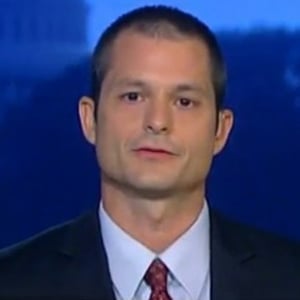
Principal Attorney, Jossey PLLC
Paul H. Jossey is principal attorney at Jossey PLLC. He has practiced law for six years representing clients in both state and federal court in Florida, Georgia, Virginia, and Washington, DC.
His wide-ranging practice has included everything from simple contract disputes to First Amendment litigation to international terrorism. Paul has specialized in campaign finance and election law for the past three years. He has now expanded into business startup and capitalization focusing on the crowdfunding provisions of Title III of the JOBS Act of 2012, whose regulations went live on May 16, 2016.
In addition to managing his own firm, Paul is an Adjunct Fellow at the Center for Competitive Politics where he researches and writes commentary about campaign finance issues. His work has been published in the New York Post, The Hill, The Federalist, The Daily Caller among others.
Prior to starting his own firm, he worked for law firms in Washington, DC and Alexandria, Virginia. After graduating law school he litigated cases for a nonprofit in Atlanta, Georgia.
He is licensed to practice in Georgia, Virginia, and Washington, DC. He holds a Juris Doctor from Case Western Reserve University School of Law and a Bachelor of Science from the University of Southern Mississippi.
Research Fellow, Harvard Kennedy School
Timothy Massad is currently a Research Fellow at the Kennedy School of Government at Harvard University, an Adjunct Professor of Law at Georgetown Law School and a consultant on financial regulatory and fintech issues.
Mr. Massad served as Chairman of the U.S. Commodity Futures Trading Commission from 2014-2017. Under his leadership, the agency implemented the Dodd Frank reforms of the over-the-counter swaps market and harmonized many aspects of cross-border regulation, including reaching a landmark agreement with the European Union on clearinghouse oversight. The agency also declared virtual currencies to be commodities, introduced reforms to address automated trading and strengthened cybersecurity protections.
Previously, Mr. Massad served as the Assistant Secretary for Financial Stability of the U.S. Department of the Treasury. In that capacity, he oversaw the Troubled Asset Relief Program (TARP), the principal U.S. governmental response to the 2008 financial crisis. During his tenure, Treasury recovered more on all the crisis investments than was disbursed. Mr. Massad was with the Treasury from 2009 to 2014 and also served as a counselor to the Treasury Secretary.
Prior to his government service, Mr. Massad was a partner in the law firm of Cravath, Swaine & Moore, LLP. His practice included corporate finance, derivatives and advising boards of directors. He managed the firm’s Hong Kong office from 1998 to 2002 and represented governments and corporations on transactions throughout Asia. Mr. Massad was also one of a small group of lawyers who drafted the original ISDA standard agreements for swaps.
Chairman of the Securities and Exchange Commission
Paul S. Atkins was sworn into office as the 34th Chairman of the Securities and Exchange Commission on April 21, 2025, after being nominated by President Donald J. Trump on January 20, 2025, and confirmed by the U.S. Senate on April 9, 2025.
Prior to returning to the SEC, Chairman Atkins was most recently chief executive of Patomak Global Partners, a company he founded in 2009. Chairman Atkins helped lead efforts to develop best practices for the digital asset sector. He served as an independent director and non-executive chairman of the board of BATS Global Markets, Inc. from 2012 to 2015.
Chairman Atkins was appointed by President George W. Bush to serve as a Commissioner of the SEC from 2002 to 2008. During his tenure, he advocated for transparency, consistency, and the use of cost-benefit analysis at the agency. Chairman Atkins also represented the SEC at meetings of the President’s Working Group on Financial Markets and the U.S.-EU Transatlantic Economic Council. From 2009 to 2010, he was appointed a member of the Congressional Oversight Panel for the Troubled Asset Relief Program.
Before serving as an SEC Commissioner, Chairman Atkins was a consultant on securities and investment management industry matters, especially regarding issues of strategy, regulatory compliance, risk management, new product development, and organizational control.
From 1990 to 1994, Chairman Atkins served on the staff of two chairmen of the SEC, Richard C. Breeden and Arthur Levitt, ultimately as chief of staff and counselor, respectively. He received the SEC’s 1992 Law and Policy Award for work regarding corporate governance matters.
Chairman Atkins began his career as a lawyer in New York, focusing on a wide range of corporate transactions for U.S. and foreign clients, including public and private securities offerings and mergers and acquisitions. He was resident for 2½ years in his firm's Paris office and admitted as conseil juridique in France.
A member of the New York and Florida bars, Chairman Atkins received his J.D. from Vanderbilt University School of Law in 1983 and was Senior Student Writing Editor of the Vanderbilt Law Review. He received his A.B., Phi Beta Kappa, from Wofford College in 1980.
Originally from Lillington, North Carolina, Chairman Atkins grew up in Tampa, Florida. He and his wife Sarah have three sons.
Partner, Cravath, Swaine & Moore LLP
Jeffrey T. Dinwoodie is a member of the Financial Institutions Group at Cravath, Swaine & Moore LLP. Mr. Dinwoodie previously served as Chief Counsel to the Chairman of the Securities and Exchange Commission (SEC) and as Head of the Office of Financial Institutions at the U.S. Department of the Treasury.
Mr. Dinwoodie has broad experience advising financial institutions, companies and investors, as well as government officials, across multiple disciplines. His practice focuses on advising clients on financial regulation and compliance, enforcement and examinations, and M&A and other corporate transactions. Mr. Dinwoodie’s practice also covers policy and regulatory strategy matters. Mr. Dinwoodie’s clients include established institutions, emerging companies and entrepreneurs—and his work spans both traditional finance and innovation‑related and crypto asset issues.
Professor of Law, New York University School of Law
Robert J. Jackson, Jr. is Professor of Law, Co-Director of the Institute for Corporate Governance and Finance, and Director of the Program on Corporate Law and Policy at the New York University School of Law. He was nominated and unanimously confirmed by the Senate to be Commissioner of the U.S. Securities and Exchange Commission in 2017 and served in that role until February 2020. Commissioner Jackson was an outspoken advocate for protecting investors, consistently calling for more transparency in capital markets and championing evidence-driven policymaking.
Research Fellow, Harvard Kennedy School
Timothy Massad is currently a Research Fellow at the Kennedy School of Government at Harvard University, an Adjunct Professor of Law at Georgetown Law School and a consultant on financial regulatory and fintech issues.
Mr. Massad served as Chairman of the U.S. Commodity Futures Trading Commission from 2014-2017. Under his leadership, the agency implemented the Dodd Frank reforms of the over-the-counter swaps market and harmonized many aspects of cross-border regulation, including reaching a landmark agreement with the European Union on clearinghouse oversight. The agency also declared virtual currencies to be commodities, introduced reforms to address automated trading and strengthened cybersecurity protections.
Previously, Mr. Massad served as the Assistant Secretary for Financial Stability of the U.S. Department of the Treasury. In that capacity, he oversaw the Troubled Asset Relief Program (TARP), the principal U.S. governmental response to the 2008 financial crisis. During his tenure, Treasury recovered more on all the crisis investments than was disbursed. Mr. Massad was with the Treasury from 2009 to 2014 and also served as a counselor to the Treasury Secretary.
Prior to his government service, Mr. Massad was a partner in the law firm of Cravath, Swaine & Moore, LLP. His practice included corporate finance, derivatives and advising boards of directors. He managed the firm’s Hong Kong office from 1998 to 2002 and represented governments and corporations on transactions throughout Asia. Mr. Massad was also one of a small group of lawyers who drafted the original ISDA standard agreements for swaps.
Chair of the Derivatives Practice Group, Patomak Global Partners LLC
Ms. Sommers brings almost three decades of experience in the derivatives industry and has a deep expertise in listed derivatives and swaps regulations under Title VII of the Dodd-Frank Act.
Based on her experience at the Commodity Futures Trading Commission (CFTC), Ms. Sommers advises companies on compliance issues and how to work with regulators to promote a more efficient and workable regulatory regime.
Ms. Sommers served two consecutive terms as a CFTC Commissioner from 2007 to 2013. She served as Chairman and Designated Federal Official of the Global Markets Advisory Committee, which discussed the regulatory challenges of a global marketplace. She had the opportunity to represent the United States internationally, working with regulators from over 100 countries as a Commission Representative to the Technical Committee meetings of the International Organization of Securities Commissions.
She has served on the boards of both the Securities and Exchange Commission and CFTC regulated exchanges and as an independent director for the National Futures Association. She has held a variety of roles within the industry, including as Policy Director and Head of Government Affairs for the International Swaps and Derivatives Association and Managing Director of Regulatory Affairs for the Chicago Mercantile Exchange.
A native of Kansas, Ms. Sommers graduated from the University of Kansas and started her career working for Senator Robert J. Dole (R-KS). She has continued her engagement with members of Congress and federal regulators on a variety of financial and commodity industry issues. She currently serves on the boards of Everybody Wins! D.C., and the Ethics & Compliance Initiative.
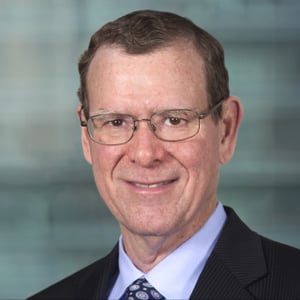
Executive in Residence, Wake Forest University School of Business
John Allison is an Executive in Residence at the Wake Forest School of Business. He is a member of the Cato Institute’s Board of Directors and Chairman of the Executive Advisory Council of the Cato Institute’s Center for Monetary and Financial Alternatives. Allison was president and CEO of the Cato Institute from October 2012 to April 2015. Prior to joining Cato, Allison was chairman and CEO of BB&T Corporation, the 10th-largest financial services holding company headquartered in the United States. During his tenure as CEO from 1989 to 2008, BB&T grew from $4.5 billion to $152 billion in assets. He was recognized by theHarvard Business Reviewas one of the top 100 most successful CEOs in the world over the last decade.
Allison has received the Corning Award for Distinguished Leadership, been inducted into the North Carolina Business Hall of Fame, and received the Lifetime Achievement Award from theAmerican Banker. He is the author of The Financial Crisis and the Free Market Cure: Why Pure Capitalism Is the World Economy’s Only Hope and The Leadership Crisis and the Free Market Cure: Why the Future of Business Depends on the Return to Life, Liberty, and the Pursuit of Happiness. In addition, he is a former Distinguished Professor of Practice at Wake Forest University School of Business, and serves on the Board of Visitors at the business schools at Wake Forest, Duke, and the University of North Carolina–Chapel Hill.
Allison is a Phi Beta Kappa graduate of the University of North Carolina–Chapel Hill. He received his master’s degree in management from Duke University and is also a graduate of the Stonier Graduate School of Banking. Allison is the recipient of six honorary doctorate degrees.
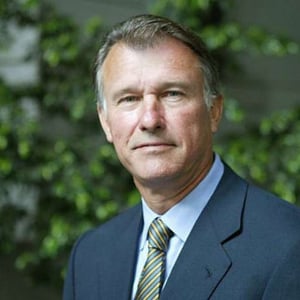
Former CEO, Wells Fargo
Mr. Richard M. Kovacevich, also known as Dick, serves as Vice President at San Francisco Symphony. Mr. Kovacevich serves as the Chief Executive Officer at Hudson Executive Capital LP. He served as the Chief Executive Officer at Wells Fargo & Company from November 1998 to June 2007 and also served as its President from November 1998 to August 1, 2005. Mr. Kovacevich served as the Chief Executive Officer of Norwest Corp. from January 1993 to November 1998 and as its Chief Operating Officer since 1989. He joined Norwest in March 1986, as Vice Chairman, Chief Operating Officer and Head of Norwest Banking Group. Mr. Kovacevich served as the President of Norwest Corporation from January 1993 to January 1997. Prior to Norwest, he served as a Group Executive of the Policy Committee of CitiCorp. and Division General Manager at General Mills. Mr. Kovacevich served as the President of The Financial Services Roundtable and serves as its Co-Chairman of Commission to Enhance Competitiveness. He served as the Chairman of the Board at Wells Fargo Bank Minnesota, National Association. Mr. Kovacevich served as the Chairman of Wells Fargo Bank, National Association. He served as the Chairman of the Board of Wells Fargo & Company from August 2005 to December 30, 2009. Mr. Kovacevich served as the Chairman of Norwest Corp. from May 1995 to November 1998. He serves as Vice Chairman of the San Francisco Museum of Modern Art. Mr. Kovacevich served as the Vice Chairman of the American Bankers Council. He has been a Director of Norwest Corporation since 1986. He has been Director of Theranos, Inc. since May 12, 2016 and previously served as Director of Theranos, Inc. since July 29, 2013. He serves as an Independent Director of Cargill, Incorporated. Mr. Kovacevich serves as a Director of The Clearing House LLC. He served as a Director at Cisco Systems, Inc. since January 19, 2005 until November 19, 2013. Mr. Kovacevich served as a Director of Wells Fargo & Company from 1986 to December 30, 2009. He served as an Independent Director of Target Corp. from 1996 to December 31, 2010. Mr. Kovacevich serves as a Member of The Federal Reserve's Federal Advisory Council, California Business Roundtable and Governor Arnold Schwarzenegger's California Commission for Jobs and Economic Growth. He graduated from Stanford University where he earned his MBA and his Bachelors and Masters degrees in Industrial Engineering.
Research Fellow, Harvard Kennedy School
Timothy Massad is currently a Research Fellow at the Kennedy School of Government at Harvard University, an Adjunct Professor of Law at Georgetown Law School and a consultant on financial regulatory and fintech issues.
Mr. Massad served as Chairman of the U.S. Commodity Futures Trading Commission from 2014-2017. Under his leadership, the agency implemented the Dodd Frank reforms of the over-the-counter swaps market and harmonized many aspects of cross-border regulation, including reaching a landmark agreement with the European Union on clearinghouse oversight. The agency also declared virtual currencies to be commodities, introduced reforms to address automated trading and strengthened cybersecurity protections.
Previously, Mr. Massad served as the Assistant Secretary for Financial Stability of the U.S. Department of the Treasury. In that capacity, he oversaw the Troubled Asset Relief Program (TARP), the principal U.S. governmental response to the 2008 financial crisis. During his tenure, Treasury recovered more on all the crisis investments than was disbursed. Mr. Massad was with the Treasury from 2009 to 2014 and also served as a counselor to the Treasury Secretary.
Prior to his government service, Mr. Massad was a partner in the law firm of Cravath, Swaine & Moore, LLP. His practice included corporate finance, derivatives and advising boards of directors. He managed the firm’s Hong Kong office from 1998 to 2002 and represented governments and corporations on transactions throughout Asia. Mr. Massad was also one of a small group of lawyers who drafted the original ISDA standard agreements for swaps.
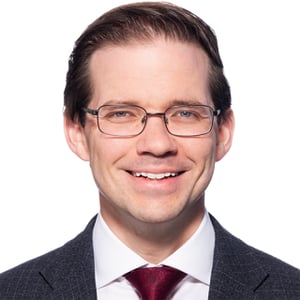
Of Counsel, Covington & Burling LLP
The Honorable Paul J. Ray is currently Of Counsel at Covington & Burling LLP where he advises clients on regulatory opportunities and challenges and helps them formulate and execute advocacy strategies for their regulatory policy priorities before the executive branch and Congress.
During the first Trump Administration, Paul held various senior positions at the Office of Information and Regulatory Affairs (OIRA) within the White House’s Office of Management and Budget, including as acting, and then Senate-confirmed, head of the office. As OIRA Administrator (the "regulations czar"), Paul supervised the review of hundreds of regulations from across the government, drafted numerous executive orders governing the regulatory process, and led the Administration’s regulatory reform effort. As a result of this experience, Paul is well-positioned to help clients understand and achieve regulatory policy priorities in the context of the government’s regulatory agenda and ongoing reform efforts.
Most recently, Paul was also the Director of the Roe Institute for Economic Policy Studies at The Heritage Foundation. In that role, he supervised the formulation of the Foundation’s economic and regulatory policy recommendations and provided technical assistance to congressional committees and staff regarding legislative changes to the regulatory process. In addition to his role at The Heritage Foundation, Paul also served as a Senior Advisor at a strategic advisory firm. Before his time in government, Paul practiced law at a law firm in Washington, specializing in administrative law matters.
Prior to his role at the White House, Paul was Counselor to the Secretary at the U.S. Department of Labor. There he led departmental efforts in high-profile rulemakings and helped formulate the Department’s legal positions and strategy.
Paul served as a law clerk to Supreme Court Justice Samuel Alito and as a law clerk to the Honorable Debra Livingston of the U.S. Court of Appeals for the Second Circuit.
Paul is a thought leader in the conservative legal movement and is a frequent commentator and speaker on regulatory policy and reform matters, including at law schools, professional gatherings, and other venues. He is the Chairman of Innovations in Peacebuilding International and the Regulatory Process Working Group of the Federalist Society’s Regulatory Transparency Project and a public member of the Administrative Conference of the United States. Paul is also an adjunct lecturer at the Hillsdale College School of Government.
Senior Fellow and Director of Finance Policy, Competitive Enterprise Institute
John Berlau is a senior fellow and Director of Finance Policy at the Competitive Enterprise Institute. His work focuses on how public policy affects access to capital, entrepreneurship, and investments made by the public and business community alike. In recent years, he has studied the consequences of financial reform efforts passed by Congress like the Sarbanes-Oxley Act, the government’s response to the 2008 financial crisis including the Dodd-Frank Act, the placement of Fannie Mae and Freddie Mac into conservatorship, and the rise of cryptocurrency.
He is also the author of the book George Washington: Entrepreneur: How Our Founding Father’s Private Business Pursuits Changed America and the World. The book received rave reviews in the Wall Street Journal and other forums, and was endorsed by eminent historians and scholars such as Richard Brookhiser, Amity Shlaes, and Craig Shirley.
Berlau is a contributing writer for Forbes. His work has been published and cited in The Wall Street Journal, The New York Times, The Washington Post, Financial Times, Bloomberg News, The Atlantic, Politico, Daily Caller, Washington Examiner, Investor’s Business Daily, National Journal, National Review, American Spectator, Reason Magazine, and more. He is a frequent guest on radio and television programs, including CNBC’s “The Call,” “Power Lunch” and “Closing Bell,” Fox News’ “Fox & Friends” and “Your World with Neil Cavuto,” and Fox Business’ “Cavuto.”
He has testified on the impact of financial regulation before the House Committee on Financial Services and the House Committee on Energy and Commerce. A recognized expert on the phenomenon of crowdfunding, Berlau has spoken at prominent conferences such as South by Southwest Interactive in Austin, Money 20/20 in Las Vegas, the FinTech Global Expo in San Diego, the CFGE Crowdfund Banking and Lending Summit in San Francisco and the Crowdfund Intermediary Regulatory Advocates (CFIRA) Summit in Washington, D.C. He is also author of the widely cited paper “Declaration of Crowdfunding Independence: Finance of the People, by the People, and for the People.”
Berlau is an award-winning financial and political journalist. He served as Washington correspondent for Investor’s Business Daily and as a staff writer for Insight magazine, published by The Washington Times. In 2002, he received the Sandy Hume Memorial Award for Excellence in Political Journalism from Washington’s National Press Club. He was a media fellow at the Hoover Institution in 2003. He graduated from the University of Missouri-Columbia in 1994 with degrees in journalism and economics.
Principal Attorney, Jossey PLLC
Paul H. Jossey is principal attorney at Jossey PLLC. He has practiced law for six years representing clients in both state and federal court in Florida, Georgia, Virginia, and Washington, DC.
His wide-ranging practice has included everything from simple contract disputes to First Amendment litigation to international terrorism. Paul has specialized in campaign finance and election law for the past three years. He has now expanded into business startup and capitalization focusing on the crowdfunding provisions of Title III of the JOBS Act of 2012, whose regulations went live on May 16, 2016.
In addition to managing his own firm, Paul is an Adjunct Fellow at the Center for Competitive Politics where he researches and writes commentary about campaign finance issues. His work has been published in the New York Post, The Hill, The Federalist, The Daily Caller among others.
Prior to starting his own firm, he worked for law firms in Washington, DC and Alexandria, Virginia. After graduating law school he litigated cases for a nonprofit in Atlanta, Georgia.
He is licensed to practice in Georgia, Virginia, and Washington, DC. He holds a Juris Doctor from Case Western Reserve University School of Law and a Bachelor of Science from the University of Southern Mississippi.
Research Fellow, Harvard Kennedy School
Timothy Massad is currently a Research Fellow at the Kennedy School of Government at Harvard University, an Adjunct Professor of Law at Georgetown Law School and a consultant on financial regulatory and fintech issues.
Mr. Massad served as Chairman of the U.S. Commodity Futures Trading Commission from 2014-2017. Under his leadership, the agency implemented the Dodd Frank reforms of the over-the-counter swaps market and harmonized many aspects of cross-border regulation, including reaching a landmark agreement with the European Union on clearinghouse oversight. The agency also declared virtual currencies to be commodities, introduced reforms to address automated trading and strengthened cybersecurity protections.
Previously, Mr. Massad served as the Assistant Secretary for Financial Stability of the U.S. Department of the Treasury. In that capacity, he oversaw the Troubled Asset Relief Program (TARP), the principal U.S. governmental response to the 2008 financial crisis. During his tenure, Treasury recovered more on all the crisis investments than was disbursed. Mr. Massad was with the Treasury from 2009 to 2014 and also served as a counselor to the Treasury Secretary.
Prior to his government service, Mr. Massad was a partner in the law firm of Cravath, Swaine & Moore, LLP. His practice included corporate finance, derivatives and advising boards of directors. He managed the firm’s Hong Kong office from 1998 to 2002 and represented governments and corporations on transactions throughout Asia. Mr. Massad was also one of a small group of lawyers who drafted the original ISDA standard agreements for swaps.
Senior Fellow and Director of Finance Policy, Competitive Enterprise Institute
John Berlau is a senior fellow and Director of Finance Policy at the Competitive Enterprise Institute. His work focuses on how public policy affects access to capital, entrepreneurship, and investments made by the public and business community alike. In recent years, he has studied the consequences of financial reform efforts passed by Congress like the Sarbanes-Oxley Act, the government’s response to the 2008 financial crisis including the Dodd-Frank Act, the placement of Fannie Mae and Freddie Mac into conservatorship, and the rise of cryptocurrency.
He is also the author of the book George Washington: Entrepreneur: How Our Founding Father’s Private Business Pursuits Changed America and the World. The book received rave reviews in the Wall Street Journal and other forums, and was endorsed by eminent historians and scholars such as Richard Brookhiser, Amity Shlaes, and Craig Shirley.
Berlau is a contributing writer for Forbes. His work has been published and cited in The Wall Street Journal, The New York Times, The Washington Post, Financial Times, Bloomberg News, The Atlantic, Politico, Daily Caller, Washington Examiner, Investor’s Business Daily, National Journal, National Review, American Spectator, Reason Magazine, and more. He is a frequent guest on radio and television programs, including CNBC’s “The Call,” “Power Lunch” and “Closing Bell,” Fox News’ “Fox & Friends” and “Your World with Neil Cavuto,” and Fox Business’ “Cavuto.”
He has testified on the impact of financial regulation before the House Committee on Financial Services and the House Committee on Energy and Commerce. A recognized expert on the phenomenon of crowdfunding, Berlau has spoken at prominent conferences such as South by Southwest Interactive in Austin, Money 20/20 in Las Vegas, the FinTech Global Expo in San Diego, the CFGE Crowdfund Banking and Lending Summit in San Francisco and the Crowdfund Intermediary Regulatory Advocates (CFIRA) Summit in Washington, D.C. He is also author of the widely cited paper “Declaration of Crowdfunding Independence: Finance of the People, by the People, and for the People.”
Berlau is an award-winning financial and political journalist. He served as Washington correspondent for Investor’s Business Daily and as a staff writer for Insight magazine, published by The Washington Times. In 2002, he received the Sandy Hume Memorial Award for Excellence in Political Journalism from Washington’s National Press Club. He was a media fellow at the Hoover Institution in 2003. He graduated from the University of Missouri-Columbia in 1994 with degrees in journalism and economics.
Principal Attorney, Jossey PLLC
Paul H. Jossey is principal attorney at Jossey PLLC. He has practiced law for six years representing clients in both state and federal court in Florida, Georgia, Virginia, and Washington, DC.
His wide-ranging practice has included everything from simple contract disputes to First Amendment litigation to international terrorism. Paul has specialized in campaign finance and election law for the past three years. He has now expanded into business startup and capitalization focusing on the crowdfunding provisions of Title III of the JOBS Act of 2012, whose regulations went live on May 16, 2016.
In addition to managing his own firm, Paul is an Adjunct Fellow at the Center for Competitive Politics where he researches and writes commentary about campaign finance issues. His work has been published in the New York Post, The Hill, The Federalist, The Daily Caller among others.
Prior to starting his own firm, he worked for law firms in Washington, DC and Alexandria, Virginia. After graduating law school he litigated cases for a nonprofit in Atlanta, Georgia.
He is licensed to practice in Georgia, Virginia, and Washington, DC. He holds a Juris Doctor from Case Western Reserve University School of Law and a Bachelor of Science from the University of Southern Mississippi.
Research Fellow, Harvard Kennedy School
Timothy Massad is currently a Research Fellow at the Kennedy School of Government at Harvard University, an Adjunct Professor of Law at Georgetown Law School and a consultant on financial regulatory and fintech issues.
Mr. Massad served as Chairman of the U.S. Commodity Futures Trading Commission from 2014-2017. Under his leadership, the agency implemented the Dodd Frank reforms of the over-the-counter swaps market and harmonized many aspects of cross-border regulation, including reaching a landmark agreement with the European Union on clearinghouse oversight. The agency also declared virtual currencies to be commodities, introduced reforms to address automated trading and strengthened cybersecurity protections.
Previously, Mr. Massad served as the Assistant Secretary for Financial Stability of the U.S. Department of the Treasury. In that capacity, he oversaw the Troubled Asset Relief Program (TARP), the principal U.S. governmental response to the 2008 financial crisis. During his tenure, Treasury recovered more on all the crisis investments than was disbursed. Mr. Massad was with the Treasury from 2009 to 2014 and also served as a counselor to the Treasury Secretary.
Prior to his government service, Mr. Massad was a partner in the law firm of Cravath, Swaine & Moore, LLP. His practice included corporate finance, derivatives and advising boards of directors. He managed the firm’s Hong Kong office from 1998 to 2002 and represented governments and corporations on transactions throughout Asia. Mr. Massad was also one of a small group of lawyers who drafted the original ISDA standard agreements for swaps.
Principal Attorney, Jossey PLLC
Paul H. Jossey is principal attorney at Jossey PLLC. He has practiced law for six years representing clients in both state and federal court in Florida, Georgia, Virginia, and Washington, DC.
His wide-ranging practice has included everything from simple contract disputes to First Amendment litigation to international terrorism. Paul has specialized in campaign finance and election law for the past three years. He has now expanded into business startup and capitalization focusing on the crowdfunding provisions of Title III of the JOBS Act of 2012, whose regulations went live on May 16, 2016.
In addition to managing his own firm, Paul is an Adjunct Fellow at the Center for Competitive Politics where he researches and writes commentary about campaign finance issues. His work has been published in the New York Post, The Hill, The Federalist, The Daily Caller among others.
Prior to starting his own firm, he worked for law firms in Washington, DC and Alexandria, Virginia. After graduating law school he litigated cases for a nonprofit in Atlanta, Georgia.
He is licensed to practice in Georgia, Virginia, and Washington, DC. He holds a Juris Doctor from Case Western Reserve University School of Law and a Bachelor of Science from the University of Southern Mississippi.
Research Fellow, Harvard Kennedy School
Timothy Massad is currently a Research Fellow at the Kennedy School of Government at Harvard University, an Adjunct Professor of Law at Georgetown Law School and a consultant on financial regulatory and fintech issues.
Mr. Massad served as Chairman of the U.S. Commodity Futures Trading Commission from 2014-2017. Under his leadership, the agency implemented the Dodd Frank reforms of the over-the-counter swaps market and harmonized many aspects of cross-border regulation, including reaching a landmark agreement with the European Union on clearinghouse oversight. The agency also declared virtual currencies to be commodities, introduced reforms to address automated trading and strengthened cybersecurity protections.
Previously, Mr. Massad served as the Assistant Secretary for Financial Stability of the U.S. Department of the Treasury. In that capacity, he oversaw the Troubled Asset Relief Program (TARP), the principal U.S. governmental response to the 2008 financial crisis. During his tenure, Treasury recovered more on all the crisis investments than was disbursed. Mr. Massad was with the Treasury from 2009 to 2014 and also served as a counselor to the Treasury Secretary.
Prior to his government service, Mr. Massad was a partner in the law firm of Cravath, Swaine & Moore, LLP. His practice included corporate finance, derivatives and advising boards of directors. He managed the firm’s Hong Kong office from 1998 to 2002 and represented governments and corporations on transactions throughout Asia. Mr. Massad was also one of a small group of lawyers who drafted the original ISDA standard agreements for swaps.
Senior Fellow and Director of Finance Policy, Competitive Enterprise Institute
John Berlau is a senior fellow and Director of Finance Policy at the Competitive Enterprise Institute. His work focuses on how public policy affects access to capital, entrepreneurship, and investments made by the public and business community alike. In recent years, he has studied the consequences of financial reform efforts passed by Congress like the Sarbanes-Oxley Act, the government’s response to the 2008 financial crisis including the Dodd-Frank Act, the placement of Fannie Mae and Freddie Mac into conservatorship, and the rise of cryptocurrency.
He is also the author of the book George Washington: Entrepreneur: How Our Founding Father’s Private Business Pursuits Changed America and the World. The book received rave reviews in the Wall Street Journal and other forums, and was endorsed by eminent historians and scholars such as Richard Brookhiser, Amity Shlaes, and Craig Shirley.
Berlau is a contributing writer for Forbes. His work has been published and cited in The Wall Street Journal, The New York Times, The Washington Post, Financial Times, Bloomberg News, The Atlantic, Politico, Daily Caller, Washington Examiner, Investor’s Business Daily, National Journal, National Review, American Spectator, Reason Magazine, and more. He is a frequent guest on radio and television programs, including CNBC’s “The Call,” “Power Lunch” and “Closing Bell,” Fox News’ “Fox & Friends” and “Your World with Neil Cavuto,” and Fox Business’ “Cavuto.”
He has testified on the impact of financial regulation before the House Committee on Financial Services and the House Committee on Energy and Commerce. A recognized expert on the phenomenon of crowdfunding, Berlau has spoken at prominent conferences such as South by Southwest Interactive in Austin, Money 20/20 in Las Vegas, the FinTech Global Expo in San Diego, the CFGE Crowdfund Banking and Lending Summit in San Francisco and the Crowdfund Intermediary Regulatory Advocates (CFIRA) Summit in Washington, D.C. He is also author of the widely cited paper “Declaration of Crowdfunding Independence: Finance of the People, by the People, and for the People.”
Berlau is an award-winning financial and political journalist. He served as Washington correspondent for Investor’s Business Daily and as a staff writer for Insight magazine, published by The Washington Times. In 2002, he received the Sandy Hume Memorial Award for Excellence in Political Journalism from Washington’s National Press Club. He was a media fellow at the Hoover Institution in 2003. He graduated from the University of Missouri-Columbia in 1994 with degrees in journalism and economics.

Luncheon Panel - U.S. Financial Regulation: Principles, Opportunities, and Challenges
EBRXII
Washington, DCLuncheon Panel - U.S. Financial Regulation: Principles, Opportunities, and Challenges
Paul S. Atkins, Jeffrey T. Dinwoodie, Robert J. Jackson, Timothy G. Massad, Jill Sommers
This panel will bring together four former senior policymakers from the SEC or CFTC to...
Twelfth Annual Executive Branch Review Conference: Register Now or Join Via Livestream!
This year, we are excited to host the Twelfth Annual Executive Branch Review Conference on Tuesday, April...
Regulation and Red Tape: Tax Inversions: Unpacking the Pfizer Case
John A. Allison, Richard M. Kovacevich, Timothy G. Massad, Paul J. Ray
In 2014, the pharmaceutical company Pfizer initiated a restructuring, only to encounter impediments from the...
A Discussion on Stablecoins
John Berlau, Paul H. Jossey, Timothy G. Massad
Stablecoins are unique types of digital tokens that have emerged out of the cryptocurrency revolution...
A Discussion on Stablecoins
John Berlau, Paul H. Jossey, Timothy G. Massad
Stablecoins are unique types of digital tokens that have emerged out of the cryptocurrency revolution...
Deep Dive Episode 218 – A Discussion on Stablecoins
Paul H. Jossey, Timothy G. Massad, John Berlau
Stablecoins are unique types of digital tokens that have emerged out of the cryptocurrency revolution...
A Discussion on Stablecoins
Teleforum