
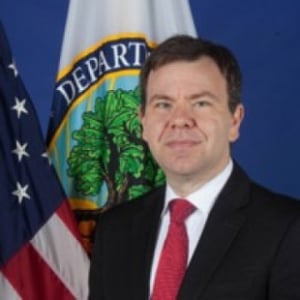
General Counsel, Mountain States Legal Foundation
William E. Trachman is General Counsel for Mountain States Legal Foundation, where he protects the rights of individuals to live freely and securely under the U.S. Constitution. Previously, he was appointed to serve in the Department of Education as Deputy Assistant Secretary in the Office for Civil Rights. Prior to his appointment, he served as General Counsel to the Douglas County School District, where he helped litigate the fight for school choice in the school district. Presently, Mr. Trachman serves as Chair of the Colorado Federalist Society and the Vice Chair of the U.S. Commission on Civil Rights’ Colorado Advisory Board. He previously taught as an Adjunct Professor at the University of Denver, Sturm College of Law. He attended U.C. Berkeley for both undergraduate and law school, and then clerked for the Honorable Harris Hartz on the 10th Circuit Court of Appeals. Mr. Trachman is licensed in Colorado, California, and Washington, D.C.

Founder, President, and General Counsel, Wisconsin Institute for Law & Liberty
Rick Esenberg is the founder and current President and General Counsel of the Wisconsin Institute for Law & Liberty, a rapidly expanding law and policy organization headquartered in Milwaukee. Under Rick’s leadership, WILL has grown into one of the more active state-based think tanks and litigation centers in the country. Rick is a frequent litigator in state and federal courts and nationally recognized scholar and commentator on constitutional law, particularly the First Amendment’s guarantees of freedom of speech and religion. He is one of the leading experts on the Wisconsin Constitution and a frequent advocate before the Wisconsin Supreme Court. Rick’s work seeks to advance the rule of law and individual liberty, formed by a robust civil society that forms individual and community character, preserving the wisdom of the past and an openness to the future.
Rick’s commentary has been featured in such outlets as the Wall Street Journal, National Review, Weekly Standard, Real Clear Politics, Milwaukee Journal Sentinel and Washington Examiner. Formerly on the faculty of Marquette University Law School, his scholarship has appeared in such publications as the Harvard Law Review, Harvard Journal of Law & Public Policy, Wake Forest Law Review and William & Mary Bill of Rights Journal. Back when they were a thing, he operated a blog called Shark and Shepherd where he tried to suggest something about the duality of man – “the Jungian thing.”
Rick holds a J.D., magna cum laude, from Harvard Law School, where he was an editor of the Harvard Law Review, and a B.A., summa cum laude, in political science from the University of Wisconsin-Milwaukee. In addition to service on the Marquette Faculty, he was formerly a litigation partner at Foley & Lardner and General Counsel of an international manufacturing firm headquartered in Wisconsin. He lives in Mequon Wisconsin with his wife Karen, golden retrievers Cooper and Riley and more books than he can find places for.

Attorney, Pacific Legal Foundation
Erin Wilcox joined PLF in 2018 and works primarily from Austin, Texas. She litigates cases around the country to secure the inalienable rights of all Americans to live responsibly and productively in their pursuit of happiness.
After graduating from law school, Erin defended the individual rights of employees as a litigator for the National Right to Work Legal Defense Foundation, was an attorney-advisor for the D.C. Public Employee Relations Board, and most recently fought for liberty in the Lone Star State as an attorney with the Texas Public Policy Foundation. During law school, Erin clerked at the Institute for Justice and was a Charles Koch Summer Fellow.
A native Texan, Erin ventured east after high school to earn a B.A. in history and political science from Wake Forest University and a J.D. from the Wake Forest University School of Law. In addition to liberty, Erin’s loves include college football, Texas barbecue, and a well-made Old Fashioned.
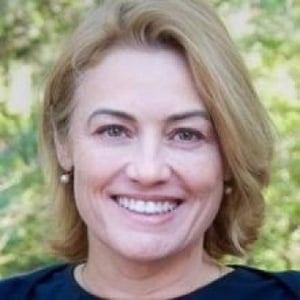
Professor of the Practice of Economics, Duke University
Michelle P. Connolly is Professor of the Practice in the Economics Department at Duke University. She was the Economics Director of Duke in New York: Financial Markets and Institutions Program for 2007-2009 and the Director of EcoTeach for several years. She currently serves as the Director of the Honors Program in Economics and a member of the Duke Alumni Association Board.
In 2011, Professor Connolly won the Howard D. Johnson Trinity College Teaching Prize and was named among the top five percent of Duke University Undergraduate Instructors in 2009, 2010 and 2011.
Professor Connolly previously served as Chief Economist of the Federal Communications Commission in 2006-2007 and 2008-2009, and as an Economist for the International Research Function for the Federal Reserve Bank of New York from 1996 to 1997. She graduated Phi Beta Kappa and Summa Cum Laude from Yale University in 1990, and went on to earn her M.A. and M.Phil in economics. Professor Connolly received her Ph.D. in economics from Yale University in 1996.
Professor Connolly’s research and teaching focus specifically on international trade, telecommunications policy, media policy, education, growth, and development. She has received funding for her research from the National Science Foundation, the Duke Arts and Sciences Research Council Grants, the Spencer Grant, and the Teagle Grant.
Professor Connolly has published in numerous journals, including the American Economic Review, the American Economic Journal: Macroeconomics, the Journal of Development Economics, the Journal of Economic History, the Journal of Economic Growth, the Review of Industrial Organization, and Current Issues in Economics and Finance.
In 2011, Professor Connolly testified before Congress and participated in a White House panel on Spectrum Issues. She has been presenting her work at university seminars and international conferences since 1996. Some of her appearances were at the ACLP Advanced Communications 2009 Summit, where she was a panelist and moderator, at the conference on “Wireless Technologies: Enabling Innovation and Economic Growth”, where she served as a keynote panelist, and at the Martin H. Crego Lecture in Economics, an all college Lecture at Vassar College. In 2013 Professor Connolly was awarded a National Science Foundation Secure and Trustworthy Cyberspace Grant, “Dollars for Hertz: Making Trustworthy Spectrum Sharing Technically and Economically Viable.”
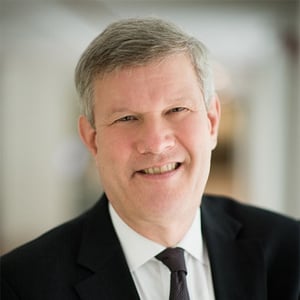
Senior Fellow and Director, Center for the Economics of the Internet, Hudson Institute
Harold Furchtgott-Roth is a senior fellow and director of the Center for the Economics of the Internet at Hudson Institute.
Mr. Furchtgott-Roth founded Furchtgott-Roth Economic Enterprises in 2003. He frequently comments on issues related to the communications sector of the economy. From 2001 to 2003, he was a visiting fellow at the American Enterprise Institute where he published A Tough Act to Follow, chronicling the difficulties implementing the Telecommunications Act of 1996.
From 1997 through 2001, Mr. Furchtgott-Roth served as a commissioner of the Federal Communications Commission. In that capacity, he served on the Joint Board on Universal Service. He is one of the few economists to have served as a federal regulatory commissioner, and the only one to have served on the Federal Communications Commission.
Before his appointment to the FCC, he was chief economist for the House Committee on Commerce and a principal staff member on the Telecommunications Act of 1996. Earlier in his career, he was a senior economist with Economists Incorporated and a research analyst with the Center for Naval Analyses.
Mr. Furchtgott-Roth is a member of the Washington Legal Foundation’s Legal Policy Advisory Board. He is the coauthor of three books: Cable TV: Regulation or Competition, with R.W. Crandall; Economics of A Disaster: The Exxon Valdez Oil Spill, with B.M. Owen et al; and International Trade in Computer Software, with S.E. Siwek.
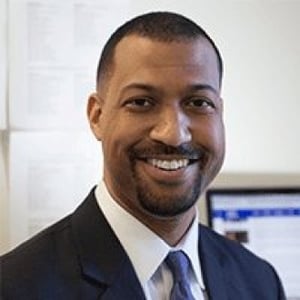
President & CEO, Public Knowledge
Chris Lewis has served as President and CEO at Public Knowledge since July 2019. Prior to being elevated to President and CEO, Chris served seven years as PK’s Vice President for Government Affairs, leading the organization’s day-to-day advocacy and political strategy on Capitol Hill and at government agencies. During that time he also served as a local elected official, serving two terms on the Alexandria City Public School Board in Virginia.
Before joining Public Knowledge, Chris worked in the Federal Communications Commission Office of Legislative Affairs, including as its Deputy Director. He is a former U.S. Senate staffer and an experienced political organizer and advocate in both the nonprofit world and political campaigns from local to the presidential level. Chris graduated from Harvard University with a Bachelors degree in Government and lives in Alexandria, VA where he continues to volunteer and advocate on local civic issues.

President, The Free State Foundation
Randolph J. May is Founder and President of The Free State Foundation. The Free State Foundation is an independent, non-profit free market-oriented think tank founded in 2006.
From October 1999-May 2006, May was a Senior Fellow and Director of Communications Policy Studies at The Progress & Freedom Foundation, a Washington, DC-based think tank. Prior to joining PFF, he practiced communications, administrative, and regulatory law as a partner at major national law firms. From 1978 to 1981, May served as Assistant General Counsel and Associate General Counsel at the Federal Communication Commission.
May has held numerous leadership positions in bar associations. He is a past Chair of the American Bar Association’s Section of Administrative Law and Regulatory Practice. He is a Fellow of the National Academy of Public Administration. Mr. May also has served as a Public Member of the Administrative Conference of the United States and currently is a Senior Fellow at ACUS.
Mr. May has published more than two hundred articles and essays on communications, administrative and constitutional law topics. He is author of A Call for a Radical New Communications Policy: Proposals for Free Market Reform, and co-author of #CommActUpdate: A Communications Law Fit for the Digital Age and The Constitutional Foundations of Intellectual Property. Mr. May is editor of two books, Communications Law and Policy in the Digital Age: The Next Five Years and New Directions in Communications Policy. In addition, he is the co-editor of two other books, Net Neutrality or Net Neutering: Should Broadband Internet Services Be Regulated? and Communications Deregulation and FCC Reform. In the past, Mr. May has written regular columns on legal and regulatory affairs for Legal Times and the National Law Journal, leading national legal periodicals.
He received his A.B. from Duke University and his J.D. from Duke Law School, where he serves as a member of the Board of Visitors.

Vice President for Legal Affairs, Cato Institute
Roger Pilon is the Cato’s Institute’s vice president for legal affairs, the founding director of Cato’s Robert A. Levy Center for Constitutional Studies, the inaugural holder of Cato’s B. Kenneth Simon Chair in Constitutional Studies, and the founding publisher of the Cato Supreme Court Review.
Prior to joining Cato, Pilon held five senior posts in the Reagan administration, including at State and Justice, and was a national fellow at Stanford’s Hoover Institution. In 1989 the Bicentennial Commission presented him with its Benjamin Franklin Award for excellence in writing on the U.S. Constitution. In 2001 Columbia University’s School of General Studies awarded him its Alumni Medal of Distinction. Pilon lectures and debates at universities and law schools across the country and testifies often before Congress.
His writing has appeared in the Wall Street Journal, the Washington Post, the New York Times, the Los Angeles Times, Legal Times, National Law Journal, Harvard Journal of Law and Public Policy, Stanford Law and Policy Review, and elsewhere. He has appeared on ABC’s Nightline, CBS’s 60 Minutes II, Fox News Channel, NPR, CNN, MSNBC, CNBC, C-SPAN, and other media.
Pilon holds a BA from Columbia University, an MA and a PhD from the University of Chicago, and a JD from the George Washington University School of Law.
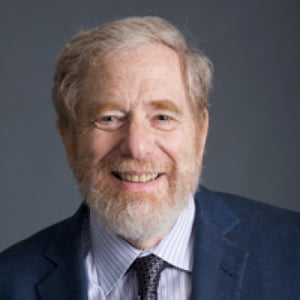
Carmack Waterhouse Professor of Constitutional Law, Georgetown Law
After graduating from Harvard Law School in 1971, Professor Seidman served as a law clerk for J. Skelly Wright of the D.C. Circuit and U.S. Supreme Court Justice Thurgood Marshall. He then was a staff attorney with the D.C. Public Defender Service until joining the Law Center faculty in 1976. He teaches a variety of courses in the fields of constitutional and criminal law. He is co-author of a constitutional law casebook and the author of many articles concerning criminal justice and constitutional law. His most recent books are Silence and Freedom (Stanford 2007), Our Unsettled Constitution: A New Defense of Constitutionalism and Judicial Review (Yale 2001) and Equal Protection of the Laws (Foundation 2002).
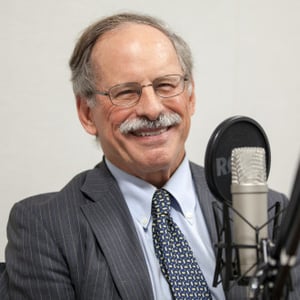
Freelance Journalist and Author
Stuart Taylor, Jr. is a Washington writer focusing on legal and policy issues and a National Journal contributing editor. He occasionally practices law.
Taylor has coauthored three books. All have been acclaimed by commentators across the ideological spectrum. In January 2017, KC Johnson and Taylor authored The Campus Rape Frenzy: The Attack on Due Process at America's Universities. In 2012, Richard Sander and Taylor authored Mismatch: How Affirmative Action Hurts Students It's Intended to Help, and Why Universities Won't Admit It. In 2007, Taylor and Johnson authored Until Proven Innocent: Political Correctness and the Shameful Injustices of the Duke Lacrosse Rape Fraud. Sander and Taylor have also filed amicus briefs in Supreme Court cases involving admissions preferences.
Since 1980, Taylor has done reporting and commentary about issues ranging from the biggest Supreme Court cases to race, voting rights, mindlessly excessive criminal penalties, guilt-presuming campus rape processes, journalistic bias, the death penalty, war powers, gerrymandering, guns, polarization, civil liberties, national security, torture, campaign finance, education, impeachment, and other issues. He has often been called one of the nation's best legal journalists and is known for challenging both liberal and conservative conventional wisdom.
Taylor was a reporter for The New York Times from 1980-1988, covering legal affairs and then the Supreme Court. He wrote commentaries and long features for The American Lawyer, Legal Times and their affiliates from 1989-1997, and for National Journal and Newsweek from 1998 through 2010. He has written (less often) on a freelance basis for numerous publications since 2010. He has written op-eds for The Washington Post, The New York Times, The Wall Street Journal, The Los Angeles Times, USA Today, and The New York Daily News and longer commentaries for RealClearPolitics, The Atlantic, The New Republic, the (late) Weekly Standard, National Review, Slate, The Daily Beast, Harper’s, Reader’s Digest, Time and other magazines. He has been interviewed on all major television and radio networks. He taught “Law and the News Media” at Stanford Law School in 2011 and 2012 and practices law on occasion.
Taylor graduated from Princeton University in 1970 with an A.B. in History. After working as a reporter for the Baltimore Evening Sun and Sun from 1971-1974, he moved to Harvard Law School, was a Harvard Law Review note editor, and graduated in 1977 at the top of his class, with high honors. He also won a Frederick Sheldon Traveling Fellowship and traveled around the world in 1977-1978 while studying freedom of the press in the United Kingdom and Kenya.
Taylor practiced law with Wilmer, Cutler & Pickering, in Washington, D.C., from 1977-1980 before returning to journalism in 1980 by joining the Washington Bureau of The New York Times.
Taylor's journalism honors include the 2009 Northern California Innocence Project Media Award for his work on the Duke lacrosse rape fraud; a 2002 National Headliner Award for best special magazine column on one subject; and a share of The American Lawyer’s National Magazine Award for a March 1990 special issue on the drug war. He was a National Magazine Award finalist in 1993 and 1997 and was nominated by The New York Times for a Pulitzer Prize in 1988.

Senior Attorney and Counsel for Special Projects, Competitive Enterprise Institute
CEI’s Counsel for Special Projects is Hans Bader. Coming to CEI in 2003, Hans’s prior casework has included suits involving the First Amendment, federalism, and civil rights issues. He graduated from the University of Virginia with a B.A. in economics and history, and later earned his J.D. from Harvard Law School. Just before joining CEI, Hans was Senior Counsel at the Center for Individual Rights.
Attorney, Pacific Legal Foundation
Erin Wilcox joined PLF in 2018 and works primarily from Austin, Texas. She litigates cases around the country to secure the inalienable rights of all Americans to live responsibly and productively in their pursuit of happiness.
After graduating from law school, Erin defended the individual rights of employees as a litigator for the National Right to Work Legal Defense Foundation, was an attorney-advisor for the D.C. Public Employee Relations Board, and most recently fought for liberty in the Lone Star State as an attorney with the Texas Public Policy Foundation. During law school, Erin clerked at the Institute for Justice and was a Charles Koch Summer Fellow.
A native Texan, Erin ventured east after high school to earn a B.A. in history and political science from Wake Forest University and a J.D. from the Wake Forest University School of Law. In addition to liberty, Erin’s loves include college football, Texas barbecue, and a well-made Old Fashioned.

Litigation Update: Cert Granted in Students for Fair Admission v. Harvard and Students for Fair Admission v. UNC Chapel Hill
William E. Trachman
Breaking news: The Supreme Court granted certiorari in two petitions pending before the Supreme Court...
Litigation Update: Wisconsin Equal Protection and Race Based Scholarships
Rick M. Esenberg
A biracial Wisconsin couple—Konkanok Rabieba and Richard Freihoefer—is suing the state of Wisconsin over its Minority Grant...
Litigation Update: Coalition for Thomas Jefferson High v. Fairfax County School Board
Erin Wilcox
Thomas Jefferson High School for Science and Technology, or “TJ,” in Fairfax County, Virginia,...
Litigation Update: Coalition for Thomas Jefferson High v. Fairfax County School Board
TeleforumThe Telecommunications Act at 25 Years: A Panel Discussion
Michelle P. Connolly, Harold W. Furchtgott-Roth, Chris Lewis, Randolph May
On February 8, 1996, President Bill Clinton signed into law the landmark Telecommunications Act of...
Panel II: Racial Preferences and Promoting Diversity: Are These Policies Taking Us in the Right Direction?
Roger Pilon, Louis Michael Seidman, Stuart S. Taylor, Hans Frank Bader
The Obama administration is widely perceived to be an avid proponent of racial preferences. As...