

Tazewell Taylor Professor of Law and William H. Cabell Research Professor, William & Mary Law School
Jonathan H. Adler joined the William & Mary law faculty as the Tazwell Taylor Professor of Law and William H. Cabell Research Professor in 2025. Prior to joining the faculty, he was the inaugural Johan Verheij Memorial Professor of Law and the founding Director of the Coleman P. Burke Center for Environmental Law at the Case Western Reserve University School of Law.
Professor Adler is the author or editor of seven books, including Climate Liberalism: Perspectives on Liberty, Property and Pollution (Palgrave, 2023), Marijuana Federalism: Uncle Sam and Mary Jane (Brookings Institution Press, 2020), Business and the Roberts Court (Oxford University Press, 2016) and Rebuilding the Ark: New Perspectives on Endangered Species Act Reform (AEI Press, 2011).
His articles have appeared in publications ranging from the Harvard Environmental Law Review and Yale Journal on Regulation to the Wall Street Journal, New York Times, and Washington Post. He has testified before Congress a dozen times, and his work has been cited in the U.S. Supreme Court. A 2024 study identified Professor Adler as the seventh most cited legal academic in administrative and environmental law from 2019 to 2023.
Professor Adler is a contributing editor to Civitas Outlook and a regular contributor to the popular legal blog, The Volokh Conspiracy. A regular commentator on constitutional and regulatory issues, he has appeared on numerous radio and television programs, ranging from the PBS Newshour and National Public Radio to the Fox News Channel and Entertainment Tonight.
Professor Adler is a senior fellow at the Property & Environment Research Center in Bozeman, Montana. In 2018, Professor Adler was elected to membership in the American Law Institute and helped co-found the organization Checks and Balances. In 2024, Professor Adler was appointed a public member of the Administrative Conference of the United States.
Professor Adler clerked for the Honorable David B. Sentelle on the U.S. Court of Appeals for the District of Columbia Circuit.
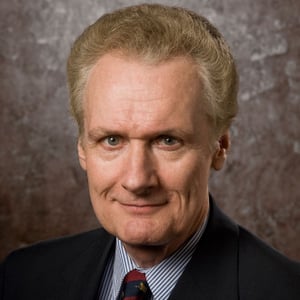
Vice President for Legal Affairs, Cato Institute
Roger Pilon is the Cato’s Institute’s vice president for legal affairs, the founding director of Cato’s Robert A. Levy Center for Constitutional Studies, the inaugural holder of Cato’s B. Kenneth Simon Chair in Constitutional Studies, and the founding publisher of the Cato Supreme Court Review.
Prior to joining Cato, Pilon held five senior posts in the Reagan administration, including at State and Justice, and was a national fellow at Stanford’s Hoover Institution. In 1989 the Bicentennial Commission presented him with its Benjamin Franklin Award for excellence in writing on the U.S. Constitution. In 2001 Columbia University’s School of General Studies awarded him its Alumni Medal of Distinction. Pilon lectures and debates at universities and law schools across the country and testifies often before Congress.
His writing has appeared in the Wall Street Journal, the Washington Post, the New York Times, the Los Angeles Times, Legal Times, National Law Journal, Harvard Journal of Law and Public Policy, Stanford Law and Policy Review, and elsewhere. He has appeared on ABC’s Nightline, CBS’s 60 Minutes II, Fox News Channel, NPR, CNN, MSNBC, CNBC, C-SPAN, and other media.
Pilon holds a BA from Columbia University, an MA and a PhD from the University of Chicago, and a JD from the George Washington University School of Law.
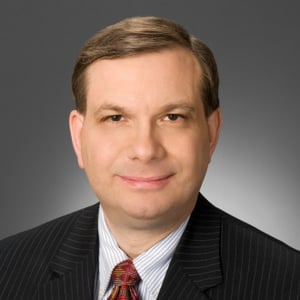
National Affairs Columnist, National Review
John Fund is National Affairs Columnist for National Review magazine and a on-air analyst on the Fox News Channel. He is considered a notable expert on American politics and the nexus between politics and economics.
He previously served as a columnist and editorial board member for The Wall Street Journal. He is the author of several books, including Who's Counting: Bow Fraudsters and Bureaucrats Put Your Vote At Risk (Encounter Books, 2012); Stealing Elections: How Voter Fraud Threatens Our Democracy (Encounter Books, 2008) and The Dangers of Regulation Through Litigation (ATRA Press, 2008). He worked as a research analyst for the California Legislature in Sacramento before beginning his journalism career as a reporter for the syndicated columnists Rowland Evans and Robert Novak.
Roll Call, the newspaper of Capitol Hill, called him "the Tom Paine of the modern Congressional reform movement." He has won awards from the Institute for Justice, The School Choice Aliance and the Warren Brooks award for journalistic excellence from the American Legislative Exchange Council.
Senior US District Judge, US District Court for the Southern District of New York
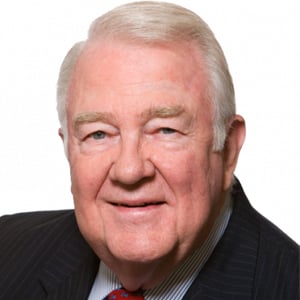
Ronald Reagan Distinguished Fellow Emeritus, The Heritage Foundation
Edwin Meese III, the prominent conservative leader, thinker and elder statesman, continues a quarter-century formal association with The Heritage Foundation as the leading think tank’s Ronald Reagan Distinguished Fellow Emeritus.
In that capacity, Meese oversees special projects and acts as an ambassador for Heritage within the conservative movement.
Meese was chairman of Heritage’s Center for Legal and Judicial Studies from its founding in 2001 until what he calls his “semi-retirement” on Feb. 1, 2013.
He joined Heritage in 1988 as the think tank's first Ronald Reagan Distinguished Fellow -- the only policy chair in the country to be officially named for the 40th president. His work focused on keeping President Reagan’s legacy of conservative principles alive in public debate and discourse.
The legal center now bears his name, in recognition of Meese’s contributions to the rule of law and the nation’s understanding of constitutional law. Its mission is to educate government officials, the media and the public about the Constitution and legal principles -- and how they affect public policy.
Perhaps best known as U.S. attorney general during Reagan’s second term, Meese’s service to the conservative icon stretched from the California governor’s mansion in 1966 to the White House in 1981 before he went to the Department of Justice four years later.
His Heritage “hats” kept Meese among the major conservative voices in national policy debates at an age when most men and women enjoyed quiet retirements.
In 2006, for example, Meese was named to the Iraq Study Group, a special presidential commission dedicated to examining the best resolutions for America's involvement in Iraq. In the past few years he wrote and spoke about constitutional topics ranging from religious liberty to the responsibility of Supreme Court justices.
Immediately after Reagan's death in 2004, and in the years since, Meese often agreed to major media appearances to discuss the lasting impact of his old friend, mentor and boss. He has summarized the Reagan legacy in three accomplishments: Reagan cut taxes and kept them low. He worked to defeat and end the Soviet Union and its worldwide push for communism. And he restored America's faith in itself after years of failure and "malaise."
"I admired him as a leader and cherish his friendship," Meese wrote in a 2004 essay for Heritage members and supporters. "Ronald Reagan had strong convictions. He was committed to the principles that had led to the founding of our nation. And he had the courage to follow his convictions against all odds." <[>Edwin Meese III was born Dec. 2, 1931, to Edwin Jr. and Leone Meese in Oakland, Calif. He graduated from Yale University in 1953 and holds a law degree from the University of California-Berkeley.
Meese spent much of his adult life working for Reagan, first after the former actor, sports announcer and athlete was elected as California’s governor in 1966 and then when he sought and won the presidency in 1980.
Reagan never forgot Meese's loyalty and hard work. During a press conference at which reporters questioned Meese's actions at the Justice Department, Reagan replied: "If Ed Meese is not a good man, there are no good men."
During the Reagan governorship, Meese served as executive assistant and chief of staff from 1969 through 1974 and as legal affairs secretary from 1967 through 1968. He previously was deputy district attorney in Alameda County, Calif.
From January 1981 to February 1985, Meese held the position of counsellor to the president -- the senior job on the White House staff -- and functioned as Reagan's chief policy adviser. In 1985, he received Government Executive magazine's annual award for excellence in management.
Meese served as the 75th attorney general of the United States from February 1985 to August 1988. As the nation's chief law enforcement officer, he directed the Justice Department and led international efforts to combat terrorism, drug trafficking and organized crime.
Meese’s relationship with Heritage began when he met with senior management to discuss the think tank's landmark policy guide, Mandate for Leadership, prepared for the incoming administration. Meese later recalled that Reagan personally handed out copies of the 1,093-page book to members of his Cabinet and asked them to read it. Nearly two-thirds of Mandate's 2,000 recommendations would be adopted or attempted by the Reagan administration.
More than a decade after joining Heritage, Meese assumed the chairmanship of its Center for Legal and Judicial Studies. Under his guidance, the center counseled White House staffers, Justice Department officials and Senate Judiciary Committee members on the importance of filling judicial vacancies with qualified men and women who are committed to interpreting the Constitution according to the founding document's original meaning.
The center became known for hosting "moot court" practice sessions to sharpen the arguments of attorneys slated to bring important cases before the Supreme Court. Those cases addressed constitutional issues ranging from property rights to racial preferences in primary and secondary schools to restrictions on free speech in campaign finance law.
Meese headed the legal center's Advisory Board for the writing and editing of the best-selling book, The Heritage Guide to the Constitution (Regnery, 2005). In it, 109 experts walked readers through a clause-by-clause analysis of the Constitution. Sen. Tom Coburn (R-Okla.) was among those keeping the reference work handy during Judiciary Committee hearings on Supreme Court nominees.
Meese's other books include “Leadership, Ethics and Policing” (Prentice Hall, 2004); “Making America Safer” (Heritage, 1997); and “With Reagan: The Inside Story” (Regnery Gateway, 1992).He wrote the Introduction to a well-received 2010 book on the “overcriminalization” trend, “One Nation Under Arrest,” by Heritage veterans Paul Rosenzweig and Brian W. Walsh.
He also is a distinguished visiting fellow at the Hoover Institution at Stanford University in California and lectures, writes and consults throughout the United States on a variety of subjects.
As both attorney general and counsellor to Reagan, Meese was a member of the Cabinet and the National Security Council. He served as chairman of the Domestic Policy Council and the National Drug Policy Board. After Reagan won the White House in the 1980 election, Meese headed the transition team. During the campaign, he was the Reagan-Bush Committee's senior official.
Meese had a career outside government and politics. From 1977 to 1981, he was a law professor at the University of San Diego, where he also directed the Center for Criminal Justice Policy and Management.
He was an executive in the aerospace and transportation industry as vice president for administration of Rohr Industries Inc. in Chula Vista, Calif. He left Rohr to return to the practice of law, doing corporate and general work in San Diego County.
A retired colonel in the Army Reserve, Meese remains active in numerous civic and educational organizations.
He and his wife, Ursula, have two grown children and reside in McLean, Va.
Founder and President, American Civil Rights Institute
Ward Connerly is founder and President of the American Civil Rights Institute – a national, not-for-profit organization aimed at educating the public about the need to move beyond race and, specifically, racial and gender preferences. Mr. Connerly has gained national attention as an outspoken advocate of equal opportunity for all Americans, regardless of race, sex, or ethnic background.
Mr. Connerly is author of Creating Equal: My Fight Against Race Preferences and his new release Lessons from My Uncle James: Beyond Skin Color to the Content of Our Character. One part memoir, one part moral guide, Lessons from My Uncle James is a touching, funny and ultimately a philosophical book about living a principled and productive life regardless of skin color. Lessons illustrates how Mr. Connerly arrived at the ethics that have guided his life and is a new starting point for the discussion about character that America must have in order to move beyond race for good.
As a member of the University of California Board of Regents, Mr. Connerly focused the attention of the nation on the University's race-based system of preferences in its admissions policy. On July 20, 1995, following Mr. Connerly's lead, a majority of the Regents voted to end the University's use of race as a means for admissions. He was appointed to a 12-year term as UC Regent in March 1993.
In 1995, Mr. Connerly accepted chairmanship of the California Civil Rights Initiative (Proposition 209) campaign. Under his leadership, the campaign successfully obtained more than 1 million signatures and qualified for the November 1996 ballot. California voters passed Proposition 209 by a 55 percent to 45 percent margin.
Mr. Connerly also led the efforts to pass initiatives in the States of Washington, Michigan, Nebraska and Arizona that were patterned after California's Proposition 209, to require equal treatment under the law for all residents in public education, public employment and public contracting.
Mr. Connerly has been profiled on 60 Minutes, the cover of Parade magazine, the New York Times, Wall Street Journal, Newsweek magazine, and virtually every major news magazine in America. He has also appeared on The NewsHour with Jim Lehrer, Crossfire, Hannity & Colmes, Meet the Press, Dateline, NBC Nightly News, CNN, and C-SPAN.
Mr. Connerly is President and Chief Executive Officer of Connerly & Associates, Inc., a Sacramento-based association management and land development consulting firm founded in 1973. He is regarded as one of the housing industry's top experts, possessing a comprehensive knowledge of housing and development issues. He has been inducted as a lifetime member into the California Building Industry Hall of Fame and has been a member of the Rotary Club of Sacramento for over 15 years.
Partner, Jones Day
Ben Ginsberg represents numerous political parties, political campaigns, candidates, members of Congress and state legislatures, governors, corporations, trade associations, vendors, donors, and individuals participating in the political process. He represents a variety of clients on election law issues, particularly those involving federal and state campaign finance laws, ethics and gifts rules, pay-to-play laws, election administration, government investigations, redistricting, communications law, and election recounts and contests.
Prior to joining Jones Day in 2014, Mr. Ginsberg served as national counsel to the Bush-Cheney presidential campaigns in the 2004 and 2000 election cycles and played a central role in the 2000 Florida recount. In 2012 and 2008, he served as national counsel to the Romney for President campaign. He also has represented the campaigns and leadership PACs of numerous members of the Senate and House as well as the national party committees. He serves as counsel to the Republican Governors Association and has extensive experience on the state legislative level through Republican redistricting efforts.
Before entering law school, Mr. Ginsberg spent five years as a newspaper reporter at The Boston Globe, Philadelphia Evening Bulletin, The Berkshire Eagle (Massachusetts), and The Riverside Press-Enterprise (California). He has been a guest lecturer at the Stanford University Law School, a Fellow at Harvard University's Institute of Politics, and an adjunct professor of law at Georgetown University Law Center. Mr. Ginsberg recently served as co-chair of the Presidential Commission on Election Administration.
Georgetown University Law Center, J.D., 1982
University of Pennsylvania, A.B., 1974
Board Member, Center for Equal Opportunity
Roger Clegg is a Board Member at and former President and General Counsel of the Center for Equal Opportunity. He focuses on legal issues arising from civil rights laws--including the regulatory impact on business and the problems in higher education created by affirmative action. A former Deputy Assistant Attorney General in the Reagan and Bush administrations, Clegg held the second highest positions in both the Civil Rights Division (1987-91) and in the Environment and Natural Resources Division (1991-93). He has held several other positions at the U.S. Justice Department, including Assistant to the Solicitor General (1985-87), Associate Deputy Attorney General (1984-85), and Acting Assistant Attorney General in the Office of Legal Policy (1984). Clegg is a graduate of Yale University Law School (1981).

Professor of Law, University of San Diego School of Law (Retired)
Gail Heriot is a recently retired law professor from the University of San Diego. She also served as a member of the U.S. Commission on Civil Rights from 2007 to 2025. She is also the chairman of the board of the American Civil Rights Project and the chair emerita of the Civil Rights practice group at the Federalist Society for Law & Public Policy.
Professor Heriot is a prolific writer in the area of civil rights. She is the author of many law review articles. She is also the editor (along with Maimon Schwarzschild) of the 2021 anthology, A Dubious Expediency: How Race Preferences Damage Higher Education. Her upcoming book is entitled, Why We Walk on Eggshell: How Our Civil Rights Laws Helped Bring About the Woke Era—And the Trump Era, Too.
Her writings for a general audience have appeared in the Wall Street Journal, the San Diego Union-Tribune, the National Review and many other newspapers and magazines.
In 1996, she co-chaired the successful “Yes on Proposition 209” campaign, which amended the California Constitution to prohibit state-sponsored discrimination or preferential treatment based on race, sex, color, ethnicity or national origin. In 2020, she co-chaired the “No on Proposition 16” campaign, which successfully prevented Proposition 209’s repeal.
Professor, University of Hawai'i - Manoa
Davianna Pomaika'i McGregor is a Professor and founding member of the Ethnic Studies Department at UH-Manoa. She is a historian of Hawai'i and the Pacific. Davianna grew up in the ahupua'a of Kaiwi'ula in the Kapalama district of O'ahu and spent her summers with grandparents in Waiakea, Hilo, Hawai'i. She currently resides on O'ahu and Moloka'i. As a member of the Protect Kaho'olawe 'Ohana she helps to steward the lands of Kaho'olawe - Kohemalamalama O Kanaloa.
Her ongoing research endeavors have focused on documenting the persistence of traditional Hawaiian cultural customs, beliefs, and practices in rural Hawaiian communities, including the island of Moloka'i; the districts of Puna and Ka'u on Hawai'i; Ke'anae-Wailuanui on Maui and Waiahole-Waikane on O'ahu. This work is featured in her UH Press book, 2007, Na Kua'aina: Living Hawaiian Culture.
In 2006 she conducted studies which resulted in the following technical reports: Hurricane Evacuation Behavior Study for Guam and the Commonwealth of the Northern Marianas for the U.S. Army Corps of Engineers with Jon Matsuoka, December 31, 2006.

The Supreme Court and the 2008 Election
Wichita, KansasAn Evening with Robert Levy: An Insider's Perspective on the D.C. Gun Ban Case
International Law and Jihad Terrorism: Novel Legal Questions Challenge the Status Quo
Should Judges Secure Unenumerated Rights? From Lochner to Lawrence
St. Louis, MissouriD.C. Gun Ban in the Crosshairs
Orlando, FloridaVoter IDs, Voter Fraud, and Democratic Access
New York City Lawyers Chapter
New York, NYJudicial Selection Litigation in New York
Benjamin L. Ginsberg, John Hilton
As this series of articles demonstrates, judicial selection is a hot topic in many states...
The Anniversary of Judge Robert Bork's Senate Vote to the Supreme Court
Richmond Student Chapter Event
Richmond, VAFulfilling the American Vision of a Colorblind Government
Akaka Bill Debate
Roger B. Clegg, Jon Dyke, Gail L. Heriot, Davianna McGregor
Proposed by U.S. Senator Daniel Akaka (D-HI), the Akaka Bill, also known as the Native Hawaiian Government...