
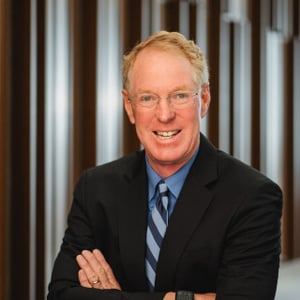
Ronald N. Boyce Presidential Professor of Criminal Law and University Distinguished Professor of Law, The University of Utah College of Law
Paul G. Cassell is an internationally recognized legal scholar on criminal and civil justice, crime victims' rights, constitutional law, evidence, judicial process, and other legal issues. Cassell received a B.A. (1981) and a J.D. (1984) from Stanford University, where he graduated Order of the Coif and was President of the Stanford Law Review. He clerked for then-Judge Antonin Scalia when Scalia was on the U.S. Court of Appeals for the D.C. Circuit (1984-85) and for Chief Justice Warren Burger of the United States Supreme Court (1985-86). Cassell then served as an Associate Deputy Attorney General with the U.S. Justice Department (1986-88) and as an Assistant U.S. Attorney for the Eastern District of Virginia (1988 to 1991). Cassell joined the faculty at the College of Law in 1992, where he taught full-time until he was sworn in as a U.S. District Court Judge for the District of Utah in July 2002. In November 2007, he resigned his judgeship to return full-time to the College of Law to teach, write, and litigate concerning issues relating to crime victims' rights and criminal and civil justice reform. Professor Cassell has also published numerous law review articles in journals such as the Stanford Law Review, the Michigan Law Review, the Harvard Journal of Law and Public Policy, and the Journal of Criminal Law and Criminology. He is a co-author of the nation's only law school textbook on crime victims' rights, Victims in Criminal Procedure (various editions, most recently in its fifth edition published in 2025). Professor Cassell has argued pro bono cases relating to criminal procedure and crime victims' rights before the United States Supreme Court, the 2nd, 4th, 5th, 6th, 7th, 8th, 9th, 10th, 11th, and D.C. Circuits (including the 5th and 11th Circuits en banc), several U.S. District Courts, the Utah Supreme Court, and the Arizona Supreme Court. In 2020, Cassell received the Ronald Wilson Reagan Public Policy Award - National Crime Victims' Service Award from the U.S. Department of Justice. Cassell is a member of the American Law Institute, a fellow of the American Bar Foundation, and an inaugural member of the Council on Criminal Justice. He is also an occasional blogger at The Volokh Conspiracy.
Professor of Law, The University of Utah S.J. Quinney College of Law
In collaboration with other leading experts at the University of Utah S.J. Quinney College of Law, Professor Guiora helps lead the school's efforts to provide cutting-edge research, innovative training, and public service initiatives in the prevention and mitigation of global conflict.
Professor Guiora writes and lectures extensively on issues such as the legal aspects of counterterrorism, rearticulating international law, global perspectives on counterterrorism, terror financing, international law and morality in armed conflict, educating IDF commanders and soldiers on international law and morality, religion and terrorism, domestic terror courts, self defense, and geo-politics and international law. He has testified before the U.S. Senate Judiciary Committee on handling terrorism detainees within the American justice system, and before a subcommittee of the U.S. House of Representatives Committee on Homeland Security on the effectiveness, accountability, and resilience in homeland security. As an expert commentator, Professor Guiora is frequently interviewed by and quoted in the media, including CNN, the Washington Post, PBS, the New York Times, the Wall Street Journal, the Los Angeles Times, the Chicago Sun Times, the BBC, the Associated Press, the Jersualem Post, Al-Jazerrah TV, the Bloomberg Report, C-Span, the Christian Science Monitor, Fox TV, the New York Daily News, and NPR.
Prior to joining the faculty at the College of Law, Professor Guiora was Professor of Law and the Founding Director of the Institute for Global Security Law and Policy at Case Western Reserve University School of Law. Before joining Case Western in 2004, Professor Guiora served for 19 years in the Israel Defense Forces Judge Advocate General's Corps (Lt. Col. Ret.), where he held a number of senior command positions, including Commander of the IDF School of Military Law, Judge Advocate for the Navy and Home Front Command, and the Legal Advisor to the Gaza Strip. During his military service, Professor Guiora was involved in the capture of the PLO weapons ship Karine A, implementation of the Gaza-Jericho Agreement, the Israeli-Palestinian Interim Agreement, and "Safe Passage" between the Gaza Strip and the West Bank. Professor Guiora also had command responsibility for the development of an interactive software program that teaches an eleven point code-of-conduct based on International Law, Israeli Law, and the IDF code. This internationally acclaimed program is used to teach IDF soldiers and commanders their obligations regarding a civilian population during an armed conflict. Based on this experience, Professor Guiora was invited by the Center for Civic Education and Leadership Development of the Armed Forces of the Federal Republic of Germany to discuss research and developments in the ethical education of armed forces.
Professor Guiora teaches Criminal Law, Criminal Procedure, International Law, Global Perspectives on Counterterrorism, and Religion and Terrorism, and he uses innovative scenario-based instruction methods to educate students regarding national and international security issues.
Partner, Sidley Austin LLP
RICHARD D. KLINGLER is a partner based in the Washington, D.C., office. He focuses his practice on national security matters and complex litigation in U.S. courts involving constitutional law and cross-border disputes. He has extensive litigation and regulatory experience working on behalf of telecommunications, finance, energy, and media clients. He has participated in matters before the U.S. Supreme Court, other appellate courts, and trial and regulatory bodies. He has worked extensively on matters being addressed in Congressional and other investigations or pending before Executive Branch departments and agencies.
Mr. Klingler joined the firm in 1990 and first became a partner in 1996. He served from 2006-2007 as the General Counsel and Legal Adviser on the National Security Council staff, advising senior government officials on an array of intelligence, defense, foreign policy, litigation, and investigatory matters. From 2005-2007, he served in the Office of the Counsel to the President, concluding as Senior Associate Counsel to the President. His work focused on litigation, Congressional investigations, and issues before the Departments of State and Homeland Security. He worked from 1997-2002 as an investment banker with Credit Suisse First Boston on equity capital market and M&A transactions in the telecommunications, energy, and finance sectors. From 1994-96 he worked in Australia as Regulatory Advisor and then Regulatory Counsel for Telstra Corp., where he addressed litigation, legislative, transactional, and regulatory issues.
Mr. Klingler is an Adjunct Fellow with the American Enterprise Institute, addressing counter-terrorism legal issues, and, from 1993-94, was Guest Scholar at The Brookings Institution, which published his book, The New Information Industry: Regulatory Challenges and the First Amendment (1996). He testified several times before Congress on Constitutional, counter-terrorism, and sovereign immunity issues, and has written on public policy matters for various national publications.
Mr. Klingler was a law clerk to U.S. Supreme Court Justice Sandra Day O'Connor (1989-90) and Judge Kenneth W. Starr of the U.S. Court of Appeals for the D.C. Circuit (1988-89). He obtained law degrees from Oxford University, which he attended as a Rhodes Scholar, and from Stanford Law School, where he was Senior Articles Editor of The Stanford Law Review and a member of Order of the Coif.
Boochever and Bird Chair for the Study and Teaching of Freedom a, UC-Davis School of Law
Alan Brownstein, a nationally recognized Constitutional Law scholar, teaches Constitutional Law, Law and Religion, and Torts at UC Davis School of Law. While the primary focus of his scholarship relates to church-state issues and free exercise and establishment clause doctrine, he has also written extensively on freedom of speech, privacy and autonomy rights, and other constitutional law subjects. His articles have been published in numerous academic journals including the Stanford Law Review, Cornell Law Review, UCLA Law Review and Constitutional Commentary. Brownstein received the UC Davis School of Law's Distinguished Teaching Award in 1995 and the UC Davis Distinguished Scholarly Public Service Award in 2008. He is a member of the American Law Institute.
Professor Brownstein has testified on several occasions before various California Senate Committees on legislation promoting religious liberty and bills that raise Establishment Clause concerns. His assistance is often sought by advocacy groups on issues relating to religious liberty and equality. He is a frequent invited lecturer at academic conferences and regularly participates as a speaker or panelist in law related programs before civic, legal, religious, and educational groups. He is the co-author of dozens of Findlaw columns discussing a range of legal issues.
A graduate of Antioch College and Harvard Law School (where he served as a Case Editor of the Harvard Law Review), Brownstein was an attorney in general litigation and corporate practice with the law firm of Tuttle & Taylor in Los Angeles before joining the UC Davis law faculty. From 1977-78, he clerked for the Honorable Frank M. Coffin, Chief Judge of the U.S. District Court of Appeals for the 1st Circuit in Portland, Maine.
"Most lawyers do not practice constitutional law," Brownstein notes, "but members of the Bar bear a special responsibility for understanding constitutional doctrine and communicating its meaning to non-lawyers. The role that constitutional law plays in our society depends in part on the interplay between courts and the political culture. If judicial decisions are unintelligible to the polity and no group accepts responsibility for explaining the Constitution's evolving meaning to the polity, we undermine part of the foundation of the constitutional scheme of things."

Associate Justice, Supreme Court of the United States
Associate Justice Brett Kavanaugh was born in Washington, D.C., on February 12, 1965. He married Ashley Estes in 2004, and they have two daughters - Margaret and Liza. He received a B.A. from Yale College in 1987 and a J.D. from Yale Law School in 1990. He served as a law clerk for Judge Walter Stapleton of the U.S. Court of Appeals for the Third Circuit from 1990-1991, for Judge Alex Kozinski of the U.S. Court of Appeals for the Ninth Circuit from 1991-1992, and for Justice Anthony M. Kennedy of the U.S. Supreme Court during the 1993 Term. In 1992-1993, he was an attorney in the Office of the Solicitor General of the United States. From 1994 to 1997 and for a period in 1998, he was Associate Counsel in the Office of Independent Counsel. He was a partner at a Washington, D.C., law firm from 1997 to 1998 and again from 1999 to 2001. From 2001 to 2003, he was Associate Counsel and then Senior Associate Counsel to President George W. Bush. From 2003 to 2006, he was Assistant to the President and Staff Secretary for President Bush. He was appointed a Judge of the United States Court of Appeals for the District of Columbia Circuit in 2006. President Donald J. Trump nominated him as an Associate Justice of the Supreme Court, and he took his seat on October 6, 2018.

Richard and Frances Mallery Professor of Law and Faculty Director, Constitutional Law Center, Stanford Law School
Michael W. McConnell is the Richard and Frances Mallery Professor and Faculty Director of the Constitutional Law Center at Stanford Law School, and a Senior Fellow at the Hoover Institution. From 2002 to 2009, he served as a Circuit Judge on the United States Court of Appeals for the Tenth Circuit. He was nominated by President George W. Bush, a Republican, and confirmed by a Democratic Senate by unanimous consent. McConnell has previously held chaired professorships at the University of Chicago and the University of Utah, and visiting professorships at Harvard and NYU. He teaches courses on constitutional law, constitutional history, First Amendment, and interpretive theory. He has published widely in the fields of constitutional law and theory, especially church and state, equal protection, and separation of powers. His book, “The President Who Would Not Be King: Executive Power Under the Constitution,” was published by Princeton University Press in 2020, based on the Tanner Lectures in Human Values, which he delivered at Princeton in 2019. His latest book, co-authored with Nathan Chapman, “Agreeing to Disagree: How the Establishment Clause Protects Religious Diversity and Freedom of Conscience,” was published by Oxford University Press in mid-2023. McConnell has argued sixteen cases in the United States Supreme Court, most recently Carney v. Adams (2020). defending a provision of the Delaware Constitution requiring political balance on that state’s courts. More recently, he was co-counsel in Gonzalez v. Google. He earned his B.A. from Michigan State University and his J.D. from the University of Chicago, and has received honorary degrees from Notre Dame University and Michigan State. He served as law clerk to Supreme Court Justice William J. Brennan, Jr. and D.C. Circuit Chief Judge J. Skelly Wright. He has been Assistant General Counsel of the Office of Management & Budget, Assistant to the Solicitor General of the Department of Justice, and a member of the President’s Intelligence Oversight Board. He is Senior of Counsel to the law firm Wilson, Sonsini, Goodrich & Rosati, and is co-chair of Meta’s Oversight Review Board.
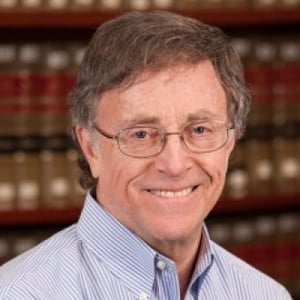
F. Elwood and Eleanor Davis Professor Emeritus of Law, The George Washington University Law School
Professor Lupu joined the law school in 1990. After graduating from law school, where he was case editor of the Harvard Law Review, he practiced law with the Boston firm of Hill & Barlow and then joined the law faculty at Boston University, where he taught from 1973 to 1989. During that time, he also served as a visiting professor at Northeastern University and at the University of California, Berkeley. In 1989–90, he was the professor-in-residence on the Appellate Staff of the Civil Division of the U.S. Department of Justice.
Professor Lupu is a nationally recognized scholar in constitutional law, with an emphasis in his writings on the religion clauses of the First Amendment. Together with his colleague Professor Robert Tuttle, Professor Lupu is the co-author of Secular Government, Religious People (Eerdmans Pub. Co., 2014) and many law journal articles.
Ronald N. Boyce Presidential Professor of Criminal Law and University Distinguished Professor of Law, The University of Utah College of Law
Paul G. Cassell is an internationally recognized legal scholar on criminal and civil justice, crime victims' rights, constitutional law, evidence, judicial process, and other legal issues. Cassell received a B.A. (1981) and a J.D. (1984) from Stanford University, where he graduated Order of the Coif and was President of the Stanford Law Review. He clerked for then-Judge Antonin Scalia when Scalia was on the U.S. Court of Appeals for the D.C. Circuit (1984-85) and for Chief Justice Warren Burger of the United States Supreme Court (1985-86). Cassell then served as an Associate Deputy Attorney General with the U.S. Justice Department (1986-88) and as an Assistant U.S. Attorney for the Eastern District of Virginia (1988 to 1991). Cassell joined the faculty at the College of Law in 1992, where he taught full-time until he was sworn in as a U.S. District Court Judge for the District of Utah in July 2002. In November 2007, he resigned his judgeship to return full-time to the College of Law to teach, write, and litigate concerning issues relating to crime victims' rights and criminal and civil justice reform. Professor Cassell has also published numerous law review articles in journals such as the Stanford Law Review, the Michigan Law Review, the Harvard Journal of Law and Public Policy, and the Journal of Criminal Law and Criminology. He is a co-author of the nation's only law school textbook on crime victims' rights, Victims in Criminal Procedure (various editions, most recently in its fifth edition published in 2025). Professor Cassell has argued pro bono cases relating to criminal procedure and crime victims' rights before the United States Supreme Court, the 2nd, 4th, 5th, 6th, 7th, 8th, 9th, 10th, 11th, and D.C. Circuits (including the 5th and 11th Circuits en banc), several U.S. District Courts, the Utah Supreme Court, and the Arizona Supreme Court. In 2020, Cassell received the Ronald Wilson Reagan Public Policy Award - National Crime Victims' Service Award from the U.S. Department of Justice. Cassell is a member of the American Law Institute, a fellow of the American Bar Foundation, and an inaugural member of the Council on Criminal Justice. He is also an occasional blogger at The Volokh Conspiracy.
Partner, Gibson Dunn & Crutcher LLP
Daniel M. Kolkey is a partner in the San Francisco office of Gibson, Dunn & Crutcher. A member of the Litigation Department, he is co-chair of the Appellate and Constitutional Law Practice Group. Mr. Kolkey returned to the firm in November 2003 after five years as an Associate Justice on the California Court of Appeal, Third Appellate District, in Sacramento.
Recognized in 2005 and 2007 by California Lawyermagazine as an Attorney of the Year in the fields of Government/Public Policy and Appellate law, respectively, and ranked in the first tier for California Appellate Litigation by Chambers USA in 2010, 2011, 2012, and 2013, Mr. Kolkey's practice focuses on appellate litigation. He has also advised four different governors on legal issues, and served as Governor Pete Wilson’s and Governor Arnold Schwarzenegger's lead negotiator for tribal-state compacts under the Indian Gaming Regulatory Act. He was named in 2004, 2005, and 2006 by the Daily Journal as one of the top 100 attorneys in California. And in May 2010, he was appointed by the California Chief Justice to the California Judicial Council’s Appellate Advisory Committee for a three-year term.
Prior to being appointed as an Associate Justice on the California Court of Appeal, Mr. Kolkey served as Legal Affairs Secretary and counsel to Governor Pete Wilson for four years. As such, he was responsible for all of the legal advice within the Governor's Office; approving all state agency appeals; supervising and directing litigation strategy with respect to lawsuits brought against the Governor in his official capacity; drafting the Governor's civil justice reform legislation; and negotiating tribal-state compacts under the Indian Gaming Regulatory Act.
Before serving Governor Wilson, Mr. Kolkey was a partner at Gibson Dunn, where he handled litigation at both the trial and appellate levels, including commercial disputes, political law litigation, and international arbitration.
As a litigator (before and after his government service from 1995 to 2003), Mr. Kolkey has handled class and shareholder actions; construction, real estate, employment, and contract disputes; unfair competition litigation; and political law litigation, including ballot litigation, Voting Rights Act claims, and redistricting matters.

Former President & CEO, The Federalist Society for Law and Public Policy Studies
Eugene B. Meyer, former President and CEO of the Federalist Society, has served as Executive Director, CEO, and/or President of the organization for more than 40 years. He is responsible for shepherding the organization from a small group of law students to a community of 90,000 lawyers, law students, academics, judges, and others interested in the rule of law. The Society now includes a Student Chapter at nearly every ABA-accredited law school in the country and Lawyers Chapters in 220 major cities across the nation. Gene earned his B.A. in history at Yale in 1975 and his M.A. in political science from the London School of Economics in 1976. Gene currently serves on the boards of the U.S. Chess Center, the Holman Foundation, the Sarah Scaife Foundation, and the advisory board of the Adam Smith Society. He holds the title of International Chess Master.

Judge, United States Court of Appeals, Ninth Circuit
Judge O’Scannlain was appointed United States Circuit Judge for the Ninth Circuit by President Reagan on September 26, 1986. He received a J.D. degree in 1963 from Harvard Law School and a B.A. in 1957 from St. John’s University. He also earned the LL.M. (Judicial Process) degree at University of Virginia Law School in 1992. He was awarded the LL.D. (honoris causa) degree by the University of Notre Dame in 2002, the LL.D. (honoris causa) degree by Lewis & Clark College in 2003 and the LL.D. (honoris causa) degree by the University of Portland in 2011.
As a judge on the U.S. Court of Appeals for the Ninth Circuit, Judge O’Scannlain has participated in over 6,000 federal cases and has written hundreds of published opinions on a broad range of subjects including constitutional law, international law, securities law, administrative law, and criminal law. He hears appeals in San Francisco (court headquarters), as well as in Los Angeles (Pasadena), Portland, Seattle, Anchorage and Honolulu. The late Chief Justice Rehnquist appointed Judge O'Scannlain to the Federal Judicial Center's Advisory Committee on Appellate Judge Education. In 2009, Chief Justice Roberts appointed Judge O’Scannlain to the International Judicial Relations Committee of the U.S. Judicial Conference and subsequently appointed him Chairman in 2010.
President George W. Bush appointed Judge O’Scannlain to the Board of Trustees of the James Madison Memorial Fellowship Foundation in 2004. Pope Benedict XVI conferred the Order of Saint Gregory the Great on Judge and Mrs. O’Scannlain in 2007.
Judge O’Scannlain’s professional interests also include judicial administration and reform, and continuing legal education. Judge O’Scannlain is former Chair of the Judicial Division of the American Bar Association and has previously chaired the ABA’s Appellate Judges Conference, its Committee on Appellate Practice, and its 9th Appellate Practice Institute. He has testified before the Senate Judiciary Committee on several occasions, the House Judiciary Subcommittee on Courts and Intellectual Property, and the Commission on Structural Alternatives for the Federal Courts of Appeals on the subject of court reorganization. In addition to serving as a faculty member at numerous federal appellate practice seminars for judges and attorneys, including New York University Law School’s Institute for Judicial Administration, Judge O’Scannlain is an Adjunct Professor at Lewis & Clark Law School where he teaches a seminar on the Supreme Court. He has served as a Moot Court Judge at distinguished law schools across the United States including Harvard, Yale Stanford, Boalt Hall (Berkeley Law), Virginia, Cornell, Notre Dame, Fordham, Alabama, University of Southern California, King Hall (U.C. Davis) and Loyola Marymount University and in China at Xiamen and Renmin Universities.
Between graduation from Harvard and investiture as a federal judge, Judge O’Scannlain was primarily engaged in private law practice. Between 1969 and 1974, he was consecutively the Deputy Attorney General of Oregon, the Public Utility Commissioner of Oregon, and Director of the Oregon Department of Environmental Quality. He retired from the U.S. Army Reserve in 1978 as a Major after 23 years Reserve and National Guard service, including four years as an enlisted man.
A first generation Irish-American son of immigrant parents from Sligo and Derry, Judge O’Scannlain is married to the former Maura Nolan and has eight children: Sean, Jane, Brendan, Kevin, Megan, Christopher, Anne, and Kate, and nineteen grandchildren. His chambers are in the Pioneer Courthouse in Portland, Oregon.

Partner, Holland & Hart LLP
A longtime litigator and project team leader, Tom Sansonetti helps clients permit and develop projects with potential obstacles in mind.
Long before a lawsuit can threaten a project, he counsels clients on how to develop effective plans of action that will meet government environmental permitting requirements and stand up to judicial scrutiny when those clients' projects are challenged in court.
Tom joined Holland & Hart in 1993 and has built a nationally recognized practice in natural resources and environmental law. Considered an expert in natural resources and environmental matters, Tom has served as one of the top leaders in the Department of Justice and also has held the third-ranking position in the Department of the Interior. He has argued before the U.S. Supreme Court and in several Federal Circuit Courts of Appeal, and has served as a federal prosecutor in environmental crimes cases. Tom’s appellate experience highlights his ability to argue cases at all levels of the federal court system.
Richard and Frances Mallery Professor of Law and Faculty Director, Constitutional Law Center, Stanford Law School
Michael W. McConnell is the Richard and Frances Mallery Professor and Faculty Director of the Constitutional Law Center at Stanford Law School, and a Senior Fellow at the Hoover Institution. From 2002 to 2009, he served as a Circuit Judge on the United States Court of Appeals for the Tenth Circuit. He was nominated by President George W. Bush, a Republican, and confirmed by a Democratic Senate by unanimous consent. McConnell has previously held chaired professorships at the University of Chicago and the University of Utah, and visiting professorships at Harvard and NYU. He teaches courses on constitutional law, constitutional history, First Amendment, and interpretive theory. He has published widely in the fields of constitutional law and theory, especially church and state, equal protection, and separation of powers. His book, “The President Who Would Not Be King: Executive Power Under the Constitution,” was published by Princeton University Press in 2020, based on the Tanner Lectures in Human Values, which he delivered at Princeton in 2019. His latest book, co-authored with Nathan Chapman, “Agreeing to Disagree: How the Establishment Clause Protects Religious Diversity and Freedom of Conscience,” was published by Oxford University Press in mid-2023. McConnell has argued sixteen cases in the United States Supreme Court, most recently Carney v. Adams (2020). defending a provision of the Delaware Constitution requiring political balance on that state’s courts. More recently, he was co-counsel in Gonzalez v. Google. He earned his B.A. from Michigan State University and his J.D. from the University of Chicago, and has received honorary degrees from Notre Dame University and Michigan State. He served as law clerk to Supreme Court Justice William J. Brennan, Jr. and D.C. Circuit Chief Judge J. Skelly Wright. He has been Assistant General Counsel of the Office of Management & Budget, Assistant to the Solicitor General of the Department of Justice, and a member of the President’s Intelligence Oversight Board. He is Senior of Counsel to the law firm Wilson, Sonsini, Goodrich & Rosati, and is co-chair of Meta’s Oversight Review Board.
Former President & CEO, The Federalist Society for Law and Public Policy Studies
Eugene B. Meyer, former President and CEO of the Federalist Society, has served as Executive Director, CEO, and/or President of the organization for more than 40 years. He is responsible for shepherding the organization from a small group of law students to a community of 90,000 lawyers, law students, academics, judges, and others interested in the rule of law. The Society now includes a Student Chapter at nearly every ABA-accredited law school in the country and Lawyers Chapters in 220 major cities across the nation. Gene earned his B.A. in history at Yale in 1975 and his M.A. in political science from the London School of Economics in 1976. Gene currently serves on the boards of the U.S. Chess Center, the Holman Foundation, the Sarah Scaife Foundation, and the advisory board of the Adam Smith Society. He holds the title of International Chess Master.
Senior Lecturer in Law, University of Chicago Law School
Following his graduation from Harvard Law School, Judge Posner clerked for Justice William J. Brennan, Jr. From 1963 to 1965, he was assistant to Commissioner Philip Elman of the Federal Trade Commission. For the next two years, he was assistant to the solicitor general of the United States. Prior to going to Stanford Law School in 1968 as Associate Professor, Judge Posner served as general counsel of the President's Task Force on Communications Policy. He first came to the University of Chicago Law School in 1969, and was Lee and Brena Freeman Professor of Law prior to his appointment in 1981 as a judge of the US Court of Appeals for the Seventh Circuit. He was the chief judge of the court from 1993 to 2000.
Judge Posner has written a number of books, including Economic Analysis of Law (9th ed., 2014); The Economics of Justice (1981); Law and Literature (3rd ed. 2009); The Problems of Jurisprudence (1990); Cardozo: A Study in Reputation (1990); The Essential Holmes (1992); Sex and Reason (1992); Overcoming Law (1995); The Federal Courts: Challenge and Reform (1996); Law and Legal Theory in England and America (1996); The Problematics of Moral and Legal Theory (1999); Antitrust Law (2d ed. 2001); Law, Pragmatism, and Democracy (2003); Catastrophe: Risk and Response (2004); Preventing Surprise Attacks: Intelligence Reform in the Wake of 9/11 (2005); How Judges Think (2008); A Failure of Capitalism: The Crisis of '08 and the Descent into Depression (2009); The Crisis of Capitalist Democracy (2010); The Behavior of Federal Judges: A Theoretical and Empirical Study of Rational Choice (coauthored with Lee Epstein and William M. Landes) (2013); and Reflections on Judging (2013). He also wrote books on the Clinton impeachment and Bush v. Gore, many articles in legal and economic journals, and book reviews in the popular press.
He has taught administrative law, antitrust, economic analysis of law, history of legal thought, conflict of laws, regulated industries, law and literature, the legislative process, family law, primitive law, torts, civil procedure, evidence, health law and economics, law and science, and jurisprudence. He was the founding editor of the Journal of Legal Studies and (with Orley Ashenfelter) the American Law and Economics Review. He is an Honorary Bencher of the Inner Temple and a corresponding fellow of the British Academy, and he was the President of the American Law and Economics Association from 1995 to 1996 and the honorary President of the Bentham Club of University College, London, for 1998. He has received honorary degrees from leading American and foreign universities, along with a number of awards, including the Thomas Jefferson Memorial Foundation Award in Law from the University of Virginia in 1994, the Marshall-Wythe Medallion from the College of William and Mary in 1998, the 2003 Research Award from the Fellows of the American Bar Foundation, the 2003 John Sherman Award from the US Department of Justice, the Learned Hand Medal for Excellence in Federal Jurisprudence from the Federal bar Council in 2005, the Thomas C. Schelling Award from the John F. Kennedy School of Government at Harvard University in 2005, and the Ronald H. Coase Medal from the American Law and Economics Association in 2010.

Professor of Law, Georgetown University Law Center
Nicholas Quinn Rosenkranz teaches constitutional law and federal jurisdiction, and he writes articles for the Harvard Law Review and the Stanford Law Review.
He is currently developing a new theory of constitutional interpretation and judicial review. The first installment, entitledThe Subjects of the Constitution, was published in the Stanford Law Review in May of 2010, and it is among the most downloaded articles about constitutional interpretation, judicial review, and/or federal courts in the history of SSRN. The second installment, The Objects of the Constitution, was published in May of 2011, also in the Stanford Law Review. And the comprehensive version is forthcoming as a book by Oxford University Press.
Rosenkranz has served and advised the federal government in a variety of capacities. He clerked for Judge Frank H. Easterbrook on the U.S. Court of Appeals for the Seventh Circuit (1999-2000) and for Justice Anthony M. Kennedy at the U.S. Supreme Court (October Term 2001). He served as an Attorney-Advisor at the Office of Legal Counsel in the U.S. Department of Justice (November 2002 - July 2004). He often testifies before Congress as a constitutional expert—most recently before the House Financial Services Oversight Subcommittee, regarding the Obama Administration's use of bank settlement agreements to circumvent the Appropriations Clause. He has also filed briefs and presented oral argument before the U.S. Supreme Court. His most recent Supreme Court brief, in Los Angeles v. Patel, was cited by Justice Alito in dissent.
Rosenkranz is a member of the New York Bar and the U.S. Supreme Court Bar. He is a Senior Fellow at the Cato Institute. He serves on the Board of Directors of the Foundation for Individual Rights in Education (FIRE). He is a founding member of Heterodox Academy and a member of its Executive Committee. He also serves on the Board of Directors of the Federalist Society and as the faculty advisor to the Georgetown chapter.
Richard and Frances Mallery Professor of Law and Faculty Director, Constitutional Law Center, Stanford Law School
Michael W. McConnell is the Richard and Frances Mallery Professor and Faculty Director of the Constitutional Law Center at Stanford Law School, and a Senior Fellow at the Hoover Institution. From 2002 to 2009, he served as a Circuit Judge on the United States Court of Appeals for the Tenth Circuit. He was nominated by President George W. Bush, a Republican, and confirmed by a Democratic Senate by unanimous consent. McConnell has previously held chaired professorships at the University of Chicago and the University of Utah, and visiting professorships at Harvard and NYU. He teaches courses on constitutional law, constitutional history, First Amendment, and interpretive theory. He has published widely in the fields of constitutional law and theory, especially church and state, equal protection, and separation of powers. His book, “The President Who Would Not Be King: Executive Power Under the Constitution,” was published by Princeton University Press in 2020, based on the Tanner Lectures in Human Values, which he delivered at Princeton in 2019. His latest book, co-authored with Nathan Chapman, “Agreeing to Disagree: How the Establishment Clause Protects Religious Diversity and Freedom of Conscience,” was published by Oxford University Press in mid-2023. McConnell has argued sixteen cases in the United States Supreme Court, most recently Carney v. Adams (2020). defending a provision of the Delaware Constitution requiring political balance on that state’s courts. More recently, he was co-counsel in Gonzalez v. Google. He earned his B.A. from Michigan State University and his J.D. from the University of Chicago, and has received honorary degrees from Notre Dame University and Michigan State. He served as law clerk to Supreme Court Justice William J. Brennan, Jr. and D.C. Circuit Chief Judge J. Skelly Wright. He has been Assistant General Counsel of the Office of Management & Budget, Assistant to the Solicitor General of the Department of Justice, and a member of the President’s Intelligence Oversight Board. He is Senior of Counsel to the law firm Wilson, Sonsini, Goodrich & Rosati, and is co-chair of Meta’s Oversight Review Board.

Judge, United States Court of Appeals, Seventh Circuit
Judge Sykes was nominated to the Seventh Circuit by President George W. Bush and confirmed by the Senate in 2004. Prior to her appointment to the federal bench, Judge Sykes served as a justice on the Wisconsin Supreme Court. Governor Tommy G. Thompson appointed her in September 1999 to fill a mid-term vacancy on the state supreme court, and she was elected to a full ten-year term in April 2000. From 1992-1999, Judge Sykes served on the state trial bench in Milwaukee County (elected in 1992 and re-elected in 1998). From 1985-1992, Judge Sykes practiced law with the Milwaukee firm of Whyte & Hirschboeck, S.C., and from 1984-1985, was a law clerk to Federal Judge Terence T. Evans.
Born and raised in the Milwaukee area, Judge Sykes earned a bachelor’s degree in journalism from Northwestern University in 1980 and a law degree from Marquette University Law School in 1984. Between college and law school, Judge Sykes worked as a reporter for The Milwaukee Journal.
Judge Sykes has two sons.
University Professor, Columbia Law School
Kent Greenawalt, an authority on constitutional law and legal philosophy, is a graduate of Columbia's School of Law, where he was a Kent Scholar and Editor-in-Chief of the Law Review. After graduation he clerked for Supreme Court Justice John M. Harlan and was an attorney for the Lawyers Committee for Civil Rights in Jackson, Miss., before joining the Columbia faculty in 1965. From 1966 to 1969, he served on the New York City Bar Association's civil rights committee. He was Deputy Solicity General in the Department of Justice in 1971-72 and served as chief reporter for the Revision of the Commentary of the Model Penal Code in the 1970s. In 1991 he was named University Professor, Columbia's highest academic honor and faculty rank, allowing him to cross departmental boundaries and teach in both the law school and department of philosophy. He was President of the American Society for Political and Legal Philosophy from 1991-93. He is the author of 13 books on jurisprudence as it relates to church and state, legal interpretation, discrimination, and freedom of speech.
He has been a visiting professor at Princeton University and has been a fellow several times at Clare Hall, Cambridge; All Souls College, University of Oxford; and the American Academy of Arts and Sciences.
Richard and Frances Mallery Professor of Law and Faculty Director, Constitutional Law Center, Stanford Law School
Michael W. McConnell is the Richard and Frances Mallery Professor and Faculty Director of the Constitutional Law Center at Stanford Law School, and a Senior Fellow at the Hoover Institution. From 2002 to 2009, he served as a Circuit Judge on the United States Court of Appeals for the Tenth Circuit. He was nominated by President George W. Bush, a Republican, and confirmed by a Democratic Senate by unanimous consent. McConnell has previously held chaired professorships at the University of Chicago and the University of Utah, and visiting professorships at Harvard and NYU. He teaches courses on constitutional law, constitutional history, First Amendment, and interpretive theory. He has published widely in the fields of constitutional law and theory, especially church and state, equal protection, and separation of powers. His book, “The President Who Would Not Be King: Executive Power Under the Constitution,” was published by Princeton University Press in 2020, based on the Tanner Lectures in Human Values, which he delivered at Princeton in 2019. His latest book, co-authored with Nathan Chapman, “Agreeing to Disagree: How the Establishment Clause Protects Religious Diversity and Freedom of Conscience,” was published by Oxford University Press in mid-2023. McConnell has argued sixteen cases in the United States Supreme Court, most recently Carney v. Adams (2020). defending a provision of the Delaware Constitution requiring political balance on that state’s courts. More recently, he was co-counsel in Gonzalez v. Google. He earned his B.A. from Michigan State University and his J.D. from the University of Chicago, and has received honorary degrees from Notre Dame University and Michigan State. He served as law clerk to Supreme Court Justice William J. Brennan, Jr. and D.C. Circuit Chief Judge J. Skelly Wright. He has been Assistant General Counsel of the Office of Management & Budget, Assistant to the Solicitor General of the Department of Justice, and a member of the President’s Intelligence Oversight Board. He is Senior of Counsel to the law firm Wilson, Sonsini, Goodrich & Rosati, and is co-chair of Meta’s Oversight Review Board.

Miranda & Terror Suspects - Podcast
Paul G. Cassell, Amos N. Guiora, Richard D. Klingler
To what extent are law enforcement personnel required to read the standard Miranda warning to...
Religious Liberties: Religious Liberty and the Limits of Government Power
Alan E. Brownstein, Brett M. Kavanaugh, Michael W. McConnell, Ira C. “Chip” Lupu
Religious freedom is often referred to as our "first freedom." But while many recognize that...
SCOTUScast 7-30-09 featuring Paul Cassell
Paul G. Cassell
On June 18th, 2009, the Supreme Court announced its decision in District Attorney's Office v....
Roundtable Discussion: How Comfortably Does Tribal Sovereignty Fit With American Democratic Ideals?
Carole Goldberg, Daniel M. Kolkey, Joe Matel, Eugene B. Meyer, Diarmuid F. O'Scannlain, Thomas Sansonetti, Alexander Skibine
Prof. Carole Goldberg, UCLA School of Law Dan Kolkey, Gibson, Dunn, & Crutcher LLP Joe...
1st Annual Rosenkranz Discussion
Michael W. McConnell, Eugene B. Meyer, Richard Posner, Nicholas Quinn Rosenkranz
The Federalist Society's 1st Annual Rosenkranz Discussion was held on November 22, 2008. The topic...
The Role of Religion in Public Debate
Robert Audi, Michael W. McConnell, James W. Skillen, Diane S. Sykes, R. Kent Greenawalt
The Federalist Society's Religious Liberties Practice Group presented this panel discussion at the 2007 Annual...
Bar Watch Bulletin February 11, 2005
Today we report on proceedings from Friday's ABA Meetings. Press Briefing by President Robert GreyToday,...
A Constitutional Campaign Finance Plan
Michael W. McConnell
Reprinted with permission of The Wall Street Journal © 1997 Dow Jones & Company, Inc....