
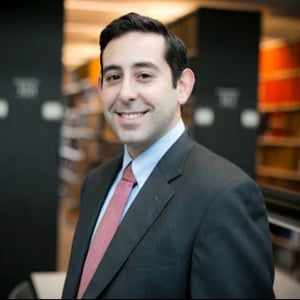
CEO and Director, National Jewish Advocacy Center
Rabbi Dr. Mark Goldfeder, Esq. is the CEO and Director of the National Jewish Advocacy Center, Inc. He has served as the founding Editor of the Cambridge University Press Series on Law and Judaism, a Trustee of the Center for Israel Education, and, by Presidential appointment, as a member of the United States Holocaust Memorial Museum Council.
Goldfeder has taught law across the country and around the world as Senior Lecturer at Emory University School of Law, Spruill Family Senior Fellow at the Center for the Study of Law and Religion, Director of the Restoring Religious Freedom Project, and as a visiting professor at Georgia State University School of Law, Florida Southern College, University of Padua (Italy), Scuola Galileana (Italy), IDC’s Radzyner Law School (Israel) and Bar Ilan Law School (Israel).
Goldfeder holds two rabbinic ordinations (yoreh yoreh; Yeshiva University and Rivavot Ephraim) and two judicial ordinations (yadin yadin; Rav Gedaliah Dov Schwartz, Av Beth Din, Rabbinical Council of America and Chicago Rabbinical Council, and Rav Dovid Schochet, President, Toronto Rabbinical Council).
Goldfeder’s work focuses on law and religion, constitutional law, and international law. He publishes widely in those areas, including both academically and in popular publications like CNN, The Wall Street Journal, The Hill, Forbes, and other major media outlets. He is also co-author of the five-volume treatise Religious Organizations and the Law (Westlaw). Goldfeder handles cases involving antisemitism issues around the country, and lectures and writes widely on those topics. He has worked with local, state, and federal legislators on measures to support the Jewish community, and has defended students, professors, businesses, and nonprofits targeted for their support of the Jewish State. He has worked on cases at the International Criminal Court in the Hague, and has successfully represented clients including American and Israeli nonprofits in federal litigation.
In 2017, he received the Opher Aviran Stand with Israel Award from Hillel, and in 2018, the Jon Barkan Israel Advocacy Award from the American Israel Public Affairs Committee in recognition of his work. He received his Doctorate and LLM degrees from Emory University and his Juris Doctor degree from NYU School of Law. He received his Bachelor of Arts at Yeshiva University in Journalism.

Senior Fellow and Director of Constitutional Studies, Manhattan Institute
Ilya Shapiro is a senior fellow and director of constitutional studies at the Manhattan Institute and a contributing editor of City Journal. Previously he was executive director and senior lecturer at the Georgetown Center for the Constitution, and before that a vice president of the Cato Institute.
Shapiro is the author of Lawless: The Miseducation of America’s Elites (2025) and Supreme Disorder: Judicial Nominations and the Politics of America’s Highest Court (2020), coauthor of Religious Liberties for Corporations? (2014), and editor of 11 volumes of the Cato Supreme Court Review (2008-18). He has contributed to a variety of academic, popular, and professional publications, including the Wall Street Journal, Harvard Journal of Law & Public Policy, Washington Post, Los Angeles Times, USA Today, National Review, and Newsweek. He also regularly provides commentary for various media outlets, writes the Shapiro’s Gavel newsletter on Substack, and once appeared on the Colbert Report.
Shapiro has testified many times before Congress and state legislatures and has filed more than 500 amicus curiae “friend of the court” briefs in the Supreme Court. He lectures regularly on behalf of the Federalist Society, is a member of the board of fellows of the Jewish Policy Center, was an inaugural Washington Fellow at the National Review Institute, and has been an adjunct law professor at the George Washington University and University of Mississippi. He is also the chairman of the board of advisers of the Mississippi Justice Institute, a barrister in the Edward Coke Appellate Inn of Court, and a former member of the Virginia Advisory Committee to the U.S. Commission on Civil Rights.
Earlier in his career, Shapiro was a special assistant/adviser to the Multi-National Force in Iraq on rule-of-law issues and practiced at Patton Boggs and Cleary Gottlieb. Before entering private practice, he clerked for Judge E. Grady Jolly of the U.S. Court of Appeals for the Fifth Circuit. He holds an AB from Princeton University, an MSc from the London School of Economics, and a JD from the University of Chicago Law School.
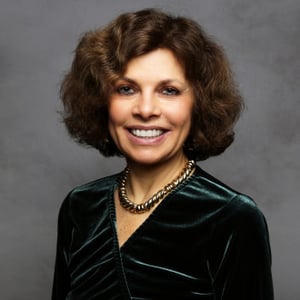
John Marshall Harlan II Professor of Law Emerita, New York Law School; Former President, American Civil Liberties Union
Nadine Strossen, New York Law School Professor Emerita and Senior Fellow at FIRE (the Foundation for Individual Rights and Expression), was national President of the American Civil Liberties Union from 1991 to 2008. An internationally acclaimed free speech scholar and advocate, who regularly addresses diverse audiences and provides media commentary around the world, Strossen is also the Host and Project Consultant for Free To Speak, a 3-hour documentary film series distributed on public television in 2023. Her books about free speech include: Free Speech: What Everyone Needs to Know® (Oxford University Press 2023); HATE: Why We Should Resist It with Free Speech, Not Censorship (Oxford University Press 2018); and Defending Pornography: Free Speech, Sex, and the Fight for Women’s Rights (Scribner 1995), which was republished with a new Preface in 2024 as part of the NYU Classics Series. Her many honors and awards include the National Coalition Against Censorship’s Judy Blume Lifetime Achievement Award for Free Speech. She serves on the Advisory Boards of several organizations that do free speech work, including: ACLU, Academic Freedom Alliance, Foundation Against Intolerance and Racism (FAIR), Heterodox Academy, National Coalition Against Censorship, and the University of Austin.
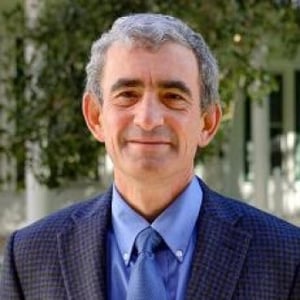
Professor and D’Alemberte Chair in Constitutional Law, Florida State University College of Law
Alexander Tsesis is the D’Alemberte chair in constitutional law at the Florida State University College of Law. He is also the general editor of the Cambridge Studies on Civil Rights and Civil Liberties and the Oxford Theoretical Foundations in Law. Tsesis’ scholarship and teaching focus on a breadth of subjects, including constitutional law, civil rights, constitutional reconstruction, interpretive methodology, free speech theory, and legal history.
Tsesis’ most recent book is Free Speech in the Balance (Cambridge University Press 2020). His previous books include Constitutional Ethos: Liberal Equality for the Common Good (Oxford University Press 2017) and For Liberty and Equality: The Life and Times of the Declaration of Independence (Oxford University Press 2012), We Shall Overcome: A History of Civil Rights and the Law (Yale University Press 2008), The Thirteenth Amendment and American Freedom (New York University Press 2004), and Destructive Messages: How Hate Speech Paved the Way for Harmful Social Movements (New York University Press 2002). He also edited a collection of essays in Promises of Liberty (Columbia University Press 2010). The subjects of his articles range from cyber speech, constitutional interpretation, civil rights law, and human rights. They have appeared or will appear in a variety of law reviews across the country, including the Boston University Law Review, Columbia Law Review, Cornell Law Review, Minnesota Law Review, Northwestern University Law Review, Southern California Law Review, Stanford Law Review, and Vanderbilt Law Review.
CEO and Director, National Jewish Advocacy Center
Rabbi Dr. Mark Goldfeder, Esq. is the CEO and Director of the National Jewish Advocacy Center, Inc. He has served as the founding Editor of the Cambridge University Press Series on Law and Judaism, a Trustee of the Center for Israel Education, and, by Presidential appointment, as a member of the United States Holocaust Memorial Museum Council.
Goldfeder has taught law across the country and around the world as Senior Lecturer at Emory University School of Law, Spruill Family Senior Fellow at the Center for the Study of Law and Religion, Director of the Restoring Religious Freedom Project, and as a visiting professor at Georgia State University School of Law, Florida Southern College, University of Padua (Italy), Scuola Galileana (Italy), IDC’s Radzyner Law School (Israel) and Bar Ilan Law School (Israel).
Goldfeder holds two rabbinic ordinations (yoreh yoreh; Yeshiva University and Rivavot Ephraim) and two judicial ordinations (yadin yadin; Rav Gedaliah Dov Schwartz, Av Beth Din, Rabbinical Council of America and Chicago Rabbinical Council, and Rav Dovid Schochet, President, Toronto Rabbinical Council).
Goldfeder’s work focuses on law and religion, constitutional law, and international law. He publishes widely in those areas, including both academically and in popular publications like CNN, The Wall Street Journal, The Hill, Forbes, and other major media outlets. He is also co-author of the five-volume treatise Religious Organizations and the Law (Westlaw). Goldfeder handles cases involving antisemitism issues around the country, and lectures and writes widely on those topics. He has worked with local, state, and federal legislators on measures to support the Jewish community, and has defended students, professors, businesses, and nonprofits targeted for their support of the Jewish State. He has worked on cases at the International Criminal Court in the Hague, and has successfully represented clients including American and Israeli nonprofits in federal litigation.
In 2017, he received the Opher Aviran Stand with Israel Award from Hillel, and in 2018, the Jon Barkan Israel Advocacy Award from the American Israel Public Affairs Committee in recognition of his work. He received his Doctorate and LLM degrees from Emory University and his Juris Doctor degree from NYU School of Law. He received his Bachelor of Arts at Yeshiva University in Journalism.
Senior Fellow and Director of Constitutional Studies, Manhattan Institute
Ilya Shapiro is a senior fellow and director of constitutional studies at the Manhattan Institute and a contributing editor of City Journal. Previously he was executive director and senior lecturer at the Georgetown Center for the Constitution, and before that a vice president of the Cato Institute.
Shapiro is the author of Lawless: The Miseducation of America’s Elites (2025) and Supreme Disorder: Judicial Nominations and the Politics of America’s Highest Court (2020), coauthor of Religious Liberties for Corporations? (2014), and editor of 11 volumes of the Cato Supreme Court Review (2008-18). He has contributed to a variety of academic, popular, and professional publications, including the Wall Street Journal, Harvard Journal of Law & Public Policy, Washington Post, Los Angeles Times, USA Today, National Review, and Newsweek. He also regularly provides commentary for various media outlets, writes the Shapiro’s Gavel newsletter on Substack, and once appeared on the Colbert Report.
Shapiro has testified many times before Congress and state legislatures and has filed more than 500 amicus curiae “friend of the court” briefs in the Supreme Court. He lectures regularly on behalf of the Federalist Society, is a member of the board of fellows of the Jewish Policy Center, was an inaugural Washington Fellow at the National Review Institute, and has been an adjunct law professor at the George Washington University and University of Mississippi. He is also the chairman of the board of advisers of the Mississippi Justice Institute, a barrister in the Edward Coke Appellate Inn of Court, and a former member of the Virginia Advisory Committee to the U.S. Commission on Civil Rights.
Earlier in his career, Shapiro was a special assistant/adviser to the Multi-National Force in Iraq on rule-of-law issues and practiced at Patton Boggs and Cleary Gottlieb. Before entering private practice, he clerked for Judge E. Grady Jolly of the U.S. Court of Appeals for the Fifth Circuit. He holds an AB from Princeton University, an MSc from the London School of Economics, and a JD from the University of Chicago Law School.
John Marshall Harlan II Professor of Law Emerita, New York Law School; Former President, American Civil Liberties Union
Nadine Strossen, New York Law School Professor Emerita and Senior Fellow at FIRE (the Foundation for Individual Rights and Expression), was national President of the American Civil Liberties Union from 1991 to 2008. An internationally acclaimed free speech scholar and advocate, who regularly addresses diverse audiences and provides media commentary around the world, Strossen is also the Host and Project Consultant for Free To Speak, a 3-hour documentary film series distributed on public television in 2023. Her books about free speech include: Free Speech: What Everyone Needs to Know® (Oxford University Press 2023); HATE: Why We Should Resist It with Free Speech, Not Censorship (Oxford University Press 2018); and Defending Pornography: Free Speech, Sex, and the Fight for Women’s Rights (Scribner 1995), which was republished with a new Preface in 2024 as part of the NYU Classics Series. Her many honors and awards include the National Coalition Against Censorship’s Judy Blume Lifetime Achievement Award for Free Speech. She serves on the Advisory Boards of several organizations that do free speech work, including: ACLU, Academic Freedom Alliance, Foundation Against Intolerance and Racism (FAIR), Heterodox Academy, National Coalition Against Censorship, and the University of Austin.
Professor and D’Alemberte Chair in Constitutional Law, Florida State University College of Law
Alexander Tsesis is the D’Alemberte chair in constitutional law at the Florida State University College of Law. He is also the general editor of the Cambridge Studies on Civil Rights and Civil Liberties and the Oxford Theoretical Foundations in Law. Tsesis’ scholarship and teaching focus on a breadth of subjects, including constitutional law, civil rights, constitutional reconstruction, interpretive methodology, free speech theory, and legal history.
Tsesis’ most recent book is Free Speech in the Balance (Cambridge University Press 2020). His previous books include Constitutional Ethos: Liberal Equality for the Common Good (Oxford University Press 2017) and For Liberty and Equality: The Life and Times of the Declaration of Independence (Oxford University Press 2012), We Shall Overcome: A History of Civil Rights and the Law (Yale University Press 2008), The Thirteenth Amendment and American Freedom (New York University Press 2004), and Destructive Messages: How Hate Speech Paved the Way for Harmful Social Movements (New York University Press 2002). He also edited a collection of essays in Promises of Liberty (Columbia University Press 2010). The subjects of his articles range from cyber speech, constitutional interpretation, civil rights law, and human rights. They have appeared or will appear in a variety of law reviews across the country, including the Boston University Law Review, Columbia Law Review, Cornell Law Review, Minnesota Law Review, Northwestern University Law Review, Southern California Law Review, Stanford Law Review, and Vanderbilt Law Review.
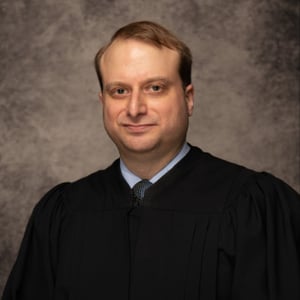
Judge, United States Court of Appeals, Second Circuit
Judge Menashi was appointed to the U.S. Court of Appeals for the Second Circuit on November 14, 2019. Previously, he served as special assistant and associate counsel to the President in the White House and as acting general counsel at the U.S. Department of Education. He was assistant professor of law at Scalia Law School, George Mason University, where he taught administrative law and civil procedure, and a research fellow at New York University School of Law and Georgetown University Law Center. He was also a partner at Kirkland & Ellis LLP in New York, where he practiced appellate and commercial litigation, and served as a law clerk to Justice Samuel Alito on the Supreme Court of the United States and to Judge Douglas Ginsburg on the U.S. Court of Appeals for the District of Columbia Circuit. He graduated from Stanford Law School, where he was elected to Order of the Coif and served as senior articles editor of the Stanford Law Review, and from Dartmouth College, where he was elected to Phi Beta Kappa.
Partner, Jones Day
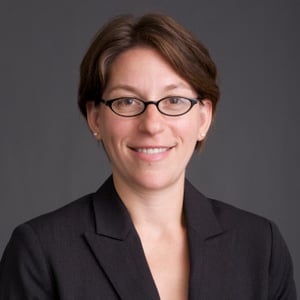
Professor of Law, Georgetown University Law Center
Eloise Pasachoff is Professor of Law, Anne Fleming Research Professor, and Associate Dean for Careers at the Georgetown University Law Center, where she specializes in the administrative law of federal funding. An award-winning teacher and scholar, she is a public member of the Administrative Conference of the United States and serves on the Academic Advisory Board of the Supreme Court Fellows program. She is a former law clerk to Justice Sotomayor (Supreme Court), Judge Robert A. Katzmann (Second Circuit), and Judge Jed S. Rakoff (Southern District of New York).
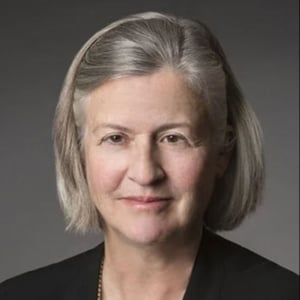
Partner, Sidley Austin LLP
Virginia Seitz is a partner in Sidley Austin’s Supreme Court and Appellate practice. On behalf of a wide range of clients, she has handled cases in the United States Supreme Court, in virtually all federal courts of appeals, and in state appellate courts. Virginia was counsel of record on the amicus brief on behalf of retired military officers in Grutter v. Bollinger, 539 U.S. 306 (2003), and Gratz v. Bollinger, 539 U.S. 244 (2003), which the Supreme Court cited at oral argument and in its opinion and which the New York Times piece noted “may have been the most influential amicus brief in the history of the Supreme Court.” She has handled an array of district court litigation involving important constitutional and federal law issues, including the Appropriations and Supremacy Clauses of the Constitution, the First Amendment, Title IX, Title VII, the Anti-Deficiency Act, ERISA, and federal labor laws.
Virginia returned to Sidley in 2014 after serving in the Senate-confirmed position of Assistant Attorney General for the Office of Legal Counsel in the Department of Justice. She was the first woman to be confirmed to that position. As the leader of that Office, Virginia was responsible for providing legal advice to the President and Executive Branch departments and agencies on issues of particular difficulty and importance. Virginia previously served as an appointee of the Chief Justice on the Advisory Committee on Civil Rules. In January 2017, she was elected to the American Law Institute. Earlier in her career, Virginia was confirmed by the Senate to the first Board of Directors of the Congressional Office of Compliance and served from May 1995 to 2000. Virginia has been recognized for her Appellate Law practice by Chambers USA, in The Legal 500 US in Litigation: Supreme Court and Appellate, and in The Best Lawyers in America.
Virginia clerked at the Supreme Court for Justice William J. Brennan, Jr., and before that for Judge Harry T. Edwards of the D.C. Circuit. She is a graduate of University at Buffalo Law School, received her M.A. from Oxford University where she was a Rhodes Scholar, and received her B.A. from Duke University, summa cum laude with distinction.
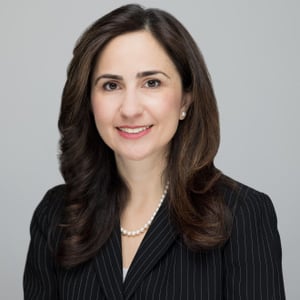
Partner, McGuireWoods LLP
Farnaz is a skilled litigator with extensive experience in representing employers and institutions of higher education, including academic medical centers, in breach of contract, constitutional, discrimination, and tort litigation. She has conducted investigations, advised clients on employment and education laws, and represented them before federal agencies, including the U.S. Department of Labor and U.S. Department of Education.
Farnaz successfully has defended employers, state agencies, government officials, and institutions of higher education in over 30 civil actions as first chair before federal and state courts as well as trial and appellate courts. Farnaz also has advised clients on investigations under civil rights laws such as Title VI of the Civil Rights Act of 1964 (discrimination based on race, color, or national origin), Title VII of the Civil Rights Act of 1964 (discrimination based on race, color, religion, sex, and national origin), and Title IX of the Education Amendments of 1972 (discrimination based on sex). Her deep knowledge of education laws and regulations includes the Higher Education Act of 1965, as amended; accreditation; borrower defense to repayment; gainful employment; financial responsibility standards; FERPA and other privacy laws; the Clery Act; and the Violence Against Women Act (VAWA).
Farnaz is experienced with student and employee disciplinary issues, including under Title IX, and has represented institutions in such matters in several of her previous roles. Representing institutions in Title IX cases requires a nuanced approach, as the institution must balance legal compliance with compassion and care, supporting victims while providing a fair process for both parties, including the accused. Farnaz strikes this balance and is a trusted resource for her clients.
Prior to joining McGuireWoods, Farnaz served as the Deputy General Counsel for Postsecondary Education at the U.S. Department of Education and also as in-house counsel at the University of Virginia. She advised the U.S. Department of Education on litigation strategy and worked closely with the U.S. Department of Justice in cases arising under federal antidiscrimination laws and the Administrative Procedure Act. Government officials also relied on her close counsel in preparation for congressional investigations and hearings. At the University of Virginia, she advised University officials on federal education and employment laws and represented the University and its academic medical center in litigation. She also drafted the University’s antidiscrimination and conduct policies, including free speech policies.
She began her legal career as a law clerk to the Honorable Eric G. Bruggink, Senior Judge, U.S. Court of Federal Claims, and later as a law clerk to the Honorable Leroy Rountree Hassell, Sr., the former Chief Justice, Supreme Court of Virginia.
CEO and Director, National Jewish Advocacy Center
Rabbi Dr. Mark Goldfeder, Esq. is the CEO and Director of the National Jewish Advocacy Center, Inc. He has served as the founding Editor of the Cambridge University Press Series on Law and Judaism, a Trustee of the Center for Israel Education, and, by Presidential appointment, as a member of the United States Holocaust Memorial Museum Council.
Goldfeder has taught law across the country and around the world as Senior Lecturer at Emory University School of Law, Spruill Family Senior Fellow at the Center for the Study of Law and Religion, Director of the Restoring Religious Freedom Project, and as a visiting professor at Georgia State University School of Law, Florida Southern College, University of Padua (Italy), Scuola Galileana (Italy), IDC’s Radzyner Law School (Israel) and Bar Ilan Law School (Israel).
Goldfeder holds two rabbinic ordinations (yoreh yoreh; Yeshiva University and Rivavot Ephraim) and two judicial ordinations (yadin yadin; Rav Gedaliah Dov Schwartz, Av Beth Din, Rabbinical Council of America and Chicago Rabbinical Council, and Rav Dovid Schochet, President, Toronto Rabbinical Council).
Goldfeder’s work focuses on law and religion, constitutional law, and international law. He publishes widely in those areas, including both academically and in popular publications like CNN, The Wall Street Journal, The Hill, Forbes, and other major media outlets. He is also co-author of the five-volume treatise Religious Organizations and the Law (Westlaw). Goldfeder handles cases involving antisemitism issues around the country, and lectures and writes widely on those topics. He has worked with local, state, and federal legislators on measures to support the Jewish community, and has defended students, professors, businesses, and nonprofits targeted for their support of the Jewish State. He has worked on cases at the International Criminal Court in the Hague, and has successfully represented clients including American and Israeli nonprofits in federal litigation.
In 2017, he received the Opher Aviran Stand with Israel Award from Hillel, and in 2018, the Jon Barkan Israel Advocacy Award from the American Israel Public Affairs Committee in recognition of his work. He received his Doctorate and LLM degrees from Emory University and his Juris Doctor degree from NYU School of Law. He received his Bachelor of Arts at Yeshiva University in Journalism.
Senior Fellow and Director of Constitutional Studies, Manhattan Institute
Ilya Shapiro is a senior fellow and director of constitutional studies at the Manhattan Institute and a contributing editor of City Journal. Previously he was executive director and senior lecturer at the Georgetown Center for the Constitution, and before that a vice president of the Cato Institute.
Shapiro is the author of Lawless: The Miseducation of America’s Elites (2025) and Supreme Disorder: Judicial Nominations and the Politics of America’s Highest Court (2020), coauthor of Religious Liberties for Corporations? (2014), and editor of 11 volumes of the Cato Supreme Court Review (2008-18). He has contributed to a variety of academic, popular, and professional publications, including the Wall Street Journal, Harvard Journal of Law & Public Policy, Washington Post, Los Angeles Times, USA Today, National Review, and Newsweek. He also regularly provides commentary for various media outlets, writes the Shapiro’s Gavel newsletter on Substack, and once appeared on the Colbert Report.
Shapiro has testified many times before Congress and state legislatures and has filed more than 500 amicus curiae “friend of the court” briefs in the Supreme Court. He lectures regularly on behalf of the Federalist Society, is a member of the board of fellows of the Jewish Policy Center, was an inaugural Washington Fellow at the National Review Institute, and has been an adjunct law professor at the George Washington University and University of Mississippi. He is also the chairman of the board of advisers of the Mississippi Justice Institute, a barrister in the Edward Coke Appellate Inn of Court, and a former member of the Virginia Advisory Committee to the U.S. Commission on Civil Rights.
Earlier in his career, Shapiro was a special assistant/adviser to the Multi-National Force in Iraq on rule-of-law issues and practiced at Patton Boggs and Cleary Gottlieb. Before entering private practice, he clerked for Judge E. Grady Jolly of the U.S. Court of Appeals for the Fifth Circuit. He holds an AB from Princeton University, an MSc from the London School of Economics, and a JD from the University of Chicago Law School.
John Marshall Harlan II Professor of Law Emerita, New York Law School; Former President, American Civil Liberties Union
Nadine Strossen, New York Law School Professor Emerita and Senior Fellow at FIRE (the Foundation for Individual Rights and Expression), was national President of the American Civil Liberties Union from 1991 to 2008. An internationally acclaimed free speech scholar and advocate, who regularly addresses diverse audiences and provides media commentary around the world, Strossen is also the Host and Project Consultant for Free To Speak, a 3-hour documentary film series distributed on public television in 2023. Her books about free speech include: Free Speech: What Everyone Needs to Know® (Oxford University Press 2023); HATE: Why We Should Resist It with Free Speech, Not Censorship (Oxford University Press 2018); and Defending Pornography: Free Speech, Sex, and the Fight for Women’s Rights (Scribner 1995), which was republished with a new Preface in 2024 as part of the NYU Classics Series. Her many honors and awards include the National Coalition Against Censorship’s Judy Blume Lifetime Achievement Award for Free Speech. She serves on the Advisory Boards of several organizations that do free speech work, including: ACLU, Academic Freedom Alliance, Foundation Against Intolerance and Racism (FAIR), Heterodox Academy, National Coalition Against Censorship, and the University of Austin.
Professor and D’Alemberte Chair in Constitutional Law, Florida State University College of Law
Alexander Tsesis is the D’Alemberte chair in constitutional law at the Florida State University College of Law. He is also the general editor of the Cambridge Studies on Civil Rights and Civil Liberties and the Oxford Theoretical Foundations in Law. Tsesis’ scholarship and teaching focus on a breadth of subjects, including constitutional law, civil rights, constitutional reconstruction, interpretive methodology, free speech theory, and legal history.
Tsesis’ most recent book is Free Speech in the Balance (Cambridge University Press 2020). His previous books include Constitutional Ethos: Liberal Equality for the Common Good (Oxford University Press 2017) and For Liberty and Equality: The Life and Times of the Declaration of Independence (Oxford University Press 2012), We Shall Overcome: A History of Civil Rights and the Law (Yale University Press 2008), The Thirteenth Amendment and American Freedom (New York University Press 2004), and Destructive Messages: How Hate Speech Paved the Way for Harmful Social Movements (New York University Press 2002). He also edited a collection of essays in Promises of Liberty (Columbia University Press 2010). The subjects of his articles range from cyber speech, constitutional interpretation, civil rights law, and human rights. They have appeared or will appear in a variety of law reviews across the country, including the Boston University Law Review, Columbia Law Review, Cornell Law Review, Minnesota Law Review, Northwestern University Law Review, Southern California Law Review, Stanford Law Review, and Vanderbilt Law Review.
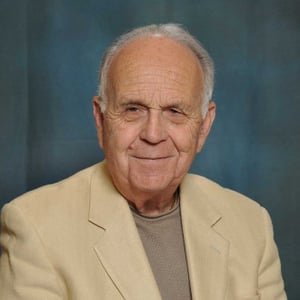
Presidential Scholar in Residence, New College of Florida
Professor Fish comes to the College of Law from Chicago, where he most recently served as Dean of the College of Liberal Arts and Sciences at the University of Illinois at Chicago. He holds a B.A. from the University of Pennsylvania (1959) and an M.A. and Ph.D. from Yale University (1960; 1962). He has previously taught at the University of California at Berkeley (1962-74); Johns Hopkins University (1974-85), where he was the Kenan Professor of English and Humanities; and Duke University, where he was Arts and Sciences Professor of English and Professor of Law (1986-1998). From 1993 through 1998 he served as Executive Director of Duke University Press. Dr. Fish served as a Distinguished Visiting Professor at The John Marshall Law School from 2000 through 2002.
In addition to being one of the country’s leading public intellectuals, Professor Fish is an extraordinarily prolific author whose works include over 200 scholarly publications and books. While his research covers a variety of fields, Professor Fish has written for many of the country’s leading law journals. including Stanford Law Review, Duke Law Journal, Yale Law Journal, University of Chicago Law Review, Columbia Law Review, and Texas Law Review. His exemplary work also includes the following books: John Skelton’s Poetry (1965); Surprised by Sin: The Reader in Paradise Lost (1967) and a Thirtieth Anniversary Edition (1997); Self-Consuming Artifacts: The Experience of Seventeenth-Century Literature (1972); The Living Temple: George Herbert and Catechizing (1978); Is there a Text in This Class? Interpretive Communities and the Sources of Authority (1980); Doing What Comes Naturally: Change, Rhetoric, and the Practice of Theory in Literary and Legal Studies (1989); There’s No Such Thing as Free Speech, and It’s a Good Thing, Too (1994); Professional Correctness: Literary Studies and Political Change (1995); The Trouble with Principle (1999); and How Milton Works (2001). The Stanley Fish Reader, edited by H. Aram Veeser, was published in 1999. He has also had five books written about his books.
Currently, Professor Fish is working on several publications, including There is No Textualist Position, San Diego Law Review (Spring 2005), Intentional Neglect, New York Times (July 2005), and Academic Cross Dressing: How Intelligent Design Gets Its Arguments from the Left, Harper’s Magazine. Professor Fish will teach a Law & Religion seminar Spring 2006.
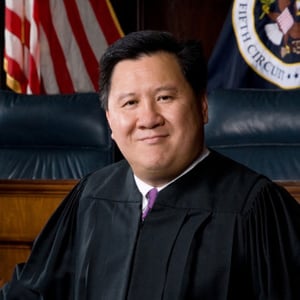
Judge, United States Court of Appeals, Fifth Circuit
James C. Ho is a Circuit Judge on the U.S. Court of Appeals for the Fifth Circuit. Before taking the bench on January 4, 2018, he was a partner and co-chair of the national Appellate and Constitutional Law practice group of Gibson, Dunn & Crutcher LLP.
As an appellate litigator for over a decade, including three years as the Solicitor General of Texas, Judge Ho presented 50 oral arguments in federal and state courts nationwide. He won numerous appeals, including three merits cases at the U.S. Supreme Court. He was routinely ranked among the nation’s leading lawyers by Benchmark, Chambers, Law360, The Legal 500, and The National Law Journal, among other publications. His work has been cited favorably by courts at every level of both the federal and state judiciaries. He won a Best Brief Award from the National Association of Attorneys General for every year that he served as solicitor general, and he is the only state solicitor general in history to be invited by the U.S. Supreme Court to express the views of a state.
Judge Ho has served in all three branches of the federal government. On the Senate Judiciary Committee, he served as chief counsel of the Subcommittees on the Constitution and Immigration under Senator John Cornyn. At the Justice Department, he served as Special Assistant to the Assistant Attorney General for Civil Rights and an attorney-advisor at the Office of Legal Counsel. He clerked for Judge Jerry E. Smith of the U.S. Court of Appeals for the Fifth Circuit and Justice Clarence Thomas of the U.S. Supreme Court.
His record of public service also includes appointments as vice chair of the Federal Judicial Evaluation Committee in Texas and co-chair of the National Asian Pacific American Bar Association Judiciary Committee, and as a member of the U.S. Magistrate Judge Merit Selection Panel for the Northern District of Texas, the U.S. delegation to the United Nations Committee on the Elimination of Racial Discrimination, and the Continuity of Government Commission.
In addition, Judge Ho has served as an Adjunct Professor of Law at the University of Texas School of Law, where he taught seminars on U.S. Supreme Court Litigation and Religious Liberty. He has authored numerous articles in respected law reviews nationwide, including an annual feature on exemplary judicial writing for The Green Bag Almanac & Reader. He previously served as senior editor of The Green Bag and as co-editor of Pub. L. Misc.
Judge Ho graduated from Stanford University with honors and a B.A. in Public Policy in 1995, and the University of Chicago Law School with high honors in 1999. Before law school, he was a legislative aide to California State Senator Quentin Kopp. He and his wife Allyson live in Dallas, Texas, with their twin daughter and son.

George C. Dix Professor in Constitutional Law, Northwestern University Pritzker School of Law
John O. McGinnis is a graduate of Harvard College and Harvard Law School where he was an editor of the Harvard Law Review. He also has an MA degree from Balliol College, Oxford, in philosophy and theology. Professor McGinnis clerked on the U.S. Court of Appeals for the District of Columbia. From 1987 to 1991, he was deputy assistant attorney general in the Office of Legal Counsel at the Department of Justice. He is the author of Accelerating Democracy: Transforming Government Through Technology (Princeton 2013) and Originalism and the Good Constitution (Harvard 2013) (with M. Rappaport). He is a past winner of the Paul Bator award given by the Federalist Society to an outstanding academic under 40. He has been listed by the United States on the roster of panelists who may be called upon to decide World Trade Organization Disputes.
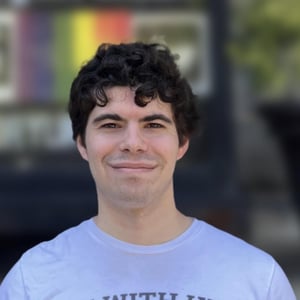
Reporter, Washington Free Beacon
Aaron Sibarium is a reporter at the Washington Free Beacon where he covers law, education, and institutional capture. He has broken stories on corporate race discrimination, the race-based allocation of COVID drugs, the American Academy of Pediatrics, Princeton University, and Yale Law School. Aaron previously worked as an editor at the American Interest and earned a B.A. in Ethics, Politics, and Economics, magna cum laude, from Yale University.
Senior Fellow and Director of Constitutional Studies, Manhattan Institute
Ilya Shapiro is a senior fellow and director of constitutional studies at the Manhattan Institute and a contributing editor of City Journal. Previously he was executive director and senior lecturer at the Georgetown Center for the Constitution, and before that a vice president of the Cato Institute.
Shapiro is the author of Lawless: The Miseducation of America’s Elites (2025) and Supreme Disorder: Judicial Nominations and the Politics of America’s Highest Court (2020), coauthor of Religious Liberties for Corporations? (2014), and editor of 11 volumes of the Cato Supreme Court Review (2008-18). He has contributed to a variety of academic, popular, and professional publications, including the Wall Street Journal, Harvard Journal of Law & Public Policy, Washington Post, Los Angeles Times, USA Today, National Review, and Newsweek. He also regularly provides commentary for various media outlets, writes the Shapiro’s Gavel newsletter on Substack, and once appeared on the Colbert Report.
Shapiro has testified many times before Congress and state legislatures and has filed more than 500 amicus curiae “friend of the court” briefs in the Supreme Court. He lectures regularly on behalf of the Federalist Society, is a member of the board of fellows of the Jewish Policy Center, was an inaugural Washington Fellow at the National Review Institute, and has been an adjunct law professor at the George Washington University and University of Mississippi. He is also the chairman of the board of advisers of the Mississippi Justice Institute, a barrister in the Edward Coke Appellate Inn of Court, and a former member of the Virginia Advisory Committee to the U.S. Commission on Civil Rights.
Earlier in his career, Shapiro was a special assistant/adviser to the Multi-National Force in Iraq on rule-of-law issues and practiced at Patton Boggs and Cleary Gottlieb. Before entering private practice, he clerked for Judge E. Grady Jolly of the U.S. Court of Appeals for the Fifth Circuit. He holds an AB from Princeton University, an MSc from the London School of Economics, and a JD from the University of Chicago Law School.
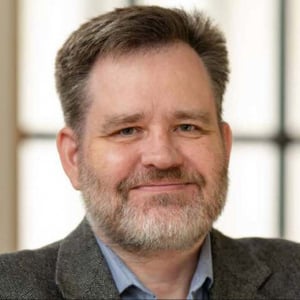
David Boies Professor of Law, Yale Law School
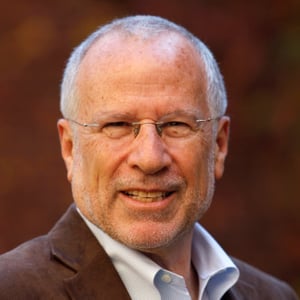
David and Mary Harrison Distinguished Professor of Law, University of Virginia School of Law
Frederick Schauer is David and Mary Harrison Distinguished Professor of Law at the University of Virginia, and previously was Frank Stanton Professor of the First Amendment at Harvard University. A Fellow of the American Academy of Arts and Sciences and recipient of a Guggenheim Fellowship, Schauer is the author of The Law of Obscenity (BNA, 1976), Free Speech: A Philosophical Enquiry (Cambridge, 1982), Playing By the Rules: A Philosophical Examination of Rule-Based Decision-Making in Law and in Life (Oxford, 1991), Profiles, Probabilities, and Stereotypes (Harvard, 2003), Thinking Like a Lawyer: A New Introduction to Legal Reasoning (Harvard, 2009), and The Force of Law (Harvard, 2015). The editor of Karl Llewellyn, The Theory of Rules (Chicago, 2011), and a founding editor of Legal Theory, he has chaired the Section on Constitutional Law of the Association of American Law Schools and the Committee on Philosophy and Law of the American Philosophical Association. In 2005 he wrote the Foreword to the Harvard Law Review’s Supreme Court issue, and has written widely on freedom of speech, constitutional interpretation, evidence, legal reasoning, and the philosophy of law.
David Boies Professor of Law, Yale Law School
David Boies Professor of Law, Yale Law School

Topics
The Impact of President Trump’s Executive Order on Accreditation in Higher Education
In his April 23 executive order Reforming Accreditation to Strengthen Higher Education, President Trump stated that “accreditors...
Addressing Antisemitism in Higher Education
Mark Goldfeder, Ilya Shapiro, Nadine Strossen, Alexander Tsesis
In the wake of the October 7, 2023 terrorist attack in Israel, there have been...
Addressing Antisemitism in Higher Education
Mark Goldfeder, Ilya Shapiro, Nadine Strossen, Alexander Tsesis
In the wake of the October 7, 2023 terrorist attack in Israel, there have been...
Addressing Antisemitism in Higher Education
Academic Freedom and "Professional Norms": The Amy Wax Affair and Freedom of Thought in Higher Education
Shapiro v. Anyone: A Conversation on DEI and Higher Education
California-UCLA Student Chapter
Los Angeles, CAUnder Attack? Academic Freedom in Higher Education
Rutgers-Camden Student Chapter
Camden, NJUnder Attack? Academic Freedom in Higher Education
Virginia Student Chapter
Charlottesville, VAUnder Attack? Academic Freedom in Higher Education
Harvard Student Chapter
Cambridge, MAIs Faithful Execution being Devoured By Factional Execution?
Steven J. Menashi, Hashim M. Mooppan, Eloise Pasachoff, Virginia Seitz, Farnaz F. Thompson
Abrupt and complete reversals of position from one Administration to the next, whether by Executive...