
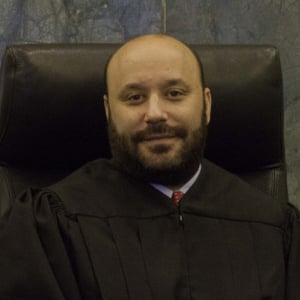
Judge, United States District Court, Eastern District of Arkansas
Lee Philip Rudofsky is a judge on the United States District Court for the Eastern District of Arkansas. Prior to his 2019 appointment by President Trump, Judge Rudofsky served as the Solicitor General of Arkansas, an Assistant General Counsel at Walmart, a Senior Litigation Associate at Kirkland & Ellis, and counsel to several Republican political campaigns. Today, in addition to his judicial service, Judge Rudofsky teaches law school classes on founding-era constitutional history and, separately, speaks to students across the country about the October 7th Massacre and the subsequent Israeli response. In 2024, Judge Rudofsky helped establish an annual judicial education mission to Israel that offers American judges the opportunity to learn first-hand about the Israeli legal system, Israeli society, and legal issues related to the Israel-Hamas war.

Partner, Horvitz & Levy LLP
Jeremy Rosen is nationally renowned for his proficiency in numerous issues arising under the First Amendment and California’s anti-SLAPP law. Using that knowledge, Jeremy has helped a wide variety of clients – including churches, private businesses, and individuals – defeat lawsuits that seek to impose liability on clients for exercising their rights of petition, free speech, and free exercise of religion. He has also handled hundreds of appeals in numerous appellate courts, including the Ninth Circuit Court of Appeals, the California Supreme Court, and California’s intermediate appellate courts. In addition to First Amendment and anti-SLAPP cases, his cases have involved numerous important issues regarding anti-trust, class actions, wage and hour law, employment law, breach of contract, California’s Unfair Competition Law, CEQA, the enforceability of arbitration clauses, hospital peer review, the scope of public employee whistleblower protection, and the application of the primary assumption of risk doctrine.
Jeremy is a partner at the firm, which he joined in 2001. He is a California State Bar Certified Appellate Specialist and a member of the California Academy of Appellate Lawyers.
Jeremy directed the Pepperdine University School of Law Ninth Circuit Appellate Advocacy Clinic for 6 years. The Clinic represents individuals in the Ninth Circuit who are identified by the court as needing pro bono counsel. Jeremy also previously served a three-year term where he was appointed by the Ninth Circuit to serve as one of 18 appellate lawyer representatives to the court.
Jeremy is a member of the National Chamber Litigation Center’s California Litigation Advisory Committee. Before joining the firm, Jeremy was a Litigation Associate with Munger, Tolles & Olson.
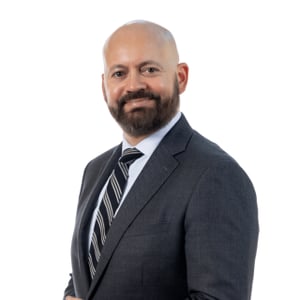
Milton R. Underwood Chair in Free Enterprise, Vanderbilt University Law School
Brian Fitzpatrick is the Milton R. Underwood Chair in Free Enterprise and Professor of Law at Vanderbilt Law School, where his research focuses on class action litigation, federal courts, judicial selection, and constitutional law. He is best known for his empirical studies of class action settlements as well as his book The Conservative Case for Class Actions (University of Chicago Press, 2019). Professor Fitzpatrick joined Vanderbilt's law faculty in 2007 after serving as the John M. Olin Fellow at New York University School of Law. He graduated first in his class from Harvard Law School and went on to clerk for Judge Diarmuid O'Scannlain on the U.S. Court of Appeals for the Ninth Circuit and Justice Antonin Scalia on the U.S. Supreme Court. After his clerkships, Professor Fitzpatrick practiced commercial and appellate litigation for several years at Sidley Austin in Washington, D.C., and served as Special Counsel for Supreme Court Nominations to U.S. Senator John Cornyn. Before earning his law degree, Fitzpatrick graduated summa cum laude with a bachelor's of science in chemical engineering from the University of Notre Dame. He has received the Hall-Hartman Outstanding Professor Award, which recognizes excellence in classroom teaching, for his Civil Procedure and Federal Courts courses.
Milton R. Underwood Chair in Free Enterprise, Vanderbilt University Law School
Brian Fitzpatrick is the Milton R. Underwood Chair in Free Enterprise and Professor of Law at Vanderbilt Law School, where his research focuses on class action litigation, federal courts, judicial selection, and constitutional law. He is best known for his empirical studies of class action settlements as well as his book The Conservative Case for Class Actions (University of Chicago Press, 2019). Professor Fitzpatrick joined Vanderbilt's law faculty in 2007 after serving as the John M. Olin Fellow at New York University School of Law. He graduated first in his class from Harvard Law School and went on to clerk for Judge Diarmuid O'Scannlain on the U.S. Court of Appeals for the Ninth Circuit and Justice Antonin Scalia on the U.S. Supreme Court. After his clerkships, Professor Fitzpatrick practiced commercial and appellate litigation for several years at Sidley Austin in Washington, D.C., and served as Special Counsel for Supreme Court Nominations to U.S. Senator John Cornyn. Before earning his law degree, Fitzpatrick graduated summa cum laude with a bachelor's of science in chemical engineering from the University of Notre Dame. He has received the Hall-Hartman Outstanding Professor Award, which recognizes excellence in classroom teaching, for his Civil Procedure and Federal Courts courses.
Milton R. Underwood Chair in Free Enterprise, Vanderbilt University Law School
Brian Fitzpatrick is the Milton R. Underwood Chair in Free Enterprise and Professor of Law at Vanderbilt Law School, where his research focuses on class action litigation, federal courts, judicial selection, and constitutional law. He is best known for his empirical studies of class action settlements as well as his book The Conservative Case for Class Actions (University of Chicago Press, 2019). Professor Fitzpatrick joined Vanderbilt's law faculty in 2007 after serving as the John M. Olin Fellow at New York University School of Law. He graduated first in his class from Harvard Law School and went on to clerk for Judge Diarmuid O'Scannlain on the U.S. Court of Appeals for the Ninth Circuit and Justice Antonin Scalia on the U.S. Supreme Court. After his clerkships, Professor Fitzpatrick practiced commercial and appellate litigation for several years at Sidley Austin in Washington, D.C., and served as Special Counsel for Supreme Court Nominations to U.S. Senator John Cornyn. Before earning his law degree, Fitzpatrick graduated summa cum laude with a bachelor's of science in chemical engineering from the University of Notre Dame. He has received the Hall-Hartman Outstanding Professor Award, which recognizes excellence in classroom teaching, for his Civil Procedure and Federal Courts courses.
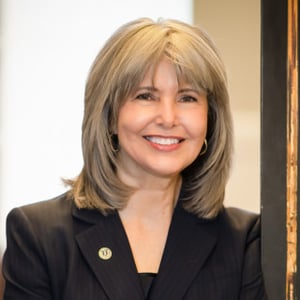
Associate Justice, Tennessee Supreme Court
Sworn in by Governor Bill Haslam in September 2014, Tennessee Supreme Court Justice Holly Kirby is the first graduate of the University of Memphis ever to sit on Tennessee’s highest court. A career jurist, Justice Kirby has authored well over a thousand opinions from appeals all across the state.
Prior to her appointment to the Supreme Court, Justice Kirby served for almost 19 years on the Tennessee Court of Appeals, Tennessee’s intermediate appellate court for civil cases. She represented a gender milestone on the Court of Appeals—when she was appointed in 1995, she became the first woman ever to sit on that Court.
A lifelong Tennessean, Justice Kirby was born in Memphis and graduated from high school in Columbia, Tennessee. As an undergraduate at the University of Memphis, she held a number of student leadership positions and graduated in 1979 with high honors, with a B.S. in mechanical engineering.
In 1982, Justice Kirby graduated from the University of Memphis School of Law with high honors. Upon graduation, she served as a judicial law clerk on the U.S. Court of Appeals for the Sixth Circuit.
After her clerkship, Justice Kirby joined the Memphis law firm of Burch, Porter & Johnson, where she was active in politics and community service. When she was selected as partner in 1990, she became the firm’s first female partner.
From the time of her appointment to the Court of Appeals in 1995 to the present, Justice Kirby has won 5 statewide elections, in 1996, 1998, 2006, 2014, and 2016.
Justice Kirby was chosen as Outstanding Young Alumna for the University of Memphis in 1996, Outstanding Alumna for the University of Memphis College of Engineering in 2002, and Special Distinguished Alumna for the School of Law in 2016. She is married to Memphis businessman Russell Ingram and has two grown children. The family belongs to Idlewild Presbyterian Church.
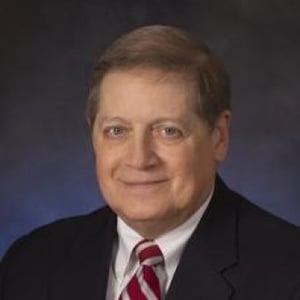
JOHN L. RYDER concentrates his practice in the areas of bankruptcy and commercial litigation. He has represented secured lenders, unsecured creditor's committees, trustees and debtors in the bankruptcy process. He has participated in a number of major bankruptcies including: The Julien Companies, Microwave Products, Wexner & Jacobson, Wang's, XpertTune, Braniff and others.
He served as Shelby County Delinquent Tax Attorney (1990-1994) and was a member of the Shelby County Home Rule Charter Commission (1984-1985). He is a member of the Memphis (Chairman, Bankruptcy Section, 1985) and Tennessee (Chairman, Commercial, Banking and Bankruptcy Section, 1986) Bar Associations, and the American Bankruptcy Institute and Mid-South Commercial Law Institute (Director, 1989-Present). He also serves as an Assistant County Attorney. Mr. Ryder is listed in the Best Lawyers in America. He has also been recognized by Business Tennessee as being among 101 Best Lawyers in Tennessee.
Vanderbilt University (J.D., 1974)
Wabash College (A.B., 1971)
Economics Department, Loyola University New Orleans

Mountaintop Coal Mining: A Permitting Process In Flux
Lee Rudofsky
Brought to you by the Environmental Law & Property Rights Practice GroupMountaintop coal mining is a...
State Court Docket Watch Summer 2009
Joshua Daniel Davey, David Strachman, Jennifer Wolsing, Jeremy B. Rosen, Aaron Chastain, Shauna Peterson
In an effort to increase dialogue about state court jurisprudence, the Federalist Society presents State...
A 2009 Tennessee Legislative Update
Memphis, TennesseeCriminal Confessions and Police Tactics: TN Supreme Court Tosses Murder Conviction under Miranda
Aaron Chastain
In a unanimous decision in January, the Tennessee Supreme Court suppressed two confessions made by...
An Overview of the White House Office on Faith-Based and Neighborhood Partnerships and the Council on Faith-Based and Neighborhood Partnerships
Brought to you by the Religious Liberties Practice GroupPresident Barack Obama announced President Bush’s White House...
A Report on the Political Balance of the Tennessee Plan
Brian T. Fitzpatrick
There is an ongoing debate about the method by which Tennessee selects its appellate judges. Professors...
A Report on the Political Balance of the Tennessee Plan
Brian T. Fitzpatrick
There is an ongoing debate about the method by which Tennessee selects its appellate judges. Professors...
Judicial Selection in Tennessee
Memphis, TennesseePrivatize This: A Panel Discussion on Privatization
How Recent Changes in the Legislature May Affect the Judiciary in Tennessee