
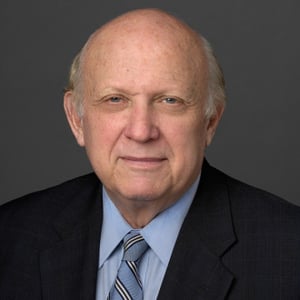
Senior Counsel, Cahill Gordon & Reindel LLP
Floyd Abrams is Senior Counsel in Cahill Gordon & Reindel LLP's litigation practice group.
Floyd has a national trial and appellate practice and extensive experience in high-visibility matters, often involving First Amendment, securities litigation, intellectual property, public policy and regulatory issues. He has argued frequently in the Supreme Court in cases raising issues as diverse as the scope of the First Amendment, the interpretation of ERISA, the nature of broadcast regulation, the impact of copyright law and the continuing viability of the Miranda rule. Most recently, Floyd prevailed in his argument before the Supreme Court on behalf of Senator Mitch McConnell as amicus curiae, defending the rights of corporations and unions to speak publicly about politics and elections in Citizens United v. Federal Election Commission. Floyd's clients have included The McGraw-Hill Companies in a large number of litigations around the country involving claims against its subsidiary, Standard & Poor’s Financial Services LLC, The New York Times in the Pentagon Papers case and others, ABC, NBC, CBS, CNN, Time Magazine, Business Week, The Nation, Reader's Digest, Hearst, AIG, and others in trials, appeals and investigations.
Floyd has represented Standard & Poor’s in litigations about its ratings; he defended the Brooklyn Museum of Art in its legal battles with Mayor Rudolph Giuliani; he represented two of the nation’s largest insurers in litigation under Section 17200 in California and he has frequently testified before congressional committees and prepared clients to do so. In 1998, he represented CNN in investigating and issuing a report on its broadcast accusing the United States of using nerve gas on a military mission in Laos in 1970, and again in 1999 in seeking to persuade the United States Senate to permit the public to view its deliberations as it determined whether or not to convict President Clinton of alleged high crimes and misdemeanors. He represented Nina Totenberg and National Public Radio in the 1992 "leak" investigation conducted by the United States Senate arising out of the confirmation hearing of Justice Clarence Thomas and, in 2004 and 2005, Judith Miller and Matthew Cooper in their efforts to avoid revealing their confidential sources.
In 2006, Floyd was elected to the American Academy of Arts & Sciences, an independent research center that conducts multidisciplinary studies of complex and emerging problems advanced by its 4,600 elected members, who are leaders in the academic disciplines, the arts, business and public affairs from around the world. In 2015, Floyd was honored by Yale Law School with its prestigious Award of Merit. Also in 2015, Floyd received the Walter Cronkite Freedom of Information Award presented by the Connecticut Foundation for Open Government. In 2011, Floyd was awarded the CUNY Graduate School of Journalism's Lifetime Achievement Award. In 1998, Floyd was the recipient of the William J. Brennan, Jr. Award for outstanding contribution to public discourse; the Learned Hand Award of the American Jewish Committee; and the Thurgood Marshall Award of the Association of the Bar of the City of New York. In November, 1999, he received the William J. Brennan, Jr. award of the Libel Defense Resource Center. Floyd was awarded, in 1997, the Milton S. Gould Award for outstanding appellate advocacy by the Office of the Appellate Defender in New York. Previously he had been awarded the Ross Essay Prize of the American Bar Association for his study of the Ninth Amendment of the United States Constitution. He has also received awards from, among others, the American Jewish Congress, Catholic University, the New York and Philadelphia Chapters of the Society of Professional Journalists, Sigma Delta Chi, the New York Civil Liberties Union, the Association for Education in Journalism and Mass Communication, and the National Broadcast Editorial Association.
In November, 2011, Yale Law School announced the formation of The Floyd Abrams Institute for Freedom of Expression, whose mission is to promote free speech, scholarship and law reform on emerging questions concerning traditional and new media. Developed in cooperation with Floyd, the Institute includes a clinic for Yale Law students to engage in litigation, draft model legislation, and advise lawmakers and policy makers on issues of media freedom and informational access.
The American Bar Association awarded Floyd its Certificate of Merit for his article published in The New York Times Magazine entitled "The New Effort to Control Information," which was described by the ABA as a "noteworthy contribution to public understanding of the American system of law and justice."
Described by Senator Daniel Patrick Moynihan as "the most significant First Amendment lawyer of our age," Floyd is top-ranked by Chambers USA. He is listed in Who’s Who Legal, Who’s Who in American Law, and has been awarded with Lifetime Achievement Awards by The New York Law Journal and The American Lawyer (2013).
Floyd, who served as chairman of Mayor Edward Koch's Committee on Appointments, New York City, served as the Chairman of the New York State Zenger Commemoration Planning Committee. Previously, he served as the Chairman of the Communications Committee of the Association of the Bar of the City of New York, as well as Chairman of the Committee on Freedom of Speech and of the Press of the Individual Rights Section of the American Bar Association and of the Committee on Freedom of Expression of the Litigation Section of the American Bar Association.
He has appeared frequently on television on Nightline, the News Hour with Jim Lehrer, Charlie Rose and other programs and has published articles and reviews in The New York Times, The Washington Post, The Yale Law Journal, The Harvard Law Review, and elsewhere.
Floyd served on the Technology and Privacy Advisory Committee of the U.S. Department of Defense in 2003-4 and as the Chair of the New York State Commission on Public Access to Court Records in 2004.
For fifteen years, Floyd was the William J. Brennan, Jr. Visiting Professor of First Amendment Law at the Columbia Graduate School of Journalism. He has, as well, been a Visiting Lecturer at Yale Law School and Columbia Law School and he is author of Friend of the Court: On the Front Lines with the First Amendment, published by Yale University Press (2013) and Speaking Freely: Trials of the First Amendment, published by Viking Press (2005).

Partner, Schaerr | Jaffe LLP
Erik Jaffe has been involved in appeals on a broad range of legal issues, including First Amendment challenges to campaign finance reform, Commerce Clause challenges to Health Care Reform and other federal legislation, Equal Protection Clause challenges to affirmative action in education, First Amendment challenges to school vouchers, Fifth Amendment challenges to takings of property, Second Amendment challenges to restrictions on gun ownership, and a wide variety of cases involving patents, copyrights, ERISA, securities fraud, federal preemption, environmental regulation, and other state and federal constitutional and statutory matters. He has represented businesses and non-profit groups, Judges, Senators, former government officials, Nobel Prize winners, and a broad cross-section of private individuals. Mr. Jaffe has been involved in over 120 Supreme Court matters, including filing over 30 cert. petitions, representing half-a-dozen parties on the merits, and filing over 70 amicus briefs at both the cert. and merits stages.
A 1990 graduate of the Columbia University School of Law, Mr. Jaffe was a law clerk to Judge Douglas H. Ginsburg of the United States Court of Appeals for the District of Columbia Circuit from 1990 to 1991. Following that clerkship he spent five years in litigation practice with the Washington, D.C. law firm of Williams & Connolly. In the summer of 1996 he left Williams & Connolly to clerk for Supreme Court Justice Clarence Thomas. At the end of that clerkship he started his own practice, and he was a sole practitioner from 1997 to 2018. He joined the firm of Schaerr | Jaffe LLP in 2018.
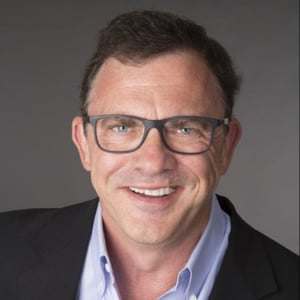
Beauchamp Brogan Distinguished Professor of Law, University of Tennessee College of Law
Professor Reynolds is one of the most prolific scholars on the UT faculty. His special interests are law and technology and constitutional law issues and his work has appeared in a wide variety of publications, including the Columbia Law Review, the Virginia Law Review, the University of Pennsylvania Law Review, the Wisconsin Law Review, the William and Mary Law Review, the Southern California Law Review, the Harvard Journal of Law and Technology, The Columbia Human Rights Law Review, Law and Policy in International Business, Jurimetrics, the Journal of Space Law, and the High Technology Law Journal. Professor Reynolds has also written in the New York Times, the Washington Post, The Atlantic, the Washington Times, the Los Angeles Times, Road & Track, Urb, and the Wall Street Journal, as well as other popular publications. He was for many years a contributing editor at Popular Mechanics magazine, and today writes a regular column for USA Today. He is the co-author of Outer Space: Problems of Law and Policy, and The Appearance of Impropriety: How the Ethics Wars Have Undermined American Government, Business, and Society. His most recent books are The Social Media Upheaval, The Judiciary’s Class War, and The New School: How the Information Age Will Save American Education from Itself.
Professor Reynolds has testified before Congressional committees on space law, international trade, and domestic terrorism. He has been executive chairman of the National Space Society and a member of the White House Advisory Panel on Space Policy. A member of the UT faculty since 1989, Professor Reynolds has received the Harold C. Warner Outstanding Faculty Scholarship Award in W. Allen Separk Outstanding Faculty Scholarship Award, and the Carden Award for Outstanding Scholarship.
A songwriter and producer for such bands as Mobius Dick, The Nebraska Guitar Militia, and The Defenders Of The Faith, Professor Reynolds is a member of the American Society of Composers and Performers and a former member of the National Academy of Recording Arts and Sciences.
Professor Reynolds blogs at InstaPundit.com.
Attorney, Spiro Moss LLP
Mr. Leviant is a civil litigation attorney with over 11 years of experience (10 as an attorney) handling complex and class action matters. Over the last five years, Mr. Leviant litigated class actions at several large plaintiffs' firms. Before that, Mr. Leviant worked at the small civil litigation firm Stanbury & Fishelman, Inc., where he handled increasingly sophisticated matters, including complex commercial litigations, class actions, appellate matters and civil trials.
Mr. Leviant has obtained several published appellate decisions, including Ghazaryan v. Diva Limousine, Ltd. 169 Cal. App. 4th 1524 (2009), which reversed a denial of class certification and obtained an Order of the Court of Appeal directing certification of the proposed class, Laliberte v. Pacific Mercantile Bank, 147 Cal. App. 4th 1 (2007), which reversed an adverse trial court ruling and reaffirmed the expansive nature of the “community of interest” concept in California class actions, andJohnson v. Glaxosmithkline, Inc., 166 Cal. App. 4th 1497 (2008), as modified (October 14, 2008), rev. denied, which reversed an adverse trial court ruling and questioned the rationale and viability of Alvarez v. May Dept. Stores Co., 143 Cal. App. 4th 1223 (2006).
Mr. Leviant is also the founder, primary author and Editor-in-Chief of The Complex Litigator, a legal blog focusing on developments in the areas of class action practice, complex litigation, and technology for small firms. In addition to his blog, Mr. Leviant has authored or co-authored various published articles.
Mr. Leviant is in his third year of service on the Board of Governors for the Consumer Attorneys of California.
Mr. Leviant is admitted to practice before the United States Supreme Court, the United States Court of Appeals for the Eighth and Ninth Circuits, the United States District Courts for the Central, Southern and Northern Districts of California and all California Courts.
Mr. Leviant received his undergraduate degree from Occidental College. Graduating cum laude, Mr. Leviant majored in economics and received a “minor” emphasis in mathematics. Along with his study of economics and mathematics, he also had an emphasis in physics. This combination of scientific and economic education has been of assistance during his litigation of complex civil actions. Mr. Leviant received his law degree from the University of Southern California Law Center.
University of San Diego School of Law
Former San Diego Superior Court Judge
Hon. Michael B. Orfield (Ret.) was a jurist for 20 years, mostly as a civil independent calendar judge. His experience and expertise as a civil judge spread widely across such diverse areas as catastrophic personal injury, medical and legal malpractice, product and construction defects, breach of warranties, easements, breach of contract, wrongful death and a variety of business disputes. His strength as a mediator "...comes from being able to call upon a broad plain of knowledge, coupled with an attention to detail, empathy for the participants, and a conviction that the resolution should be their own."
Judge Orfield retired as a member of the statewide Continuing Judicial Education Committee, and still has a passion for teaching. He currently teaches "Trying the Complicated Case: From Trial Readiness to Verdict" as well as the LexisNexis Jury Instruction computer program for both civil and criminal jury instructions. He has also taught "Leading Organizational Change" as well as the week long "Civil Overview for Judges".
Judge Orfield was appointed by Chief Justice Ronald George to the original Task Force on Civil Jury Instructions and then to the Advisory Committee on Civil Jury Instructions. Justice George also appointed him a member of the prestigious Judicial Council of the State of California. Judge Orfield has served as a member of the Judicial Council Presiding Judges and Court Executives Advisory Committee and the Judicial Needs Advisory Committee.
Judge Orfield has served on the Board of the San Diego Humane Society and chaired the North County "Bridging the Gap" program for new lawyers. Before transferring to the Vista Courthouse, he co-moderated the San Diego County Bar Association Bridging the Gap program.
In 1972, Judge Orfield earned his Bachelor of Arts degree in Biology from the University of California at San Diego, and obtained his law degree from California Western School of Law in 1977. Judge Orfield also completed one year of graduate study in Microbiology and Immunology at Duke University in 1974.
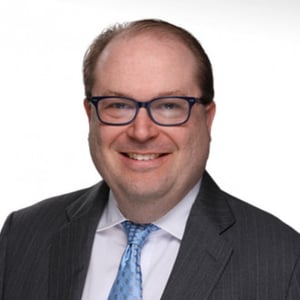
Partner, Horvitz & Levy LLP
Jeremy Rosen is nationally renowned for his proficiency in numerous issues arising under the First Amendment and California’s anti-SLAPP law. Using that knowledge, Jeremy has helped a wide variety of clients – including churches, private businesses, and individuals – defeat lawsuits that seek to impose liability on clients for exercising their rights of petition, free speech, and free exercise of religion. He has also handled hundreds of appeals in numerous appellate courts, including the Ninth Circuit Court of Appeals, the California Supreme Court, and California’s intermediate appellate courts. In addition to First Amendment and anti-SLAPP cases, his cases have involved numerous important issues regarding anti-trust, class actions, wage and hour law, employment law, breach of contract, California’s Unfair Competition Law, CEQA, the enforceability of arbitration clauses, hospital peer review, the scope of public employee whistleblower protection, and the application of the primary assumption of risk doctrine.
Jeremy is a partner at the firm, which he joined in 2001. He is a California State Bar Certified Appellate Specialist and a member of the California Academy of Appellate Lawyers.
Jeremy directed the Pepperdine University School of Law Ninth Circuit Appellate Advocacy Clinic for 6 years. The Clinic represents individuals in the Ninth Circuit who are identified by the court as needing pro bono counsel. Jeremy also previously served a three-year term where he was appointed by the Ninth Circuit to serve as one of 18 appellate lawyer representatives to the court.
Jeremy is a member of the National Chamber Litigation Center’s California Litigation Advisory Committee. Before joining the firm, Jeremy was a Litigation Associate with Munger, Tolles & Olson.
Partner, Morrison & Foerster LLP
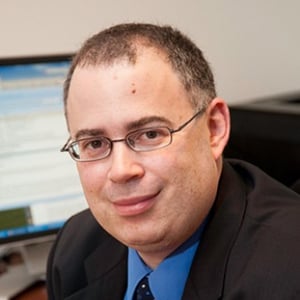
Vice Dean and Professor of Law, Villanova University School of Law
Professor Michael Risch joined the Villanova faculty in 2010 from the West Virginia University College of Law, where he directed the Entrepreneurship, Innovation and Law Program. Prior to joining the West Virginia faculty, he served as an Olin Fellow in Law at Stanford Law School. Professor Risch’s teaching and scholarship focus on intellectual property and internet law, with an emphasis on patents, trade secrets and information access. His articles have been published in the Stanford Law Review and Duke Law Journal, among others; online in the Yale Law Journal Online and PENNumbra; and less formally at the Madisonian, Prawfsblawg, and Patently-O blogs. Two of his articles have been cited by the United States Supreme Court. Professor Risch received his A.B. with honors and distinction in Public Policy and with distinction in Quantitative Economics from Stanford University, and his J.D. with high honors from the University of Chicago Law School. Prior to entering academia, he was a partner at intellectual property boutique Russo & Hale LLP in Palo Alto, California.
Professor of Law, DePaul University College of Law
Joshua D. Sarnoff is a professor of law at DePaul University and a faculty member in and former director of the Center for Intellectual Property Law & Information Technology (CIPLIT®). He teaches patent law, advanced patent law, administrative law, law and climate change, and other intellectual property law courses. He was previously a professor at the Washington College of Law, American University, in the Glushko-Samuelson Intellectual Property Law Clinic, and at the University of Arizona College of Law. In academic year 2014-2015, Professor Sarnoff was a Thomas A. Edison Distinguished Scholar at the United States Patent and Trademark Office. He is a registered patent attorney and a member of the bars of Washington D.C. and California, a former member of the board of governors of the Federal Circuit Bar Association, and a member of the boards of directors and advisory boards of various nonprofit organizations. He has written numerous articles and book chapters on patent law and climate change and has been involved in a wide range of intellectual property legal and policy disputes. He has submitted testimony on domestic patent law reform bills, has filed numerous amicus briefs in the United States Supreme Court and in the U.S. Court of Appeals for the Federal Circuit on important patent law issues, has been a pro bono mediator for the Federal Circuit, and has been a consultant to the United Nations Conference on Trade and Development on international intellectual property, trade and environmental issues. Professor Sarnoff was formerly in the private practice of intellectual property, environmental, and food and drug law in Washington, D.C. He received his BS from MIT and JD from Stanford.

Professor of Law, Antonin Scalia Law School, George Mason University
Adam Mossoff is Professor of Law at Antonin Scalia Law School, George Mason University. He has published extensively on why patents, copyrights, and other intellectual property rights have been—and should be—legally secured to innovators and creators as property rights. His scholarship has been relied on by the United States Supreme Court, by lower federal courts, and by U.S. federal agencies. He has been invited to testify numerous times before the U.S. Senate and the House of Representatives on intellectual property legislation. His writings on intellectual property policy have also appeared in the Wall Street Journal, New York Times, Forbes, Investors Business Daily, and in other media outlets. His journal articles can be downloaded here.
Professor Mossoff is a longstanding member of the Executive Committee of the Intellectual Property Practice Group of the Federalist Society, on which he served as Chairperson from 2016-2018, and he is Chair of the Intellectual Property Working Group of the Regulatory Transparency Project of the Federalist Society. He is a Senior Fellow and Chair of the Forum for Intellectual Property at the Hudson Institute, a Visiting Intellectual Property Fellow at the Heritage Foundation, and a member of the Board of Directors of the Center for Intellectual Property Understanding. He is a member of the Intellectual Property Rights Policy Committee of ANSI and he has served as Chair and Vice-Chair of the Intellectual Property Committee of the IEEE-USA, on which he remains a member in good standing.

Revisiting New York Times v. Sullivan
Floyd Abrams, Erik S. Jaffe, Glenn Reynolds
On April 21, 2021, the Federalist Society's Free Speech & Election Law Practice Group hosted...
California’s 17200 – Its Use and Abuse
Scott Leviant, Shaun P. Martin, Michael Orfield, Jeremy B. Rosen, William L. Stern, Adam Van Susteren
Prop 64, also known as California 17200, was adopted by initiative in 2004 and was...
Bilski v. Doll - Cert Granted SCOTUScast
Michael Risch, Joshua Sarnoff, Adam Mossoff
In the Bilski case, a patent application for a method of hedging risks in commodities...