
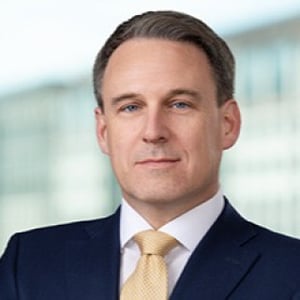
Chair, Global Antitrust Law Practice Group, Morrison Foerster
Alex Okuliar is Co-Chair of Morrison Foerster’s Global Antitrust Law Practice Group. He is the former Deputy Assistant Attorney General for Civil Antitrust Enforcement at the U.S. Department of Justice and a former advisor at the Federal Trade Commission.
Alex’s practice spans merger review, civil litigation, and criminal investigations. Over his twenty-five-year career, Alex has worked on nearly one thousand deals. He has deep experience guiding clients through the complex global merger clearance process and has litigated agency merger challenges through trial. He has also helped clients succeed in a wide range of federal and state cases, including class actions and private party disputes alleging price fixing, monopolization, group boycotts, market allocation, and tying. His understanding of the agency processes from the inside allows him to offer expert, timely, and practical advice to clients navigating merger and conduct investigations by the U.S. Department of Justice, the Federal Trade Commission, state Attorneys General, and foreign agencies. Alex’s work has been recognized by leading industry publications such as Chambers, The Legal 500 U.S., and Global Competition Review.
Outside of client work, Alex is a prolific thought leader and was recognized as a 2024 Top Author for Antitrust & Trade Regulation by JD Supra’s Readers’ Choice Awards. He currently serves as the co-chair of the ABA Antitrust Law Section’s Joint Conduct Committee and is the former chair of the Section’s Intellectual Property Committee and co-chair of the 2023 Antitrust Fall Forum on Artificial Intelligence. He is also a member of the Corporations, Securities & Antitrust Executive Committee of The Federalist Society for Law and Public Policy Studies.
Before law school, Alex co-founded and sold an online technology company. Alex received his B.S. in economics and B.A. with distinction in history from the Wharton School of the University of Pennsylvania and his J.D. from Vanderbilt University Law School.
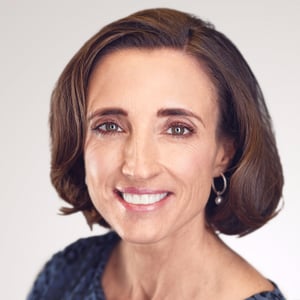
Senior Vice President, Strand Consult
Roslyn Layton, PhD is a leading international expert on technology policy. She is Senior Vice President of Strand Consult, an independent consultancy serving the global mobile telecom industry. She is also a Visiting Researcher at Aalborg University Copenhagen where she earned a doctoral thesis on network neutrality by measuring the outcome of the policy across 53 countries over 5 years. She served on the Presidential Transition Team for the Federal Communications Commission (FCC), and her work was critical to the FCC’s defense for the Restoring Internet Freedom Order. She has testified to the United States Senate and House on multiple topics including spectrum, broadband, mobile mergers, competition, and privacy. She founded the think tank China Tech Threat to study the problems of technology produced by the People’s Republic of China. She serves as the Program Chair for the Telecom Policy Research Conference, the leading interdisciplinary academic gathering. Her recent paper on rural broadband describes the empirical case for policy reform to recover network infrastructure costs from streaming video entertainment providers. She is a Senior Contributor to Forbes.
Senior Counsel, FCC
For the past four years, Mr. Degani has served as Commissioner Pai's Wireline Legal Advisor. He joined the office from a detail to the U.S. House of Representatives Committee on Energy and Commerce, where he served as counsel under Chairman Fred Upton and Communications and Technology Subcommittee Chairman Greg Walden. Before his detail, Mr. Degani served as an Attorney Advisor in the Wireline Competition Bureau's Telecommunications Access Policy Division and Competition Policy Division, as well as the Commission's Office of General Counsel. Mr. Degani entered the Commission through the Attorney Honors Program. Earlier in his career, Mr. Degani clerked for Judge Jeffrey Sutton of the United States Court of Appeals for the Sixth Circuit. He graduated cum laude from Harvard Law School and magna cum laude from Yale University, where he studied Electrical Engineering/Computer Science and History.
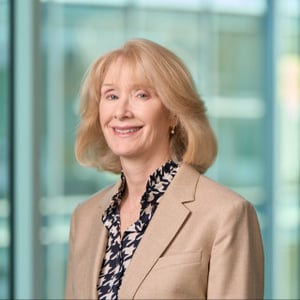
Partner, HWG LLP
Patricia Paoletta is a partner with the law firm of HWG LLP, where she specializes in telecommunications, trade and technology policy. Ms. Paoletta provides advice on regulatory, trade and legislative policy to clients before the FCC, Congress and the Administration. Her clients include providers of content, cloud, mobile broadband, VoIP, international telecommunications, small cells, cognitive radio, public safety and homeland security solutions. She serves on Advisory Boards for several entities engaged in information services, communications and technology.
Ms. Paoletta has accrued considerable experience with telecommunications trade and policy in the public sector. From 1990 to 1995, she was senior advisor to the International Bureau Chief and Office Director at the Federal Communications Commission. In the mid 1990s, Ms. Paoletta served as Director of Telecommunications Trade Policy in the Office of the U.S. Trade Representative, Executive Office of the President, where she worked on the WTO Information Technology Agreement (ITA) and the Basic Telecommunications Agreement. After USTR, Ms. Paoletta served as Majority Counsel to the House Energy and Commerce Committee. She then moved to Level 3 Communications, as Vice President, Government Relations.
Ms. Paoletta is on the Steering Committee of the Transatlantic Roundtable on Telecommunications and Information Technology of the European Institute. She is a member of the USTR Alumni Association, Washington International Trade Association, the Federal Communications Bar Association (FCBA), and Women in Technology. Ms. Paoletta has served on the Board of Advisors for the Inter-American Dialogue's Latin America Telecom Advisor, Co-Chairman of the American Bar Association International Communications Committee, and as a member of the U.S. Chamber of Commerce's Technology Policy Committee.
Ms. Paoletta served as a delegate in 2012 to the ITU-R's Study Group 6 Working Party 6A Meeting and in 2009 and 2010 to the ITU-R's Study Group I Working Party IB Meetings; the 2009 meetings of CITEL (the Committee on International Telecommunications at the Organization of American States) PCC-II; the International Telecommunication Union (ITU) World Telecommunications Standards Assembly (2000); the ITU Internet Protocol Telephony Experts Group and the ITU World Telecommunications Policy Forum in 2001; as Chairman of the National Reliability and Interoperability Council (NRIC) Steering Committee (2000-2001); as Board Member for the Voice on the Net Coalition (2001); as Co-Chairman of the FCBA's Annual Seminar Committee (2009-2011); as a member of the FCBA's Ad Hoc Speakers Committee (2006-2007); as Co-Chairman for the FCBA International Practice Committee (2001-2002 and 2005-2006); and as a Co-Chairman of the FCBA Legislative Practice Committee (1999-2000).

Managing Partner, Wilkinson Barker Knauer LLP
Bryan Tramont, the firm’s managing partner, offers strategic counsel to Fortune 100 companies and trade associations, as well as small and mid-sized telecommunications and media companies, on all aspects of communications law and regulation. He is regularly called on to advise companies as they develop and evaluate new business opportunities in the technology, media, and telecommunications sectors. Mr. Tramont also designs and leads the execution of the firm’s strategic plan and directs client management and development. Mr. Tramont has been recognized by leading publications like Legal 500, Chambers USA, and Washingtonian as one of the nation’s top communications lawyers. In 2017, he was named to the inaugural Legal 500 Hall of Fame List, which highlights individuals who have received constant praise by their clients and who have been recognized by the Legal 500 as an elite leading lawyer for six consecutive years. He has been awarded The Best Lawyers in America © 2017 “Lawyer of the Year” for Media Law and “Lawyer of the Year" in Communications Law in 2016. In 2016, he was also named one of the Top 10 Washington, DC Super Lawyers.
Mr. Tramont serves on the Commerce Spectrum Management Advisory Committee (CSMAC), advising the Assistant Secretary of Commerce for Communications and Information at NTIA. Appointed under the Bush and Obama Administrations, he also served as the committee’s Co-Chairman from 2008-2010. In addition, Mr. Tramont is active in the Federal Communications Bar Association, where he served in a variety of leadership roles, including as President from 2010-11 and has been awarded the organization’s Distinguished Service Award. Mr. Tramont chairs the Federalist Society’s Telecommunications Practice Group Executive Committee, serves on the International Institute of Communications Canada Board of Directors, and previously served on the Governing Committee of the ABA Forum on Communications Law. Mr. Tramont currently is an adjunct law professor at The Catholic University of America as part of the Communications Law Institute, is a senior adjunct fellow at the University of Colorado, Boulder, has served as the Syracuse University Law School’s Practitioner in Residence, and is on the Board of Trustees at William Woods University. Mr. Tramont is the author of numerous articles on communications policy and is a frequent speaker and lecturer at academic and industry events. Prior to joining Wilkinson Barker Knauer, Mr. Tramont served as Chief of Staff of the Federal Communications Commission under Chairman Michael Powell. As Chief of Staff, Mr. Tramont managed all aspects of the agency’s operations and directed FCC staff in implementing all components of the agency’s policy portfolio including media, broadband, mobility, and traditional telephone services. Before being elevated to Chief of Staff, Mr. Tramont was Chairman Powell’s Senior Legal Advisor, advising him on strategic policy matters and on wireless, international, technology, satellite, and consumer issues. Mr. Tramont also served as Senior Legal Advisor to Commissioner Kathleen Abernathy and, before that, to Commissioner Harold Furchtgott-Roth. He also served as a law clerk for the Honorable Duane Benton on the Supreme Court for his home state of Missouri. In addition, Mr. Tramont has served as an expert witness in a number of communications-related litigation matters.
Bryan Tramont graduated summa cum laude from The George Washington University with a degree in political science. He earned his law degree from Yale Law School, where he served as editor of the Yale Law & Policy Review.
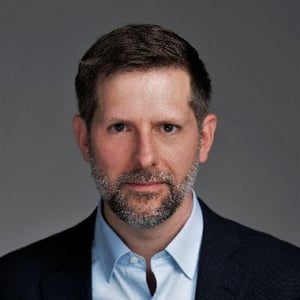
Head of AI Policy, Abundance Institute
Neil Chilson is the Head of AI Policy at the Abundance Institute. Prior to this position, he served as a Senior Research Fellow at the Center for Growth and Opportunity. Chilson is a lawyer, computer scientist, and author of the book “Getting Out of Control: Emergent Leadership in a Complex World.”
Chilson was previously the senior research fellow for Technology and Innovation at Stand Together, where he guided efforts to understand and promote the legal and cultural paradigms that best enable people to discover, innovate, and improve all our lives.
Before Stand Together, Chilson was the Chief Technologist at the Federal Trade Commission, where he focused on the economics of privacy and blockchain-related issues. Previously, he was an attorney advisor to Acting FTC Chairman Maureen K. Ohlhausen. In both roles he advised Chairman Ohlhausen and worked with staff on nearly every major technology-related case, report, workshop, or other FTC proceeding since January 2014. Neil joined the FTC from telecom firm Wilkinson Barker Knauer. Neil is frequently quoted by the press and his work has appeared in numerous news outlets, including The Wall Street Journal, The Washington Post, USAToday, and Newsweek. Neil has a J.D. from The George Washington Law School, a M.S. in computer science from University of Illinois, Urbana-Champaign, and a B.S. in computer science from Harding University.
Policy Fellow, Public Knowledge
Dallas is a Policy Fellow at Public Knowledge, where she focuses on Lifeline modernization and technology transition issues.
Prior to joining Public Knowledge, Dallas was a law clerk for the firm Utrecht, Kleinfeld, Fiori, Partners. Throughout her 3 years in Washington, DC, she has interned with Public Citizen’s Congress Watch, DC City Council Member Mary Cheh, and was a summer law clerk at the Federal Trade Commission’s Bureau of Consumer Protection. In her last year of law school, she spent a semester as a Policy Extern at Facebook.
Dallas received her J.D. from The George Washington University Law School. She was born and raised in Las Vegas, Nevada and is an avid tennis player.
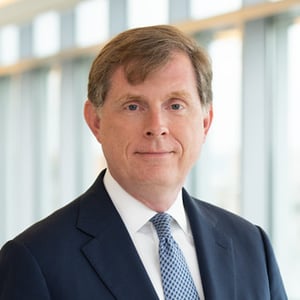
Partner, Arnold & Porter
John Elwood is the head of Arnold & Porter’s Appellate and Supreme Court practice. He has argued before the Supreme Court nine times, and appeared before most of the federal courts of appeals. He has successfully argued cases across a broad cross-section of subjects, with particular experience in environmental law, the False Claims Act, government contracting, and federal criminal law
Mr. Elwood’s work has earned him recognition as one of Washington’s top Supreme Court lawyers (Washingtonian, 2013), as one of “a small group of lawyers” with an “outsized influence at the U.S. Supreme Court” (Reuters, 2014), and as one of the country’s most innovative lawyers (Financial Times, 2014). Chambers USA reports that “[t]he much-admired John Elwood is praised for his advocacy skills” (2013), and describes Mr. Elwood as “phenomenal” (2014), “incredibly talented” (2012), and “a much-loved and widely respected lawyer who is quick on his feet” (2010).
Before joining the firm, Mr. Elwood served in senior-level positions in the U.S. Department of Justice. Beginning as an Assistant to the Solicitor General, and continuing with the firm, he has briefed more than 20 merits cases before the Supreme Court of the United States, and has briefed approximately 135 cases at the certiorari stage. As the senior Deputy in the Office of Legal Counsel, he advised the White House and federal agencies on a range of constitutional, statutory, and regulatory issues.

Laurence H. Silberman Chair in Constitutional Governance, American Enterprise Institute; Executive Director, Antonin Scalia Law School’s C. Boyden Gray Center for the Study of the Administrative State
Adam J. White is the Laurence H. Silberman Chair in Constitutional Governance and senior fellow at the American Enterprise Institute, where he focuses on the Supreme Court and the administrative state. He also directs the Antonin Scalia Law School’s C. Boyden Gray Center for the Study of the Administrative State.
He writes on regulation and constitutional government for a variety of publications. He practiced law in Washington, D.C., after clerking for the D.C. Circuit's Judge David Sentelle. He also has been chairman of the ABA's Administrative Law Section.
In 2021, he served on the Presidential Commission on the Supreme Court of the United States, where he criticized “Court packing” and other efforts to restructure the Supreme Court.
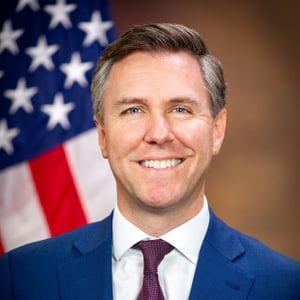
Assistant Attorney General, Civil Division, United States Department of Justice
Brett A. Shumate was sworn in as the Civil Division’s 36th Assistant Attorney General on June 11, 2025. He previously served in the Civil Division from 2017 to 2019 as the Deputy Assistant Attorney General for the Federal Programs Branch. Prior to rejoining the Department, Mr. Shumate was a partner at Jones Day in Washington, D.C.
Mr. Shumate clerked for Judge Edith H. Jones on the United States Court of Appeals for the Fifth Circuit. He graduated from Wake Forest University School of Law and Furman University.
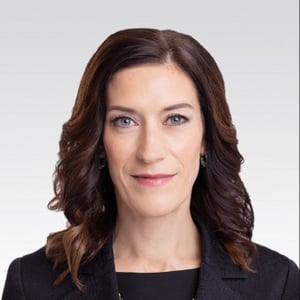
Executive Vice President of Global Governance, Chief Legal Officer and Corporate Secretary, Walmart Inc.
Rachel Brand is Walmart’s executive vice president of global governance, chief legal officer, and corporate secretary. She oversees the company’s global legal, compliance, ethics, corporate governance, digital citizenship, aviation, investigative, and corporate security functions, including Walmart’s Emergency Operations Center.
Immediately before joining Walmart, Rachel served as the United States Associate Attorney General and holds the distinction of being the first woman to serve in this role. She had previously served in the U.S. Department of Justice as the Assistant Attorney General for the Office of Legal Policy during President George W. Bush’s administration. Her other government service includes an appointment by President Obama to serve as a Member of the U.S. Privacy and Civil Liberties Oversight Board, service as an Associate Counsel to the President at the White House, and judicial clerkships with Justice Charles Fried of the Supreme Judicial Court of Massachusetts and Justice Anthony Kennedy at the Supreme Court of the United States. In the private sector, Rachel was a lawyer in private practice at two law firms in Washington, D.C. and served as the Vice President and Chief Counsel for Regulatory Litigation at the U.S. Chamber of Commerce Litigation Center.
Rachel serves on the board of directors for the Walmart Foundation and is the executive sponsor for Walmart’s Tribal Voices Associate Resource Group. Outside of Walmart, she serves on the board of directors for the International Justice Mission and is a member of The American Law Institute.
Rachel earned her Bachelor of Arts degree from the University of Minnesota-Morris and her J.D. from Harvard Law School.

Milton R. Underwood Chair in Free Enterprise, Vanderbilt University Law School
Brian Fitzpatrick is the Milton R. Underwood Chair in Free Enterprise and Professor of Law at Vanderbilt Law School, where his research focuses on class action litigation, federal courts, judicial selection, and constitutional law. He is best known for his empirical studies of class action settlements as well as his book The Conservative Case for Class Actions (University of Chicago Press, 2019). Professor Fitzpatrick joined Vanderbilt's law faculty in 2007 after serving as the John M. Olin Fellow at New York University School of Law. He graduated first in his class from Harvard Law School and went on to clerk for Judge Diarmuid O'Scannlain on the U.S. Court of Appeals for the Ninth Circuit and Justice Antonin Scalia on the U.S. Supreme Court. After his clerkships, Professor Fitzpatrick practiced commercial and appellate litigation for several years at Sidley Austin in Washington, D.C., and served as Special Counsel for Supreme Court Nominations to U.S. Senator John Cornyn. Before earning his law degree, Fitzpatrick graduated summa cum laude with a bachelor's of science in chemical engineering from the University of Notre Dame. He has received the Hall-Hartman Outstanding Professor Award, which recognizes excellence in classroom teaching, for his Civil Procedure and Federal Courts courses.

Professor of Law, Georgetown University Law Center
Professor Galle arrives at the Law Center from Boston College Law School. Before that, he was on the faculty at Florida State University College of Law. His research and teaching interests include taxation, nonprofit organizations, behavioral law and economics, federalism, and public finance economics. He was a visiting professor at the Law Center in the 2008-2009 academic year and has been a visitor at George Washington University Law School and a visiting fellow at the Urban/Brookings Tax Policy Center. He practiced for three years as an attorney in the Criminal Appeals and Tax Enforcement Policy Section of the Tax Division, U.S. Department of Justice. He also clerked for Judge Robert A. Katzmann of the U.S. Court of Appeals for the 2nd Circuit and Judge Stephen M. Orlofsky of the U.S. District Court for the District of New Jersey. A graduate of Harvard College, he received a J.D. from Columbia and an LL.M. from Georgetown.

Professor of Law, Antonin Scalia Law School, George Mason University
Professor of Law Michael S. Greve joined the faculty of the Antonin Scalia Law School, George Mason University in fall 2012 after having served as John G. Searle Scholar at the American Enterprise Institute (AEI), where he specialized in constitutional law, courts, and business regulation and served as chairman of the Competitive Enterprise Institute. Prior to joining AEI, Greve was founder and co-director of the Center for Individual Rights, a public interest law firm specializing in constitutional litigation.
Greve has served previously as an adjunct professor at a number of universities, including Cornell and Johns Hopkins Universities, and has been a visiting professor at Boston College since 2004. He was awarded a PhD and an MA in government by Cornell University. Greve also earned a Diploma from the University of Hamburg in Germany.
A prolific writer, Greve is the author of nine books and a multitude of articles appearing in scholarly publications, as well as numerous editorials, short articles, and book reviews. He is a frequent speaker for professional and scholarly organizations and has made many appearances on radio and television.
In addition Greve has provided congressional and state legislative testimony, has lobbied and consulted in federal agency proceedings, and has provided litigation services and management in over 30 cases, including matters before the U.S. Supreme Court.
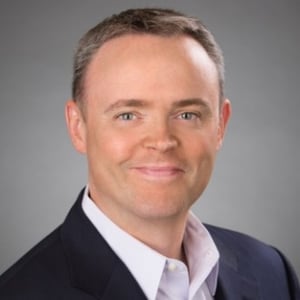
Senior Fellow, R Street Institute
Prior to R Street, Adam spent 12 years as a senior fellow at the Mercatus Center at George Mason University. Before the Mercatus Center, he served as the president of the Progress and Freedom Foundation. Adam has also worked for the Adam Smith Institute, the Heritage Foundation and the Cato Institute.
Adam has published 10 books on a wide range of topics, including online child safety, internet governance, intellectual property, telecommunications policy, media regulation and federalism.
In 2008, Adam received the Family Online Safety Institute’s “Award for Outstanding Achievement.”
Adjunct Professor, George Washington University
Howard W. Cox is a former federal prosecutor, criminal investigator and Senior Intelligence Service officer. After almost 40 years of federal service, he retired as the Assistant Inspector General for Investigations of the Central Intelligence Agency. In this capacity, Mr. Cox supervised criminal, civil and administrative investigations conducted by the Office of Inspector General (OIG). Prior to his employment with the CIA, Mr. Cox was the Assistant Deputy Chief of the Computer Crime and Intellectual Property Section of the Department of Justice, where he was responsible for supervising criminal prosecutions of federal hacking and identity theft cases. While at the Department of Justice, Mr. Cox received the Attorney General’s Distinguished Service Award.
Prior to his service with the Department of Justice, Mr. Cox served as a manager, attorney and criminal investigator at OIG offices at the US Postal Service, the Department of Defense, and the General Services Administration. He also served as Staff Counsel for the US Senate Permanent Subcommittee on Investigations. Prior to his federal civilian service, Mr. Cox was also a Captain and trial attorney in the US Army’s Judge Advocate General’s Corps. Mr. Cox also served as Law Secretary to the Hon. Sherwin D. Lester, NJ Superior Court.
Mr. Cox is an adjunct professor at George Washington University, where he teaches graduate level courses in computer forensics. He is also an instructor with the Graduate School USA, and the Federal Law Enforcement Training Center, where he teaches courses related to procurement fraud and electronic search and seizure. Mr. Cox received his AB degree from Seton Hall University, South Orange, NJ. He received his law degree from Georgetown University Law Center, Washington, DC.
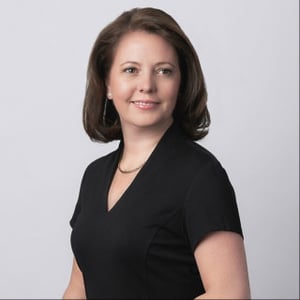
Partner, Wiley Rein, LLP
Megan L. Brown is a partner at Wiley Rein LLP. She has significant litigation, appellate and regulatory experience before state and federal courts and agencies.
Ms. Brown helps businesses respond to federal, state and local regulation and investigations raising administrative law, statutory interpretation, and constitutional issues, including the First Amendment.
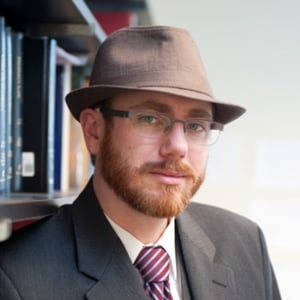
Professor of Law and Associate Dean, Boston College Law School; Nonresident Senior Fellow, American Enterprise Institute, Boston College Law School
Professor Lyons is a Professor and Associate Dean at Boston College Law School. He specializes in telecommunications and tech policy, energy, and administrative law. Before joining the faculty, he practiced at the firm of Munger, Tolles and Olson in Los Angeles. He also clerked for the Judge Cynthia Holcomb Hall of the Ninth Circuit Court of Appeals.
Professor Lyons is also a Nonresident Senior Fellow at the American Enterprise Institute, where he has written over 250 blog posts on tech policy issues, including net neutrality, telecommunications regulation, First Amendment issues with tech regulation, and generative AI.
Vice President, Public Knowledge
Michael Weinberg is a Vice President at Public Knowledge. He oversees PK Thinks, Public Knowledge's place to explore long term trends and anticipate policy challenges. He also focuses on the policy implications of emerging technologies such as 3D printing and open source hardware.
Mr. Weinberg is the author of a number of whitepapers including “It Will Be Awesome if They Don't Screw it Up: 3D Printing, Intellectual Property, and the Fight Over the Next Great Disruptive Technology” and “What's the Deal with Copyright and 3D Printing?” He regularly discusses the policy implications of emerging technologies in the press and at speaking events.
Mr. Weinberg received his J.D. from The George Washington University Law School and his B.A. from Claremont McKenna College. Mr. Weinberg was born and raised in and around Washington, D.C. and looks forward to having his heart broken by the Washington football team both on and off the field every fall.
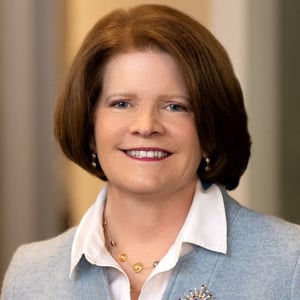
Partner, Antitrust and Competition, Wilson Sonsini Goodrich & Rosati
Maureen Ohlhausen is a partner in the Washington, D.C., office of Wilson Sonsini Goodrich & Rosati, where she advises industry-leading clients on complex antitrust and litigation matters, with a focus on high-profile cases. Sought after for her depth of experience on antitrust and Federal Trade Commission (FTC)-related issues, Maureen is known for her relationships with officials in the U.S. and abroad.
After finishing law school and clerking at the U.S. Court of Appeals for the D.C. Circuit, Maureen joined the FTC in 1997. She held a series of roles at the agency over the next 12 years, rising to the position of Director of the FTC Office of Policy Planning, where she led the agency’s work on e-commerce and headed the FTC’s Internet Access Task Force, which produced an influential report analyzing competition and consumer protection legal issues in the broadband and internet sectors. She then went into private practice at a leading telecommunications law firm, where she headed the FTC practice group.
In 2012, Maureen was confirmed by the Senate as a Commissioner of the FTC and was appointed Acting Chairman in January 2017, a role she held until May 2018. As Acting Chairman, Maureen directed all aspects of the agency’s antitrust work, including merger review, conduct enforcement, and all consumer protection enforcement, with an emphasis on privacy and technology issues. Under her leadership, the FTC won several influential merger challenges in court and reached a number of key digital privacy settlements.
To date, Maureen is the only FTC Commissioner to have received the Robert Pitofsky Lifetime Achievement Award in recognition of her contributions to the FTC.
Following the end of her term at the FTC, and immediately prior to joining Wilson Sonsini, Maureen was chair of the global antitrust and competition practice at Baker Botts, based in that firm’s Washington, D.C., office.
A recognized thought leader, Maureen is a frequent author and speaker, and is often quoted by leading print and broadcast media on antitrust, FTC, and privacy and data security matters. She has published dozens of articles on antitrust, privacy, intellectual property, regulation, FTC litigation, telecommunications, and international law issues in prestigious publications. During her tenure at the FTC and in private practice, she testified more than two dozen times before Congress, including before the Senate Commerce Committee and the House Energy and Commerce Antitrust Sub-Committee. She also testified before the Antitrust Modernization Commission.

President, The Free State Foundation
Randolph J. May is Founder and President of The Free State Foundation. The Free State Foundation is an independent, non-profit free market-oriented think tank founded in 2006.
From October 1999-May 2006, May was a Senior Fellow and Director of Communications Policy Studies at The Progress & Freedom Foundation, a Washington, DC-based think tank. Prior to joining PFF, he practiced communications, administrative, and regulatory law as a partner at major national law firms. From 1978 to 1981, May served as Assistant General Counsel and Associate General Counsel at the Federal Communication Commission.
May has held numerous leadership positions in bar associations. He is a past Chair of the American Bar Association’s Section of Administrative Law and Regulatory Practice. He is a Fellow of the National Academy of Public Administration. Mr. May also has served as a Public Member of the Administrative Conference of the United States and currently is a Senior Fellow at ACUS.
Mr. May has published more than two hundred articles and essays on communications, administrative and constitutional law topics. He is author of A Call for a Radical New Communications Policy: Proposals for Free Market Reform, and co-author of #CommActUpdate: A Communications Law Fit for the Digital Age and The Constitutional Foundations of Intellectual Property. Mr. May is editor of two books, Communications Law and Policy in the Digital Age: The Next Five Years and New Directions in Communications Policy. In addition, he is the co-editor of two other books, Net Neutrality or Net Neutering: Should Broadband Internet Services Be Regulated? and Communications Deregulation and FCC Reform. In the past, Mr. May has written regular columns on legal and regulatory affairs for Legal Times and the National Law Journal, leading national legal periodicals.
He received his A.B. from Duke University and his J.D. from Duke Law School, where he serves as a member of the Board of Visitors.
Head of AI Policy, Abundance Institute
Neil Chilson is the Head of AI Policy at the Abundance Institute. Prior to this position, he served as a Senior Research Fellow at the Center for Growth and Opportunity. Chilson is a lawyer, computer scientist, and author of the book “Getting Out of Control: Emergent Leadership in a Complex World.”
Chilson was previously the senior research fellow for Technology and Innovation at Stand Together, where he guided efforts to understand and promote the legal and cultural paradigms that best enable people to discover, innovate, and improve all our lives.
Before Stand Together, Chilson was the Chief Technologist at the Federal Trade Commission, where he focused on the economics of privacy and blockchain-related issues. Previously, he was an attorney advisor to Acting FTC Chairman Maureen K. Ohlhausen. In both roles he advised Chairman Ohlhausen and worked with staff on nearly every major technology-related case, report, workshop, or other FTC proceeding since January 2014. Neil joined the FTC from telecom firm Wilkinson Barker Knauer. Neil is frequently quoted by the press and his work has appeared in numerous news outlets, including The Wall Street Journal, The Washington Post, USAToday, and Newsweek. Neil has a J.D. from The George Washington Law School, a M.S. in computer science from University of Illinois, Urbana-Champaign, and a B.S. in computer science from Harding University.
Policy Fellow, Public Knowledge
Dallas is a Policy Fellow at Public Knowledge, where she focuses on Lifeline modernization and technology transition issues.
Prior to joining Public Knowledge, Dallas was a law clerk for the firm Utrecht, Kleinfeld, Fiori, Partners. Throughout her 3 years in Washington, DC, she has interned with Public Citizen’s Congress Watch, DC City Council Member Mary Cheh, and was a summer law clerk at the Federal Trade Commission’s Bureau of Consumer Protection. In her last year of law school, she spent a semester as a Policy Extern at Facebook.
Dallas received her J.D. from The George Washington University Law School. She was born and raised in Las Vegas, Nevada and is an avid tennis player.

The Layered Model of Adjudication and Enforcement of Net Neutrality with the FTC, DOJ, and State AGs
Alexander P. Okuliar, Roslyn Layton
A number of regulatory advocates assert that Title II of the Communications Act, enforced by...
Telecommunications Law in the New Administration - Podcast
Nicholas Degani, Patricia J. Paoletta, Bryan N. Tramont
In late March, Congress used the Congressional Review Act to reverse the FCC’s controversial Broadband...
Broadband Privacy: FCC vs. FTC - Podcast
Neil Chilson, Dallas Harris
On October 27th, 2016, on a 3-2 party line vote, the Federal Communications Commission adopted...
Courthouse Steps: NLRB v. SW General, Inc - Podcast
John P. Elwood
On November 7, the Supreme Court heard oral argument in National Labor Relations Board v....
Broadband Privacy: FCC vs. FTC
TeleforumNet Neutrality Survives D.C. Circuit Challenge: U.S. Telecom Association v. FCC - Podcast
Adam White, Brett Shumate
On Wednesday, June 14, the D.C. Circuit Court of Appeals upheld the Federal Communications Commission’s...
Regulatory Theory: Preemptive Rule-making vs. Common Law Redress
Rachel L. Brand, Brian T. Fitzpatrick, Brian Galle, Michael S. Greve, Adam Thierer
What regulatory approach best fosters commercial innovation? Traditionally, it had been thought that ex post,...
StingRay Technology and Reasonable Expectations of Privacy in the Internet of Everything
Howard W. Cox
Note from the Editor: This article discusses cell site simulators, also known as StingRays, and...
T-Mobile v. City of Roswell - Post-Decision SCOTUScast
Megan L. Brown
On January 14, 2015, the Supreme Court issued its decision in T-Mobile South, LLC v....
Net Neutrality: The Power to Act - Podcast
Daniel Lyons, Michael Weinberg, Maureen K. Ohlhausen, Randolph May
After suffering two judicial setbacks already, most recently in the D.C. Circuit’s Verizon v. FCC...