

Professor Emeritus, Paul M. Hebert Law Center, Louisiana State University
In memoriam
Dr. John Baker is Professor Emeritus of Law, and previously the Dale E. Bennett Professor of Law, at Louisiana State University Law School. He is currently Visiting Professor at Peking University School of Transnational Law (via Zoom) and has been Visiting Professor at The Center for the Constitution, Georgetown Law School (2013-2020). He has also been a Visiting Fellow at Oriel College, the University of Oxford (2012-2014) and taught at Blackfriars Hall, Oxford in 2014. Dr. Baker has also been an adjunct Fellow at the Heritage Foundation (Spring, 2008) and a Distinguished Scholar at the Catholic University of America Law School (2011-12). He has taught at Tulane Law School, George Mason Law School, Pepperdine Law School, New York Law School, Hong Kong University, and the University of Dallas, School of Management and also taught and/or lectured in 17 foreign countries. Notable among his foreign visits are the
following: Visiting Professor at the University of Lyon III (France) (1999-2011); Visiting Professor at the Universidad de los Andes, Chile (2012), as a Fulbright Specialist (2006); and a Fulbright Scholar at various universities in the Philippines. Dr. Baker received his J.D., with honors, from the University of Michigan Law School and his B.A., magna cum laude, from the University of Dallas. He also earned a Ph.D. in Political Thought from the University of London. Baker has taught over a dozen different subjects, mostly courses in public law. His main areas of interest are Constitutional Law (particularly federalism and separation of powers), Criminal Law, Anti-Terrorism Law, International Law, Health Care Law, Mediation, and Comparative Law.
In addition to law review articles and book chapters, Dr. Baker’s academic publications include Hall's Criminal Law: Cases and Materials (with Benson, Force and George; 5th ed. Michie, 1993); An Introduction to the Law of the United States (ed. with Levasseur; University Press of America, 1992). He has also published on Forbes.com, FoxNews.com, in The Washington Times, and a number of times in The Wall Street Journal. He argues in federal court, including two oral arguments in the U.S. Supreme Court. For many years, he co-taught courses for the Federalist Society on separation of powers with the late Supreme Court Justice Antonin Scalia. In September 2016, he co-taught a Supreme Court seminar in China with Justice Samuel Alito. Following law school, he served as a law clerk in federal district court and as an assistant district attorney in New Orleans before joining LSU in 1975. While a professor, he has been as a consultant to USAID, USIA (since rolled into the State Department), the Justice Department, the U.S. Senate Judiciary Subcommittee on Separation of Powers, and the Office of Planning in the White House. He served on an ABA Task Force which issued the report, The Federalization of Crime (1998) and later as a consultant to the “Bi-Partisan Task Force on the Over- federalization of Crime” (2012-2014) created by the U.S. House Judiciary Subcommittee on Crime. Dr. Baker was a co-founder of the first iteration (1995) of Stratfor Inc., a global intelligence agency. He co-authored its first book: The Intelligence Edge (with Friedman, Friedman and Chapman; Crown Books/Random House 1997). In 2022, he began a short, weekly video podcast available on YouTube and Rumble, The Baker Brief.
Charles L. B. Lowndes Professor of Law, Duke Law School
Partner, Sidley Austin LLP
BRADFORD A. BERENSON is a litigator in the Washington, D.C., office whose practice focuses on the defense of white collar criminal cases, investigations by government agencies and congressional committees, and other civil or constitutional matters that present unusual legal, public relations, or political risks. He has defended criminal cases at every stage of development, from internal investigations and grand jury proceedings through trials, sentencings, and appeals. Mr. Berenson’s practice has included criminal matters in the fraud, environmental, health care, pharmaceutical, and public corruption areas. In addition, Mr. Berenson served as a consultant to Independent Counsel David M. Barrett in the prosecution of former HUD Secretary Henry Cisneros. He has also handled a variety of civil and appellate cases in federal court.
From January 2001 through January 2003, Mr. Berenson served as Associate Counsel to the President of the United States. In the White House, he worked on a wide variety of legal, legislative and policy issues associated with the Bush Administration’s relations with Congress, its justice and domestic policy initiatives, and the war on terrorism. These included judicial selection, responses to congressional oversight and investigations, the USA Patriot Act, the Military Order authorizing the use of military commissions, detainee and anti-terrorism litigation, presidential action against terrorist financing, and the creation of the new Department of Homeland Security.
Mr. Berenson has also provided commentary on legal matters in the mainstream media, publishing articles in the Wall Street Journal, Los Angeles Times and Washington Times and making appearances on news and public affairs programming on ABC, NBC, CBS, PBS, NPR, CNN and Fox News Channel. He was a consultant to ABC News in connection with the departures of Chief Justice Rehnquist and Justice O’Connor from the Supreme Court and the nominations of Chief Justice Roberts, Harriet Miers and Justice Alito.
Mr. Berenson holds a B.A., summa cum laude, from Yale University, and a J.D., magna cum laude, from Harvard Law School, where he was Supreme Court editor of the Harvard Law Review. Following graduation, he clerked for Judge Laurence H. Silberman of the U.S. Court of Appeals for the District of Columbia Circuit and Justice Anthony M. Kennedy of the United States Supreme Court.
Chief Counsel for Criminal Justice, Committee on the Judiciary, U.S. Senate
Noah Bookbinder serves as chief counsel for criminal justice to Senator Patrick Leahy on the Senate Judiciary Committee. In this position, he advises Senator Leahy on legislative issues including public corruption, criminal justice, detainee treatment and procedure, corrections, and juvenile justice. He also assists Senator Leahy in conducting oversight of the Department of Justice and evaluating judicial and executive nominations. He previously worked as a trial attorney for the Department of Justice's Public Integrity Section, where he investigated and prosecuted a wide variety of federal public corruption cases, ranging from bribery and contracting fraud to international immigration fraud schemes. He received a B.A. from Yale University and a J.D. from Stanford University and clerked for U.S. District Judge Douglas Woodlock in Boston, Massachusetts.

Vice President, Edwin Meese III Institute for the Rule of Law, Advancing American Freedom
John G. Malcolm oversees Advancing American Freedom’s work to increase understanding of the Constitution and the rule of law as Vice President of the organization’s Edwin Meese III Institute for the Rule of Law. Malcolm brings to the challenge a wealth of legal expertise and experience in both the public and private sectors.
Prior to joining Advancing American Freedom in 2025, Malcolm was the Vice President of the Institute for Constitutional Government and the Director of the Meese Center for Legal and Judicial Studies at the Heritage Foundation. Prior to joining Heritage in 2012, Malcolm was general counsel at the U.S. Commission on International Religious Freedom, as well as a distinguished practitioner in residence at Pepperdine Law School. From 2004 to 2009, Malcolm was executive vice president and director of worldwide anti-piracy operations for the Motion Picture Association.
Malcolm served as a deputy assistant attorney general in the Department of Justice’s Criminal Division from 2001 to 2004, where he oversaw sections on computer crime and intellectual property, domestic security, child exploitation and obscenity, and special investigations. Immediately prior to that, he was a founding partner in the Atlanta law firm of Malcolm & Schroeder, LLP.
From 1990 to 1997, Malcolm was an assistant U.S. attorney in Atlanta, assigned to the fraud and public corruption section, and also an associate independent counsel, investigating fraud and abuse in the Department of Housing and Urban Development. He was honored with the Director’s Award for Superior Performance for his work in connection with the successful prosecution of Walter Leroy Moody Jr., who assassinated an 11th Circuit judge and the head of the Savannah chapter of the NAACP.
A graduate of Harvard Law School and Columbia College, Malcolm began his career as a law clerk to a federal district court judge and a federal appellate court judge, and as an associate at the Atlanta-based law firm of Sutherland, Asbill & Brennan (new Eversheds Sutherland).
Malcolm, who resides in Washington, D.C., serves on the Board of Trustees of the Washington National Opera and is a Senate-confirmed member of the Board of Directors of the Legal Services Corporation, the largest funder of civil legal aid in the United States.

Ronald Reagan Distinguished Fellow Emeritus, The Heritage Foundation
Edwin Meese III, the prominent conservative leader, thinker and elder statesman, continues a quarter-century formal association with The Heritage Foundation as the leading think tank’s Ronald Reagan Distinguished Fellow Emeritus.
In that capacity, Meese oversees special projects and acts as an ambassador for Heritage within the conservative movement.
Meese was chairman of Heritage’s Center for Legal and Judicial Studies from its founding in 2001 until what he calls his “semi-retirement” on Feb. 1, 2013.
He joined Heritage in 1988 as the think tank's first Ronald Reagan Distinguished Fellow -- the only policy chair in the country to be officially named for the 40th president. His work focused on keeping President Reagan’s legacy of conservative principles alive in public debate and discourse.
The legal center now bears his name, in recognition of Meese’s contributions to the rule of law and the nation’s understanding of constitutional law. Its mission is to educate government officials, the media and the public about the Constitution and legal principles -- and how they affect public policy.
Perhaps best known as U.S. attorney general during Reagan’s second term, Meese’s service to the conservative icon stretched from the California governor’s mansion in 1966 to the White House in 1981 before he went to the Department of Justice four years later.
His Heritage “hats” kept Meese among the major conservative voices in national policy debates at an age when most men and women enjoyed quiet retirements.
In 2006, for example, Meese was named to the Iraq Study Group, a special presidential commission dedicated to examining the best resolutions for America's involvement in Iraq. In the past few years he wrote and spoke about constitutional topics ranging from religious liberty to the responsibility of Supreme Court justices.
Immediately after Reagan's death in 2004, and in the years since, Meese often agreed to major media appearances to discuss the lasting impact of his old friend, mentor and boss. He has summarized the Reagan legacy in three accomplishments: Reagan cut taxes and kept them low. He worked to defeat and end the Soviet Union and its worldwide push for communism. And he restored America's faith in itself after years of failure and "malaise."
"I admired him as a leader and cherish his friendship," Meese wrote in a 2004 essay for Heritage members and supporters. "Ronald Reagan had strong convictions. He was committed to the principles that had led to the founding of our nation. And he had the courage to follow his convictions against all odds." <[>Edwin Meese III was born Dec. 2, 1931, to Edwin Jr. and Leone Meese in Oakland, Calif. He graduated from Yale University in 1953 and holds a law degree from the University of California-Berkeley.
Meese spent much of his adult life working for Reagan, first after the former actor, sports announcer and athlete was elected as California’s governor in 1966 and then when he sought and won the presidency in 1980.
Reagan never forgot Meese's loyalty and hard work. During a press conference at which reporters questioned Meese's actions at the Justice Department, Reagan replied: "If Ed Meese is not a good man, there are no good men."
During the Reagan governorship, Meese served as executive assistant and chief of staff from 1969 through 1974 and as legal affairs secretary from 1967 through 1968. He previously was deputy district attorney in Alameda County, Calif.
From January 1981 to February 1985, Meese held the position of counsellor to the president -- the senior job on the White House staff -- and functioned as Reagan's chief policy adviser. In 1985, he received Government Executive magazine's annual award for excellence in management.
Meese served as the 75th attorney general of the United States from February 1985 to August 1988. As the nation's chief law enforcement officer, he directed the Justice Department and led international efforts to combat terrorism, drug trafficking and organized crime.
Meese’s relationship with Heritage began when he met with senior management to discuss the think tank's landmark policy guide, Mandate for Leadership, prepared for the incoming administration. Meese later recalled that Reagan personally handed out copies of the 1,093-page book to members of his Cabinet and asked them to read it. Nearly two-thirds of Mandate's 2,000 recommendations would be adopted or attempted by the Reagan administration.
More than a decade after joining Heritage, Meese assumed the chairmanship of its Center for Legal and Judicial Studies. Under his guidance, the center counseled White House staffers, Justice Department officials and Senate Judiciary Committee members on the importance of filling judicial vacancies with qualified men and women who are committed to interpreting the Constitution according to the founding document's original meaning.
The center became known for hosting "moot court" practice sessions to sharpen the arguments of attorneys slated to bring important cases before the Supreme Court. Those cases addressed constitutional issues ranging from property rights to racial preferences in primary and secondary schools to restrictions on free speech in campaign finance law.
Meese headed the legal center's Advisory Board for the writing and editing of the best-selling book, The Heritage Guide to the Constitution (Regnery, 2005). In it, 109 experts walked readers through a clause-by-clause analysis of the Constitution. Sen. Tom Coburn (R-Okla.) was among those keeping the reference work handy during Judiciary Committee hearings on Supreme Court nominees.
Meese's other books include “Leadership, Ethics and Policing” (Prentice Hall, 2004); “Making America Safer” (Heritage, 1997); and “With Reagan: The Inside Story” (Regnery Gateway, 1992).He wrote the Introduction to a well-received 2010 book on the “overcriminalization” trend, “One Nation Under Arrest,” by Heritage veterans Paul Rosenzweig and Brian W. Walsh.
He also is a distinguished visiting fellow at the Hoover Institution at Stanford University in California and lectures, writes and consults throughout the United States on a variety of subjects.
As both attorney general and counsellor to Reagan, Meese was a member of the Cabinet and the National Security Council. He served as chairman of the Domestic Policy Council and the National Drug Policy Board. After Reagan won the White House in the 1980 election, Meese headed the transition team. During the campaign, he was the Reagan-Bush Committee's senior official.
Meese had a career outside government and politics. From 1977 to 1981, he was a law professor at the University of San Diego, where he also directed the Center for Criminal Justice Policy and Management.
He was an executive in the aerospace and transportation industry as vice president for administration of Rohr Industries Inc. in Chula Vista, Calif. He left Rohr to return to the practice of law, doing corporate and general work in San Diego County.
A retired colonel in the Army Reserve, Meese remains active in numerous civic and educational organizations.
He and his wife, Ursula, have two grown children and reside in McLean, Va.
Director, Center for Transnational Business and the Law, Georgetown University Law Center
Professor Carter has an extensive background in international trade and business, U.S. and international law, and foreign policy. In 2006 he received Georgetown Law's excellence in teaching award. Mr. Carter also teaches frequently in other countries.
He returned to Georgetown in 1996 after over three years as the Deputy Under Secretary of Commerce for Export Administration. He implemented and enforced a variety of trade and nonproliferation laws, and he also helped reorganize his 370-person Bureau. Mr. Carter also served during that time as the U.S. vice chair to Secretary of Defense William Perry on bilateral defense conversion committees with Russia, Kazakhstan, Ukraine, and other countries to help eliminate the nuclear weapons in Kazakhstan and Ukraine and to secure nuclear and other dangerous materials in several countries. He also served on committees with China.
Before entering the government, Mr. Carter had been a Georgetown professor since 1979 and was Executive Director of the American Society of International Law during 1992-93. He was a visiting law professor at Stanford in 1990. He served as a senior counsel on the Senate Select Committee on Intelligence Activities in 1975. He was a Fellow at the Institute of Politics at Harvard's Kennedy School of Government and an International Affairs Fellow at the Council on Foreign Relations in 1972. A member of Dr. Henry Kissinger's National Security Council staff from 1970?72, he worked on nuclear arms negotiations and other foreign policy matters. While an Army officer, he was a program analyst in the Office of the Secretary of Defense. He has also been a trial and appellate lawyer in private practice in California and Washington, D.C.
Mr. Carter, a native Californian, graduated Phi Beta Kappa from Stanford University, received a master's degree in economics and public policy from Princeton's Woodrow Wilson School of Public and International Affairs, and graduated from Yale Law School, where he was the Projects Editor of the Yale Law Journal.
Prof. Carter's book on International Economic Sanctions: Improving the Haphazard U.S. Legal Regime (Cambridge Univ. Press: 1988) received the 1989 annual award from the American Society of International Law (ASIL) for the outstanding new book on international law subjects. He is the co-author of the widely-used casebook on International Law (Aspen: 5th ed. 2007) and the editor of the accompanying Selected Documents (Aspen: 9th ed. 2009). He has also written chapters in books as well as publishing articles in the California Law Review, Yale Law Journal, Scientific American, Washington Post, Wall Street Journal, and other periodicals.
He is a member of the Council on Foreign Relations, the American Law Institute, the American Bar Association, and ASIL. He is on the U.S. Department of State's Advisory Committee on International Economic Policy, the advisory council of a major insurance company, and was on the board of directors of a U.S. international trading company. He has served on two binational arbitration panels that reviewed Chapter 19 trade matters under the North American Free Trade Agreement. He has also been the Chairman of the Advisory Committee of the Defense Budget Project and the Vice President of the Arms Control Association.
Senior Of Counsel, Covington & Burling LLP and Executive Chairma, The Chertoff Group
Michael Chertoff concentrates in the area of White Collar Defense and Investigations. In recent years, he has handled a series of federal investigations, including complex criminal and civil regulatory matters. He has advised major clients on SEC and Justice Department investigations and successfully served as the independent monitor of a major national healthcare company under criminal and civil investigation.
In addition to his legal work, Mr. Chertoff is Founder and Chairman of The Chertoff Group, a security and risk management firm, where he provides high-level strategic counsel to corporate and government leaders on a broad range of security issues, from risk identification and prevention to preparedness, response and recovery.
In April of 2012, Mr. Chertoff was elected as the new Chairman of the Board of Directors of BAE Systems, Inc. He also sits on the board of directors or board of advisors of a number of companies and nonprofits.
Previously, Mr. Chertoff served as Secretary of the Department of Homeland Security. As Secretary, he led a 218,000 person department with a budget of $50 billion. Mr. Chertoff developed and implemented border security and immigration policy; promulgated homeland security regulations; and spearheaded a national cyber security strategy. He also served periodically on the National Security Council and the Homeland Security Council, and on the Committee on Foreign Investment in the United States.
Prior to his appointment to the Cabinet, Mr. Chertoff served from 2003 to 2005 on the U.S. Court of Appeals for the Third Circuit. Before becoming a federal judge, Mr. Chertoff was the Assistant Attorney General for the Criminal Division of the U.S. Department of Justice. In that position, he oversaw the investigation of the 9/11 terrorist attacks, and formed the Enron Task Force, which produced more than 20 convictions, including those of CEOs Jeffrey Skilling and Kenneth Lay.
Mr. Chertoff’s career includes more than a decade as a federal prosecutor, including service as U.S. Attorney for the District of New Jersey, First Assistant U.S. Attorney for the District of New Jersey, and Assistant U.S. Attorney for the Southern District of New York. As a federal prosecutor, Mr. Chertoff investigated and personally prosecuted significant cases of political corruption, organized crime, and corporate fraud.
From 1994-2001, Mr. Chertoff represented major corporations and individuals in numerous white collar investigations and trials. Among other matters, he successfully represented the nation’s largest hospital company in a four year, multi-jurisdictional criminal and civil investigation, represented major corporations in corruption scandals, and obtained acquittals at trial for individual criminal defendants.
Mr. Chertoff has received numerous awards including the Department of Justice Henry E. Petersen Memorial Award (2006); the Department of Justice John Marshall Award for Trial of Litigation (1987); NAACP Benjamin L. Hooks Award for Distinguished Service (2007); European Institute Transatlantic Leadership Award (2008); and two honorary doctorates. His trial experiences have been featured in over half a dozen books and many news articles.

George C. Dix Professor in Constitutional Law, Northwestern University Pritzker School of Law
John O. McGinnis is a graduate of Harvard College and Harvard Law School where he was an editor of the Harvard Law Review. He also has an MA degree from Balliol College, Oxford, in philosophy and theology. Professor McGinnis clerked on the U.S. Court of Appeals for the District of Columbia. From 1987 to 1991, he was deputy assistant attorney general in the Office of Legal Counsel at the Department of Justice. He is the author of Accelerating Democracy: Transforming Government Through Technology (Princeton 2013) and Originalism and the Good Constitution (Harvard 2013) (with M. Rappaport). He is a past winner of the Paul Bator award given by the Federalist Society to an outstanding academic under 40. He has been listed by the United States on the roster of panelists who may be called upon to decide World Trade Organization Disputes.
Associate Director, St. John
Peggy McGuinness joined the St. John's faculty in 2010. Her course offerings include international human rights, international business transactions, conflicts of law and international dispute resolution.
Professor McGuinness graduated with distinction from Stanford Law School, where she was an articles editor for the Stanford Law Review and a graduate fellow at the Stanford Center on Conflict and Negotiation. Afterwards, she clerked for Judge Colleen McMahon in the Southern District of New York and worked as a litigator for Paul, Weiss, Rifkind, Wharton & Garrison LLP. Her career in the law follows an early career as a Foreign Service Officer with the State Department, which included service in Germany, Pakistan and Canada, and as a Special Assistant to Secretary of State Warren Christopher.
With scholarly interests and expertise in international law and international human rights law, Professor McGuinness has published on the subjects of international human rights law, international security and the resolution of armed conflict, and the role and influence of international law in U.S. courts. She is a member of the Executive Council of the American Society of International Law. She co-founded -and regularly contributes to- Opinio Juris, the leading international law blog..
Professor McGuinness previously taught at the University of Missouri School of Law. She has also been a visiting professor at the University of Georgia and Temple University, and a visiting scholar at the Johns Hopkins School of Advanced International Studies.
Edward B. Burling Professor of International Law and Diplomacy, Johns Hopkins University School of Advanced International Studies
Member of the World Bank International Centre for Settlement of Investment Disputes; served on the U.S. Secretary of State’s advisory committees on private and public international law and on the CIA historical review panel; U.S. delegate to the U.N. Human Rights Committee (Geneva and New York, 2003–11); member of U.S. delegations to the Organization for Security and Co-operation in Europe and the Wehrkunde security conference; member of the Pentagon Defense Policy Advisory Board (2003–09) and the Hart-Rudman Commission on National Security in the 21st Century; was independent expert for U.N. criminal tribunal for the former Yugoslavia; formerly director of studies at Hague Academy for International Law, tenured professor at Yale Law School, visiting professor at the University of Paris (Sorbonne) and Charles H. Stockton professor at the U.S. Naval War College; named Berlin Prize Fellow of the American Academy; was vice president of the American Society of International Law, serves as president of the American branch of the International Law Association and vice chair of Freedom House and is on the board of editors for American Journal of International Law, Journal of Strategic Studies, American Interest, World Policy Journal, National Defense University Prism and National Interest; was law clerk to Judge Henry Friendly of the U.S. Court of Appeals (Second Circuit) and U.S. Supreme Court Justice Harry Blackmun; commentator for BBC, NPR and PBS; J.D., Yale University.

Emanuel S. Heller Professor of Law, University of California at Berkeley; Thomas Smith Senior Research Fellow, The Civitas Institute, University of Texas at Austin
John Yoo is the Emanuel Heller Professor of Law at the University of California at Berkeley. He is also the Thomas Smith Senior Research Fellow, Civitas Institute, at the University of Texas at Austin. He is also a Nonresident Senior Fellow at the American Enterprise Institute.
His most recent book, The Politically Incorrect Guide to the Supreme Court, co-authored with Robert Delahunty, was published in 2023. Professor Yoo’s other books include Defender-in-Chief: Trump’s Fight for Presidential Power; Striking Power: How Cyber, Robots, and Space Weapons Change the Rules for War; Point of Attack: Preventive War, International Law, and Global Welfare; and Crisis and Command: A History of Executive Power from George Washington to George Bush.
He is a co-author of volumes 1 and 2 of R. Rossum, G. Tarr, V. Munoz & J. Yoo American Constitution Law (Routledge, 2026), and a co-editor of the eight-volume series on the 250th anniversary of the American Revolution, We Hold These Truths, with Yuval Levin and Adam White of the American Enterprise Institute.
Professor Yoo has published more than 100 articles in academic journals on subjects including national security, constitutional law, international law, and the Supreme Court. He also regularly contributes to the editorial pages of the Wall Street Journal, New York Times, Washington Post, Los Angeles Times, and National Review, among others.
Professor Yoo has served in all three branches of government. He was an official in the U.S. Department of Justice, where he worked on national security and terrorism issues after the 9/11 attacks. He served as general counsel of the U.S. Senate Judiciary Committee. He has been a law clerk for Supreme Court Justice Clarence Thomas and federal appeals Judge Laurence Silberman. He has been a visiting professor at the University of Texas at Austin’s School of Civic Leadership, Seoul National University, the Interdisciplinary Center Herzliya, Keio University, Trento University, the University of Chicago, and the Free University of Amsterdam.
Professor Yoo supervises the Public Law and Policy Program and the California Constitution Center. He also serves on the boards of Founding Forward, the Washington Legal Foundation, the Pacific Legal Foundation, the Ulysses Grant Institute, the Federalist Society’s Separation of Powers and Federalism Division, the Universidad Cientifica del Sur Law School, and the Asia-Pacific Law Institute at Seoul National University. He is a winner of the Federalist Society’s Paul Bator award and the Heritage Foundation’s Edwin Meese III Originalism Lectureship.
Professor Yoo graduated from Yale Law School and summa cum laude from Harvard College.

Clayton J. and Henry R. Barber Professor of Law, Northwestern University Pritzker School of Law and Co-Chairman, Board of Directors, The Federalist Society
STEVEN GOW CALABRESI is the Clayton J. & Henry R. Barber Professor at Northwestern Pritzker School of Law. He has also co-taught in the Fall semester at Yale Law School from 2013 to the present. Calabresi clerked for Justice Antonin Scalia and Judges Robert H. Bork and Ralph K. Winter. He was a Special Assistant to Attorney General Meese from 1985 to 1987 and worked with Ken Cribb as his deputy in 1987 on the second floor of the West Wing of the Reagan White House. Calabresi has written books on presidential power and comparative constitutional law and the origins of judicial review. He and Gary Lawson are the co-editors of a casebook on U.S. Constitutional Law, and Calabresi is also the co-editor of a casebook on comparative constitutional law. He has written over seventy law review articles since 1990.
Director, Program in Law and Economics, University of California Berkeley School of Law
Robert Cooter, a pioneer in the field of law and economics, began teaching in the Department of Economics at UC Berkeley in 1975 and joined the Boalt faculty in 1980. He has been a visiting member of the Institute for Advanced Study at Princeton and a recipient of various awards and fellowships, including Guggenheim, the Jack N. Pritzker Visiting Research Professorship at Northwestern Law School, and, most recently, the Max Planck Research Prize. He was an Olin visiting professor at the University of Virginia Law School and lectured at the University of Cologne in 1989. He is coeditor of the International Review of Law and Economics. He is one of the founders of the American Law and Economics Association and served from 1994 to 1995 as its president. In 1999 he was elected to the American Academy of Arts and Sciences.
Cooter has published a wide variety of articles on private law, constitutional law and economics, and law and economic development.
Recent publications include the third edition of the leading textbook Law and Economics (with Ulen, 1999), also translated into Spanish, Italian, Japanese, Chinese and Korean. He has also authored "Commodifying Liability" in The Fall and Rise of Freedom of Contract (1999), "Law from Order: Economic Development and the Jurisprudence of Social Norms" in A Not-so-Dismal Science: A Broader, Brighter Approach to Economies and Societies (1999), "Punitive Damages" in Philosophy of Law: An Encyclopedia (1999), and "Does Risk to Oneself Increase the Care Owed to Others? Law and Economics in Conflict" in the Journal of Legal Studies (with Porat, 2000).

Laurence A. Tisch Professor of Law and Director, Classical Liberal Institute, New York University School of Law; Senior Fellow, The Civitas Institute, University of Texas at Austin
Richard A. Epstein is the inaugural Laurence A. Tisch Professor of Law at NYU School of Law. Prior to his joining the faculty, he was a visiting law professor at NYU from 2007 through 2009. He served as the Peter and Kirstin Bedford Senior Fellow at the Hoover Institution from 2000 to 2024. Since 2024 to the present he is a senior lecturer at the Civitas Institute at the University of Texas—Austin. Epstein is also the James Parker Hall Distinguished Service Professor of Law Emeritus and a senior lecturer at the University of Chicago. His initial law school appointment was at the University of Southern California from 1968 to 1972. Epstein received an LL.D., h.c. from the University of Ghent, 2003. He has been a member of the American Academy of Arts and Sciences since 1985 and was a Senior Fellow of the Center for Clinical Medical Ethics at the University of Chicago Division of Biological Sciences, also from 1983. to 2022 He served as editor of the Journal of Legal Studies from 1981 to 1991, and of the Journal of Law and Economics from 1991-2001. From 2001 to 2010 he was a director of the John M. Olin Program in Law and Economics at the University of Chicago.
His newest book, The Myth of Birthright Citizenship: What the Fourteenth Amendment Really Says was published in 2026 (Encounter Books). Prior to that he has published many books including, The Dubious Morality of the Modern Administrative State (Roman & Littlefield 2020).Earlier he published th Classical Liberal Constitution: The Uncertain Quest for Limited Government (Harvard 2014) iHis previous books include Design for Liberty: Private Property, Public Administration and the Rule of Law (Harvard 2011); The Case Against the Employee Free Choice Act (Hoover 2009); Supreme Neglect: How to Revive the Constitutional Protection of Property Rights (Oxford 2008); Antitrust Decrees in Theory and Practice: Why Less is More (AEI 2007); Overdose: How Excessive Government Regulation Stifles Pharmaceutical Innovation (Yale University Press. 2006); How Progressives Rewrote the Constitution (Cato 2006); Cases and Materials on Torts (Aspen Law & Business; 8th ed. 2004); Skepticism and Freedom: A Modern Case for Classical Liberalism (University of Chicago, 2003); Torts (Aspen Law & Business 1999); Principles for a Free Society: Reconciling Individual Liberty with the Common Good (Perseus Books, 1998): Mortal Peril: Our Inalienable Rights to Health Care (Addison-Wesley, 1997); Simple Rules for a Complex World (Harvard, 1995); Bargaining With the State (Princeton, 1993); Forbidden Grounds: The Case Against Employment Discrimination Laws (Harvard , 1992); Takings: Private Property and the Power of Eminent Domain (Harvard, 1985); and Modern Products Liability Law (Greenwood Press, 1980). He has also edited(with Catherine M. Sharkey) Cases and Materials on the Law of Torts (10th edition 2012).
Professor Epstein has written numerous articles on a wide range of legal and interdisciplinary subjects. He has taught courses in administrative law, antitrust law, civil procedure, communications, constitutional law, contracts, corporations, criminal law, employment discrimination law, environmental law, food and drug law health law and policy, legal history, labor law, property, real estate development and finance, jurisprudence, labor law; land use planning, patents, individual, estate and corporate taxation, Roman Law; torts, and workers' compensation.
Professor Epstein also writes a regular column for Civitas Institute, which also sponsors his podcast, The Libertarian with Charles C.W. Cooke, and Law Talk, with Cooke and John Yoo. He also does a podcast with John Batchelor. And appears regularly on the Freedom File with Judge Andrew Napolitano.
Alexander M. Bickel Professor of Public Law, Yale Law School
Degrees from Davidson College, B.A. summa cum laude, 1973; Harvard University, M.A., 1974; Yale Law School, J.D, 1978. Clerked for Edward Weinfeld, 1978-79; Attorney at Shea & Gardner, 1979-82; Law Professor since 1982, tenured at Georgetown and Yale, visiting professor at Stanford, NYU, Toronto, Harvard, Columbia, Penn, Fordham, Vanderbilt. Author of casebooks on legislation and sexuality, gender and law, as well as monographs on statutory interpretation and the rights of sexual and gender minorities. Author of dozens of articles, by one empirical count a top ten most cited law professors.

Charles Evans Hughes Professor of Law, Columbia Law School
THOMAS W. MERRILL is the Charles Evans Hughes Professor of Law at Columbia Law School. He previously taught at Northwestern University School of Law and Yale Law School. He has undergraduate degrees from Grinnell College and Oxford University, where he studied as a Rhodes Scholar, and a law degree from the University of Chicago. He clerked on the D.C. Circuit (for Chief Judge David Bazelon) and the U.S. Supreme Court (for Justice Harry Blackmun). From 1987-1990 he served as Deputy Solicitor General, U.S. Department of Justice. Professor Merrill’s writings related to property include Property: Principles and Policies (Foundation Press Second Edition, 2012) (with Henry E. Smith); Property: The Oxford Introductions to U.S. Law (Oxford U. Press, 2010); Property: Takings (Foundation Press, 2002)(with David Dana); and numerous articles, including “The Economics of Public Use” (Cornell Law Review 1986); “The Landscape of Constitutional Property” (Virginia Law Review 2000); and “The Character of the Governmental Action” (Vermont Law Review 2012). He is a member of the American Academy of Arts and Sciences.
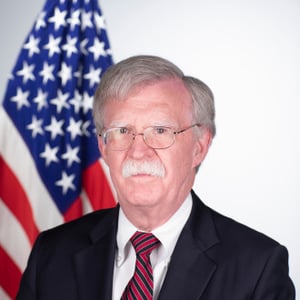
Former United States National Security Advisor
John R. Bolton served as Assistant to the President and National Security Advisor from April 2018 to September 2019.
Prior to his appointment, Ambassador Bolton served as a senior fellow at the American Enterprise Institute (AEI); of counsel at Kirkland & Ellis; a contributor to FOX News Channel and FOX Business Network; and his op-ed articles were regularly featured in major media publications.
Ambassador Bolton was appointed as United States Permanent Representative to the United Nations on August 1, 2005 and served until his resignation in December 2006. Prior to his appointment, Ambassador Bolton served as Under Secretary of State for Arms Control and International Security from May 2001 to May 2005.
Other positions he has previously held include Assistant Secretary for International Organization Affairs at the Department of State, 1989-1993; Assistant Attorney General, Department of Justice, 1985-1989; Assistant Administrator for Program and Policy Coordination, U.S. Agency for International Development, 1982-1983 and General Counsel, U.S. Agency for International Development, 1981-1982.
Ambassador Bolton is the author of Surrender is Not an Option: Defending America at the U.N. and Abroad, published by Simon and Shuster (November 2007) and How Barack Obama is Endangering our National Sovereignty, published by Encounter Books (April 2010).
Ambassador Bolton was born in Baltimore, Maryland. He graduated with a Bachelor of Arts degree, summa cum laude, Phi Beta Kappa, from Yale College in 1970, and received his Juris Doctor from Yale Law School in 1974. He currently resides in Maryland with his wife, Gretchen. They have one daughter, Jennifer Sarah, who also graduated from Yale College, and received her MBA and SM degrees from MIT in 2014 and is currently a senior manager at Nissan’s facility in Nashville.
William Van Alstyne Professor of Law, Duke University School of Law
Curtis Bradley is the William Van Alstyne Professor of Law and Professor of Public Policy Studies at Duke University, as well as a co-director for the Center for International and Comparative Law. His scholarly expertise spans the areas of international law in the U.S. legal system, the constitutional law of foreign affairs, and federal jurisdiction, and his courses include International law, Foreign Relations Law, and Federal Courts. He was the founding co-director of Duke Law School’s Center for International and Comparative Law and serves on the executive board of Duke's Center on Law, Ethics, and National Security. Recently, he was appointed to serve as a Reporter on the American Law Institute's new Restatement project on The Foreign Relations Law of the United States.
Bradley graduated magna cum laude from Harvard Law School in 1988. He then clerked for Judge David Ebel of the 10th U.S. Circuit Court of Appeals and Justice Byron White of the U.S. Supreme Court. After his clerkships, Bradley practiced law for several years at Covington & Burling in Washington, D.C. He began teaching in 1995 at the University of Colorado School of Law, and he received tenure there in 1999. In 2000, he joined the faculty at the University of Virginia School of Law as a full professor. In 2004, he served as counselor on international law in the Legal Adviser's Office of the U.S. State Department. He is currently a member of the Secretary of State's Advisory Committee on International Law. Bradley joined the Duke Law faculty in 2005.
Bradley is a member of the Board of Editors of the American Journal of International Law and a member of the International Law Association's Study Group on the Principles on the Application of International Law by Domestic Courts.
Bradley has written numerous articles concerning international law, U.S. foreign relations law, and constitutional law, including articles published in the Harvard, Yale, Columbia, Stanford, Michigan, Pennsylvania, Virginia, Duke, Texas, and Georgetown law journals. He is also the co-editor of Presidential Power Stories (Foundation Press 2008) (with Christopher H. Schroeder), and the co-author of two casebooks: Foreign Relations Law: Cases and Materials (Aspen Press 5th ed. 2014) (with Jack Goldsmith), and Federal Courts and the Law of Federal-State Relations (Foundation Press 8th ed. 2014) (with Peter Low and John Jeffries). His most recent book, International Law in the U.S. Legal System, was published by Oxford University Press in early 2013. He is currently working on a new book, tentatively entitled History’s Constitution: How Governmental Practices Define the Separation of Powers. His scholarship has been cited in over fifty judicial decisions.
Judge, United States Court of Appeals, Second Circuit
Judge Livingston was appointed United States Circuit Judge for the Second Circuit on May 17, 2007 and entered on duty June 1, 2007. Prior to her appointment she was the Paul J. Kellner Professor of Law at Columbia Law School, where she also served as Vice Dean from 2005 to 2006. Judge Livingston joined the Columbia faculty in 1994. She continues to serve as a member of that faculty as the Paul J. Kellner Professor.
Judge Livingston received her B.A., magna cum laude, in 1980 from Princeton University, where she was elected to Phi Beta Kappa. She received her J.D., magna cum laude, in 1984 from Harvard Law School, where she was an editor on the Harvard Law Review. Following law school, she served as a law clerk to Judge J. Edward Lumbard of the United States Court of Appeals for the Second Circuit.
Judge Livingston was an Assistant United States Attorney in the Southern District of New York from 1986 to 1991 and she served as a Deputy Chief of Appeals in the Criminal Division from 1990 to 1991. She was an associate with the New York law firm of Paul, Weiss, Rifkind, Wharton & Garrison from 1985 to 1986 and again from 1991 to 1992, when she elected to pursue an academic career. Judge Livingston was a member of the University of Michigan's Law School faculty from 1992 until 1994.
Judge Livingston is a co-author of the casebook, Comprehensive Criminal Procedure, and has published numerous academic articles on legal topics. She has taught courses in evidence, criminal law and procedure, and national security and terrorism. From 1994 to 2003, Judge Livingston was a Commissioner on New York City's Civilian Complaint Review Board.

Distinguished University Chair and Professor of Law, University of St. Thomas School of Law
Michael Stokes Paulsen is Distinguished University Chair & Professor of Law at the University of St. Thomas, where he has taught since 2007. Professor Paulsen was previously the McKnight Presidential Professor of Law & Public Policy and Associate Dean at the University of Minnesota Law School, where he taught from 1991-2007. He is a graduate of Northwestern University, Yale Law School, and Yale Divinity School. He has served as a federal prosecutor, as Attorney-Advisor in the Office of Legal Counsel of the U.S. Department of Justice, and as counsel for the Center for Law & Religious Freedom.
Paulsen has taught as a visiting professor at Princeton University, Pepperdine University, Georgetown University, Bethel University, Uppsala University (Sweden), Daystar University (Kenya), and University of the Andes (Chile). He has been a guest lecturer at universities around the nation, including Harvard, Yale, Columbia, Princeton, Penn, NYU, Georgetown, Virginia, Stanford, Berkeley, Michigan, University of Chicago, and Northwestern.
Professor Paulsen is the author of more than ninety scholarly articles and book chapters on a wide variety of constitutional law topics, published in law journals including the Harvard Law Review, the Yale Law Journal, the Stanford Law Review, the University of Chicago Law Review, the Michigan Law Review, the Georgetown Law Journal, and the Northwestern University Law Review. He is the author or co-author of three books, including The Constitution: An Introduction (Basic Books, 2015) (co-authored with Luke Paulsen) and the casebook The Constitution of the United States, now in its fifth edition with Foundation Press, co-authored with Michael McConnell, Samuel Bray, and Will Baude.
Charles S. Murphy Professor of Law and Public Policy Studies, Duke Law School
In December, 2012, Chris Schroeder returned to the Duke Law School faculty after serving for nearly three years as Assistant Attorney General in the Office of Legal Policy at the United States Department of Justice, where he supervised the evaluation of President Obama’s nominees to the federal judiciary and provided policy advice to the Attorney General and the White House on a variety of law enforcement and national security issues. Chris has also served as acting Assistant Attorney General in the Office of Legal Counsel where he was responsible for legal advice to the Attorney General and the President on a broad range of legal issues, including separation of powers, other constitutional issues, and matters of statutory interpretation and administrative law. He has also served as chief counsel to the Senate Judiciary Committee. Schroeder is currently teaching a course on Federal Policymaking to Duke Law School’s Duke in DC externs, as well as co-teaching a seminar on presidential powers with his Duke colleague, Jeff Powell. He is working on a book on presidential powers.
Chris is married to Kate Bartlett, former Dean of Duke Law School.
Clayton J. and Henry R. Barber Professor of Law, Northwestern University Pritzker School of Law and Co-Chairman, Board of Directors, The Federalist Society
STEVEN GOW CALABRESI is the Clayton J. & Henry R. Barber Professor at Northwestern Pritzker School of Law. He has also co-taught in the Fall semester at Yale Law School from 2013 to the present. Calabresi clerked for Justice Antonin Scalia and Judges Robert H. Bork and Ralph K. Winter. He was a Special Assistant to Attorney General Meese from 1985 to 1987 and worked with Ken Cribb as his deputy in 1987 on the second floor of the West Wing of the Reagan White House. Calabresi has written books on presidential power and comparative constitutional law and the origins of judicial review. He and Gary Lawson are the co-editors of a casebook on U.S. Constitutional Law, and Calabresi is also the co-editor of a casebook on comparative constitutional law. He has written over seventy law review articles since 1990.
Gerard C. and Bernice Latrobe Smith Professor of International Law and Counselor to the Dean, Yale Law School
Oona A. Hathaway is the Gerard C. and Bernice Latrobe Smith Professor of International Law at Yale Law School, Professor of International Law and Area Studies at the Yale University MacMillan Center, Professor of the Yale University Department of Political Science, and Director of the Yale Law School Center for Global Legal Challenges. She is also Counselor to the Dean at Yale Law School. She has been a member of the Advisory Committee on International Law for the Legal Adviser at the United States Department of State since 2005. In 2014–15, she took leave to serve as Special Counsel to the General Counsel at the U.S. Department of Defense, where she was awarded the Office of the Secretary of Defense Award for Excellence. She is the Director of the annual Yale Cyber Leadership Forum. She has published more than 30 law review articles, and The Internationalists: How a Radical Plan to Outlaw War Remade the World (with Scott Shapiro, 2017).
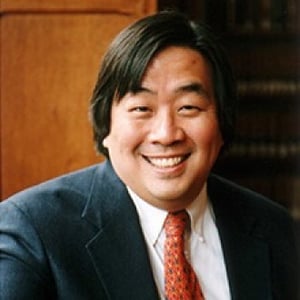
Sterling Professor of International Law, Yale Law School
Harold Hongju Koh is Sterling Professor of International Law at Yale Law School. He returned to Yale Law School in January 2013 after serving for nearly four years as the 22nd Legal Adviser of the U.S. Department of State.
Professor Koh is one of the country’s leading experts in public and private international law, national security law, and human rights. He first began teaching at Yale Law School in 1985 and served as its fifteenth Dean from 2004 until 2009. From 2009 to 2013, he took leave as the Martin R. Flug ’55 Professor of International Law to join the State Department as Legal Adviser, service for which he received the Secretary of State's Distinguished Service Award. From 1993 to 2009, he was the Gerard C. & Bernice Latrobe Smith Professor of International Law at Yale Law School, and from 1998 to 2001, he served as U.S. Assistant Secretary of State for Democracy, Human Rights and Labor.
Professor Koh has received seventeen honorary degrees and more than thirty awards for his human rights work, including awards from Columbia Law School and the American Bar Association for his lifetime achievements in international law. He has authored or co-authored eight books, published more than 200 articles, testified regularly before Congress, and litigated numerous cases involving international law issues in both U.S. and international tribunals. He is a Fellow of the American Philosophical Society and the American Academy of Arts and Sciences, an Honorary Fellow of Magdalen College, Oxford, and a member of the Council of the American Law Institute.
He holds a B.A. degree from Harvard College and B.A. and M.A. degrees from Oxford University, where he was a Marshall Scholar. He earned his J.D. from Harvard Law School, where he was Developments Editor of the Harvard Law Review. Before coming to Yale, he served as a law clerk for Justice Harry A. Blackmun of the United States Supreme Court and Judge Malcolm Richard Wilkey of the U.S. Court of Appeals for the D.C. Circuit, worked as an attorney in private practice in Washington, and served as an Attorney-Adviser for the Office of Legal Counsel, U.S. Department of Justice.
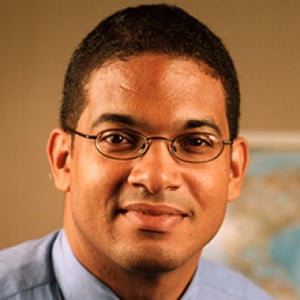
Benjamin Mazur Summer Research Professor of Law Affiliated Faculty, Ford Motor Company Center for Global Citizenship, Northwestern University School of Law
Jide Nzelibe joined Northwestern's faculty as an assistant professor in 2004 became a full Professor in 2008. He served as the Bigelow Teaching Fellow and Lecturer in Law at the University of Chicago before joining Northwestern Law. In addition to his JD from Yale Law School, he also holds an MPA in international relations from Princeton University, where he was awarded a fellowship from the Woodrow Wilson Foundation and a pre-doctoral fellowship from the Ford Foundation. His research and teaching interests include international trade, foreign relations law, public and private international law and contracts.

Tazewell Taylor Professor of Law and William H. Cabell Research Professor, William & Mary Law School
Jonathan H. Adler joined the William & Mary law faculty as the Tazwell Taylor Professor of Law and William H. Cabell Research Professor in 2025. Prior to joining the faculty, he was the inaugural Johan Verheij Memorial Professor of Law and the founding Director of the Coleman P. Burke Center for Environmental Law at the Case Western Reserve University School of Law.
Professor Adler is the author or editor of seven books, including Climate Liberalism: Perspectives on Liberty, Property and Pollution (Palgrave, 2023), Marijuana Federalism: Uncle Sam and Mary Jane (Brookings Institution Press, 2020), Business and the Roberts Court (Oxford University Press, 2016) and Rebuilding the Ark: New Perspectives on Endangered Species Act Reform (AEI Press, 2011).
His articles have appeared in publications ranging from the Harvard Environmental Law Review and Yale Journal on Regulation to the Wall Street Journal, New York Times, and Washington Post. He has testified before Congress a dozen times, and his work has been cited in the U.S. Supreme Court. A 2024 study identified Professor Adler as the seventh most cited legal academic in administrative and environmental law from 2019 to 2023.
Professor Adler is a contributing editor to Civitas Outlook and a regular contributor to the popular legal blog, The Volokh Conspiracy. A regular commentator on constitutional and regulatory issues, he has appeared on numerous radio and television programs, ranging from the PBS Newshour and National Public Radio to the Fox News Channel and Entertainment Tonight.
Professor Adler is a senior fellow at the Property & Environment Research Center in Bozeman, Montana. In 2018, Professor Adler was elected to membership in the American Law Institute and helped co-found the organization Checks and Balances. In 2024, Professor Adler was appointed a public member of the Administrative Conference of the United States.
Professor Adler clerked for the Honorable David B. Sentelle on the U.S. Court of Appeals for the District of Columbia Circuit.
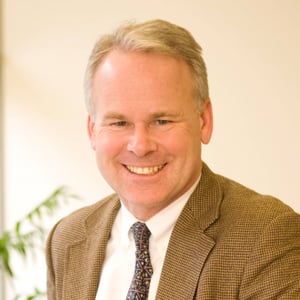
David Daniels Allen Distinguished Chair of Law Director, Climate Change Research Network Co-director, Energy, Environment and Land Use Program, Vanderbilt Law School
Michael Vandenbergh is a leading scholar in environmental and energy law whose research explores the relationship between formal legal regulation and informal social regulation of individual and corporate behavior. His work with Vanderbilt's Climate Change Research Network involves interdisciplinary teams that focus on the reduction of carbon emissions from the individual and household sector. His corporate work explores private environmental governance and the influence of social norms on firm behavior and the ways in which private contracting can enhance or undermine public governance. Before joining Vanderbilt's law faculty, Professor Vandenbergh was a partner at a national law firm in Washington, D.C. He served as Chief of Staff of the U.S. Environmental Protection Agency from 1993 to 1995. He began his career as a law clerk for Judge Edward R. Becker of the U.S. Court of Appeals for the Third Circuit in 1987-88. In addition to directing Vanderbilt's Climate Change Research Network, Professor Vandenbergh serves as co-director of the law school's Energy, Environment and Land Use Program. He was named a David Daniels Allen Distinguished Professor of Law in fall 2013. A recipient of the Hall-Hartman Teaching Award, he teaches courses in environmental law, energy, and property. Professor Vandenbergh has been a visiting professor at the University of Chicago Law School and at Harvard Law School.
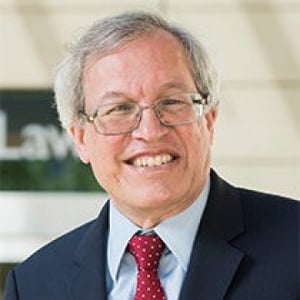
Dean and Jesse H. Choper Distinguished Professor of Law, UC Berkeley School of Law
Erwin Chemerinsky became the 13th Dean of Berkeley Law on July 1, 2017, when he joined the faculty as the Jesse H. Choper Distinguished Professor of Law.
Prior to assuming this position, from 2008-2017, he was the founding Dean and Distinguished Professor of Law, and Raymond Pryke Professor of First Amendment Law, at University of California, Irvine School of Law, with a joint appointment in Political Science. Before that he was the Alston and Bird Professor of Law and Political Science at Duke University from 2004-2008, and from 1983-2004 was a professor at the University of Southern California Law School, including as the Sydney M. Irmas Professor of Public Interest Law, Legal Ethics, and Political Science. He also has taught at DePaul College of Law and UCLA Law School.
He is the author of eleven books, including leading casebooks and treatises about constitutional law, criminal procedure, and federal jurisdiction. His most recent books are, We the People: A Progressive Reading of the Constitution for the Twenty-First Century (Picador Macmillan) published in November 2018, and two books published by Yale University Press in 2017, Closing the Courthouse Doors: How Your Constitutional Rights Became Unenforceable and Free Speech on Campus (with Howard Gillman).
He also is the author of more than 200 law review articles. He writes a regular column for the Sacramento Bee, monthly columns for the ABA Journal and the Daily Journal, and frequent op-eds in newspapers across the country. He frequently argues appellate cases, including in the United States Supreme Court.
In 2016, he was named a fellow of the American Academy of Arts and Sciences. In 2017, National Jurist magazine again named Dean Chemerinsky as the most influential person in legal education in the United States.
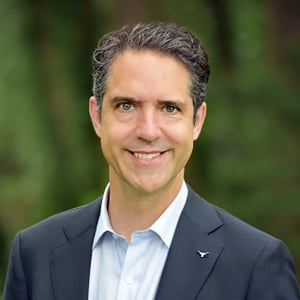
James A. Baker III Chair in the Rule of Law and World Affairs and Associate Dean for Academic Affairs, The University of Texas at Austin School of Law
Bobby Chesney holds the James Baker Chair and also serves as the Associate Dean for Academic Affairs at the University of Texas School of Law. In addition, he is the Director of the Robert S. Strauss Center for International Security and Law, a University-wide research unit bridging across disciplines to improve understanding of international security issues.
In 2009, Professor Chesney served in the Justice Department in connection with the Detention Policy Task Force created by Executive Order 13493. He also previously served the Intelligence Community as an associate member of the Intelligence Science Board and as a member of the Advanced Technology Board. In addition to his current positions at the University of Texas, he is a member of the American Law Institute, and a senior editor for the Journal of National Security Law & Policy, and a former non-resident Senior Fellow of the Brookings Institution.
Professor Chesney is a co-founder and contributor to www.lawfareblog.com, the leading source for analysis, commentary, and news relating to law and national security. In addition to his blogging at Lawfare, those interested in national security law should consider following Professor Chesney on Twitter (@bobbychesney) as well as subscribing to the National Security Law Podcast (which he co-hosts with his colleague Steve Vladeck). Professor Chesney's scholarship focuses on U.S. national security policies and institutions, encompassing both domestic and international law issues. His articles may be downloaded from SSRN here.
Professor Chesney is a magna cum laude graduate of both Texas Christian University and Harvard Law School. After law school he clerked for the Honorable Lewis A. Kaplan of the United States District Court for the Southern District of New York and the Honorable Robert D. Sack of the United States Court of Appeals for the Second Circuit. He then practiced with the firm Davis Polk & Wardwell in New York (litigation), before beginning his academic career with Wake Forest University School of Law. There he received a teacher of the year award from the student body in one year, and from the school's dean in another. In 2008 he came to the University of Texas School of Law as a visiting professor, and then joined UT on a permanent basis in 2009. He became the Associate Dean for Academic Affairs in 2011.
Professor Chesney teaches a variety of courses, including: Constitutional Law, National Security Law, Foundations of Cybersecurity: Law, Institutions, and Policy; Law of the Intelligence Community; History of U.S. Counterterrorism Law & Policy: 1970 to Present; Evidence, Civil Procedure, and an array of seminars. He is from San Antonio.
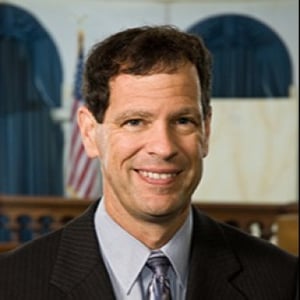
Warren Distinguished Professor of Law, University of San Diego School of Law
Michael D. Ramsey is Warren Distinguished Professor of Law at the University of San Diego School of Law, where he teaches and writes in the areas of Constitutional Law, Foreign Relations Law and International Law. He is the author of The Constitution’s Text in Foreign Affairs (Harvard University Press), co-editor of International Law in the U.S. Supreme Court: Continuity and Change (Cambridge University Press), and co-author of two casebooks, Transnational Law and Practice (2d ed., Aspen) and International Business Transactions: A Problem-Oriented Coursebook (14th ed., West). His scholarly articles have appeared in publications such as the Yale Law Journal, the University of Chicago Law Review, the Georgetown Law Journal and the American Journal of International Law. He received his B.A. magna cum laude from Dartmouth College and his J.D. summa cum laude from Stanford Law School. Prior to teaching, he served as a judicial clerk for Judge J. Clifford Wallace of the United States Court of Appeals for the Ninth Circuit and for Justice Antonin Scalia of the United States Supreme Court, and practiced law with the law firm of Latham & Watkins, where he specialized in international finance and investment. He has taught as a visiting professor at the University of California, San Diego, in the Department of Political Science and at the University of Paris – Sorbonne, in the Department of Comparative Law.
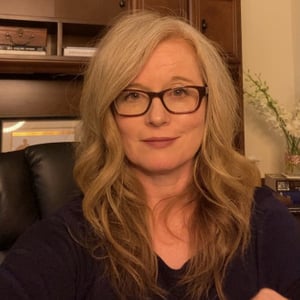
Executive Director of the Military Law and Policy Institute and AMVETS Legal Clinic
Professor Rotunda is regarded as a leading expert in military law and currently teaches Law of War and a Family Violence Clinic. She is the author of Honor Bound: Inside the Guantanamo Trials, published by Carolina Academic Press (2008). She directed the Clinic for Legal Assistance to Service Members at George Mason School of Law, where she and her students successfully represented military families in various legal disputes, including Physical Evaluation Boards and Traumatic Service Group Life Insurance Appeals. Rotunda has recovered hundreds of thousands of dollars for disabled troops.
Professor Rotunda began her career in the US Army JAG Corps and has since been recruited by the National Veterans Legal Services Program (NVLSP) to produce a series of instructional DVDs about military law. She has also authored a coordinating outline and co-authored NVLSP's forthcoming book regarding military administrative/disability proceedings, to be published by Lexis Nexis. She remains in the Army Reserves and holds the rank of Major. Rotunda has served in several missions related to the Global War on Terror: she served in Guantanamo Bay, was the legal advisor to a team of investigators pursuing leads in the war on terror, served as a prosecutor at the Office of Military Commissions, represented wounded troops at Walter Reed Army Medical Center, and was the lawyer assigned to Jessica Lynch after Lynch's rescue.
Professor Rotunda is an avid writer and advocate for soldiers. She has written op-eds for The Christian Science Monitor, The Wall Street Journal, The Chicago Tribune, and The Washington Times. She is a regular television and radio commentator regarding military law and the ongoing trials in Guantanamo Bay. She has appeared on more than 20 nationally-syndicated radio shows, including The Michael Reagan Show, The Dennis Miller Show, and the Jim Bohannon Show. Rotunda has also appeared on national and international television news programs, including Hannity's America, the Brit Hume Report, and Al Jazeera.
B.A., University of Wyoming; J.D., University of Wyoming College of Law

Agnes Williams Sesquicentennial Professor of Federal Courts, Georgetown Law
Stephen I. Vladeck is a professor of law at the Georgetown University Law Center, and is a nationally recognized expert on the federal courts; the Supreme Court; national security law; and military justice.
Vladeck is author of the New York Times bestselling book, “The Shadow Docket: How the Supreme Court Uses Stealth Rulings to Amass Power and Undermine the Republic,” which won the 2023 Writers’ League of Texas Book Award for Non-Fiction and was a finalist for the 2024 ABA Silver Gavel Award for Media and the Arts. Vladeck is also a highly regarded appellate advocate, having argued three cases before the U.S. Supreme Court and over a dozen before various lower federal civilian and military courts. He has received numerous awards for his influential and widely cited legal scholarship, his prolific popular writing, his teaching, and his service to the legal profession—including the 2024 University of Texas President’s Research Impact Award and his selection by the Order of the Coif to serve as its Distinguished Visiting Professor for 2025.
Vladeck is CNN’s Supreme Court analyst and editor and author of “One First,” a popular weekly newsletter about the Supreme Court. Together with Bobby Chesney, Vladeck co-hosts the popular and award-winning “National Security Law Podcast.” He is also a co-author of Aspen Publishers’ leading national security law and counterterrorism law casebooks. And he is a member of the Board of Trustees of EarthJustice—the nation’s premier nonprofit public interest environmental law organization.
Vladeck graduated from Yale Law School in 2004—where he was executive editor of the Yale Law Journal and won the Harlan Fiske Stone Prize for outstanding moot court oralist and shared the Potter Stewart Prize for best moot court team performance. After law school, he clerked for the Honorable Marsha S. Berzon on the U.S. Court of Appeals for the Ninth Circuit and the Honorable Rosemary Barkett on the U.S. Court of Appeals for the Eleventh Circuit. He earned a B.A. summa cum laude with Highest Distinction in History and Mathematics from Amherst College in 2001—where he wrote his senior thesis on “Leipzig’s Shadow: The War Crimes Trials of the First World War and Their Implications from Nuremberg to the Present.” A native New Yorker and hopeless Mets fan, Vladeck lives in the District with his wife, Karen (Founder and Managing Partner of Risepoint Search Partners); their daughters, Madeleine and Sydney; and their eleven-year-old pug, Roxanna.
Tazewell Taylor Professor of Law and William H. Cabell Research Professor, William & Mary Law School
Jonathan H. Adler joined the William & Mary law faculty as the Tazwell Taylor Professor of Law and William H. Cabell Research Professor in 2025. Prior to joining the faculty, he was the inaugural Johan Verheij Memorial Professor of Law and the founding Director of the Coleman P. Burke Center for Environmental Law at the Case Western Reserve University School of Law.
Professor Adler is the author or editor of seven books, including Climate Liberalism: Perspectives on Liberty, Property and Pollution (Palgrave, 2023), Marijuana Federalism: Uncle Sam and Mary Jane (Brookings Institution Press, 2020), Business and the Roberts Court (Oxford University Press, 2016) and Rebuilding the Ark: New Perspectives on Endangered Species Act Reform (AEI Press, 2011).
His articles have appeared in publications ranging from the Harvard Environmental Law Review and Yale Journal on Regulation to the Wall Street Journal, New York Times, and Washington Post. He has testified before Congress a dozen times, and his work has been cited in the U.S. Supreme Court. A 2024 study identified Professor Adler as the seventh most cited legal academic in administrative and environmental law from 2019 to 2023.
Professor Adler is a contributing editor to Civitas Outlook and a regular contributor to the popular legal blog, The Volokh Conspiracy. A regular commentator on constitutional and regulatory issues, he has appeared on numerous radio and television programs, ranging from the PBS Newshour and National Public Radio to the Fox News Channel and Entertainment Tonight.
Professor Adler is a senior fellow at the Property & Environment Research Center in Bozeman, Montana. In 2018, Professor Adler was elected to membership in the American Law Institute and helped co-found the organization Checks and Balances. In 2024, Professor Adler was appointed a public member of the Administrative Conference of the United States.
Professor Adler clerked for the Honorable David B. Sentelle on the U.S. Court of Appeals for the District of Columbia Circuit.
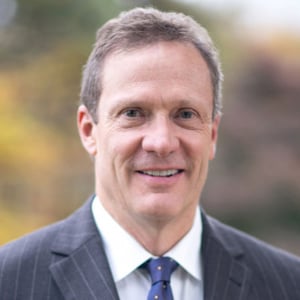
Blaine T. Phillips Distinguished Professor in Environmental Law, University of Virginia School of Law
Law and economics expert Jason Scott Johnston joined the Virginia Law faculty in 2010 and is the Blaine T. Phillips Distinguished Professor in Environmental Law. He formerly served as the the Nicholas E. Chimicles Research Professor in Business Law and Regulation at Virginia Law, and the Robert G. Fuller, Jr. Professor of Law and director of the Program on Law, Environment and Economy at the University of Pennsylvania Law School.
Johnston’s scholarship has examined subjects ranging from natural resources law to torts and contracts. He has published dozens of articles in law journals, such as the Yale Law Journal, and in peer-reviewed economics journals, such as the Journal of Law, Economics and Organization. He is currently working on a book that critically analyzes the foundations of global warming law and policy, a series of articles on the economics of regulatory science and another series of articles on various aspects of the law and economics of consumer protection. He has served on the Board of Directors of the American Law and Economics Association, on the National Science Foundation’s Law and Social Science grant review panel, and on the Board of the Searle Civil Justice Institute. He won Penn Law’s Robert A. Gorman Award for Teaching Excellence in 2003.
After earning his A.B. from Dartmouth College and both his J.D. and Ph.D. (economics) from the University of Michigan, Johnston clerked for Judge Gilbert S. Merritt on the U.S. Court of Appeals for the Sixth Circuit. He then taught at Vermont Law School and Vanderbilt Law School before joining Penn’s faculty. He has been a visiting professor or held fellowship appointments at Yale Law School, the University of Southern California Gould School of Law, the American Academy in Berlin and the Property and Environment Research Center.
Dean, Indiana University School of Public and Environmental Affairs
John Graham is Dean of the Indiana University School of Public and Environmental Affairs (SPEA), a professional school with more than 2500 students and 100 faculty covering the fields of environmental science, criminal justice, arts administration, non-profit management, public finance and budgeting, public management and policy analysis. SPEA’s Master’s in Public Affairs program was recently ranked #2 in the country by U.S. News and World Report.
From 2001 to 2006 Dr. Graham served as the Senate-confirmed administrator of the Office of Information and Regulatory Affairs in the U.S. Office of Management and Budget. In this capacity, he was responsible for federal regulatory, information and statistical policies.
Prior to his government service, Dr. Graham was a tenured professor of policy and decision sciences at the Harvard School of Public Health where he founded and led the Harvard Center for Risk Analysis.
He holds a BA degree (politics and economics) from Wake Forest University, an MA degree (public affairs) from Duke University and a Ph.D. degree (public affairs) from Carnegie-Mellon University.
Associate Justice, United States Supreme Court
Antonin Scalia, Associate Justice, was born in Trenton, New Jersey, March 11, 1936. He married Maureen McCarthy and has nine children- Ann Forrest, Eugene, John Francis, Catherine Elisabeth, Mary Clare, Paul David, Matthew, Christopher James, and Margaret Jane. He received his A.B. from Georgetown University and the University of Fribourg, Switzerland, and his LL.B. from Harvard Law School, and was a Sheldon Fellow of Harvard University from 1960-1961. He was in private practice in Cleveland, Ohio from 1961-1967, a Professor of Law at the University of Virginia from 1967-1971, and a Professor of Law at the University of Chicago from 1977-1982, and a Visiting Professor of Law at Georgetown University and Stanford University. He was chairman of the American Bar Association's Section of Administrative Law, 1981-1982, and its Conference of Section Chairmen, 1982-1983. He served the federal government as General Counsel of the Office of Telecommunications Policy from 1971-1972, Chairman of the Administrative Conference of the United States from 1972-1974, and Assistant Attorney General for the Office of Legal Counsel from 1974-1977. He was appointed Judge of the United States Court of Appeals for the District of Columbia Circuit in 1982. President Reagan nominated him as an Associate Justice of the Supreme Court, and he took his seat September 26, 1986.

Criminal Law: Expansion of Federal Criminal Power: Too Much or Too Little?
John S. Baker, Sara Sun Beale, Bradford A. Berenson, Noah D. Bookbinder, John G. Malcolm, Edwin Meese
Prof. John S. Baker, Jr., Dale E. Bennett Professor of Law, Paul M. Hebert Law...
International: America as Hegemon and International Law
Barry E. Carter, Michael Chertoff, John O. McGinnis, Margaret E. McGuinness, Ruth J. Wedgwood, John C. Yoo
Prof. Barry E. Carter, Director, Center for Transnational Business and the Law, Georgetown University Law...
Showcase Panel II: Government of the People, by the People, and for the People?
Steven G. Calabresi, Robert D. Cooter, Richard A. Epstein, William N. Eskridge, Thomas W. Merrill
Direct democracy is feasible today to an extent that it was not feasible in 1787....
The Thousand-Page Prescription: Is a Federal Take-Over the Cure for America’s Health Crisis?
Justice Antonin Scalia
Panel V: War Powers and the Executive
John R. Bolton, Curtis A. Bradley, Debra Ann Livingston, Michael Stokes Paulsen, Christopher Schroeder
The Federalist Society's Student Division presented this panel at the 2009 Annual Student Symposium on...
Panel I: Is the Separation of Powers Principle Exportable?
Jose A. Cabranes, Steven G. Calabresi, Oona A. Hathaway, Harold Hongju Koh, Juan Linz, Jide Okechuku Nzelibe, Rebekah Perry
The Federalist Society's Student Division presented this panel at the 2009 Annual Student Symposium on...
A Conversation on Climate Change Policy: A Look Ahead at 2009
Jonathan H. Adler, Brooks Smith, Michael P. Vandenbergh
The Federalist Society and The Vanderbilt Climate Change Research Network present, "A Conversation on Climate...
Panel: Guantanamo Bay: the Problem of Judicial Review Post-Boumediene
Erwin Chemerinsky, Robert Chesney, Michael D. Ramsey, Kyndra Kaye Rotunda, Stephen I. Vladeck
Dean Erwin Chemerinsky, University of California, Irvine School of Law Prof. Michael Ramsey, University of...
Panel: The Road Ahead for Climate Change Regulation
Jonathan H. Adler, David Dana, Sean Hecht, Jason Johnston
Prof. Jonathan Adler, Case Western Reserve University School of Law Prof. Jason Johnston, University of...